


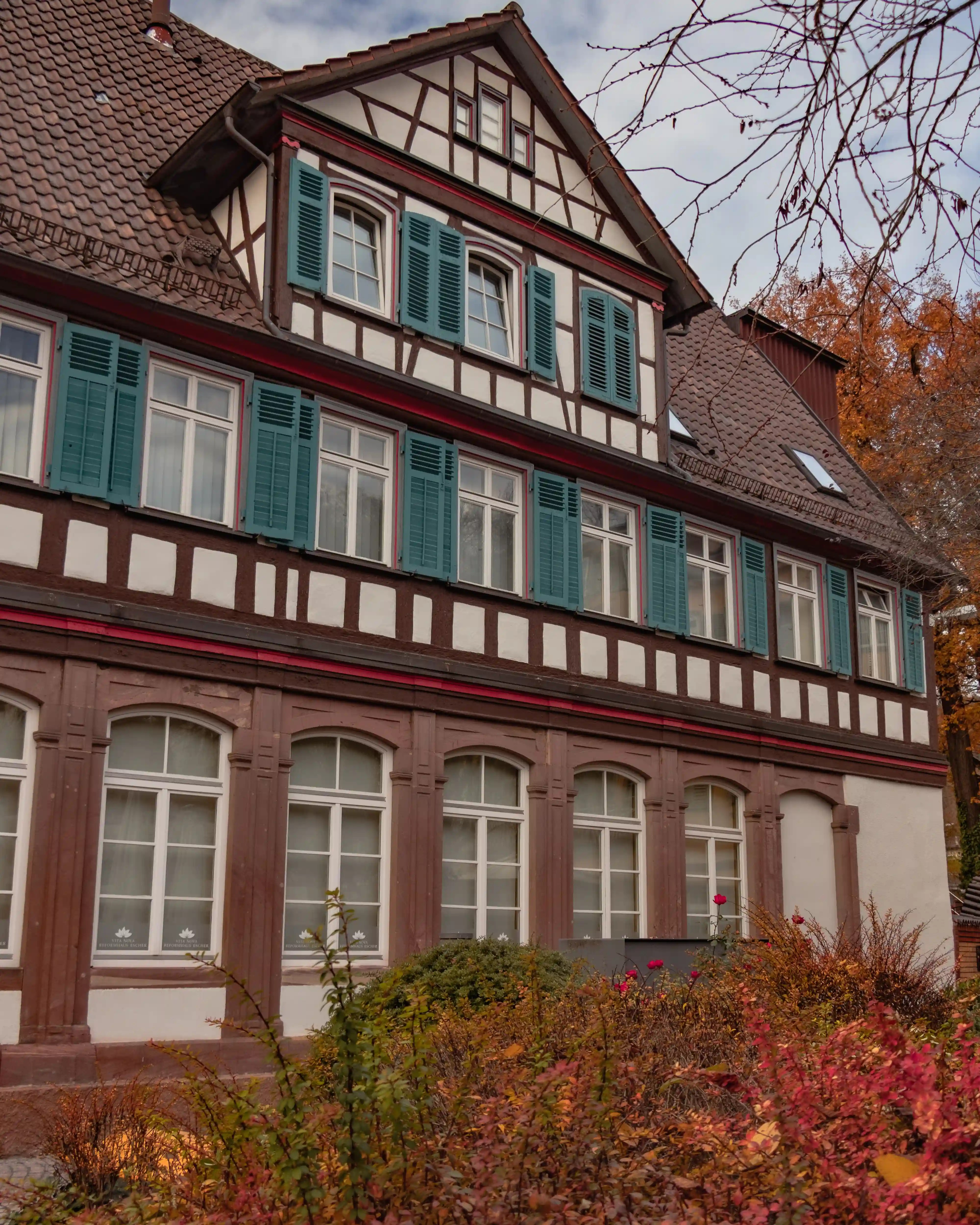


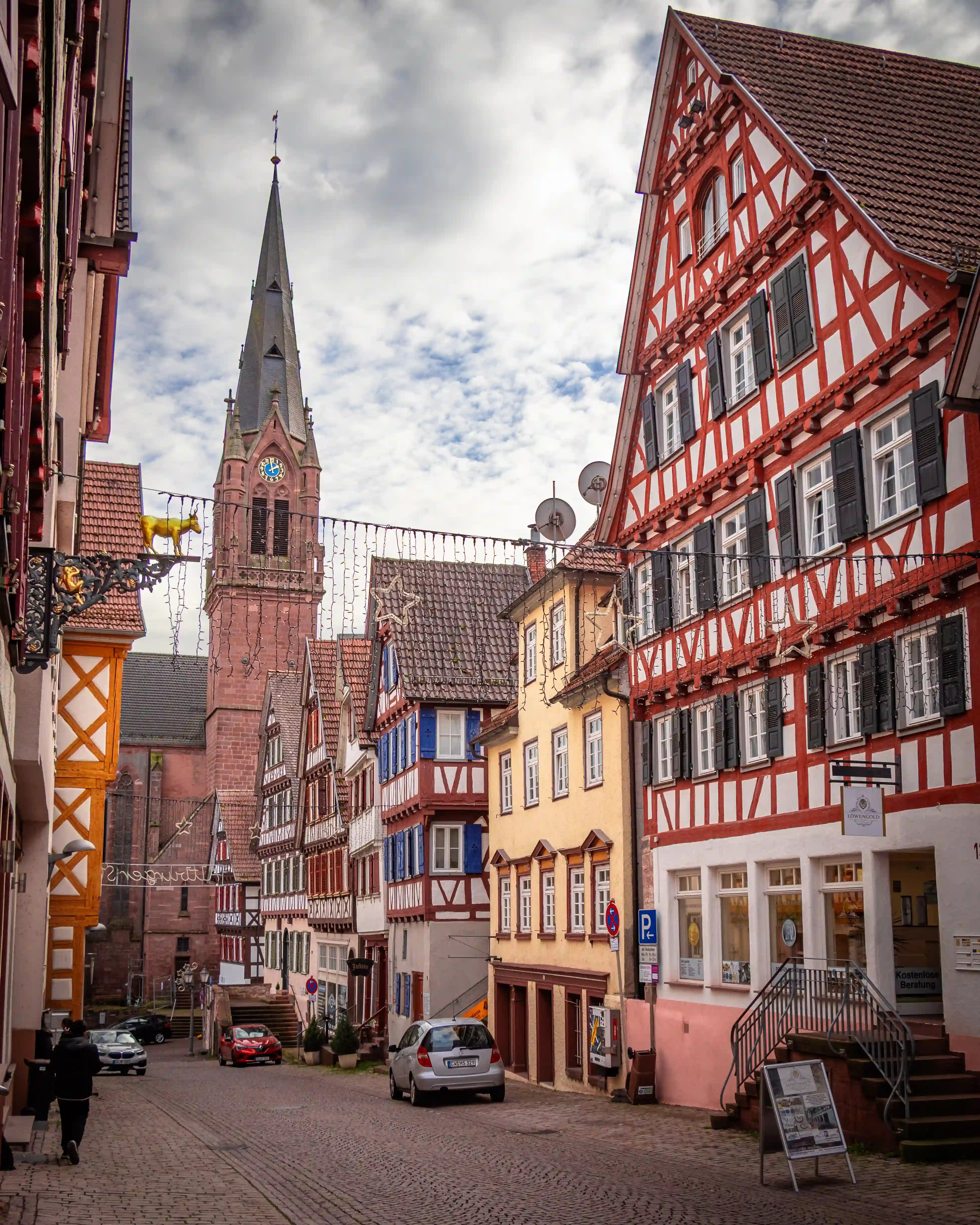
There’s something special about exploring a town for the first time with no real plan other than to wander, look around, and follow whatever catches your eye. That’s exactly what we did on our November day trip to Calw (pronounced kalf), a small Black Forest town known for its half-timbered houses, steep hillsides, and its most famous resident, the writer Hermann Hesse.
With autumn still clinging to the trees and the river Nagold running quietly through the center, Calw felt like the kind of place made for slow strolling and photography—the perfect low-key outing before winter settles in.

A Little About Calw
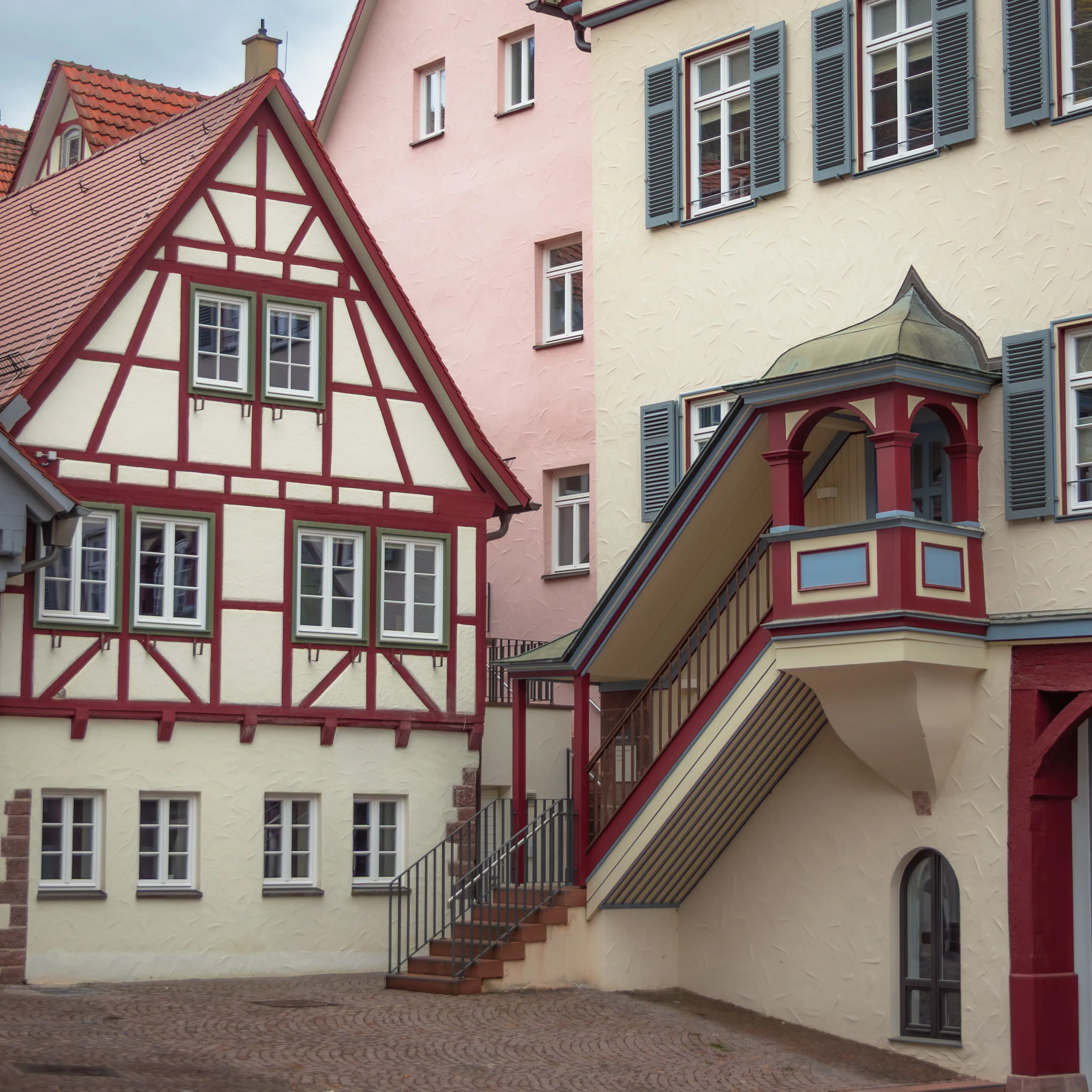
Founded in 1075, Calw marked its 950-year anniversary in 2025, a milestone that reflects the town’s long history along the Nagold River. Calw sits in the northern Black Forest, with the old town rising in layers from the water up toward the forested hills. The combination of narrow streets, traditional Fachwerk (timber-framed) architecture, and steep terrain gives the town a compact but distinctive character.
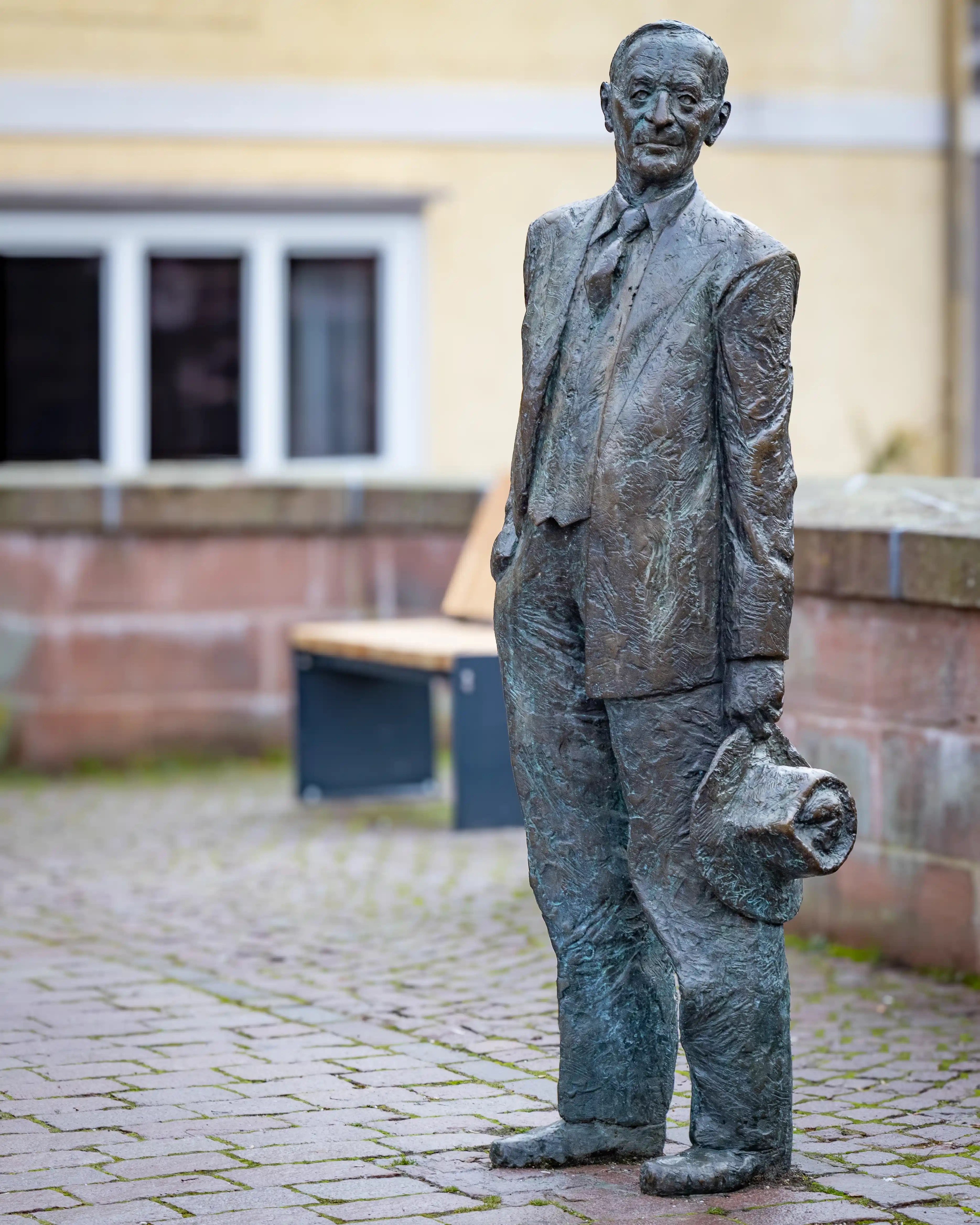
Calw is the birthplace of Hermann Hesse, the 1946 Nobel Prize–winning author of Siddhartha, Steppenwolf, and The Glass Bead Game. His presence is woven throughout the town—from the bronze statue near the river to markers identifying places connected to his early life.
The town actually has two related walking routes dedicated to him: the Hermann-Hesse-Weg, marked by interpretive signs through the old town and the Stadtgarten, and a broader literary walk often described as “In the footsteps of Hermann Hesse through Calw,” which links additional biographical sites. The Hermann Hesse Museum, located in the historic Haus Schüz on the Marktplatz, the town’s central square, is currently closed for renovation until 2026, but will again display manuscripts, personal items, and exhibits about his childhood when it reopens.
Walking through Calw reveals traces of both its literary heritage and its long history as a center of trade along the Nagold. Tanning was once a major craft here, alongside prosperous textile and cloth trading and the timber business that relied on the river. As you explore the old town and riverside paths, the mix of merchant houses and former workshop buildings still hints at the industries that shaped Calw for centuries.
Exploring Calw
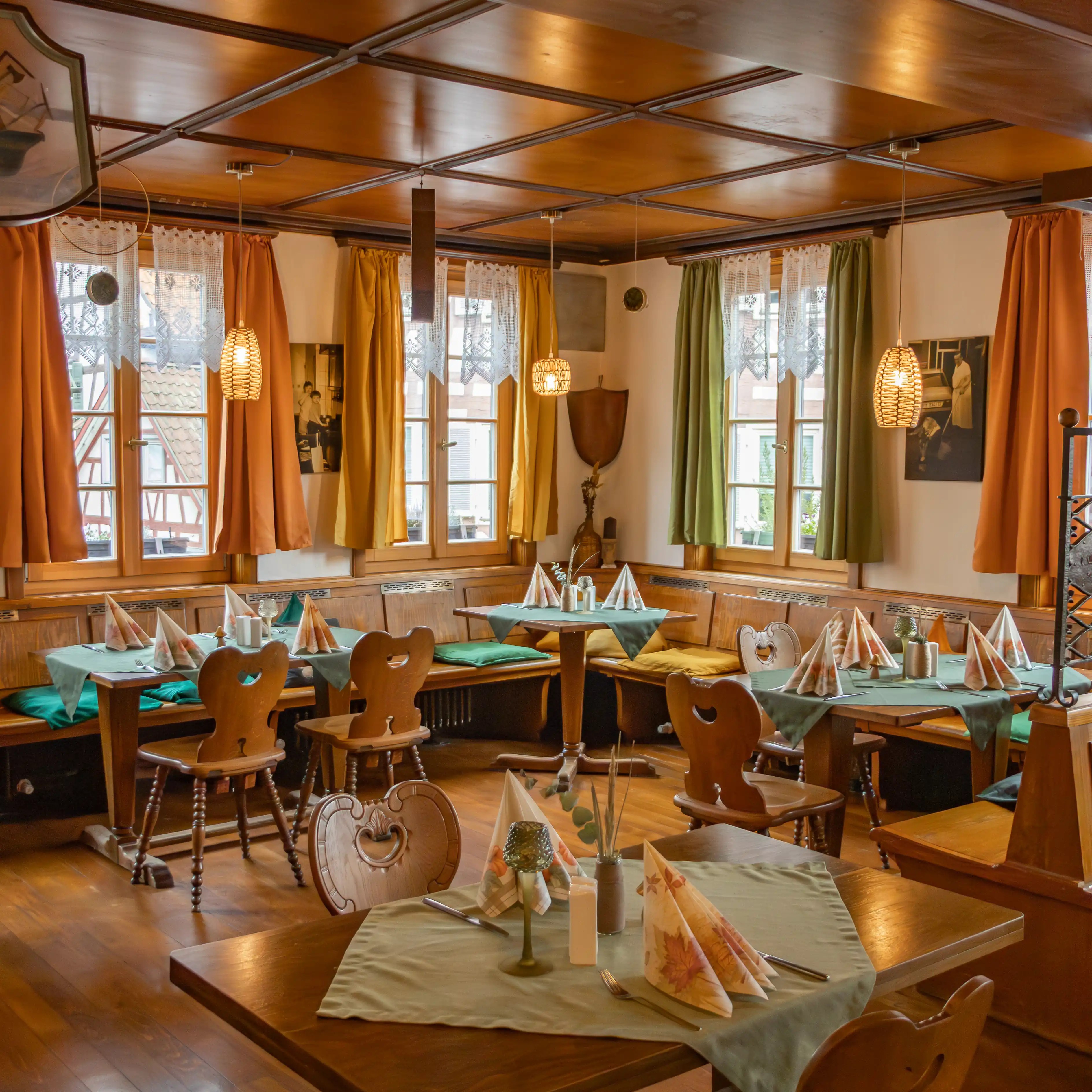
We arrived just in time for lunch and stopped at Hotel Restaurant Rössle, a family-run establishment that has been owned by the Waidelich family since 1876. Set in the heart of Calw’s old town, the restaurant blends a cozy, traditional setting with modern touches and its own patisserie. It was a welcoming and convenient first stop before we headed out to explore the town.


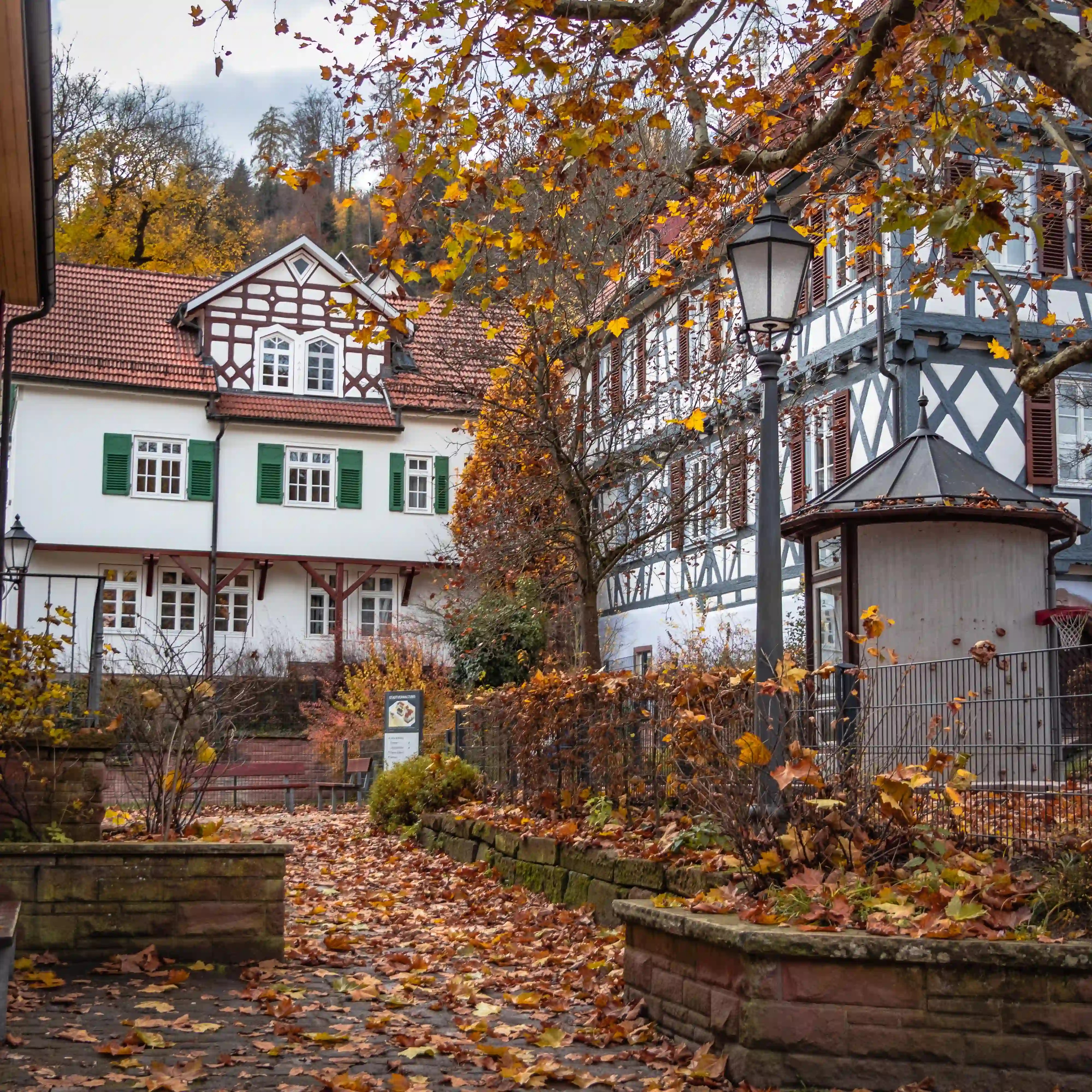
We took our time moving through the old town, stepping into side streets and pausing for photos. Each turn seemed to offer a new angle on the timber-framed houses or a small detail that caught our eye.




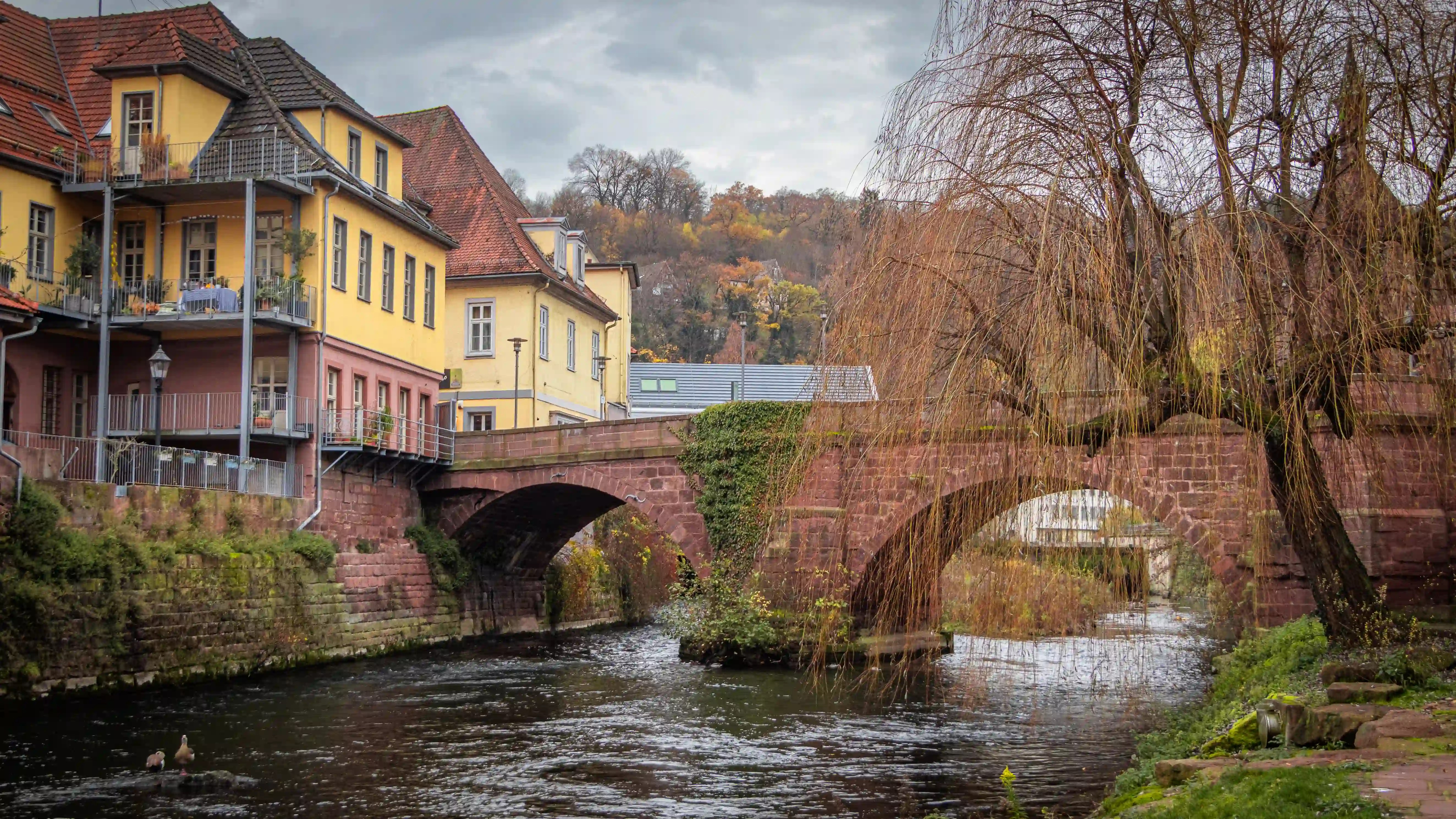
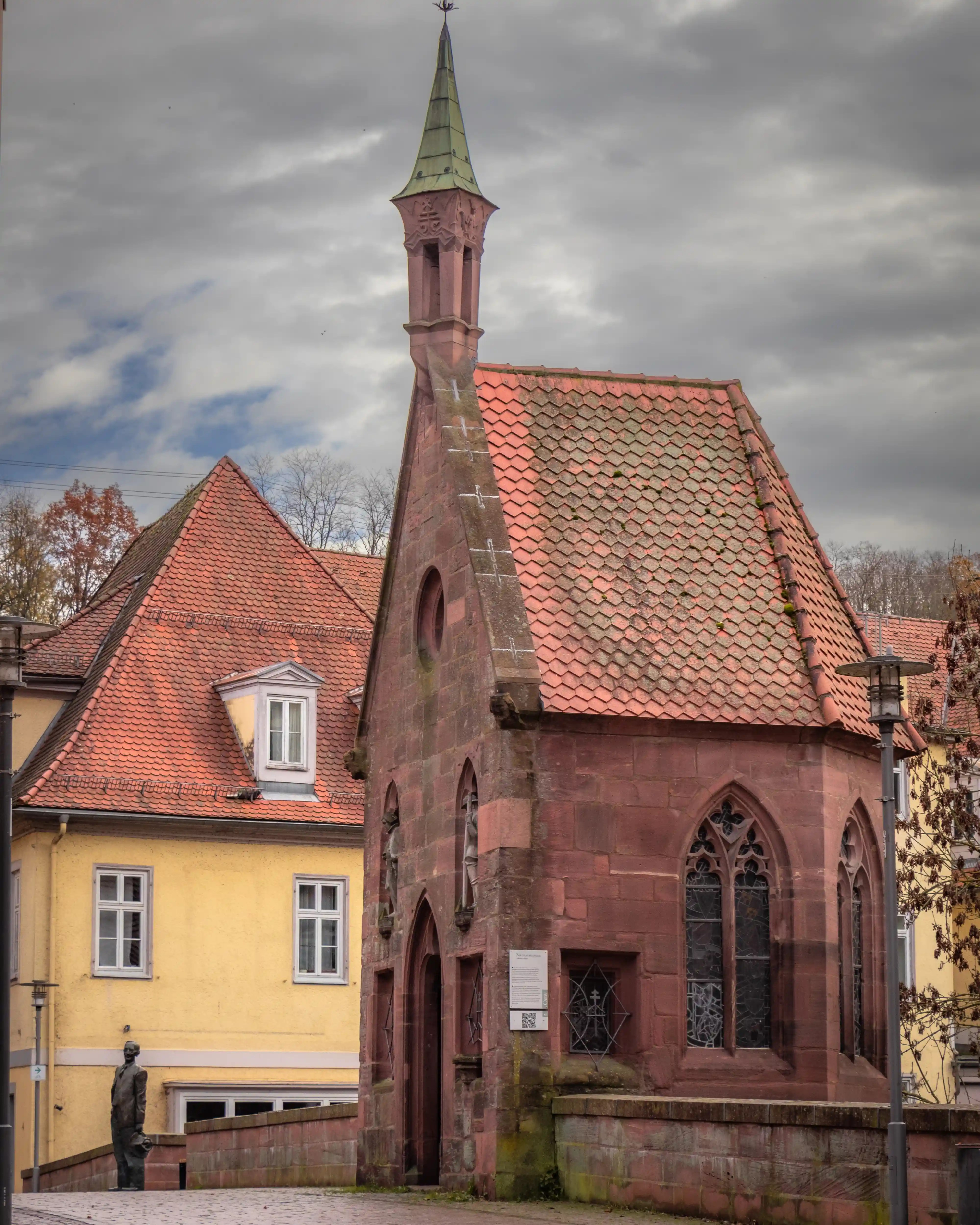
The St. Nicholas Bridge (Nikolausbrücke) is one of the town’s most photographed spots, a stone bridge first built around 1400 and long regarded as a Calw landmark. At one end stands the St. Nicholas Chapel (Nikolauskapelle), dedicated to St. Nicholas, the patron saint invoked against high and stormy water. Hermann Hesse was especially fond of this spot, calling it his favorite place in Calw and noting that he valued it even more than well-known squares such as the Cathedral Square of Florence. A bronze statue of Hesse now stands nearby, underscoring his lasting connection to the town.
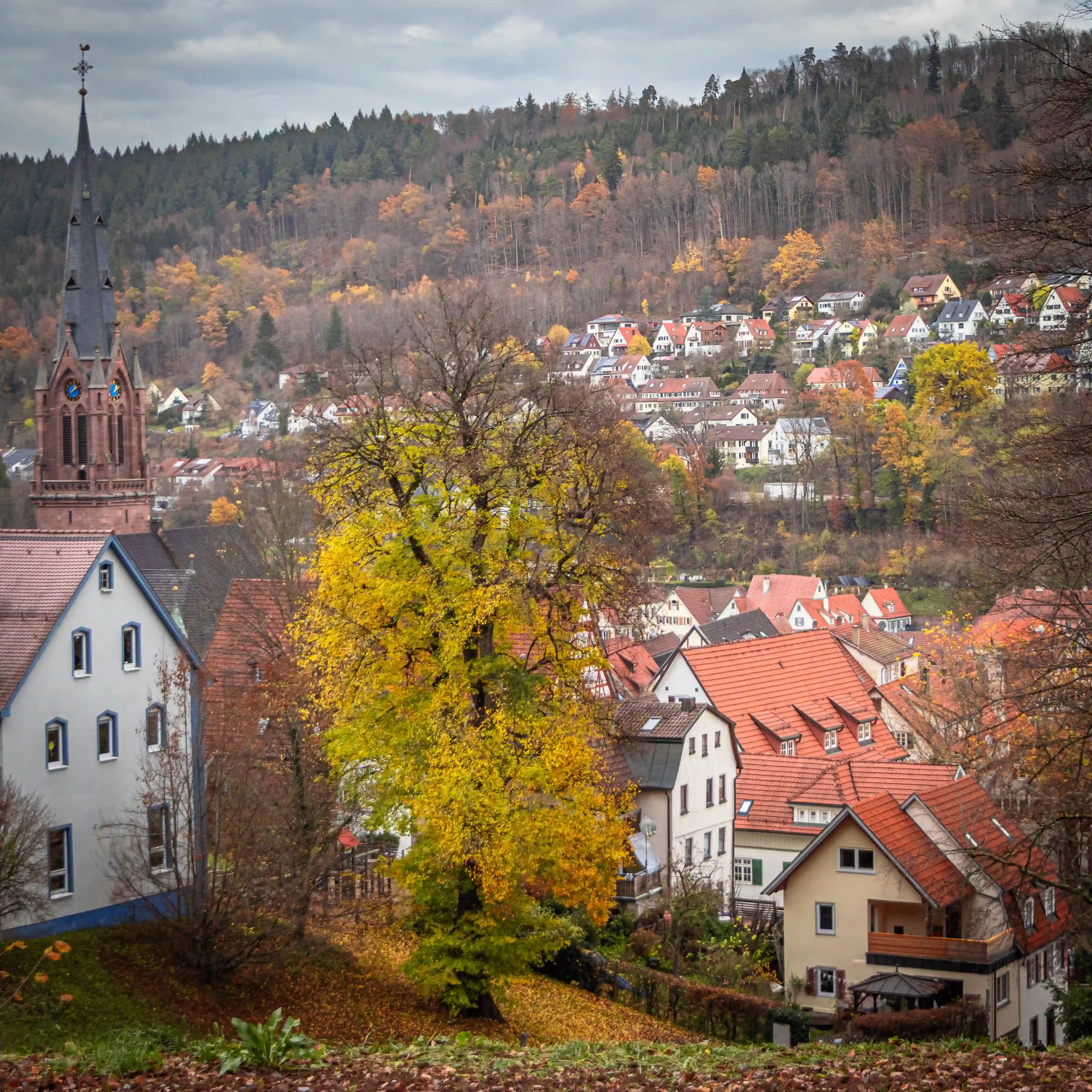
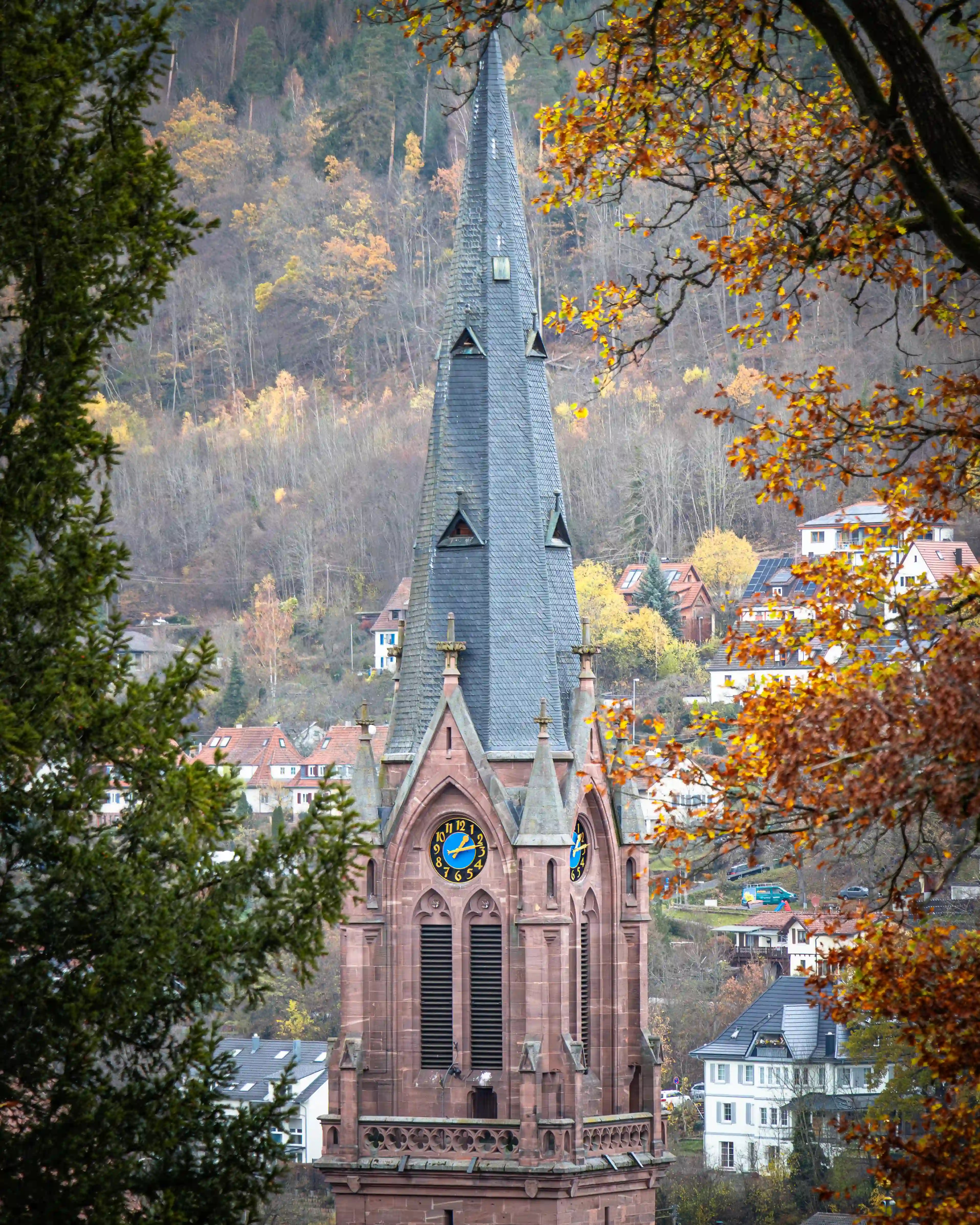
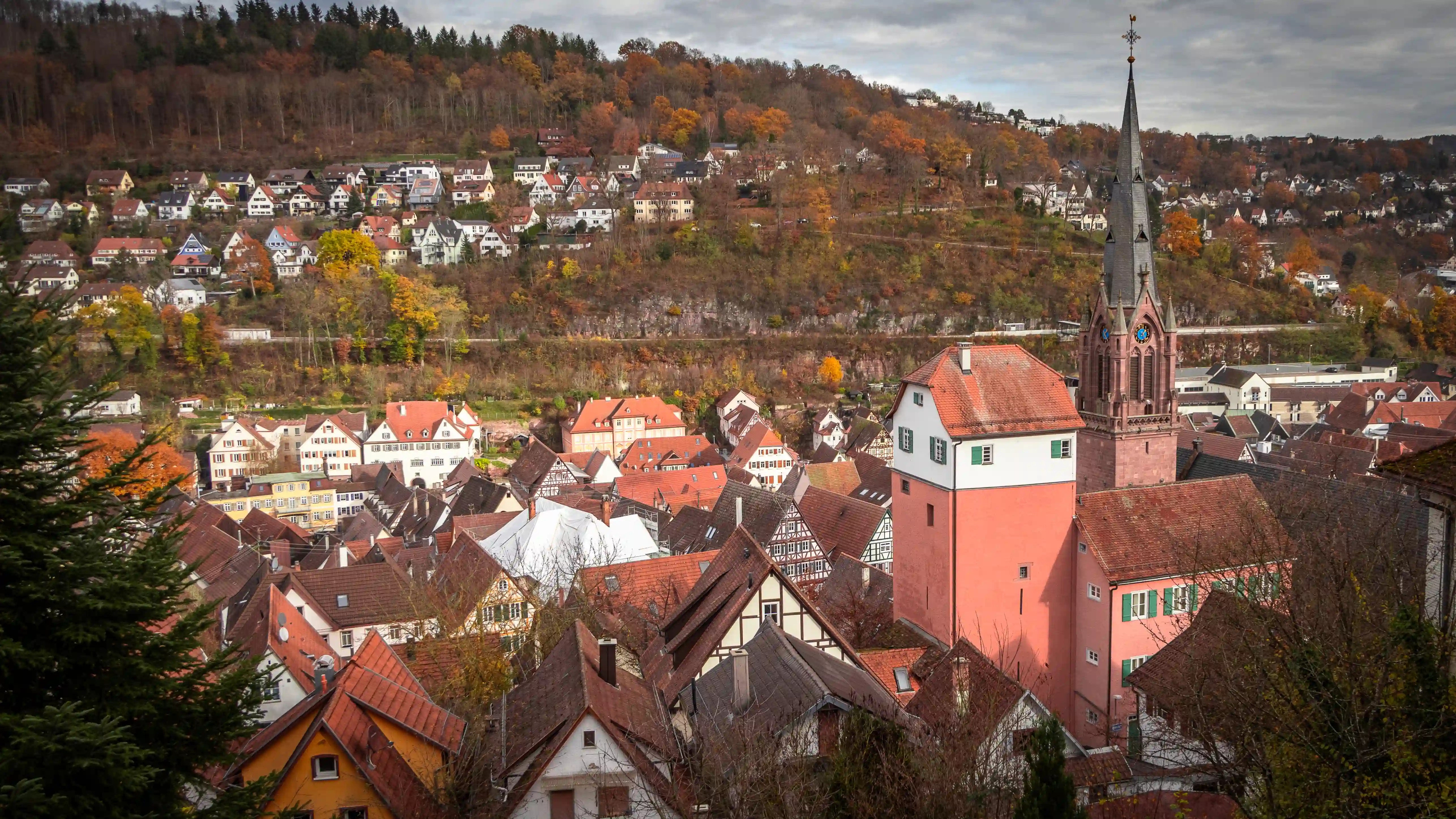
From the town center, we continued up toward the Stadtgarten, a landscaped hillside park with lovely views over the rooftops. The climb isn’t long, but it offers a great vantage point to photograph Stadtkirche St. Peter und Paul, whose neo-Gothic spire rises above the old town and can be seen from many parts of Calw.
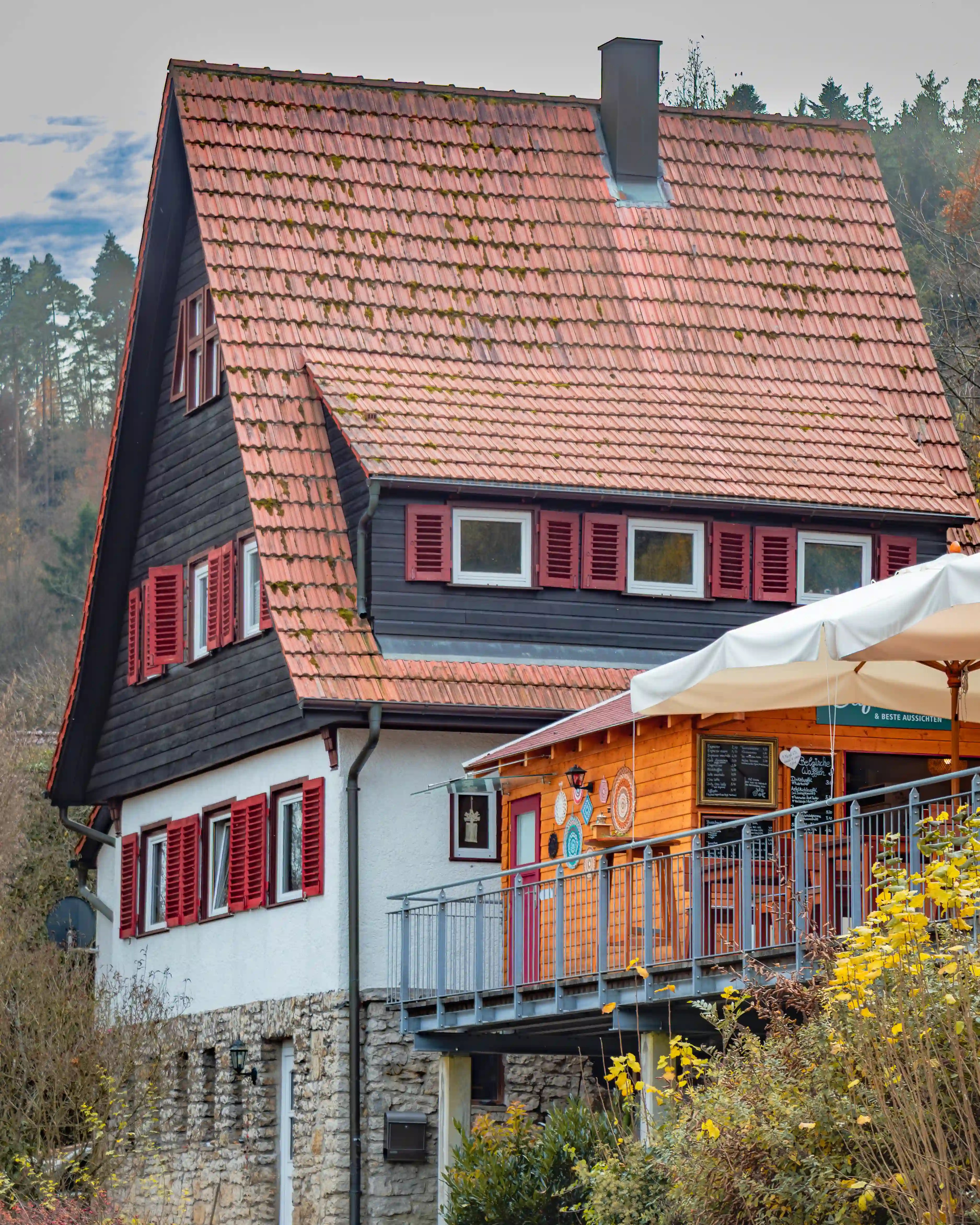
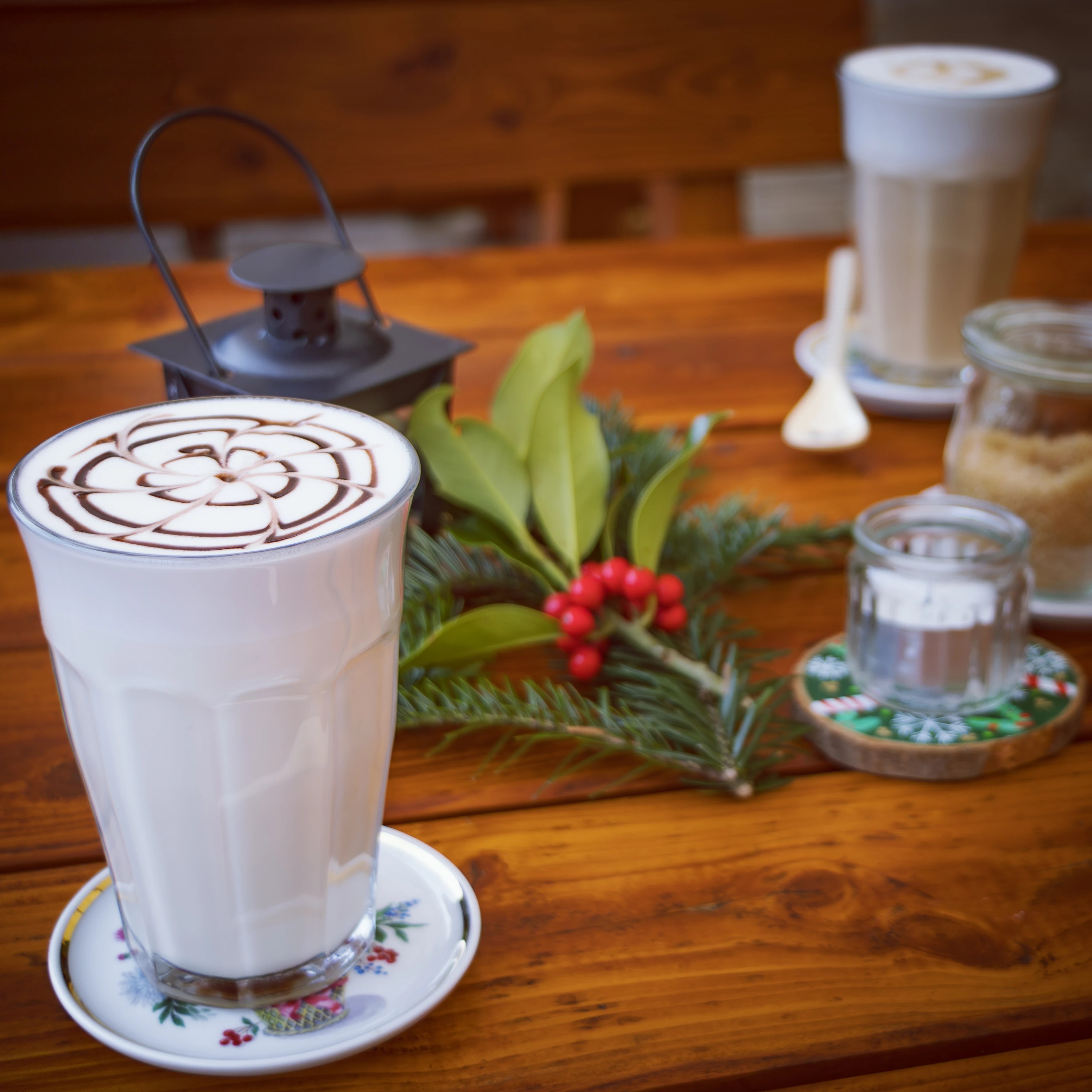
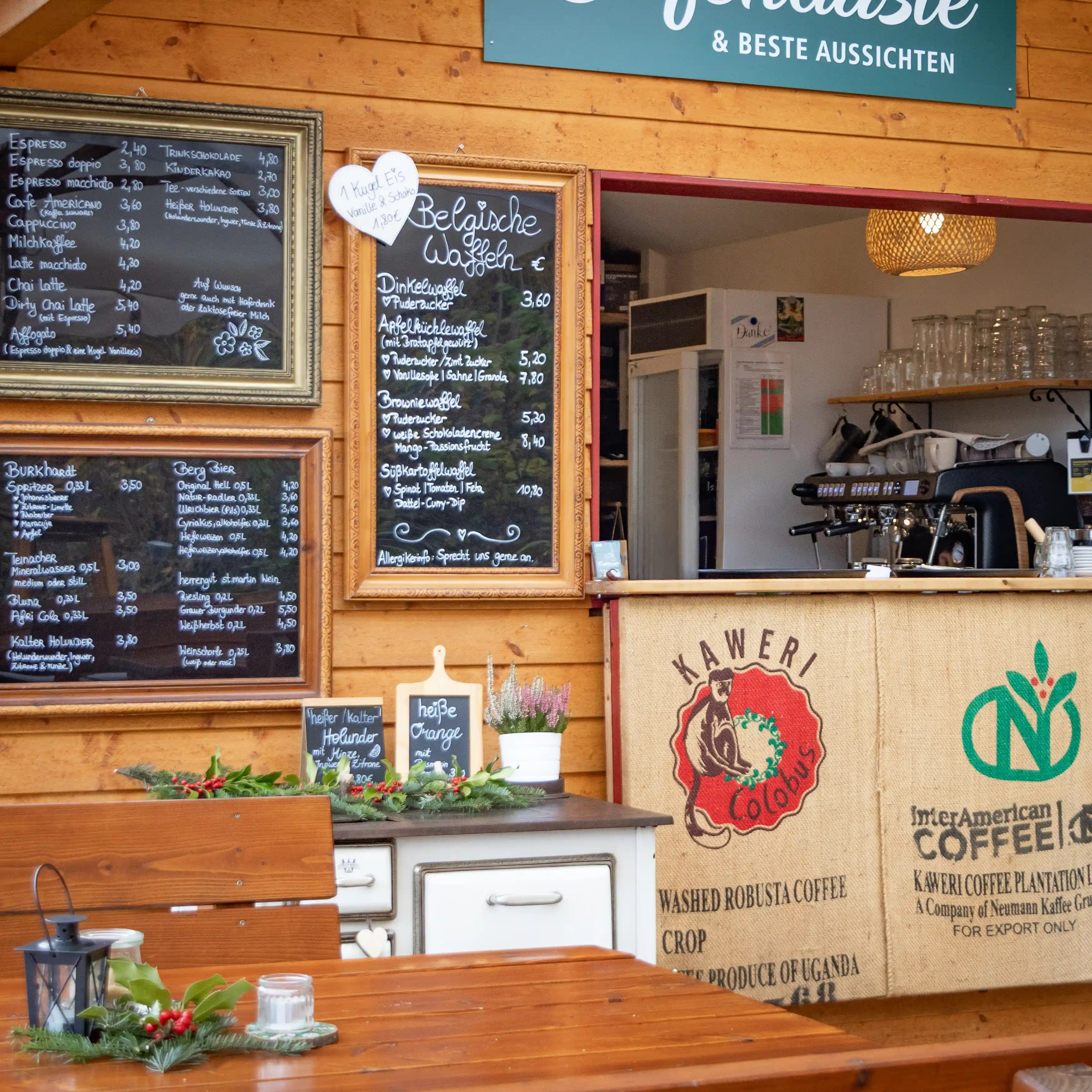
Just beyond the garden sits Caféhäusle & Beste Aussichten, a small café perched above Calw with a panoramic view of the valley. We stopped for coffee and enjoyed seeing Calw from above. The terrace alone makes the climb worthwhile.

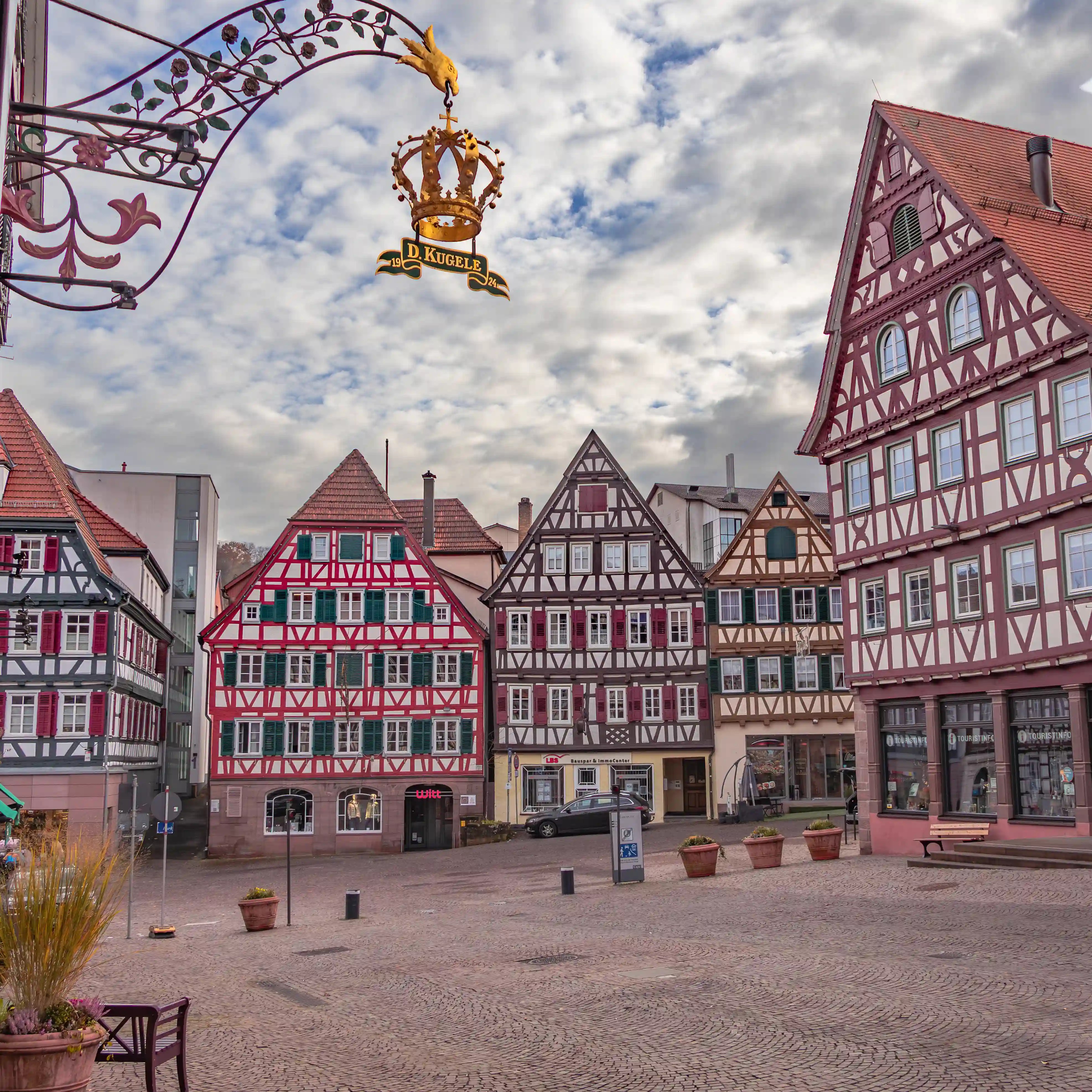
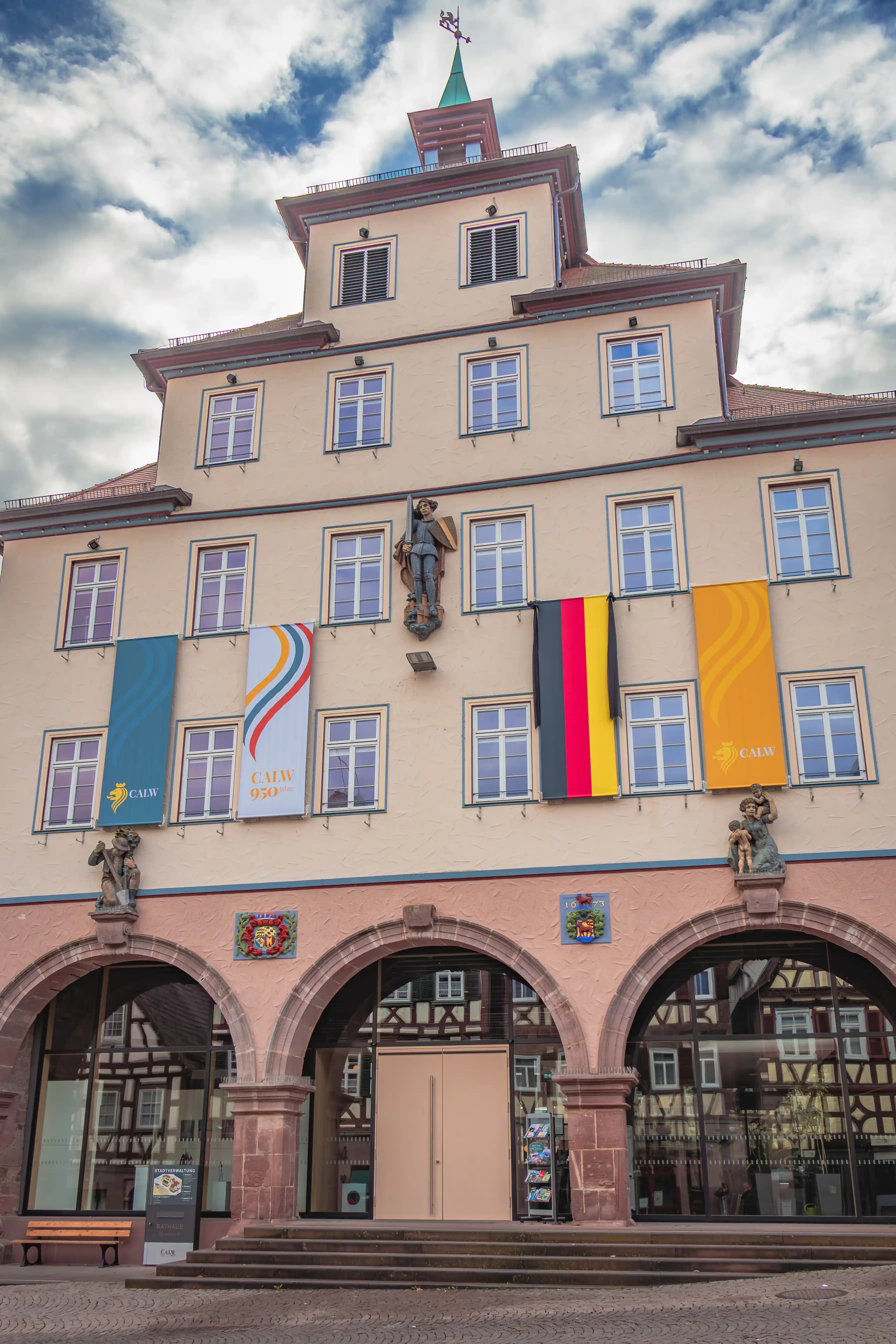
Calw’s Marktplatz, the town’s central square, is framed by richly decorated timber-framed buildings and the Rathaus, the historic town hall whose façade is decorated with symbolic figures representing civic values such as protection, community, and care. It’s a natural gathering point and a great location for photos, thanks to the colorful façades around the square and the central fountain. During the holiday season, the Marktplatz becomes an especially charming backdrop for Calw’s Christmas Market.

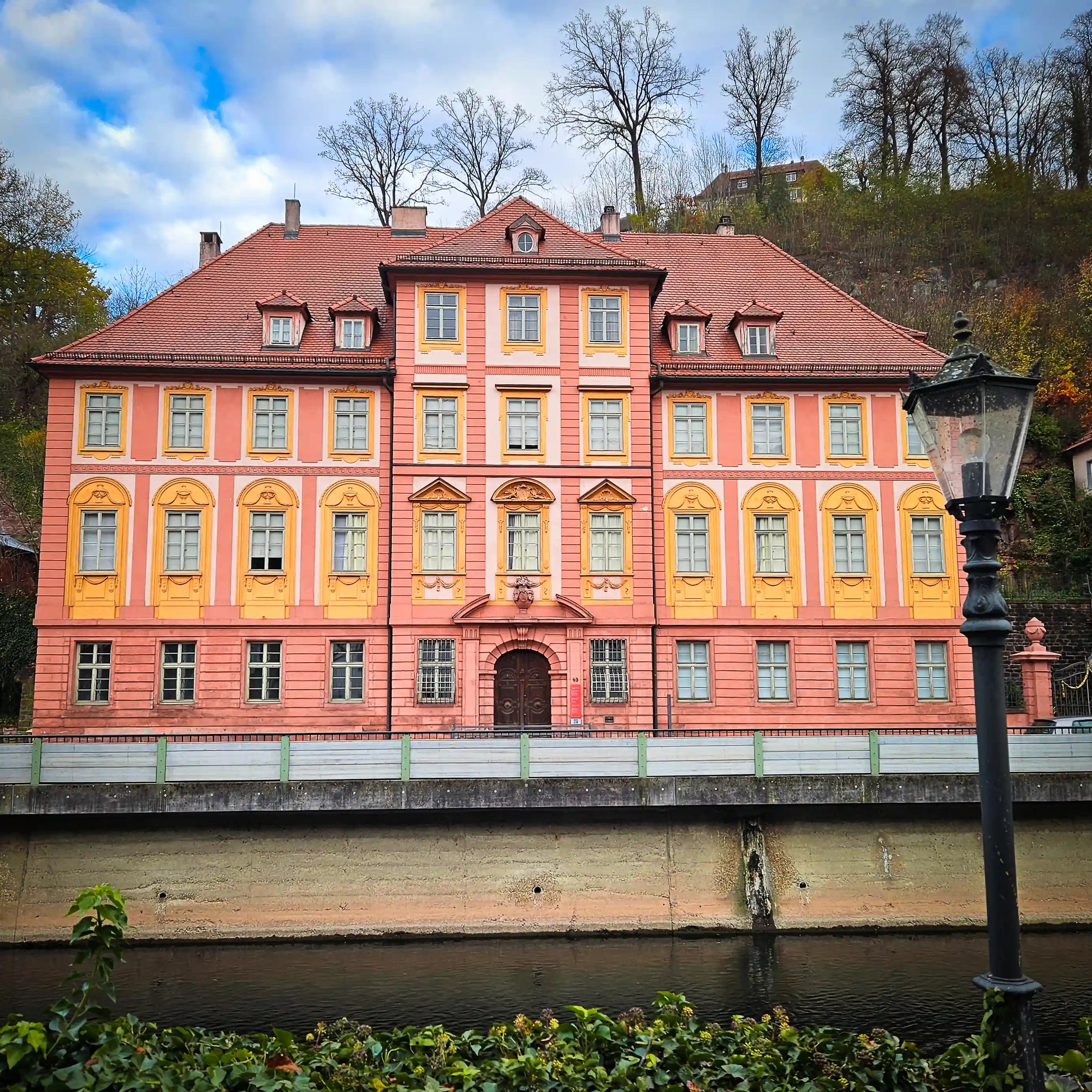
Across the river, Palais Vischer is an elegant late-18th-century palace built by Johann Martin Vischer, a leading figure in Calw’s timber trade. Today it serves as the Museum of the City of Calw, where 18 rooms present exhibits on the town’s history and influential families, and some of the interiors still reflect the original Louis-seize décor.
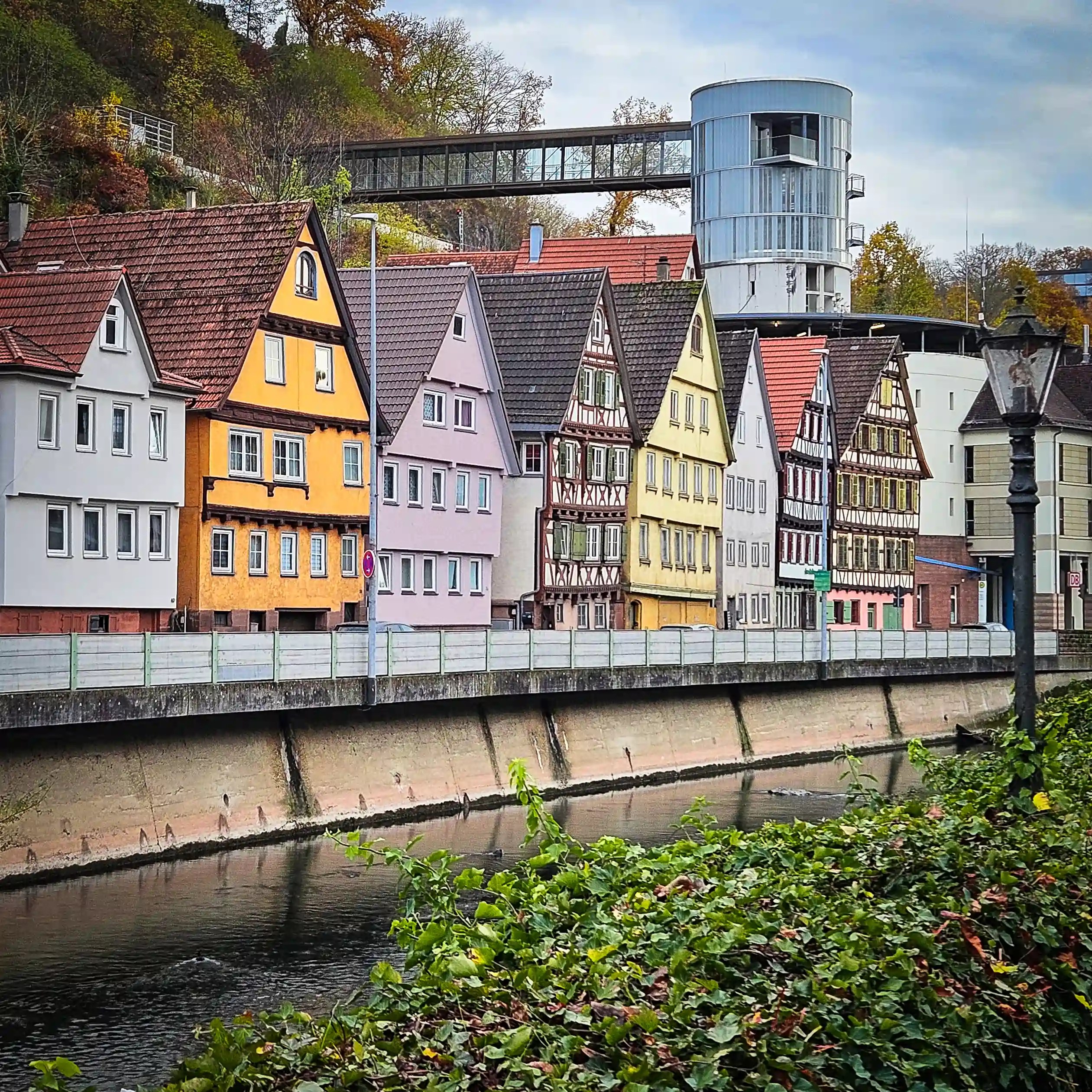
One of the most enjoyable parts of our stroll was along the Nagold River, where ducks, swans, and pigeons gathered near the water. The reflections of the houses on the river and the quiet path along the bank made it a lovely place to pause, and the wildlife added a bit of extra charm to an already picturesque scene.



Final Thoughts
Our November visit to Calw wasn’t packed with activities—and that’s exactly what made it so enjoyable. With its half-timbered houses, hillside views, literary history, and riverside paths, Calw is one of those towns that invites you to explore with your camera and simply enjoy being there.
Other Things to Do in the Area
If you’re planning a longer visit or returning to the region, there are several nearby places worth exploring:
Hirsau
Just a short distance from Calw, Hirsau is home to the impressive monastery ruins and the surrounding Black Forest trails. I wrote a full blog post about visiting Hirsau and hiking in the area, which pairs beautifully with a day trip to Calw.
Other nearby attractions include:
- Bad Liebenzell – Known for its thermal spa facilities and the hilltop Burg Liebenzell, this town is only about 7.5 km / 4.7 mi north of Calw (roughly a 10-minute drive).
- Burgruine Zavelstein – About 10 km / 6.2 mi southwest (about a 15-minute drive) from Calw, the ruins of Zavelstein Castle rise above the Teinach Valley. From the tower, you get sweeping views of the Black Forest, the surrounding hills, and the half-timbered town of Zavelstein below. The site is especially popular in early spring when the nearby nature reserve bursts into bloom with thousands of wild crocuses during the annual Zavelsteiner Crocus Blossom.
- Nagold – A stylish town with a mix of modern cafés and historical architecture, also set along the river. It lies about 28 km / 17 mi south of Calw (approximately a 30-minute drive).
These destinations make it easy to turn a single outing into a full weekend of exploring the northern Black Forest.
Location & Getting There
Calw lies about 48 km / 30 mi from Stuttgart, making it an easy day trip.
- By car: The roughly 45-minute drive takes you west toward the Black Forest, and parking is available in several garages close to the old town.
- By public transport: From Stuttgart, you can reach Calw by taking the S-Bahn toward the northern Black Forest and transferring to a connecting bus, with a total travel time of about 70 minutes. If you have the Deutschland-Ticket, the entire route is covered, making it a convenient option if you prefer not to drive.
Seasonal note: A few places in Calw, including some cafés and smaller museums, close or run limited hours in winter. If you’re visiting in the colder months, it’s helpful to check opening times in advance.
Have you visited Calw or explored other towns in the northern Black Forest? I’d love to hear your thoughts, questions, or favorite memories in the comments below!


Leave a reply to mayakory Cancel reply