








Just 15 minutes from the salt mine town of Bad Friedrichshall and about an hour from Stuttgart, Bad Wimpfen is a storybook town you’ve likely never heard of. Recently nominated as one of the top five contenders for the 2025 TRAVELBOOK Award for “Most Beautiful Old Town in Germany,” this historic gem quickly became one of our favorite discoveries along the scenic Burgenstrasse—one of Germany’s oldest and most charming holiday routes.

Bad Wimpfen: From Ancient Routes to Spa Retreat
Bad Wimpfen has been a place of settlement for thousands of years, with archaeological finds tracing human activity here back to the Neolithic and Bronze Ages. Its strategic location at the fork of ancient trade routes—linking France, the Danube, and central Germany—made it a natural crossroads long before recorded history.
In Roman times, a military fort stood here along the empire’s northern frontier. Centuries later, Wimpfen rose to prominence in the medieval period and developed close ties with the emperors of the Holy Roman Empire. The town’s status as a Free Imperial City by the 1300s meant it governed itself independently—a rare privilege in the era. Though it suffered during the Thirty Years’ War, much of its medieval charm remains intact. In the 1800s, the discovery of salt springs led to its rise as a spa destination, and in 1930, it officially became Bad Wimpfen—Bad meaning “bath” in German.
A Walk Through Time in Bad Wimpfen’s Old Town
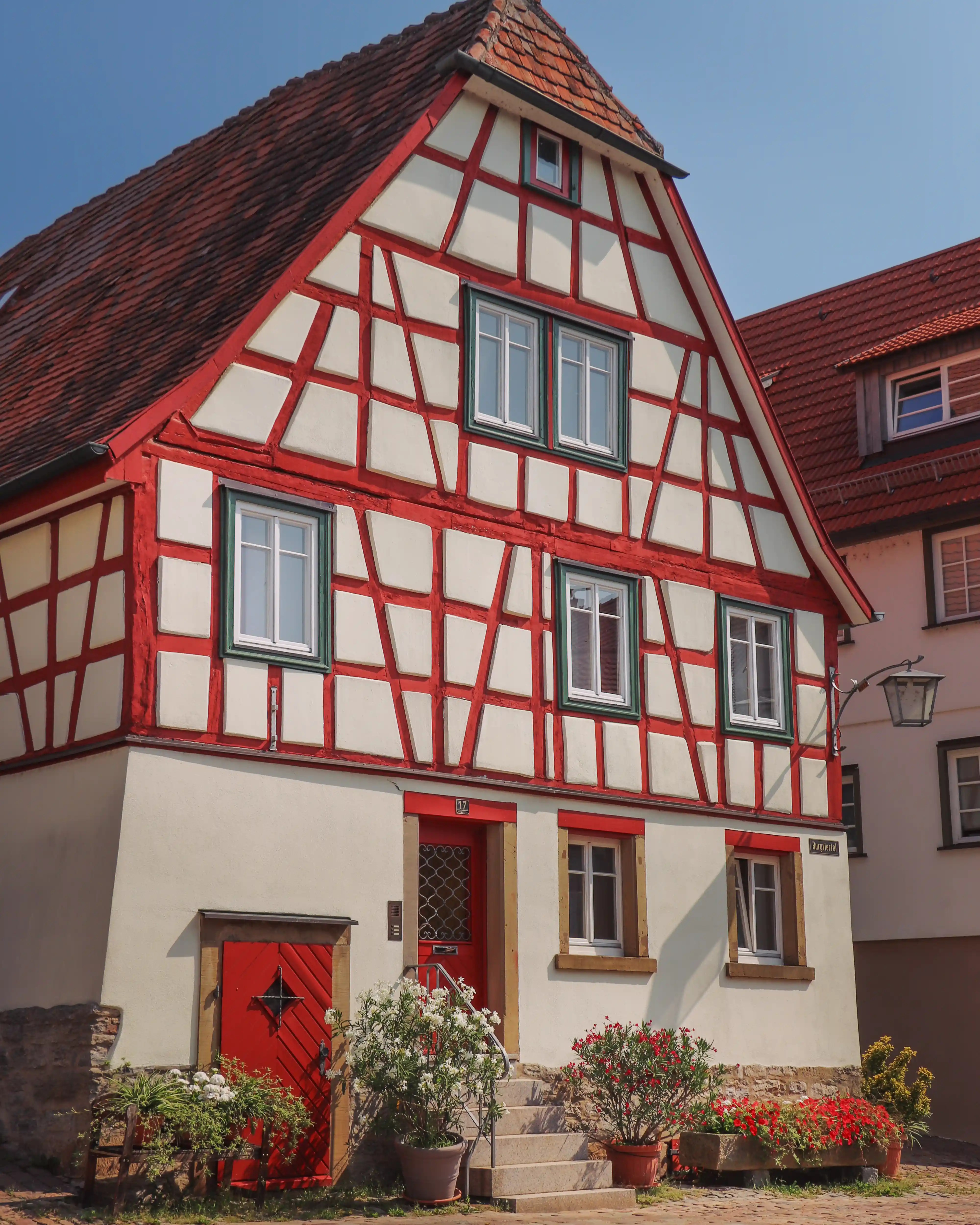
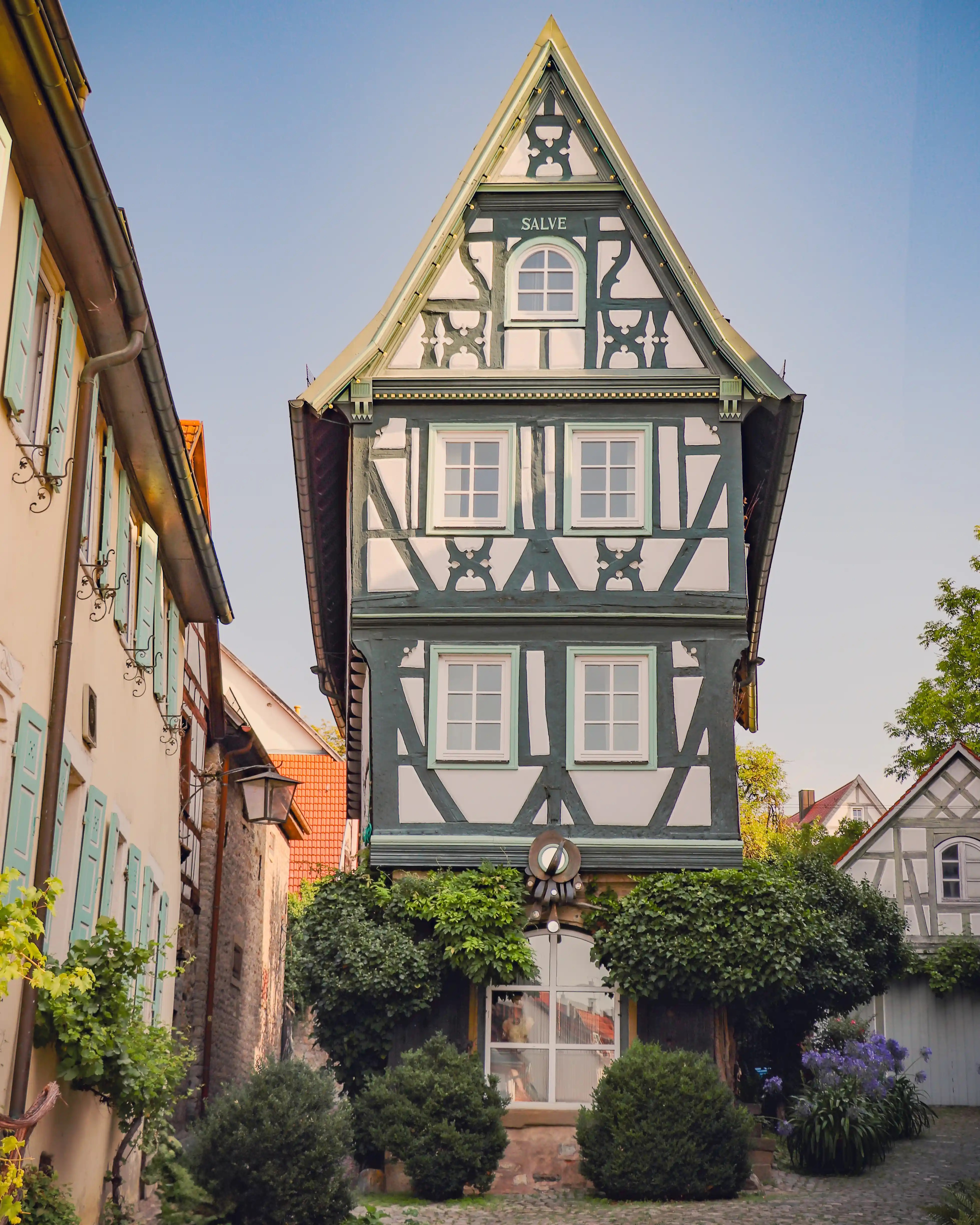
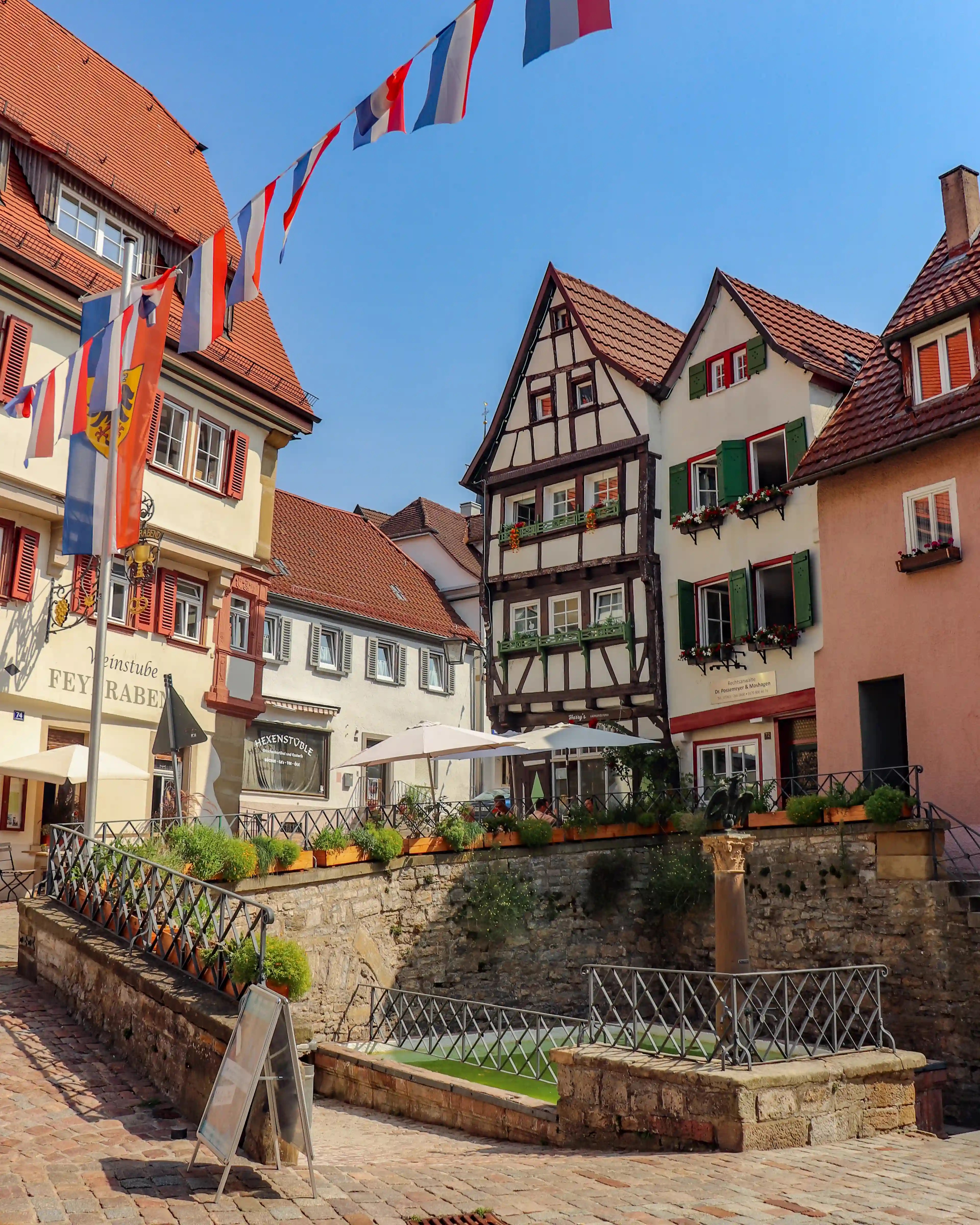
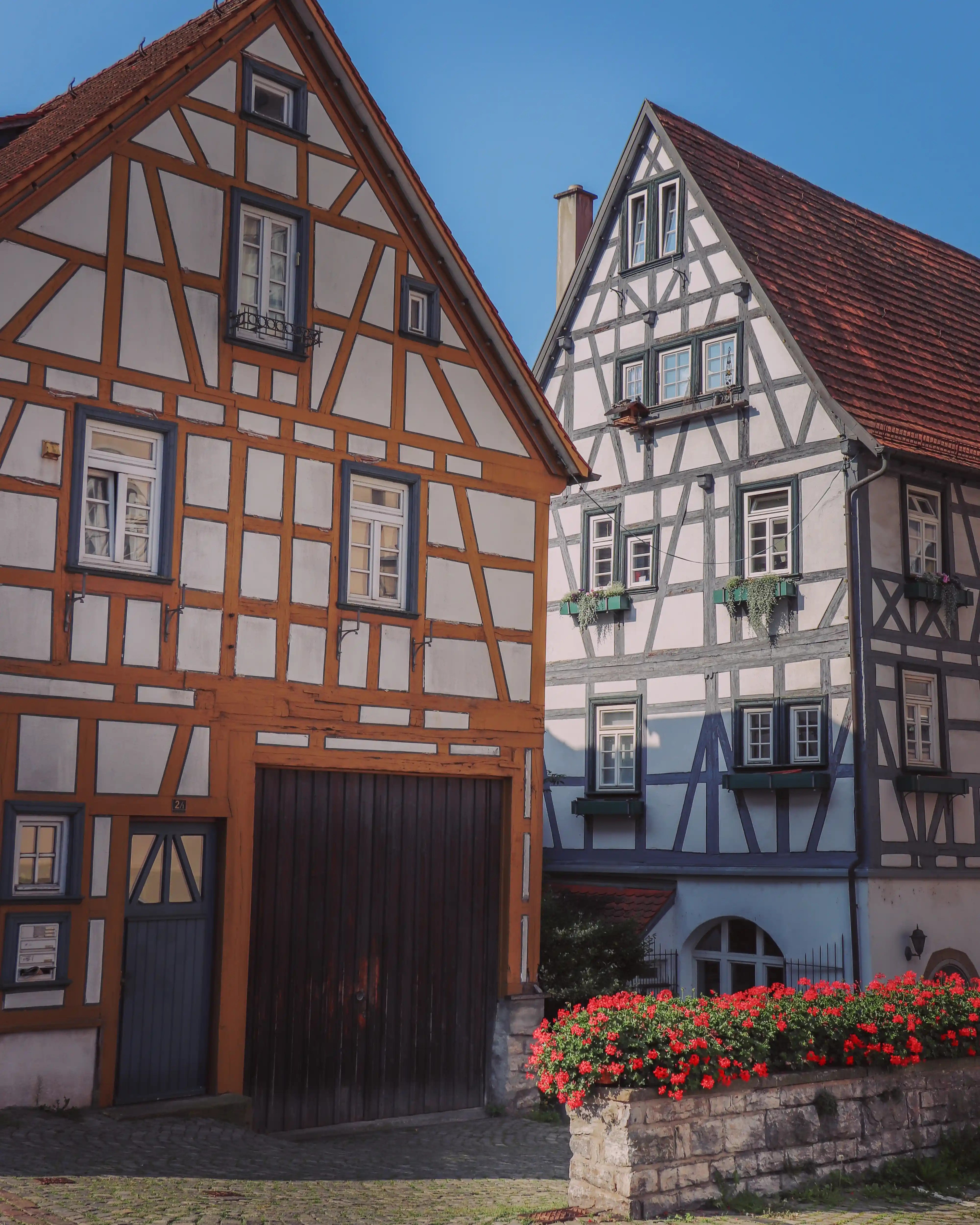
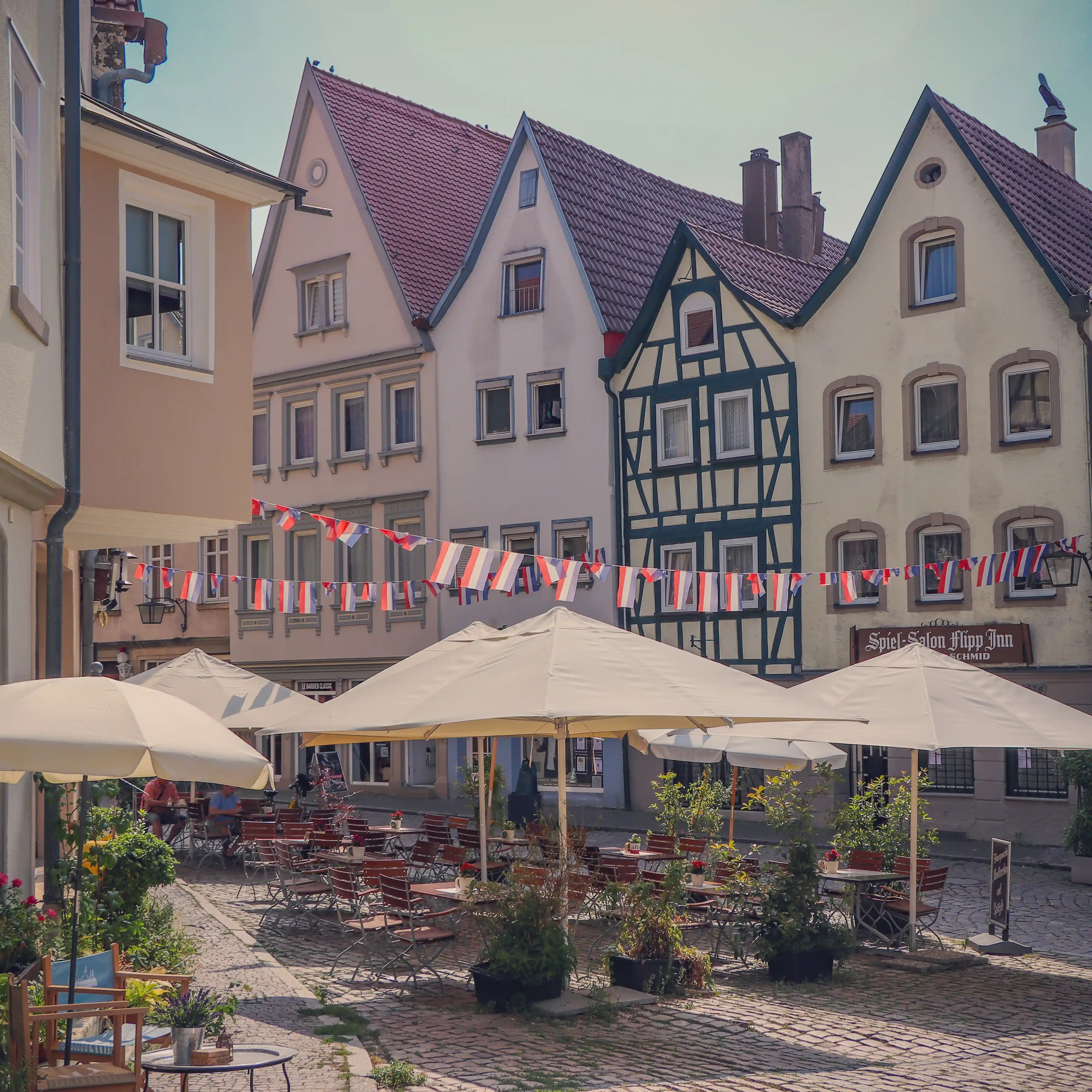
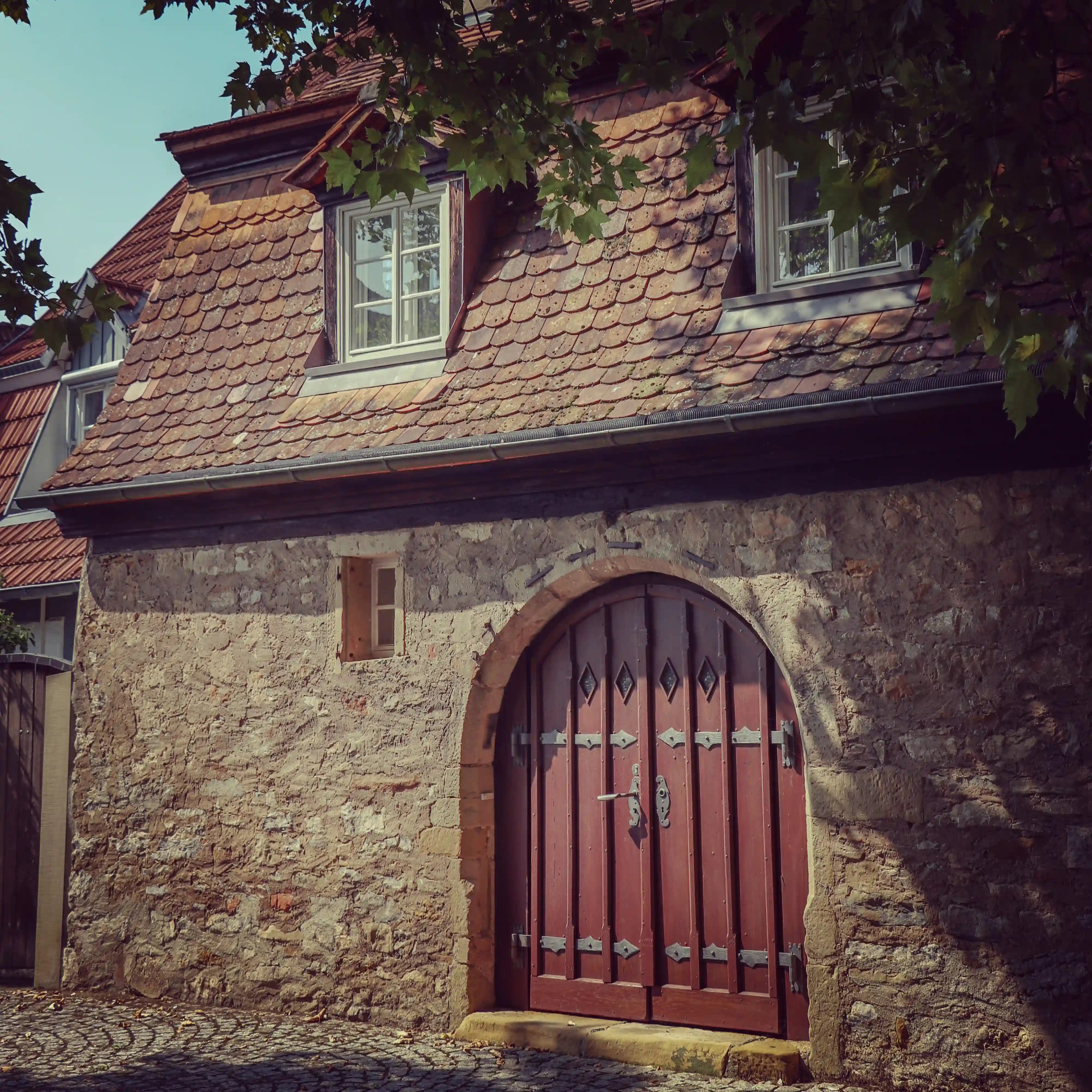
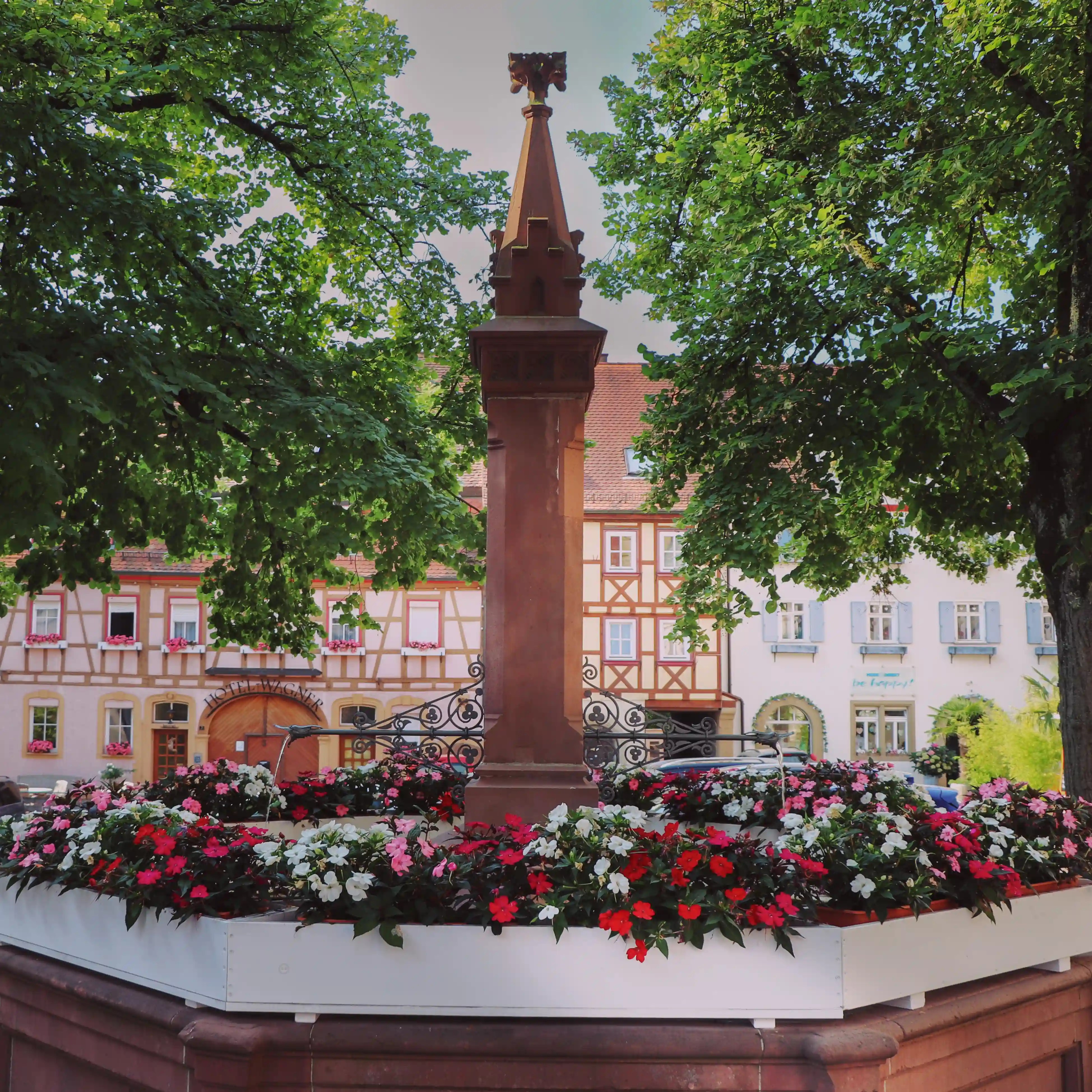
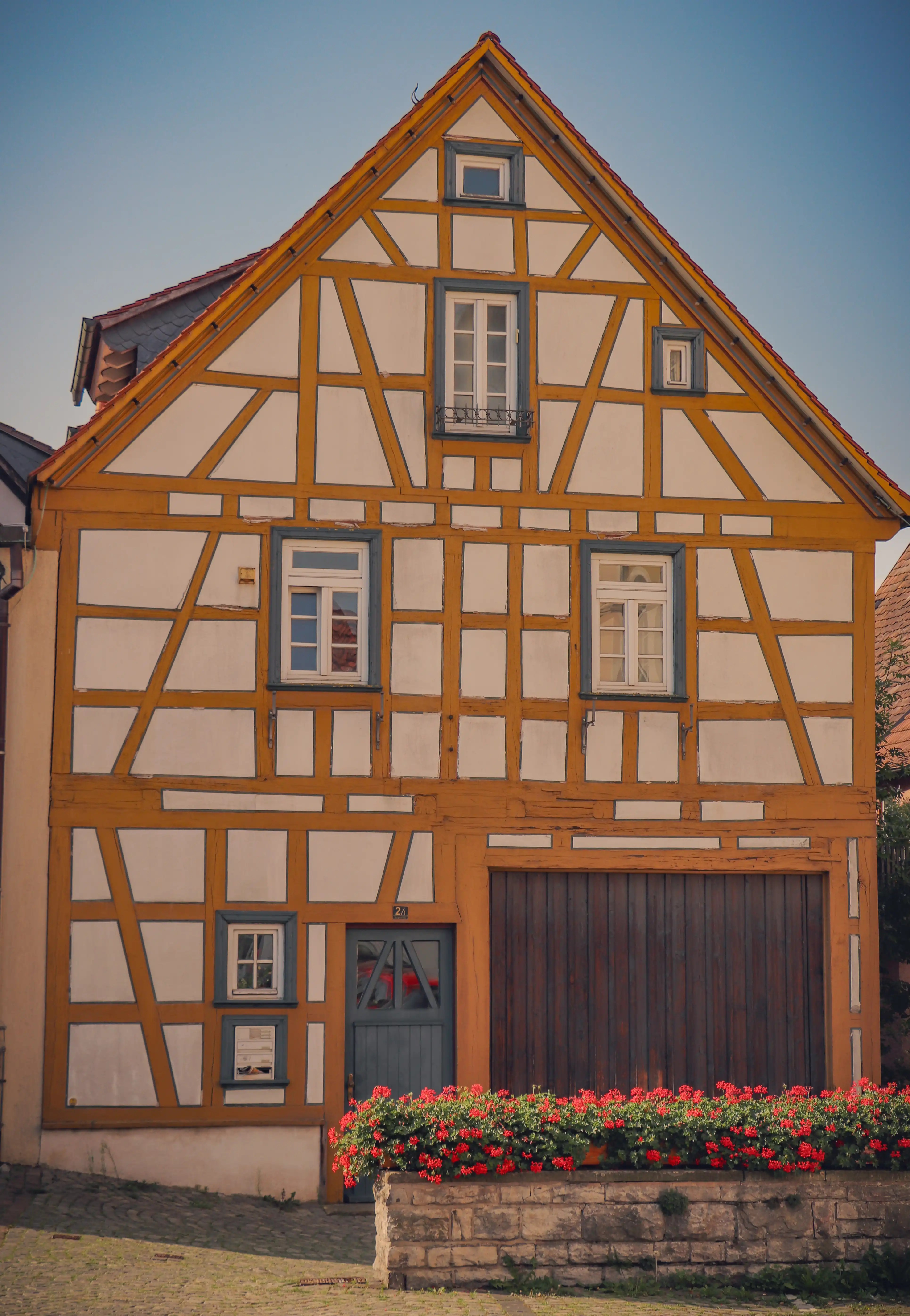
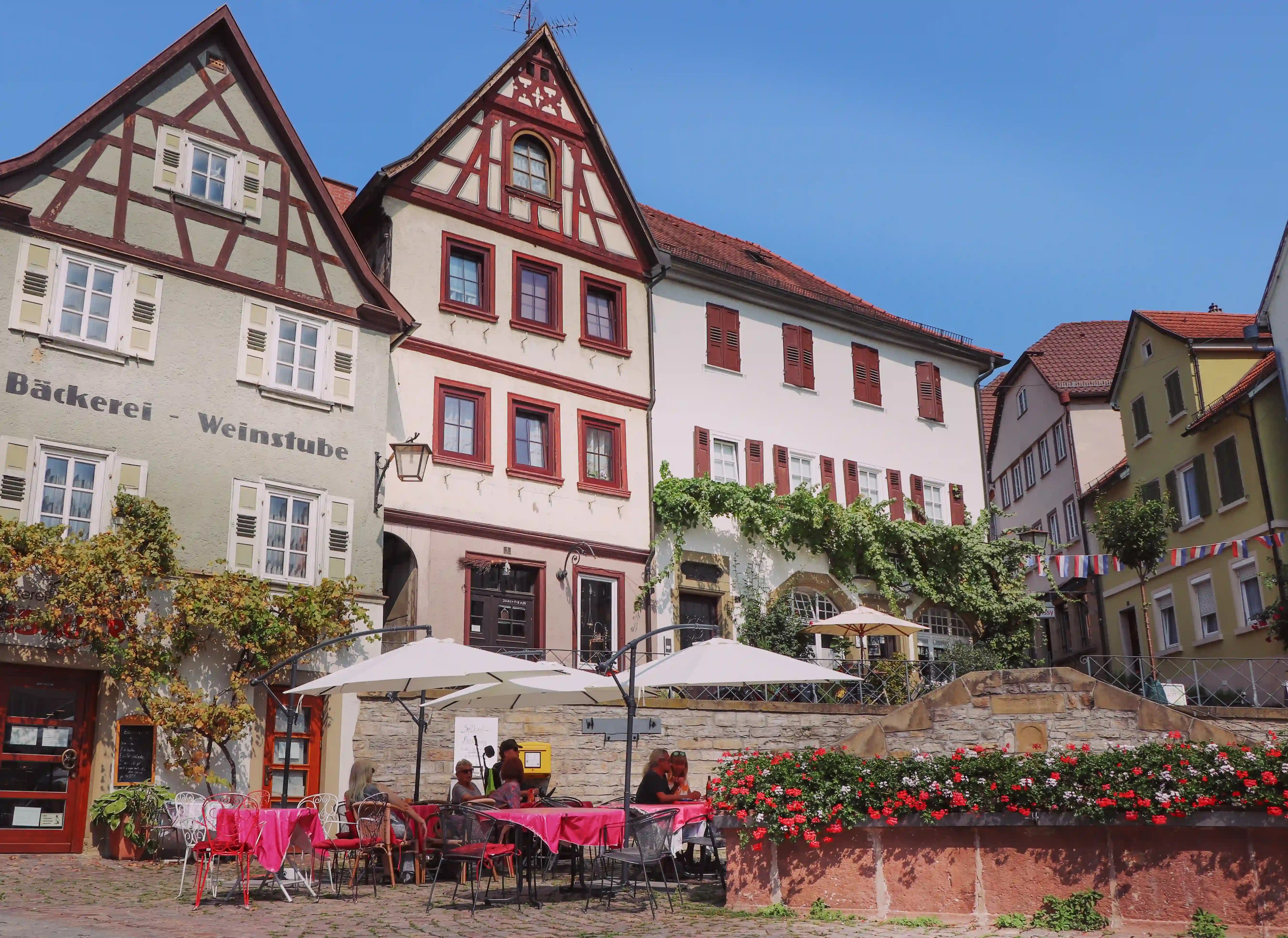
With an early start, we arrived before the streets filled, giving us a peaceful window to explore the cobblestone lanes, pastel half-timbered houses, and sunlit courtyards. The medieval character of Bad Wimpfen is remarkably well preserved and a true joy to explore.
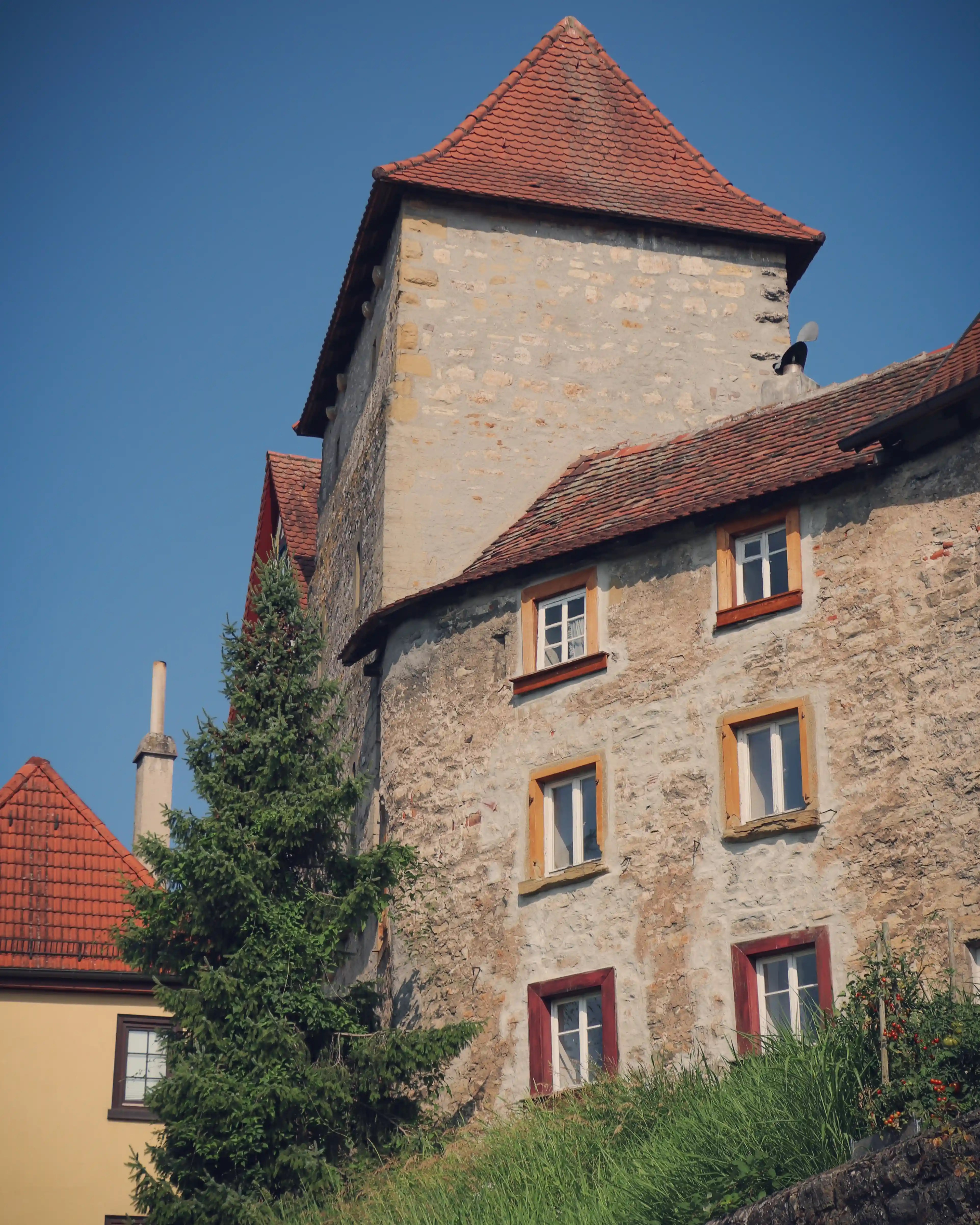
Towering above the Neckar River, the town’s skyline is still defined by the remnants of the Staufer imperial palace (Kaiserpfalz Wimpfen), once the largest of its kind north of the Alps. Built in the 12th and 13th centuries for visiting emperors, the complex includes several stone towers and historic buildings that transport you straight into the Middle Ages.
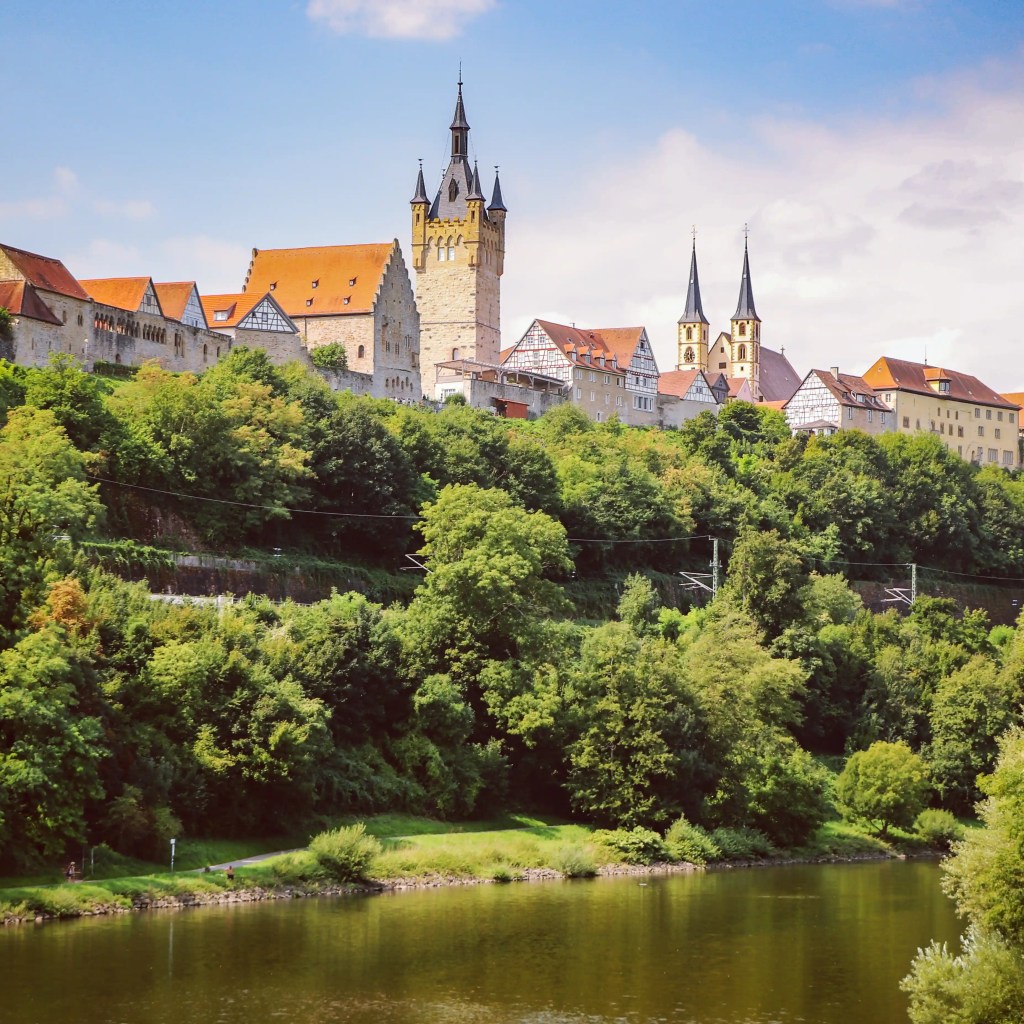
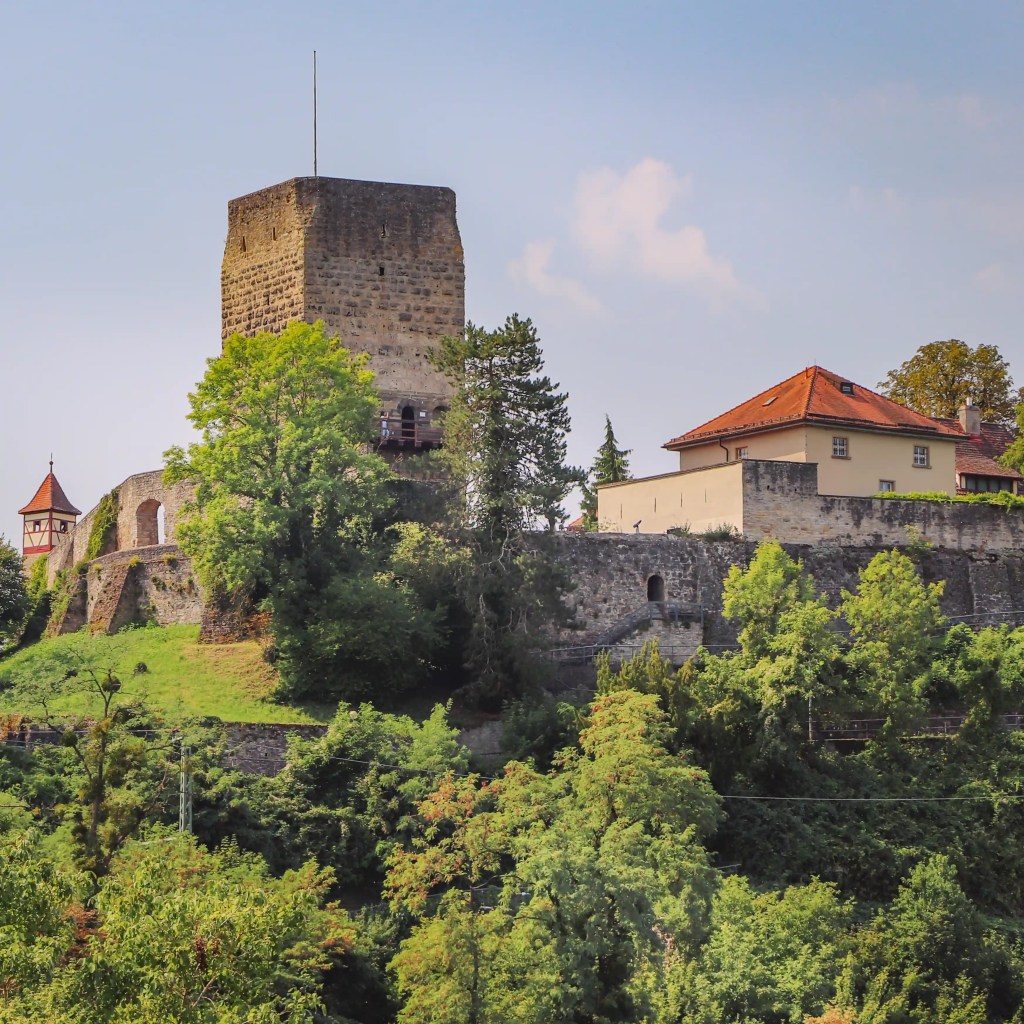
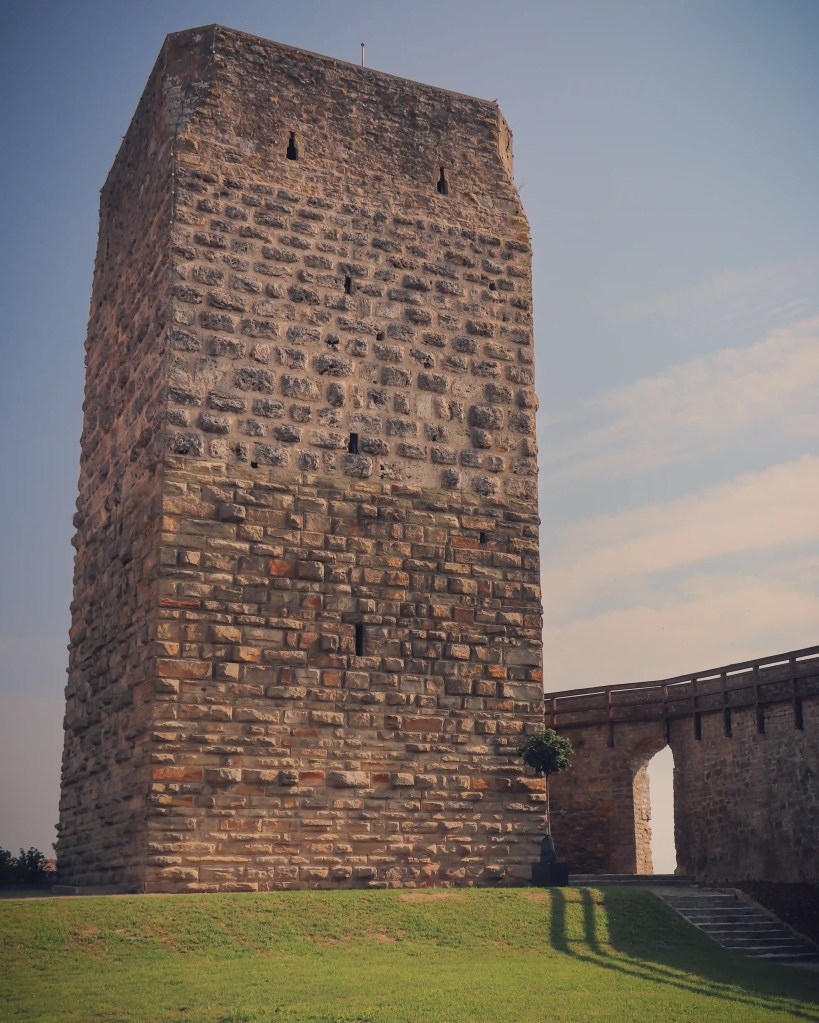
The Blue Tower (Blauer Turm), built around 1170 and once part of the town’s fortifications, is Bad Wimpfen’s most iconic landmark. After a steep climb to the top, visitors are rewarded with sweeping views—and perhaps a surprising encounter. The tower’s watchman, who sells tickets at the top, actually lives in the tower and has for decades, continuing what is believed to be the oldest still-active tower watch tradition in Germany.
One visitor I met shared a story from 20 years ago: a young boy, spotting the watchman’s long-haired daughter, turned to his mother and whispered, “Now I know where Rapunzel lives!” The story made our visit feel all the more magical.
Over the centuries, the Blue Tower has seen dramatic changes. It was badly damaged by fires in 1674, 1848, and most recently in 1984—but each time, it was lovingly restored and remains a living part of the town’s history.


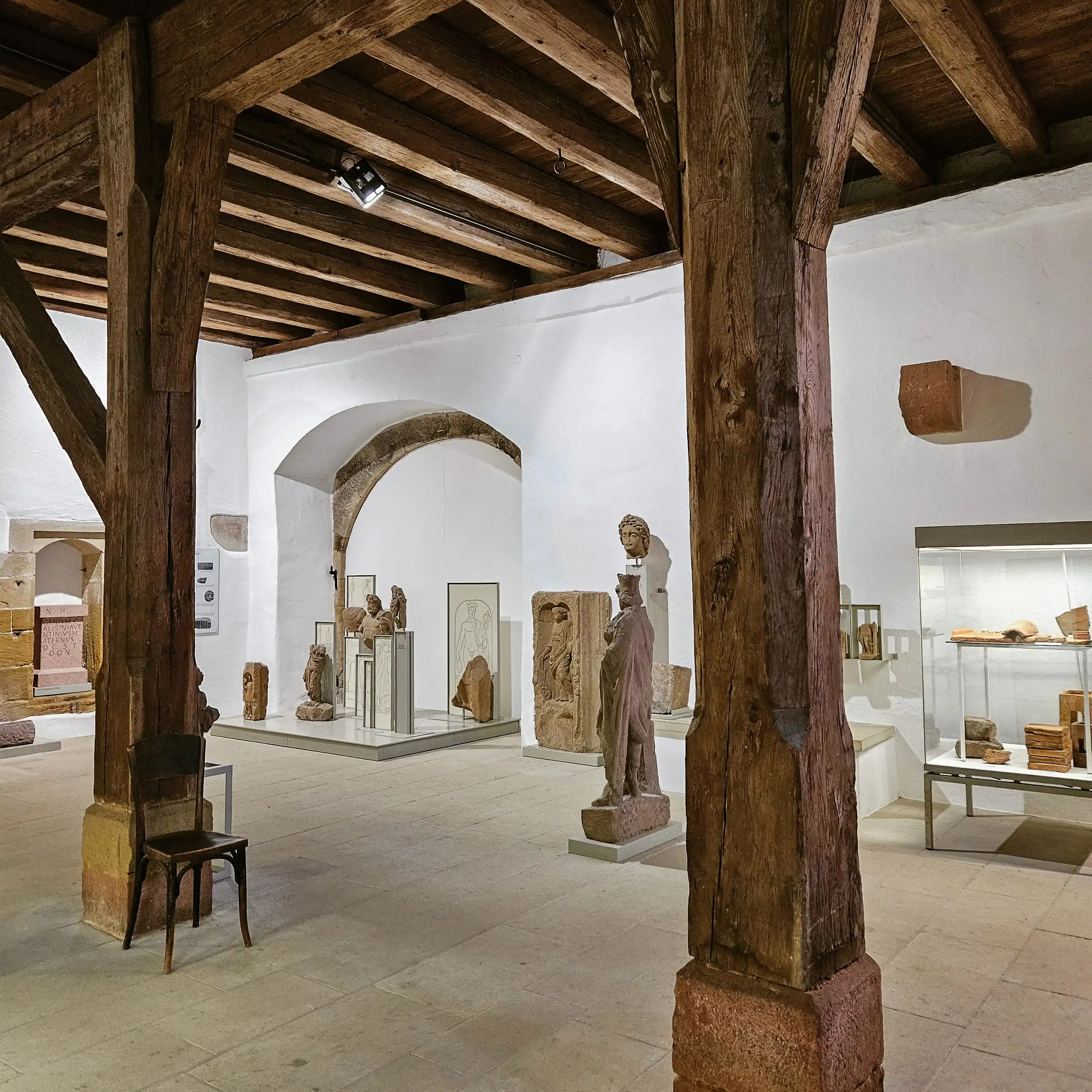
Nearby, the Stone House (Steinhaus)—one of the largest non-religious Romanesque buildings in Germany—now houses the History Museum (Historisches Museum). Inside, exhibits showcase Roman-era artifacts, medieval pottery, and archaeological finds from an early civilian settlement (vicus) that once existed beneath present-day Bad Wimpfen, offering a fascinating glimpse into the town’s ancient past.



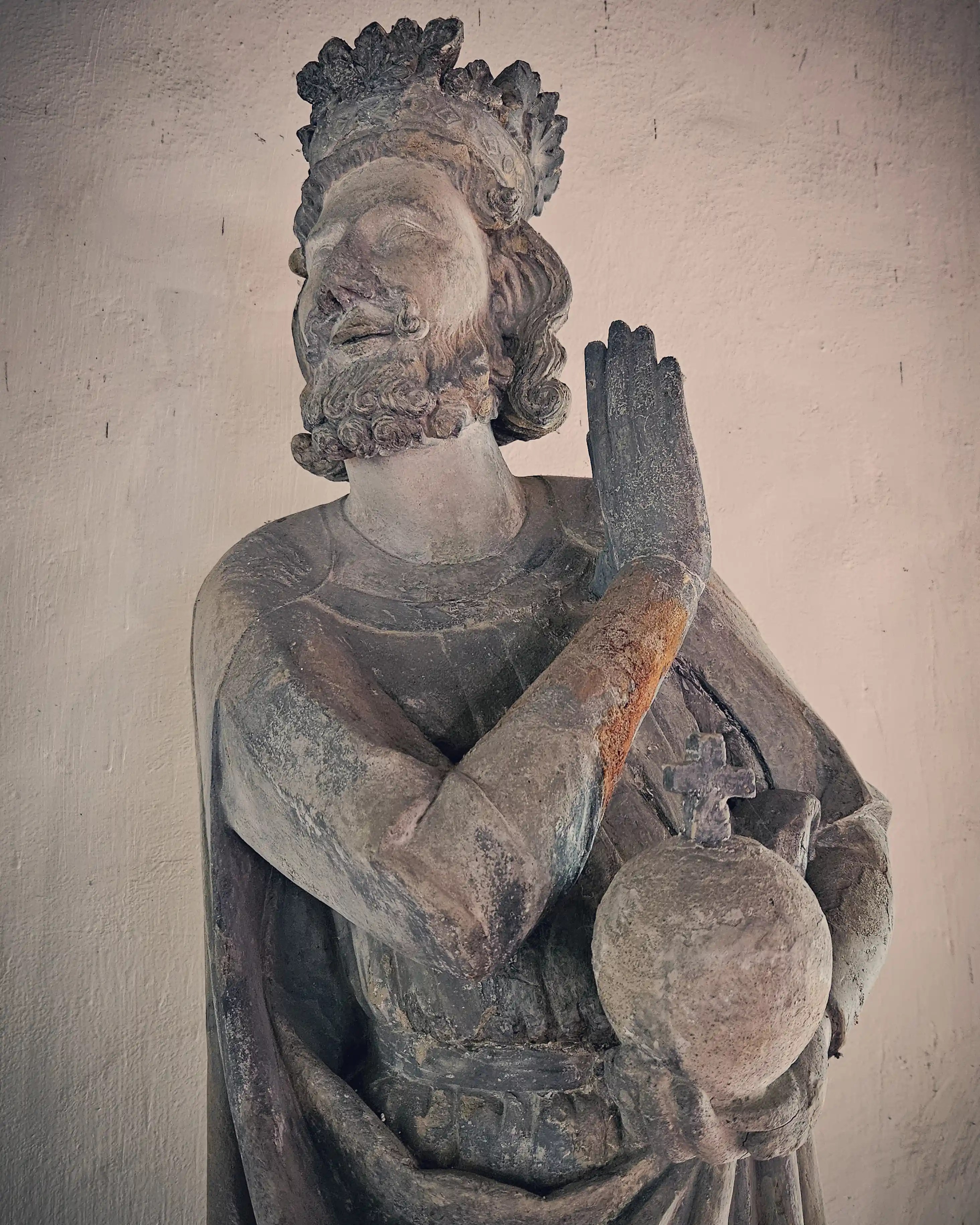

Just steps away, the Palace Chapel (Pfalzkapelle), dating to around 1200, offers a glimpse into the town’s ecclesiastical history and houses the Church History Museum (Kirchenhistorisches Museum).

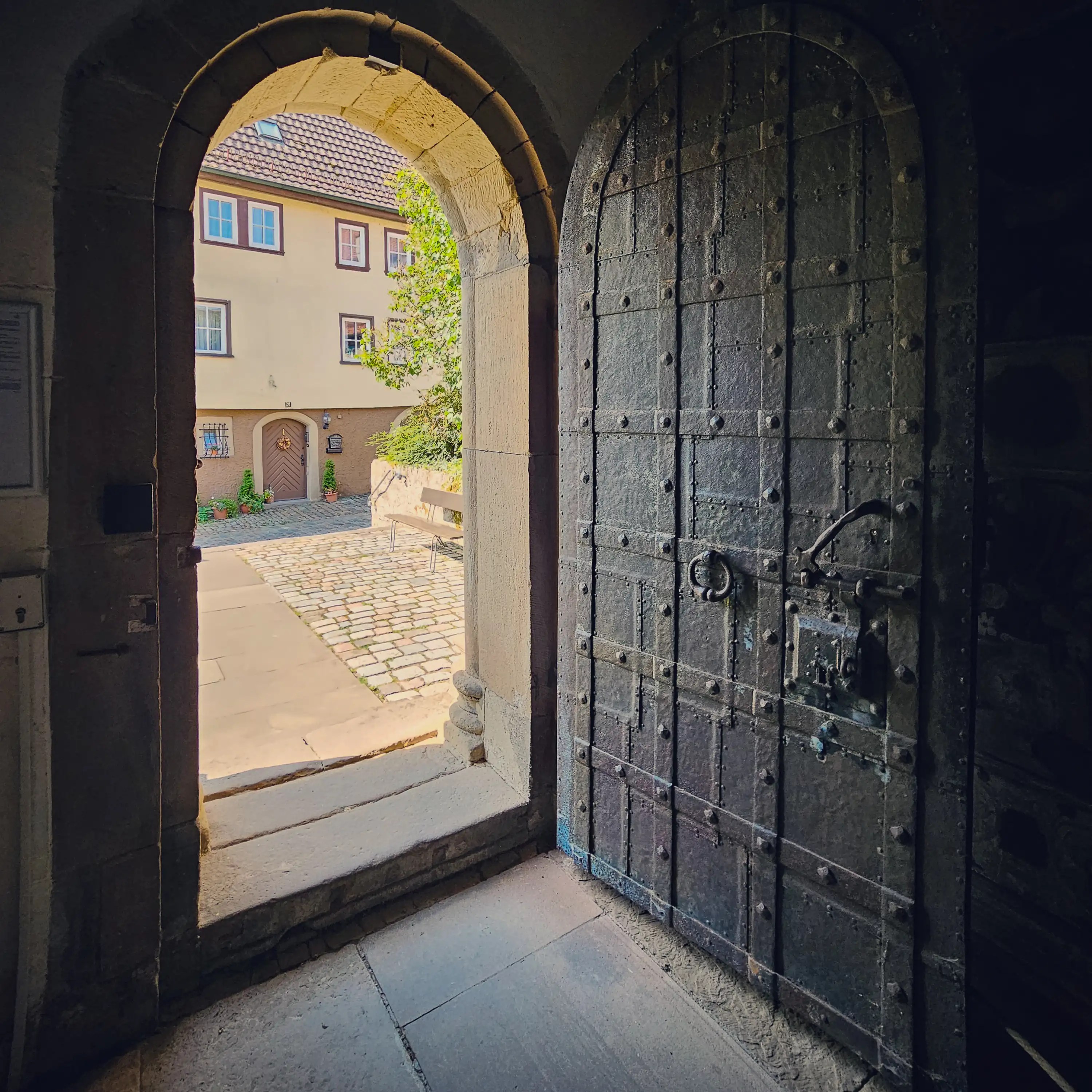

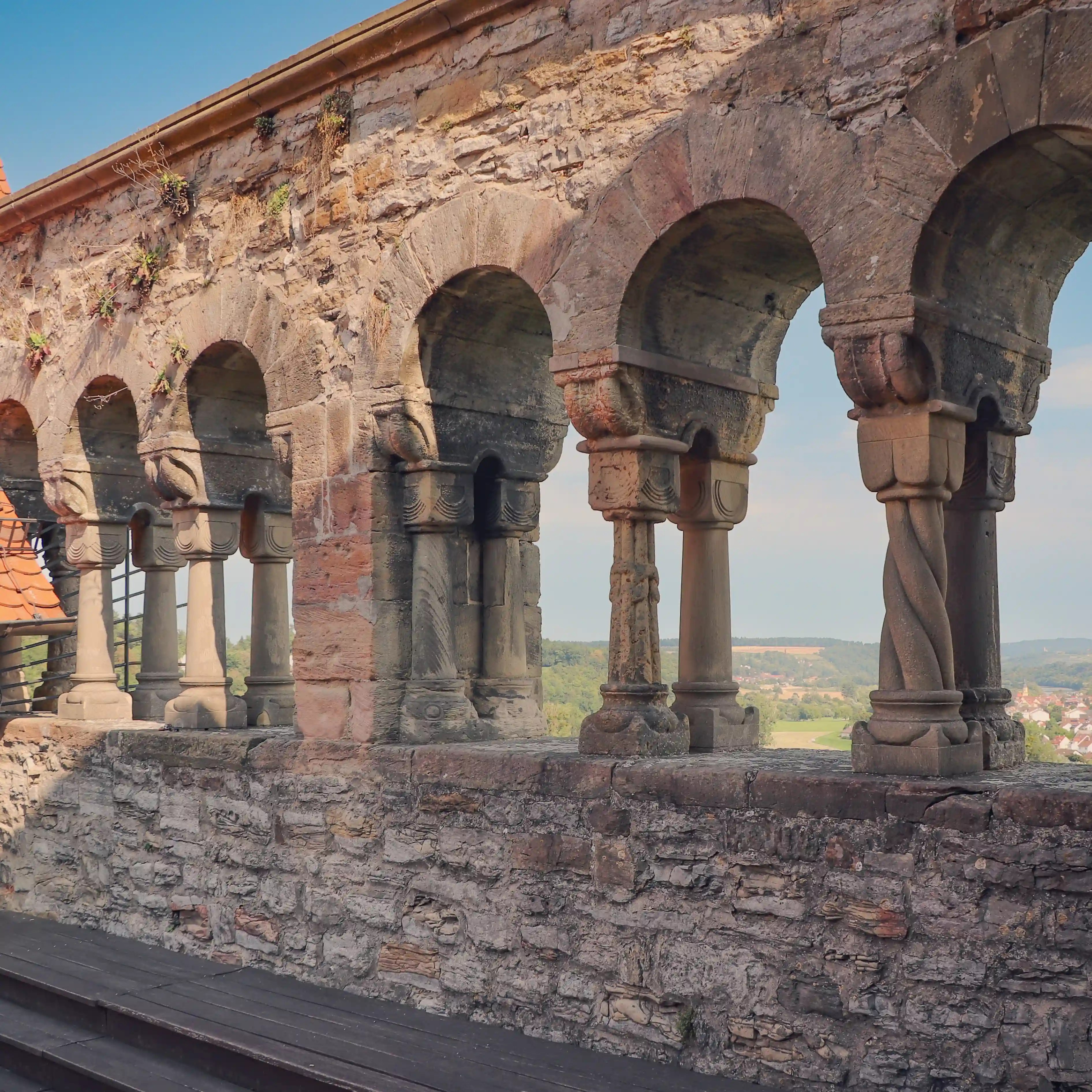
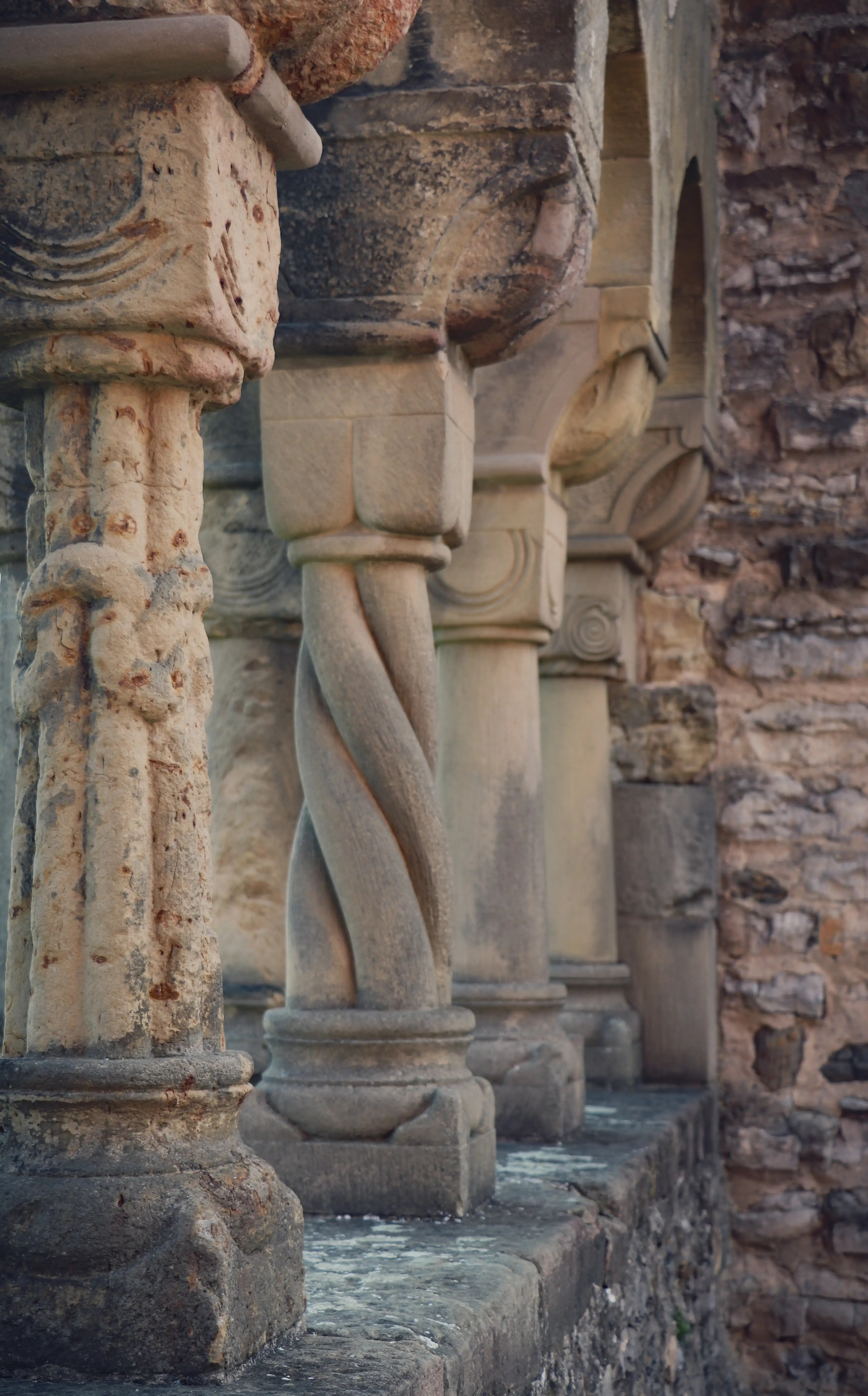
The adjacent Great Hall Arcades (Palas Arkaden)—a graceful gallery of arches along the northern side of the former great hall—once framed the ceremonial heart of the imperial complex, where traveling Staufer kings held court. Today, it’s one of the finest surviving examples of imperial Staufer architecture.

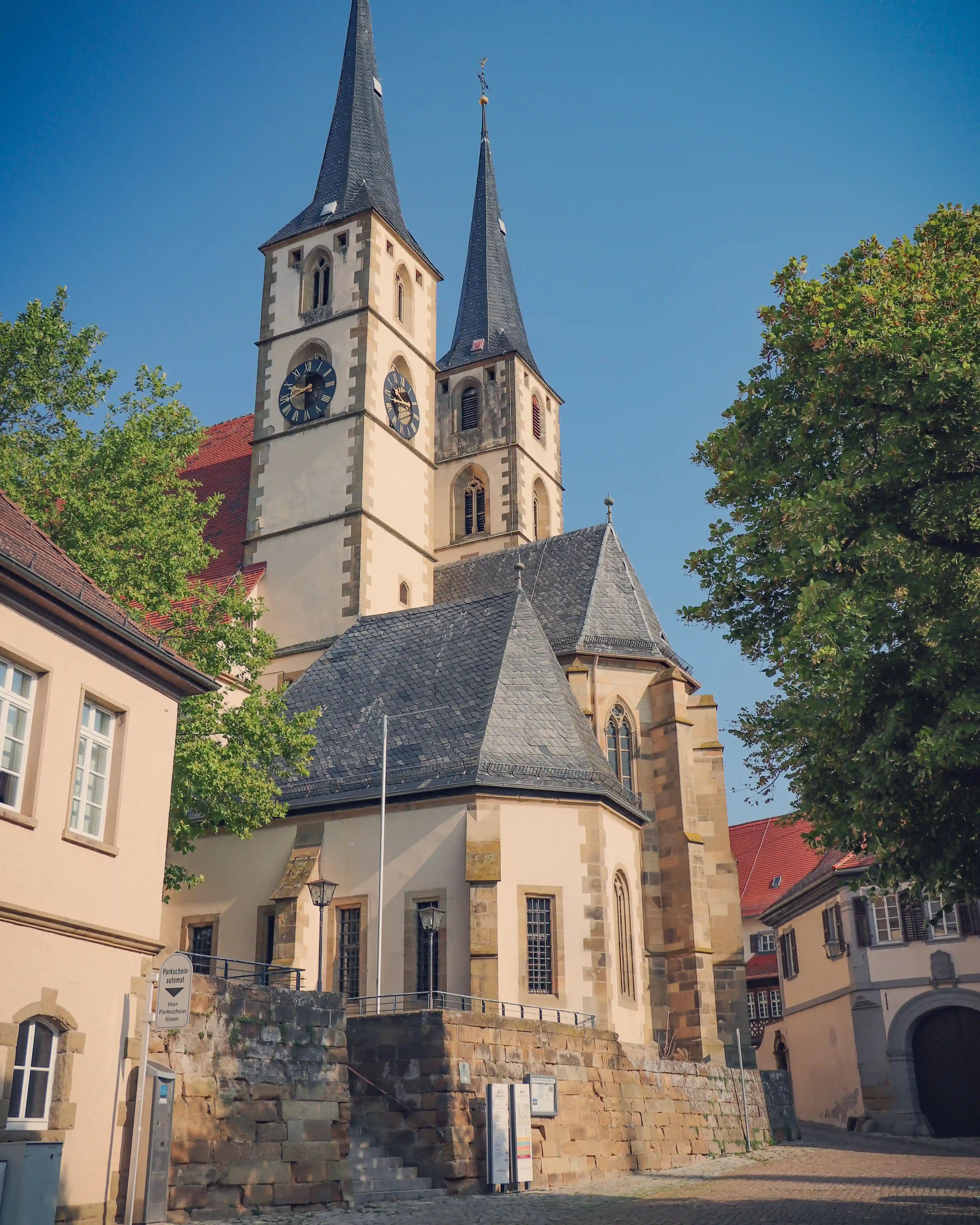
We also stepped inside the Evangelische Stadtkirche, the Protestant Town Church. Its light-filled nave, painted ceiling frescoes, and ornate baptismal font gave the church a serene and historic character.




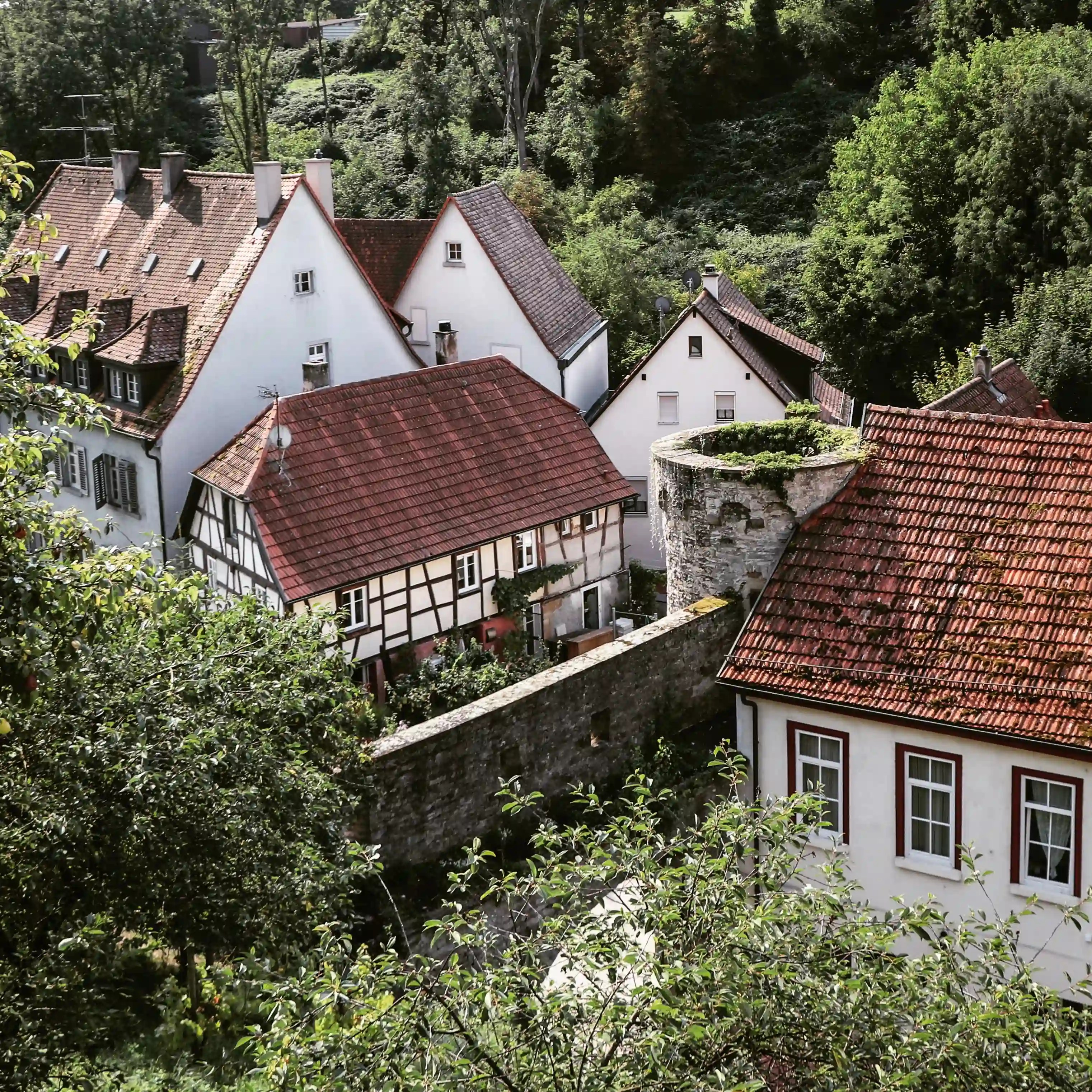
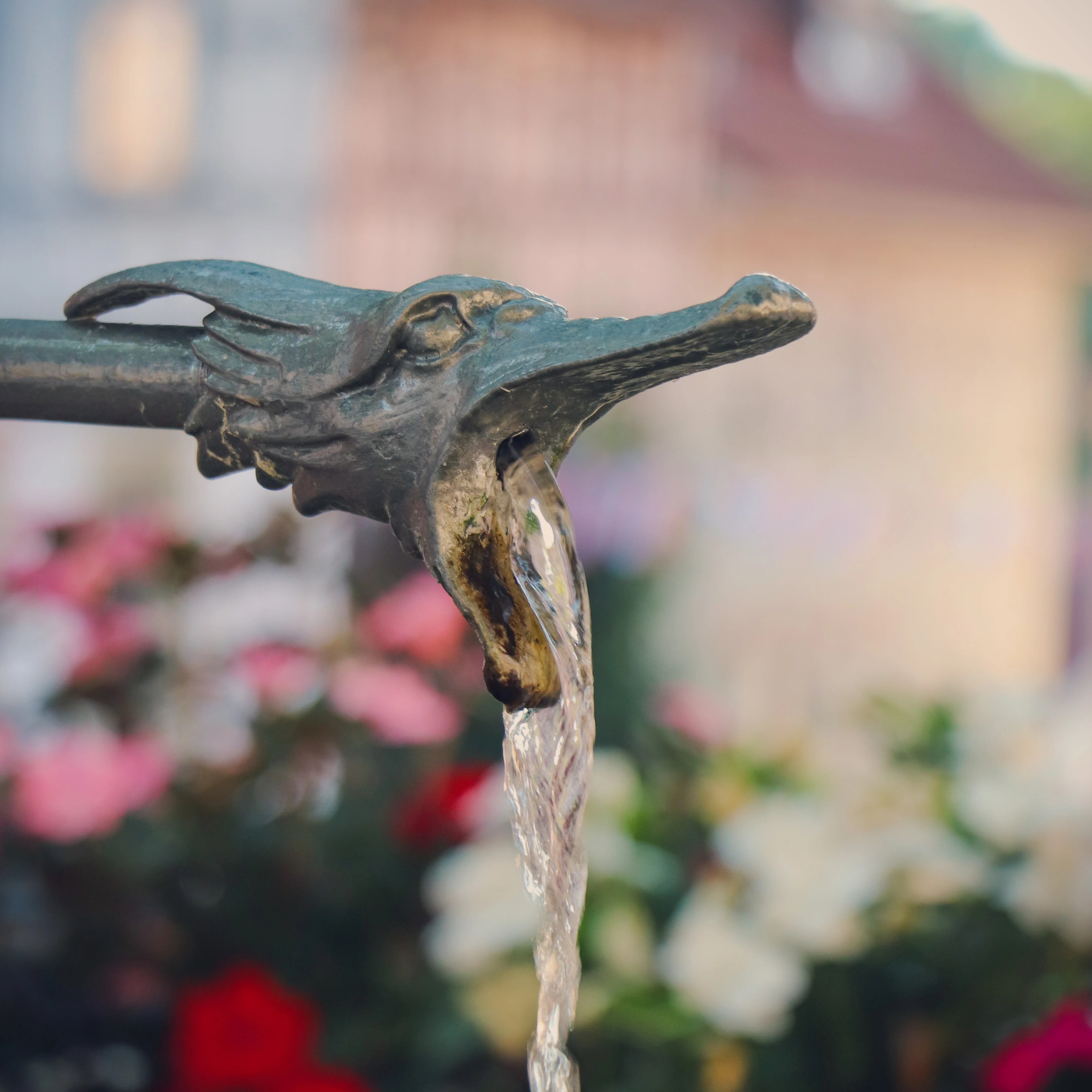
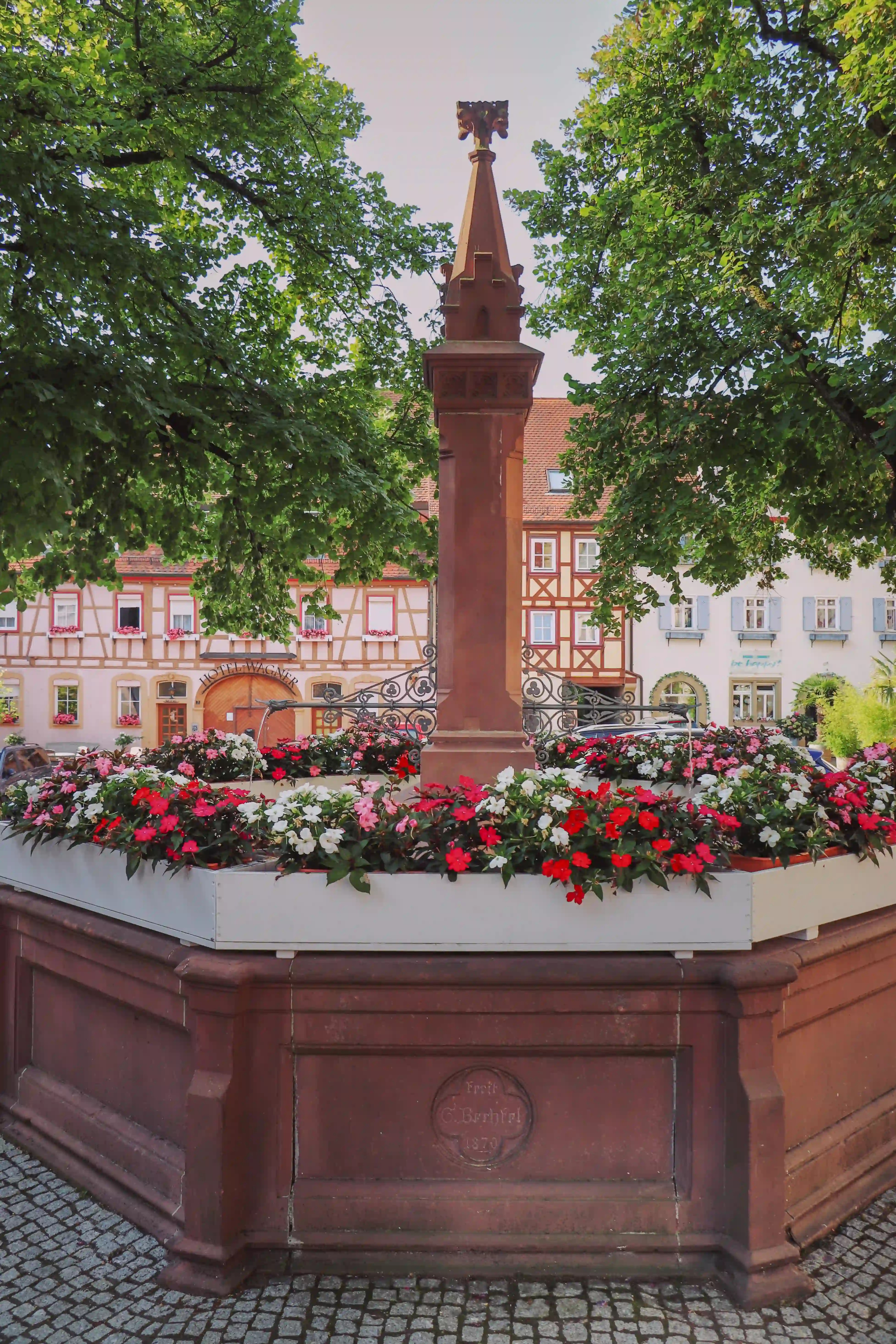
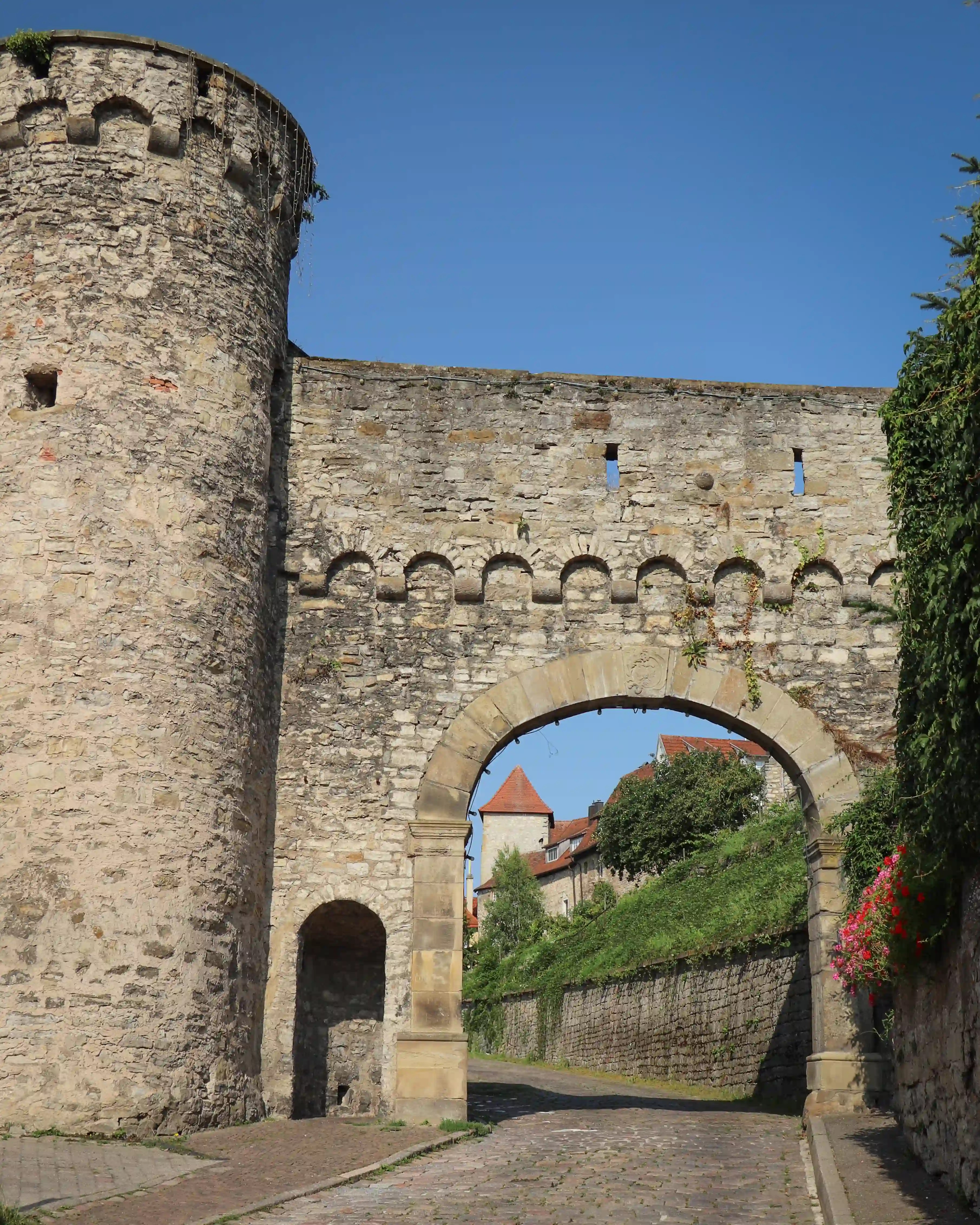
Scattered throughout the town, other remnants of the Kaiserpfalz include the Red Tower (Roter Turm) and the Castle Gate (Burgtor)—each adding to the layered, fortified character of the old town. Beyond the palace remains, you’ll find a wealth of historic charm in Bad Wimpfen’s half-timbered homes, medieval gates, churches, fountains, the market square (Marktplatz), and the town hall (Rathaus).









Scenic Views and Hidden Corners of Bad Wimpfen
From nearly every part of town, we caught glimpses of the Neckar River flowing far below—whether from the top of the Blue Tower or simply walking along the upper lanes. Lookouts near the city gates and along the arcades of the Kaiserpfalz offer sweeping views of the valley and surrounding hills.
Be sure to give yourself time to wander. Some of our favorite moments came from following winding lanes through garden-filled courtyards, discovering fountains, and resting on sun-warmed stone steps as the town quietly came to life around us. And don’t forget to bring Euros—small entry fees to museums and towers are cash-only.

Burg Hornberg: A Castle with a View
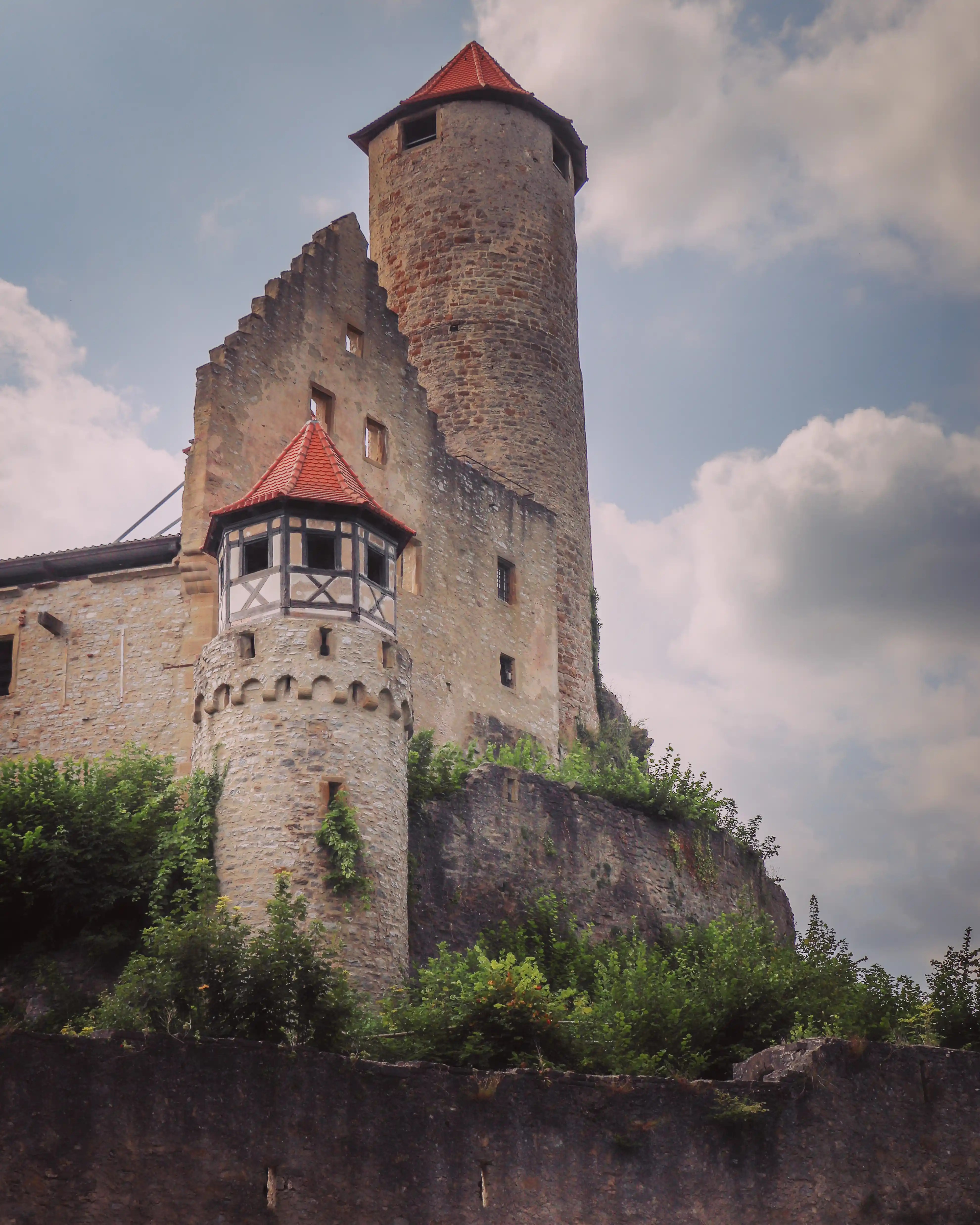
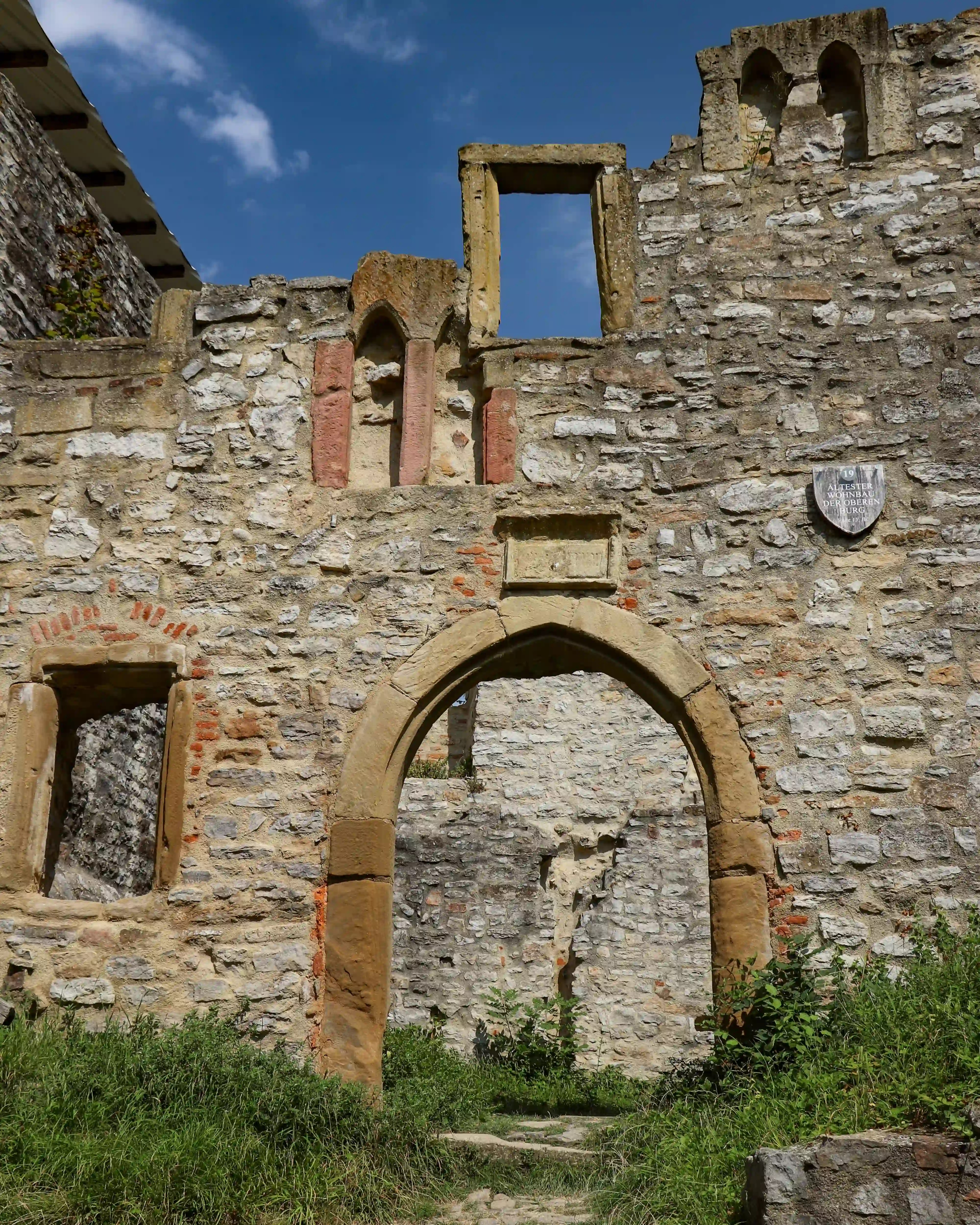
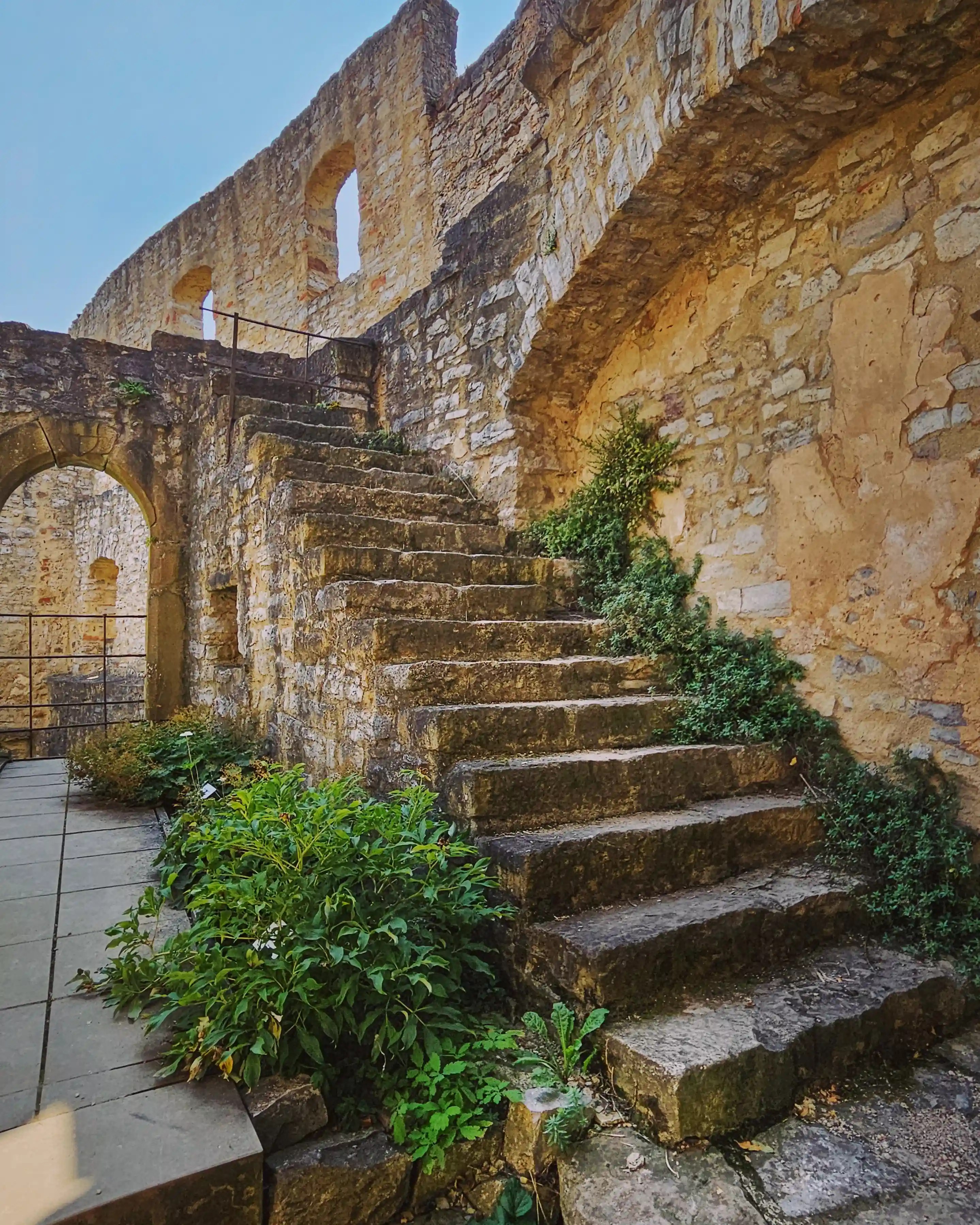
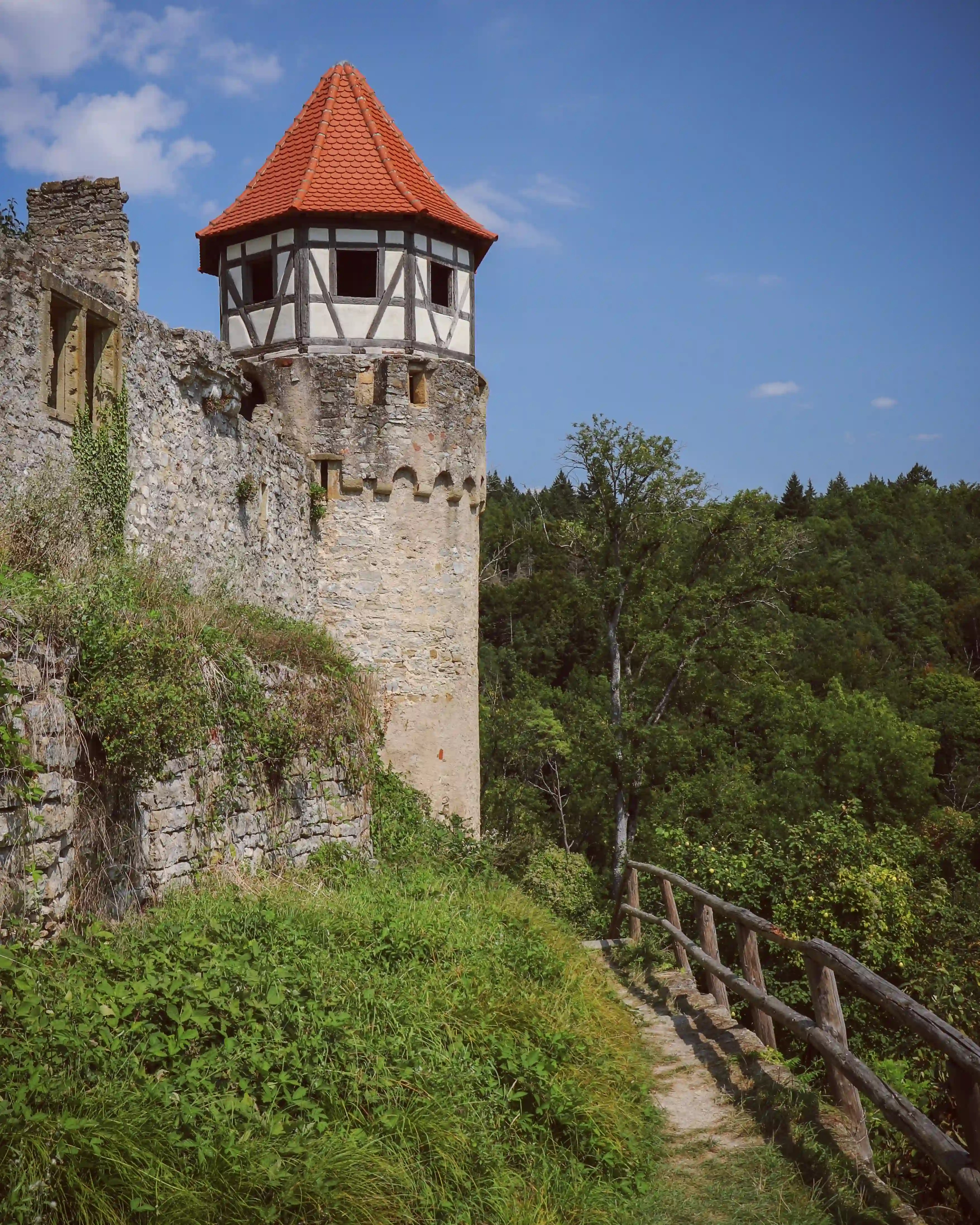
From Bad Wimpfen, we continued our journey to Burg Hornberg, just a short drive away. Perched dramatically above the Neckar, this castle was home to Götz von Berlichingen, the notorious “Iron Hand,” named for the mechanical prosthetic arm he wore after losing his real one in battle. A knight, mercenary, and rebel in equal measure, Götz inspired Goethe’s 18th-century drama Götz von Berlichingen—and, in popular legend, earned a reputation similar to a German Robin Hood for his bold exploits and rumored sympathy for the common people.
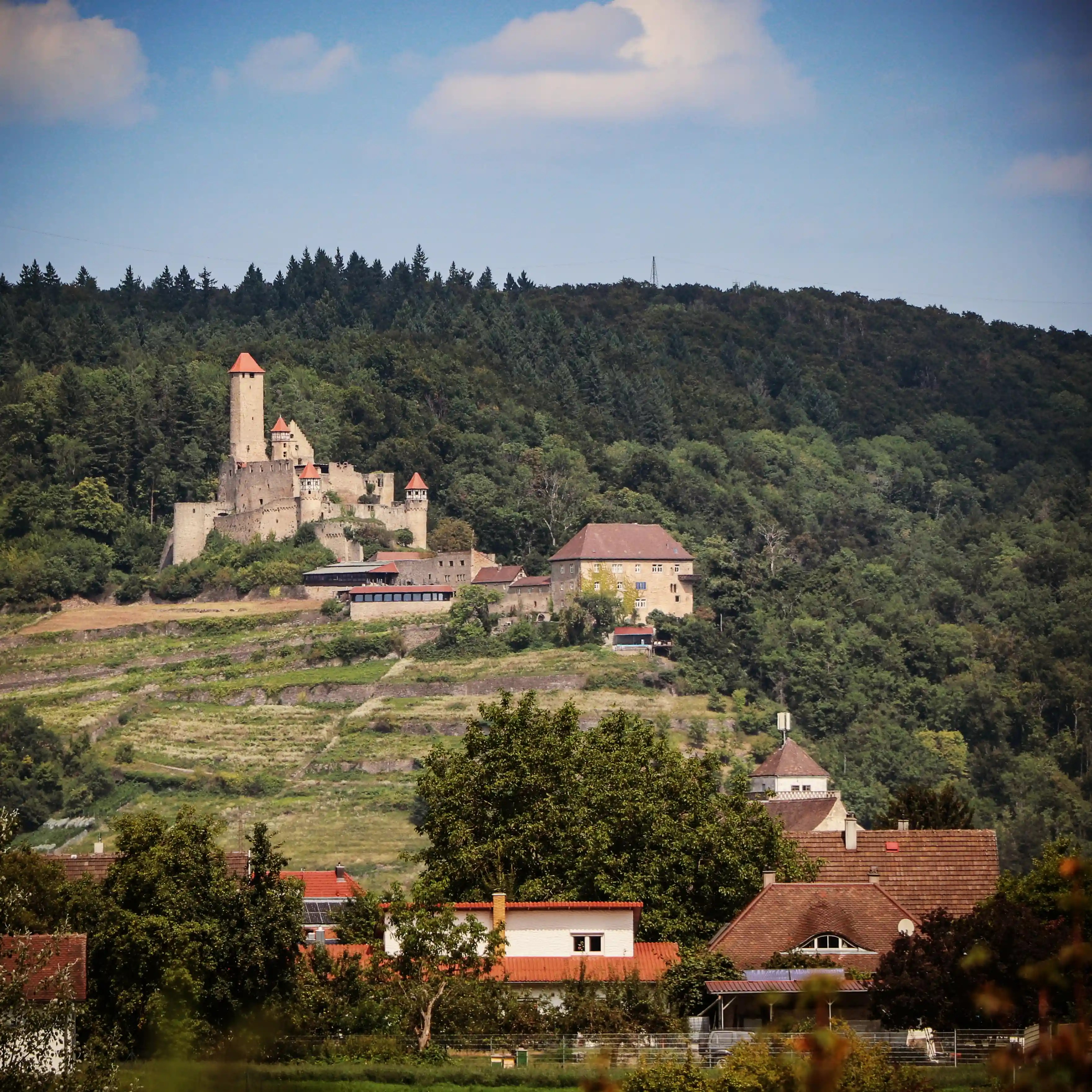
The castle complex includes a hotel, restaurant, wine shop, museum, and extensive ruins to explore. We purchased our entry ticket at the small Verkauf shop, which included tokens for the museum and entry gate.
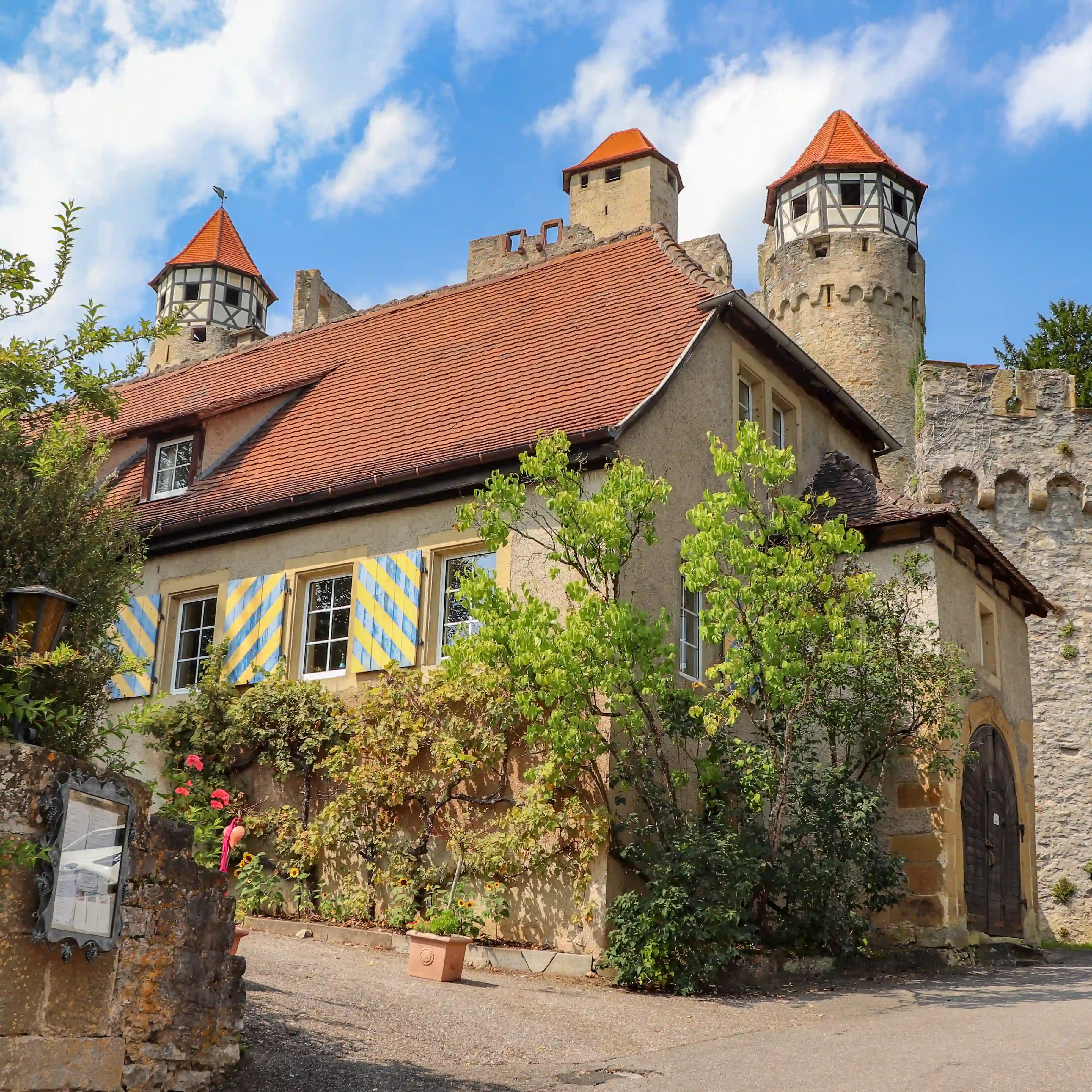
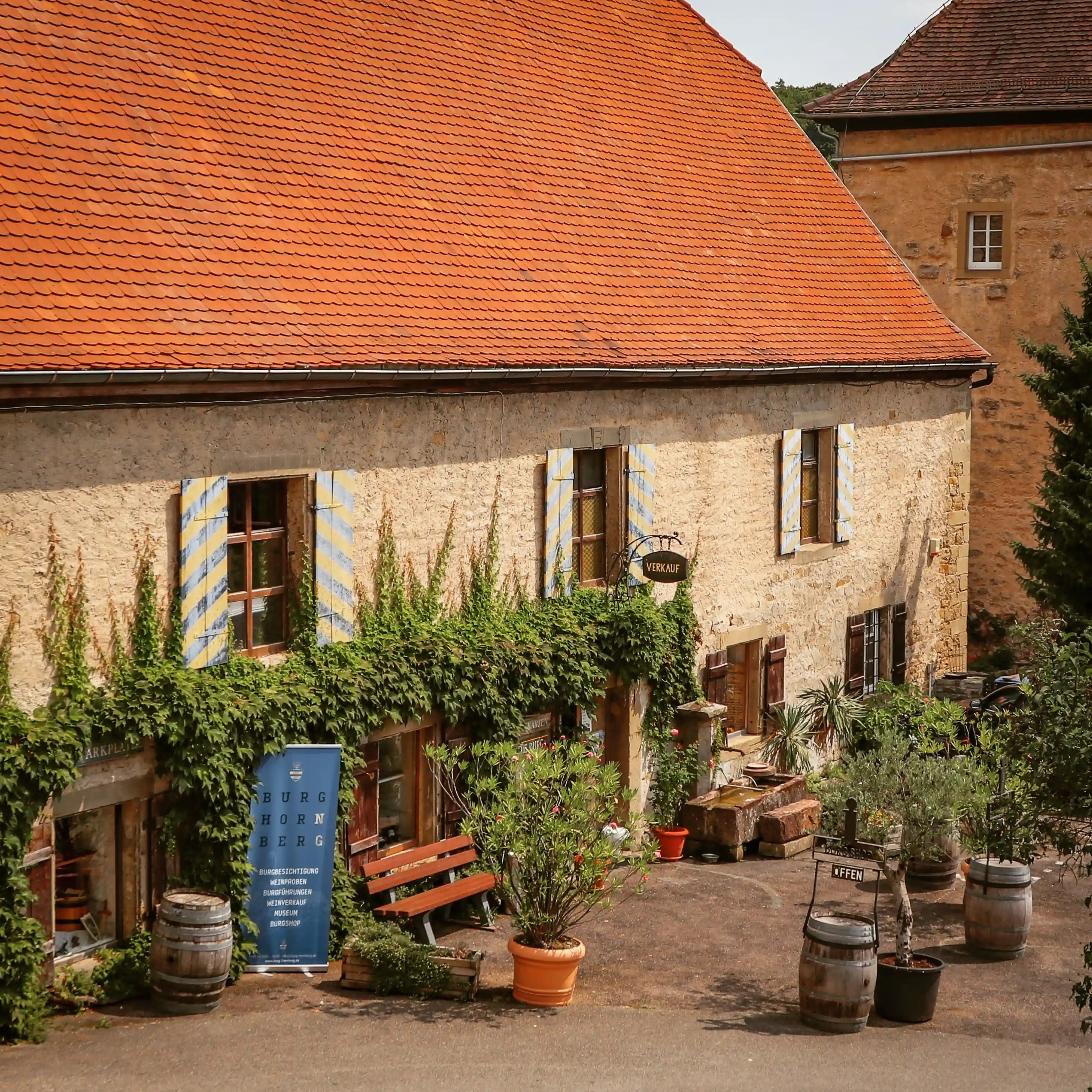

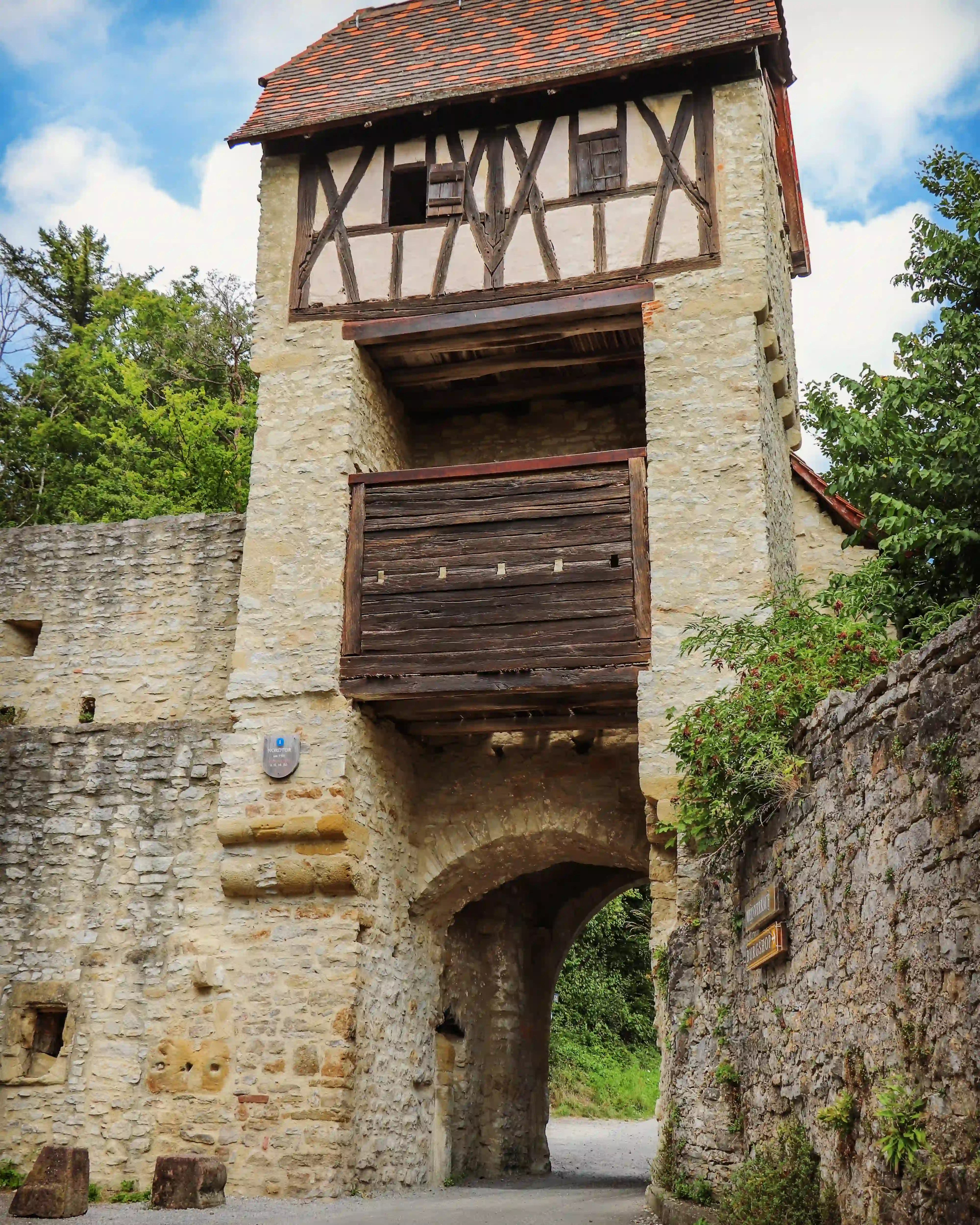

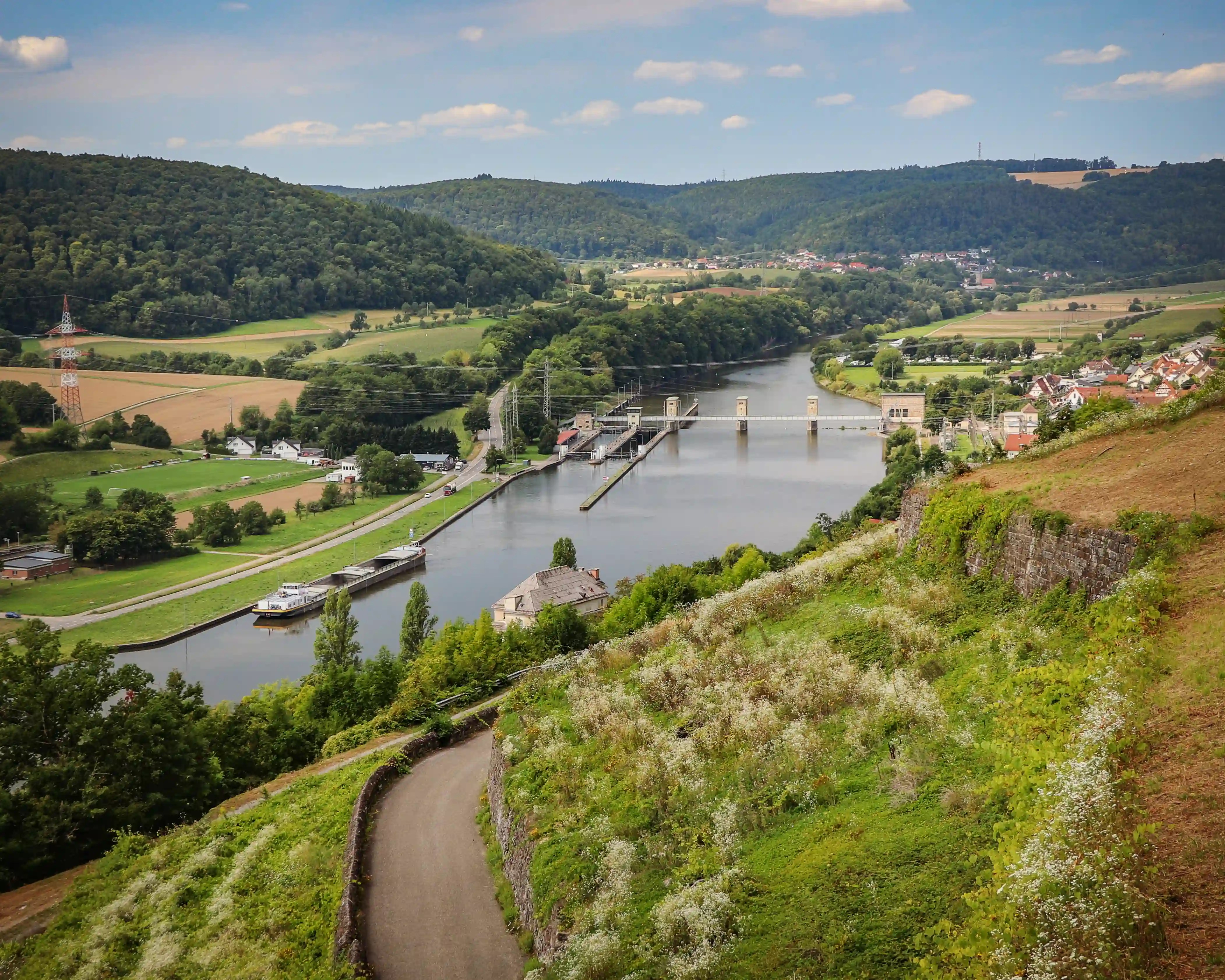
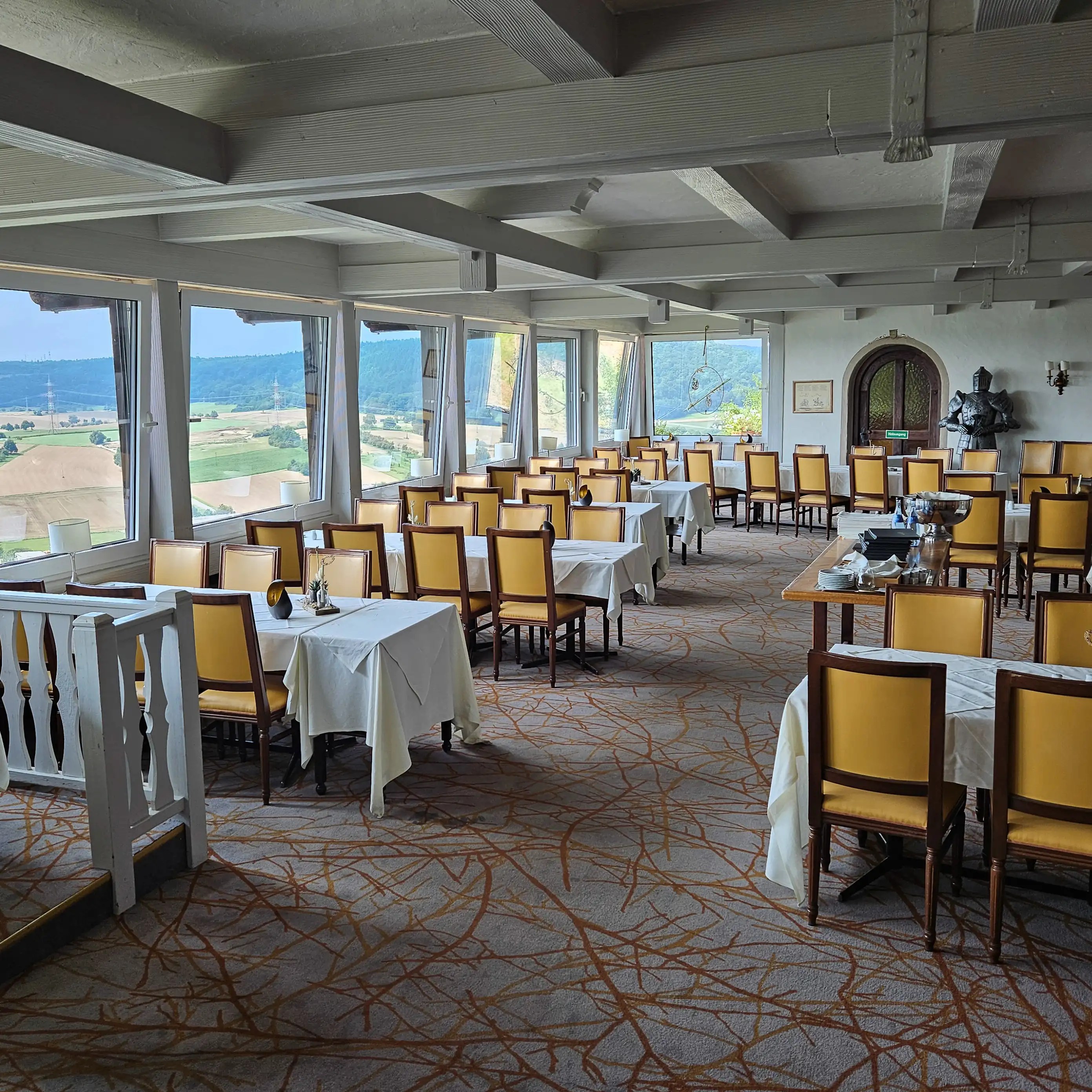
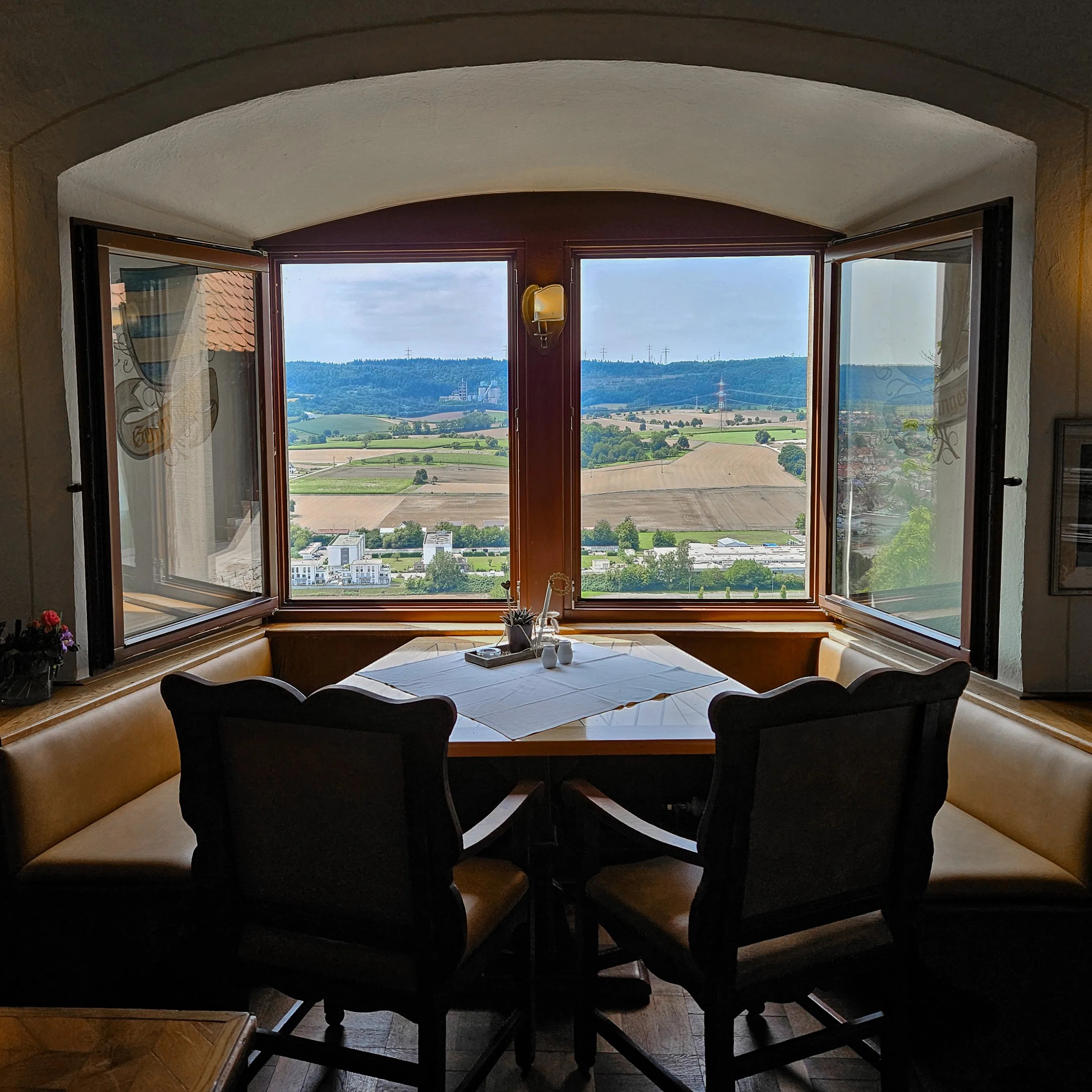
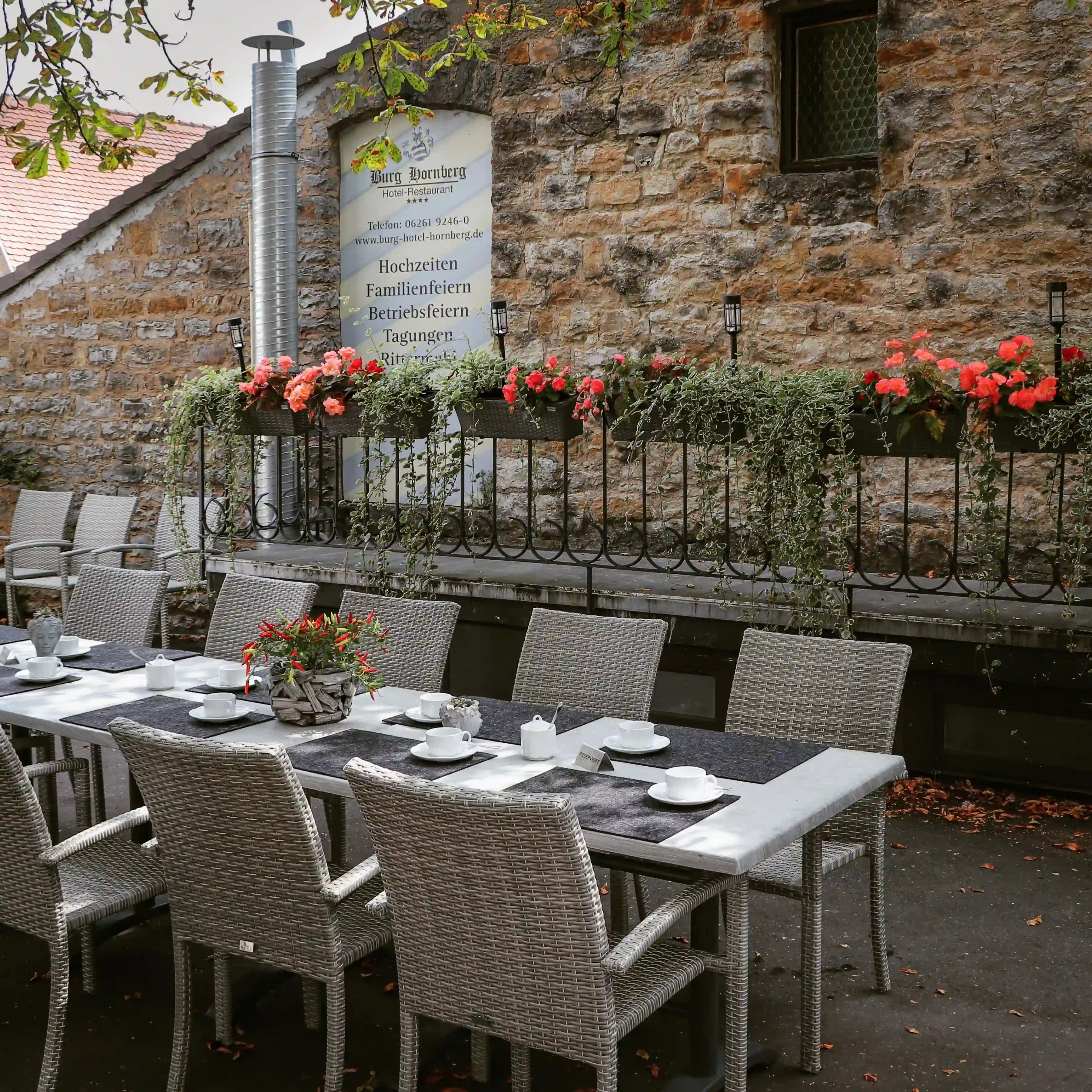
Before exploring the ruins, we had lunch at the castle’s Panorama Restaurant, seated beneath a beautiful old tree in the courtyard—an enchanting spot made even better by the fresh summer air. Housed in a former horse stable, the restaurant serves regional Baden-Swabian dishes and offers sweeping views from its dining room and panoramic terrace (closed that day for a private event).
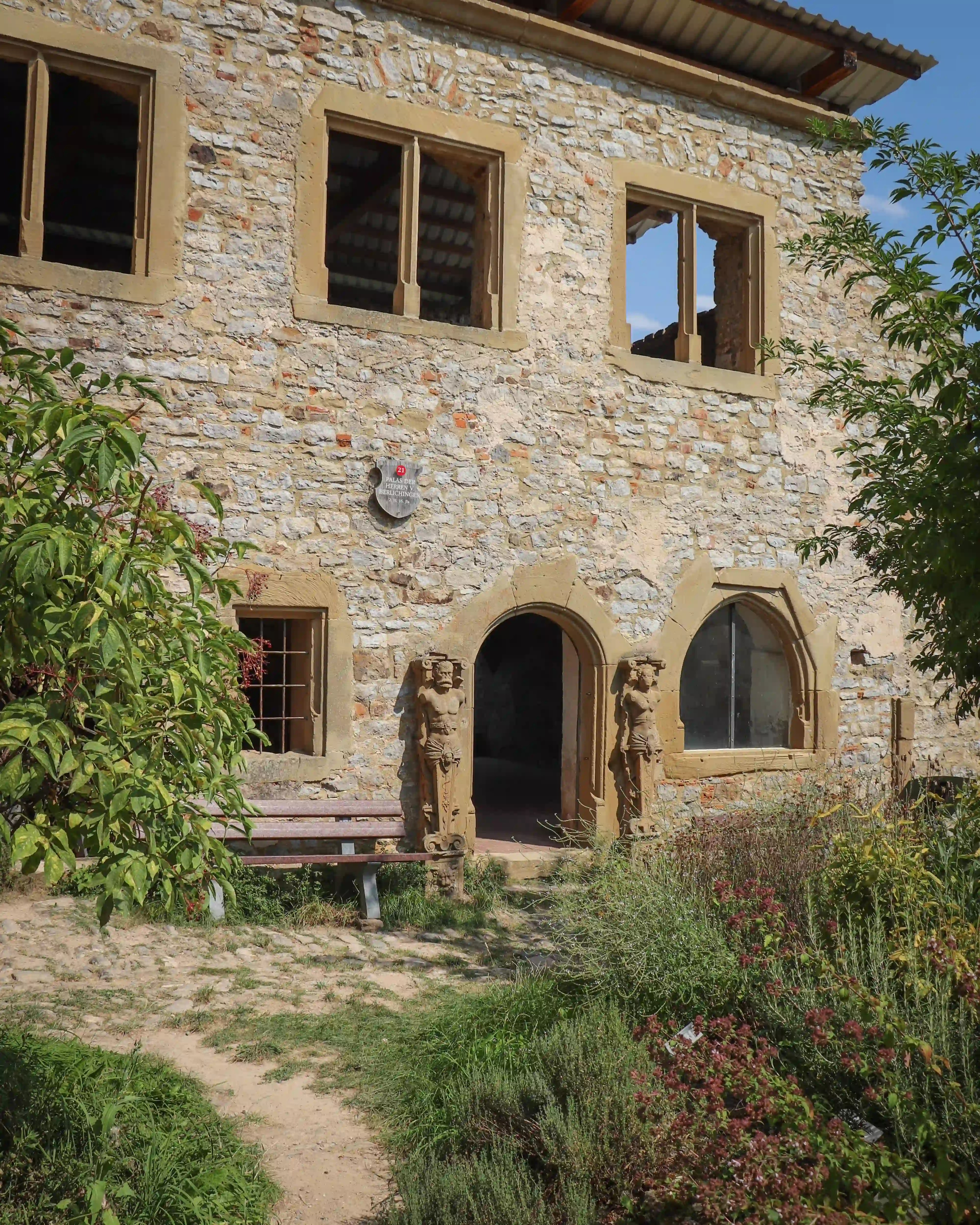
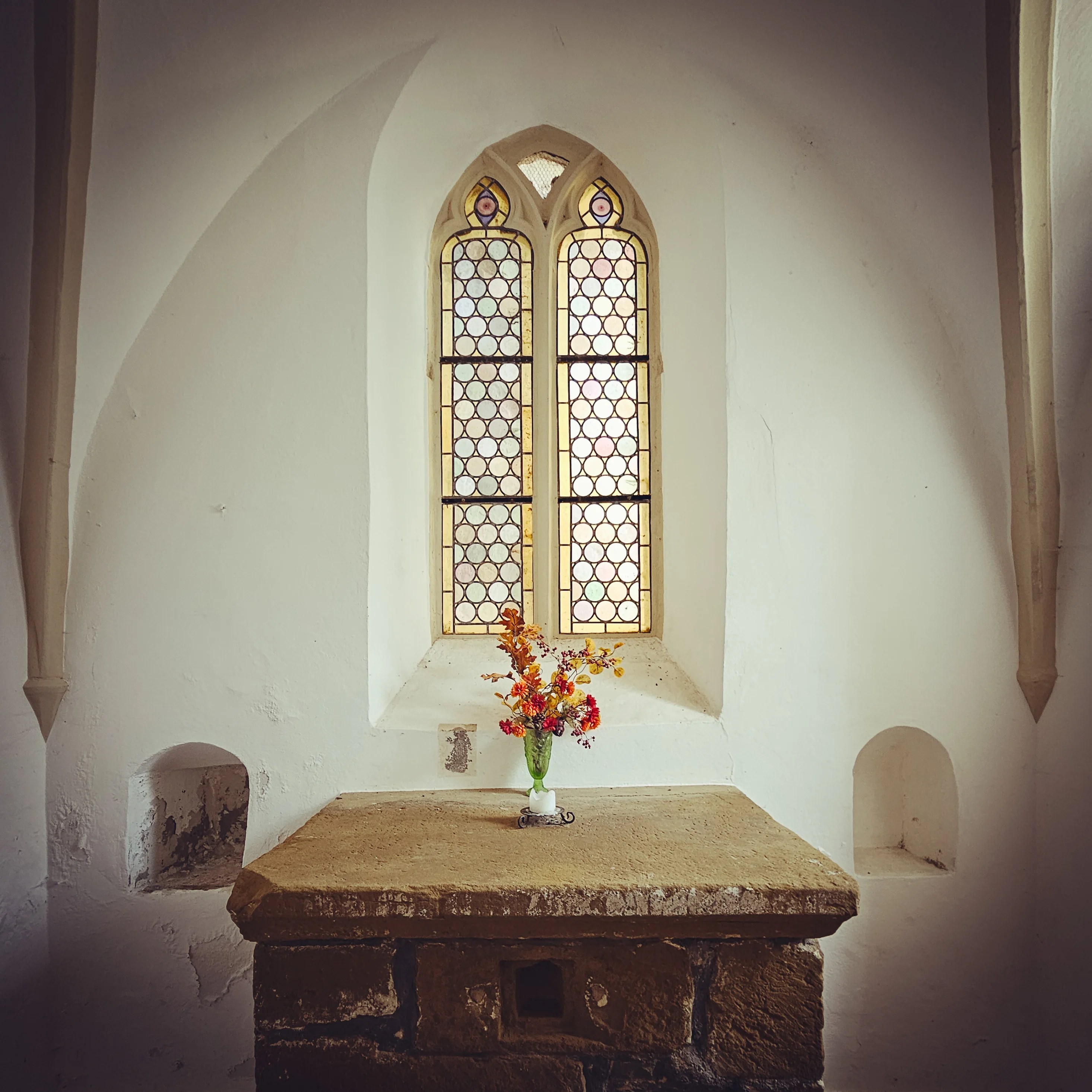
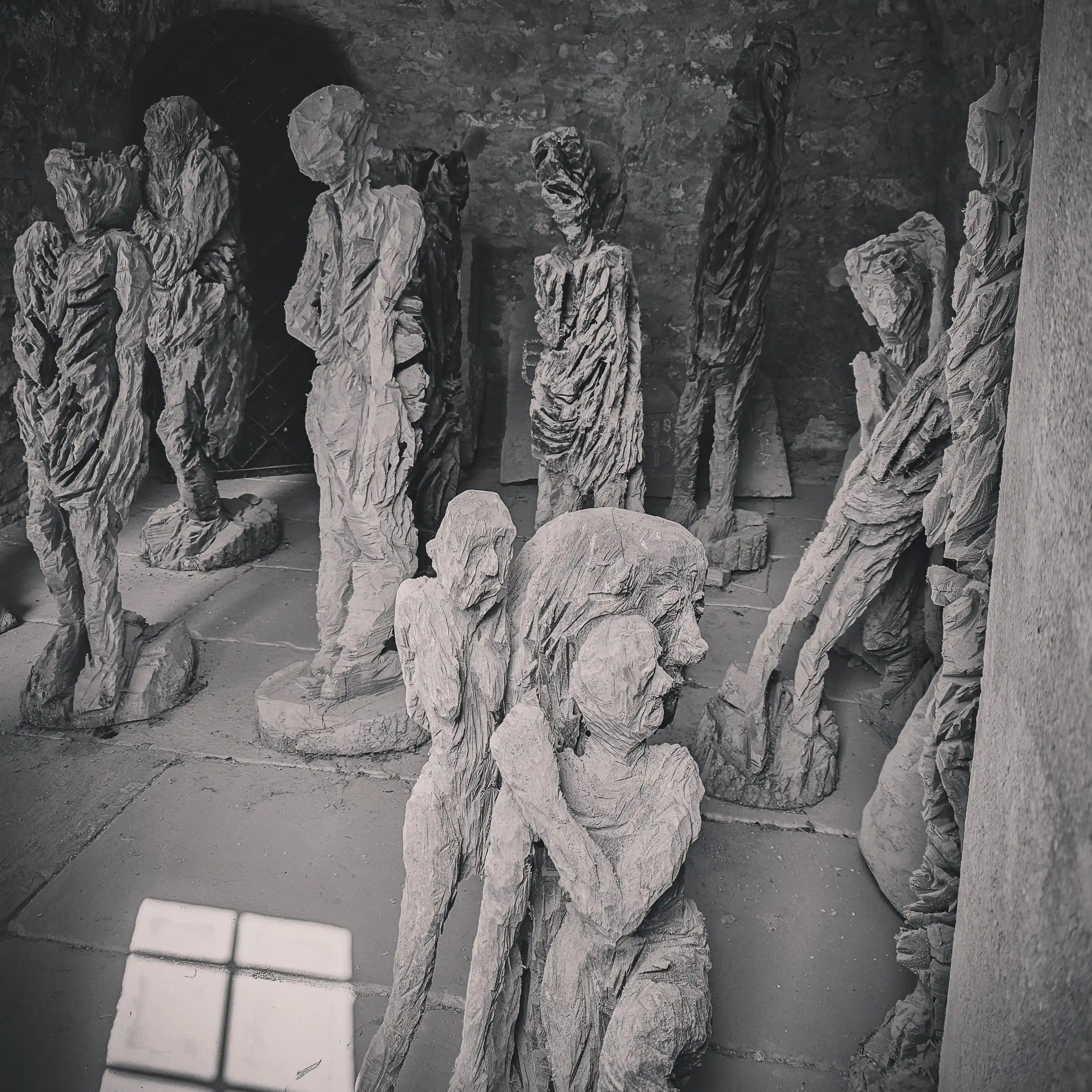
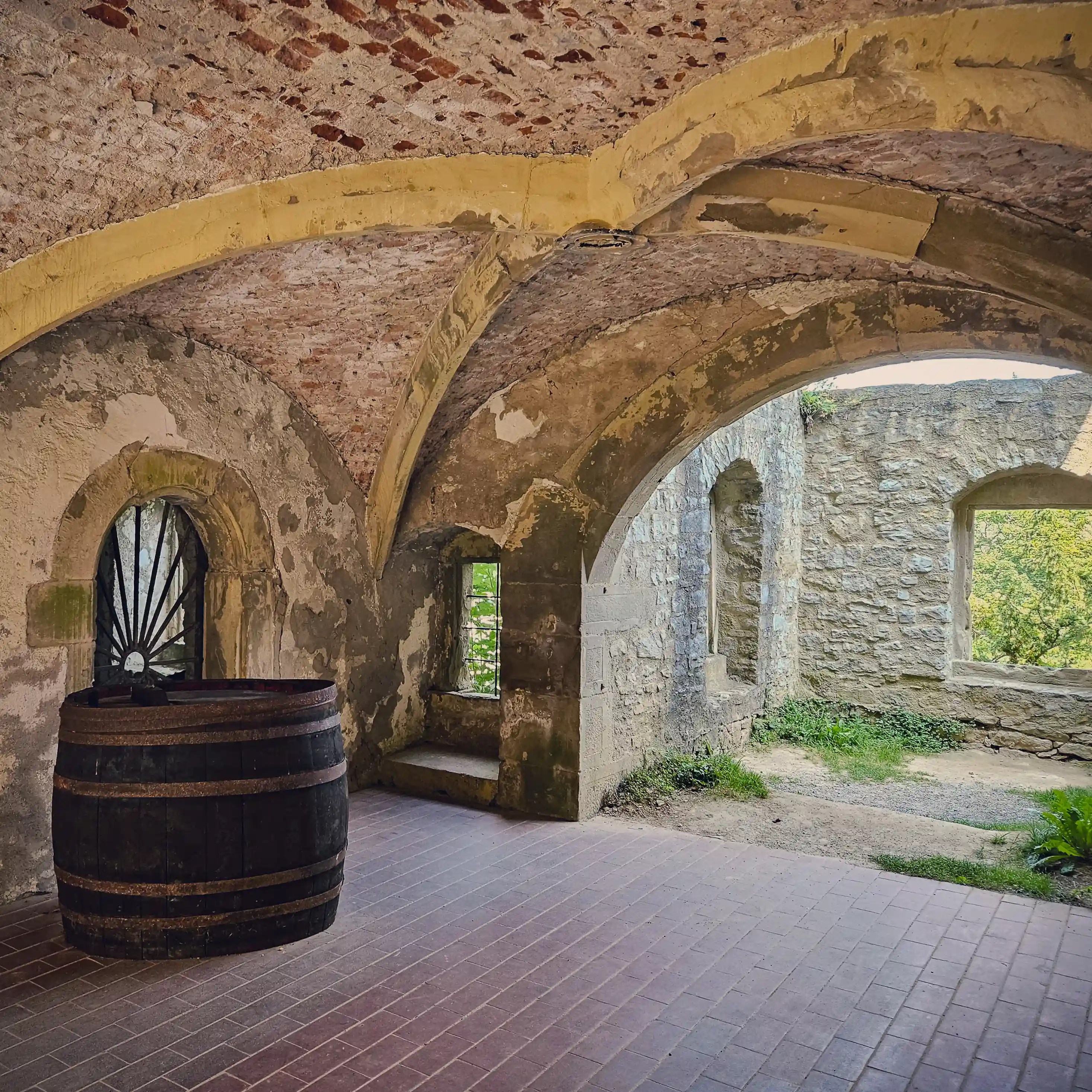
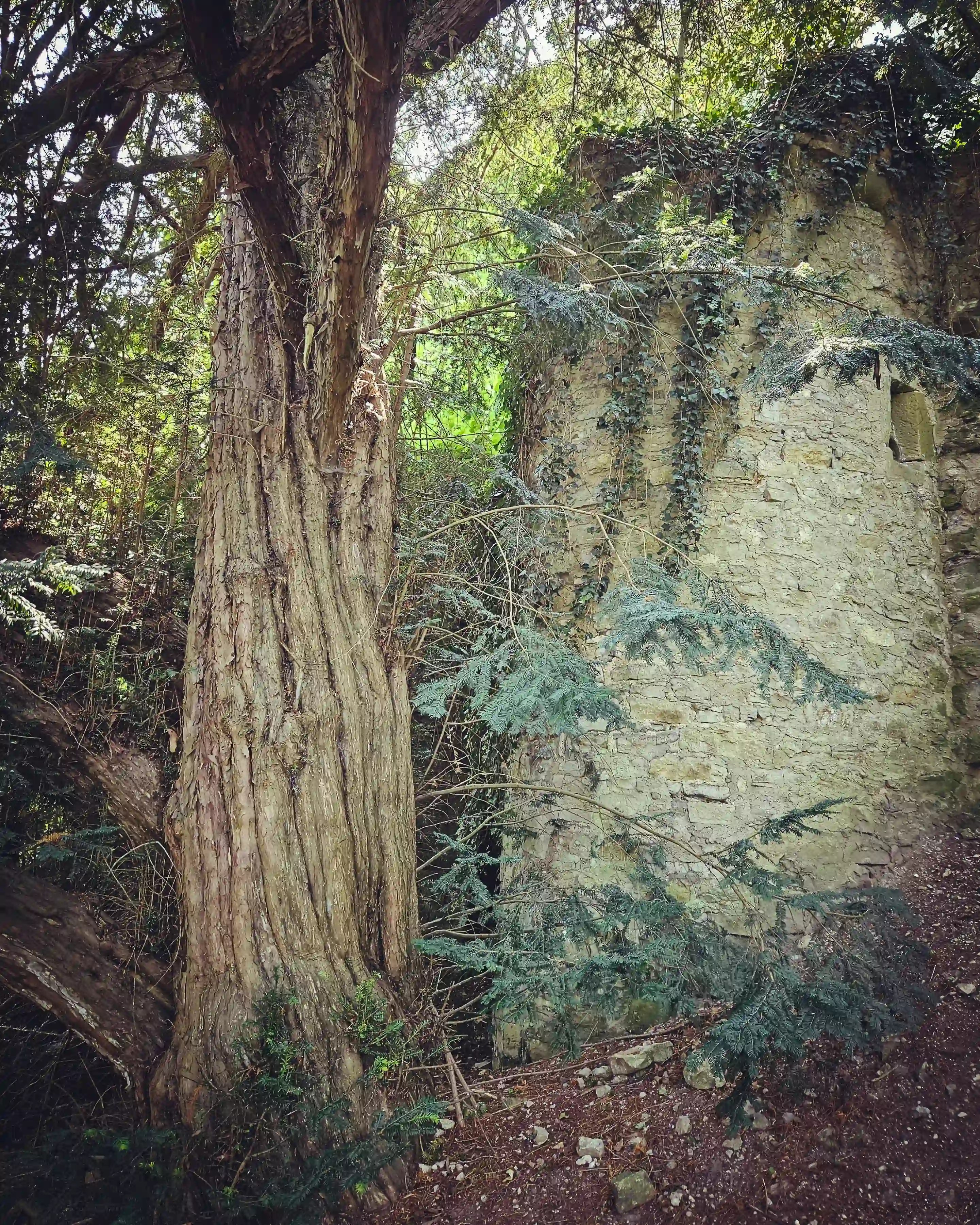
Then it was time to roam. Burg Hornberg is perfect for those who love exploring castle nooks, climbing castle towers, and wandering through centuries of history. Along the way, we stumbled upon a small outer tower with a curious black button on the wall—press it, and a grate in the floor reveals a shadowy drop below. In a quieter corner of the grounds, a gnarled yew tree, more than 500 years old, stood watch like a living monument to the castle’s past.





Getting There from Stuttgart
Both Bad Wimpfen and Burg Hornberg make for a great day trip from Stuttgart (about 1 to 1.5 hours by car). While public transit is available via train and bus connections, having a car allows greater flexibility—especially when heading up to Burg Hornberg.
Beyond Bad Wimpfen: What to Explore Next
If you’re planning a weekend, here are some nearby highlights worth adding:
- Solebad Bad Wimpfen – Continue the town’s spa tradition with a relaxing visit to this modern saltwater thermal bath. It features indoor and outdoor pools with massage jets, a glass steam bath, an infrared cabin, and tranquil relaxation areas—perfect after a day of exploring.
- Bad Friedrichshall & Salzbergwerk (approx. 6 km / 4 mi) – A working salt mine with underground tunnels, mining history, and multimedia exhibits that bring the world of salt mining to life. Read about my experience here.
- Heilbronn & Experimenta (approx. 15 km / 9 mi) – A vibrant city with Germany’s largest science center—great for families and interactive learners.
- Guttenberg Castle (approx. 8 km / 5 mi) – One of Germany’s oldest continuously inhabited castles—built around 1180 and owned by the same family for over 500 years. This largely intact Staufer-era fortress is home to a birds-of-prey show, a museum, and a tavern.
- Schell Schokoladen (approx. 9 km / 6 mi) – Chocolate, cake, and a café… need we say more? Don’t miss their award-winning champagne truffles—once named among the best in the world—and the world’s first patented praline, the Essigschleckerle. There’s also a small hotel on-site if you’d like to stay a little longer.
- Schäfers Michaelsberg (approx. 11 km / 7 mi) – Organic farm with a guesthouse, farm shop, and the cozy Restaurant Schäfers, all set on a hilltop with beautiful views over the Neckar Valley.
- Bad Rappenau (approx. 6 km / 4 mi) – A spa town with lovely parks and thermal baths.
Final Thoughts
From imperial ruins and castle walls to a fairytale tower that may or may not house Rapunzel, Bad Wimpfen and Burg Hornberg offer a perfect blend of history, views, and storybook charm. Whether you’re drawn to castles, centuries-old architecture, or simply love wandering beautiful medieval towns, this day trip is one to remember.
Have you been to Bad Wimpfen or Burg Hornberg? Planning a trip? Let me know in the comments—I’d love to hear your questions, favorite spots, or travel tips!


Leave a reply to Robin Cancel reply