




How We Found Ourselves in Arctic Norway
My husband doesn’t usually want to plan our trips or choose the destination, but when I asked him what was on his wish list, he had one clear answer: the Northern Lights. So, on a cold February morning, we flew from Stuttgart to Tromsø, chasing Arctic skies and that elusive green glow.
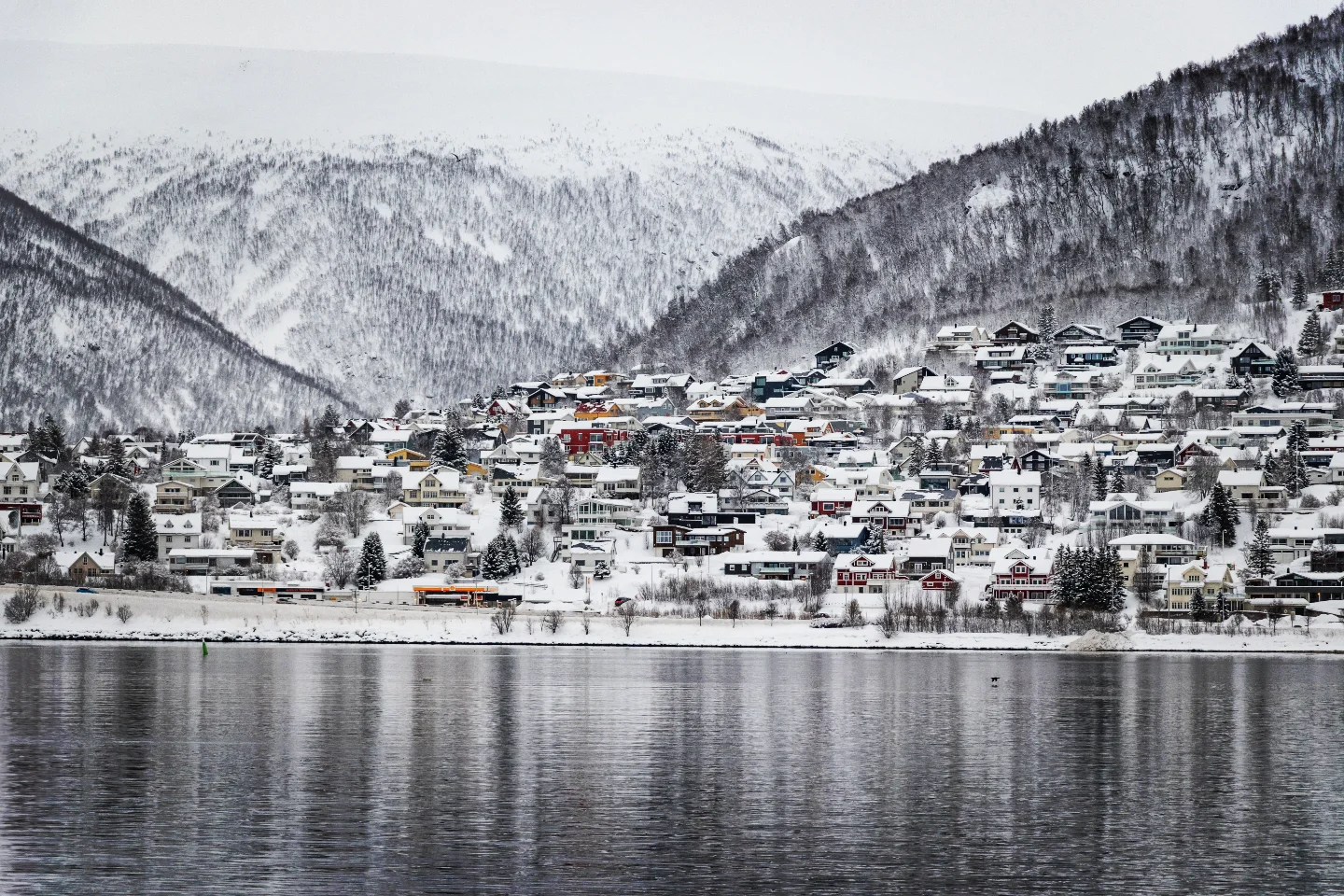
Tromsø (pronounced TROHM-suh), often called the “Gateway to the Arctic,” is the largest city in Northern Norway and has long been a hub for Arctic expeditions and polar research. Located above the Arctic Circle, it’s one of the best places in the world to see the Northern Lights, thanks to its position beneath the auroral oval. The city combines rich cultural traditions with breathtaking scenery—snowy peaks, quiet fjords, and dramatic winter skies.
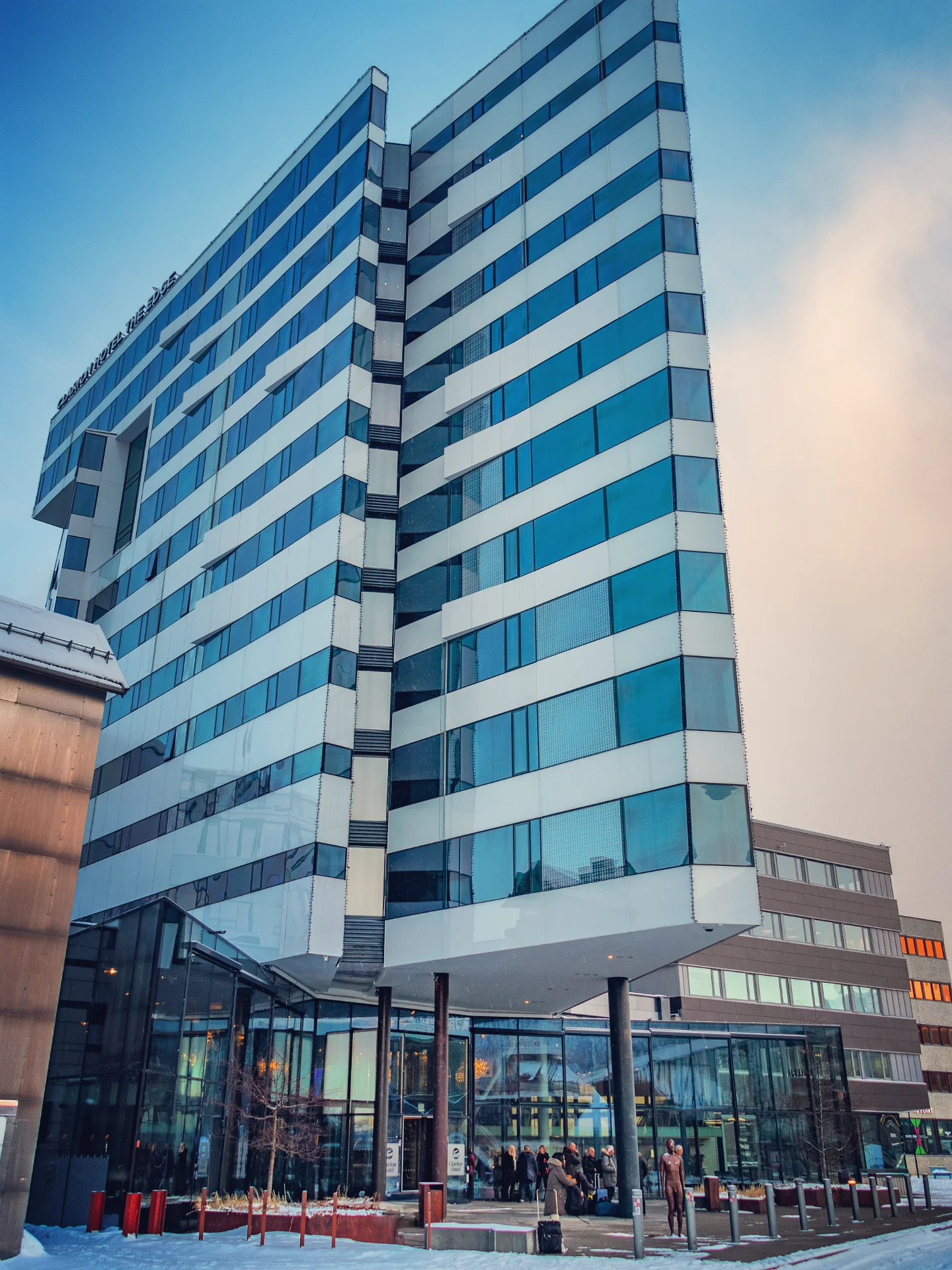
Our Home Base: Clarion Hotel The Edge
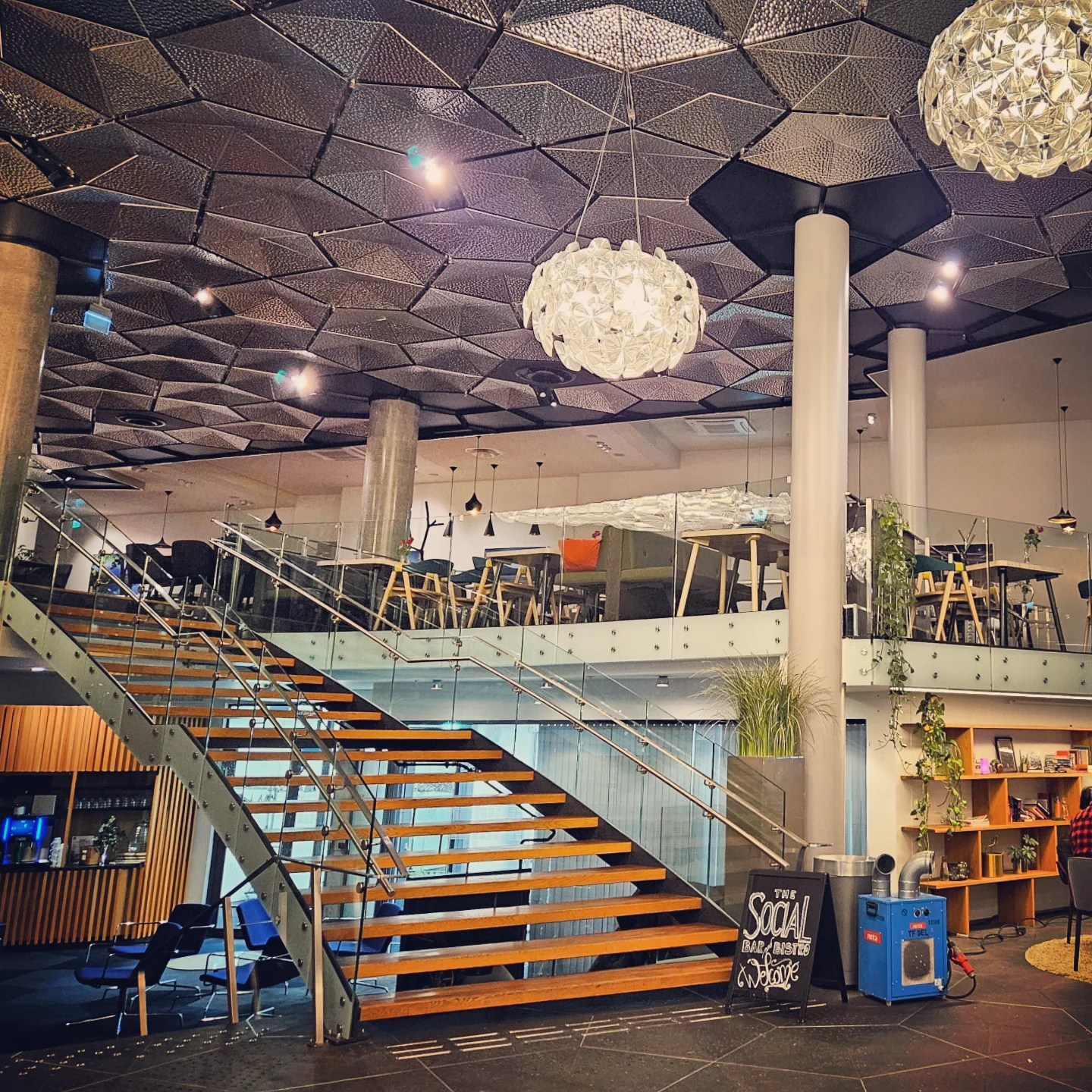
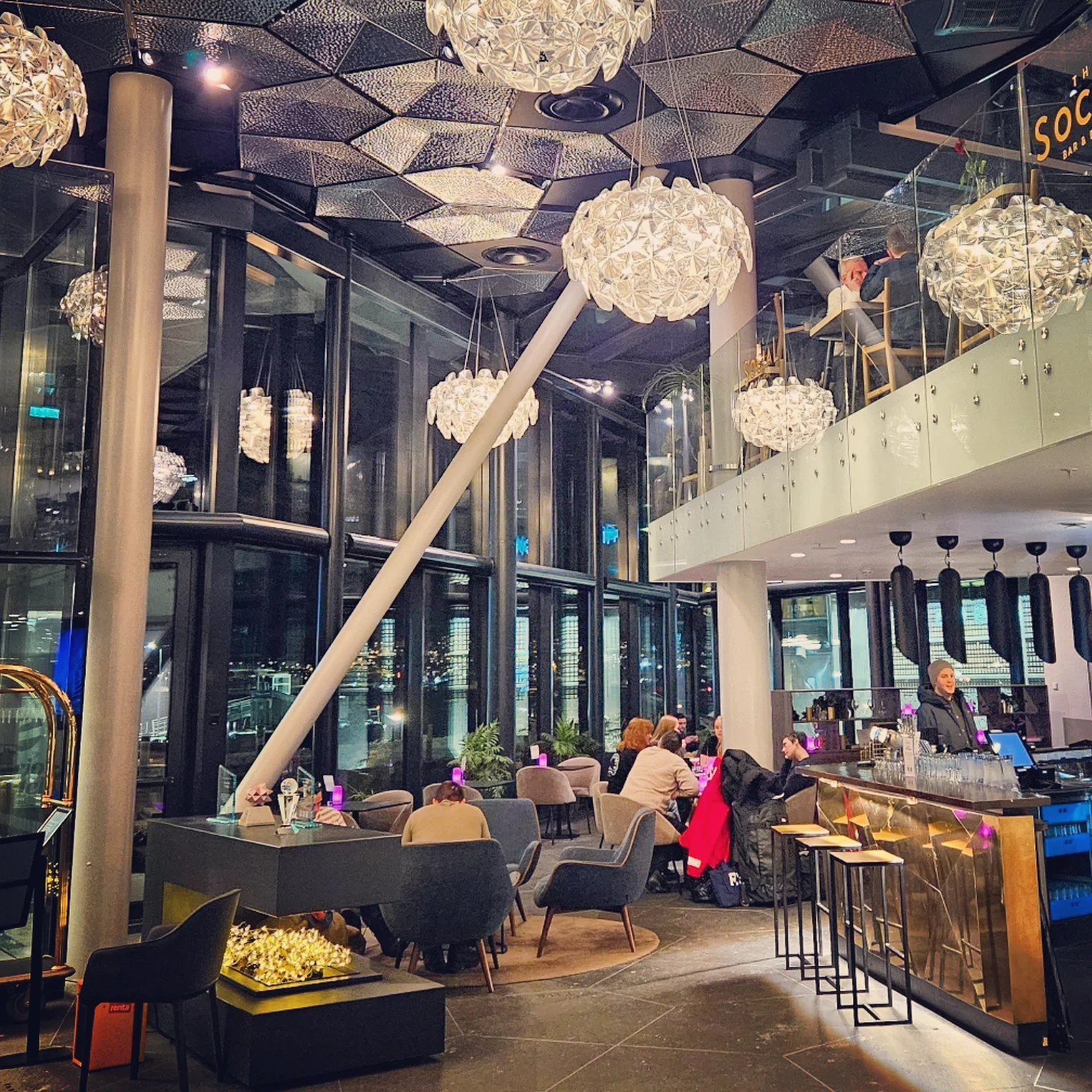
Located right along the waterfront in the heart of Tromsø, Clarion Hotel The Edge was the perfect place to stay. Most attractions were within walking distance, and the view over the harbor was beautiful. Every morning, we started with what might be the most impressive hotel breakfast we’ve ever had. Think: cured fish, creamy eggs, fresh-baked breads, and even cod liver oil shots if you’re feeling brave (or healthy!).
The rooftop Skybar was a cozy spot for a drink and a hopeful skyward glance. Sadly, the clouds blocked any glimpse of the aurora—but we imagined how magical it would’ve been from up there.

First Impressions & A Taste of Tromsø
By the time we checked in and dropped off our bags, darkness had already fallen—typical for February this far north. Still, the city was beautifully lit and full of energy, so we bundled up and headed out to explore. We walked past the glowing Tromsø Library, a striking piece of modern architecture that serves as the city’s public library and archives. Its large glass facade made it shine like a lantern in the night.



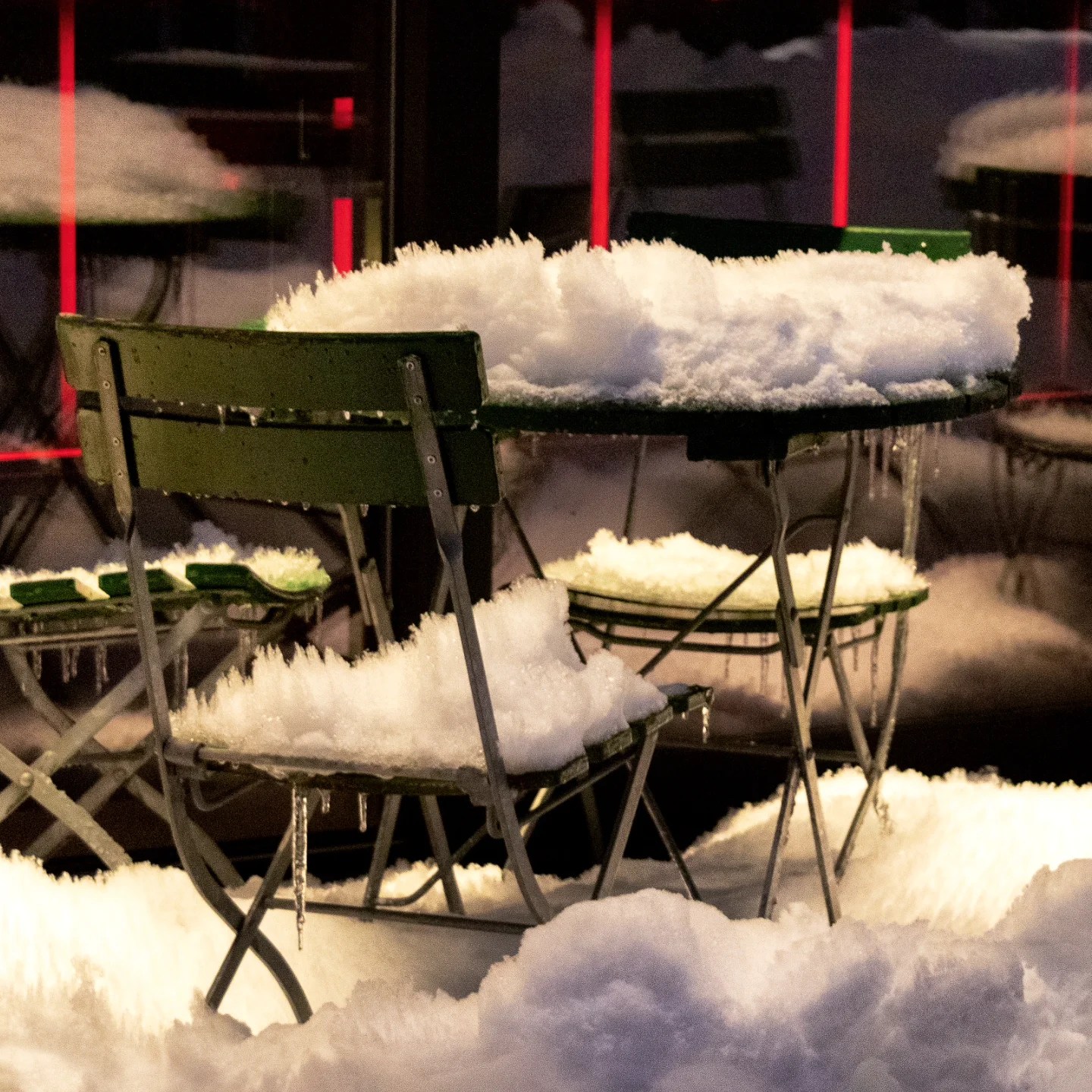

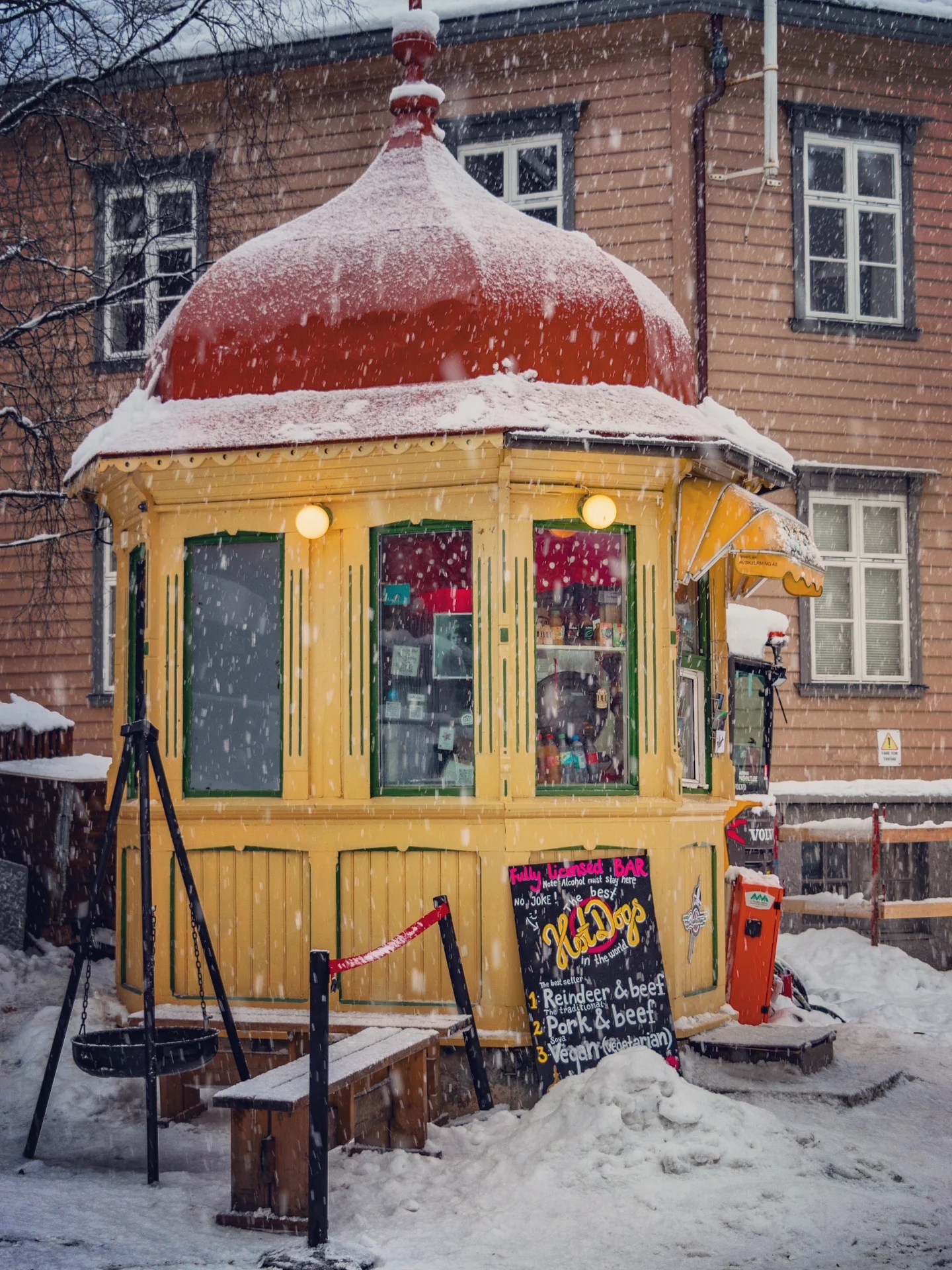


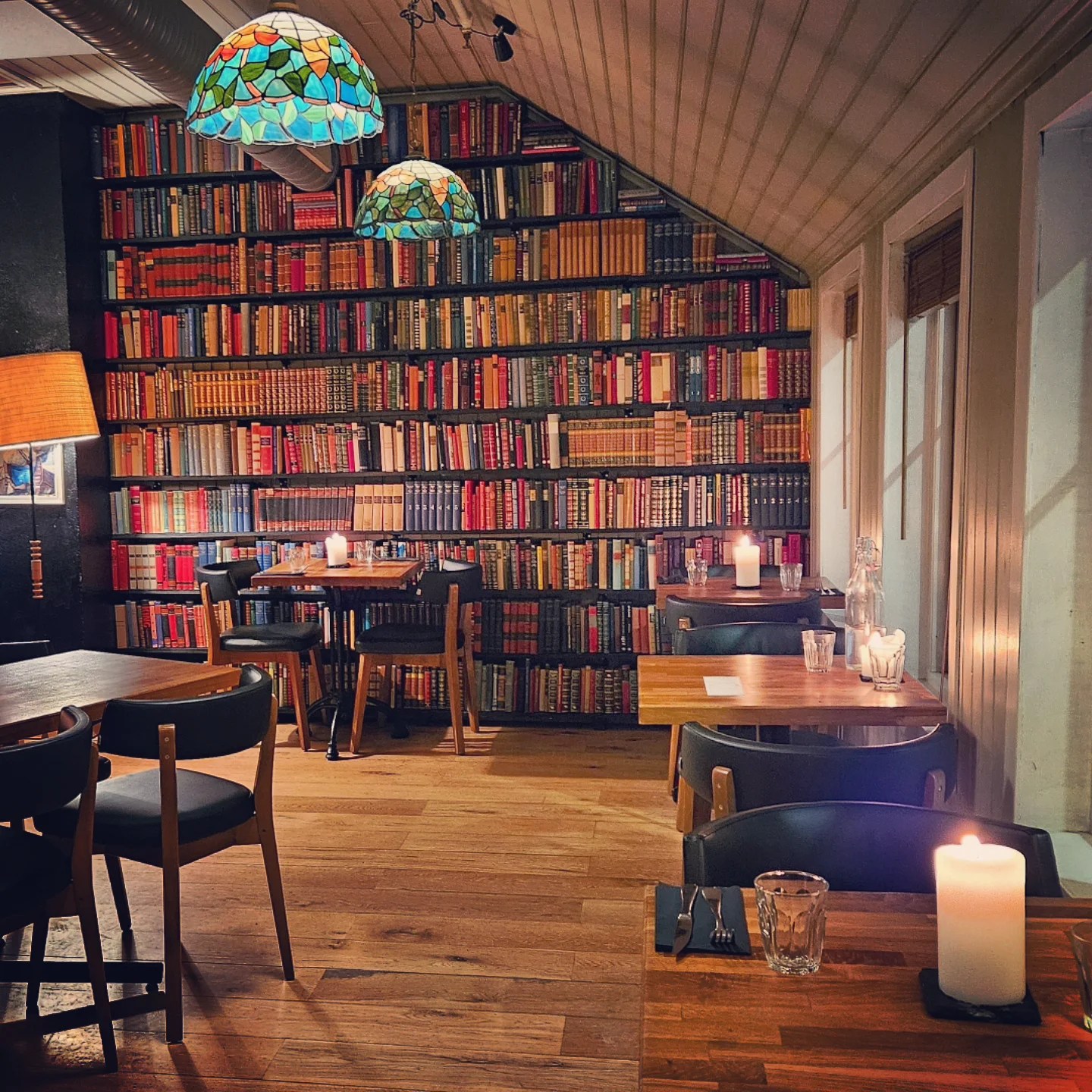
As we sat down for a cozy dinner at Bardus Bistro, the snowflakes began to fall outside, adding to the magic of our first night. Upstairs in the dining room, stained glass lamps cast a warm glow over bookshelves stacked from floor to ceiling, giving the space a literary charm.
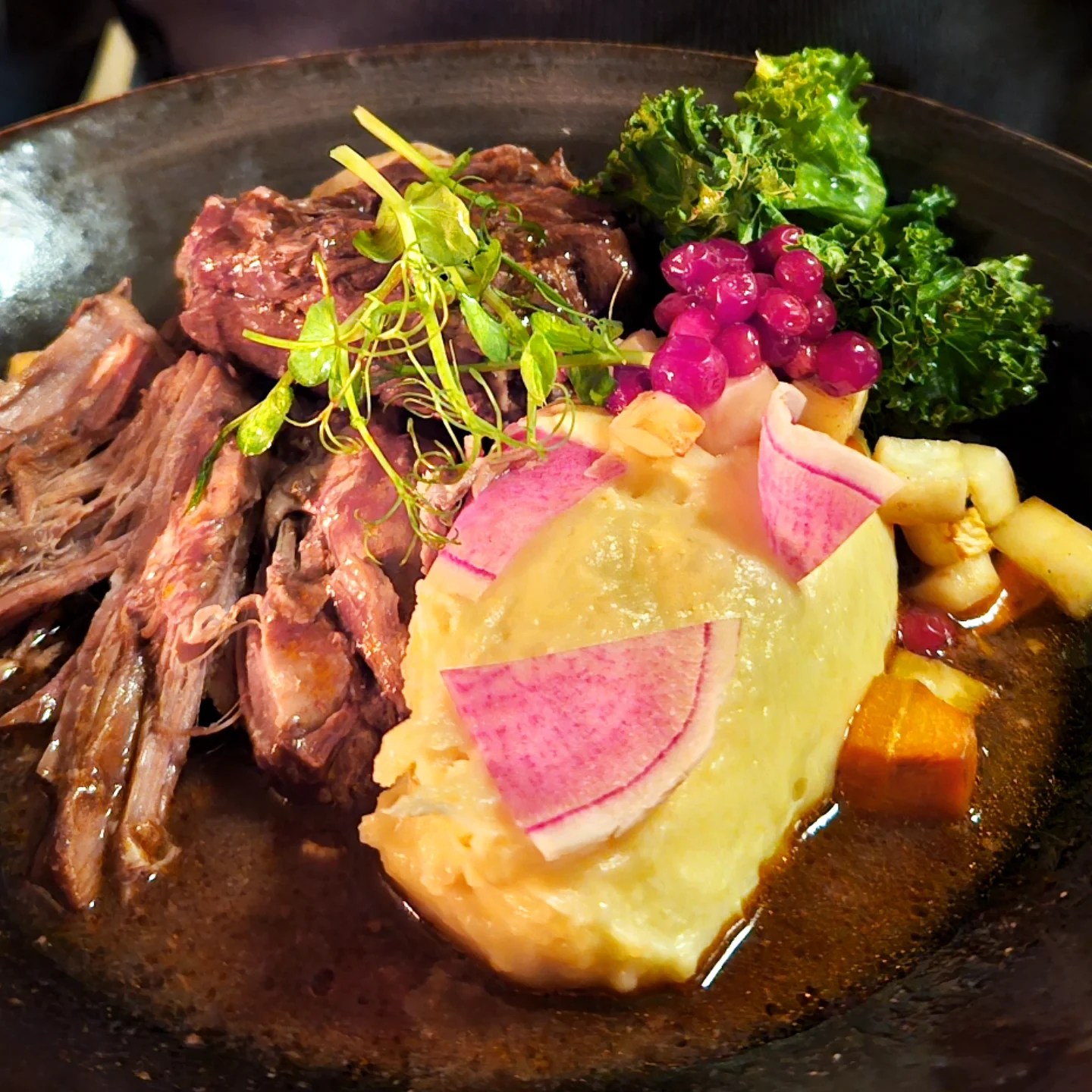
The menu showcased beautifully prepared local specialties—we ordered tender reindeer and a perfectly cooked fish dish, both full of rich, regional flavors. The atmosphere was relaxed and welcoming, the perfect introduction to Tromsø’s culinary scene. Don’t forget to try their Arctic seaweed cocktail, made with locally harvested ingredients and known for its distinctly northern twist. Unfortunately, we didn’t know about it until afterward, but it’s definitely on our list for next time!

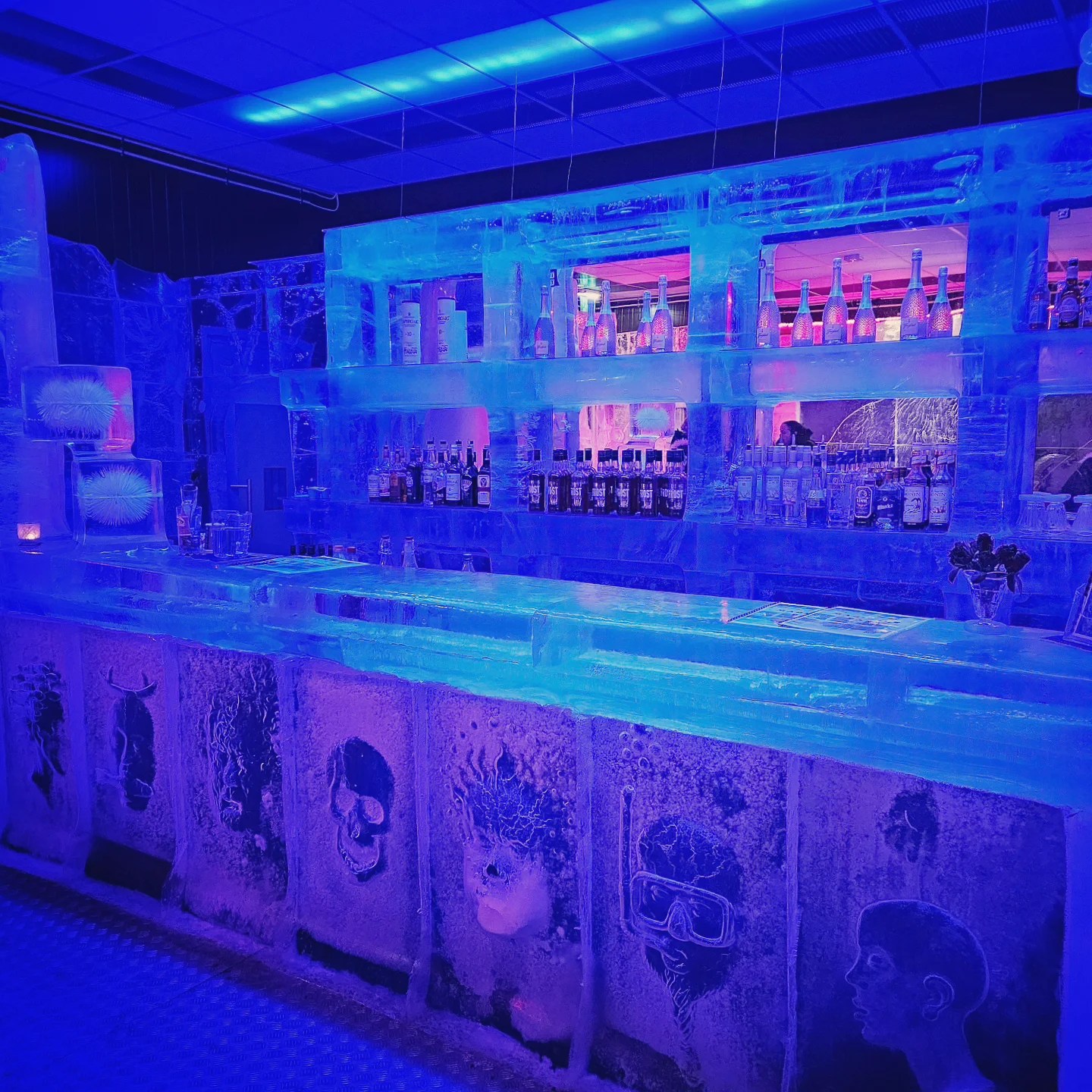
We ended the evening with drinks at the Magic Ice Bar, where walls, chairs, and even some of the glasses are carved from ice. Admission includes a welcome drink, a winter poncho and gloves, and access to explore a colorful gallery of Arctic-inspired sculptures and art. The blue-toned lighting and dramatic carvings provided a chilly, but memorable experience.
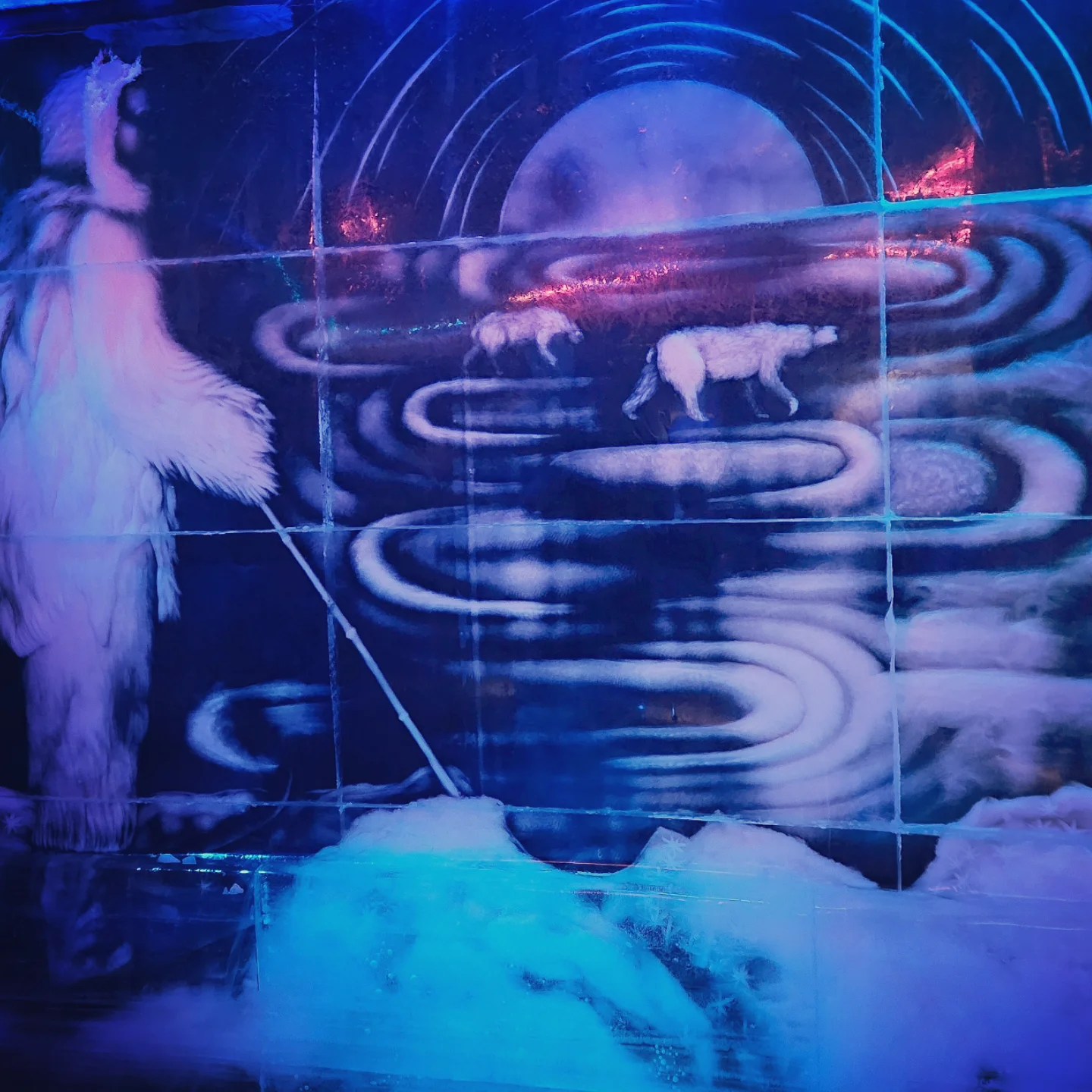
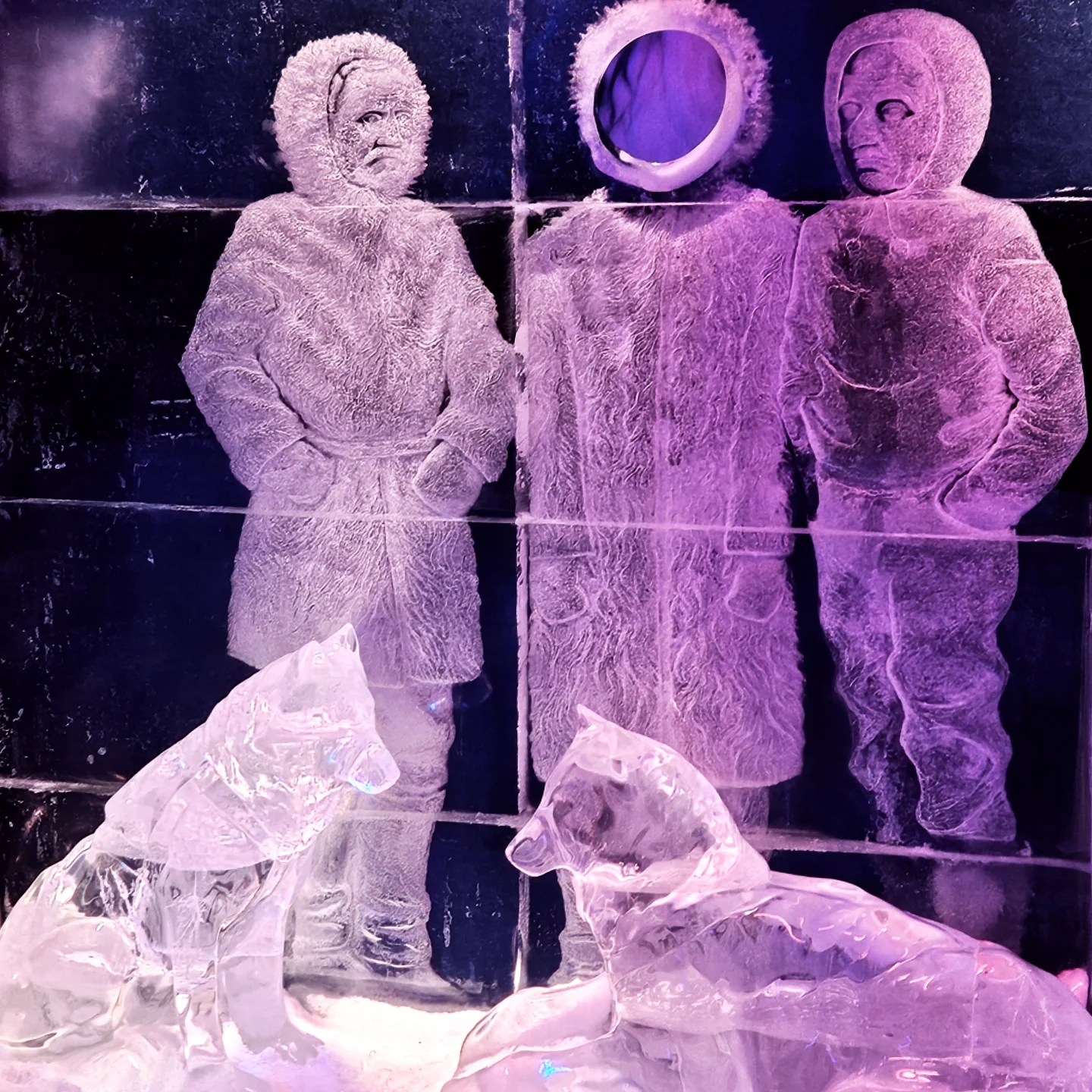
Fjellheisen & the Northern Lights Chase
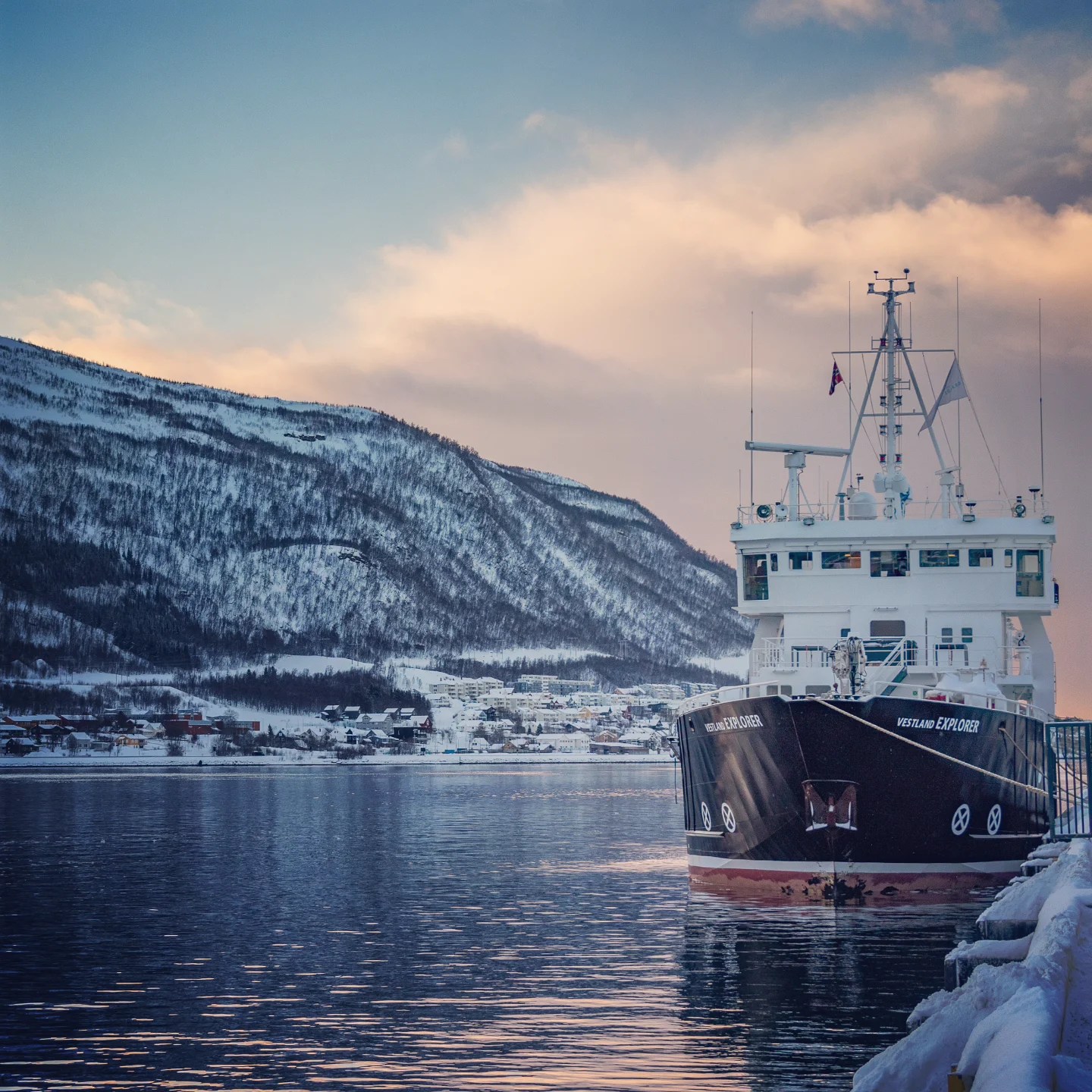
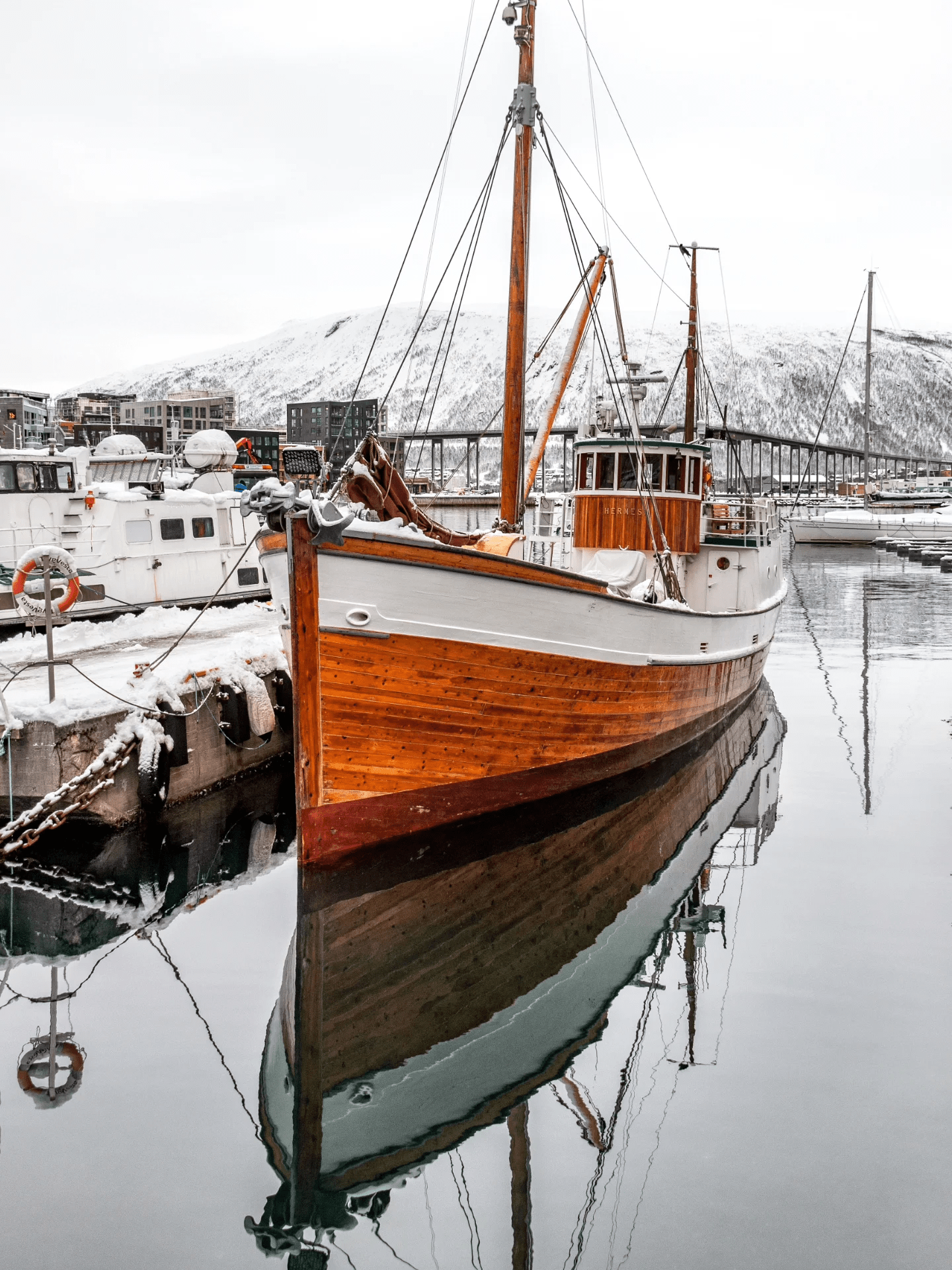
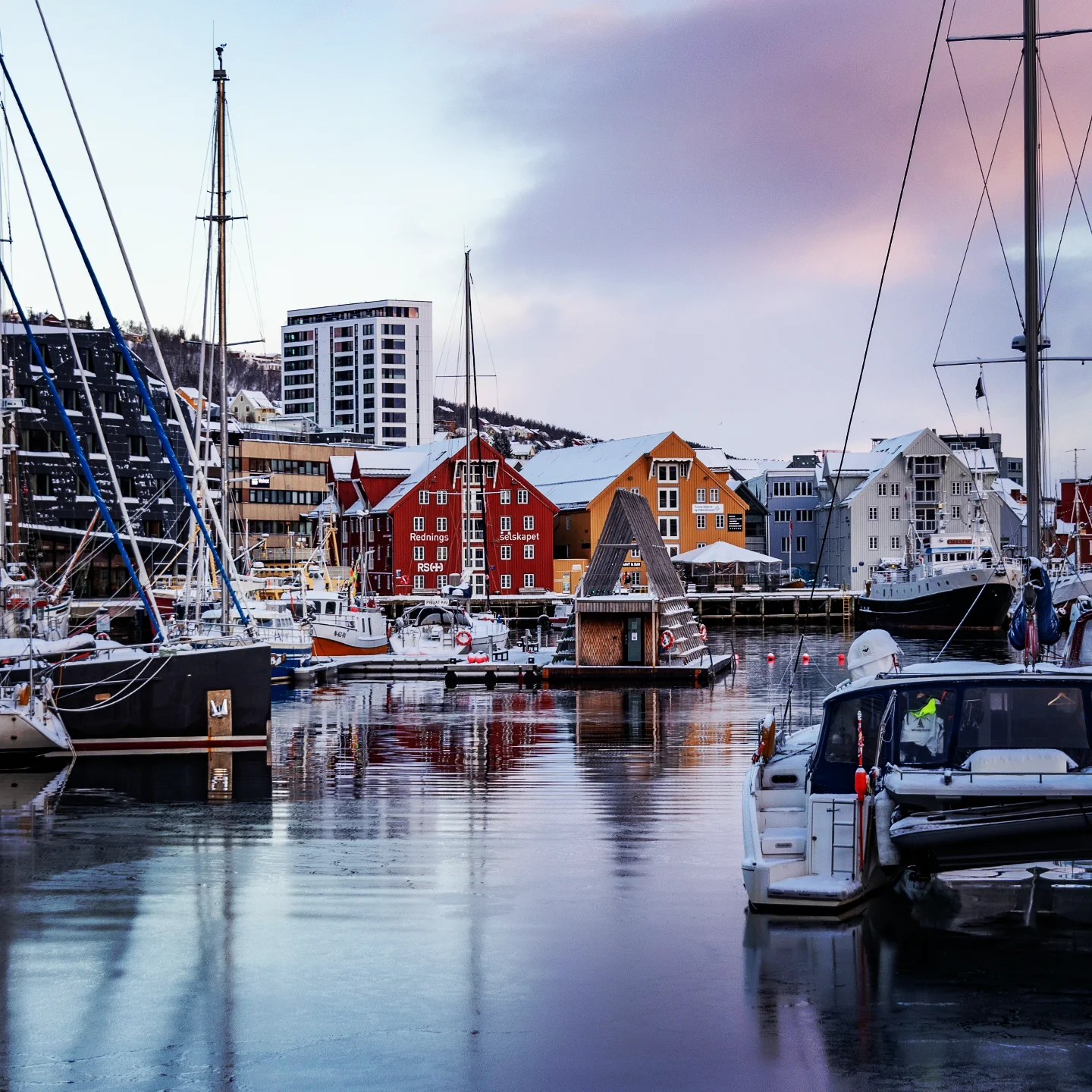
Morning skies gave us our first splash of pinks and golds, so we strolled along Tromsø Harbor, admiring boats resting quietly in the cold.

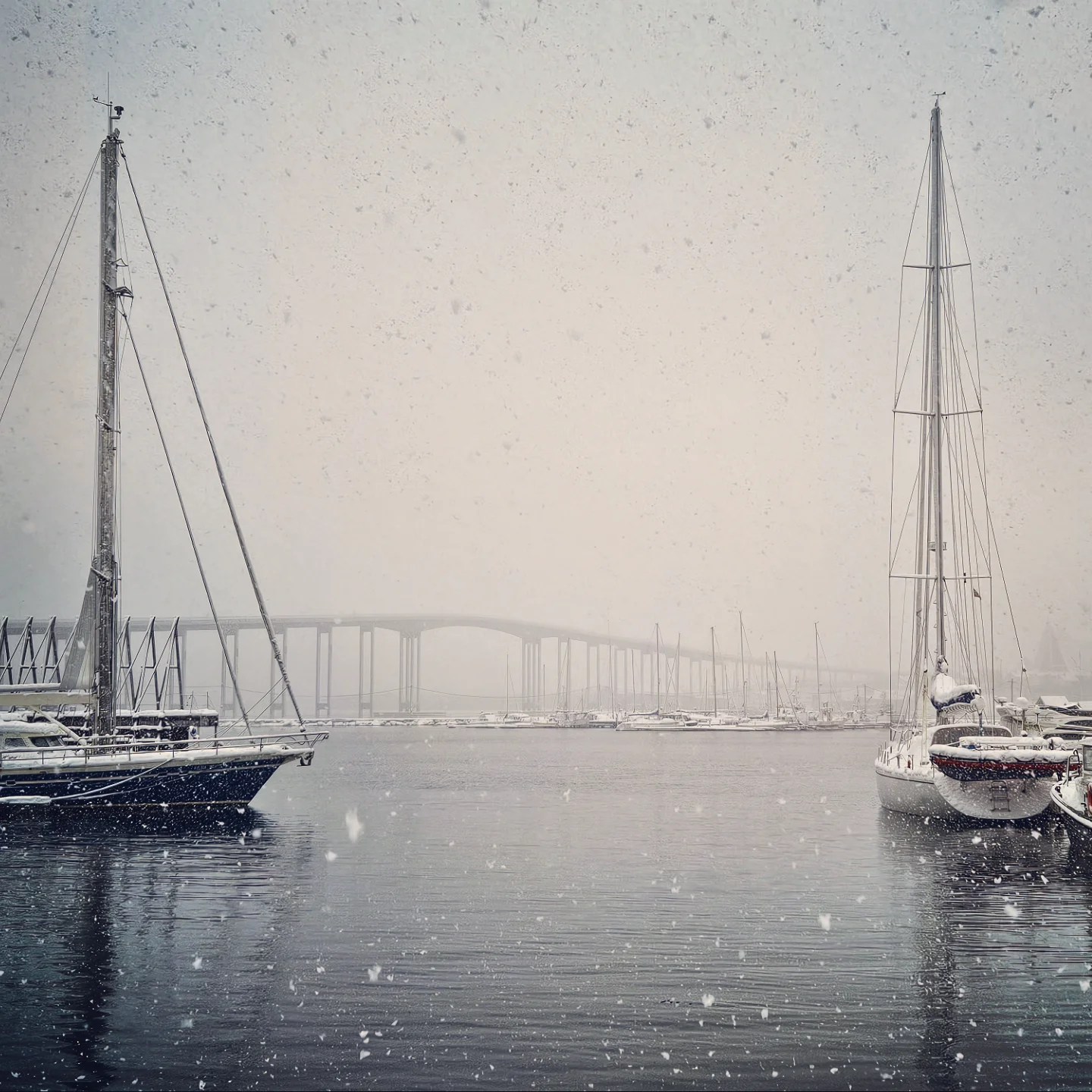
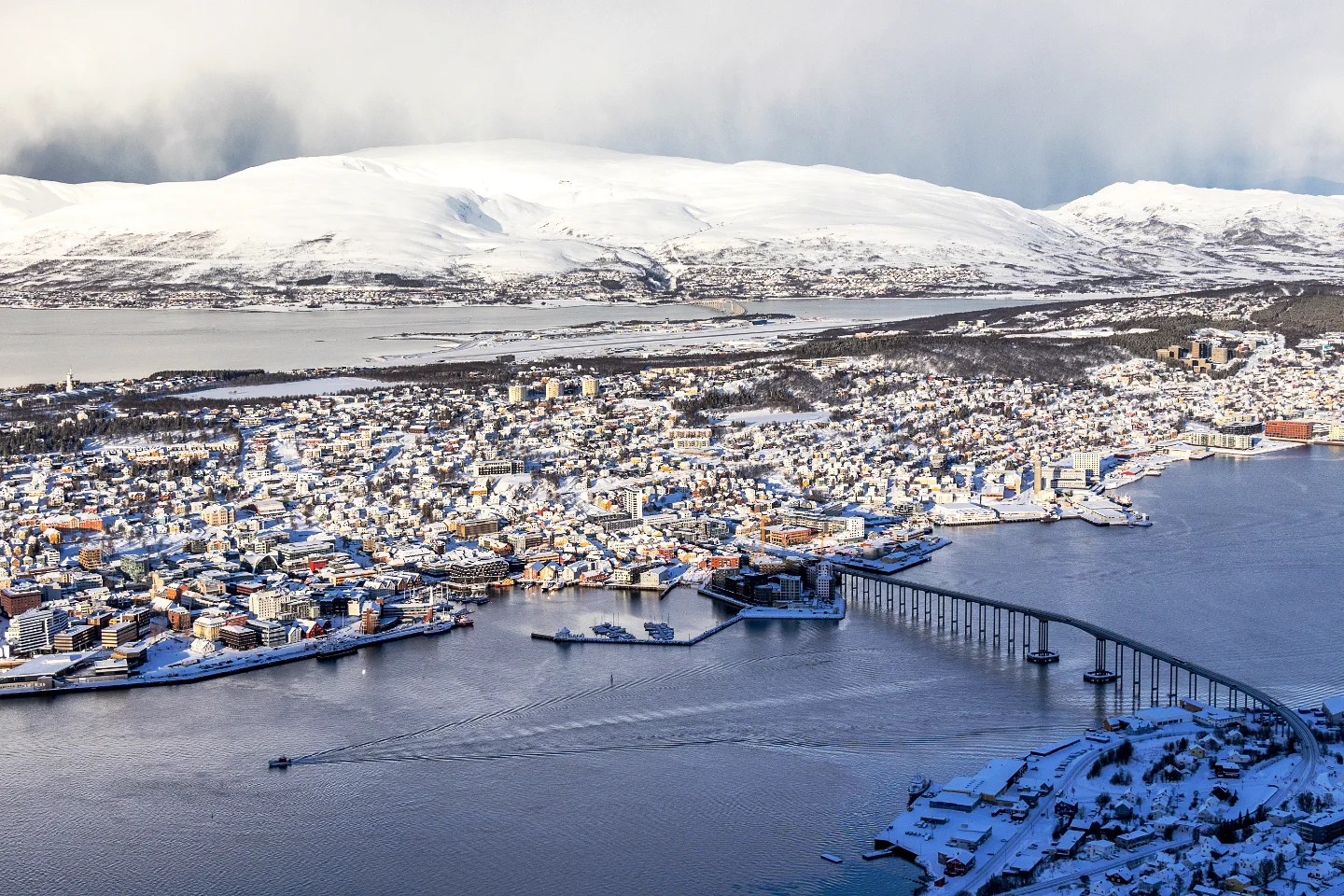
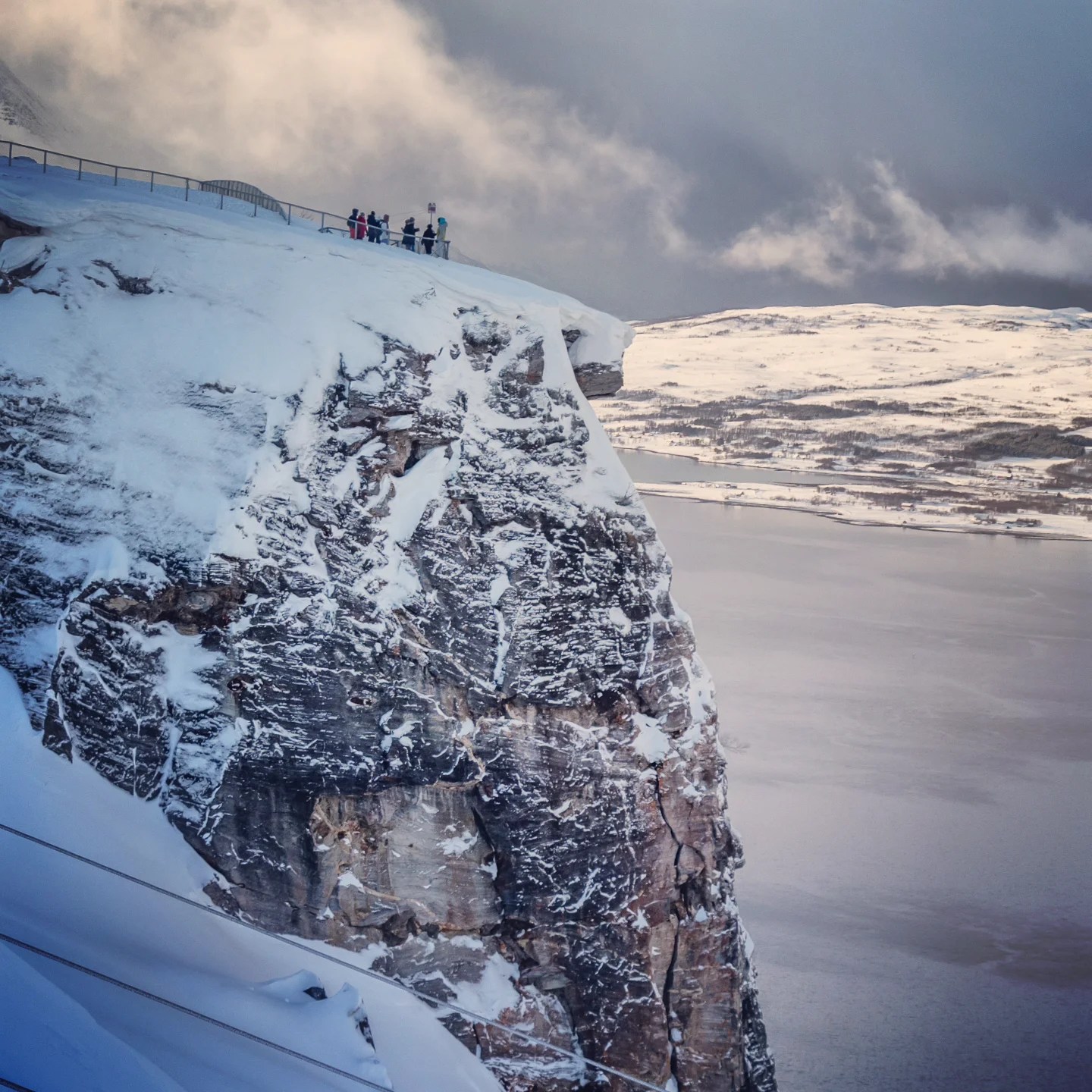
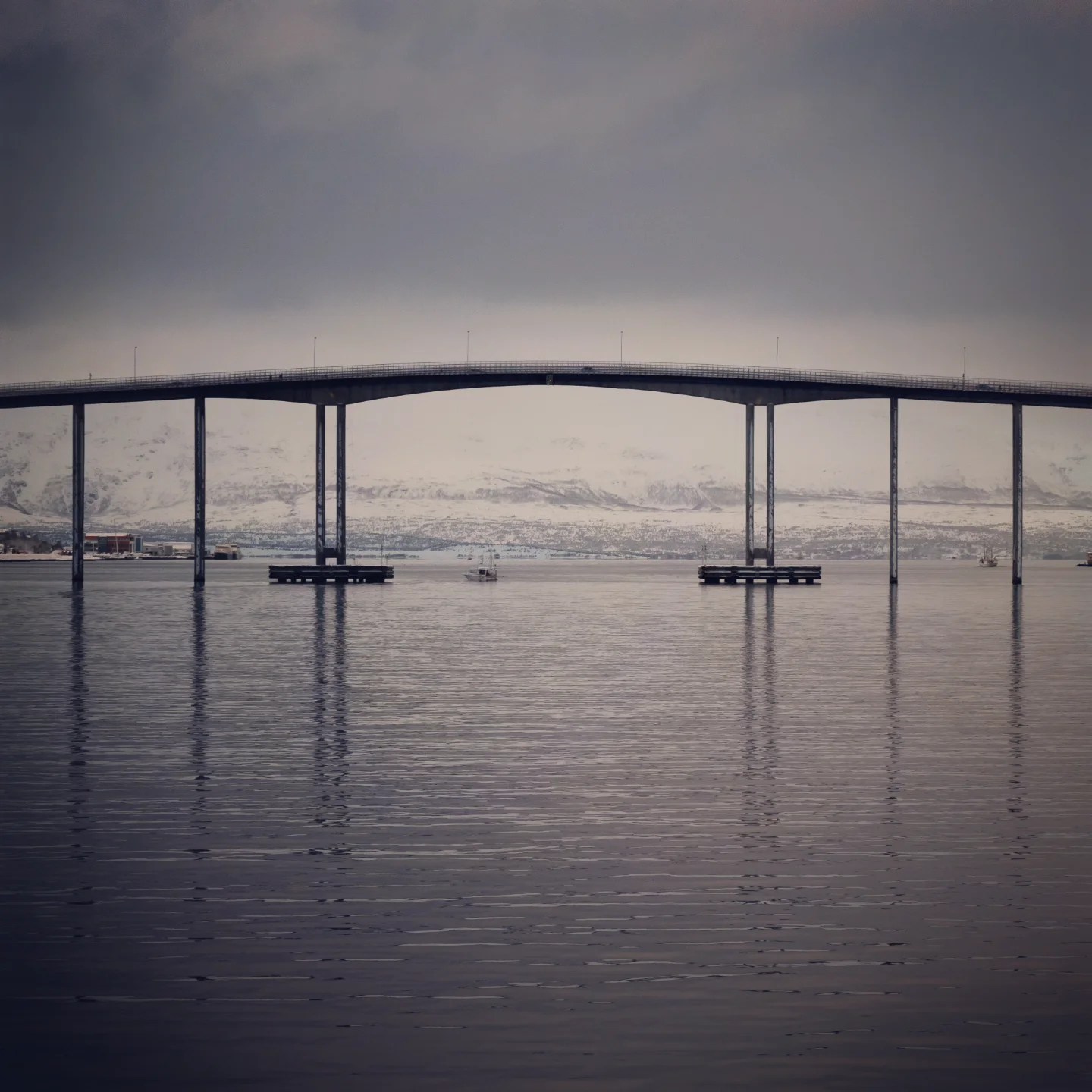
To reach the Fjellheisen cable car, we crossed the Tromsø Bridge (Tromsøbrua)—a scenic walk of about 45 minutes from the city center, depending on how often you stop for photos (and you will stop!). The bridge itself stretches over a kilometer (3,399 ft) and offers stunning views of the harbor and surrounding mountains. Once across, we continued on foot to the base station, where a four-minute ride carried us up to Storsteinen, a mountaintop ledge 421 meters (1,381 ft) above sea level that overlooks the entire city.
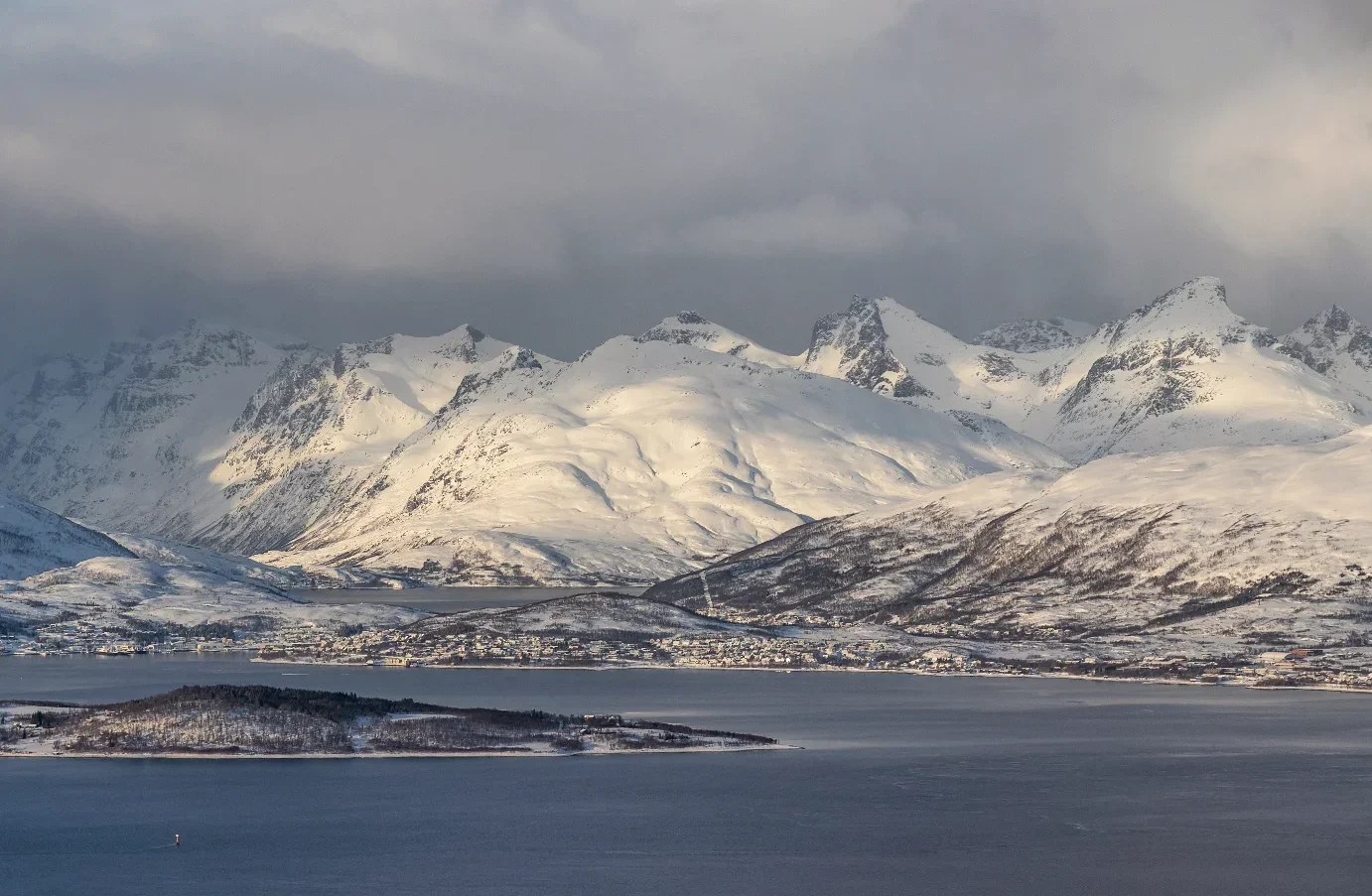
The views? Spellbinding. Mountains, bridges, sea, and city—everything blanketed in white. A snow squall swept through briefly, then cleared to reveal sunlit peaks in all directions.
Note to future self (and readers): Wear your ice spikes on the mountain. I didn’t. I slipped hard, bruised my tailbone, and felt it for far too long.

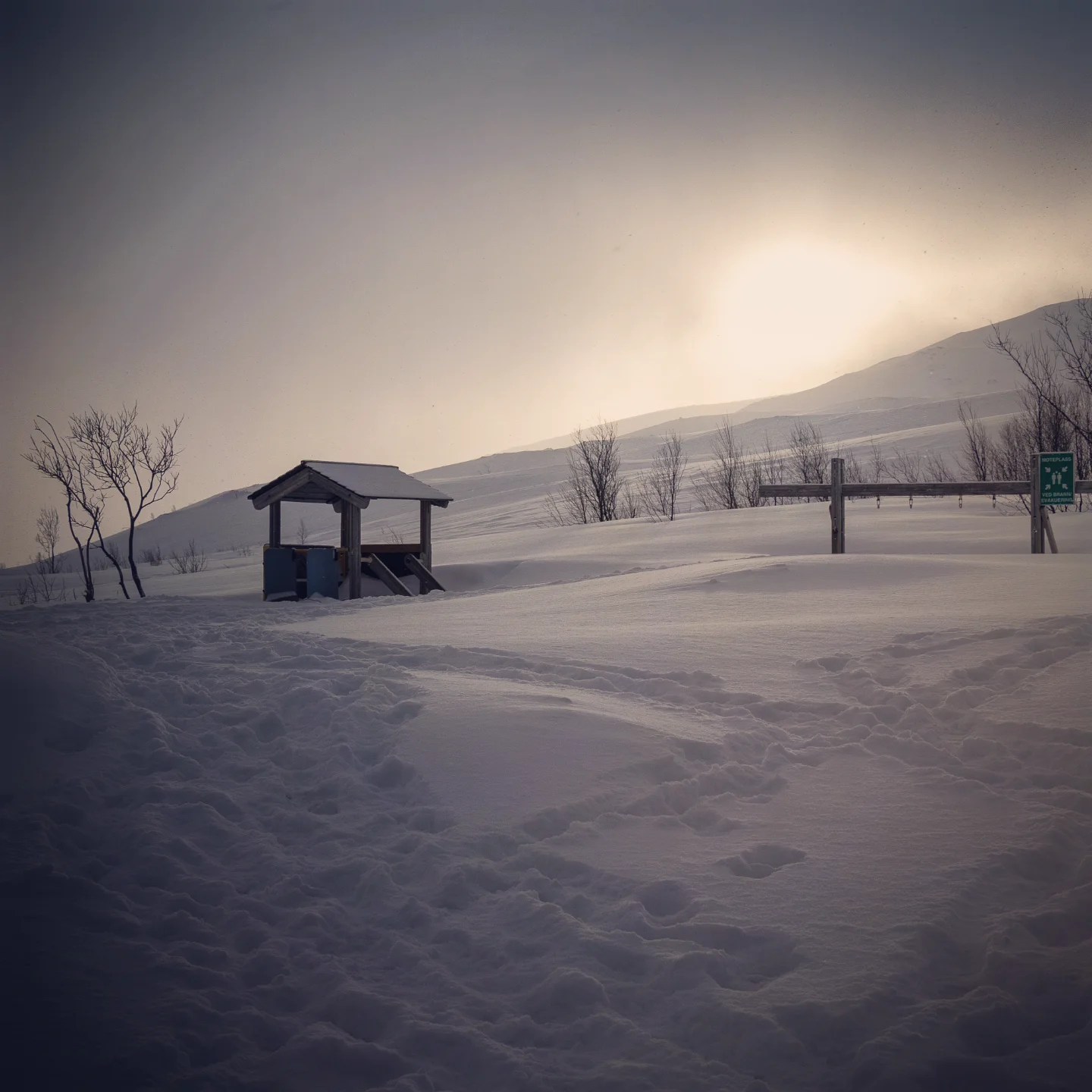



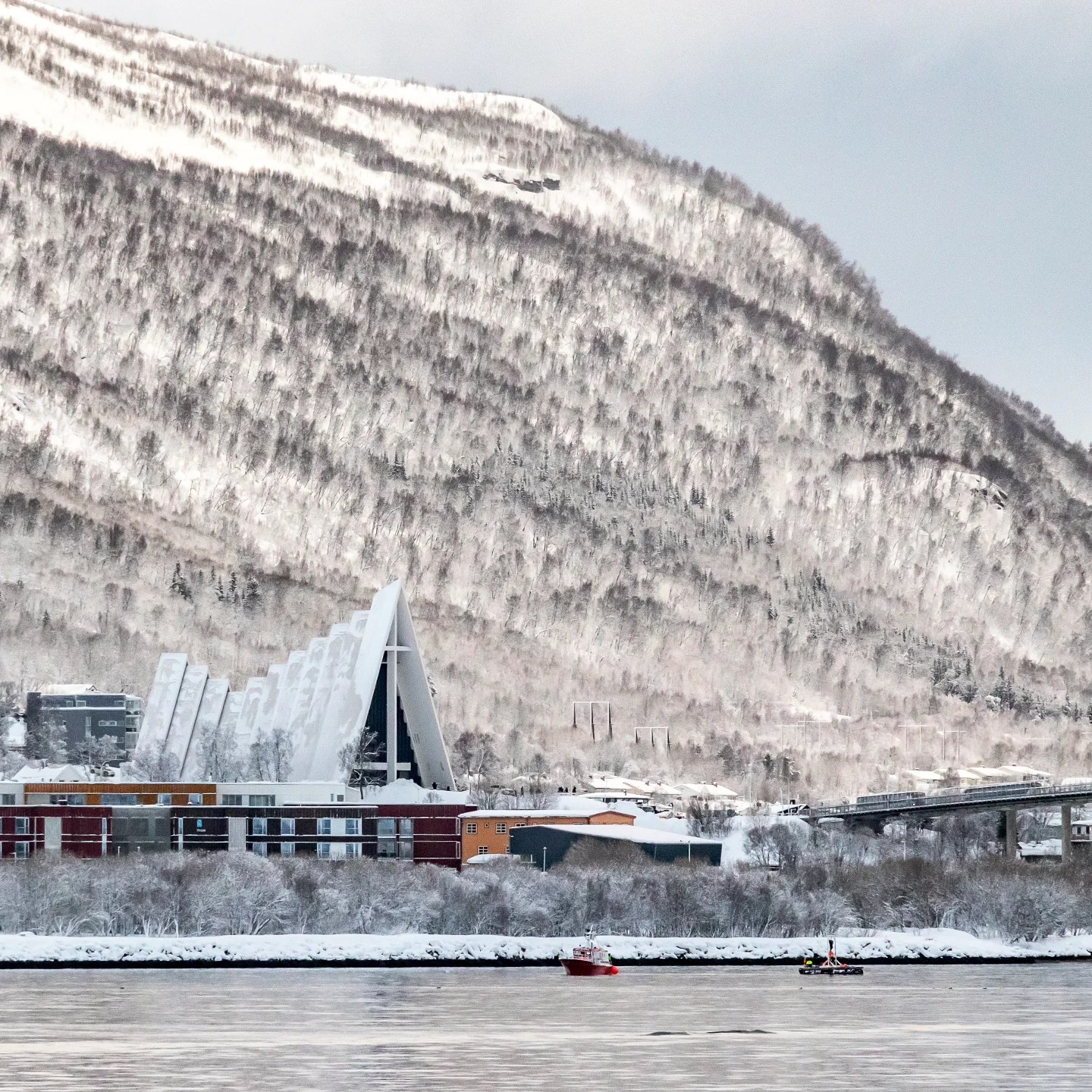
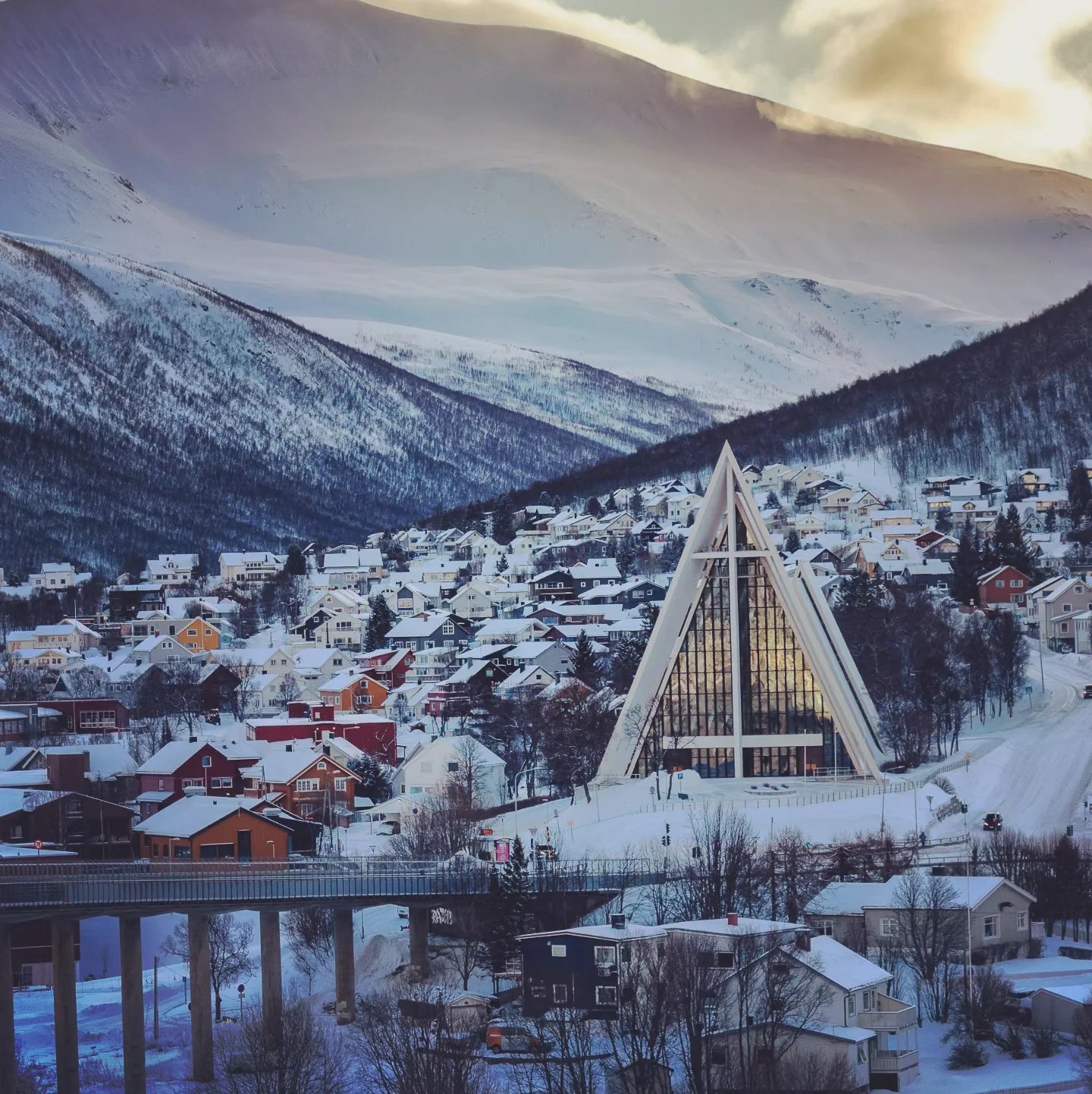
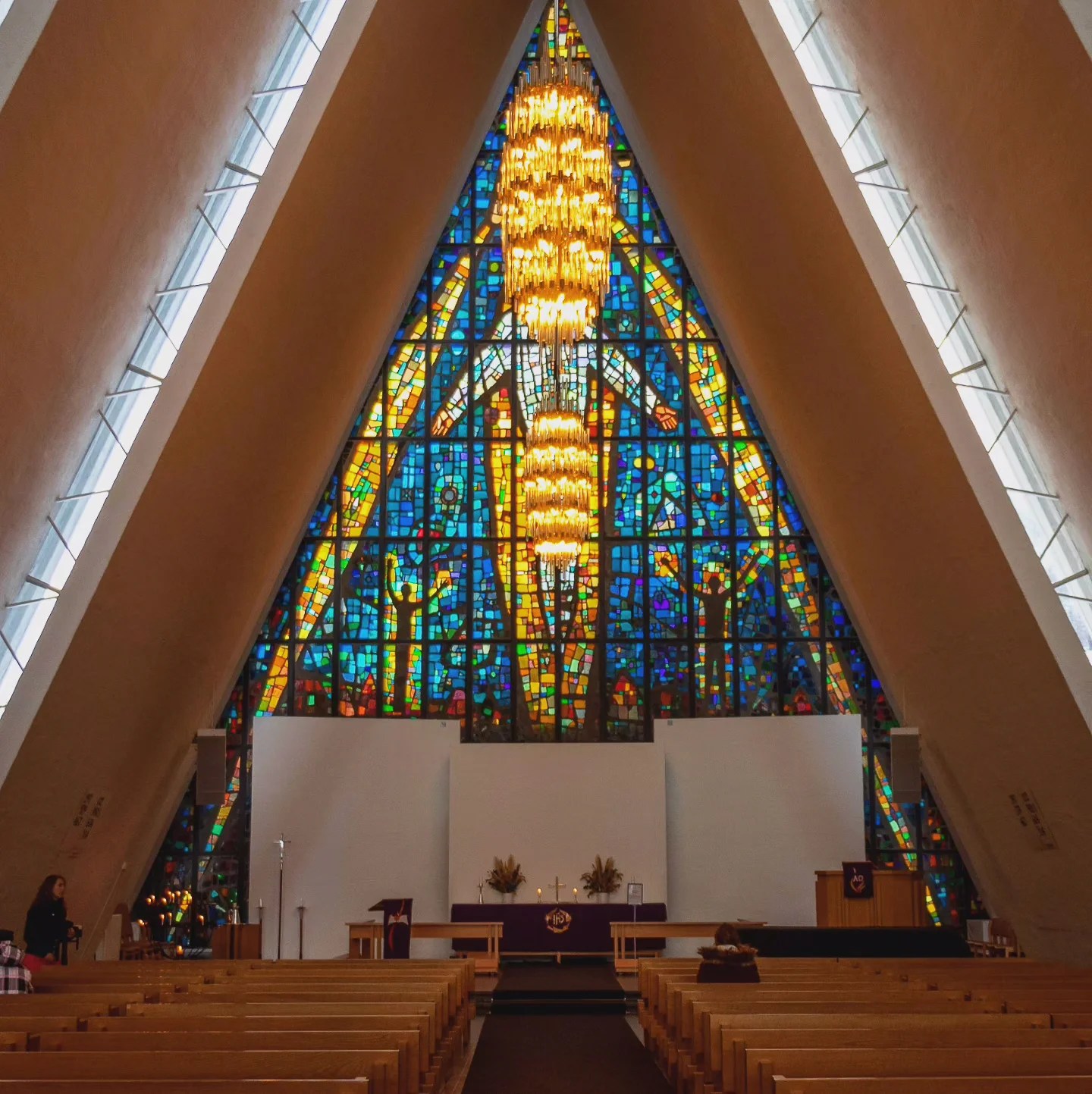
After warming up with coffee and cake at the Fjellstua Café—a cozy spot perched at the top of the cable car—we made our way back down the mountain. From there, we visited the striking Arctic Cathedral, known for its soaring triangular design and magnificent stained-glass window. Officially named Ishavskatedralen, it was built in 1965 and remains one of Tromsø’s most iconic landmarks.
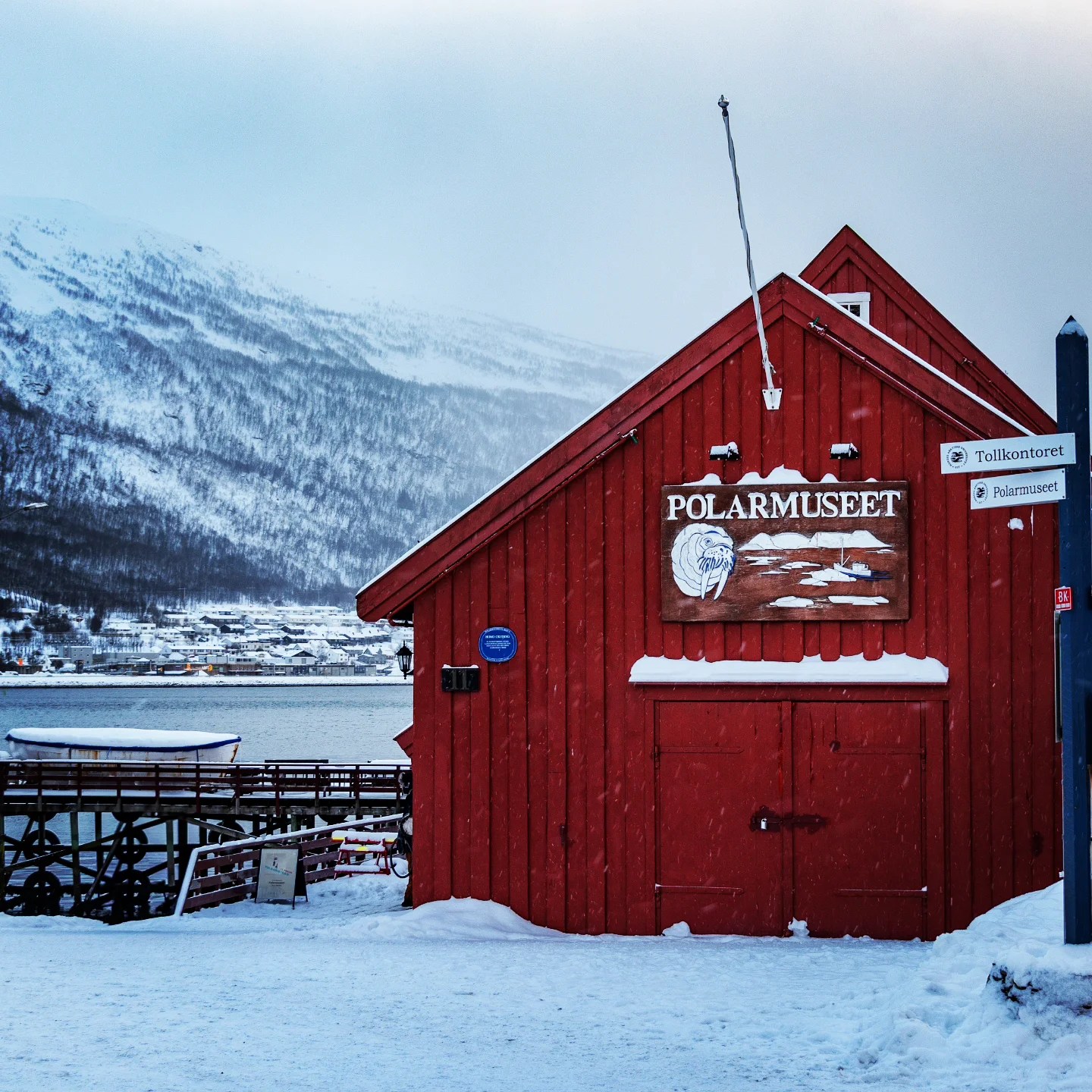
Back across the bridge, we explored the Polar Museum (Polarmuseet). Housed in an 1830s customs house, it offers fascinating insight into Arctic expeditions and Tromsø’s role as a gateway to the polar regions.

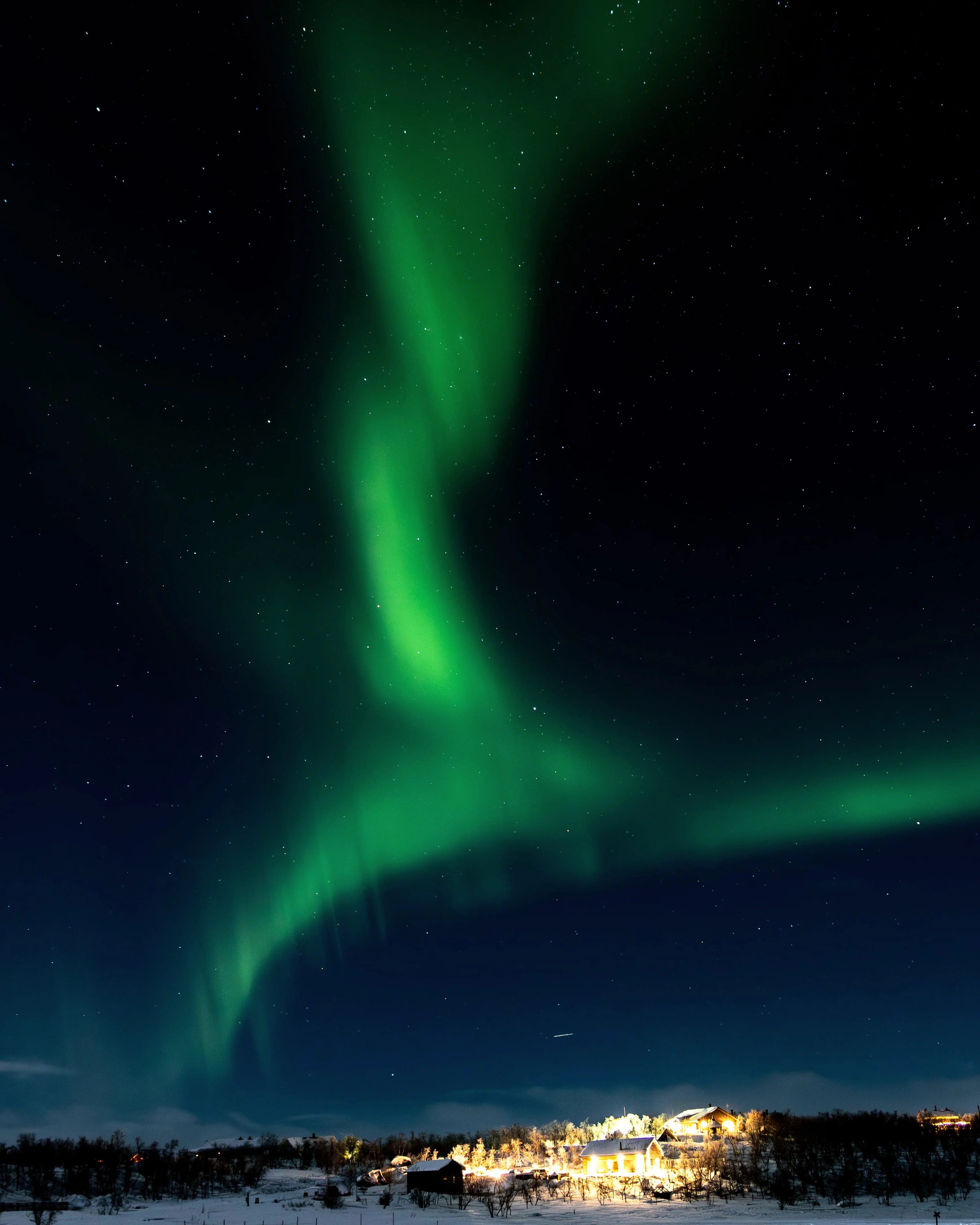
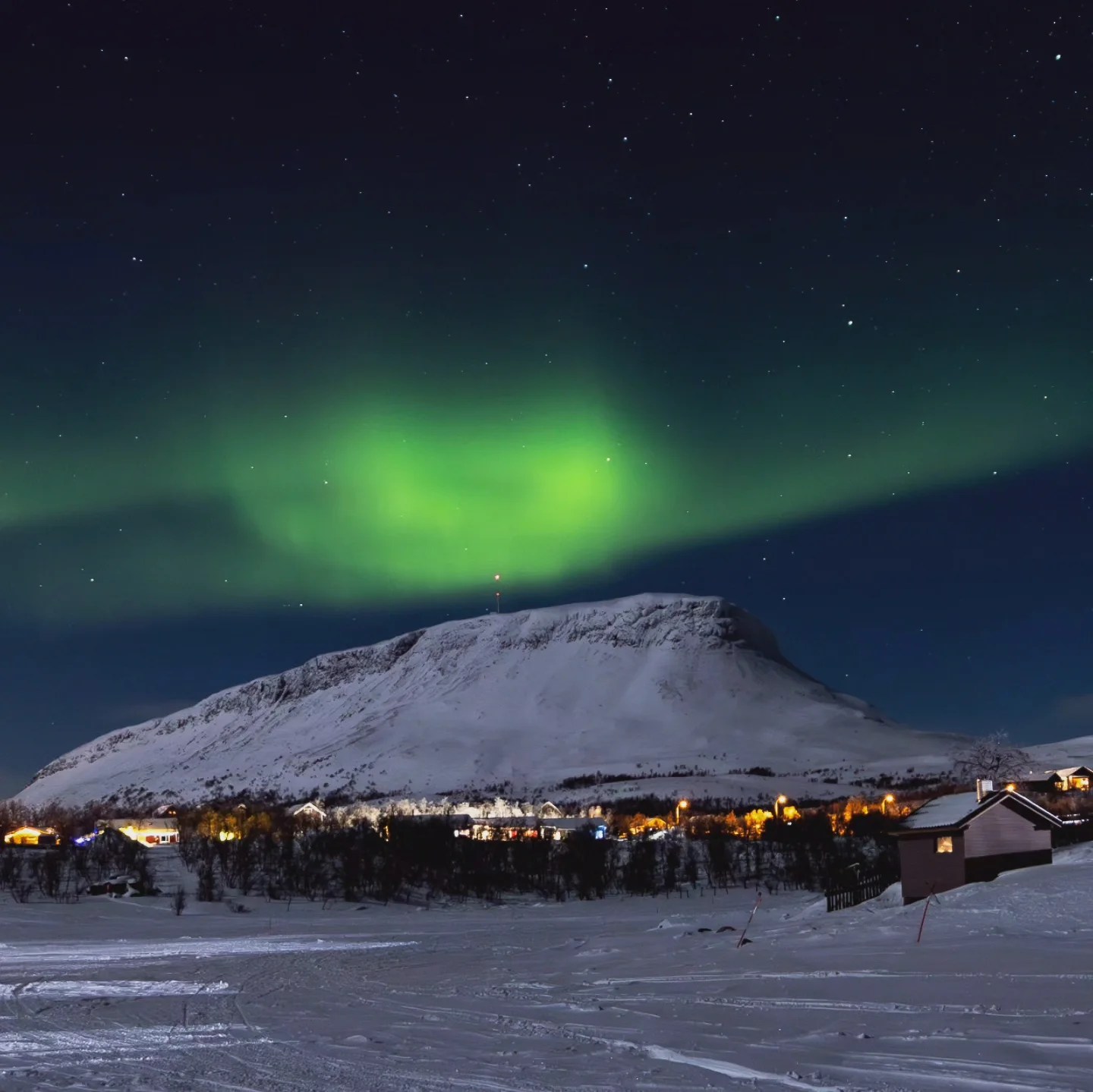
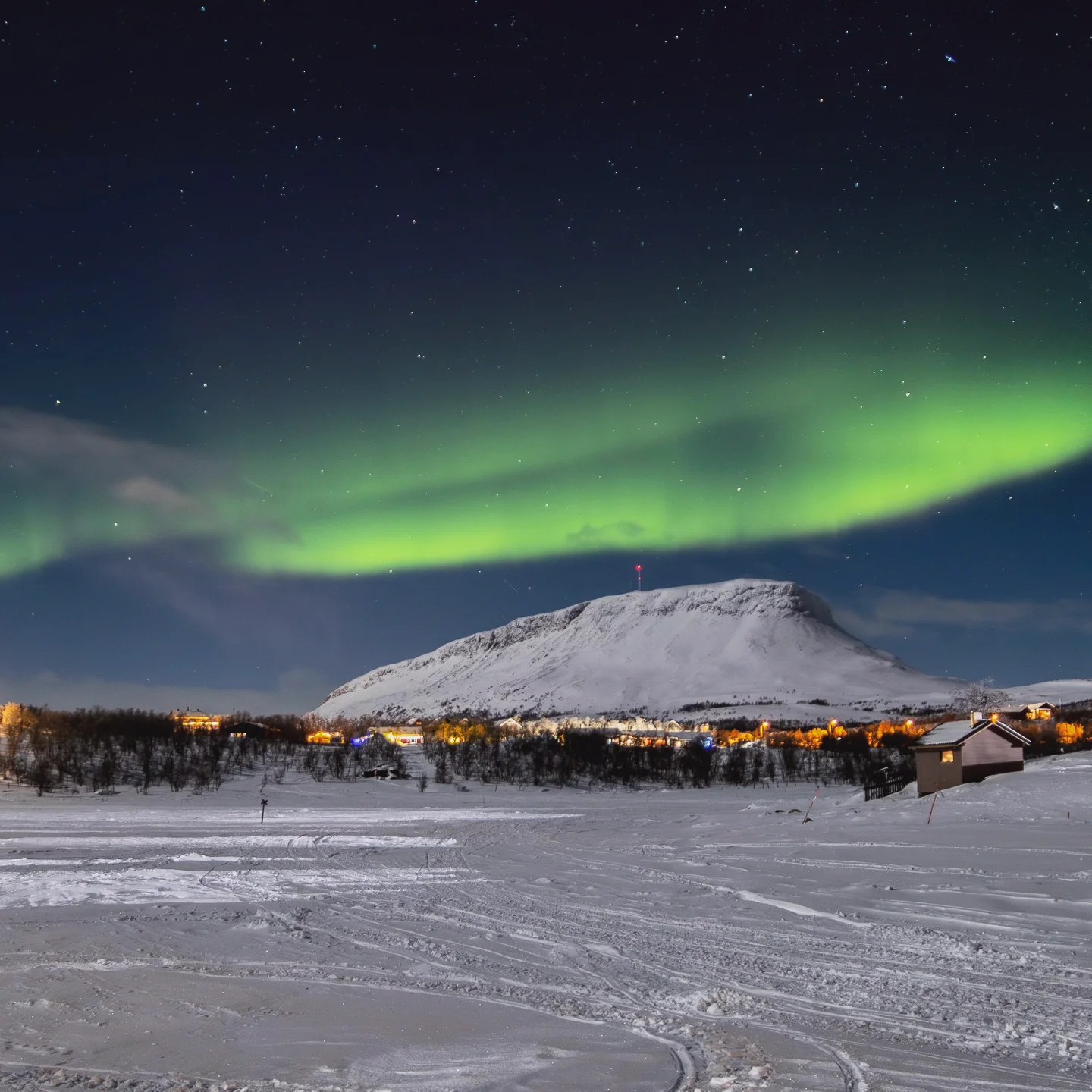
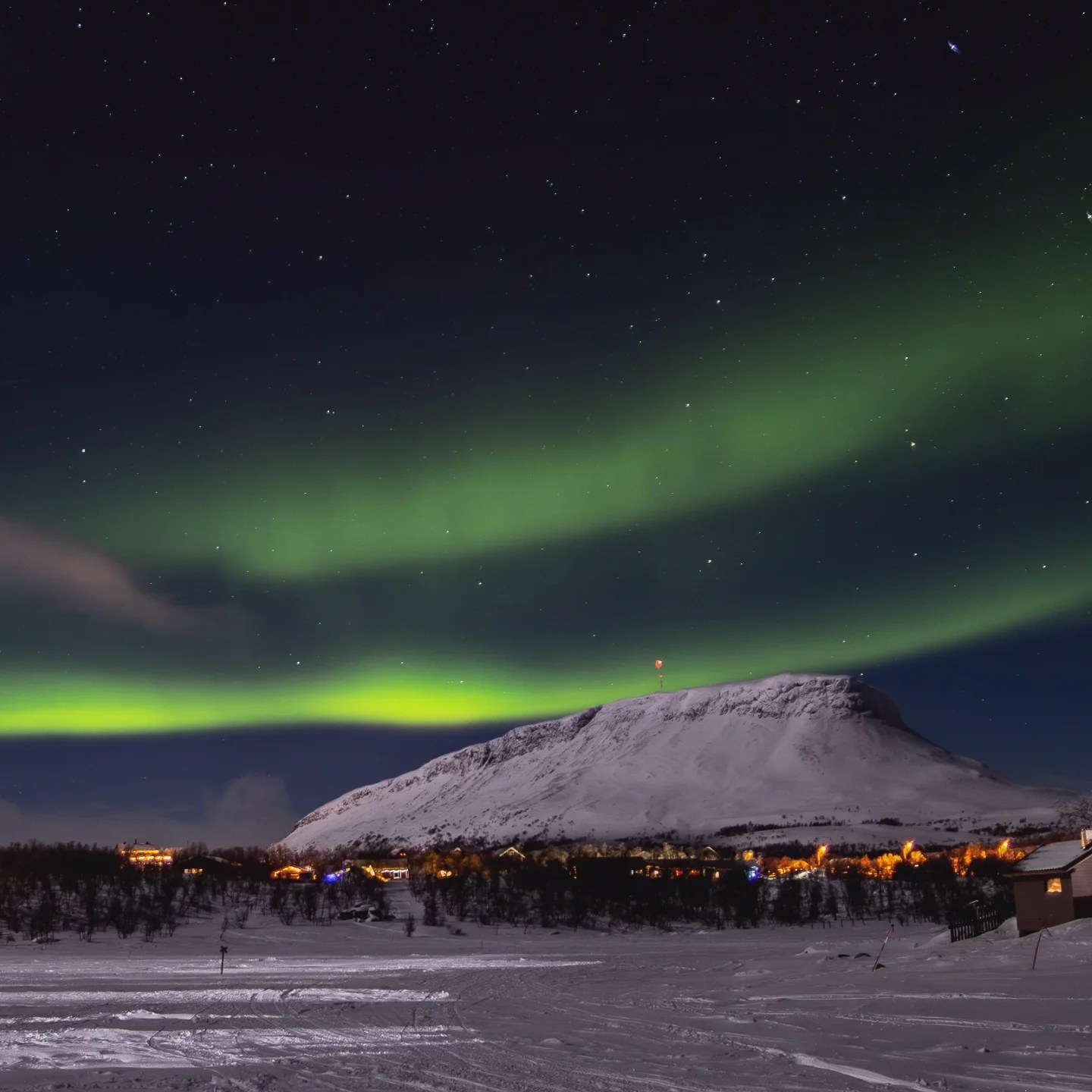
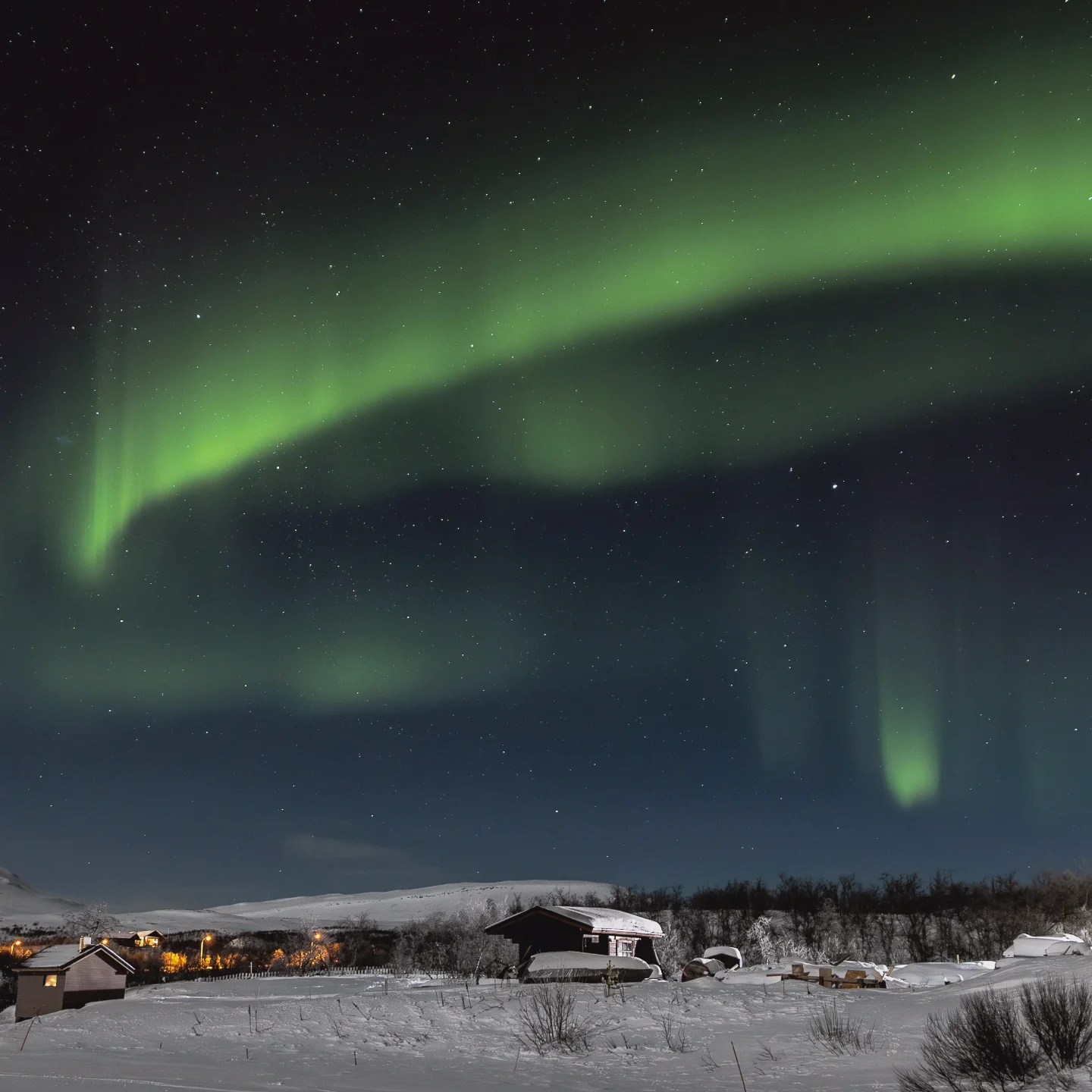
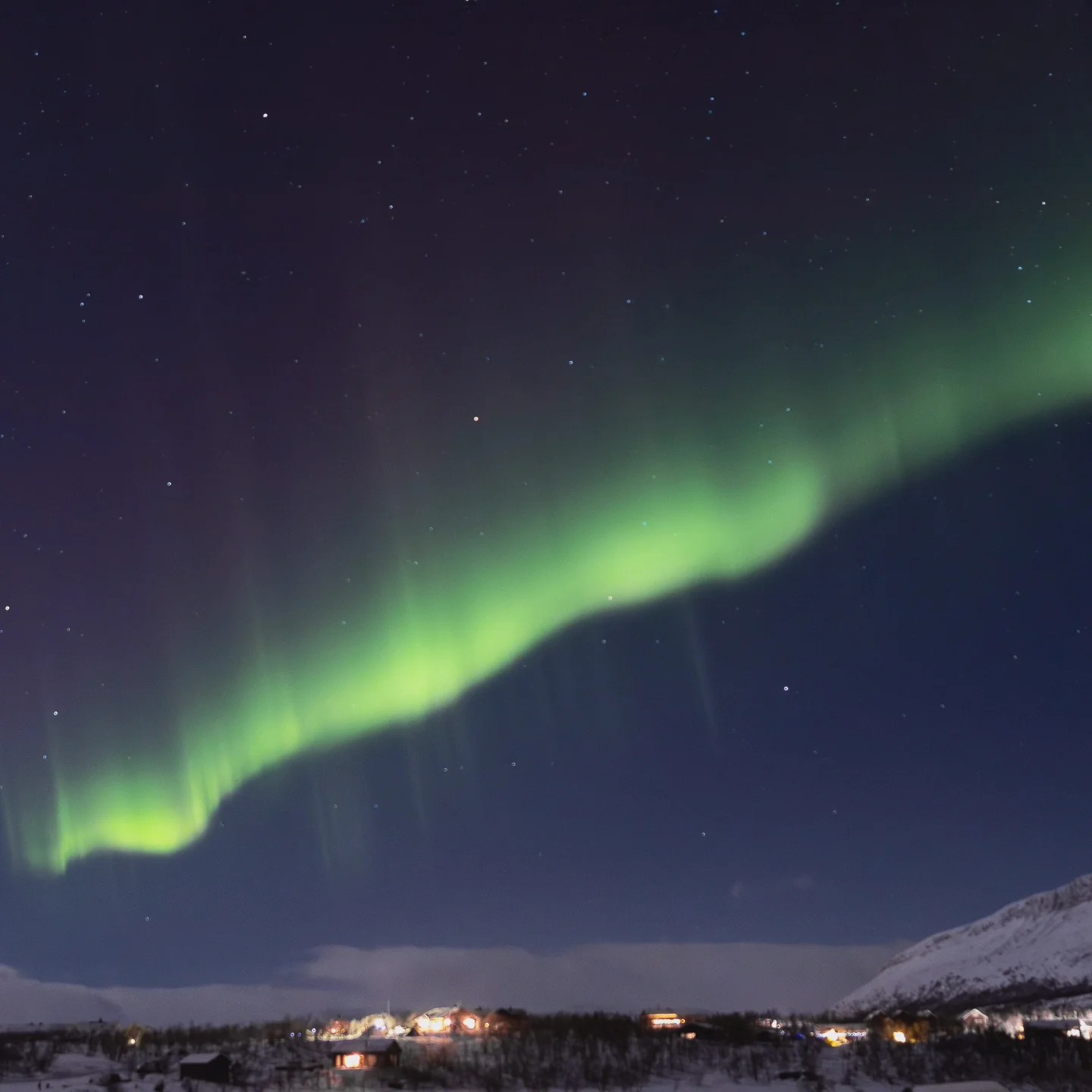
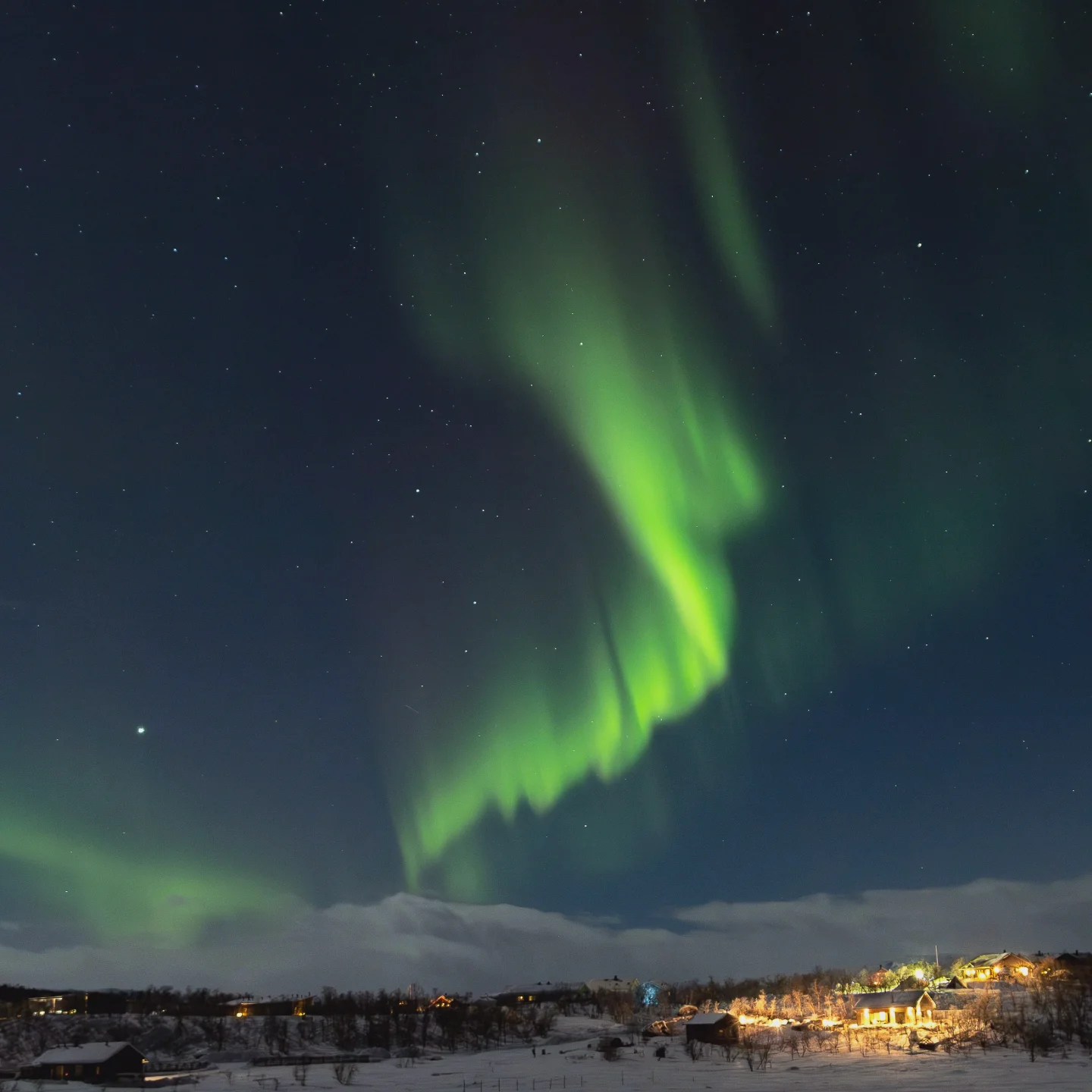
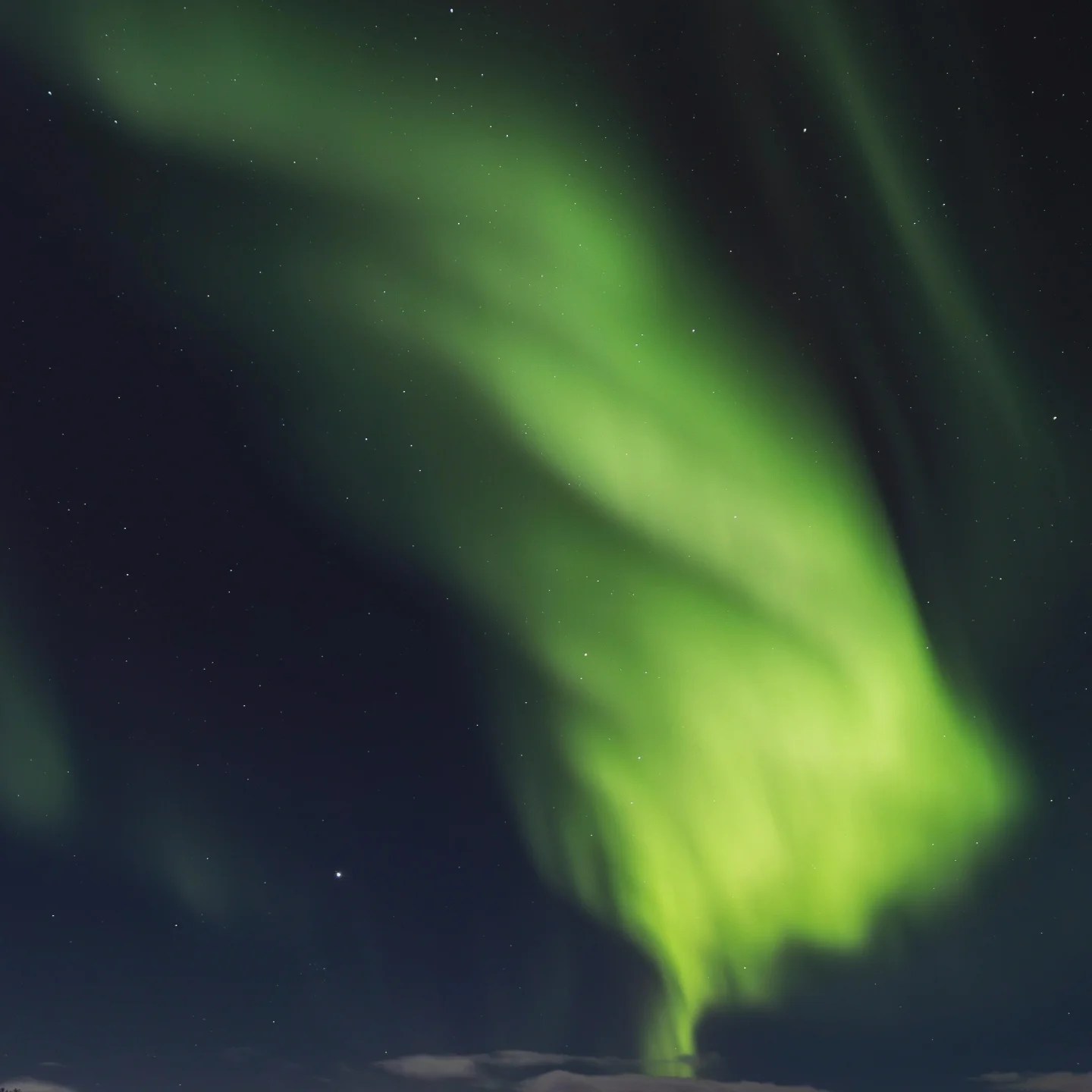
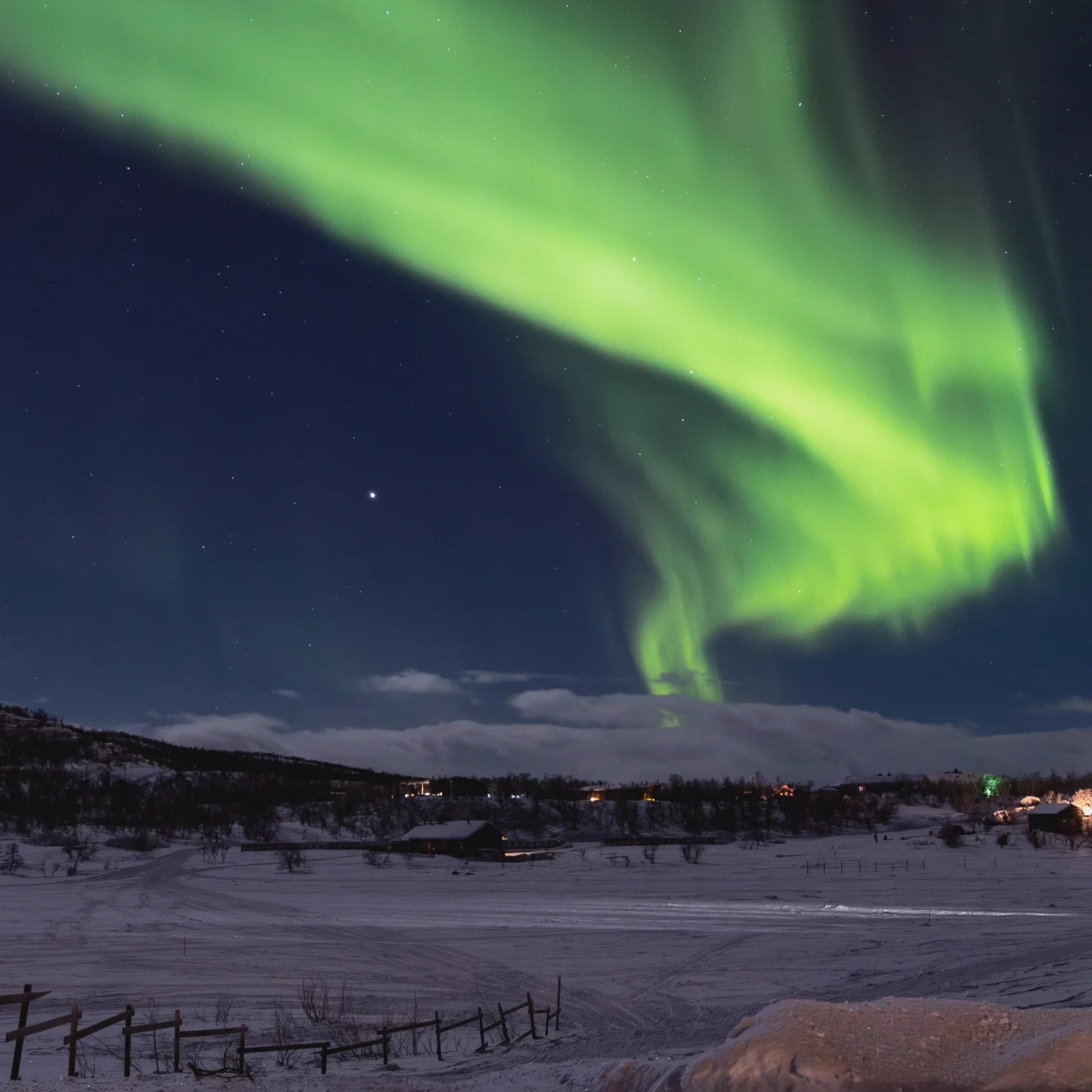
That night, we joined a small group tour with Northern Soul Adventures in search of the Northern Lights. Clouds pushed us across the border into Finland—but just when we thought we’d missed it, the aurora danced across the sky. Green waves shimmered. One shape even looked like a bird in flight. We scrambled out of the van, clicking our shutters and forgetting the cold.
At the end of the night, we sat around a warm fire, sipping hot chocolate and soup under the stars and shimmering green lights. Our guide named the new photo stop “Frozen Robin” in my honor after I nearly froze without my thermal suit. It was cold, magical and truly unforgettable.



Reindeer & Sami Stories
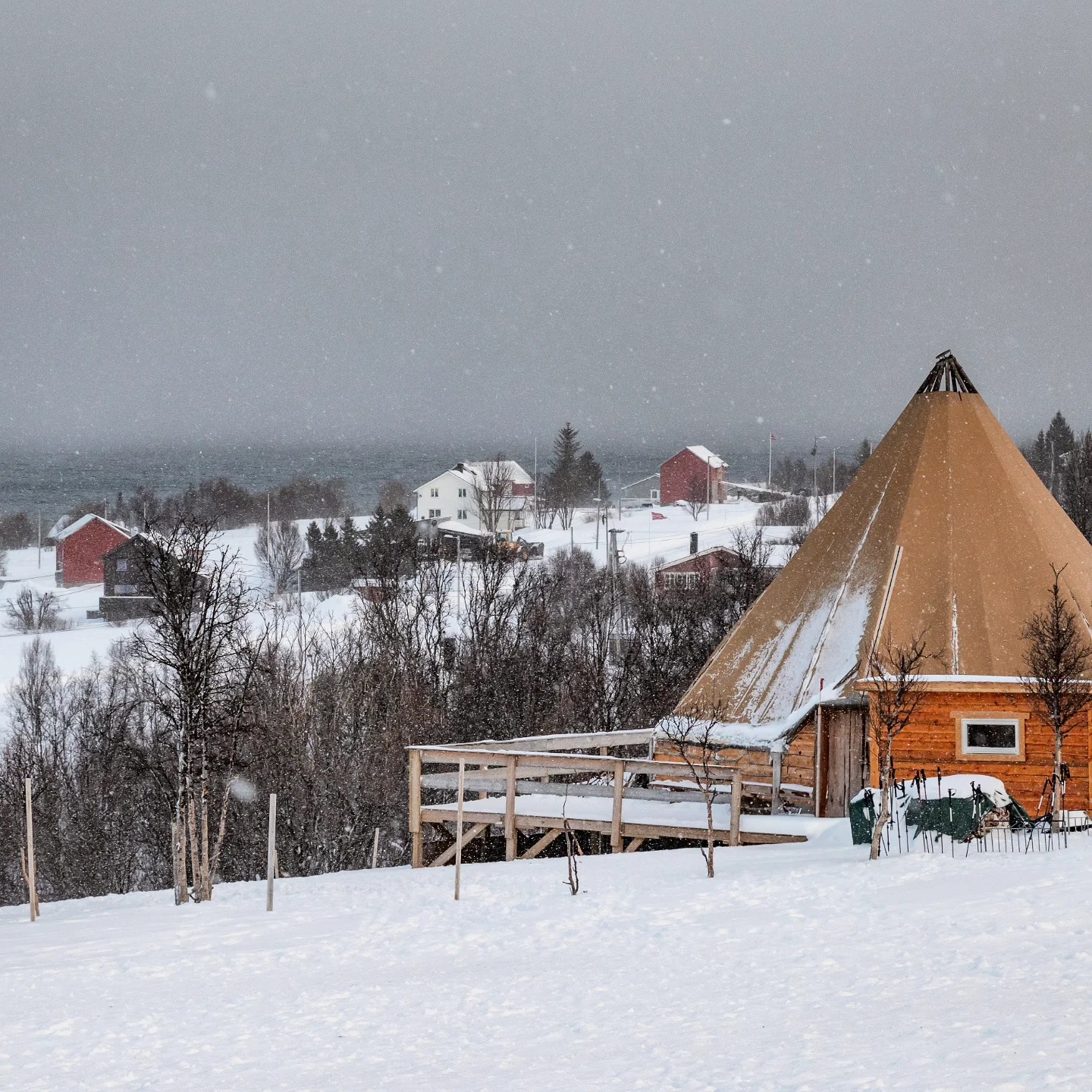
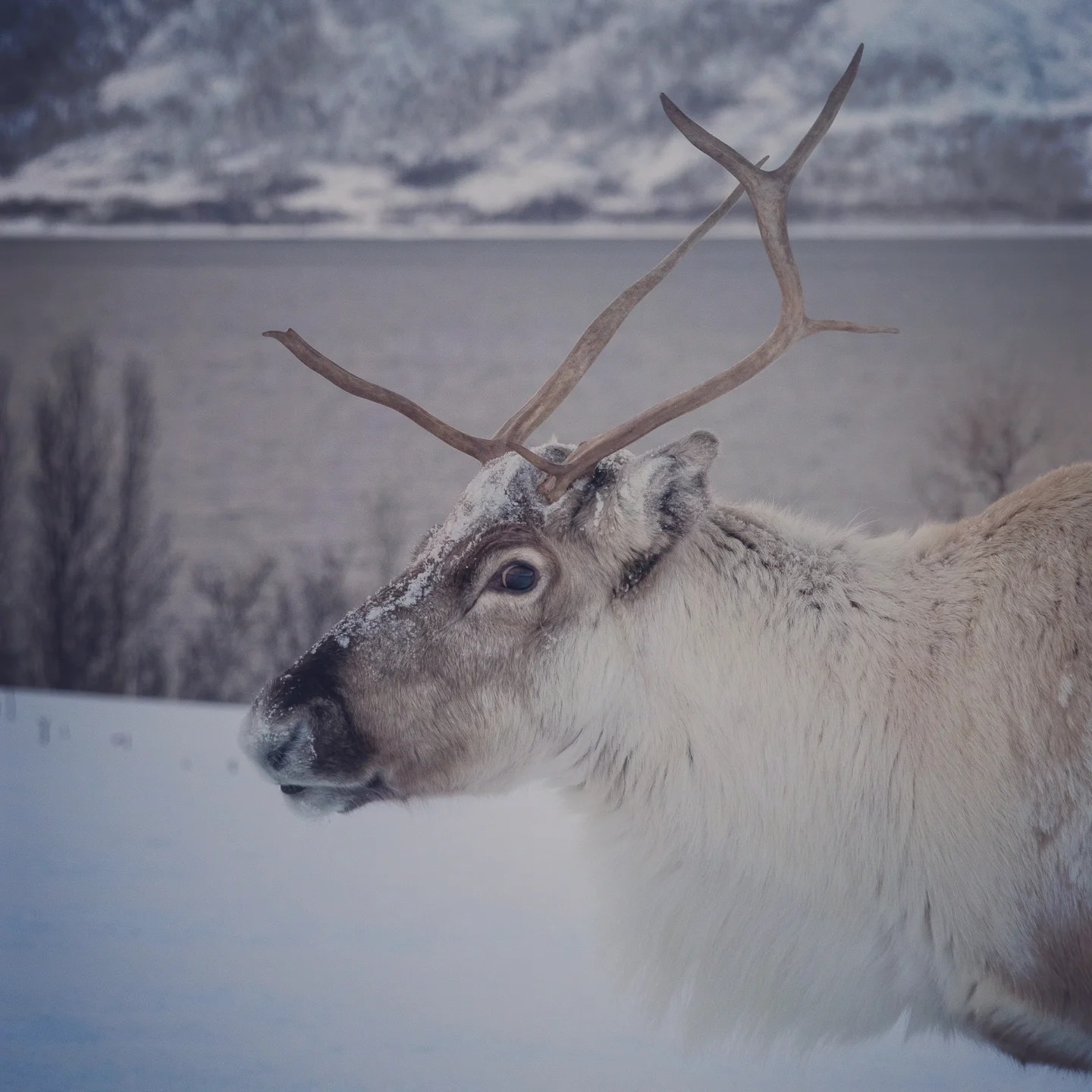
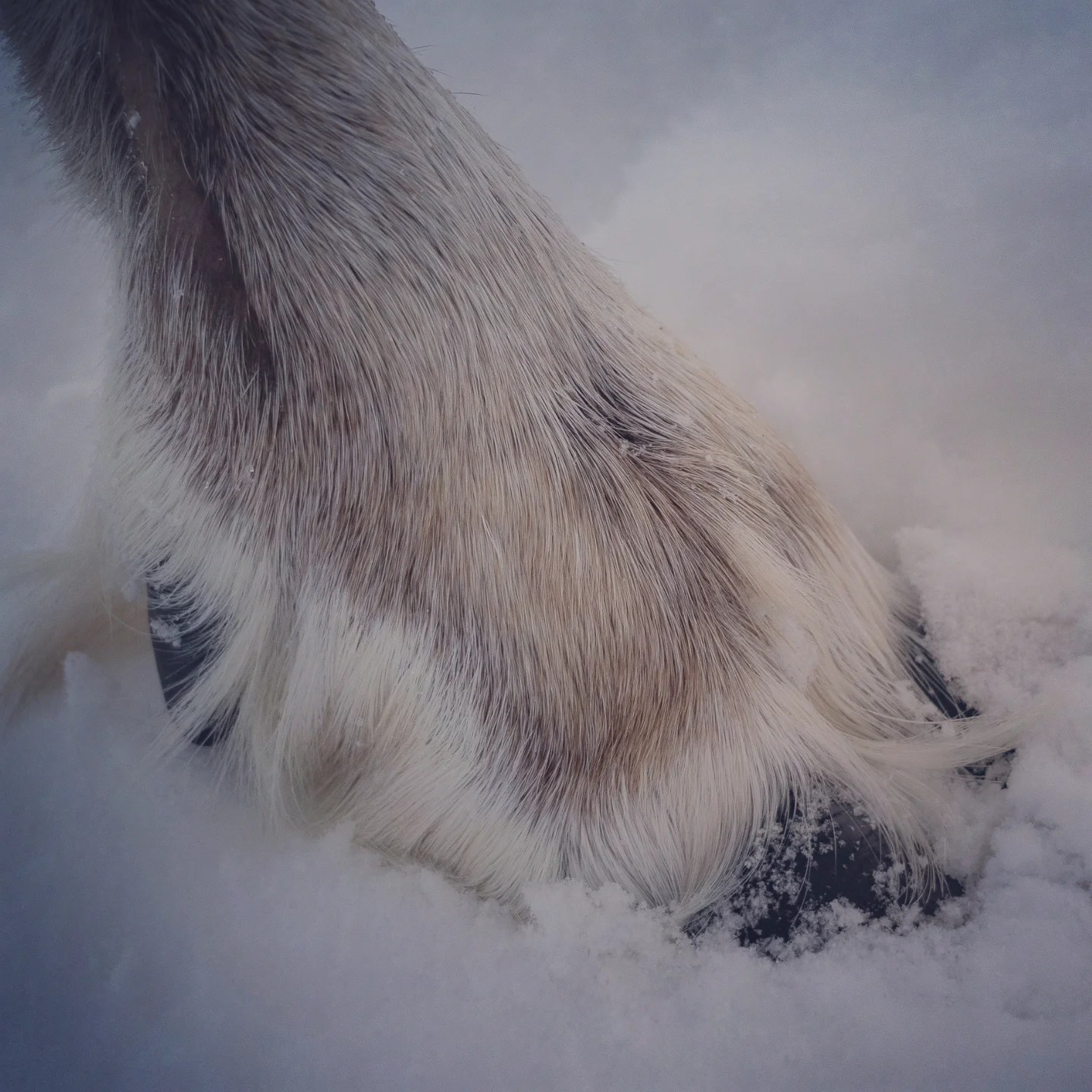
We booked a Reindeer Ranch & Sámi Cultural Tour via Get Your Guide, and it ended up being one of our favorite days. Surrounded by a few hundred reindeer (and a lot of snow), we fed and marveled at these gentle animals while soaking in views of the fjord.
Lunch was inside a warm lavvu (Sámi tent) around a fire, where we were served traditional hearty stew, hot drinks and cookies while hearing stories and joik—the ancestral Sámi form of song. The Sámi have lived in this region for centuries, herding reindeer across the vast Arctic. It was an honor to learn more about their lives and culture.







Later that evening, we ate at Full Steam Tromsø, a seafood restaurant located right along the harbor. The menu focuses on traditional Arctic seafood like cod, stockfish, and other local catches. The setting is cozy and rustic, with the feel of a historic fishing cabin. Full Steam also houses a small maritime museum and offers a Cod Tasting Experience—a guided culinary journey through Norwegian seafood traditions. You can sample classic dishes while learning about the country’s deep connection to the sea.


We had planned to visit Pust Sauna—two floating saunas in the inner harbor—but I had just had surgery on my hand and couldn’t go in the water. If you go: bring two towels, a swimsuit, and your courage for a cold plunge into Arctic waters! The saunas offer views of the harbor and nearby mountains and are inspired by the Arctic Cathedral and traditional Sámi architecture.
Arctic Roadtrip & Telegrafbukta Area
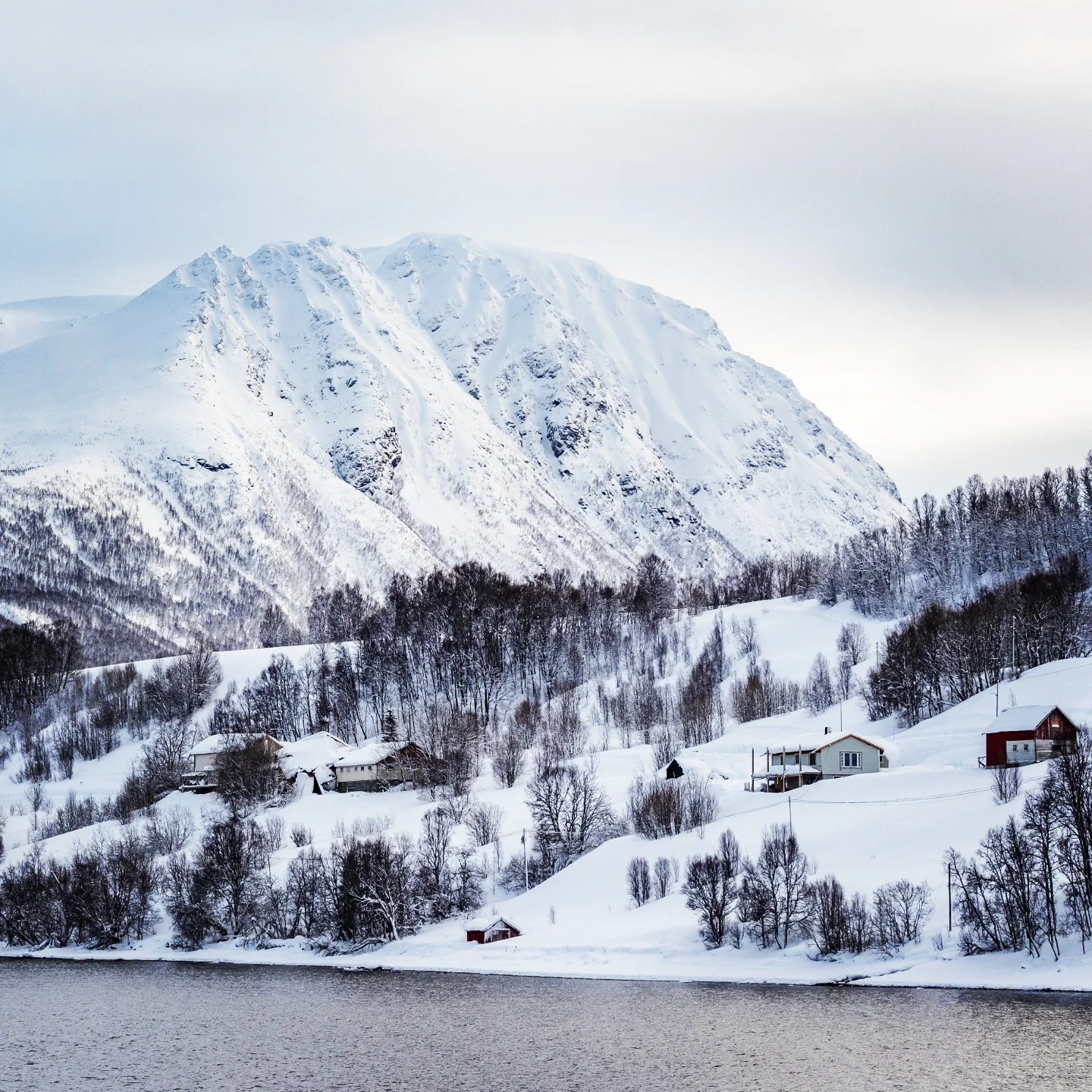
We joined Northern Soul Adventures again for an Arctic Fjord Roadtrip, a small group tour that typically travels toward the islands of Kvaløya and Sommarøy. But due to weather conditions, our guide opted for an inland route—and it was no less spectacular. We stopped at scenic viewpoints featuring frozen fjords, snow-covered peaks, and peaceful mountain valleys. It was less about famous landmarks and more about soaking in the winter landscape as it unfolded around us. At our last stop, we enjoyed an outdoor lunch with warm drinks, surrounded by silence and snowy beauty.
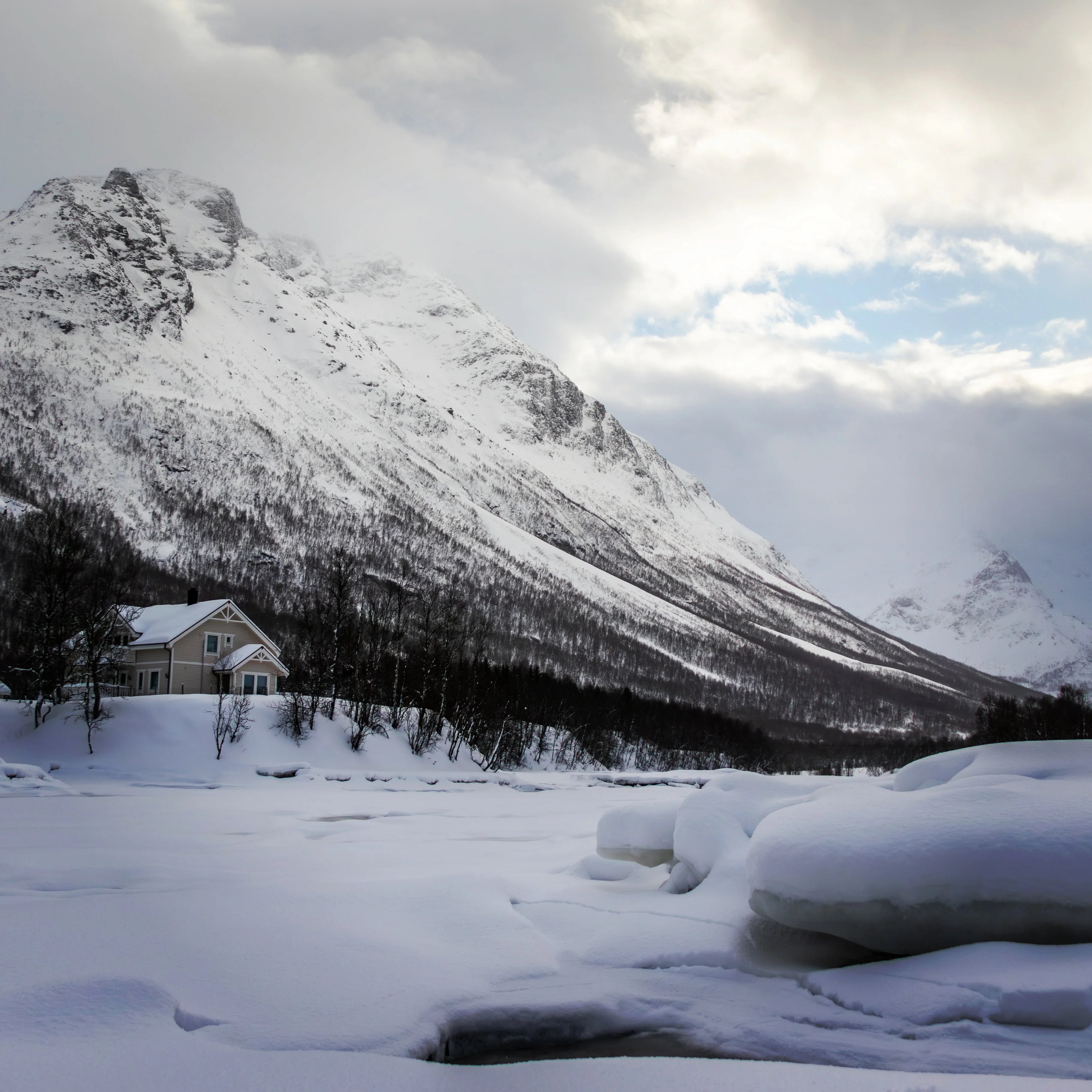

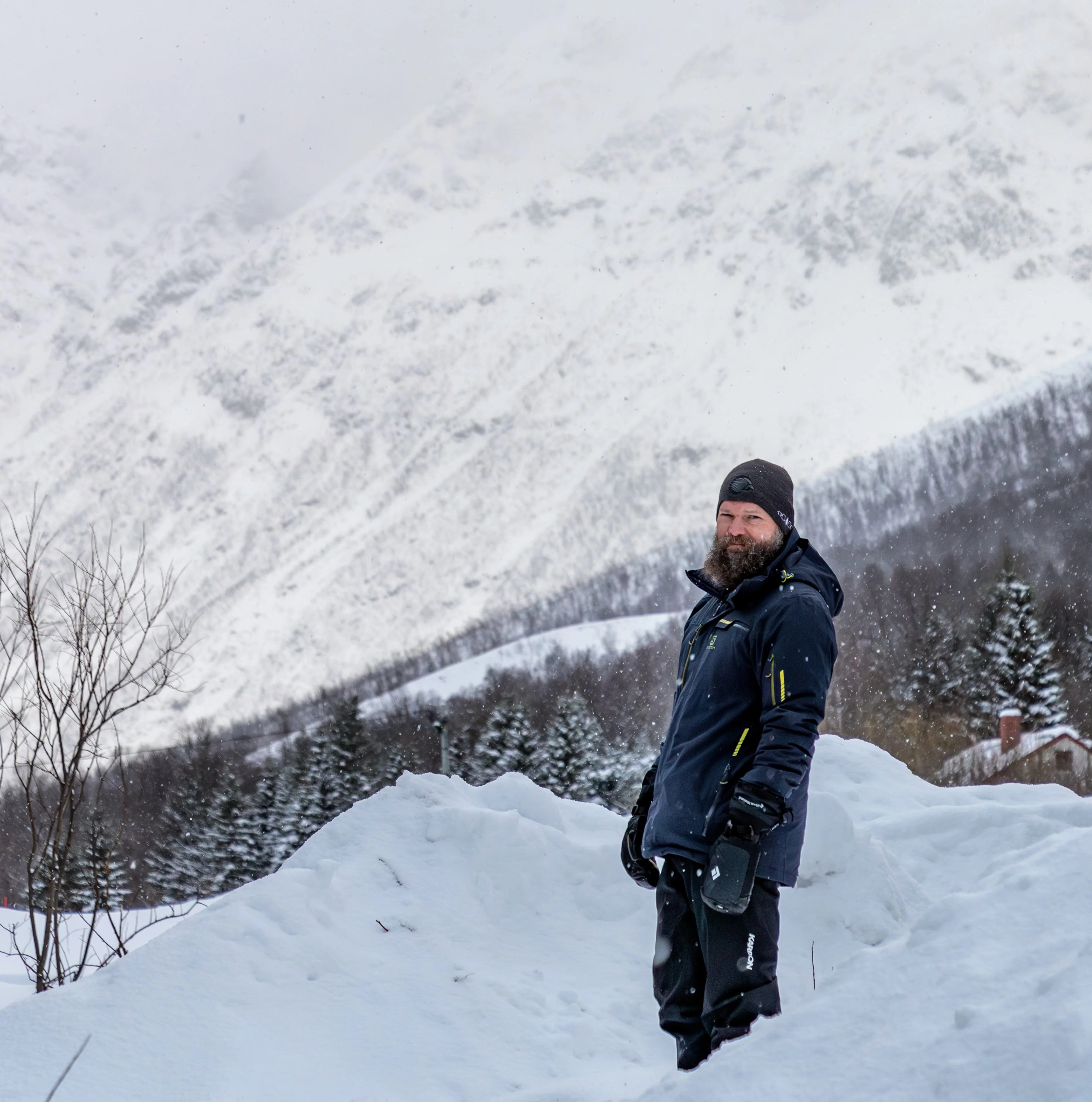
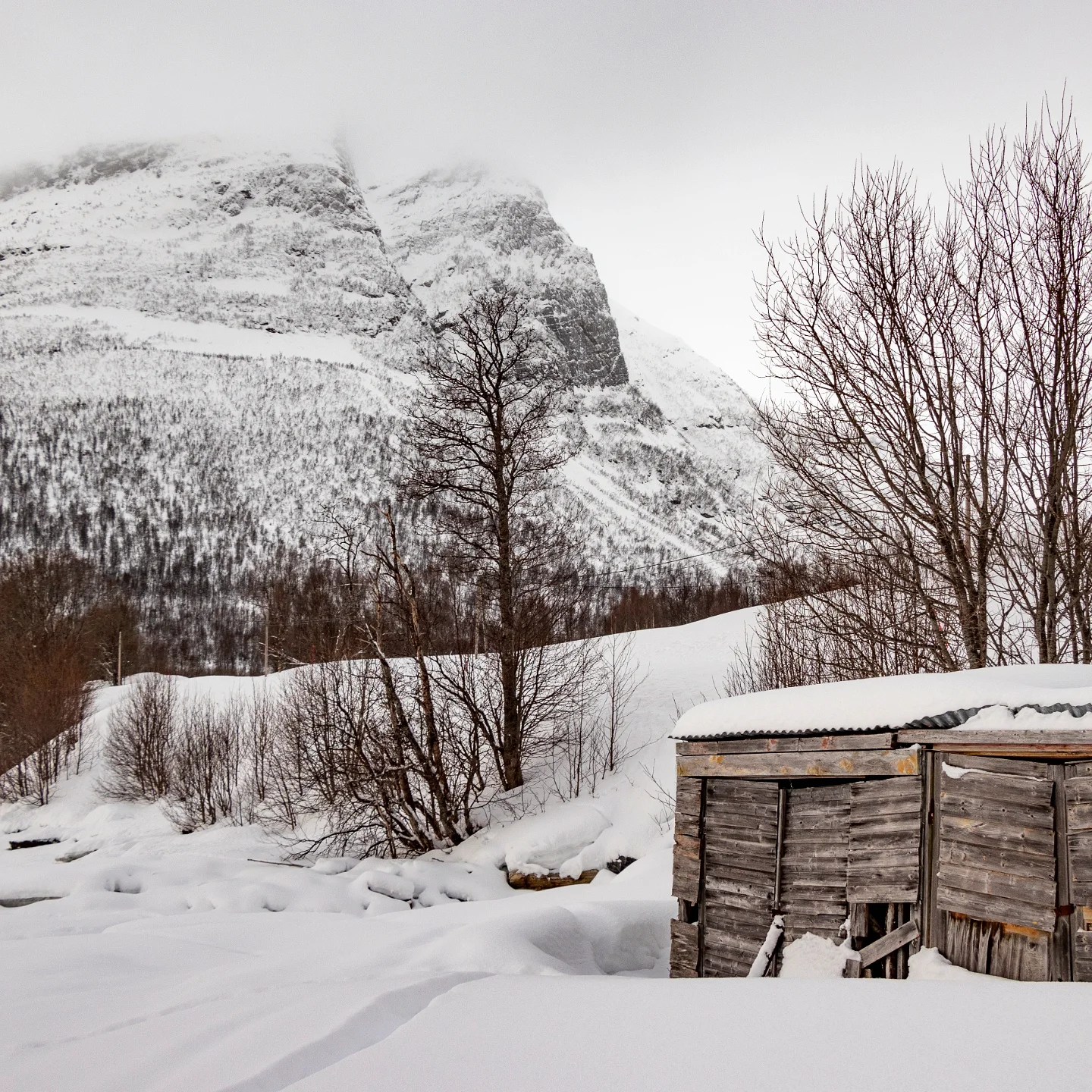
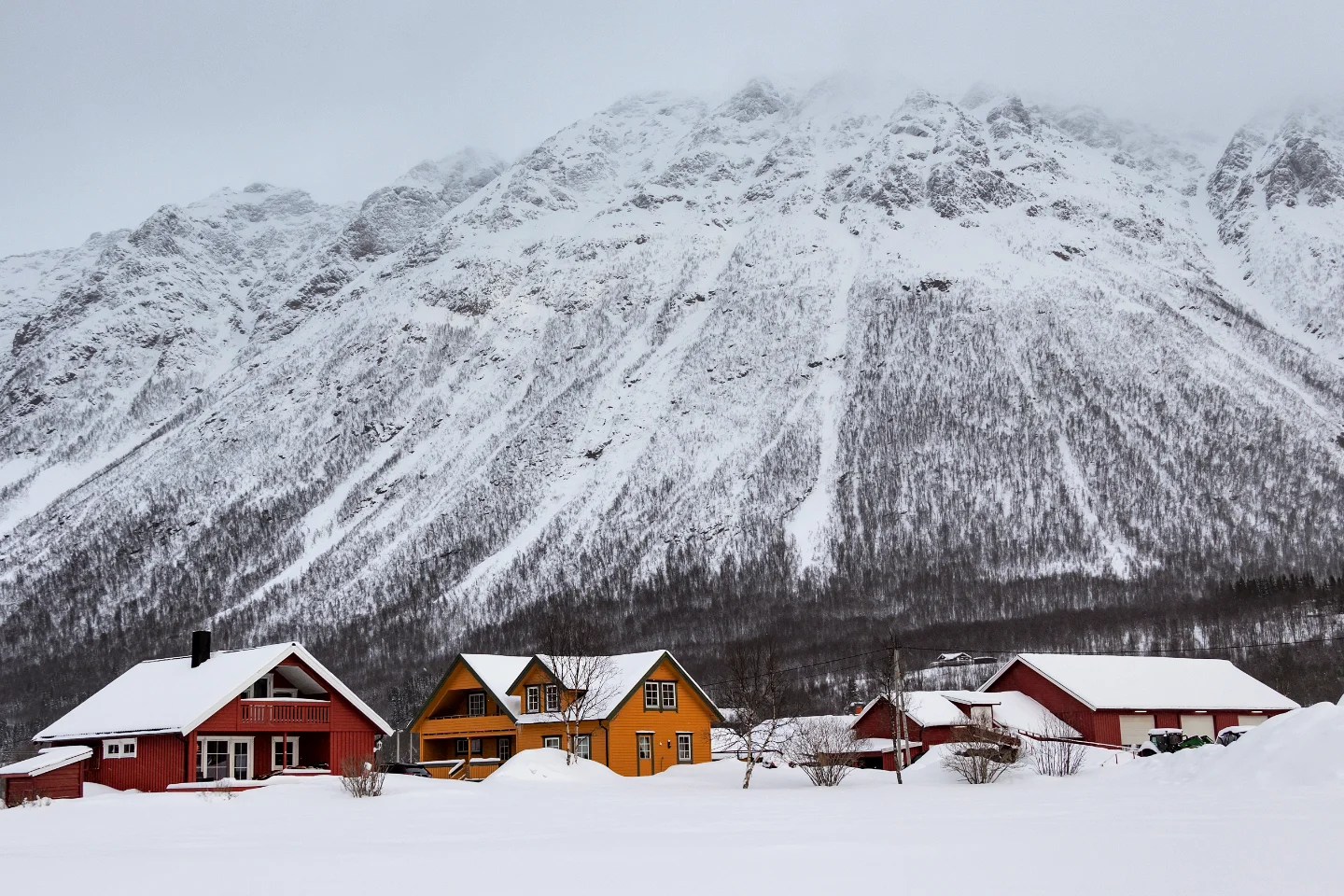
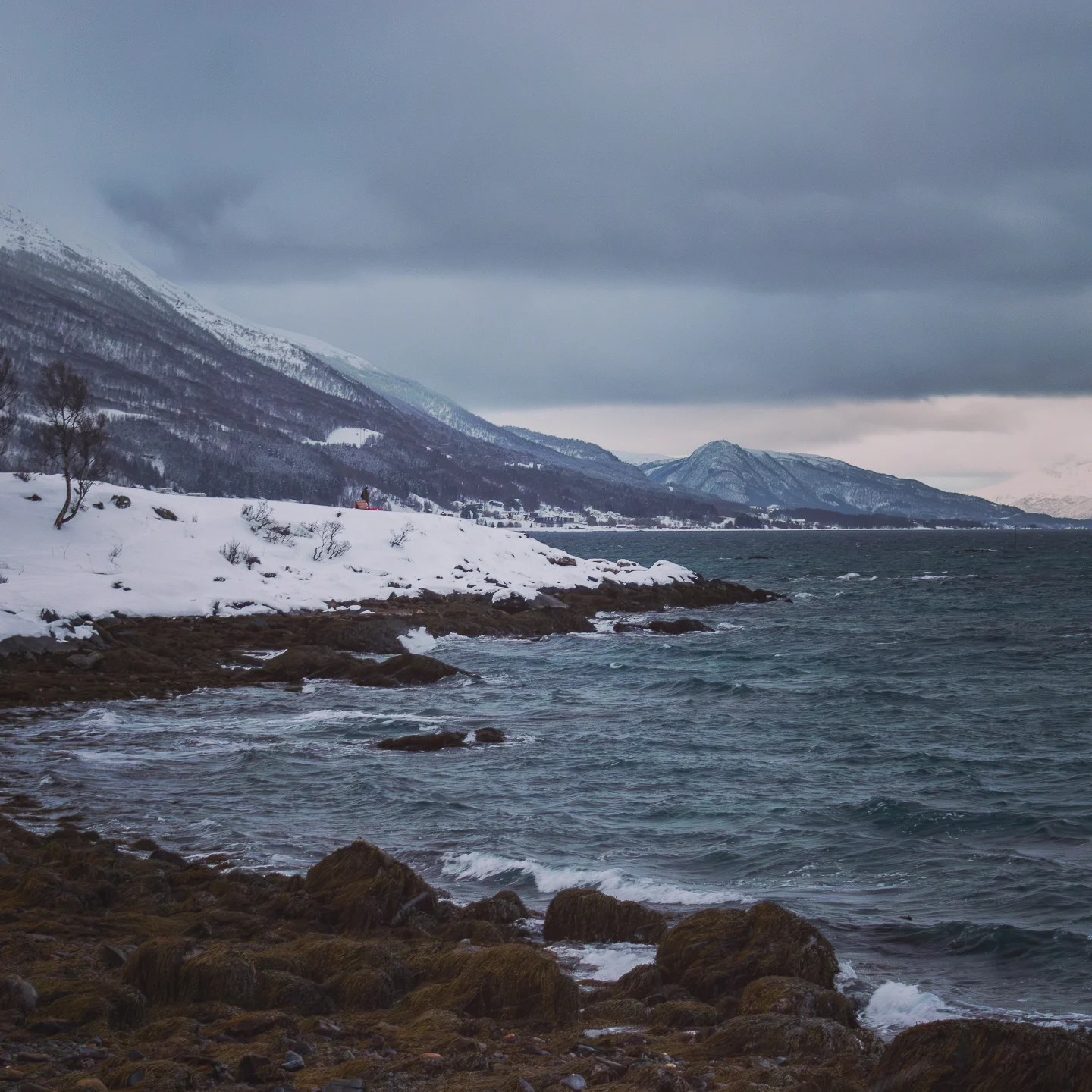
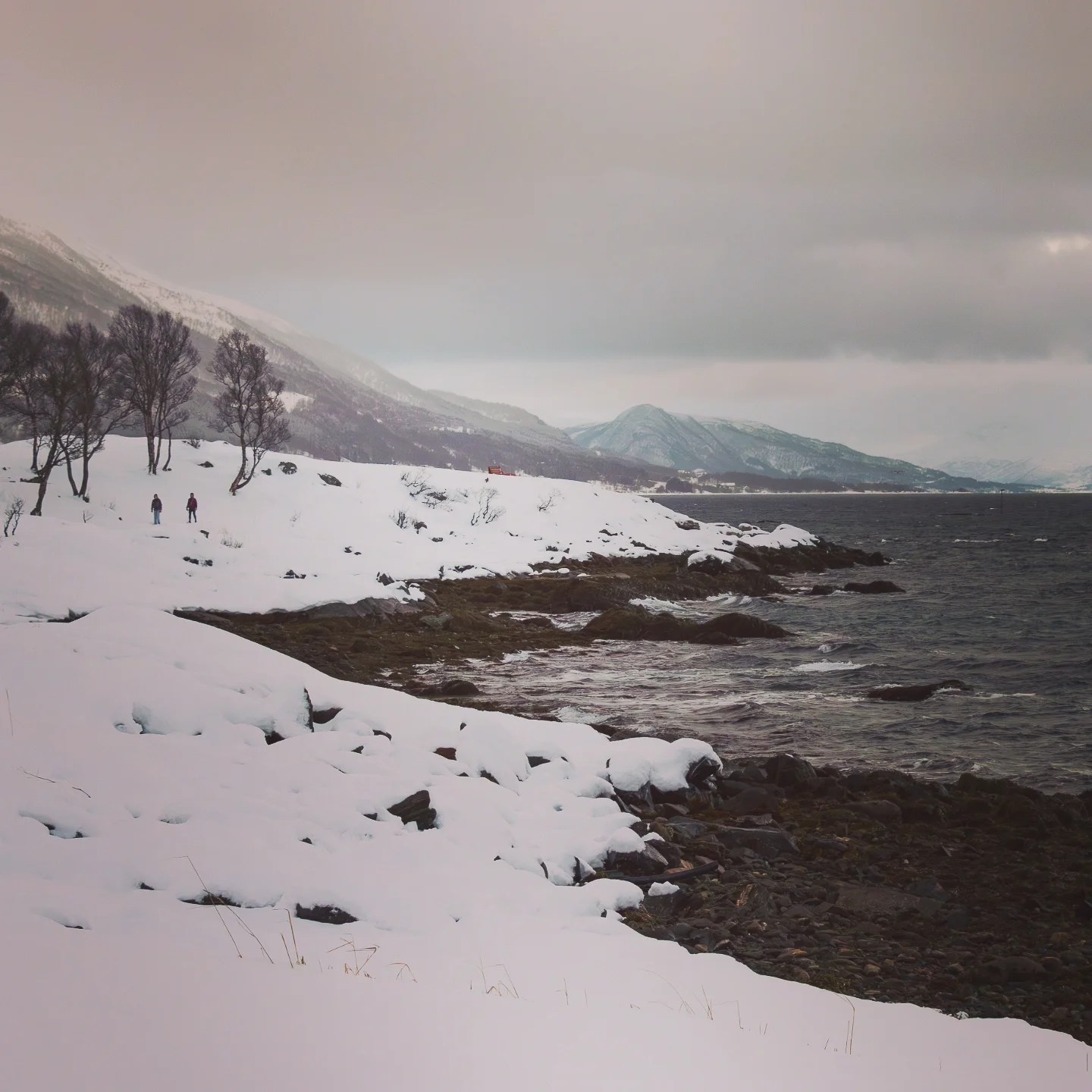
Later that afternoon, at the recommendation of our tour guide, I hopped on public bus 33 (very easy to use!) and visited the area of Telegrafbukta (Telegraph Bay), a rugged stretch of coast and beaches on the southern tip of Tromsøya island. It’s a popular spot for summer festivals but in winter, it’s windy, cold, and incredibly beautiful—a perfect place to experience the coastal landscape of northern Norway.

Unexpected Bonus Day & Fjord Cruise
A United Airlines strike delayed our departure—and gifted us another day in Tromsø. We took it as a sign to keep exploring.
We tried to book a last-minute fjord cruise but had no luck online or at the hotel desk. Then, while walking along the harbor, we spotted a boat boarding passengers. We asked if they had space. They did—and just like that, we were off on an unexpected Arctic adventure.
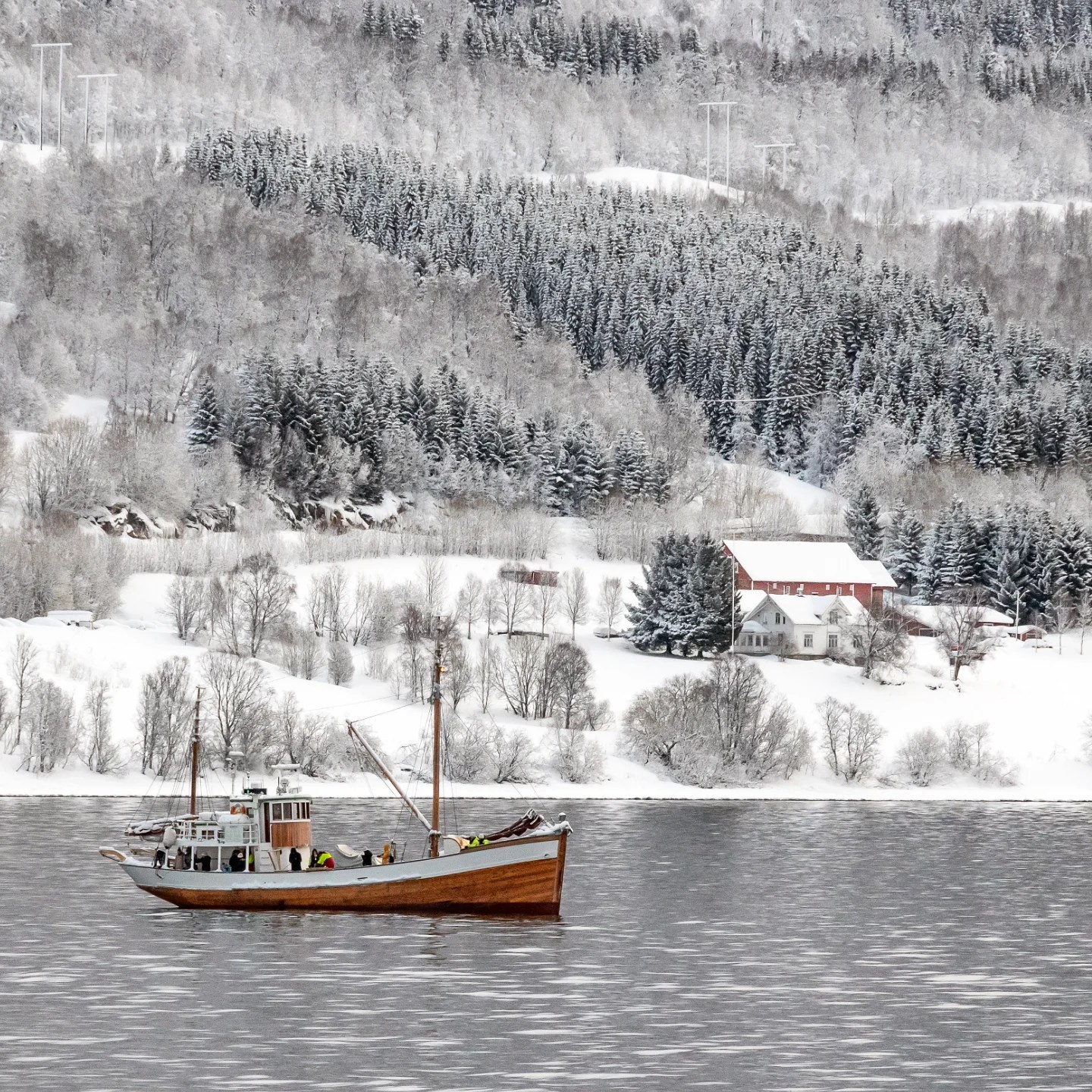
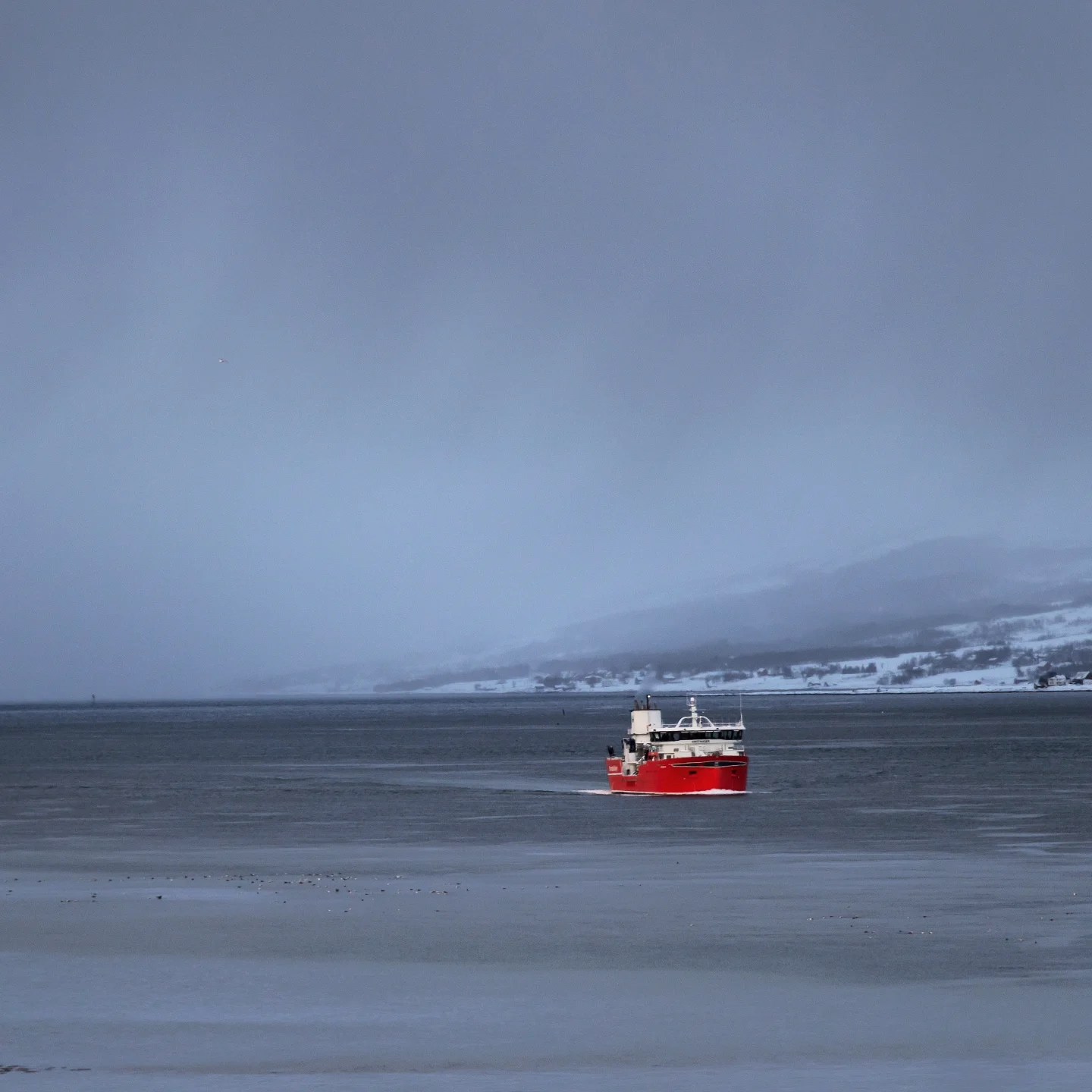
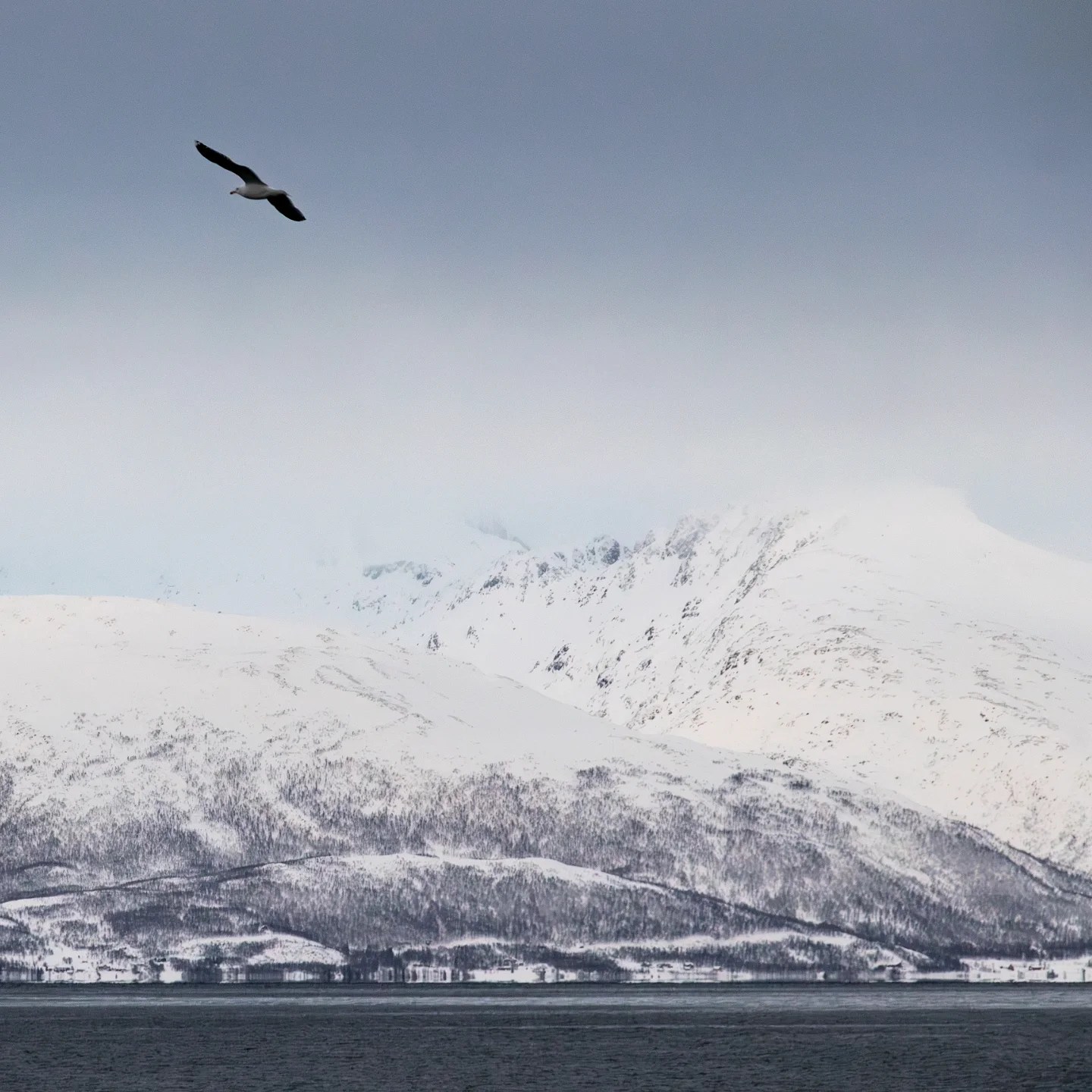
With Rødne Fjord Cruise, we set out from Tromsø aboard a comfortable sightseeing boat, complete with wide panoramic windows, a warm indoor cabin, and plenty of space outside to take in the unobstructed views. The route took us past snow-covered mountains and through quiet stretches of icy water, where we caught glimpses of great cormorants, eider ducks, little auks, and even a few harbor porpoises surfacing in the cold sea.
One of the more unusual sights was Olavsvern, a decommissioned naval base built directly into the side of a mountain—a hidden remnant of Norway’s Cold War history. As we came upon different sights and wildlife, our onboard guide shared maps, photos, and bits of local history—making the cruise both scenic and informative.
Though the deck was cold, I stepped outside often to enjoy the fresh Arctic air and snap photos of the snowy coastline and traditional fishing huts. The pace was relaxed, the views ever-changing, and the whole experience a perfect way to enjoy the Arctic landscape from a new perspective.



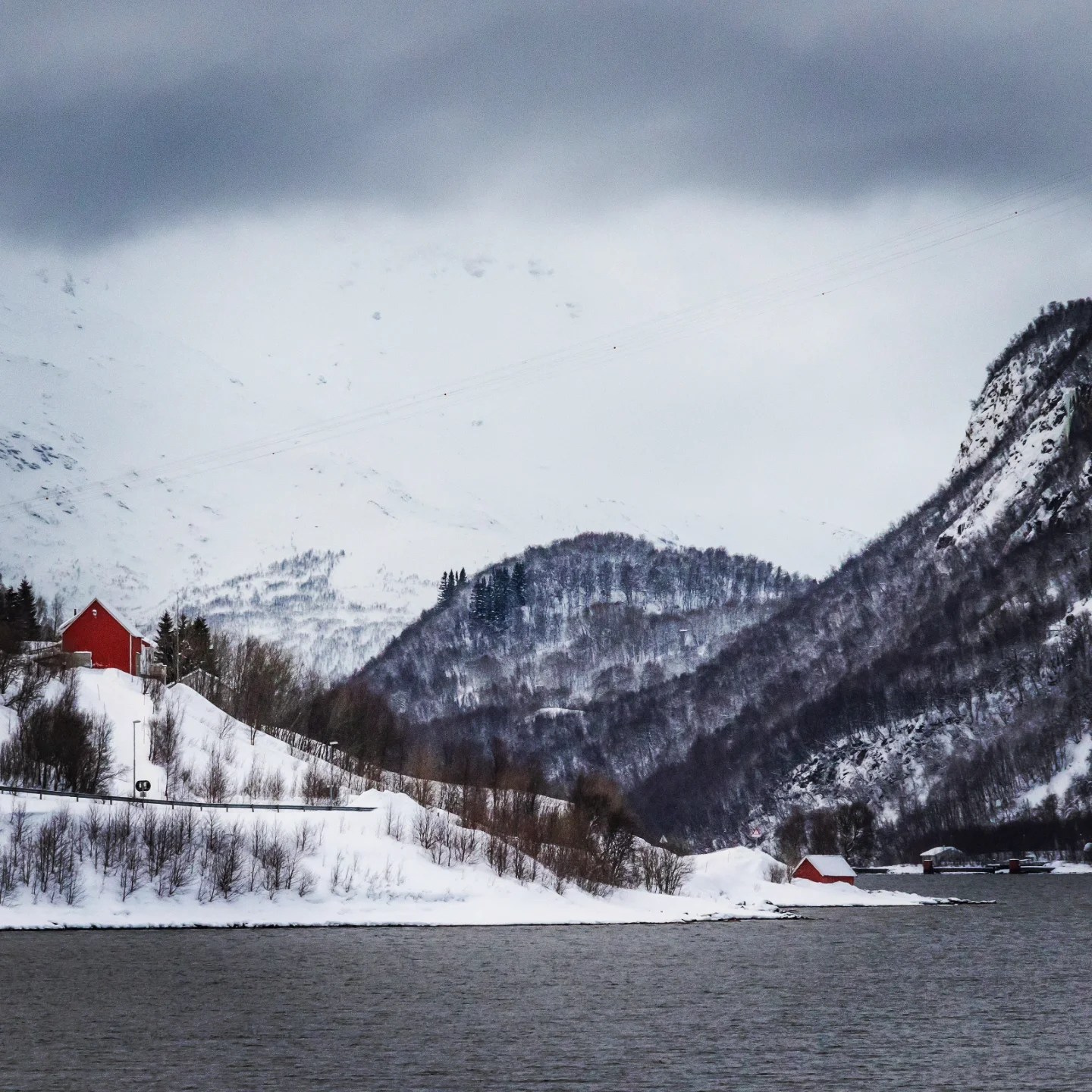
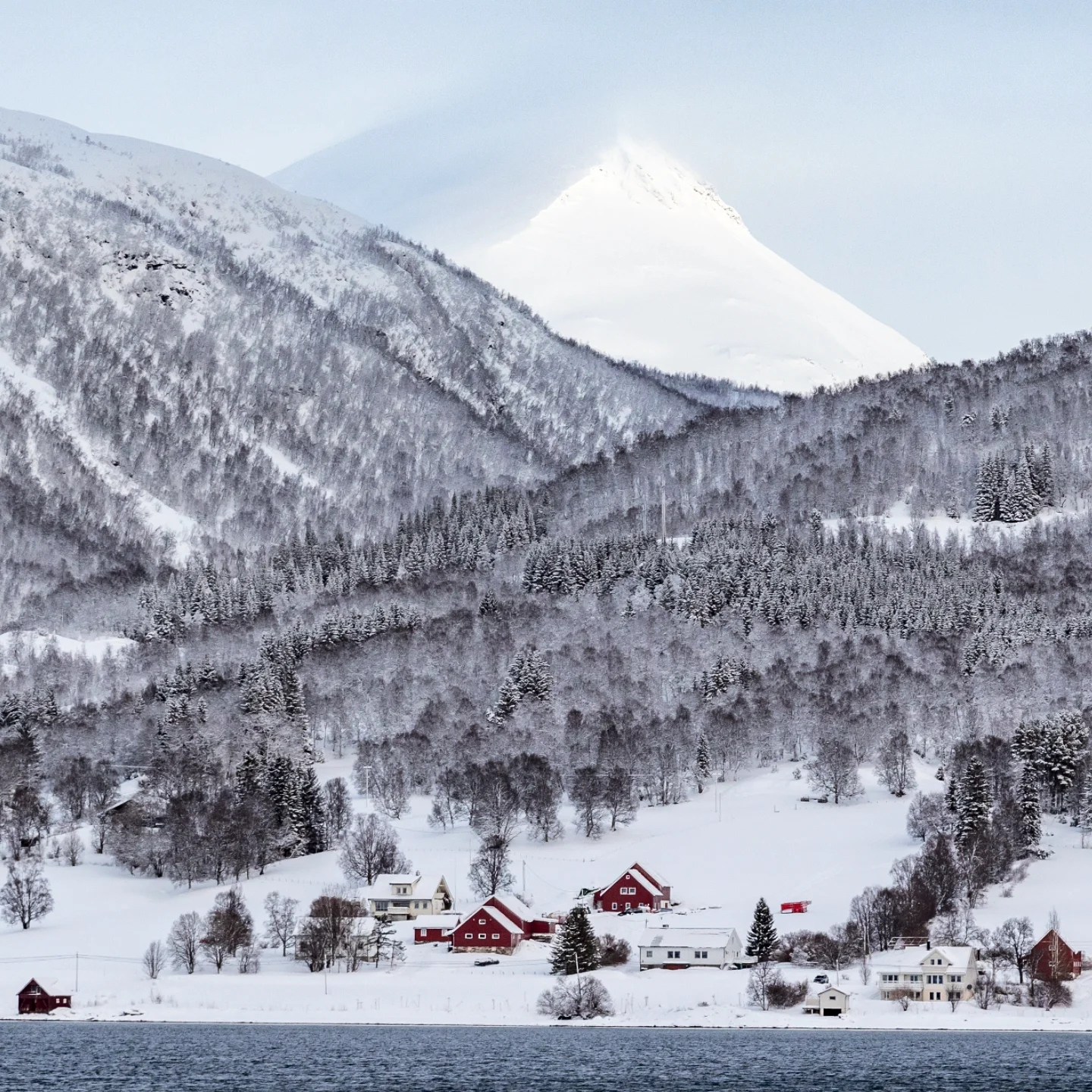
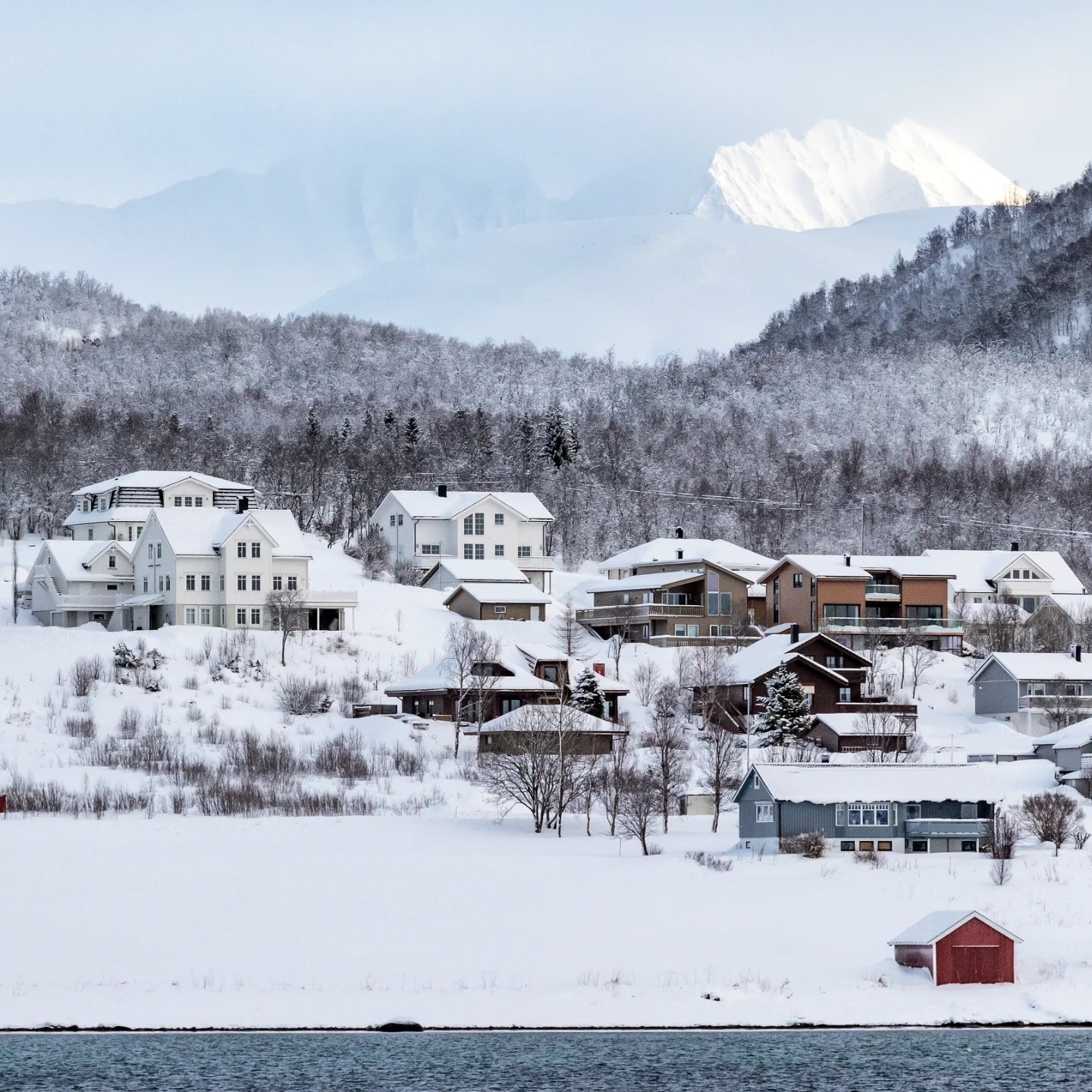
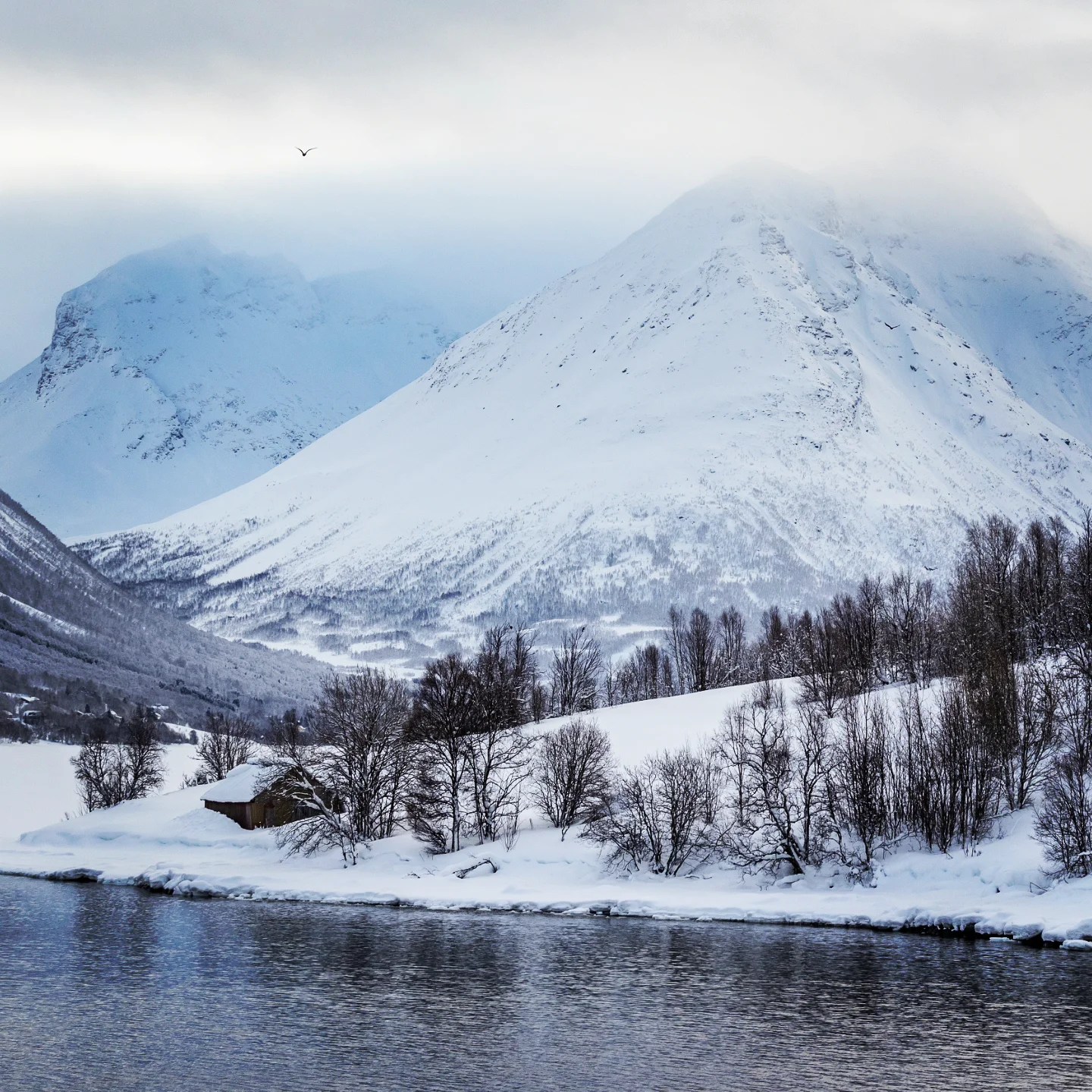

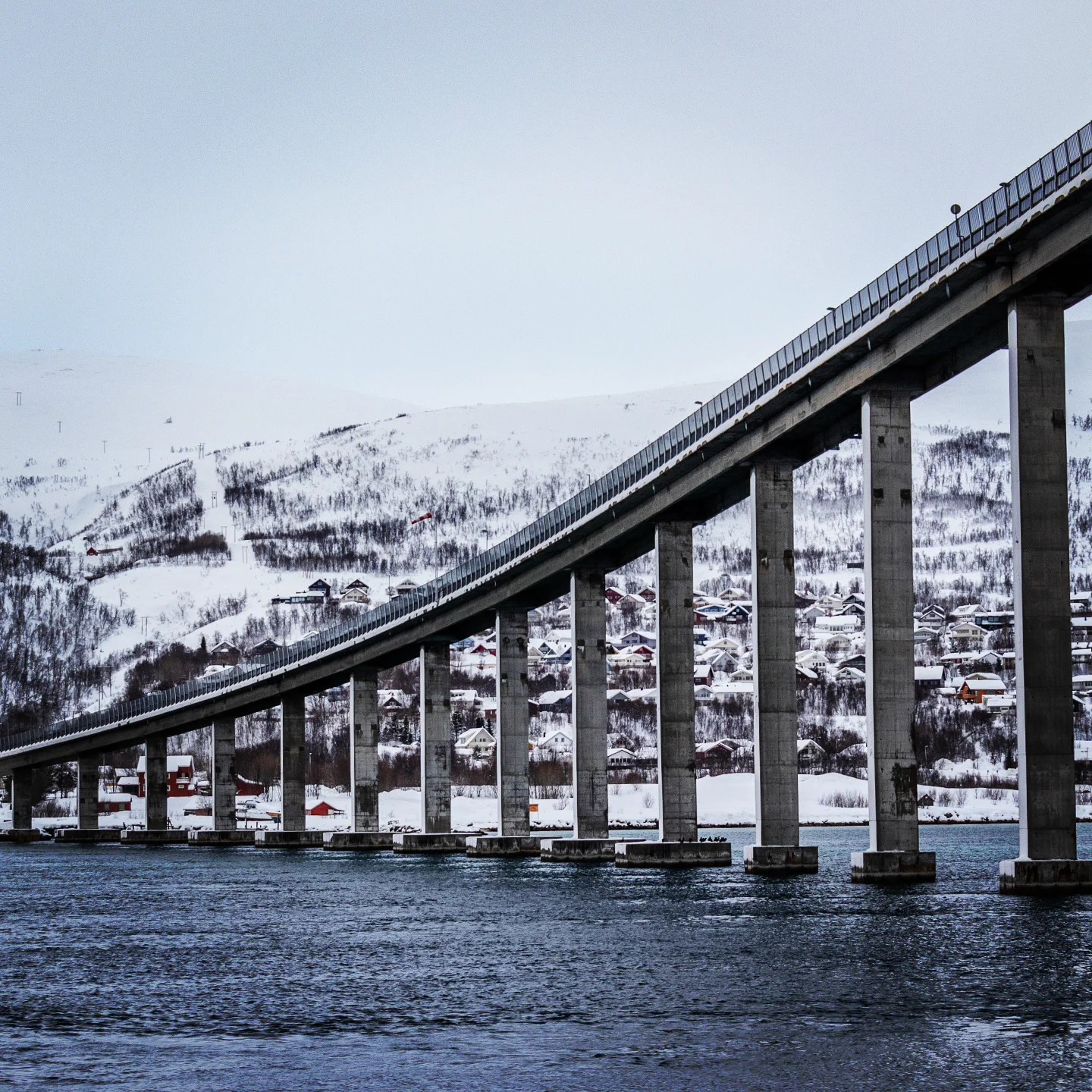


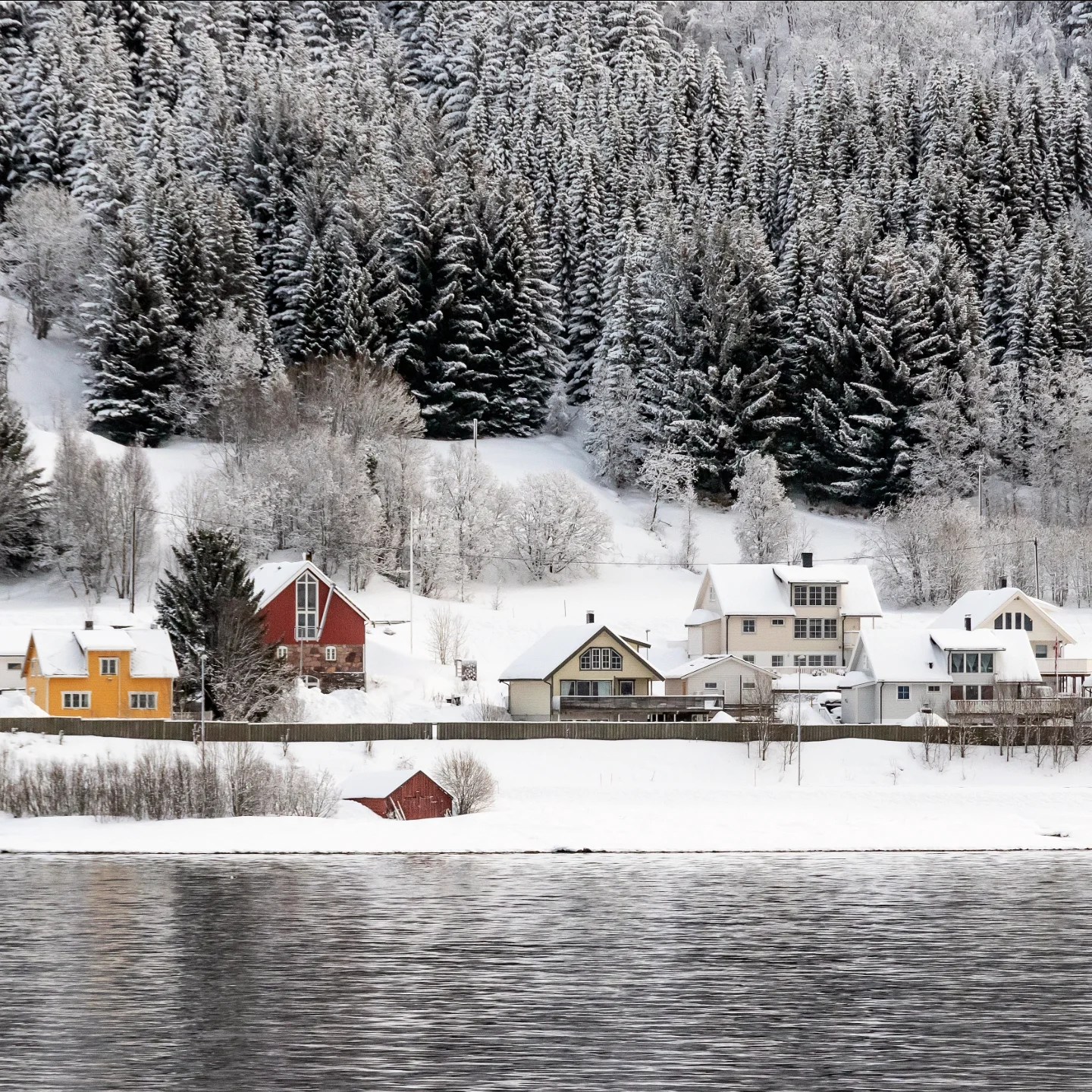
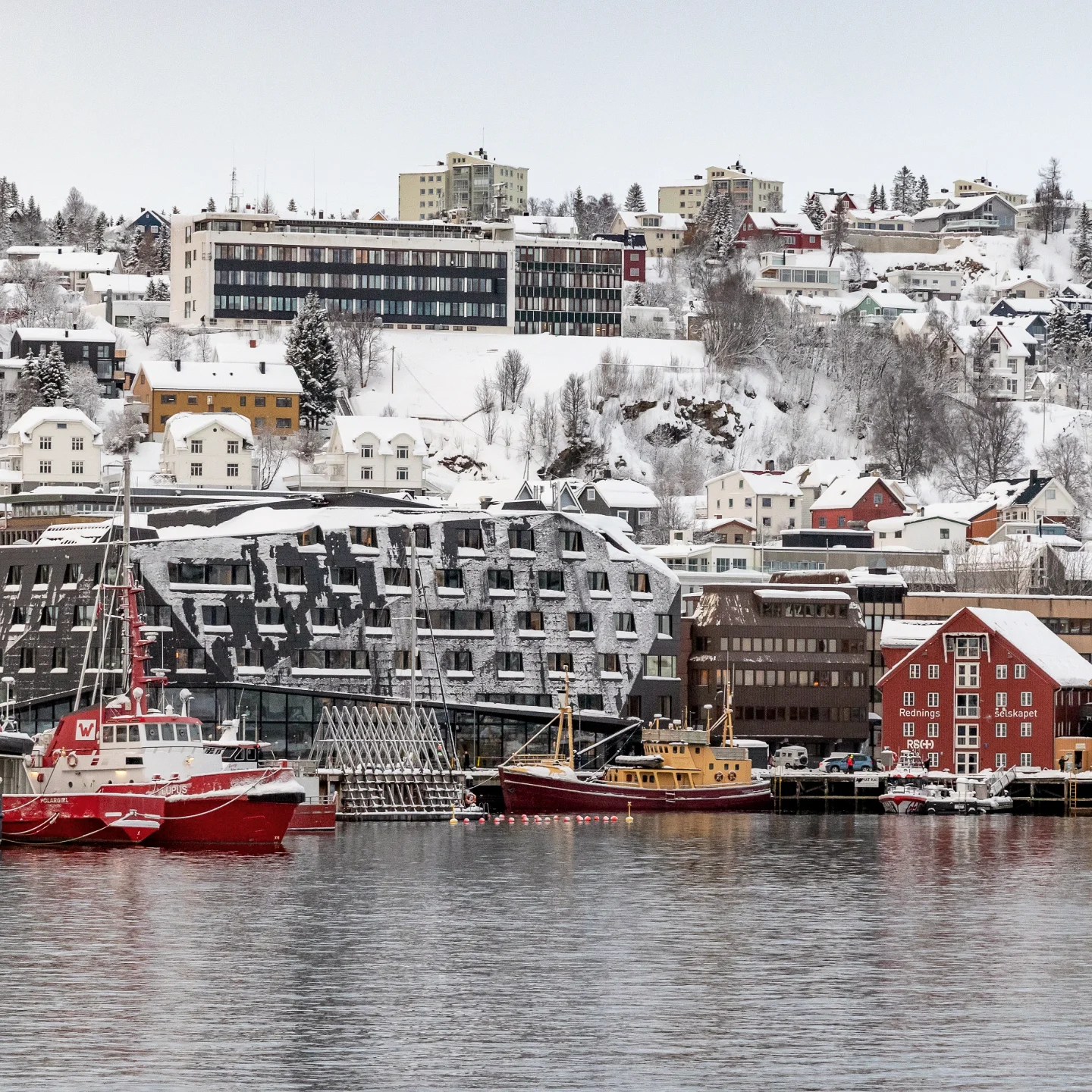
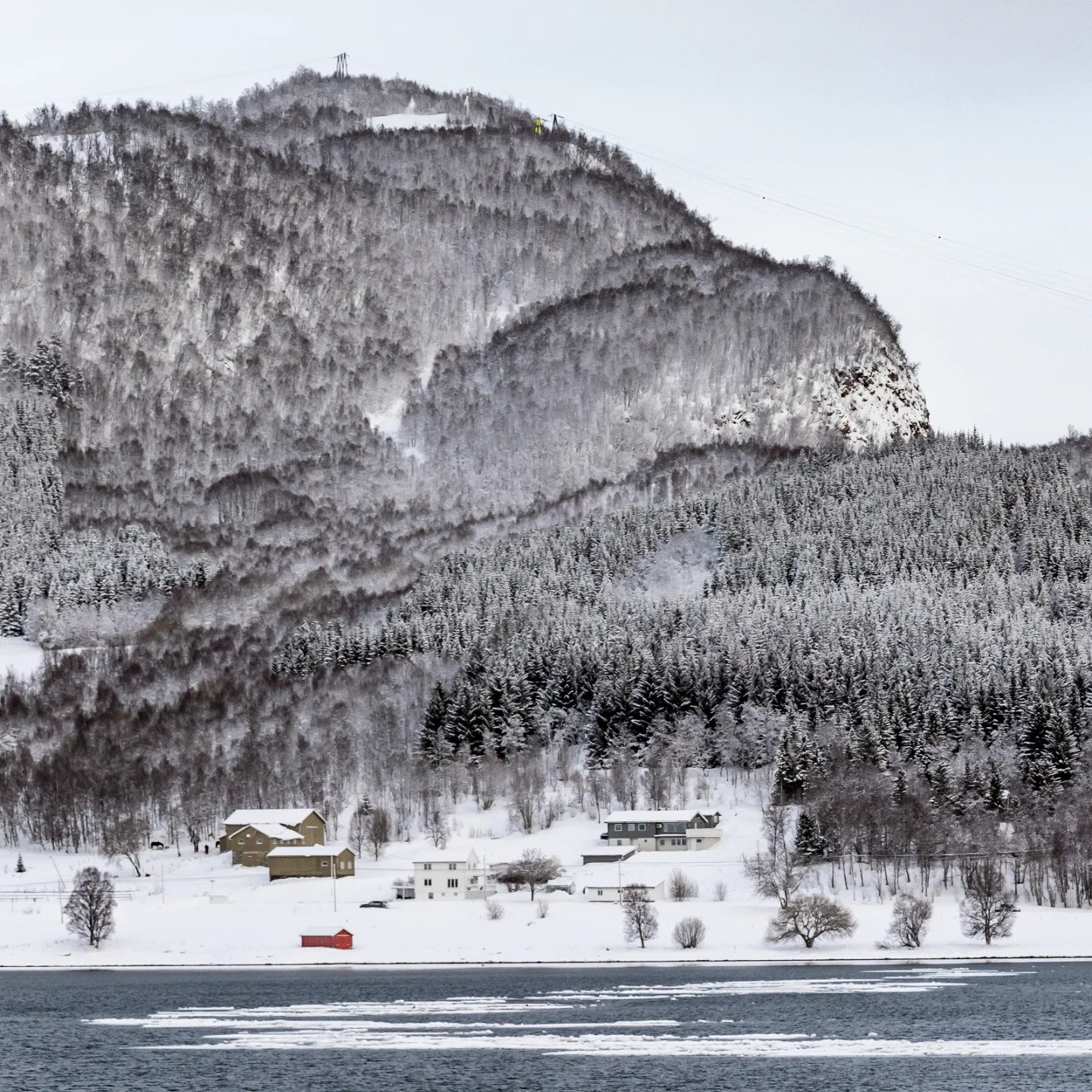

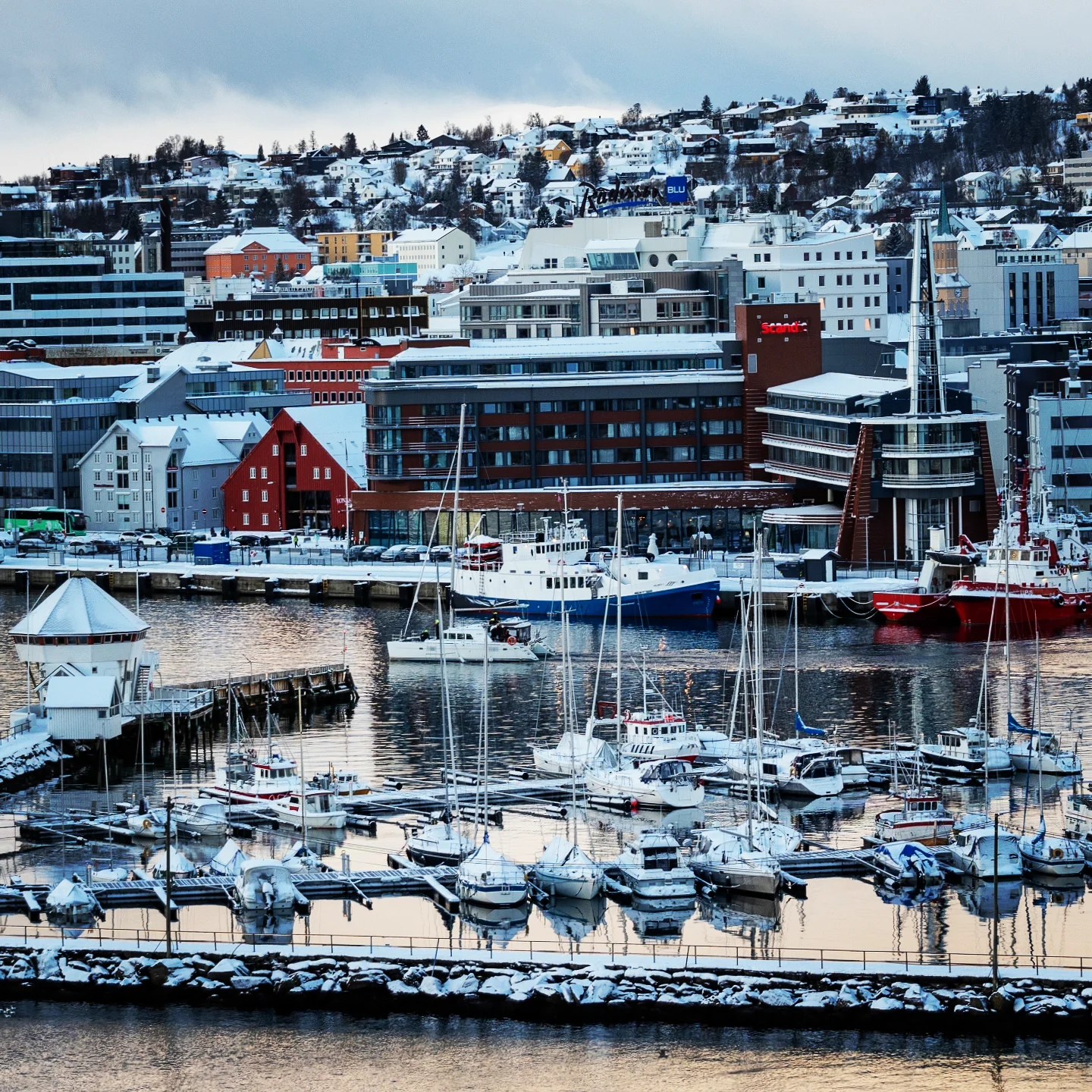
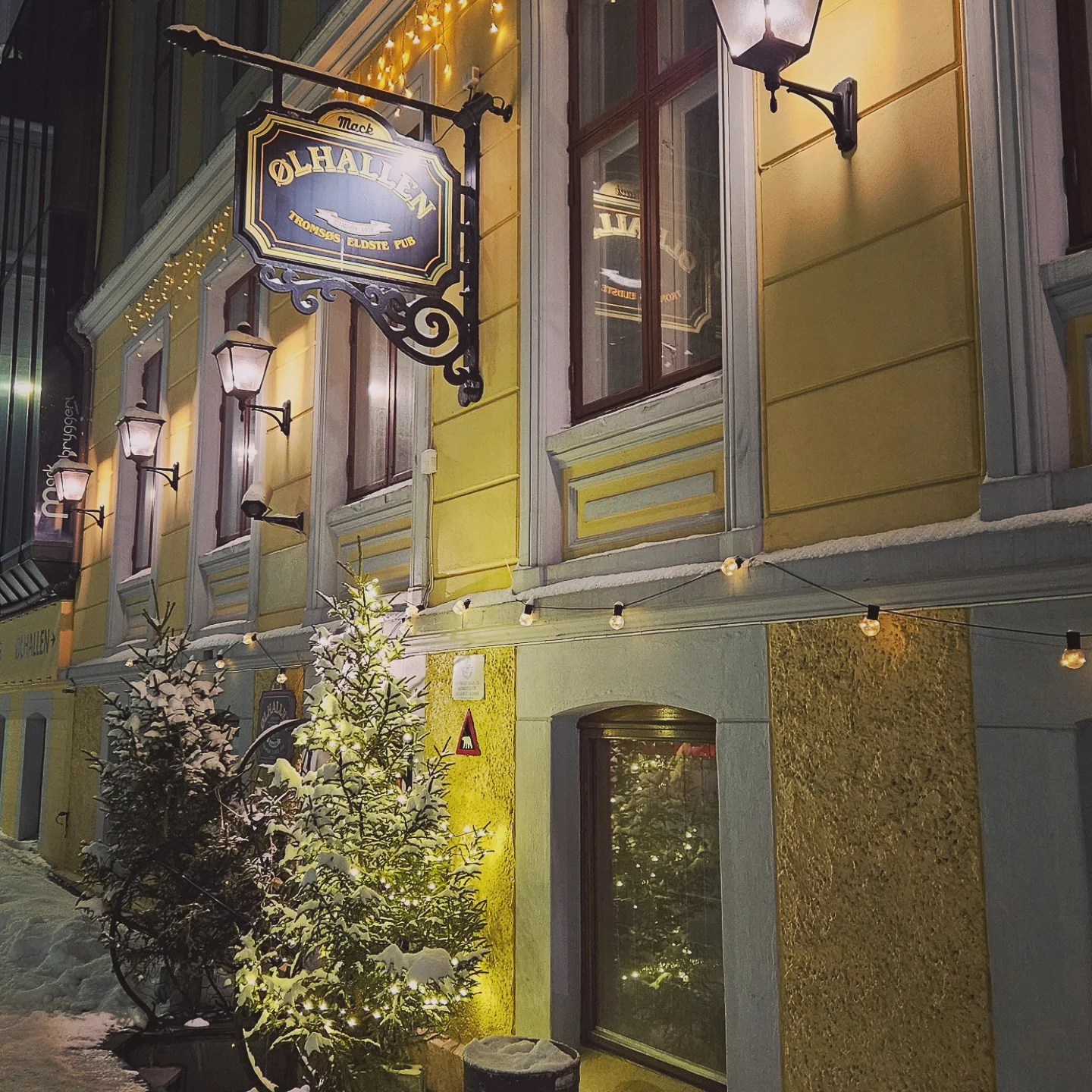
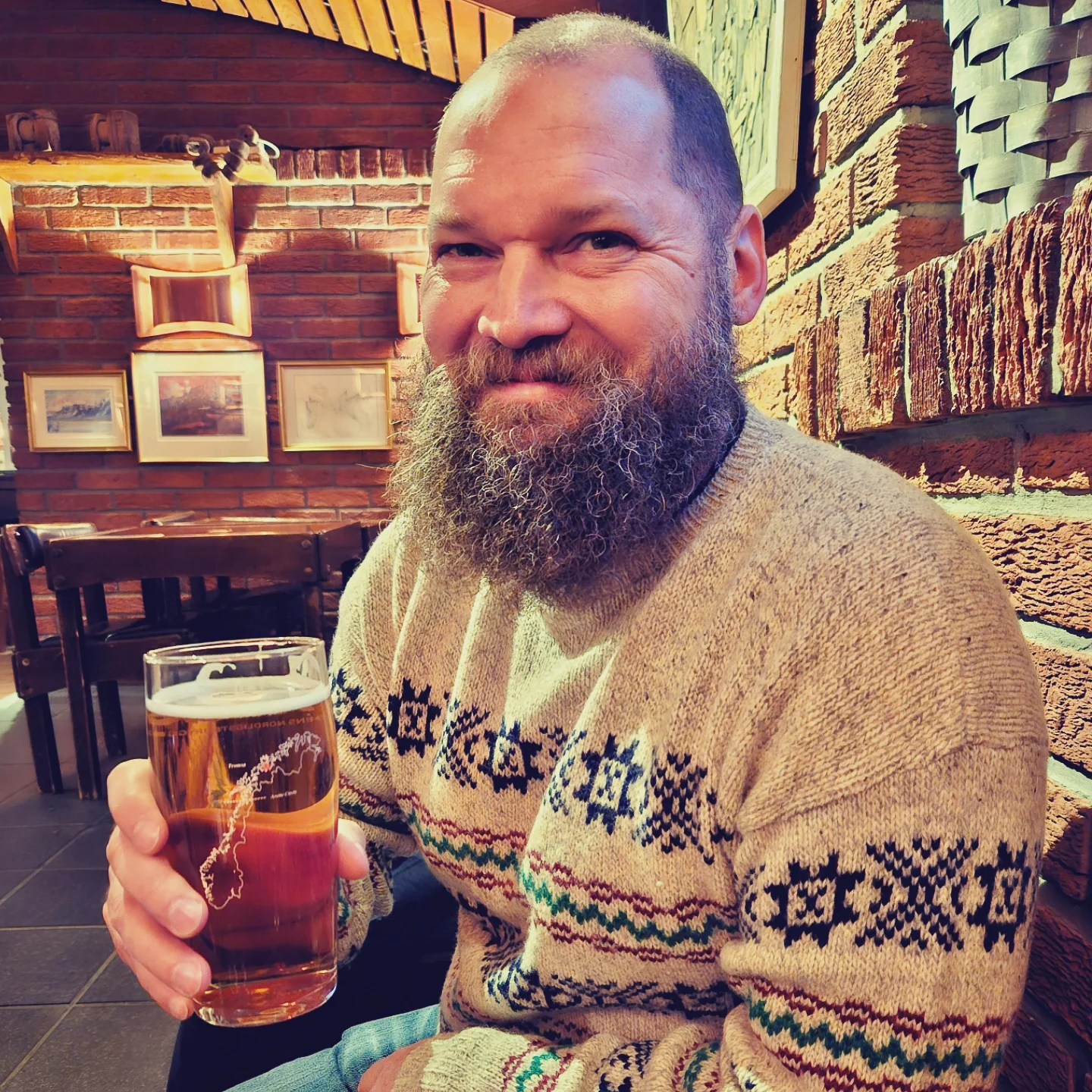
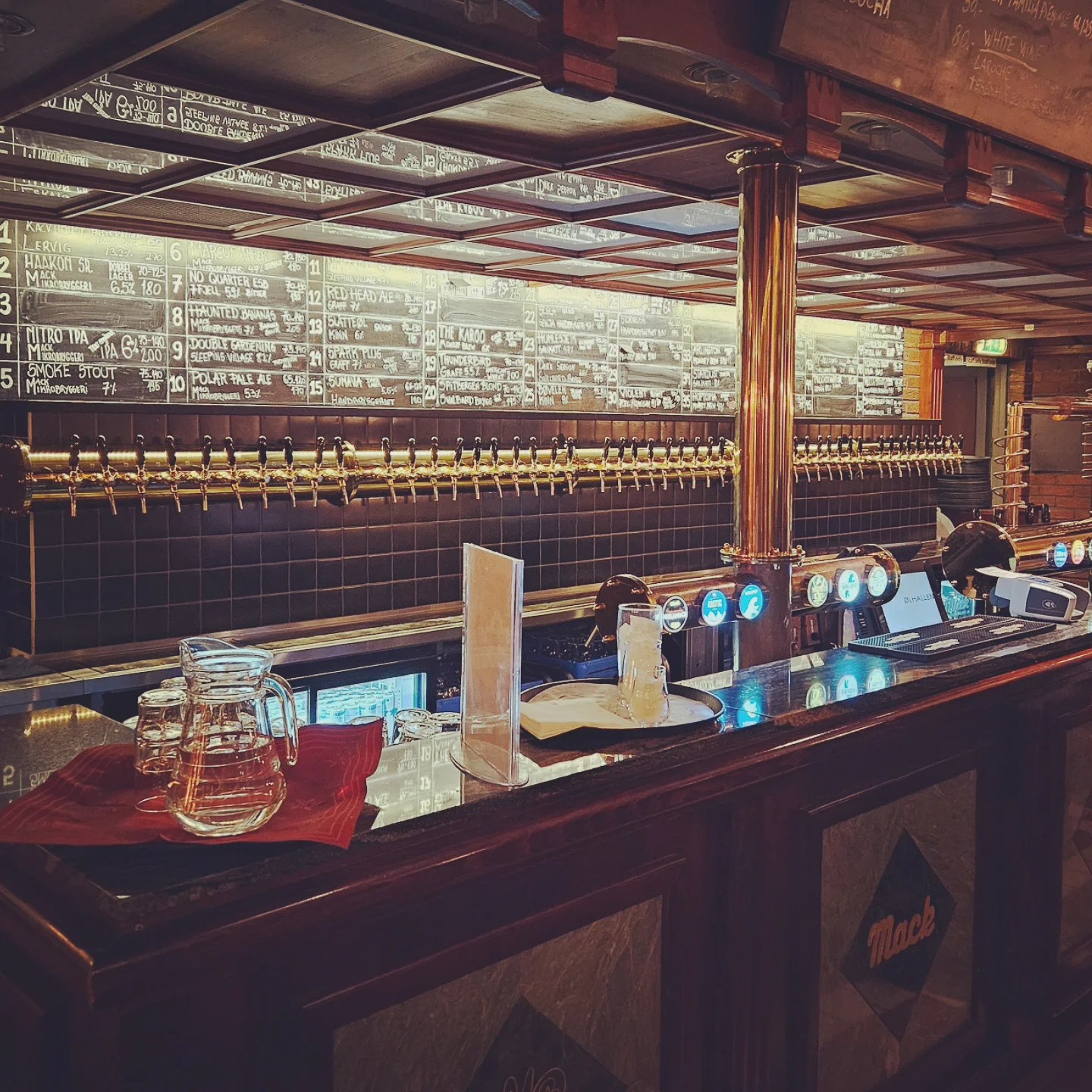
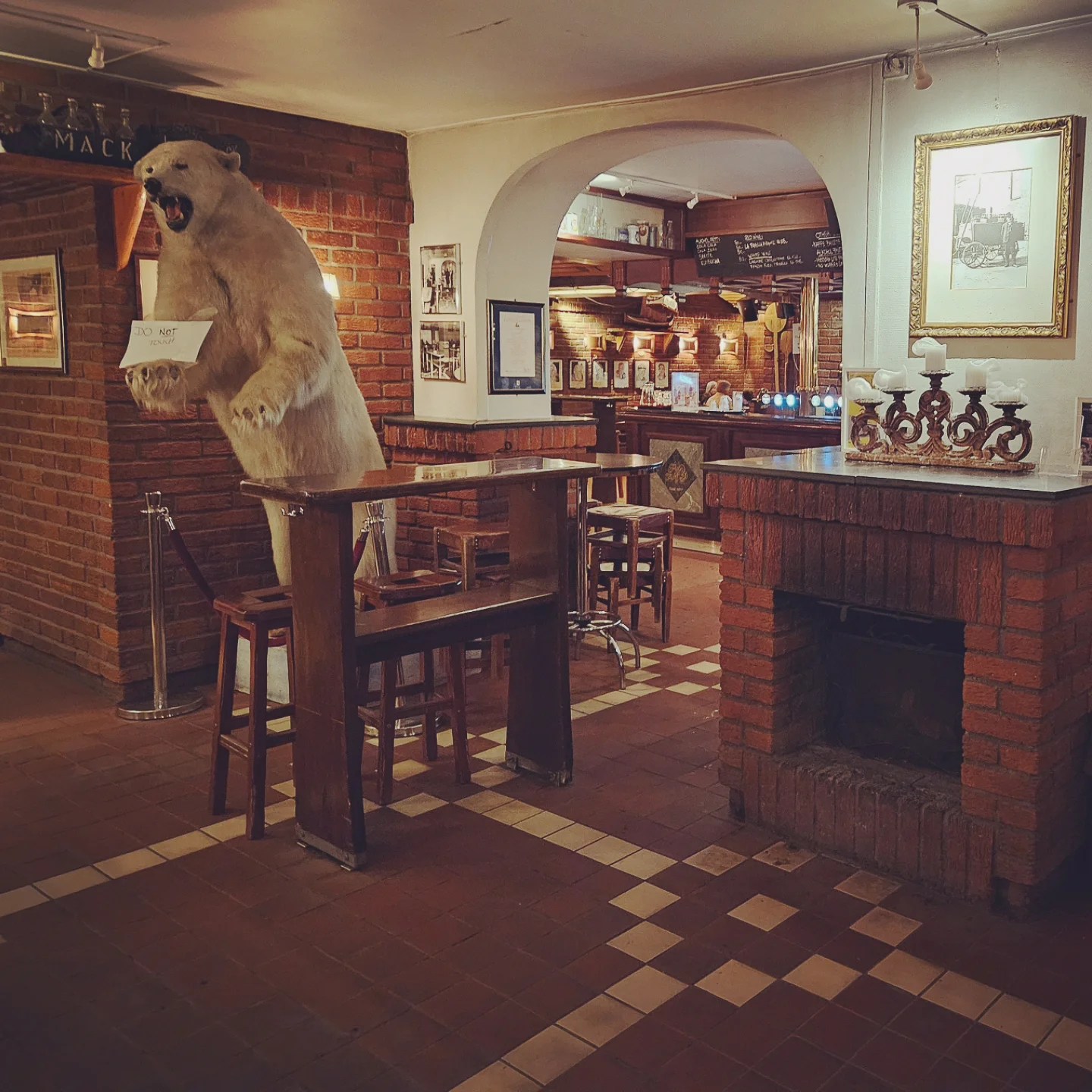
We wrapped up the day at Ølhallen, Tromsø’s oldest pub and part of the historic Mack Brewery. Opened in 1928, it’s long been a favorite gathering place for locals and fishermen coming in from the cold. With its long wooden bar and wall lined with 72 beer taps—one of the largest selections in Europe—it’s a great place to sample local brews and enjoy a relaxed, welcoming atmosphere.
A Little More Wonder
The next day, with a few hours to spare before our rescheduled flight, we had just enough time for one final outing in Tromsø. First stop: Blåst Glasshytta, a working glass studio where we watched artists shape molten glass into delicate Arctic-inspired creations.


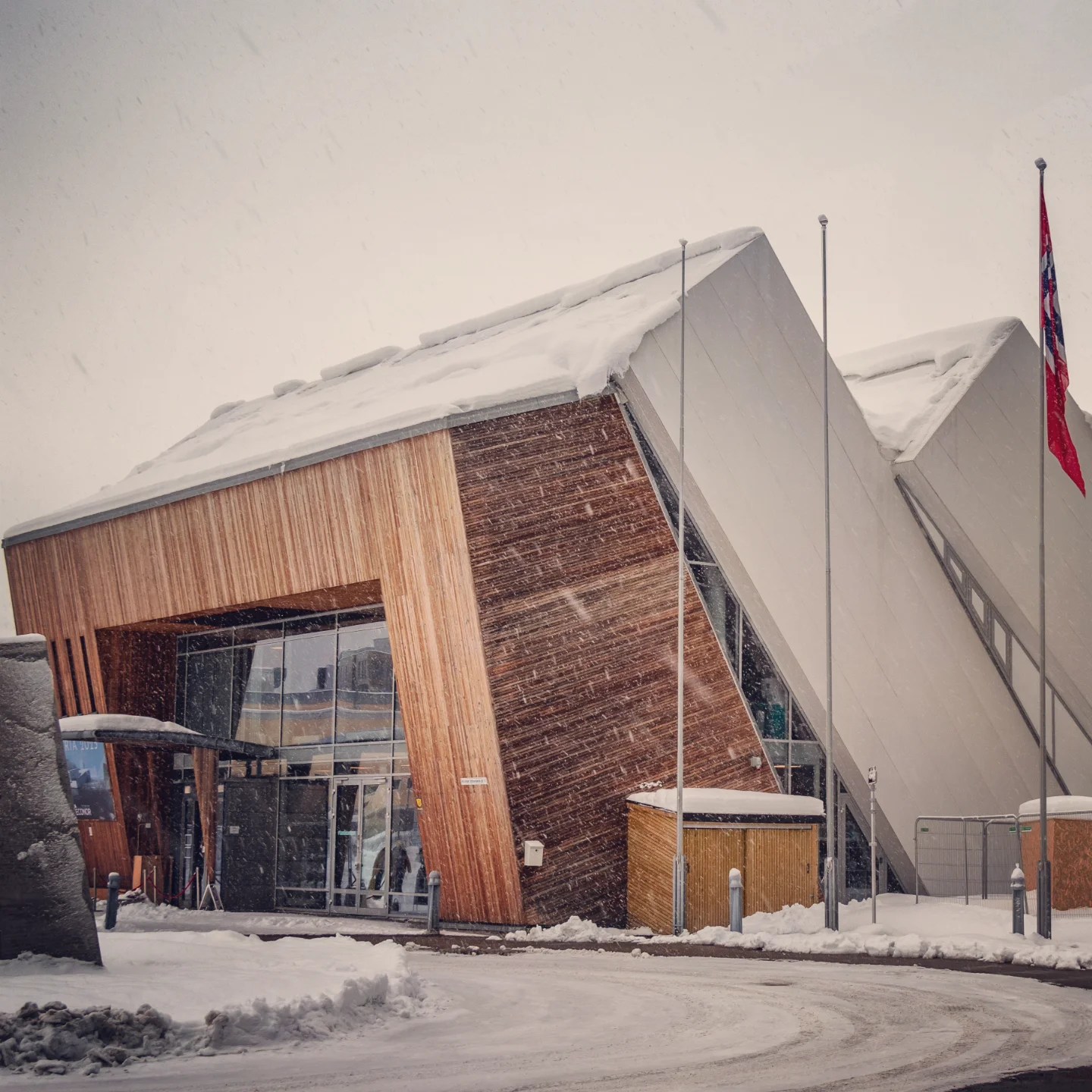
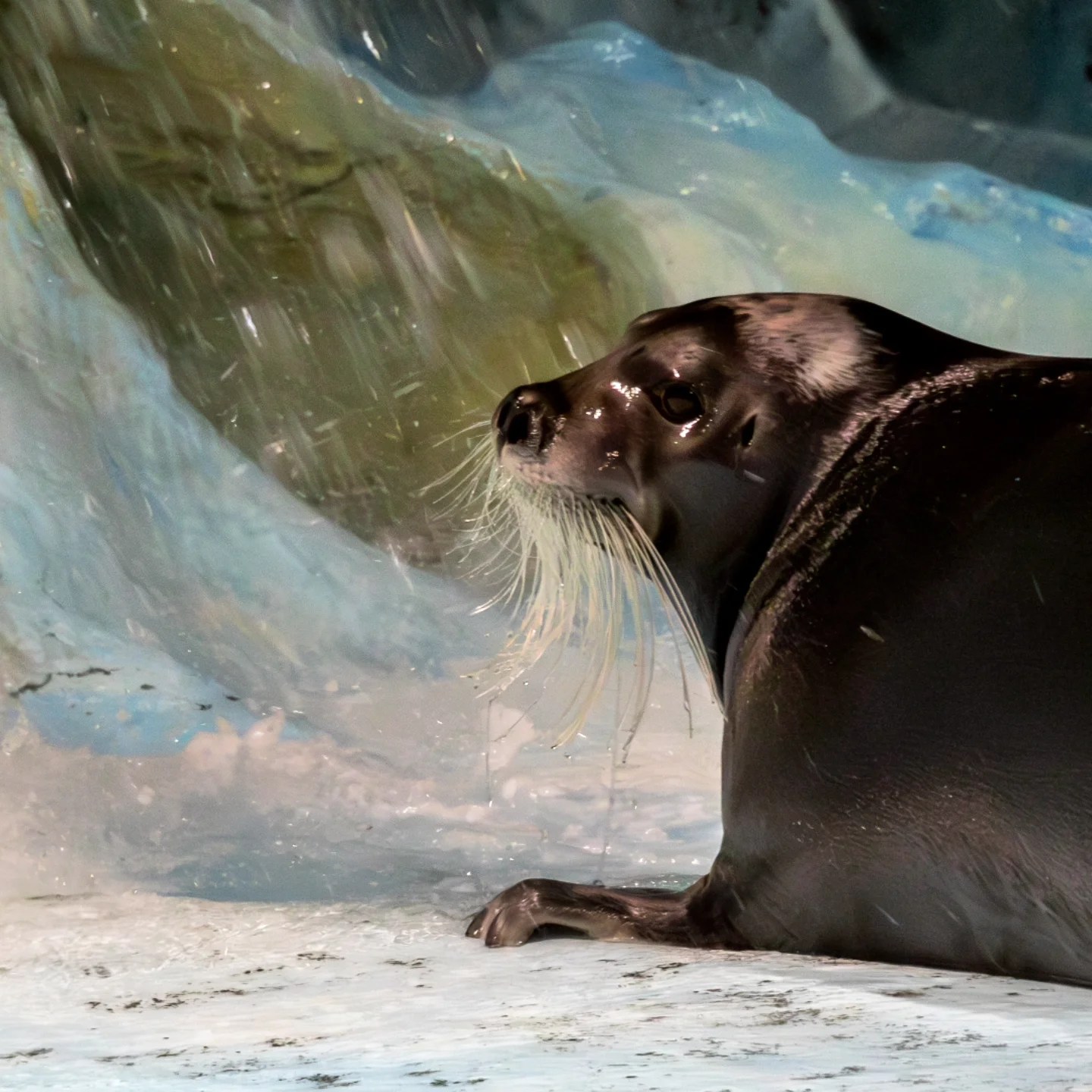
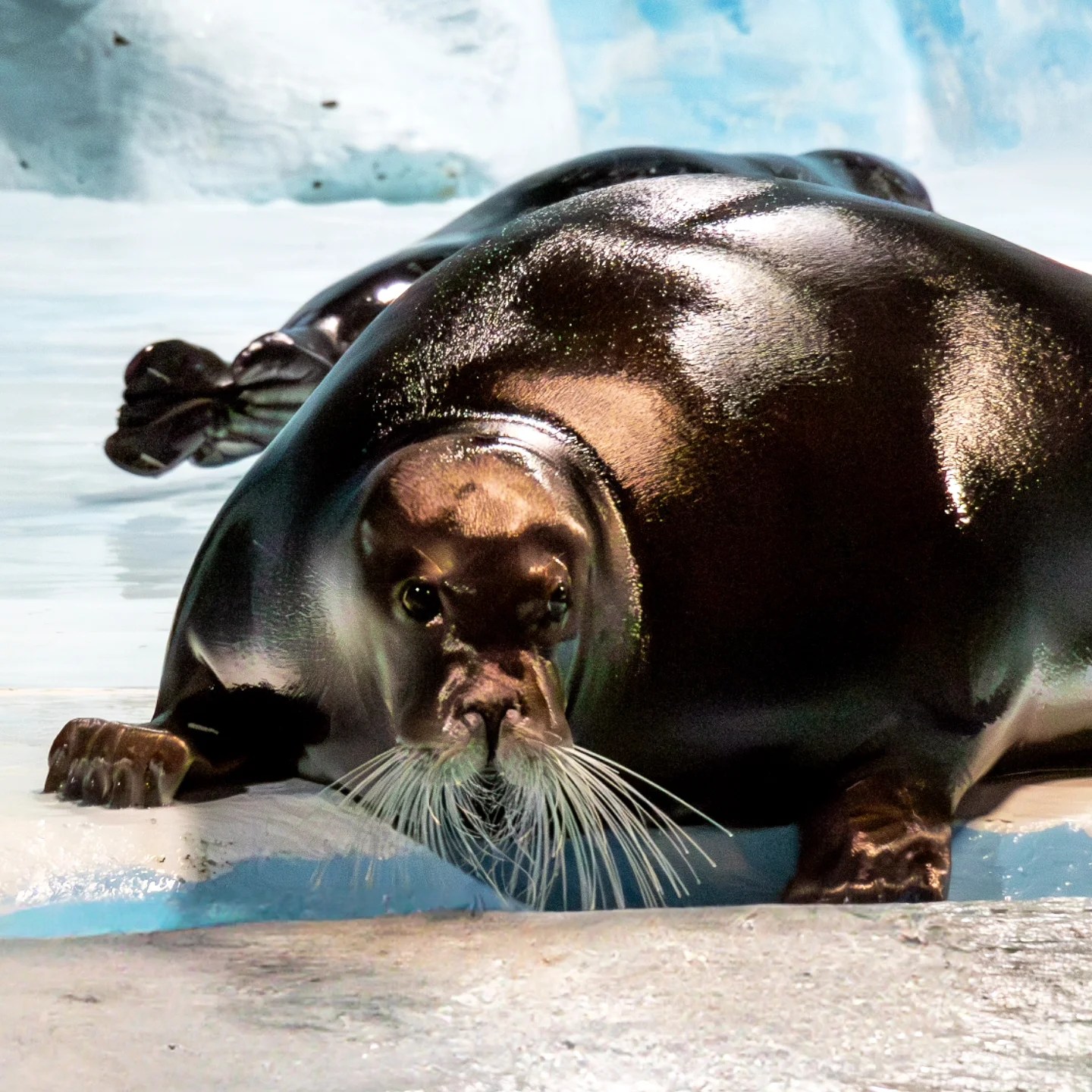
Then we wandered over to Polaria, a modern arctic experience center shaped like ice floes pushed up on land. Inside, you’ll find a small Arctic aquarium, informative climate exhibits, and a seal training session that was very entertaining to watch. It’s a great stop for families – or anyone curious about life above the Arctic Circle.
Useful Tips for Visiting Tromsø in Winter
- Daylight: Days are short in February (5–9.5 hrs of daylight), so plan accordingly. If you visit earlier in winter, you may experience polar night (no true daylight), while by March, the days grow longer rapidly.
- When to See the Northern Lights: Northern Lights season in Tromsø typically runs from late September through early April, when the nights are long and dark enough for visibility. The best chance to see them is during the coldest, clearest nights, especially between 6 p.m. and 2 a.m. Be sure to check the aurora forecast and cloud cover before heading out!
- Clothing & Gear: Wool base layers, thermal underwear, a sturdy winter coat, snow pants, waterproof snow boots, and ice grips for your boots are essentials. Don’t forget warm accessories like hats, scarves, mittens, and hand/foot warmers. Camera, power banks (cold drains batteries quickly), a tripod, and a headlamp are also helpful if you’re chasing the aurora or out after dark.
- Tech Tools: Use My Aurora Forecast, an app that helps you track aurora activity and viewing conditions based on your location. Use it to check the KP Index, a measure of geomagnetic activity that can predict the likelihood of Northern Lights. For weather updates, YR offers reliable and detailed forecasts tailored for Norwegian locations.
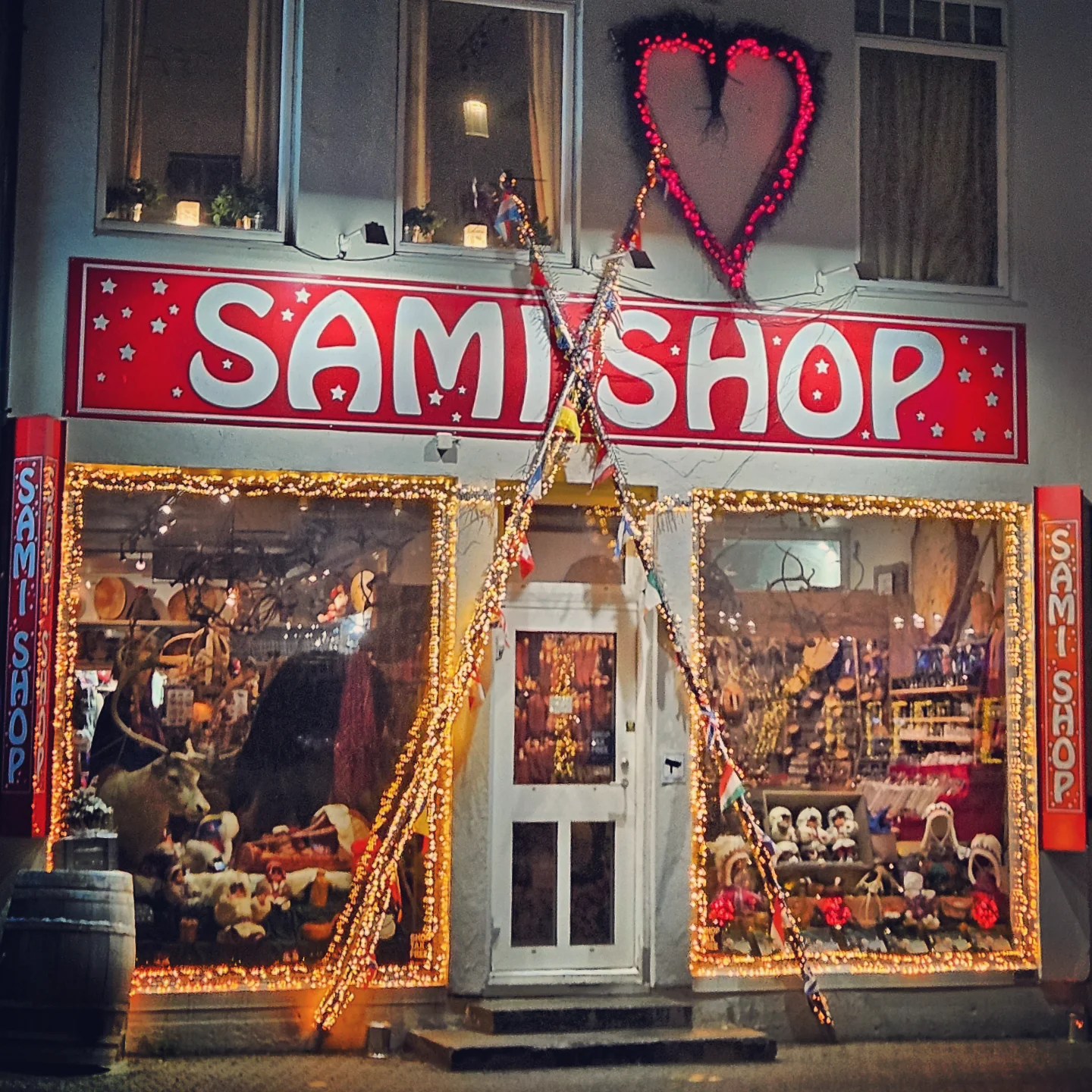
- Souvenirs: Don’t miss the thrift shops & vintage clothing stores — I found a beautiful handmade wool sweater at Postludium, but there are several others in Tromsø!
- Eat Like a Local: Try bacalao, a rich cod stew made with salted cod, potatoes, and tomatoes. You might also find other traditional favorites like klippfisk (dried and salted cod), reindeer stew, brunost (Norwegian brown cheese), and rakfisk (fermented fish – a bit of an acquired taste) on menus around town – each one a flavorful window into Northern Norway’s food culture.
- Getting Around: Tromsø’s local bus system is easy to navigate and a great way to explore beyond the city center. Tickets can be purchased via the Svipper app, at ticket machines, or directly on the bus (cash in NOK only). Most routes run regularly—even in winter—and will take you to key spots like Fjellheisen and Telegrafbukta. Bonus: the buses are warm, reliable, and give your feet a much-needed break from the cold.
- Musical Nights: The Tromsø Cathedral (Tromsø domkirke) in the city center hosts a Midnight Concert every night at 23:00 (11:00 pm)—a peaceful experience that offers a unique way to end your day. The cathedral’s wooden interior makes it a beautiful setting for traditional and seasonal music. Note: Don’t confuse it with the Arctic Cathedral, which is located on the other side of the bridge.
Location & Getting There
Tromsø is located well above the Arctic Circle in Northern Norway, surrounded by dramatic fjords, snowy mountains, and icy sea. The easiest way to reach Tromsø from Stuttgart is by air, typically with a connection in Oslo. Most routes include one stop in Norway’s capital, with total travel time around 5–6 hours depending on layovers.
Once in Tromsø, the airport is only 10–15 minutes from the city center. The red Flybussen (Airport Express Coach) offers an easy and efficient transfer, with drop-off points within walking distance of most hotels. Taxis are also available, but they’re pricey—and really not necessary.
Tips for Photographing the Northern Lights
Want to capture your own photos of the aurora? You don’t need to be a pro—just a bit of preparation goes a long way. Based on research and personal experience photographing the Northern Lights in Tromsø with my DSLR, I’ve pulled together some simple, practical tips. From essential gear to general camera settings, this mini guide is designed to help you come home with your own bit of magic. Click here to view the full photography guide.
Essential Gear
- Camera: I used a DSLR, so these tips are geared toward that setup—but many modern smartphones can also capture the aurora with the right settings and apps.
- Tripod: Crucial for long exposures. If it’s windy, hang a weight from the center hook for added stability.
- Remote shutter release: Prevents blur from pressing the shutter button. A self-timer can also work (2-second delay).
- Extra batteries & memory cards: Cold weather drains battery life fast. Keep spares in a warm pocket.
- Headlamp with red light mode: Helpful for making adjustments without ruining your night vision (or blinding your companions).
Camera Prep
- Remove any filters and turn off image stabilization (IS/VR) if your lens has it.
- Attach a lens hood to minimize glare from stray light or snow.
- Keep the lens pointed downward when not shooting to avoid frost buildup.
- Cover bright indicator lights with gaffer’s tape to reduce unwanted light in your shots.
Focusing in the Dark
- Daytime prep: Use autofocus on a distant, high-contrast object. Switch to manual focus and tape the ring to lock it.
- At night: Use Live View to zoom in on a bright star. Manually adjust the focus until it’s sharp (starting at the infinity mark), then tape the focus ring in place. A loupe or magnifier can help.
Suggested Camera Settings
These are starting points—every camera and situation is different, so adjust as needed.
- Mode: Aperture Priority or Manual mode depending on your comfort level.
- Aperture: As wide as your lens allows (e.g., f/2.8 or f/3.5) to capture more light.
- Shutter speed: Start with 1 second for bright, fast-moving auroras, and go up to 20 seconds for faint or slow-moving displays. Exposures longer than 20 seconds may result in star trails.
- ISO: Start around 400–1600. Increase if the aurora is dim; lower it if it’s bright or there’s ambient light.
- White balance: Manually set around 3500K or use Auto and adjust later in post-processing.
- Image format: Shoot in RAW for maximum flexibility when editing.
- Noise reduction: Turn off Long Exposure and High ISO Noise Reduction to speed up shooting and preserve detail. (You can handle noise in editing.)
- LCD Screen: Dim the brightness so you’re not fooled into thinking your exposure is brighter than it is.
- Histogram: Turn on RGB histograms and highlight alerts. Don’t rely solely on the LCD preview.
- Viewfinder if your camera has one, cover it to prevent stray light from affecting your exposure.
Final Photography Notes
- Be patient—the aurora can appear suddenly or not at all, but when it does, it’s magical.
- Use hand warmers near your camera battery and lens to help offset the cold.
- After shooting, place your camera in a sealed bag before going indoors to prevent condensation.
- Practice your settings and focus at night before your trip to get comfortable in the dark.
- Don’t worry if your first shots aren’t perfect—photographing the Northern Lights is part skill, part luck, and definitely lots of camera adjustments.
- To be honest, once I was outside under the Arctic sky with the Northern Lights dancing overhead, most of my careful plans went out the window. It all felt like a blur—cold fingers, camera buttons, and the rush of trying to capture something that might disappear at any moment. Thankfully, I had a helpful guide to keep me on track. These photos aren’t perfect, but capturing them made the experience even more unforgettable.
Final Thoughts
Tromsø delivered everything we had hoped for and more: Arctic landscapes, wildlife, rich culture, and moments of magic under the Northern Lights. Even the airline strike turned into a blessing in disguise. It was an amazing trip that we will never forget.
Have questions about Tromsø or photographing the Northern Lights? Drop a comment below—I’d love to hear from you!

Leave a Reply