





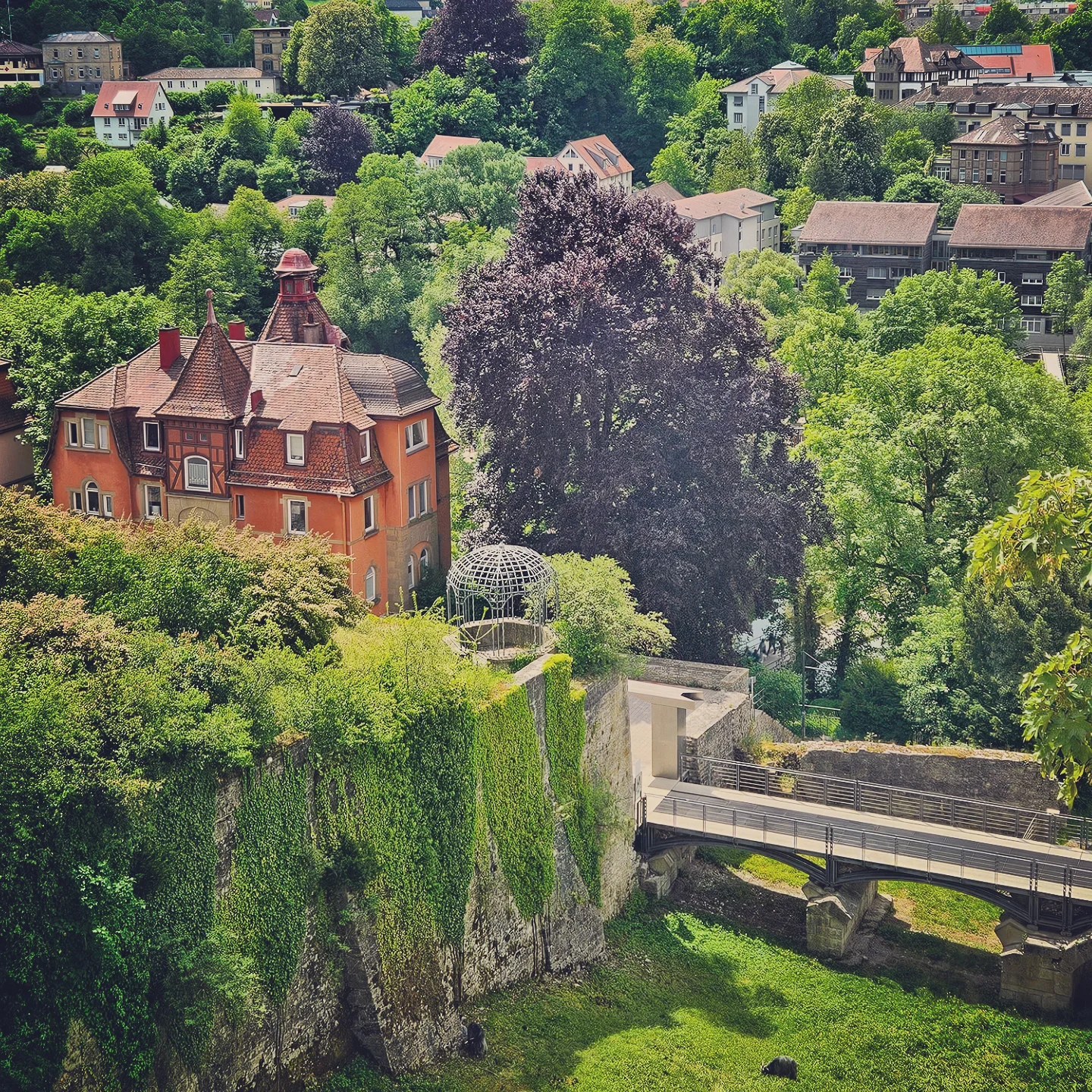
Schwäbisch Hall – A Timeless Tapestry of Cobblestones and Beauty
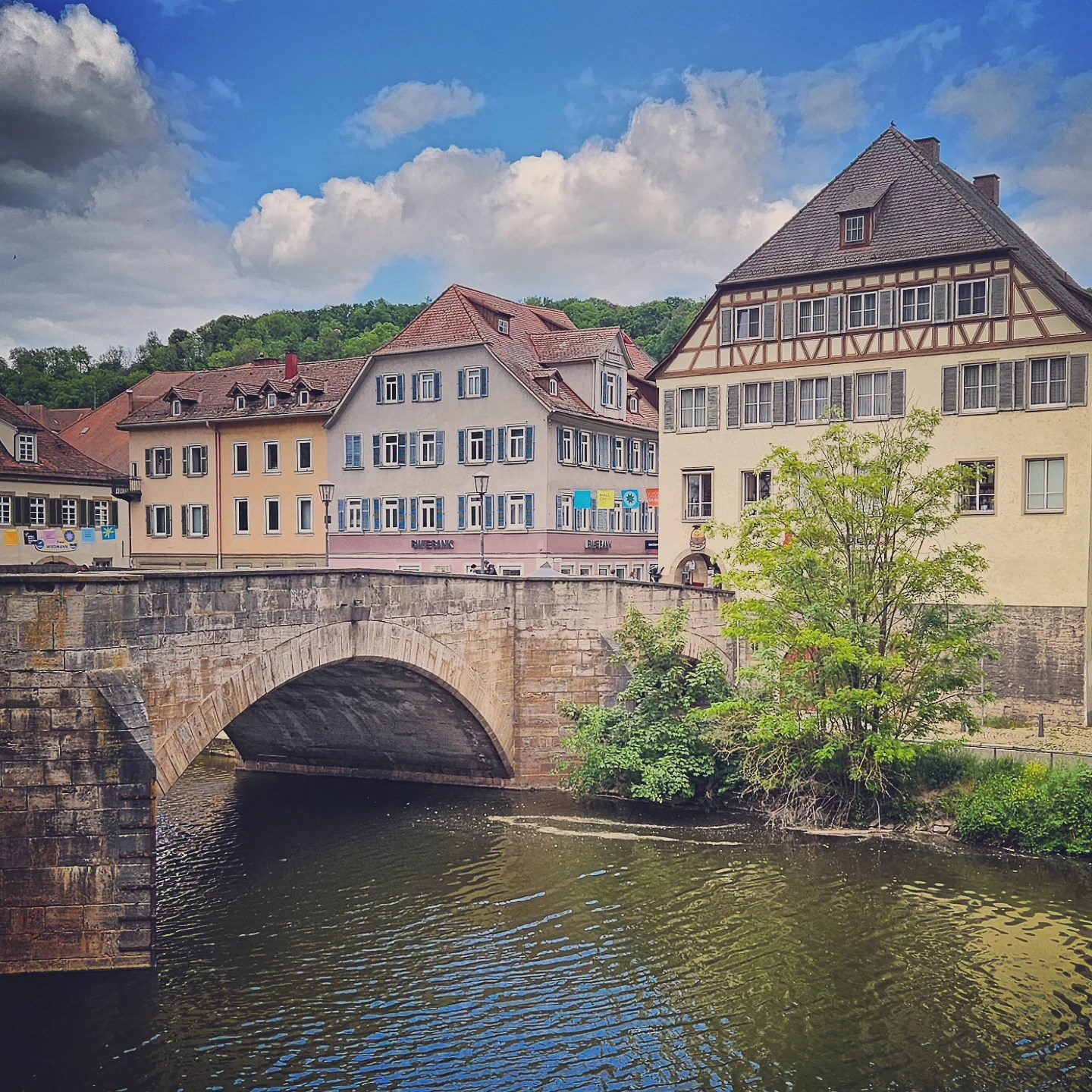
Nestled in the heart of Baden-Württemberg in southwest Germany, Schwäbisch Hall is a charming old saltmaker’s town with roots stretching back to the 12th century. Its medieval spirit lingers in every cobbled lane and half-timbered façade along the scenic river Kocher.
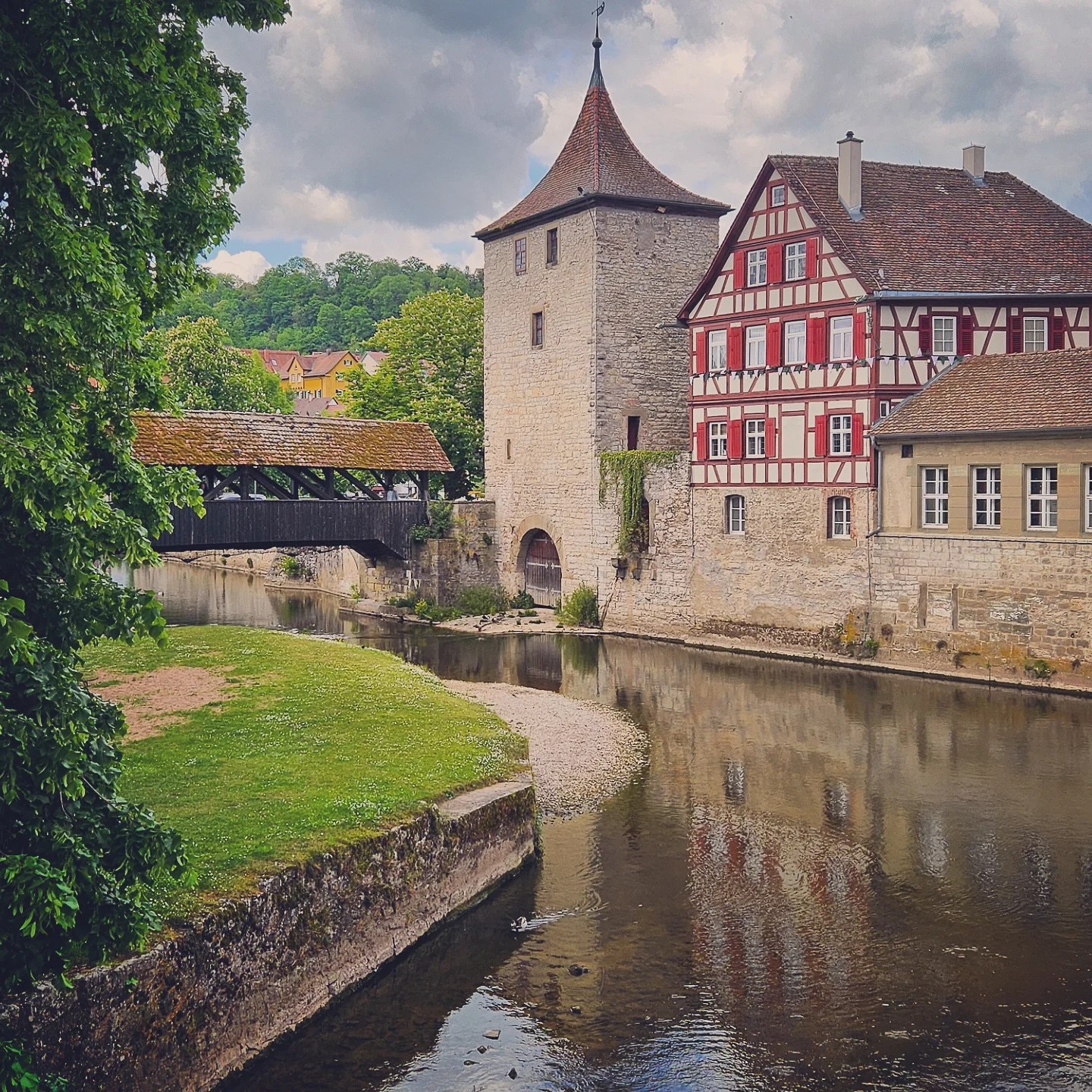
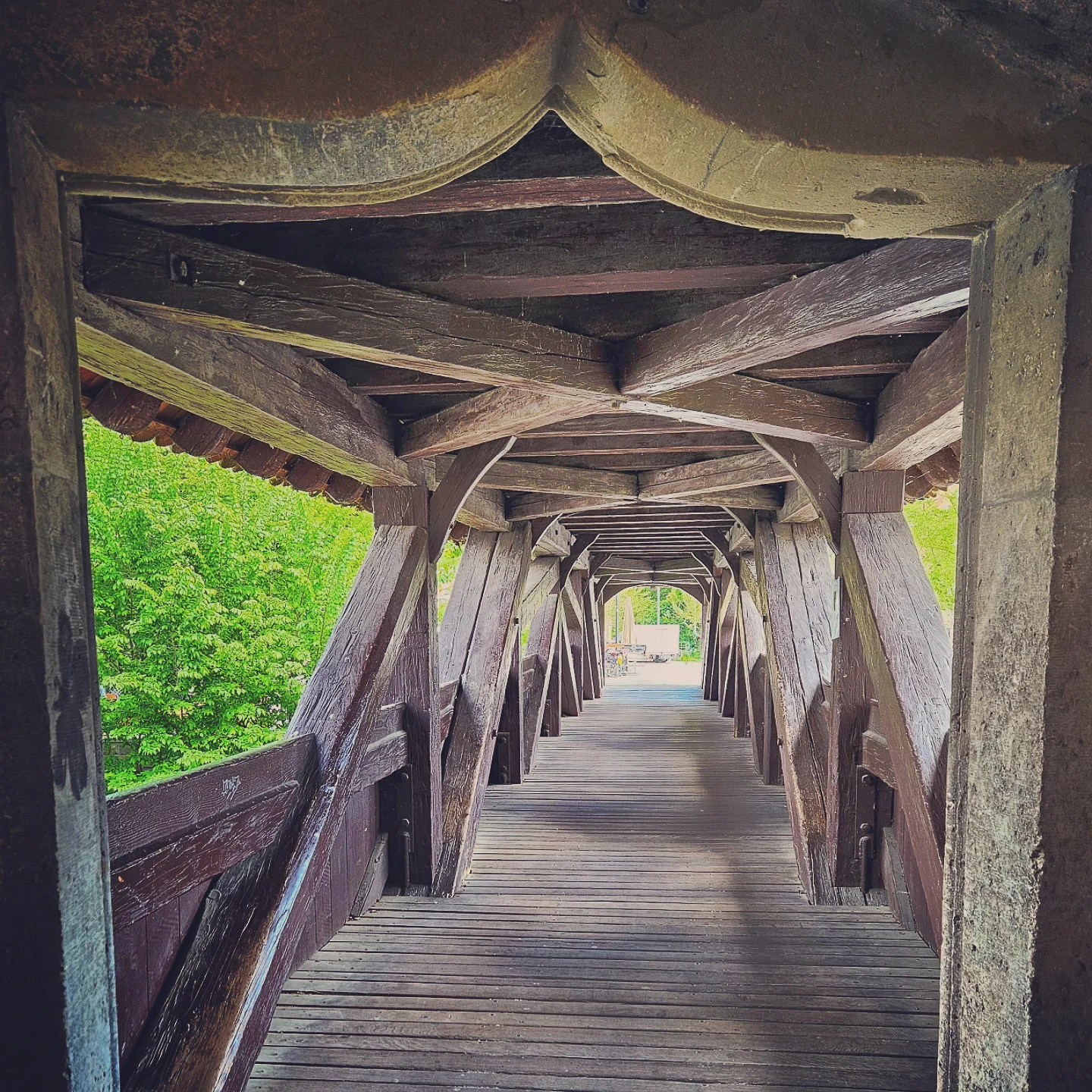
Take your time here. Stroll across covered wooden bridges, climb the quirky stäffele (those steep stair-stepped lanes), and lose yourself among ancient towers and traces of the old town wall. Around every corner, you’ll find another frame-worthy glimpse into the town’s rich past.
A Spring Visit to Schwäbisch Hall
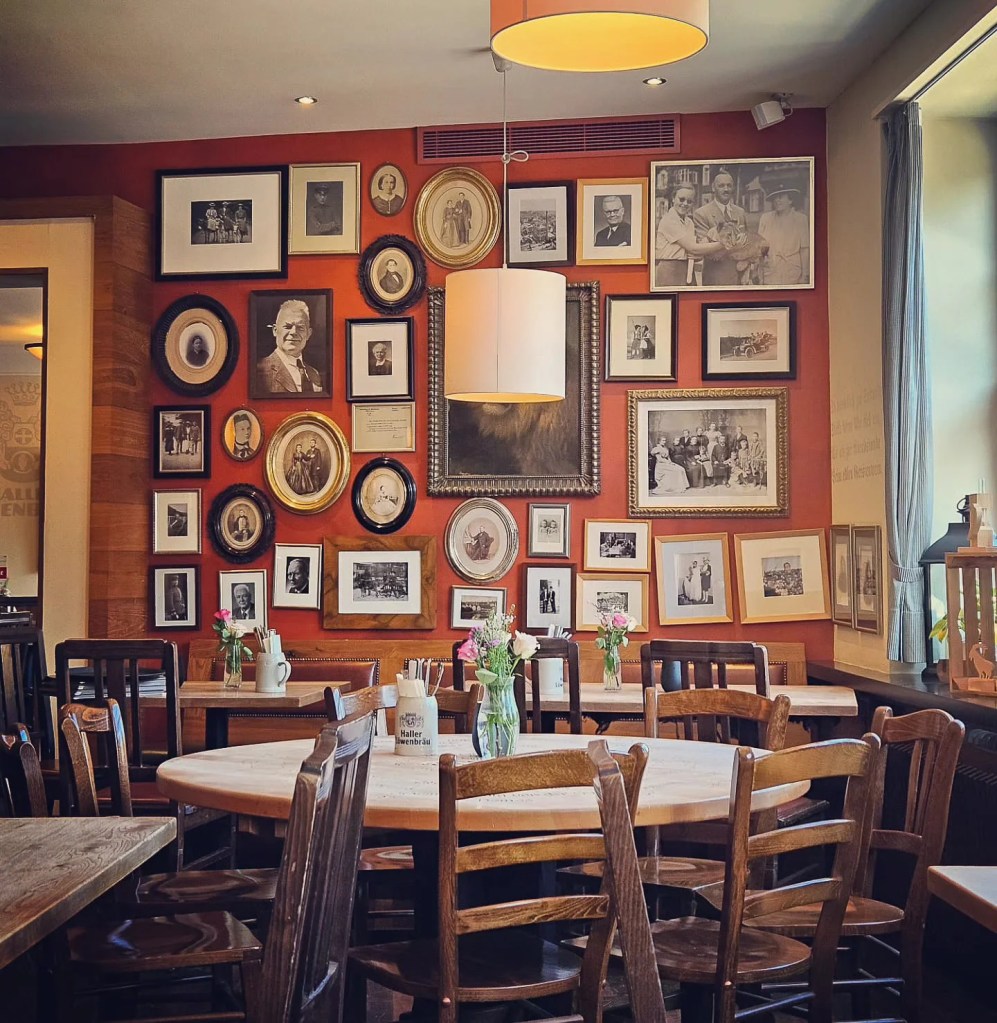
We arrived in Schwäbisch Hall on a sunny May morning, eager to discover its rich history and timeless appeal. Our first stop was Brauereiausschank zum Löwen, a traditional German brewery restaurant perfectly nestled along the river. Outdoor tables line the sidewalk out front, offering views of the town’s iconic half-timbered buildings. Inside, the atmosphere is cozy and welcoming, with old family portraits covering the walls. We ordered local favorites like crispy schnitzel, Käsespätzle (Swabian cheese noodles), and a flavorful putensteak (turkey steak), all paired with a refreshing house-brewed beer—a hearty and satisfying start to our day.
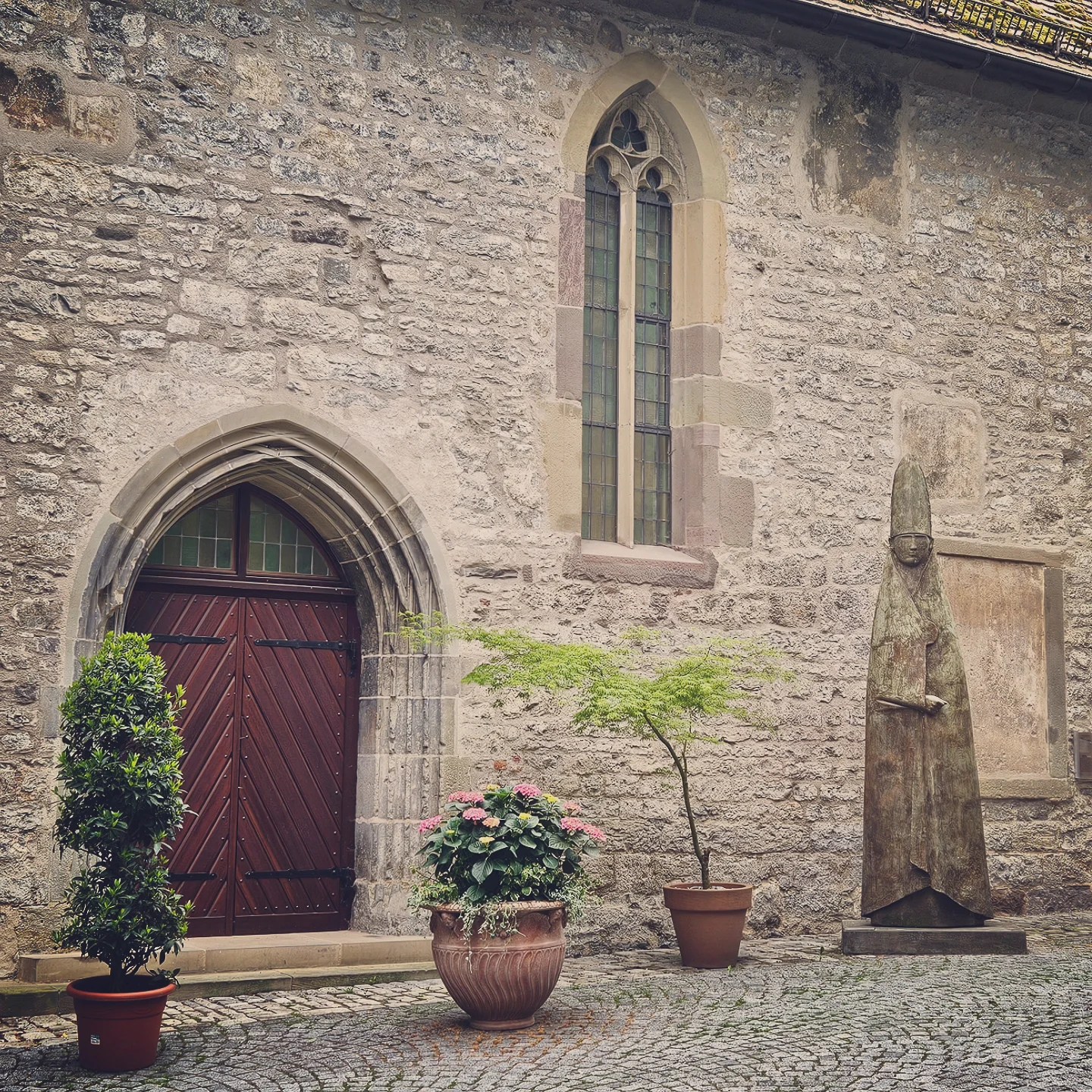
From there, we began exploring the western bank, stopping by St. Katharina—a quieter, lesser-known church with Romanesque and Gothic touches tucked among the surrounding homes—and wandered through its small but lively flohmarkt (flea market).
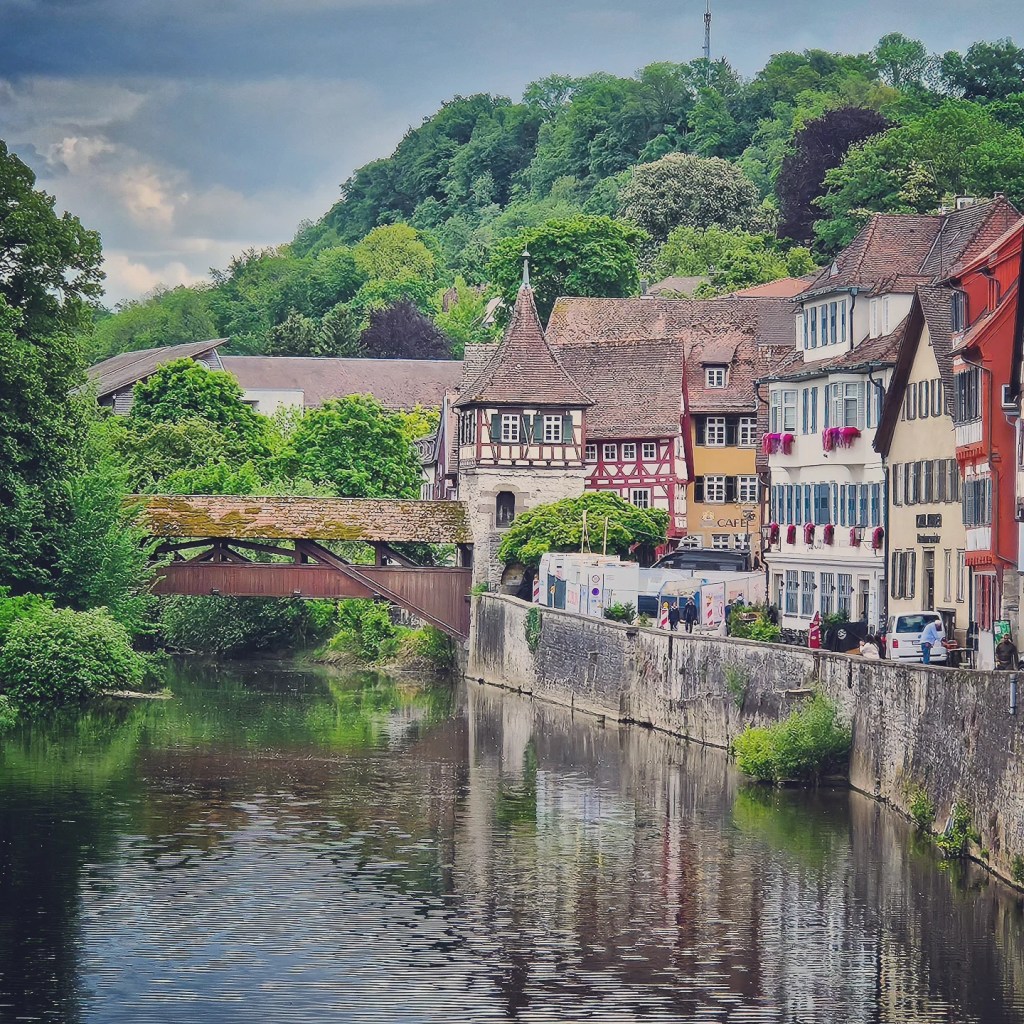
We crossed the picturesque Roter Steg (Red Bridge), a covered pedestrian span over the Kocher River, and wandered through two small islands nestled in the river that offer a quiet green space in the middle of town. One of the islands is home to the Neues Globe, a striking modern theater modeled after Shakespeare’s Globe, which hosts open-air performances during the warmer months.
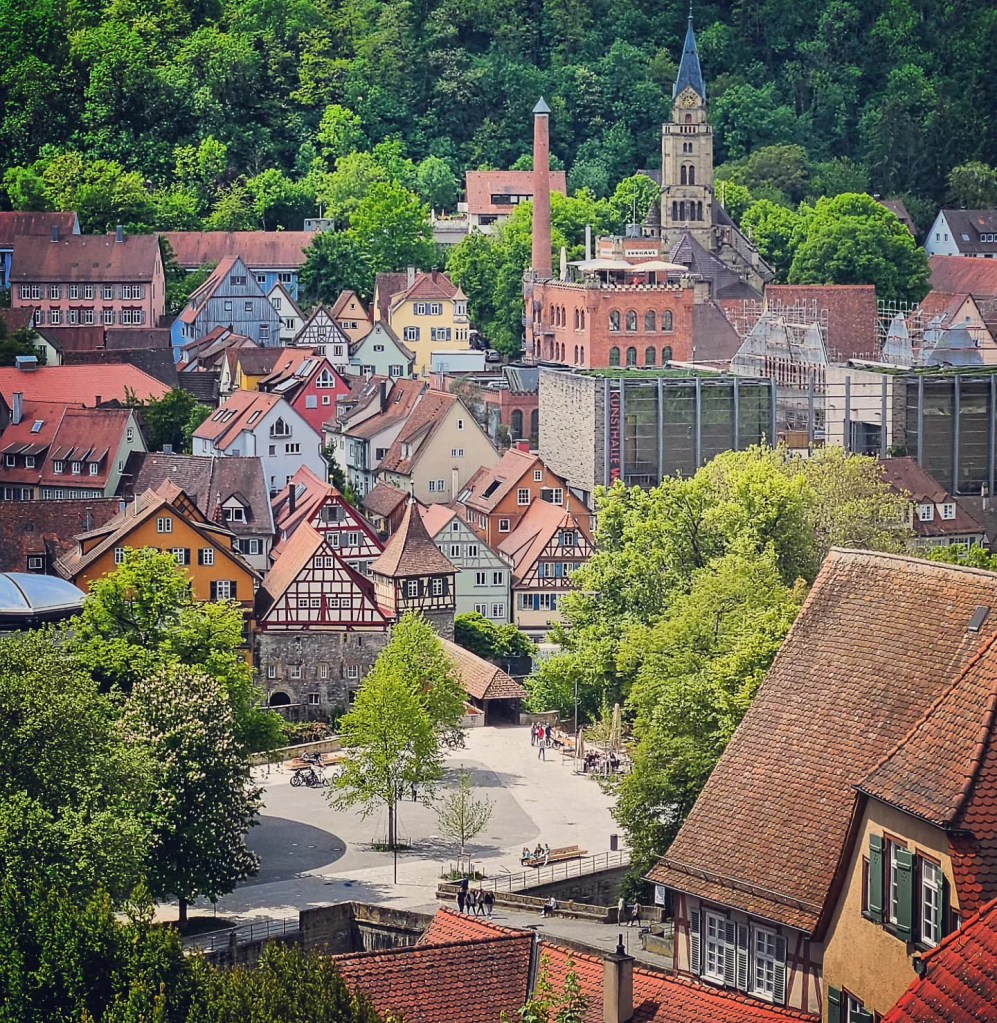
On the eastern side, we climbed uphill toward the Neubausaal, a massive 16th-century building originally used as Schwäbisch Hall’s armory and granary. Today the hall hosts concerts and events, and its elevated position offers sweeping views over the old town. Along the way, we spotted a few long-haired goats grazing nearby, adding a touch of rural charm to the urban hillside.

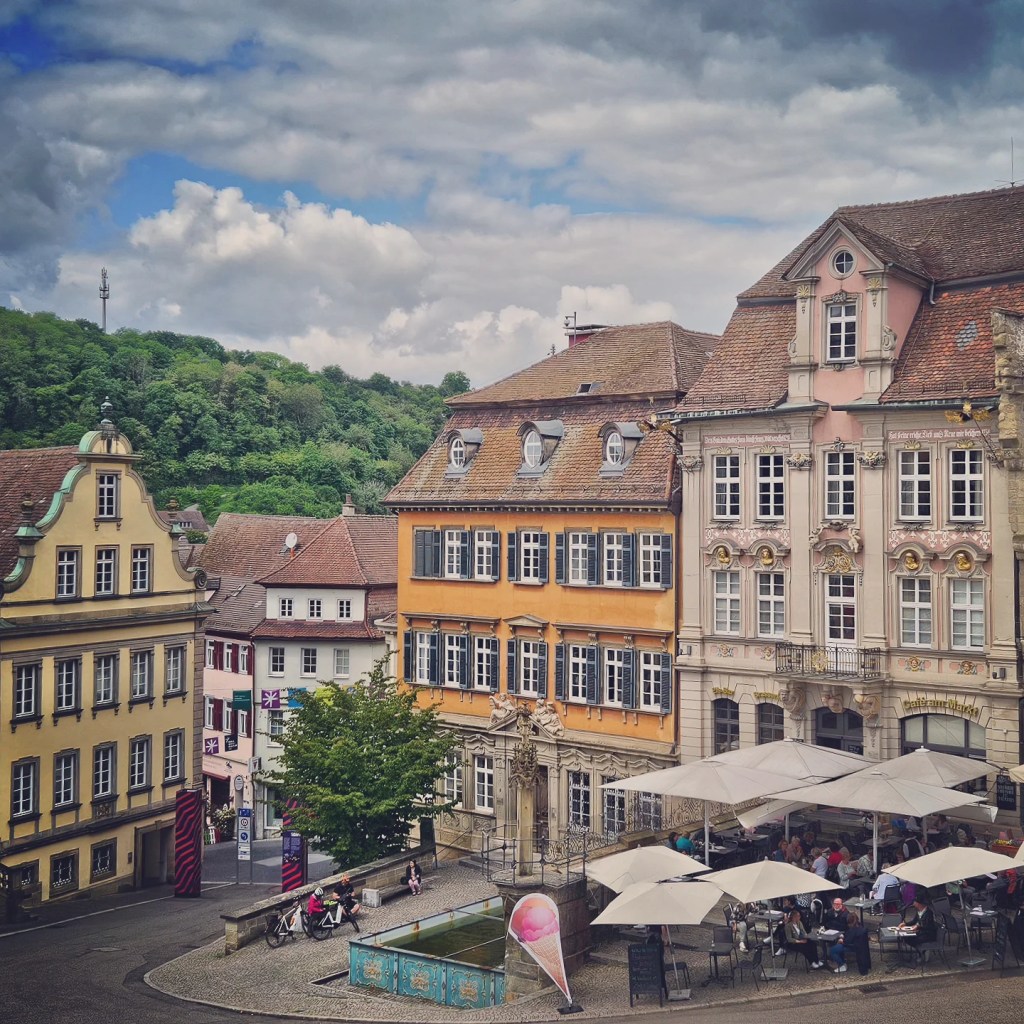
After wandering through St. Michael’s Church, we paused in its Romanesque entrance hall to admire a 13th-century statue of Archangel Michael slaying a dragon—a powerful symbol of justice and divine protection that reminded me of the iconic dragon in Ljubljana, another town steeped in legend. From there, we descended the church’s grand staircase, taking in sweeping views over the Marktplatz, a vibrant square often alive with local events and markets. Just across the way stands the Rathaus (Town Hall), an elegant reminder of Schwäbisch Hall’s civic heritage.
Leaving the square behind, we ducked into a maze of charming little alleys full of half-timbered homes and hidden corners that felt centuries removed from the modern world. We paused for kaffee und kuchen (coffee and cake), taking a moment to soak in the timeless scenery before continuing on to cross the historic Henkersbrücke (Hangman’s Bridge). In medieval times, the town’s executioner lived in a small house built directly on the bridge, where he collected tolls from those passing through—a curious bit of history still visible in the pavilion that stands there today.



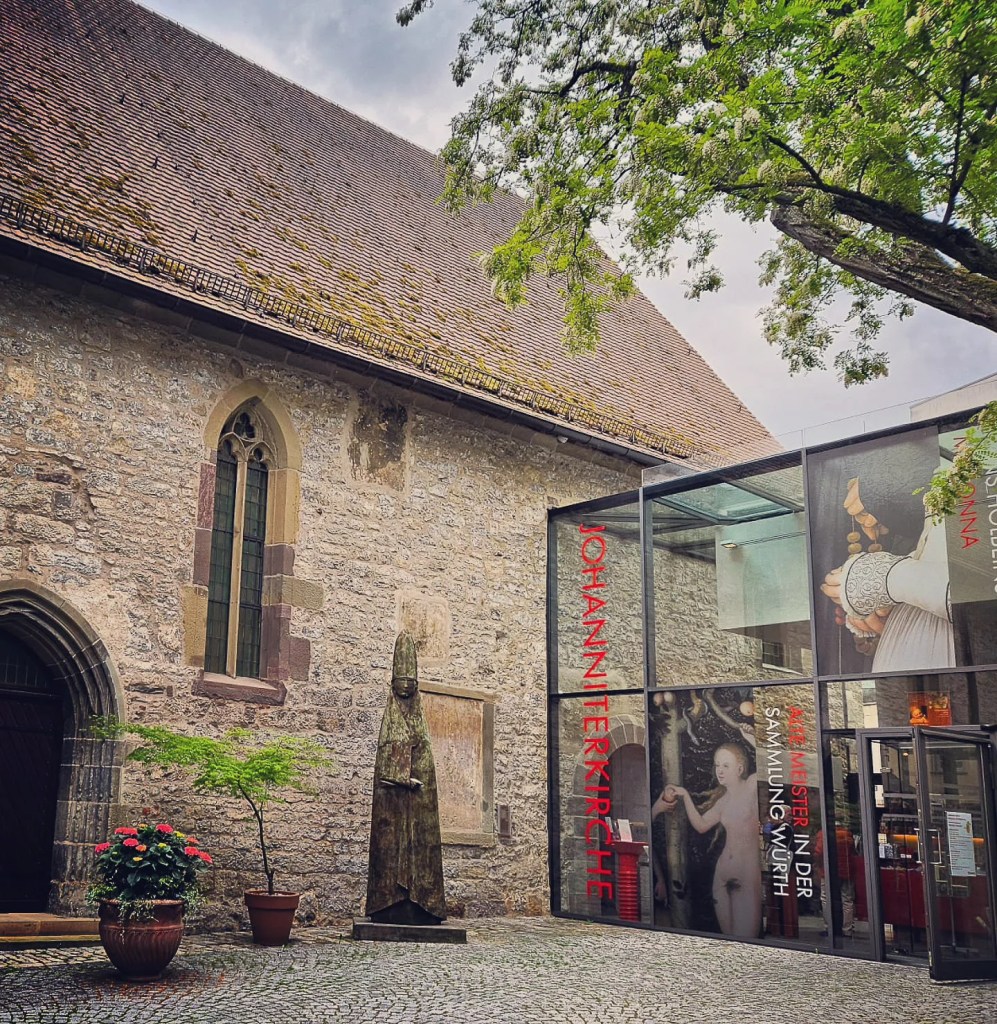
Back on the western side, we visited Johanniterkirche, now a museum filled with stunning late medieval and early modern art. Don’t leave without spotting The Little Lark, a sweet little bird hidden in a centuries-old fresco—it’s a small, beautiful detail that feels like a secret waiting to be found (hint: inside, look up near the corners of the church).

Don’t Miss these other Schwäbisch Hall Highlights
- Hällisch-Fränkisches Museum: Dive into the rich salt and cultural history of the region.
- Kunsthalle Würth: A treasure trove of contemporary art housed in sleek modern architecture.
- Großcomburg Monastery: A breathtaking fortress-like monastery with panoramic views. (Scroll below for photos and details.)
- Hohenlohe Open-Air Museum: Step back into Franconian village life before electricity and telephones. Just a 10-minute drive away, and an absolute gem for curious minds and cameras alike.
Getting There
Schwäbisch Hall is located about 90 kilometers (55 miles) northeast of Stuttgart. It’s the perfect destination for a relaxed day trip or weekend escape.
By Train from Stuttgart
- You can reach Schwäbisch Hall-Hessental train station by taking the S-Bahn and Regional-Express (RE) from Stuttgart Hauptbahnhof. The route is covered by the Deutschland-Ticket (currently €58/month), which is a great option if you’re traveling by train and bus frequently within Germany. Travel time is approximately 1 hour.
- From the Train Station: catch the local bus from Hessental Bahnhof (right outside the station). It’s a quick 10-minute ride directly to the Old Town.
- Check routes and times using the DB Navigator or Google Maps.
By Car from Stuttgart:
- Drive time from Stuttgart: About 1 to 1.5 hours, depending on traffic.
- Parking is available near the Altstadt and main attractions.
From there, we set out on a serene 35-minute riverside walk to Großcomburg Monastery (tip: follow the path under the buildings near the Red Bridge to stay close to the river).
Perched Above the Kocher Valley: A Visit to Großcomburg Monastery
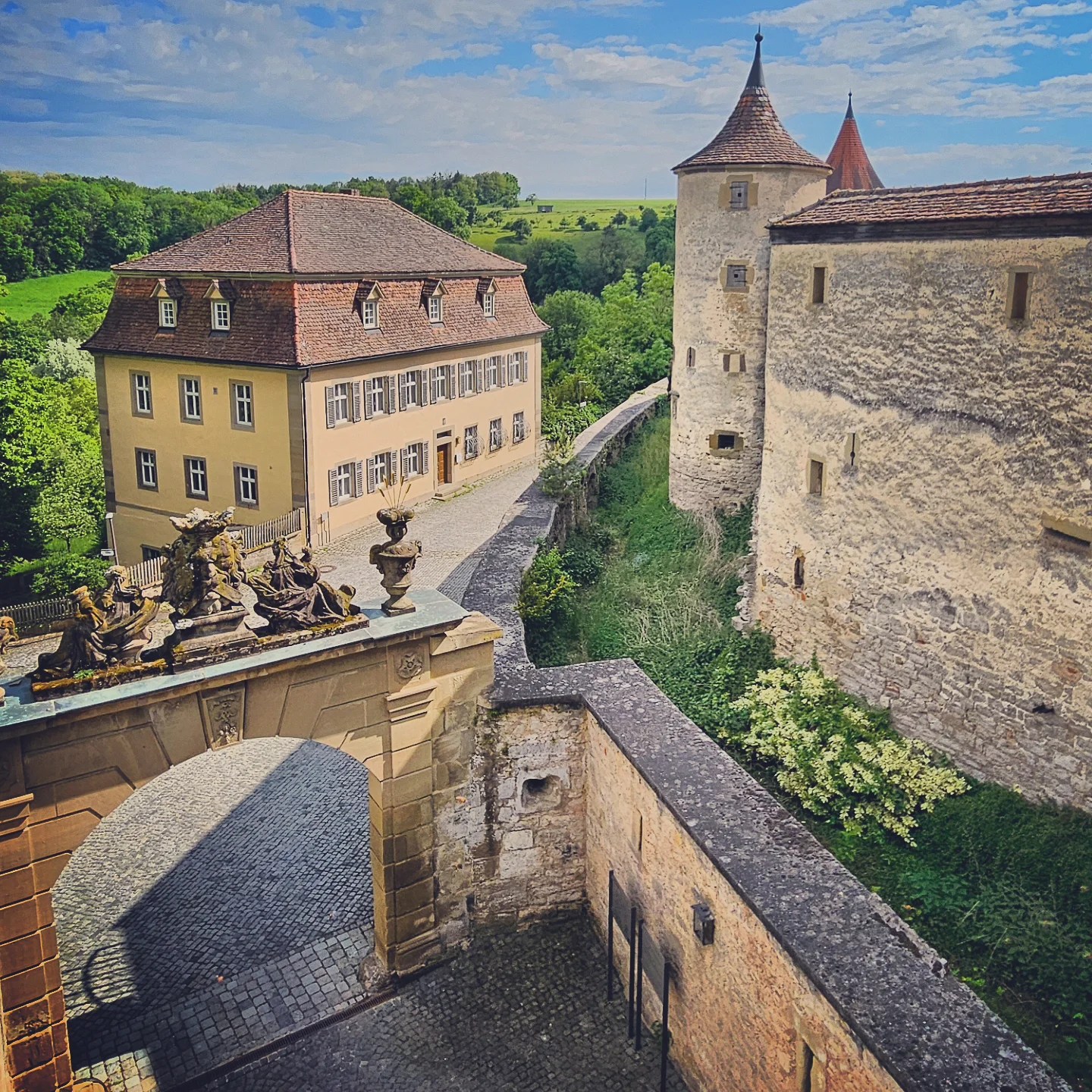


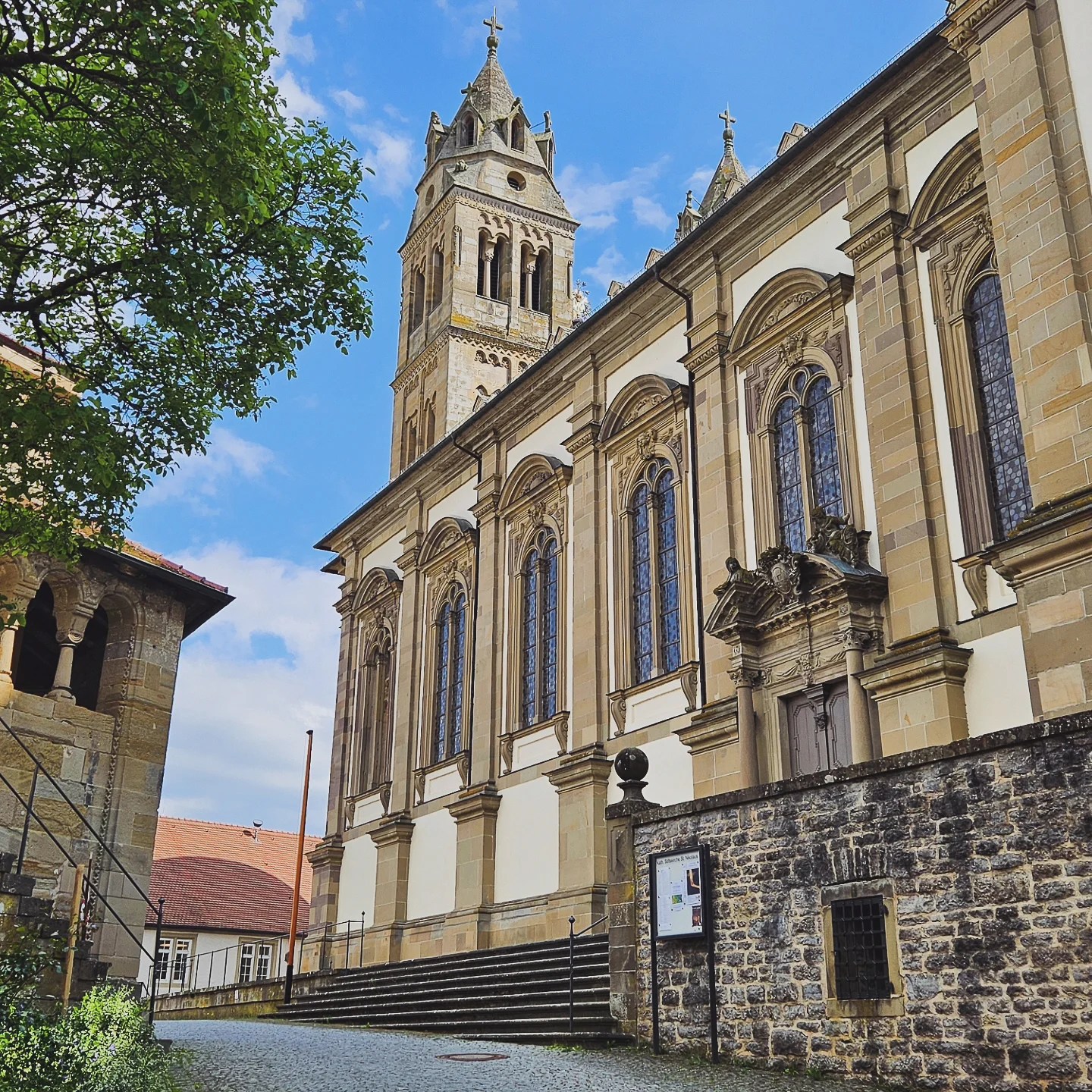

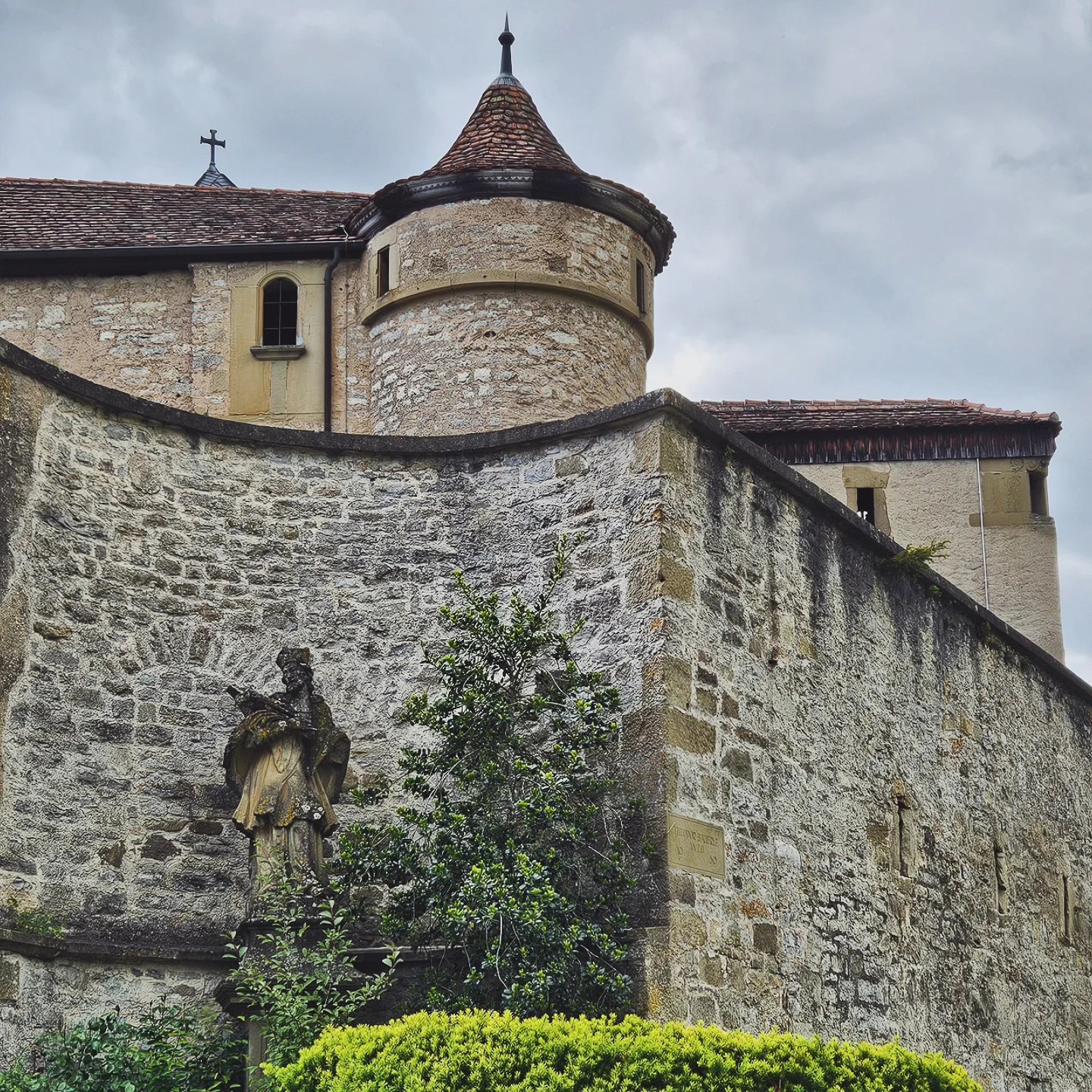
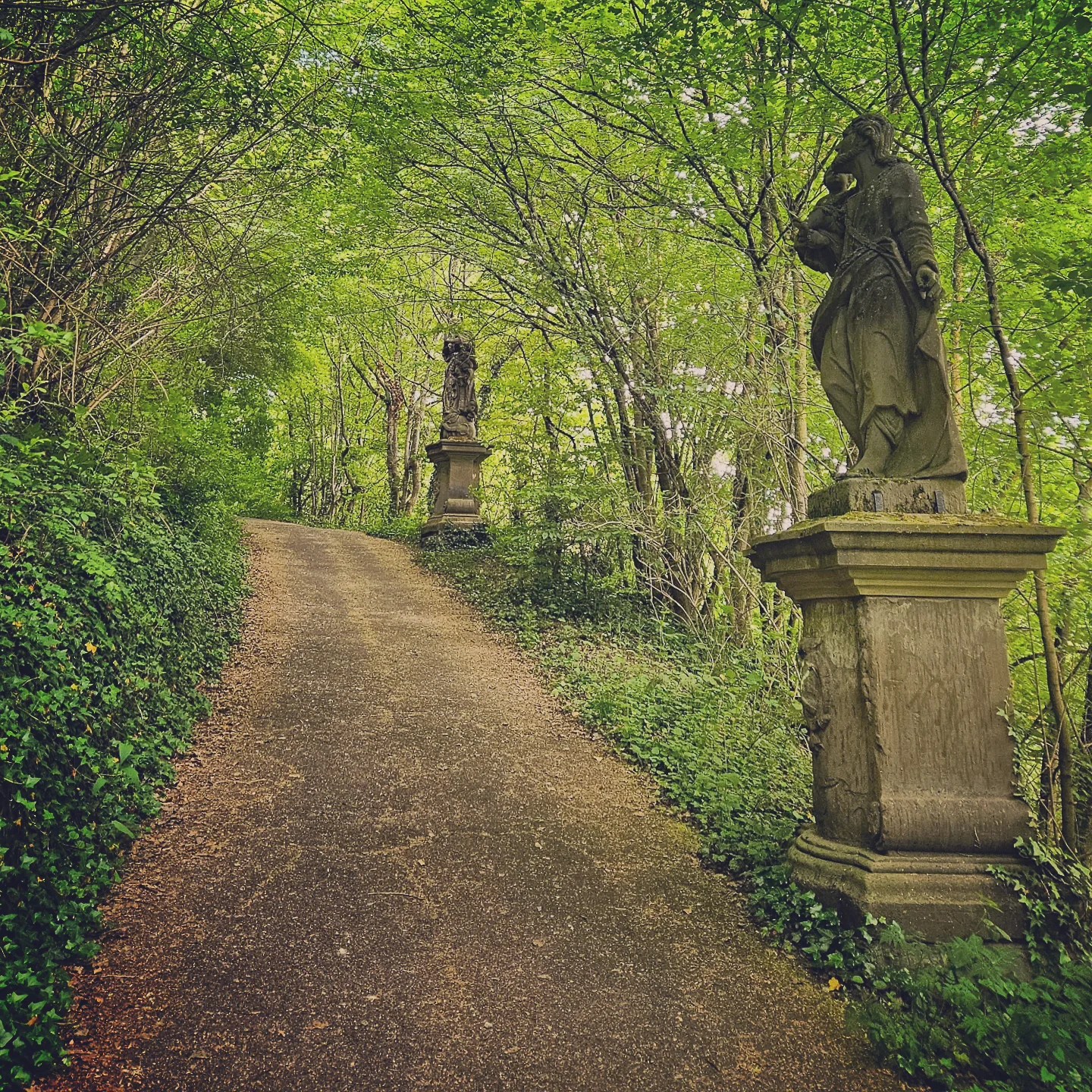
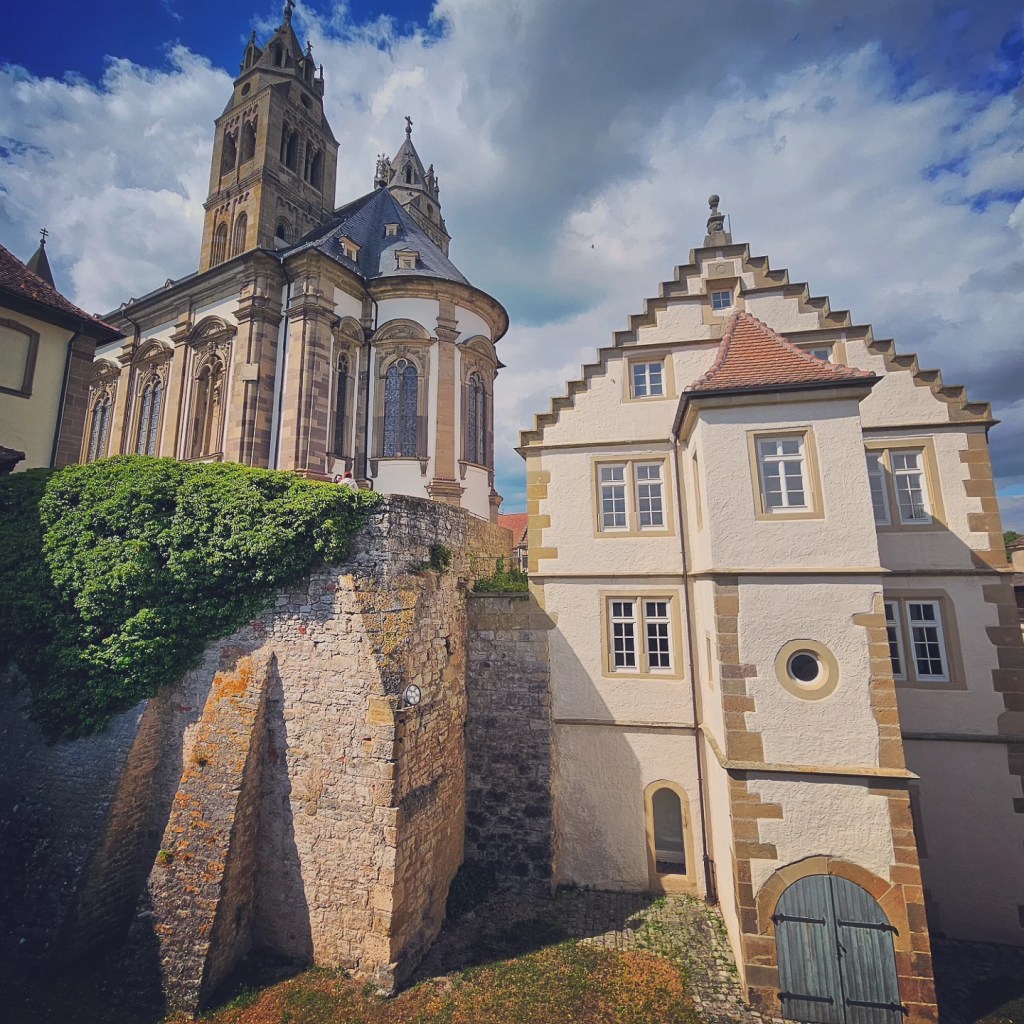
High above the river Kocher, Großcomburg Monastery (Kloster Großcomburg) has watched over the landscape since 1078, when it was established as a Benedictine monastery. Built more like a fortress than a cloister, the complex includes a complete ring wall with towers, gates, and even battlements—reminders of its dual role as a spiritual retreat and a place of protection. Today, it houses a teacher training center for Baden-Württemberg, but much of the original structure is still accessible and well preserved.
Step Inside the Walls
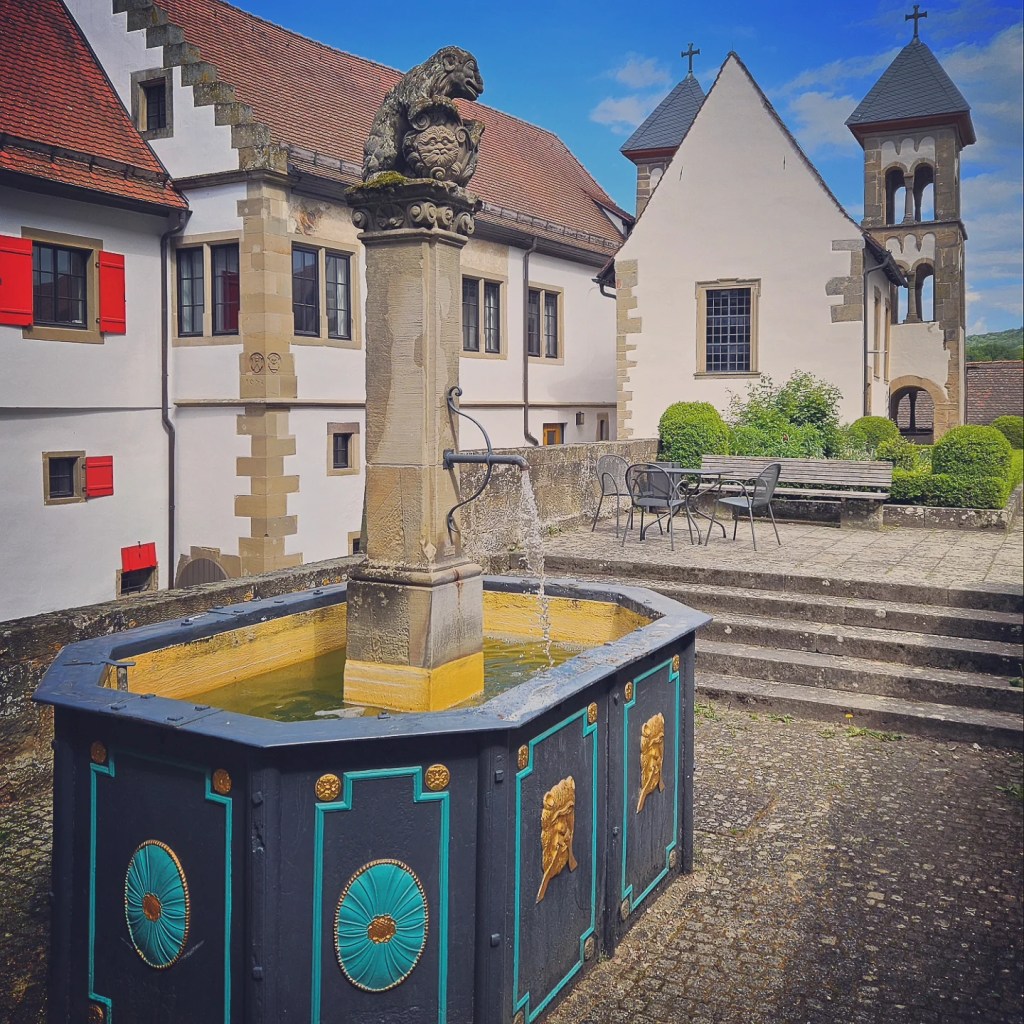
Within the grounds, we explored a mix of Romanesque and Baroque architecture, peaceful inner courtyards, and a fully walkable curtain wall. Along the way, you’ll find weathered statues, vine-covered stonework, and sweeping views that hint at the monastery’s long history as both a sacred site and a seat of influence. Informational panels throughout the grounds help bring the site’s layered history to life—from its early monastic roots to later periods of secular use.

Take in the Views
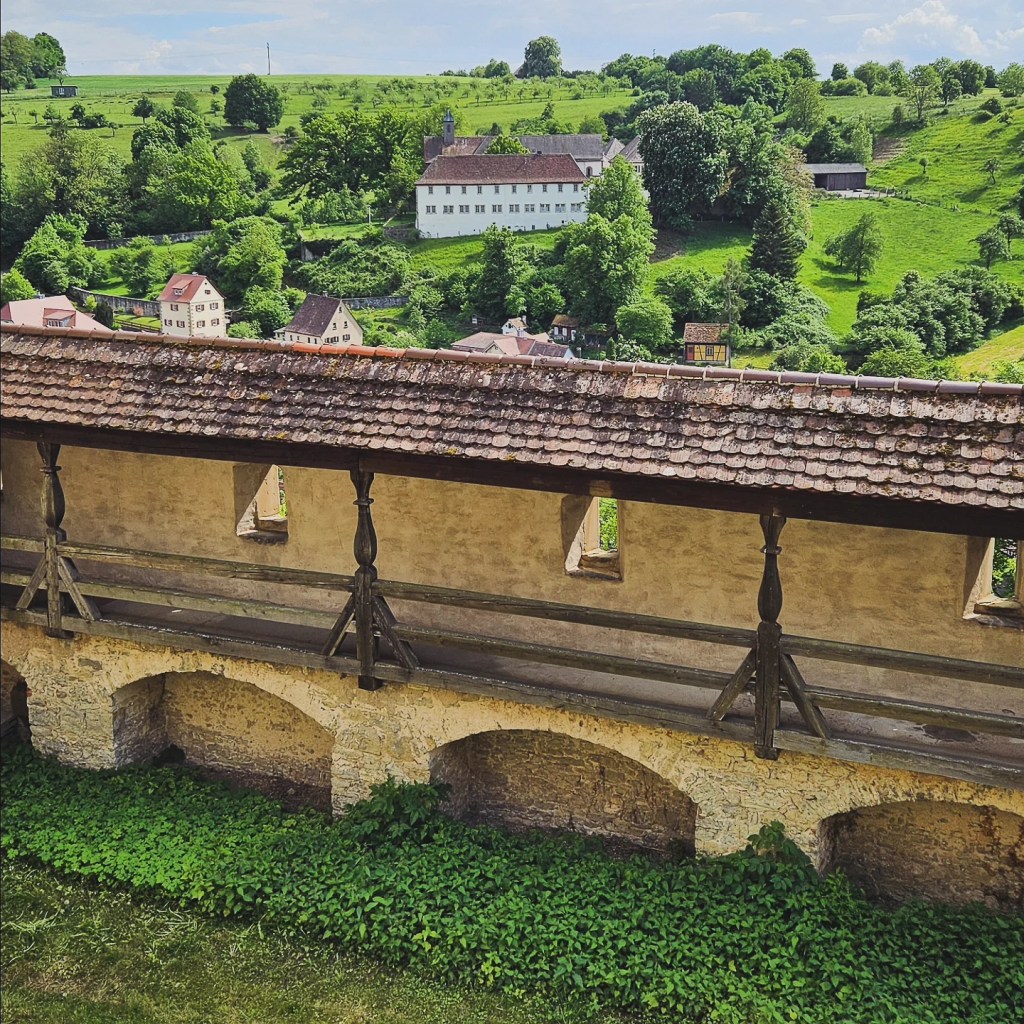
We also took a walk along the outer walls, which offer stunning panoramas over the Kleincomburg Convent, surrounding villages, and the rolling Hohenlohe countryside. It’s an ideal spot for photographers, especially in the softer light of morning or late afternoon.

Don’t Miss the Church Treasures
If you can, join a guided tour of the Collegiate Church of St. Nicholas (Stiftskirche St. Nikolaus). The church interior holds two rare treasures: a Romanesque gold antependium—a richly decorated altar front that glows with intricate religious scenes—and an extraordinary wheel chandelier, suspended like a medieval halo above the sanctuary. Access is only possible with a guided tour, and while we weren’t able to take one during our visit, it’s well worth planning ahead. Tour times vary, so be sure to check the official website for current information.

Getting There
- By Foot from Schwäbisch Hall: About 30-40 min along the river Kocher
- By Bus from Schwäbisch Hall: About 25 min
When you are ready to head home, you can either walk 30 minutes to the Schwäbisch Hall-Hessental train station or catch the bus again for a quick ride back.
I’d love to hear about your own adventures at Schwäbisch Hall and Großcomburg Monastery—share your tips, favorite memories, or questions below!

Leave a Reply