I had been looking forward to this day trip for a while. The Blautopf, a glowing turquoise spring at the foot of the Swabian Alb, first drew me in, but the area around Blaubeuren offers much more than just the blue water—medieval streets and a monastery, UNESCO-listed Ice Age caves, and castle ruins overlooking the Blautal valley. Together, they make this small corner of the Swabian Alb an easy place to fill an entire day.
Blaubeuren’s Medieval Center
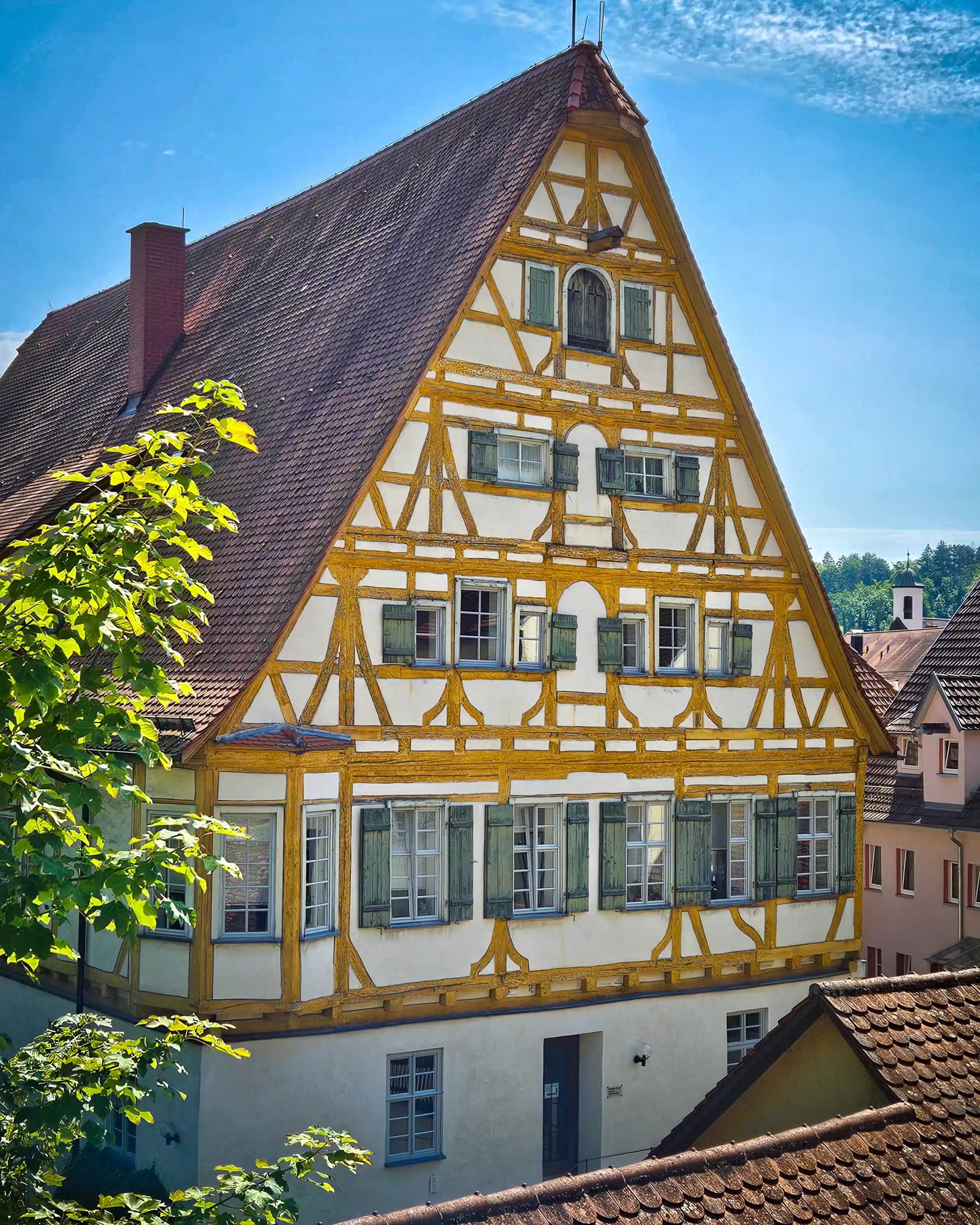
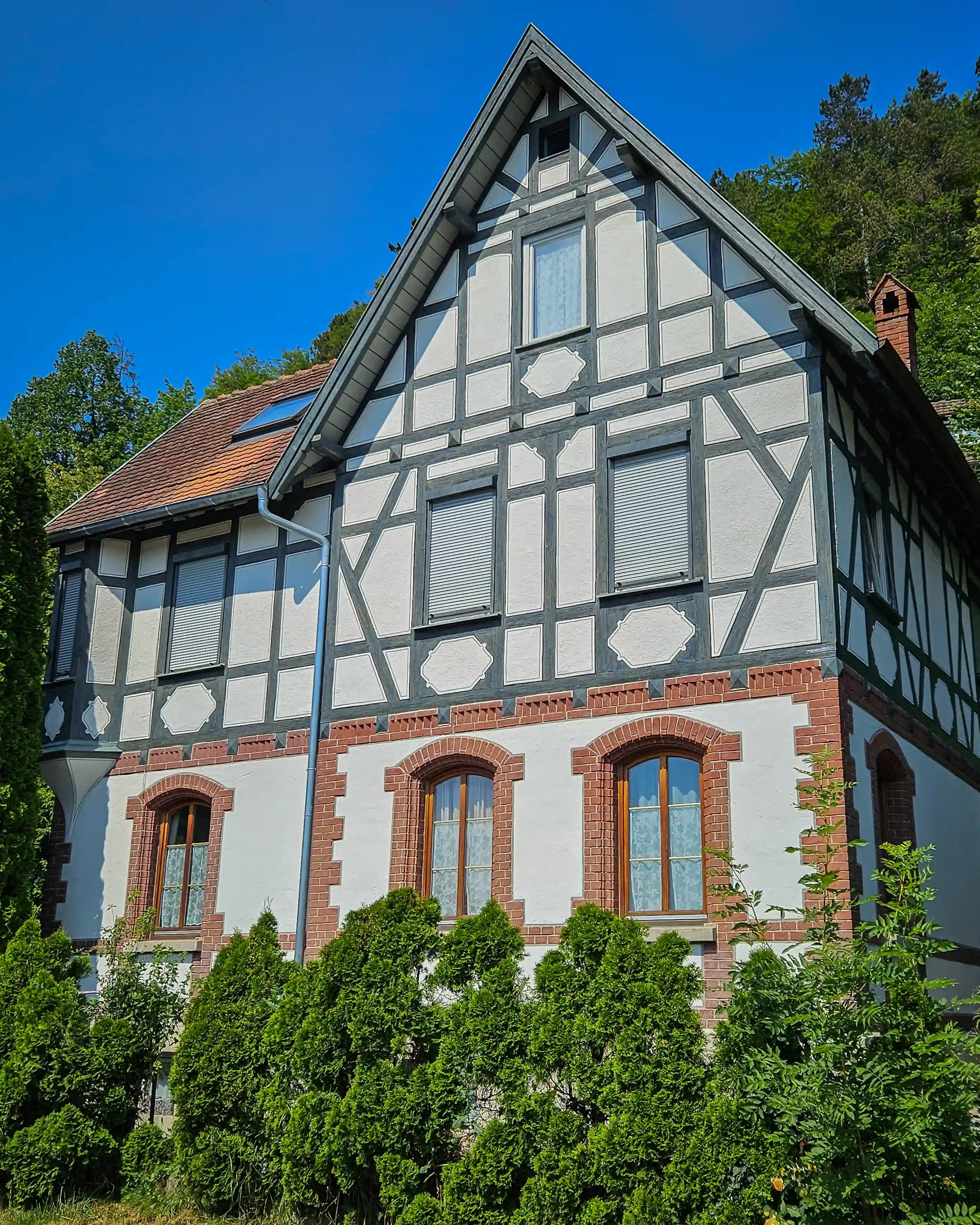
Blaubeuren’s old town is considered one of the best-preserved medieval centers in southwestern Germany, and it shows as soon as you arrive. Narrow streets, half-timbered houses, and small squares shape the historic center, and remnants of the medieval town wall can still be found around the edges of town.
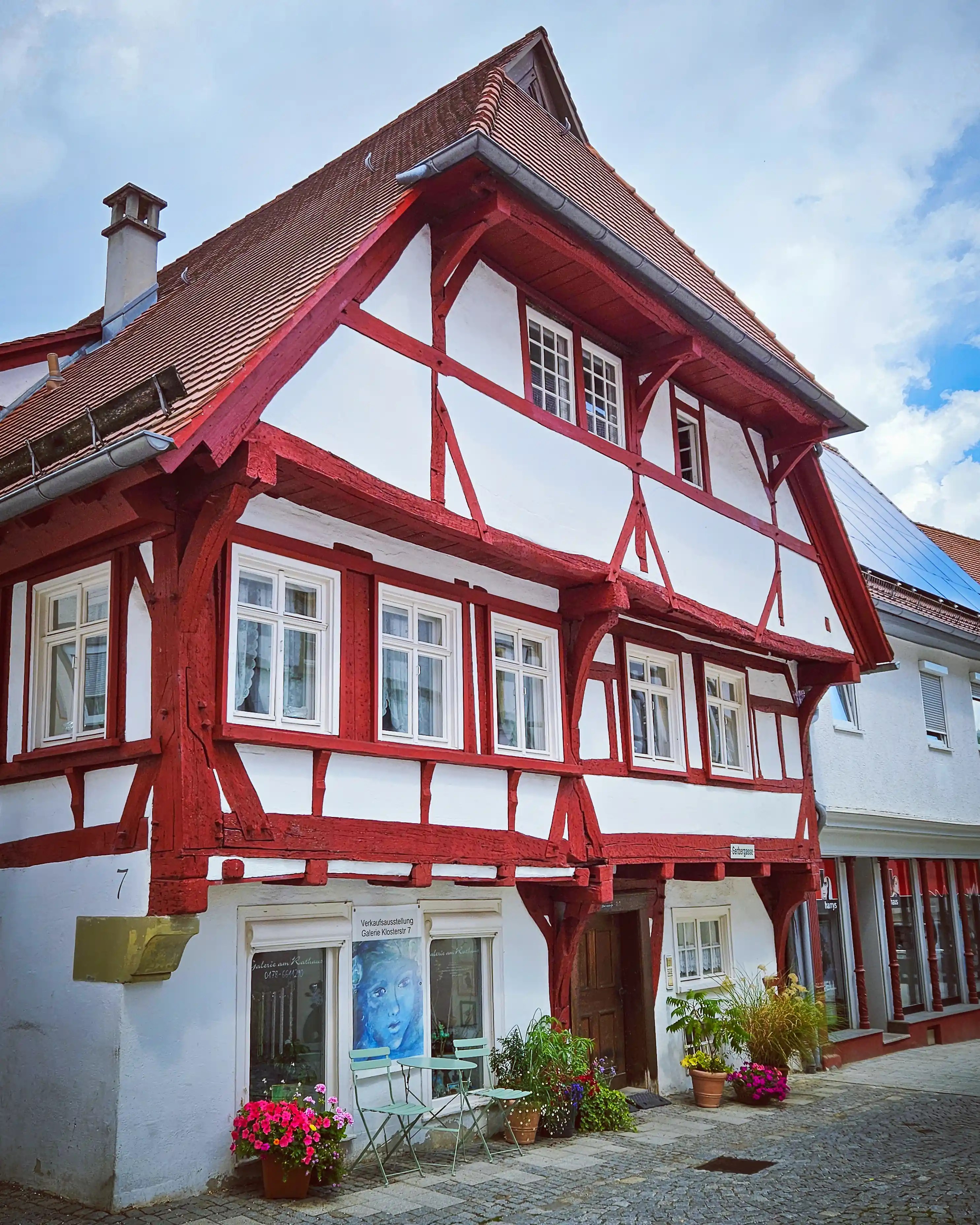
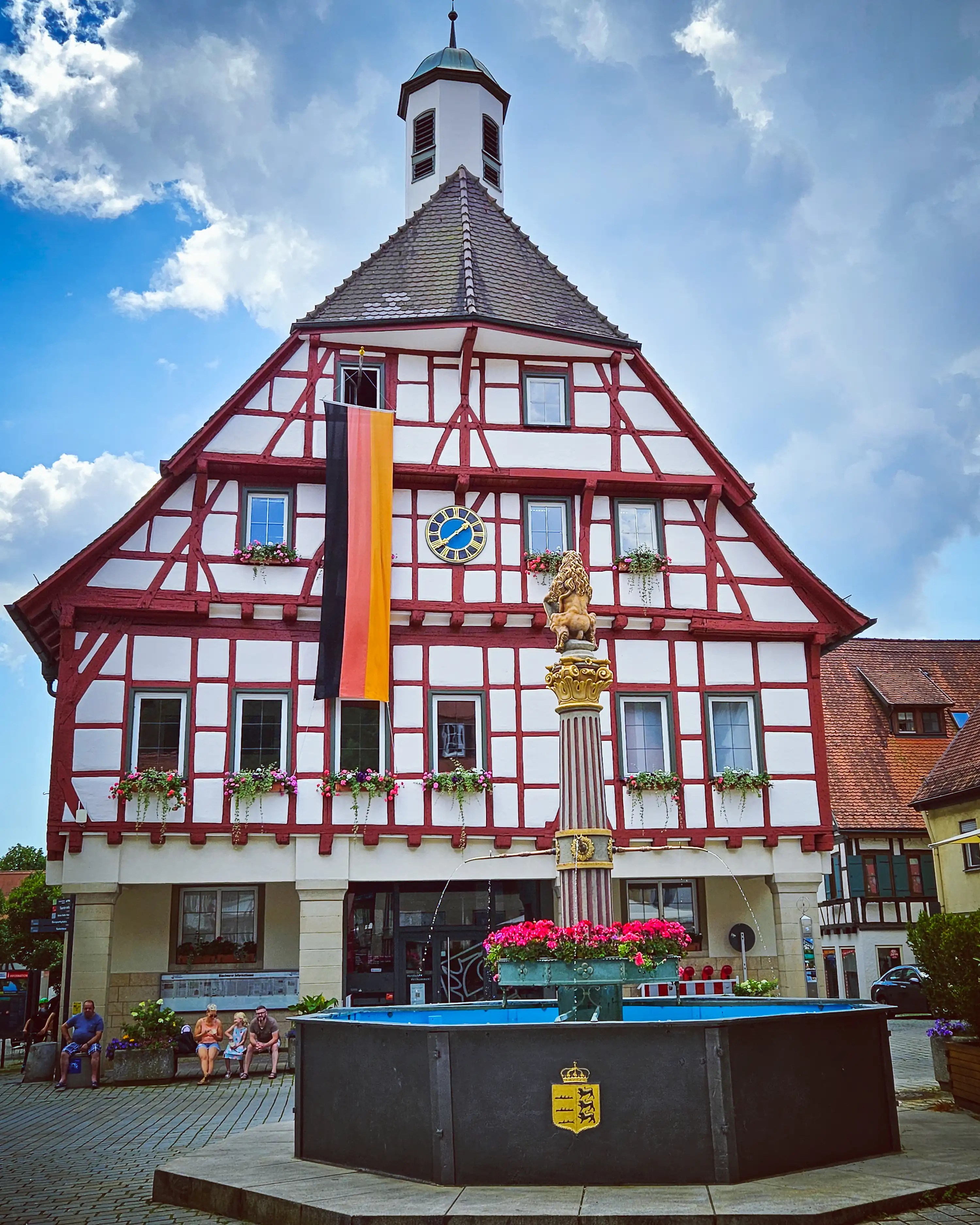
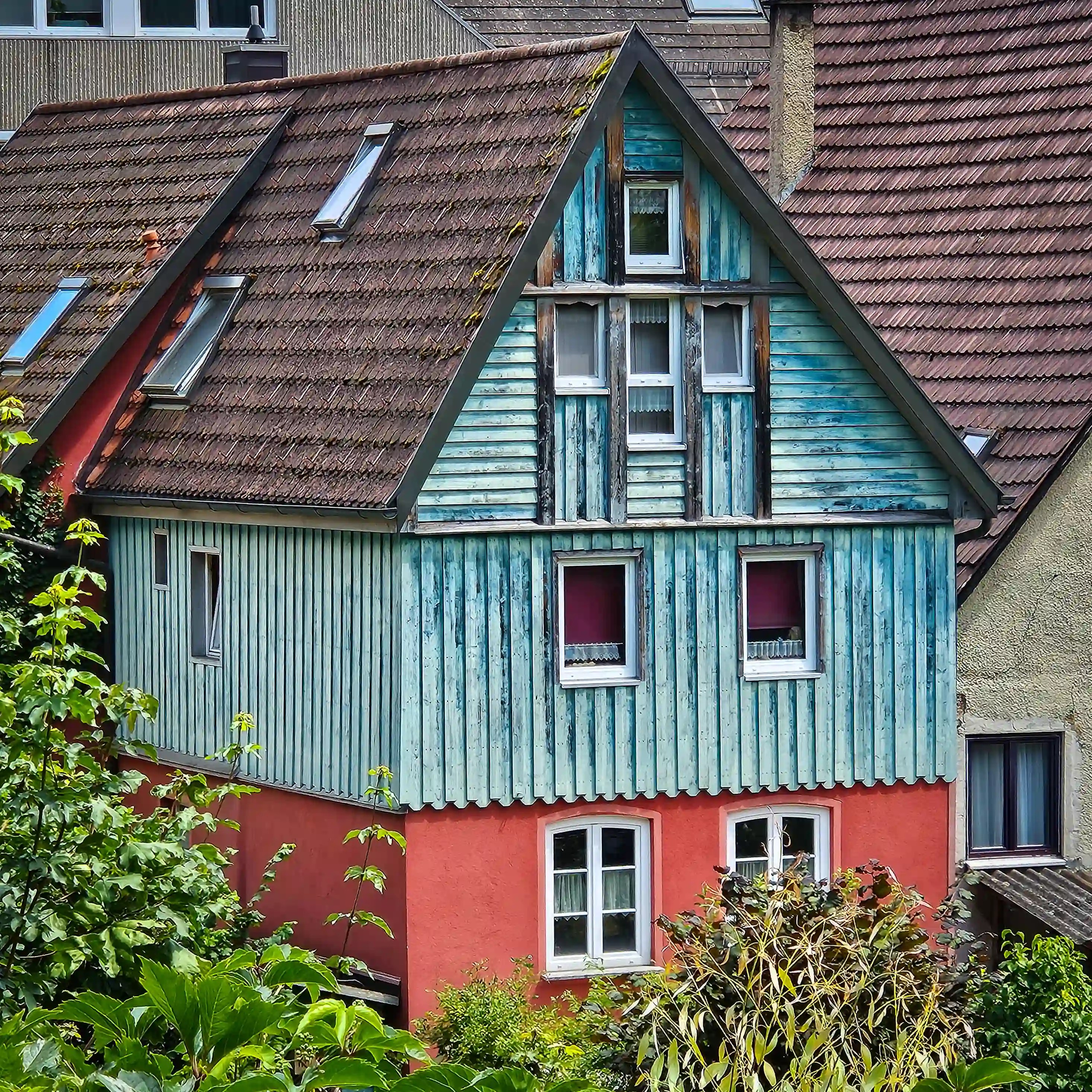
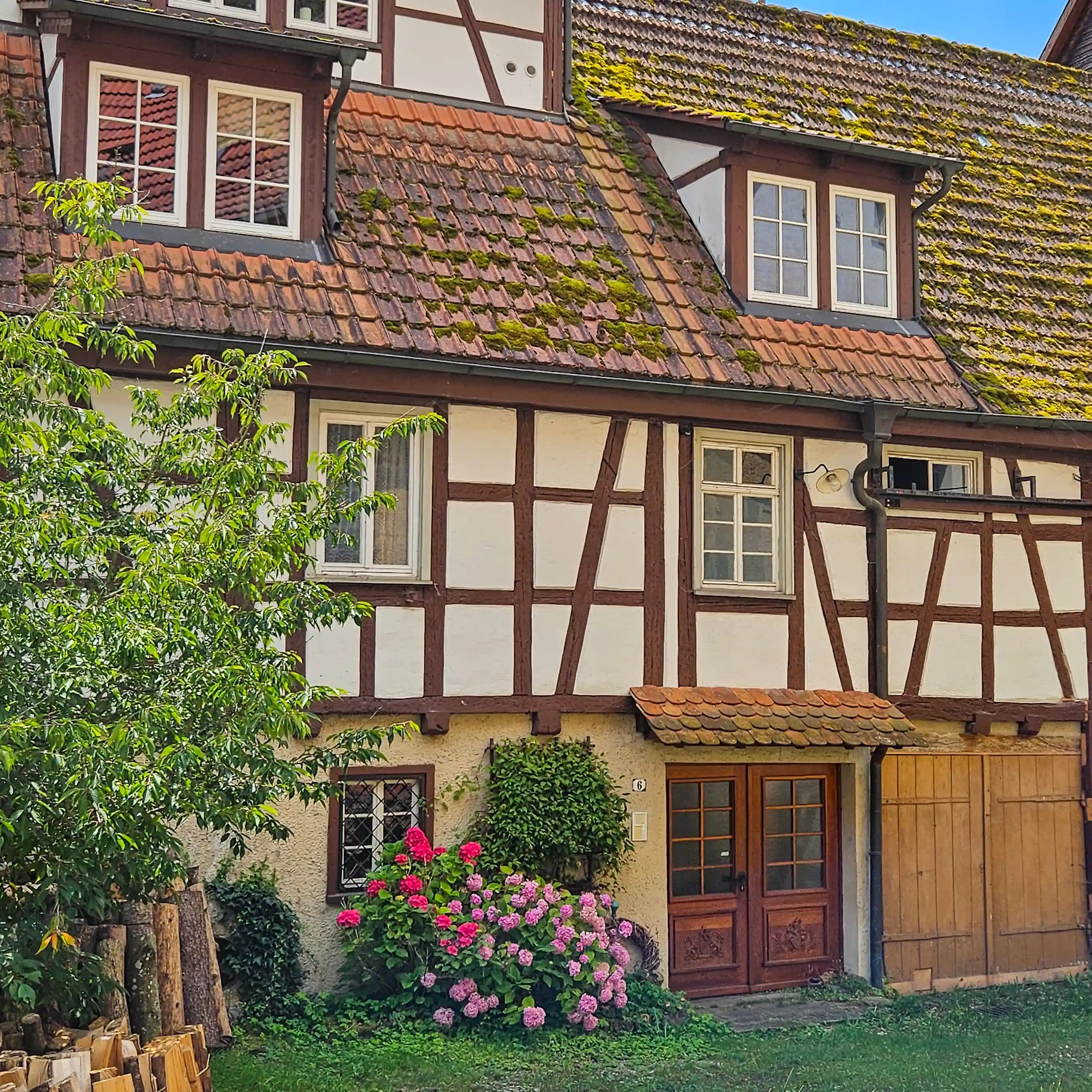
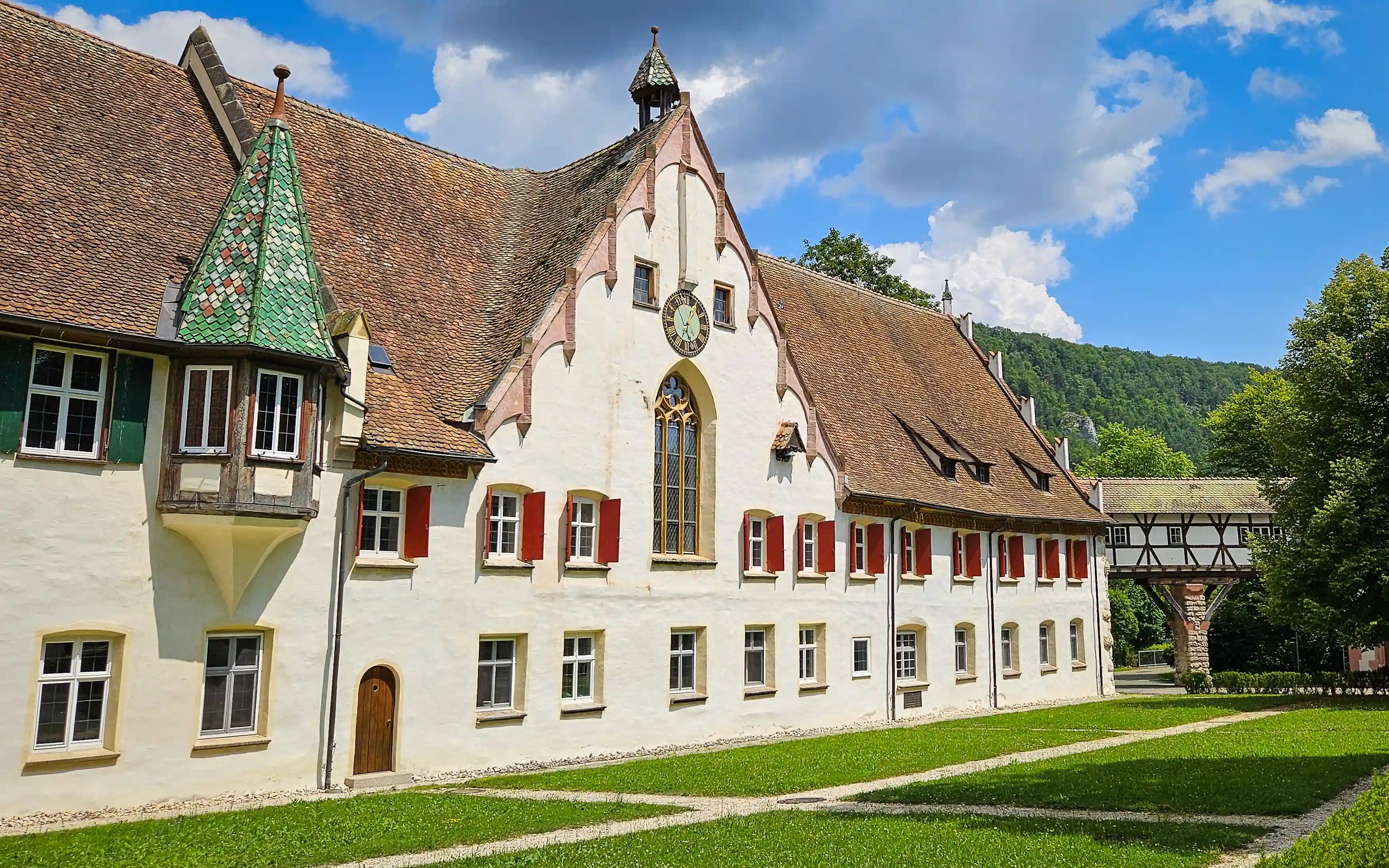
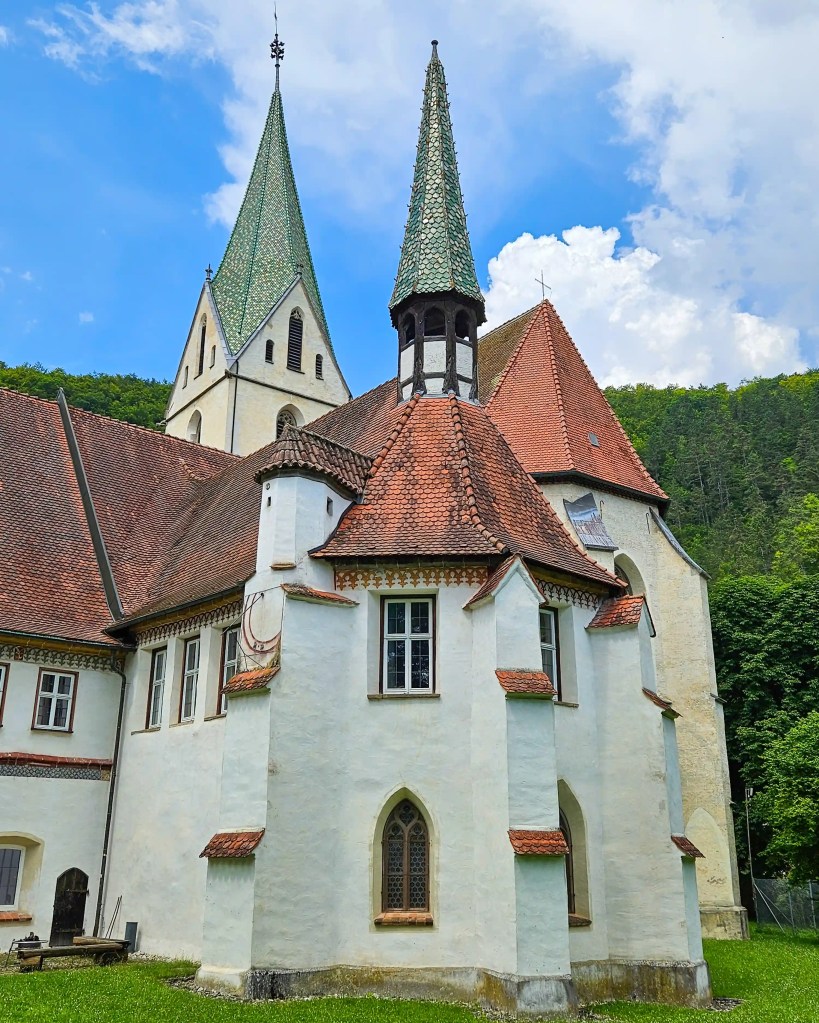
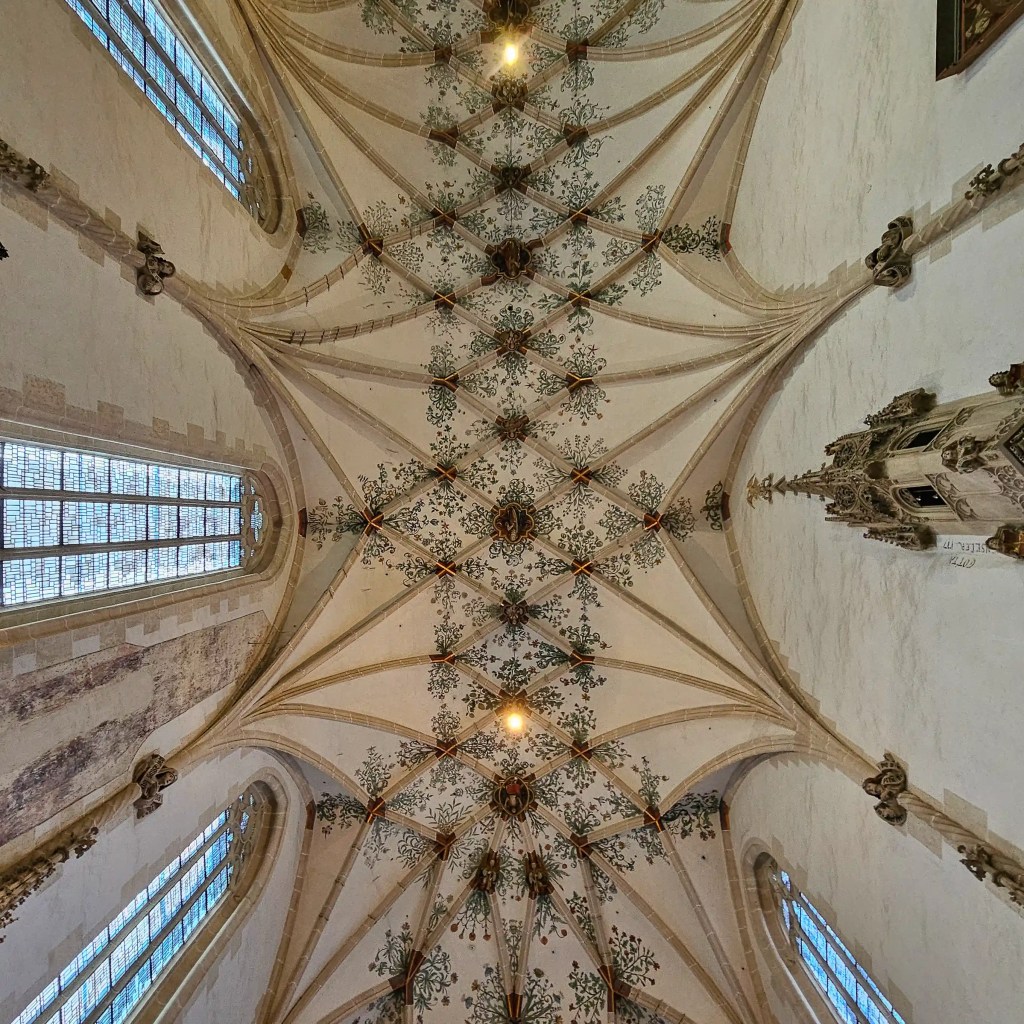
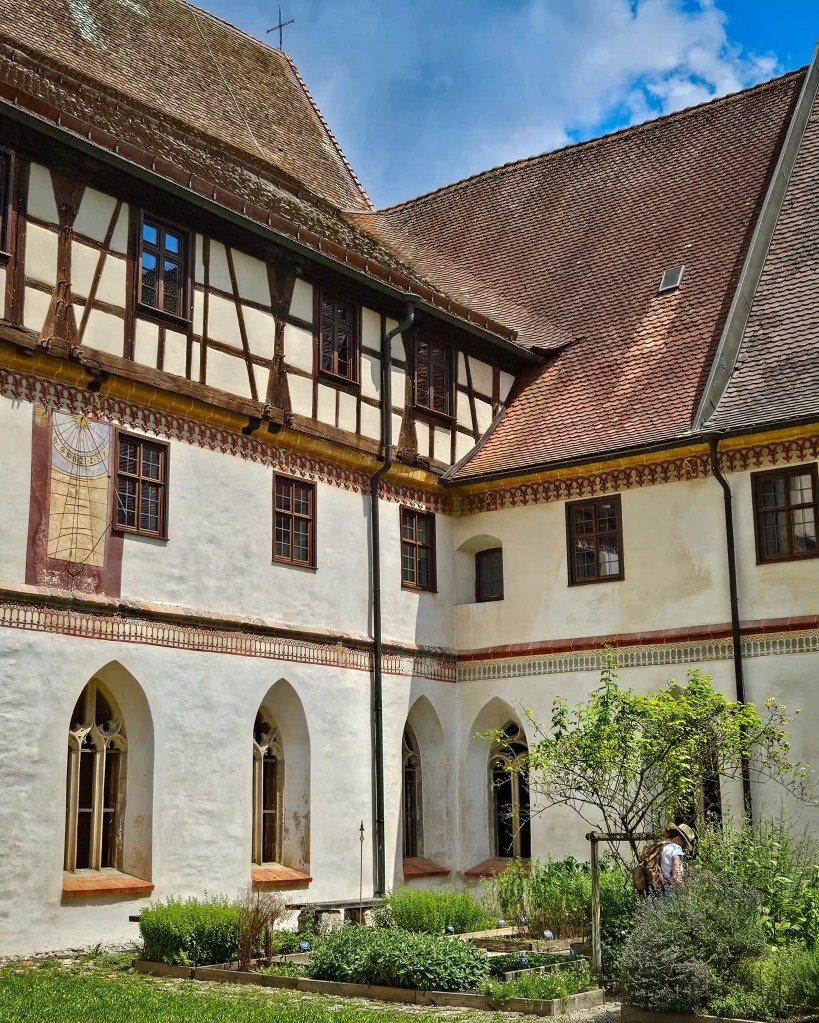
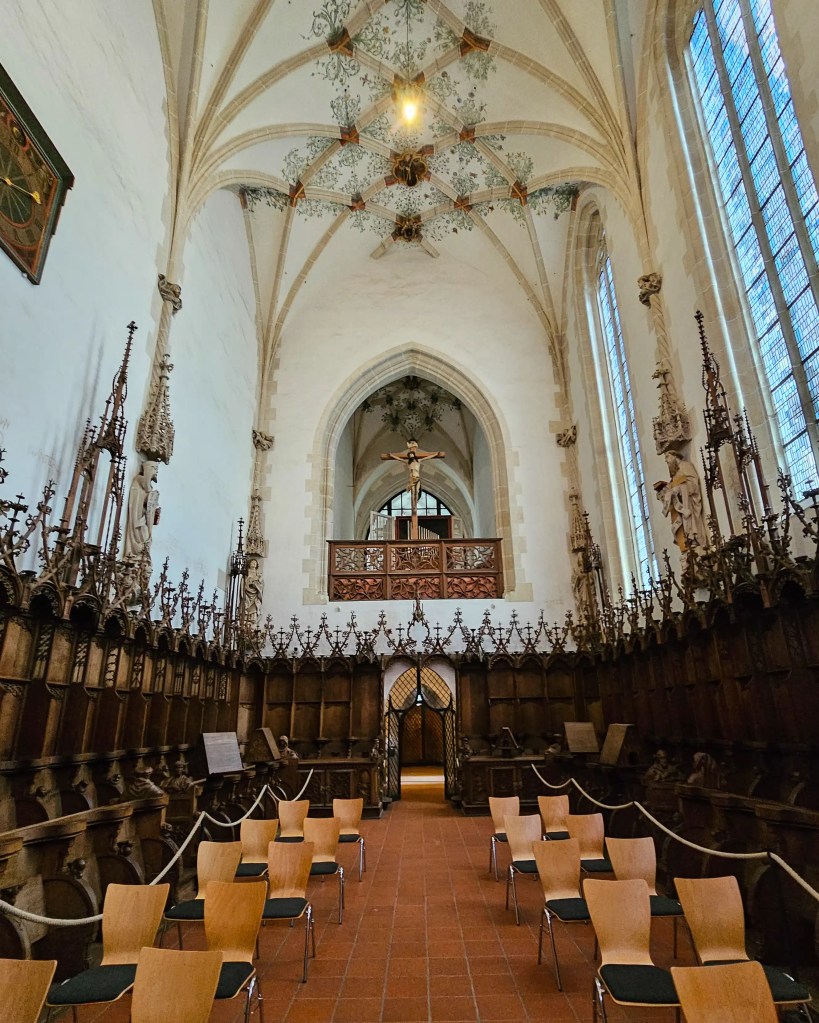
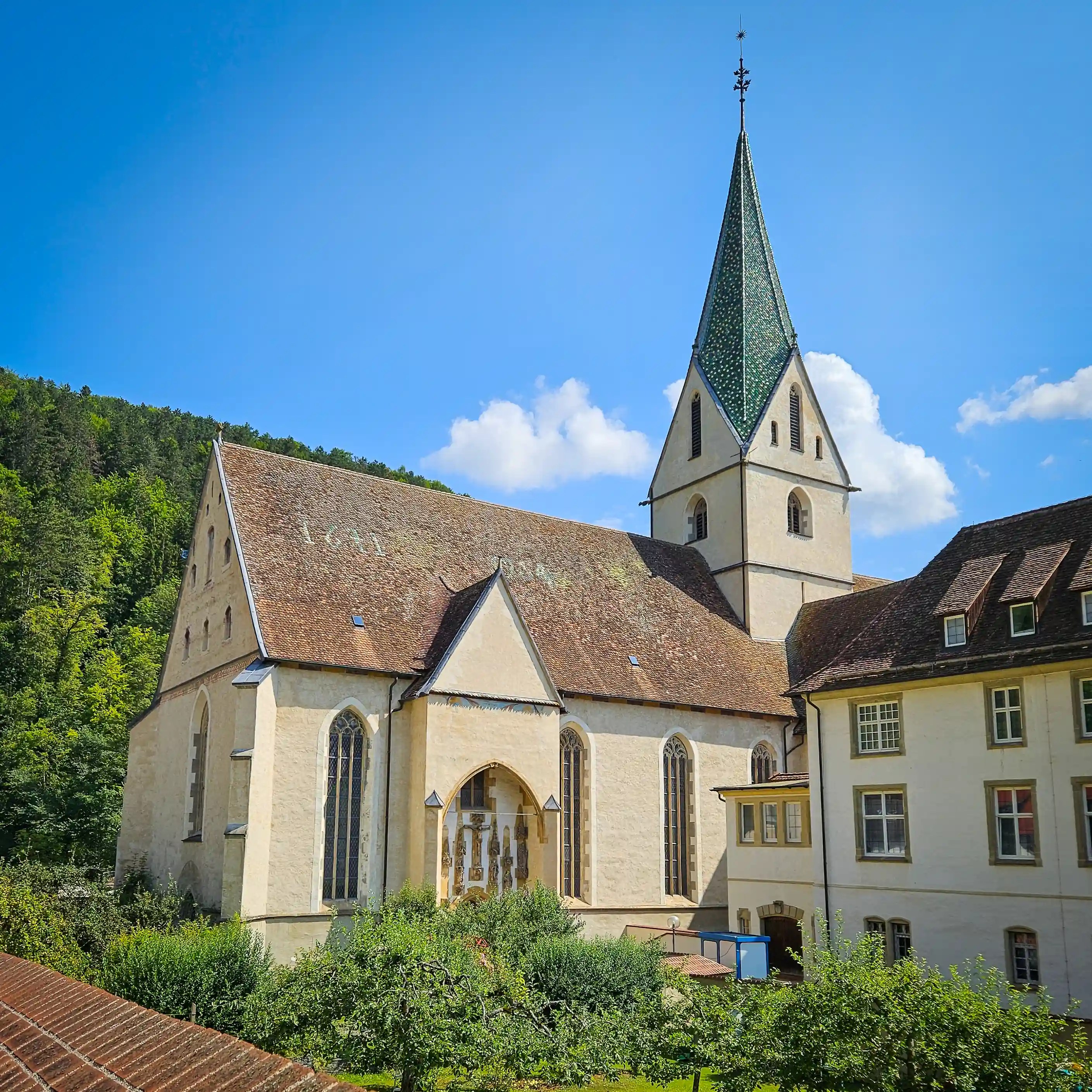
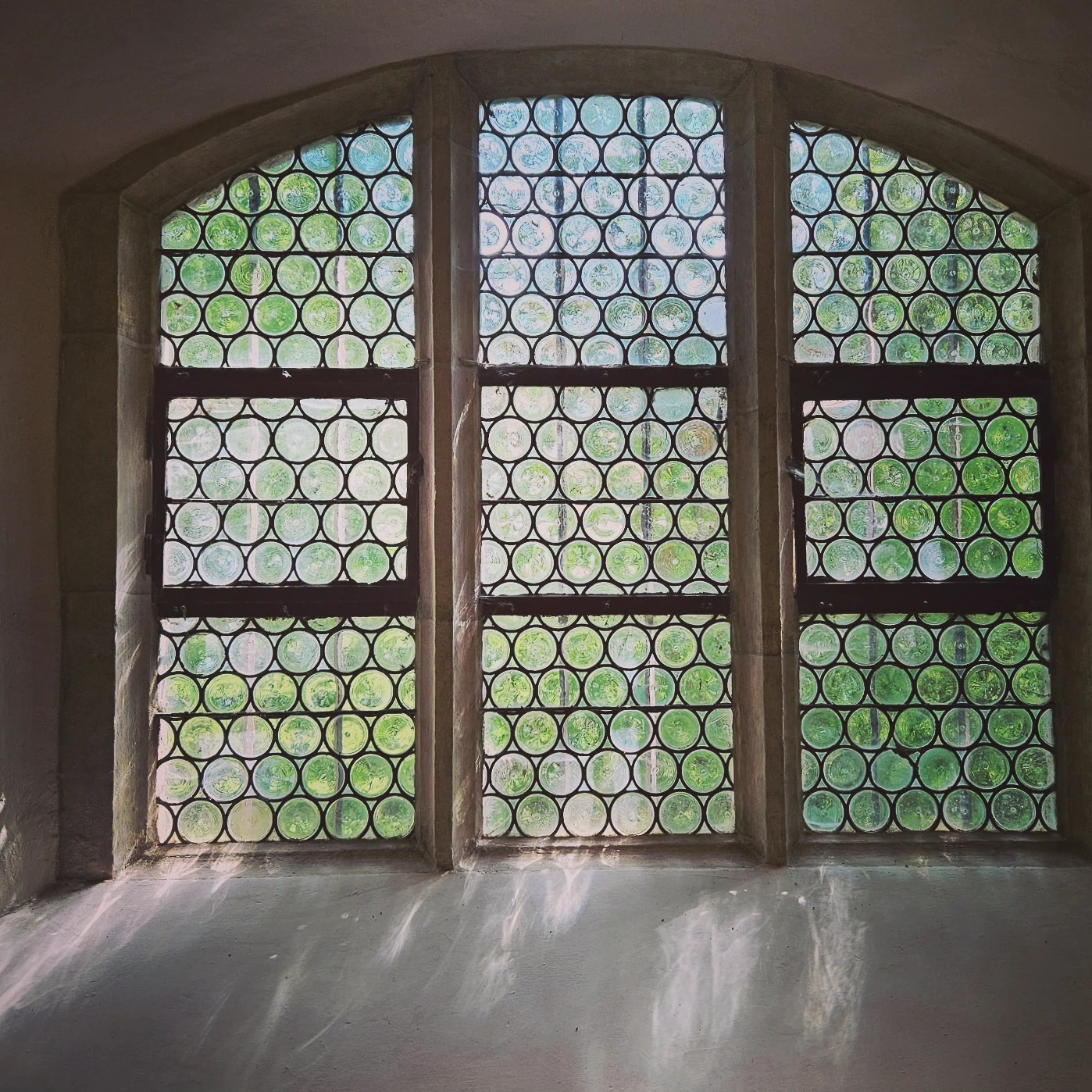
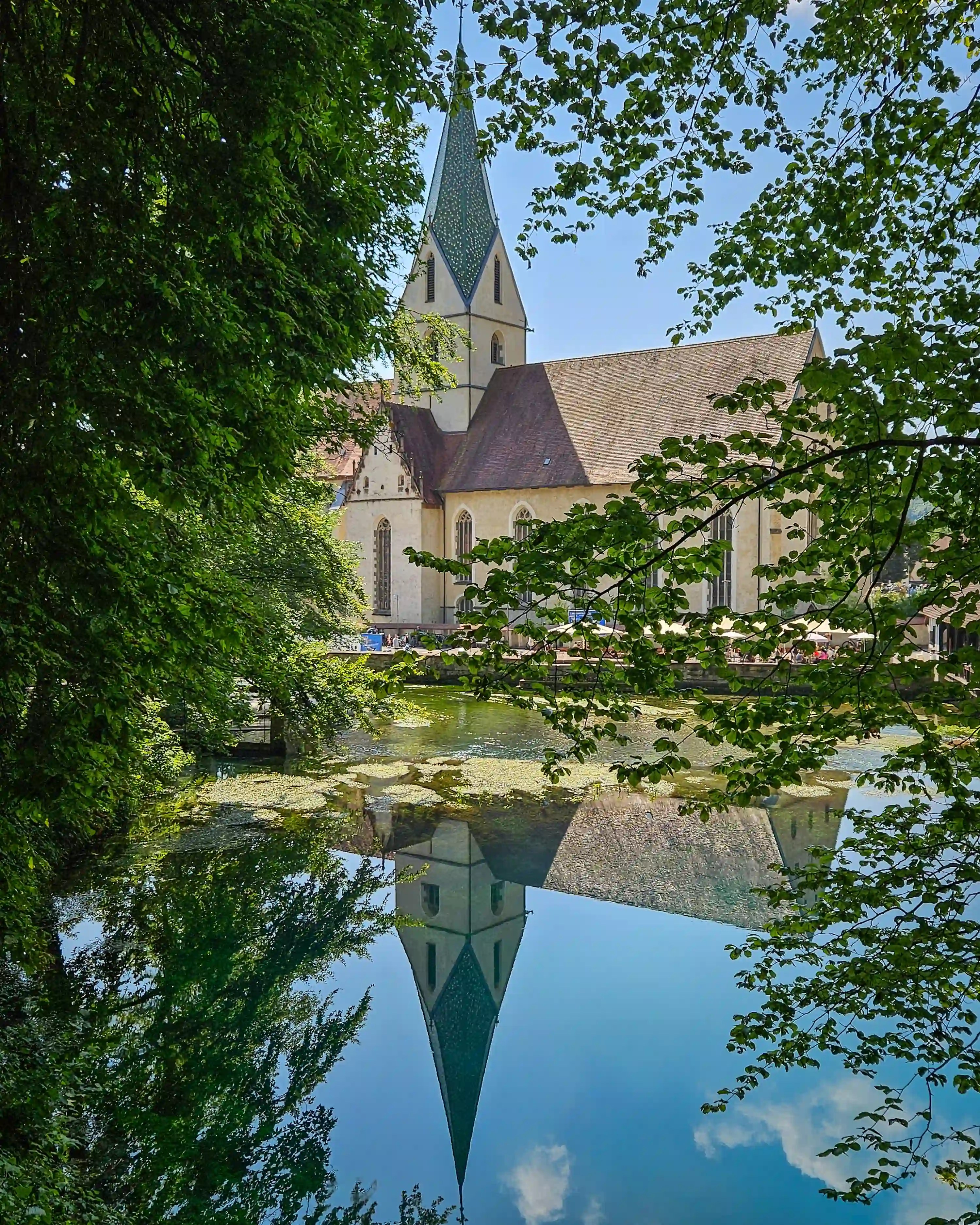
One of the most important landmarks is Kloster Blaubeuren, a former Benedictine monastery founded in the 11th century. The complex includes a late Gothic church known for its richly carved choir stalls from the 15th century, as well as a cloister courtyard and herb garden that reflect its monastic past. In the 16th century, during the Reformation—when much of Württemberg broke from the Roman Catholic Church—the monastery was converted into a Protestant seminary.
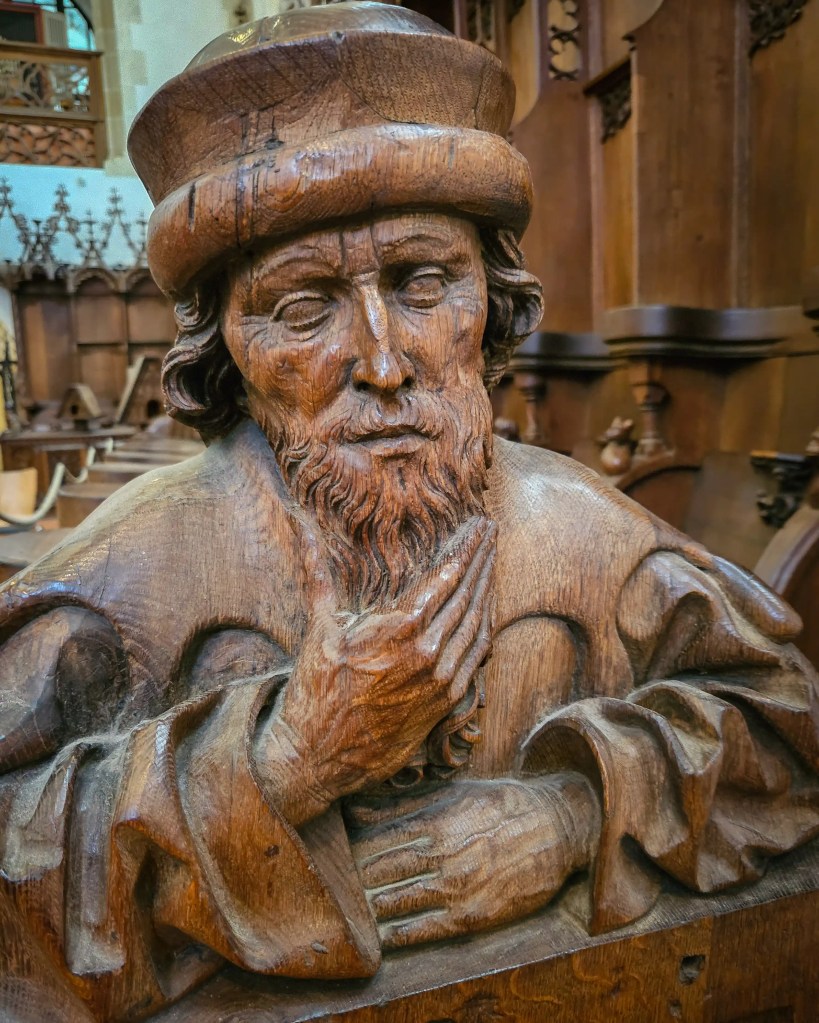
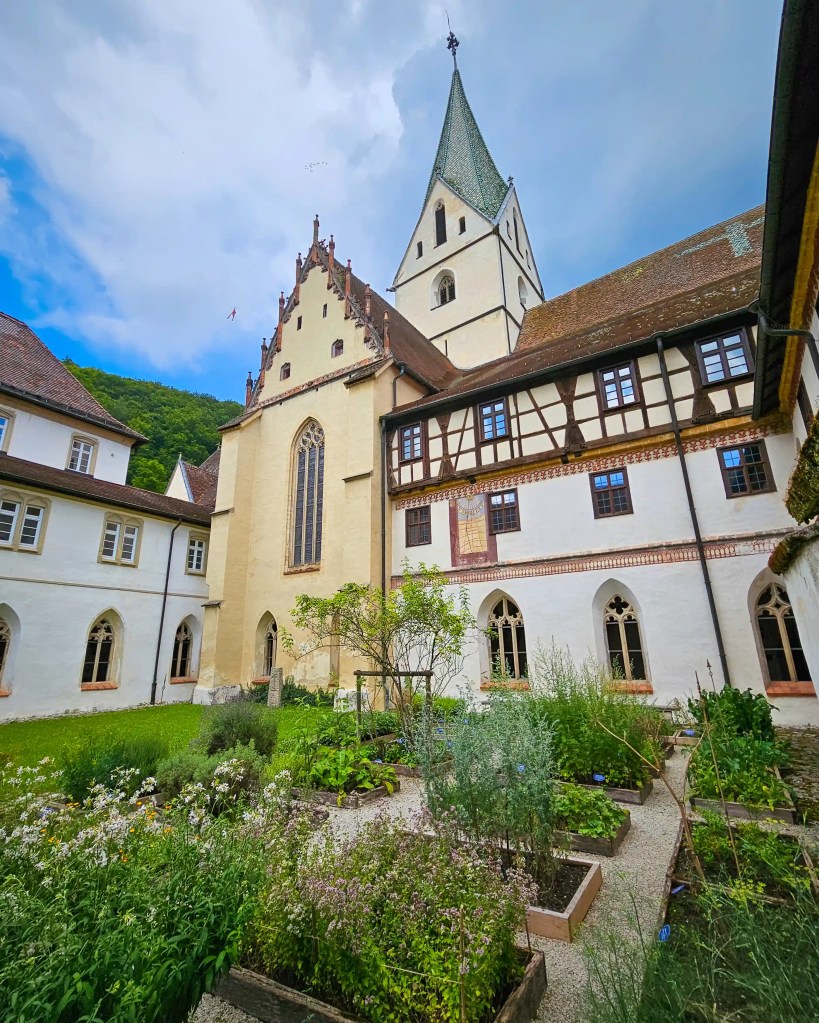
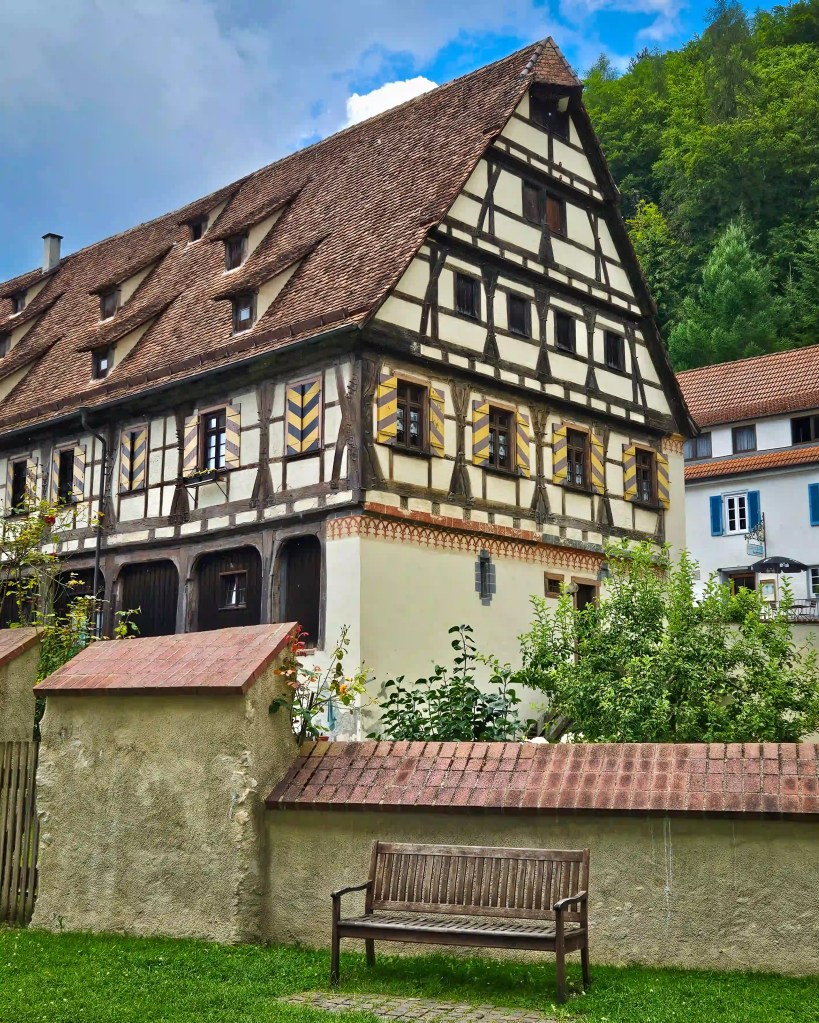
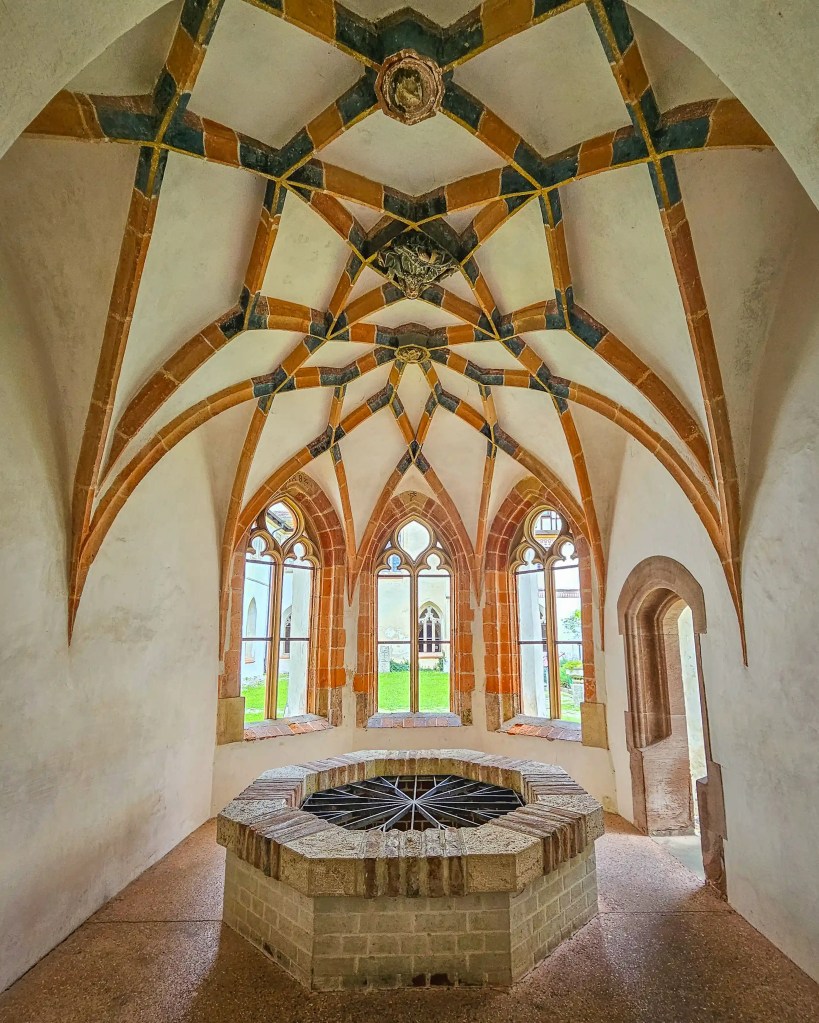
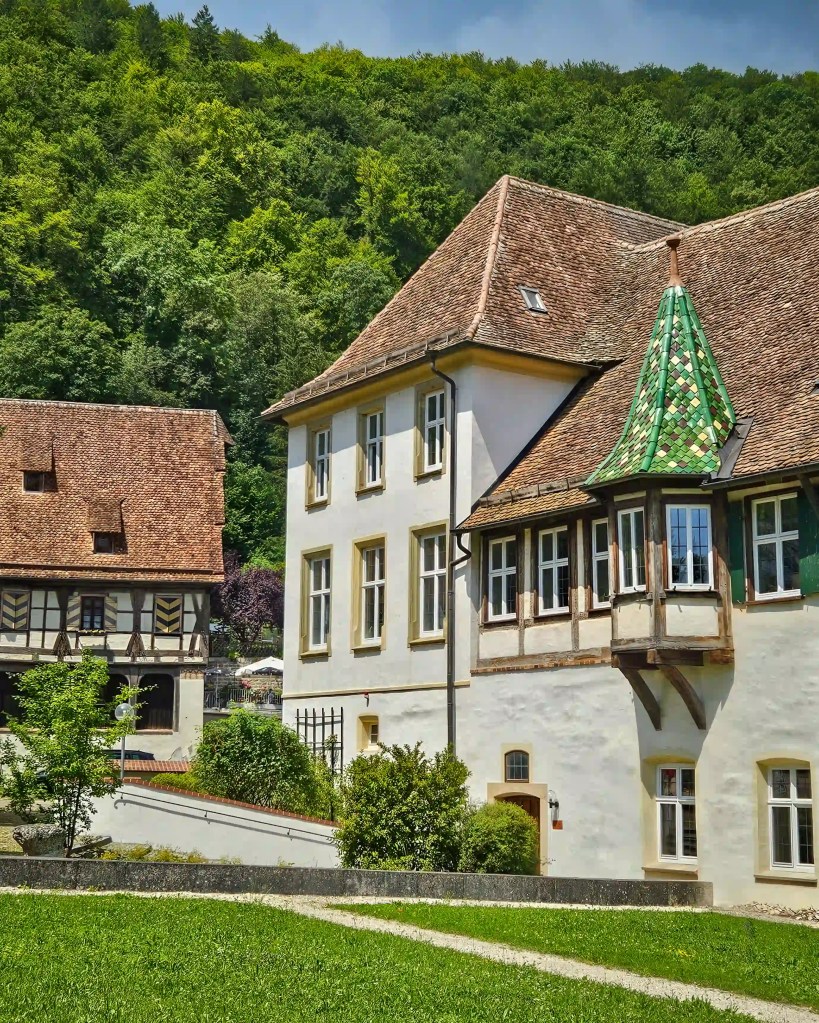
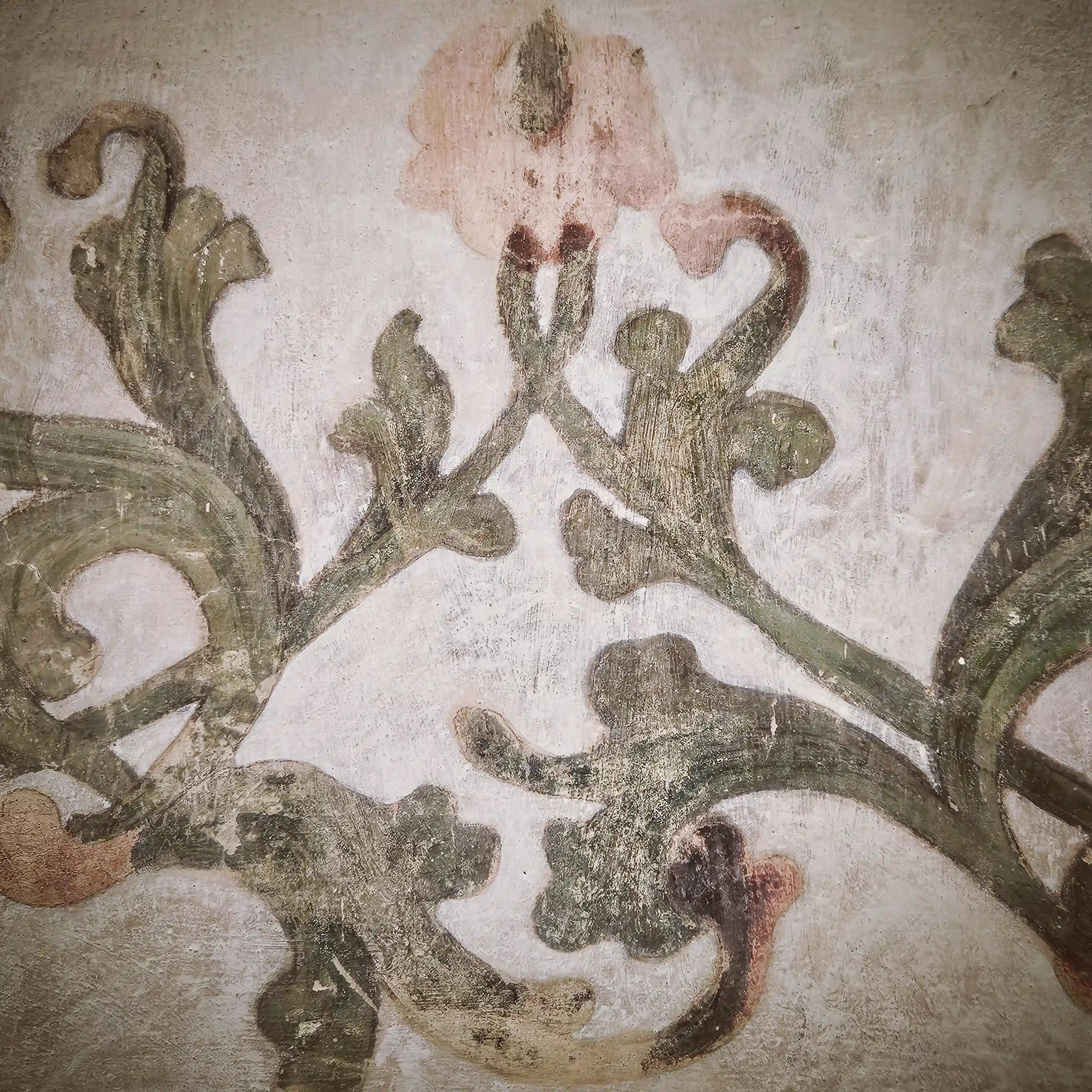
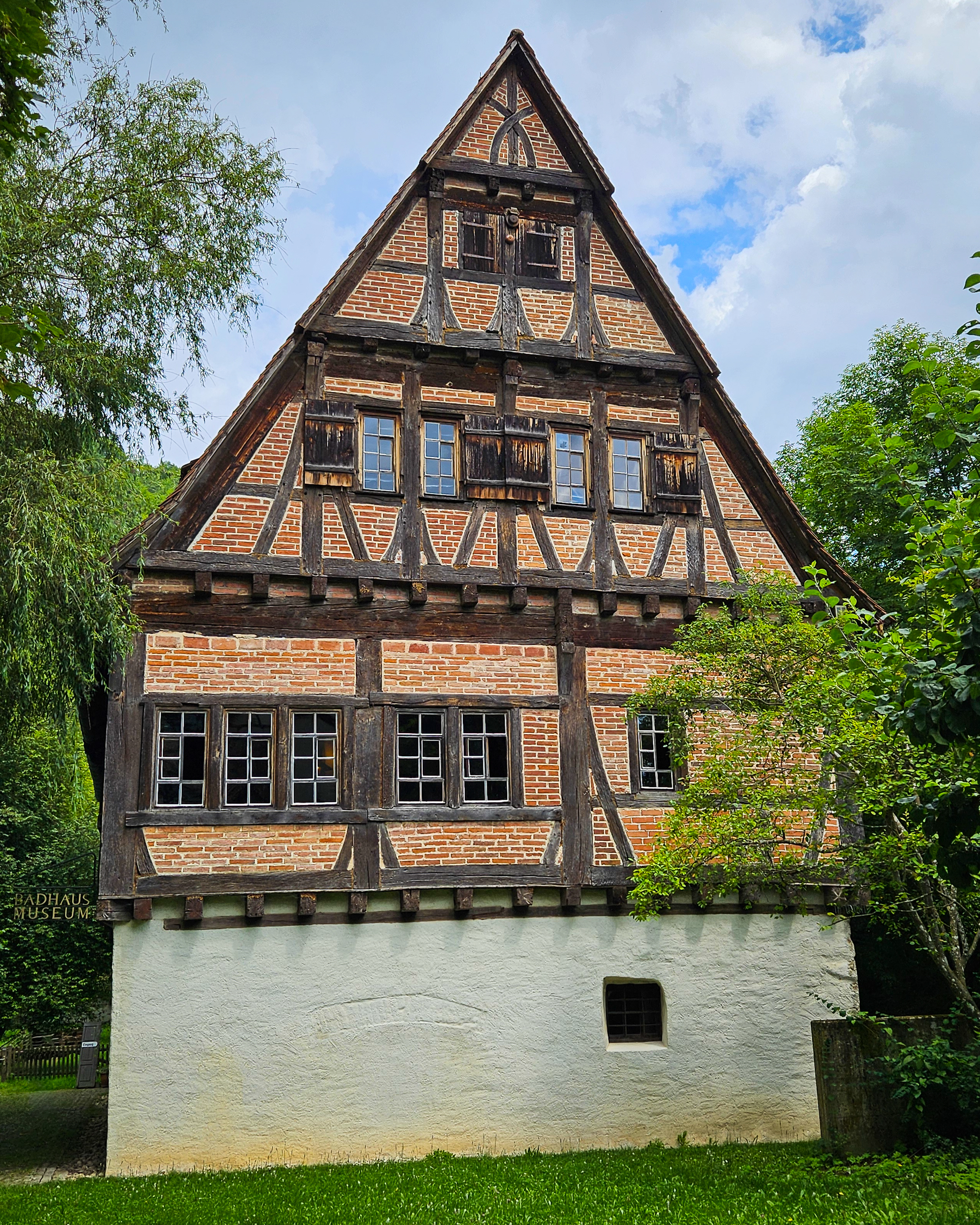
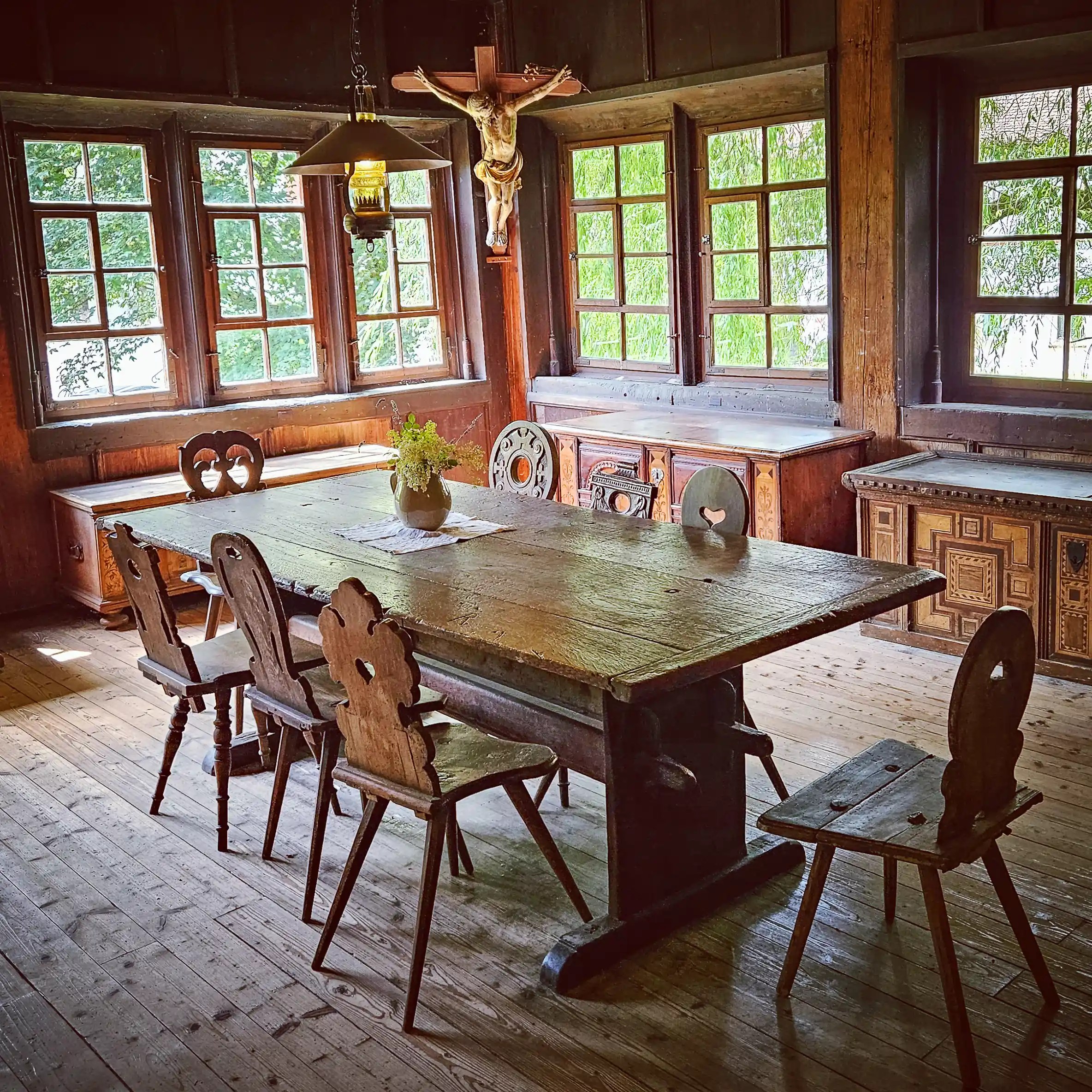
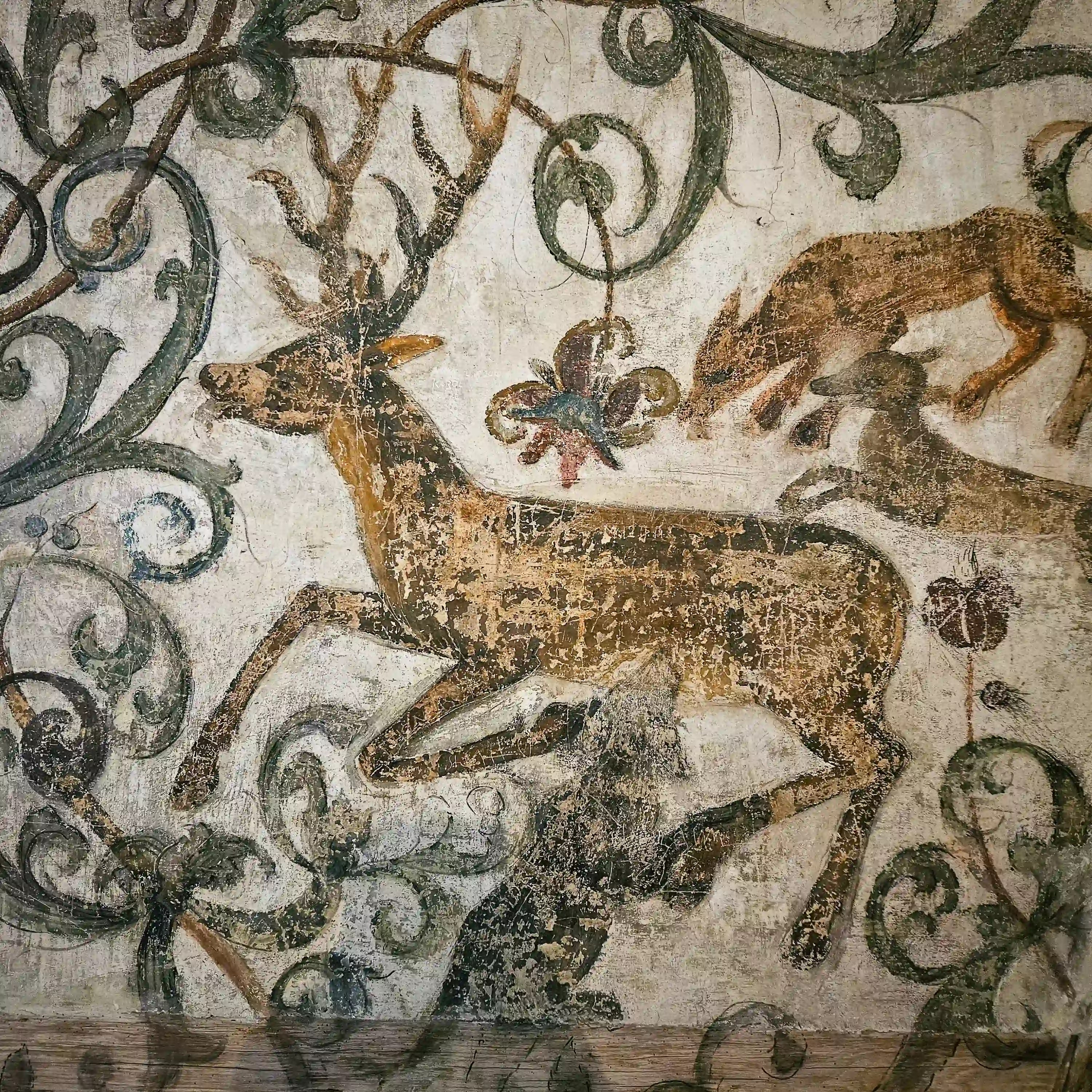
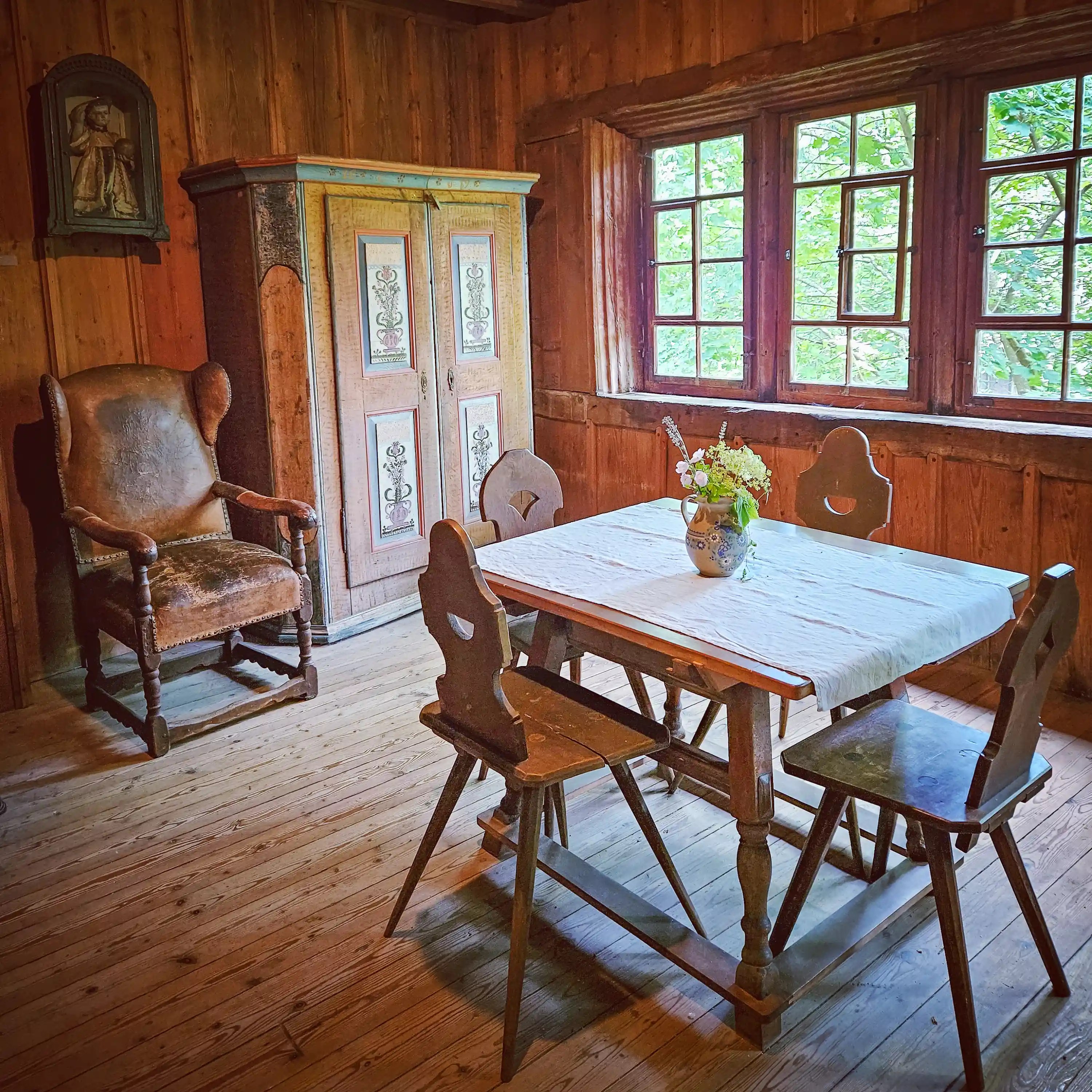
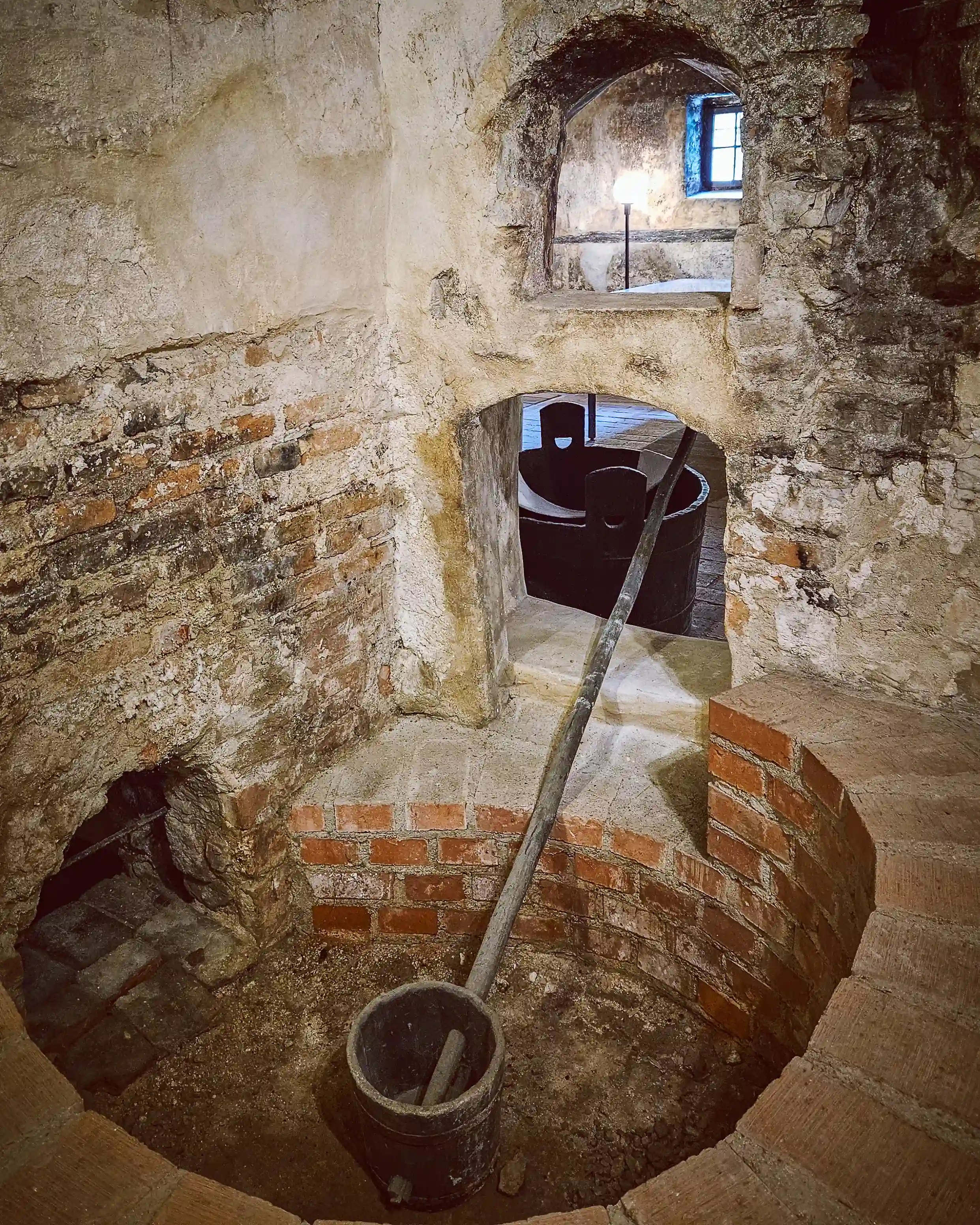
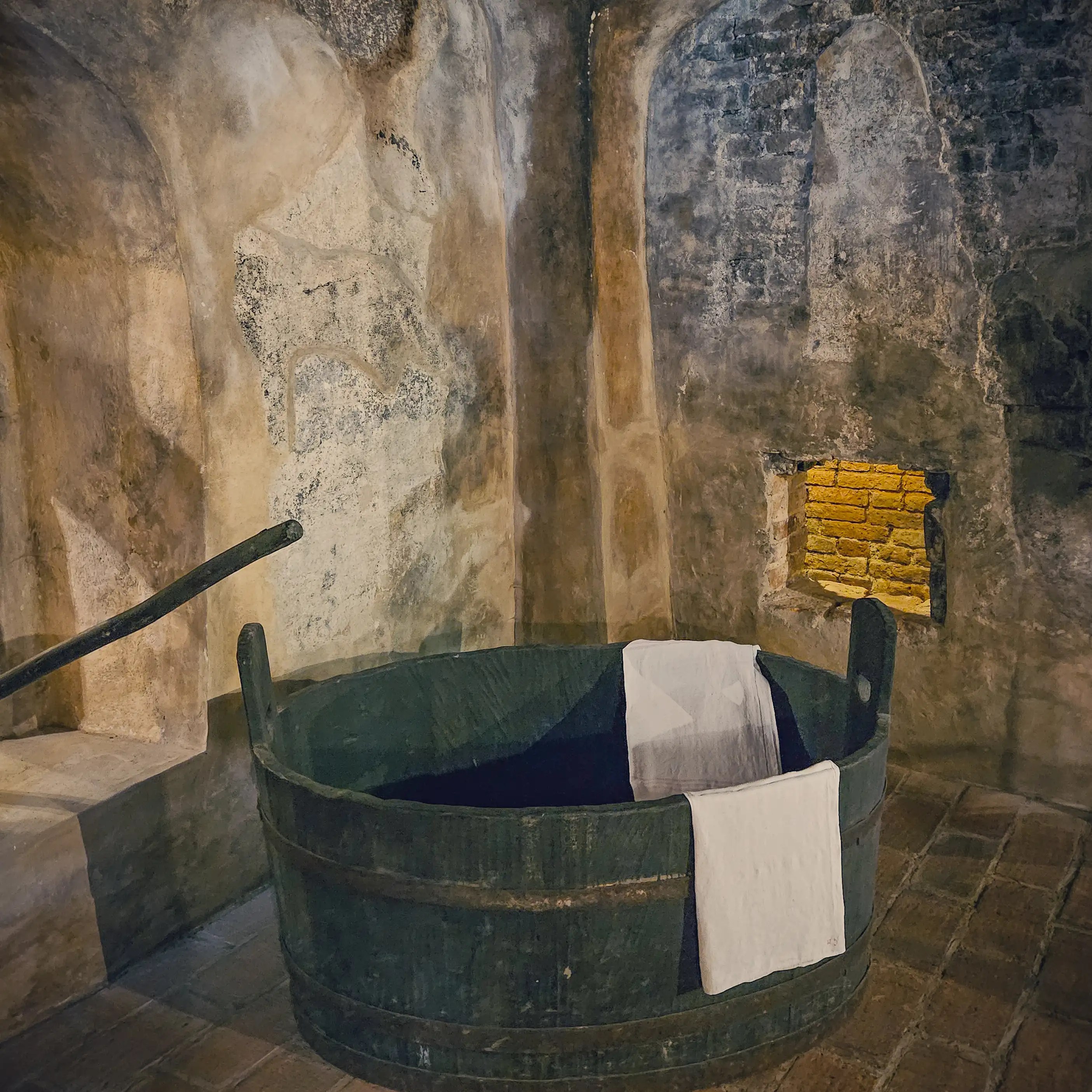
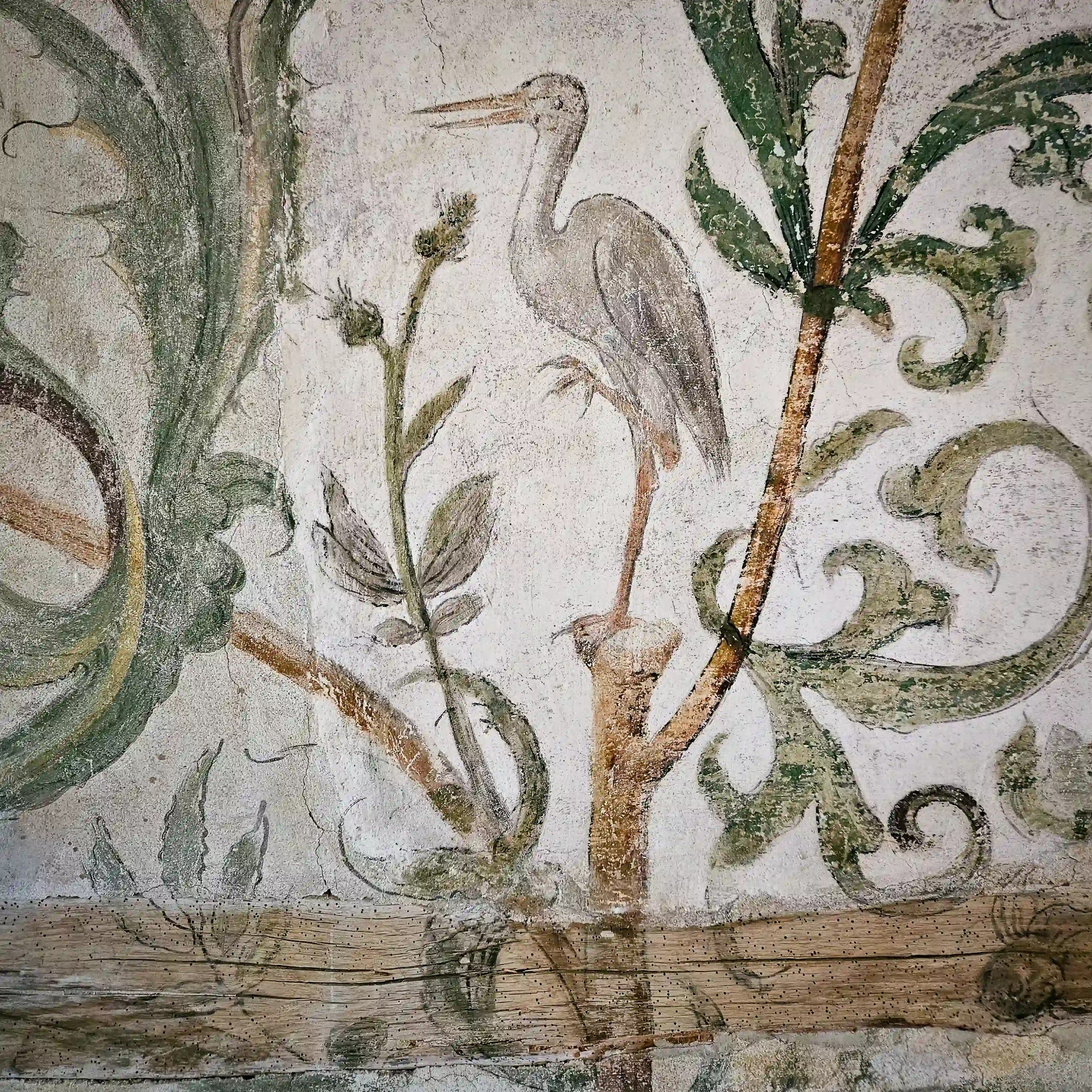
Just a short walk from the monastery is the Badhaus der Mönche (Monks’ Bathhouse), built around 1510 and believed to be the only surviving monks’ bathhouse in Germany. The ground floor originally housed the bathing rooms for the monastery’s monks, while the upper floor served as lodging for noble guests. Today the building houses the Blaubeuren Local History Museum, and the interior still features beautiful medieval wall paintings in the former ballroom.
The Blautopf: Turquoise Water at the Foot of the Alb
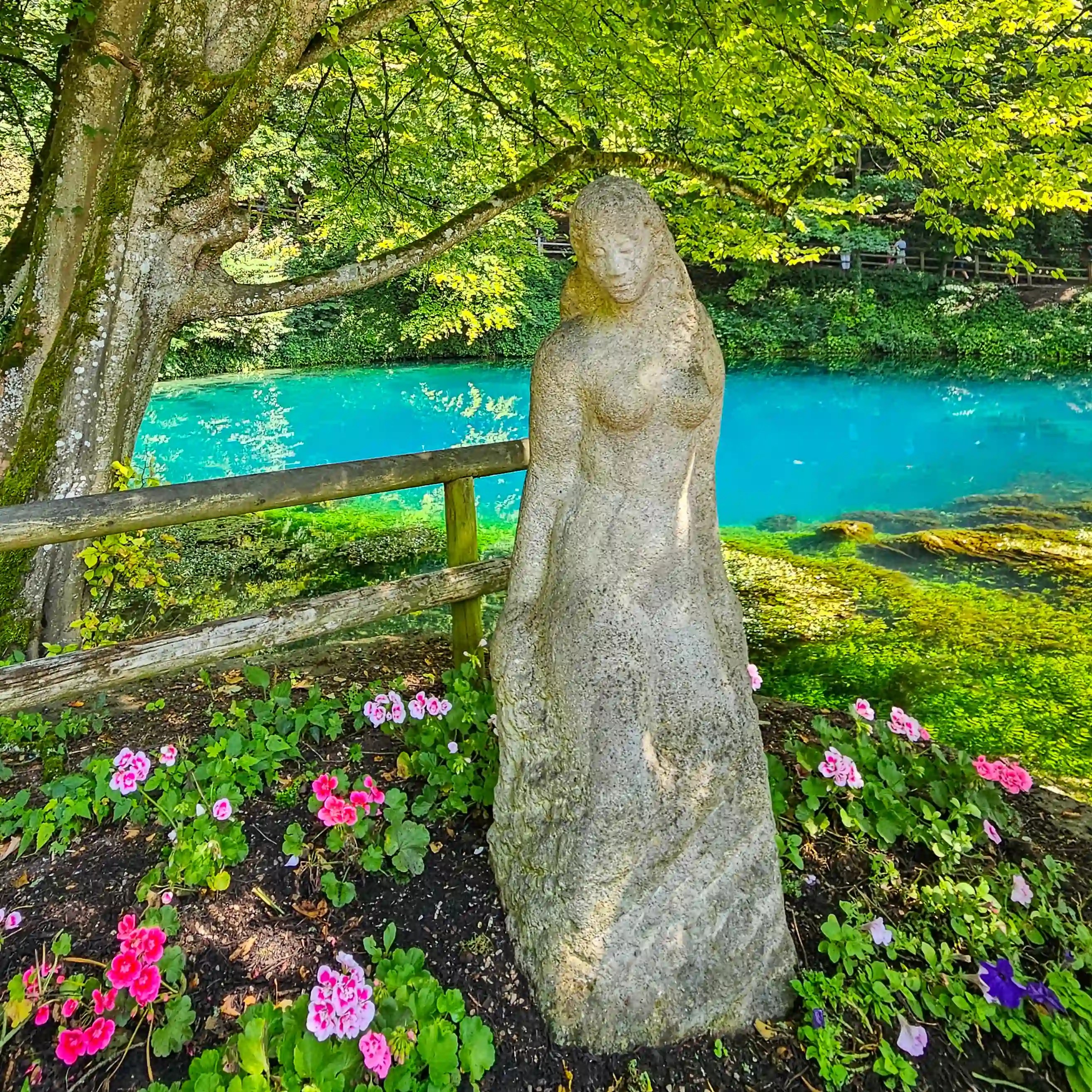
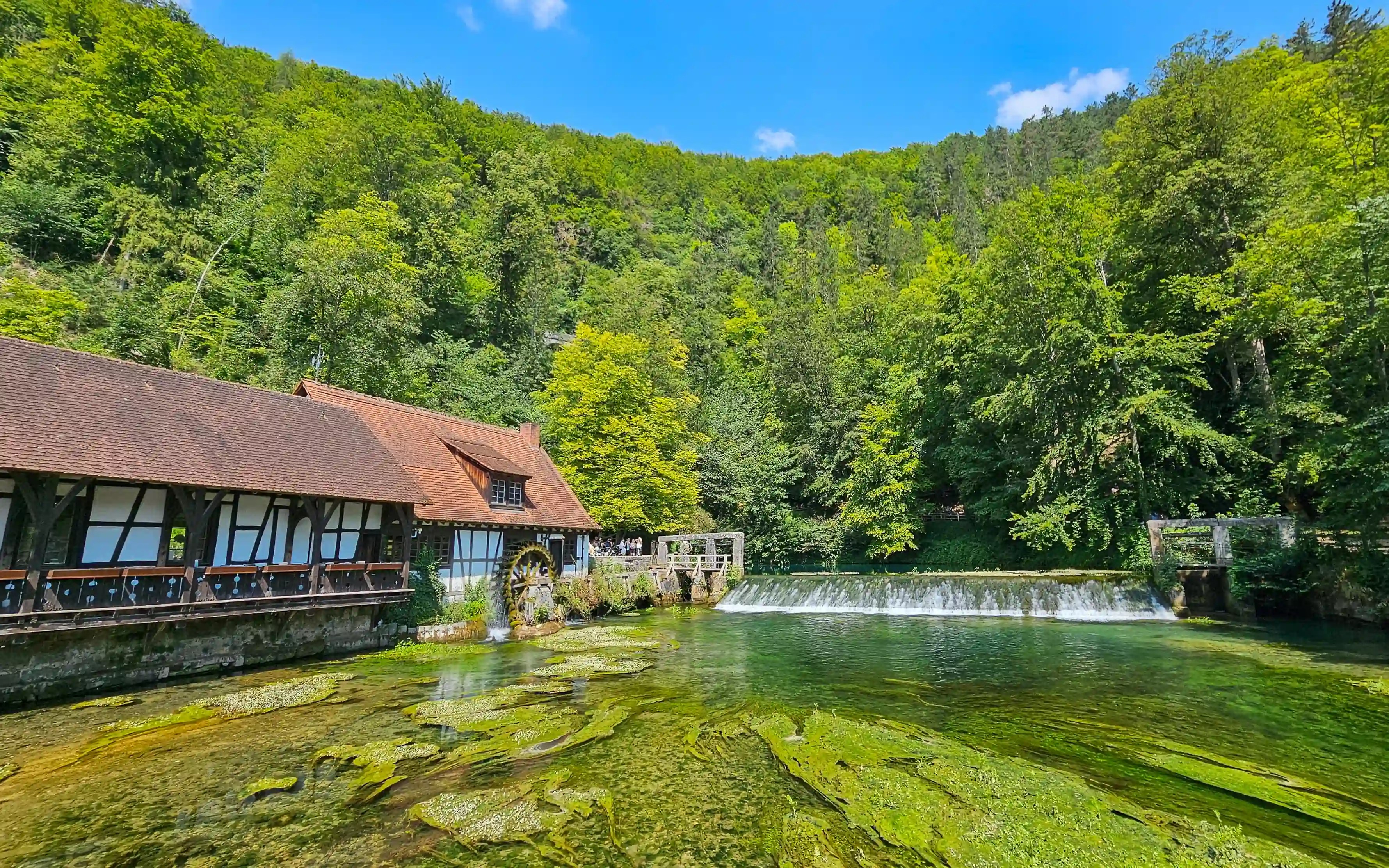
Just steps from the monastery lies the Blautopf, literally “Blue Pot,” one of Germany’s most famous karst springs.
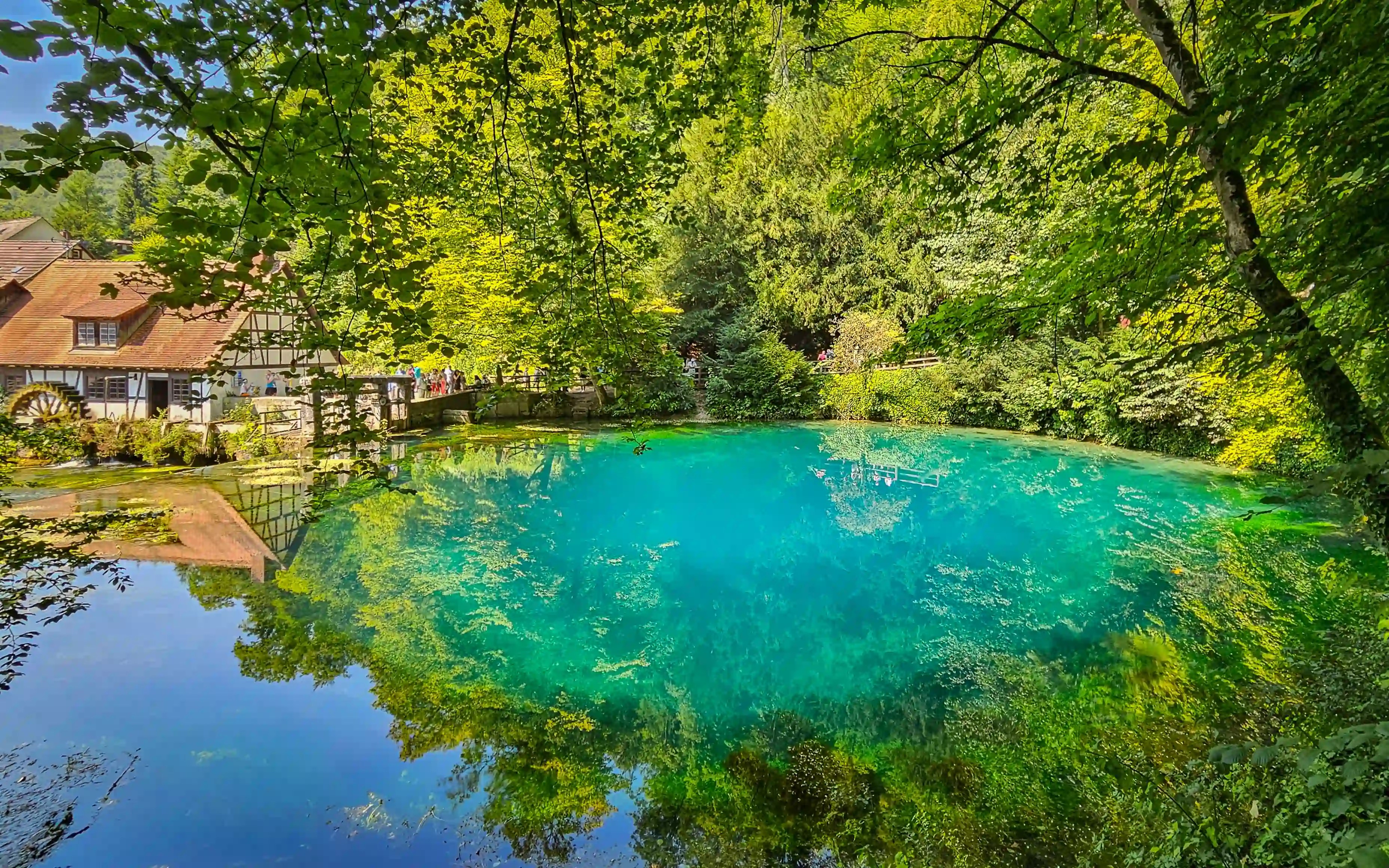
Rainwater falling on the Alb plateau filters through porous limestone before emerging here at the southern foot of the Swabian Alb. On sunny days—especially after a few dry days—the water takes on an almost luminous turquoise-blue. Its color is created by the way light interacts with the fine limestone particles suspended in the crystal-clear spring water.
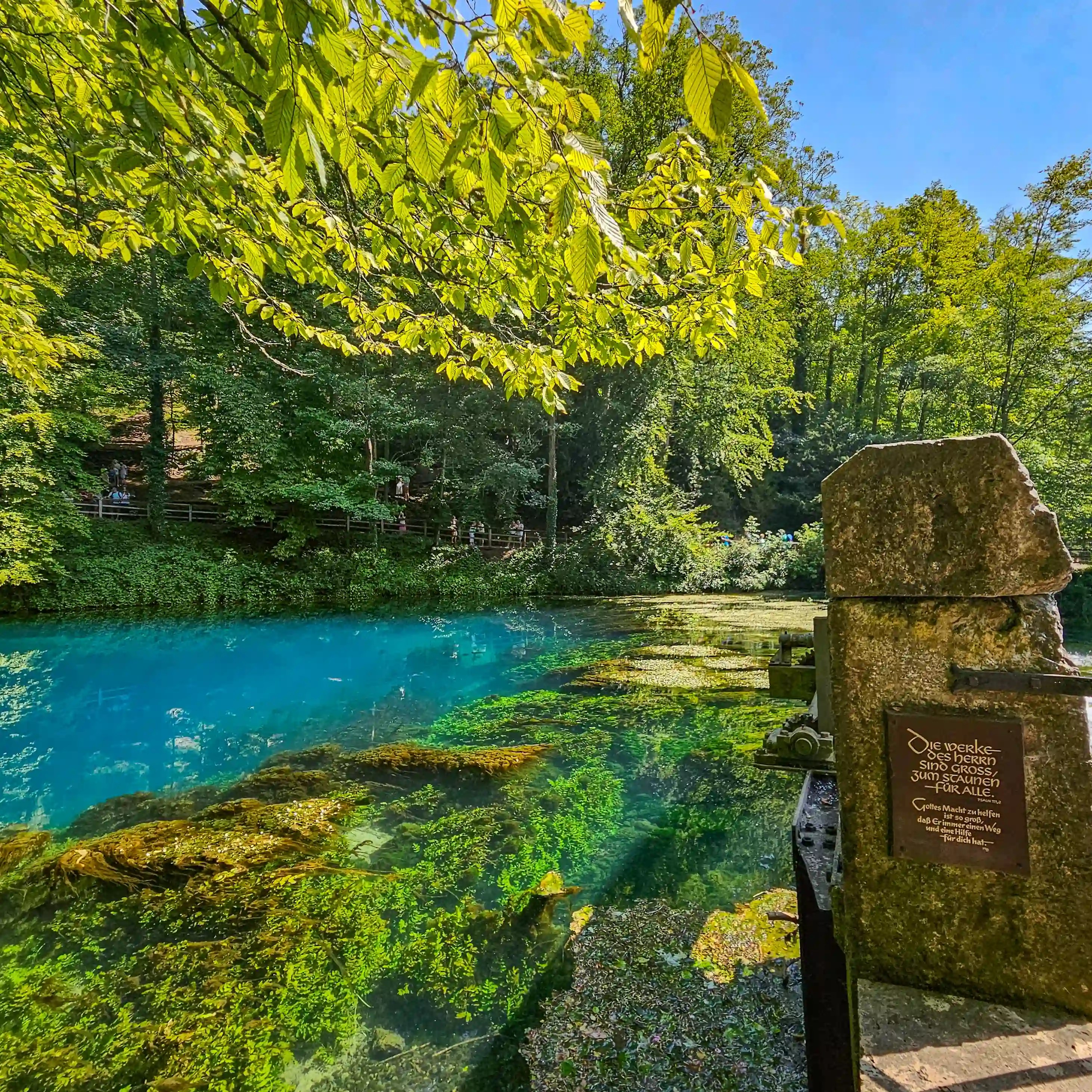
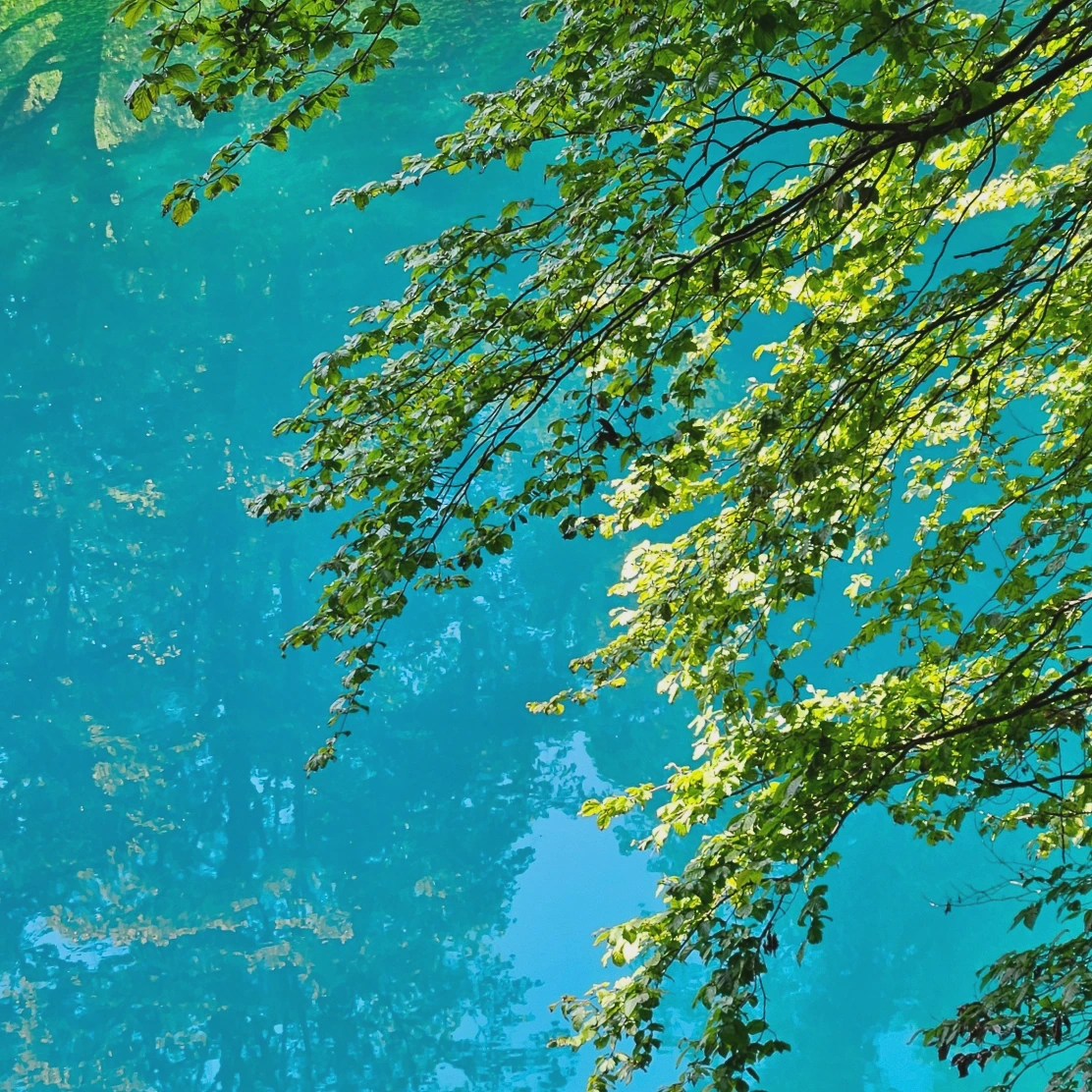
Beneath the Blautopf lies the entrance to the Blauhöhle (Blue Cave), an extensive underwater cave system that divers first reached in 1957. Today, more than 11 kilometers (about 6.8 miles) of passages have been explored, and the system is believed to extend even farther.
The spring also inspired poet Eduard Mörike’s tale of the Schöne Lau (Beautiful Lau), a water nymph from the Black Sea who was sent to live in an underwater palace at the bottom of the Blautopf. According to the story, she could only be freed from her sorrow—and finally bear a living child—if she laughed out loud five times. It was the women of Blaubeuren, through their stories and companionship, who slowly brought those laughs from her. Some say that if you stand quietly by the water, you can still hear her laughter rising from below. It’s easy to understand how a place like this inspired such a story.
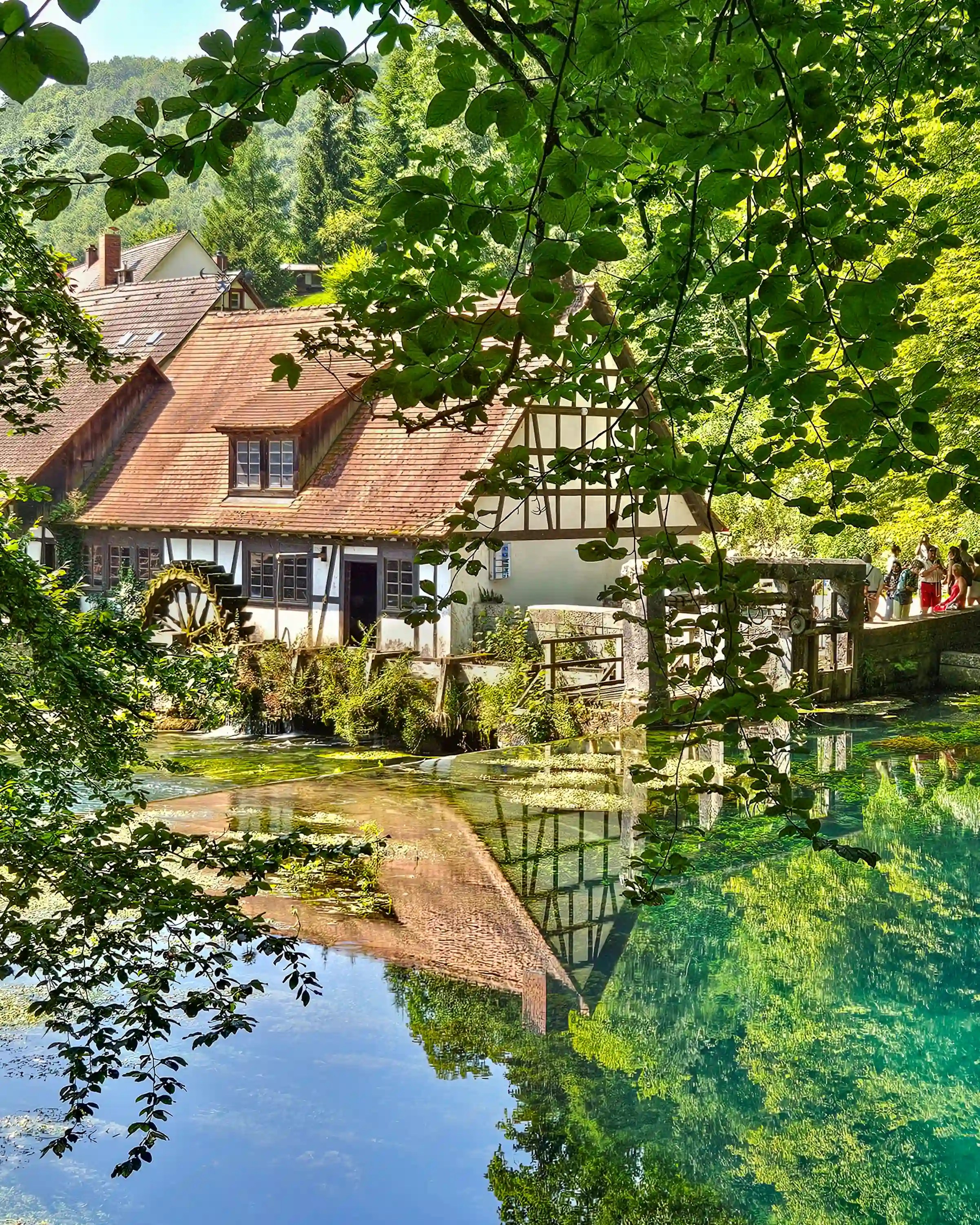
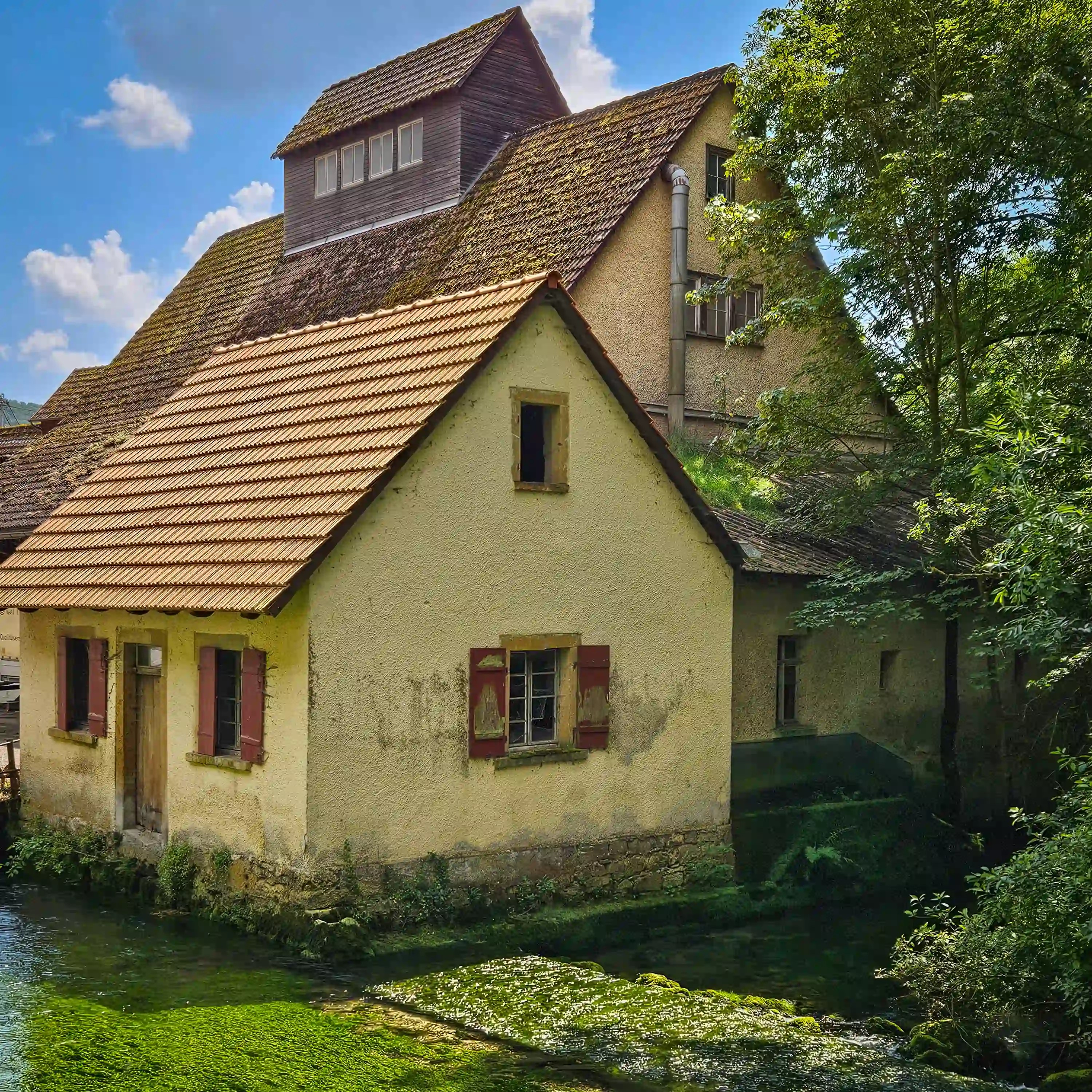
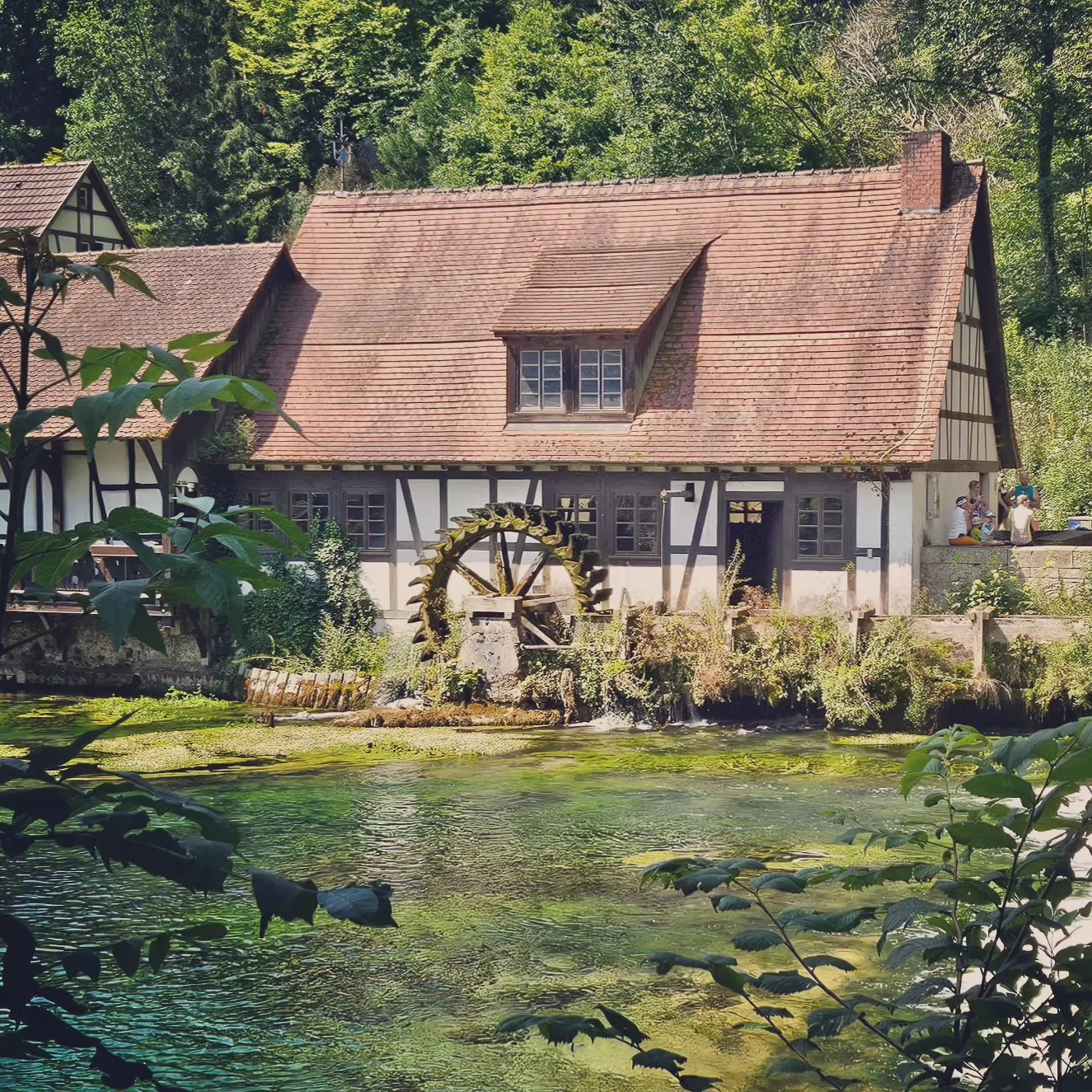
We had lunch at Blautopfhaus Schönhofer am Blautopf just below the spring basin. In addition to traditional German dishes, the building includes a historic water-powered hammer mill and a small souvenir shop. Sitting by the flowing water made it a pleasant stop before continuing our afternoon explorations.
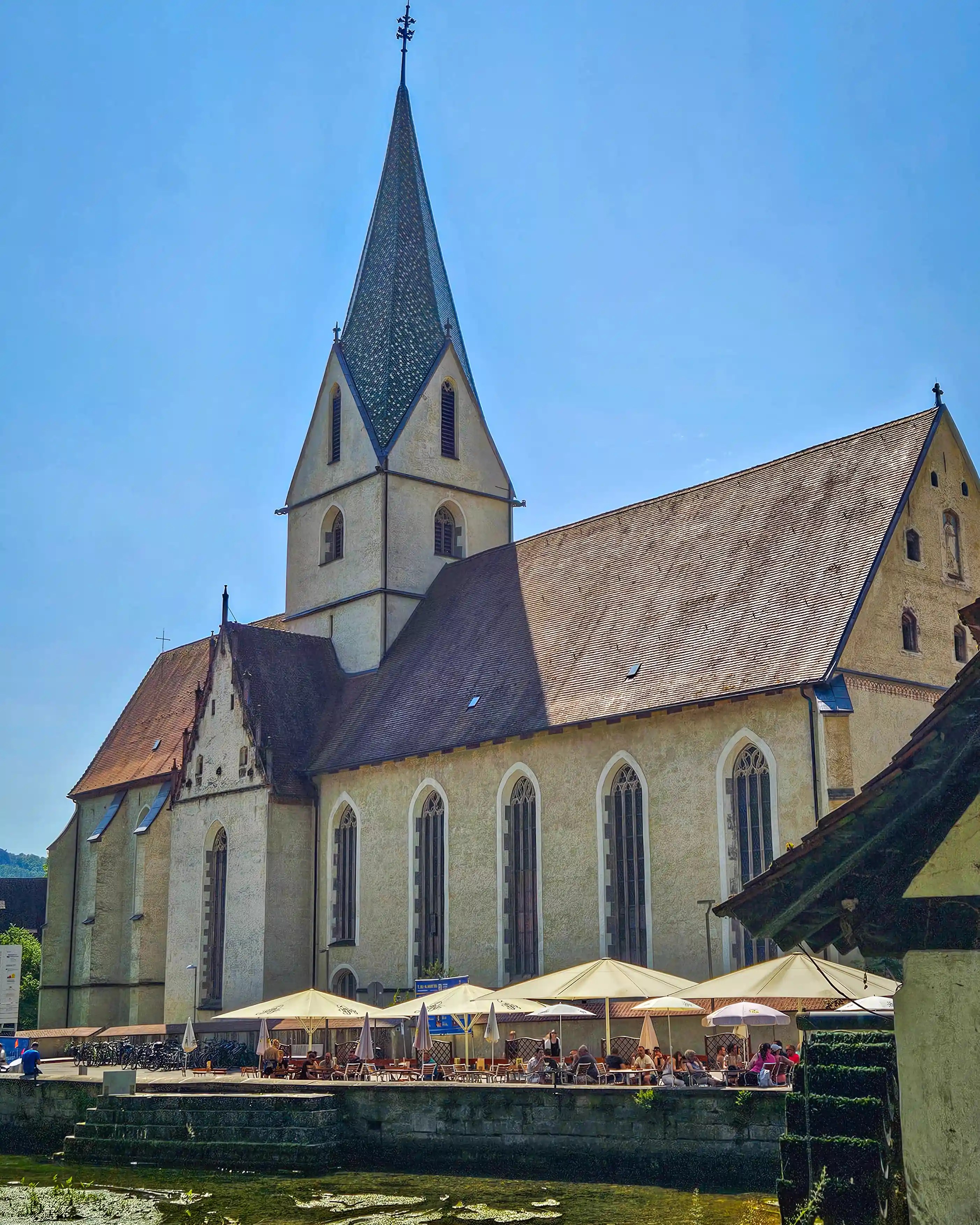
If you have extra time, there’s also a 1.5-kilometer (0.9 mile) historical walking trail with signposts throughout town and the seasonal Blautopfbahnle, a small tourist train that circles the area.
Hiking to Schloss Hohengerhausen (Rusenschloss)
Our next stop took us to Ruine Hohengerhausen, more commonly known as Rusenschloss, which sits above the Blautal valley. The castle was likely built around 1080 by Count Hartmann II of Dillingen. Over the centuries, it changed hands several times before being sold for demolition in 1768. Today, only sections of the walls and archways remain.
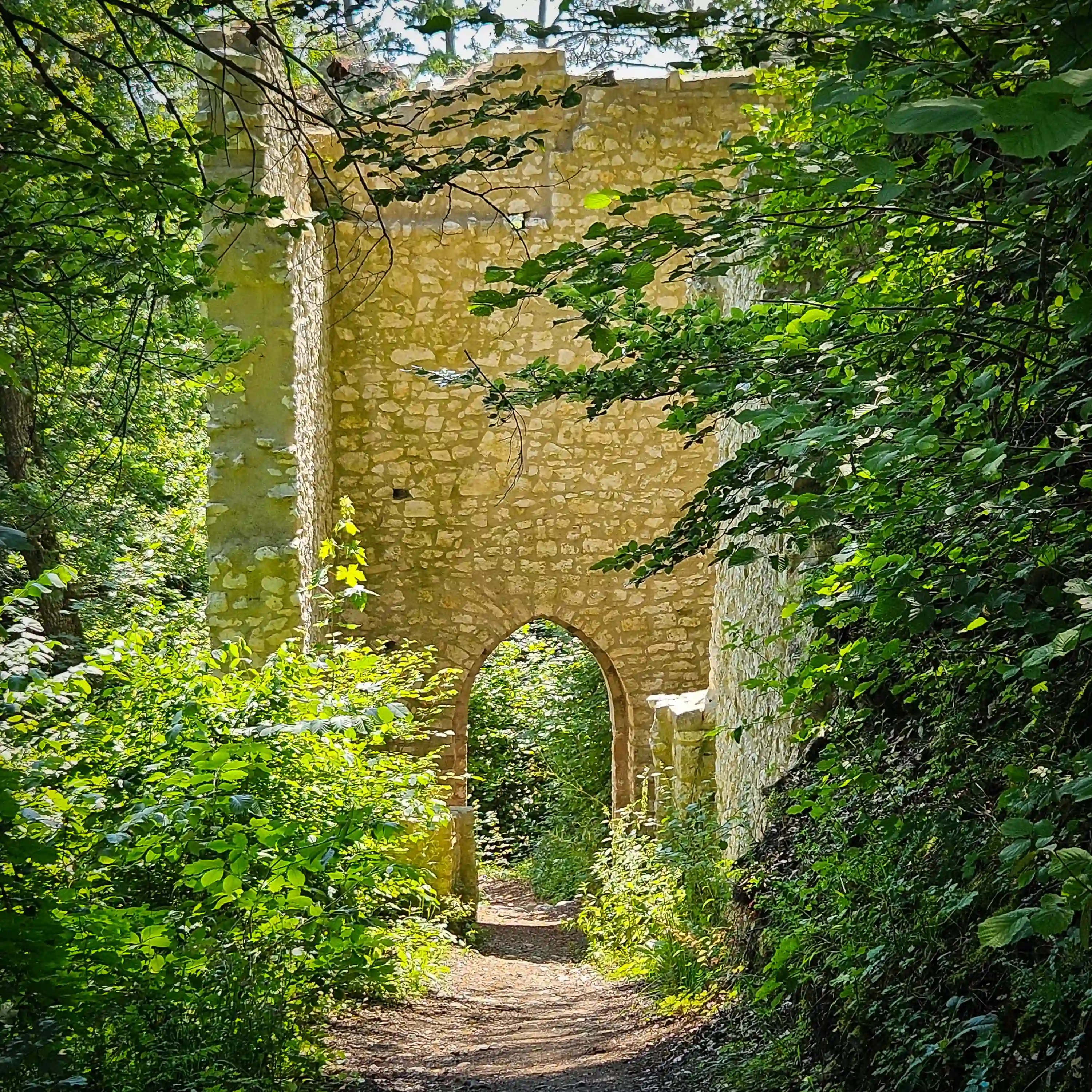
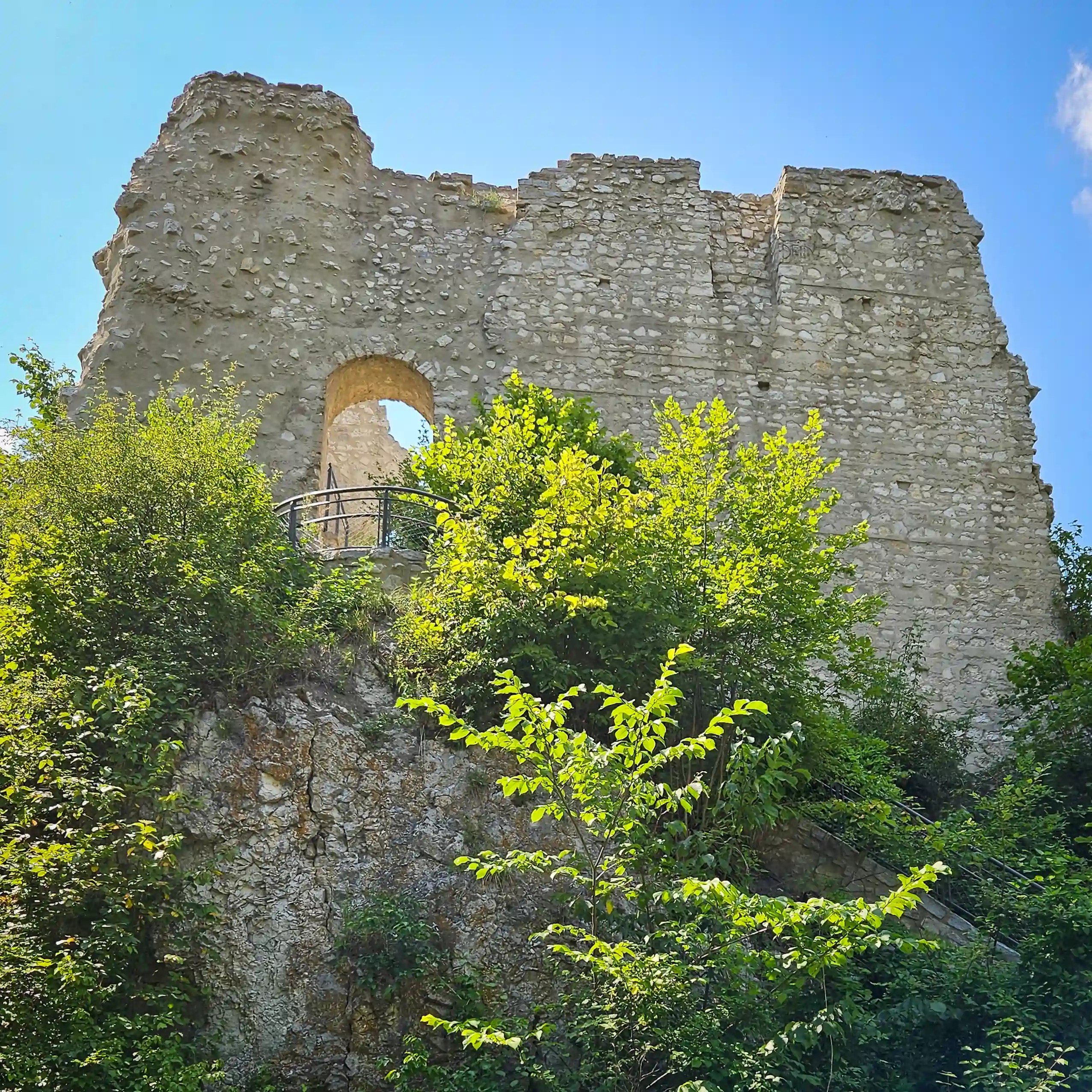
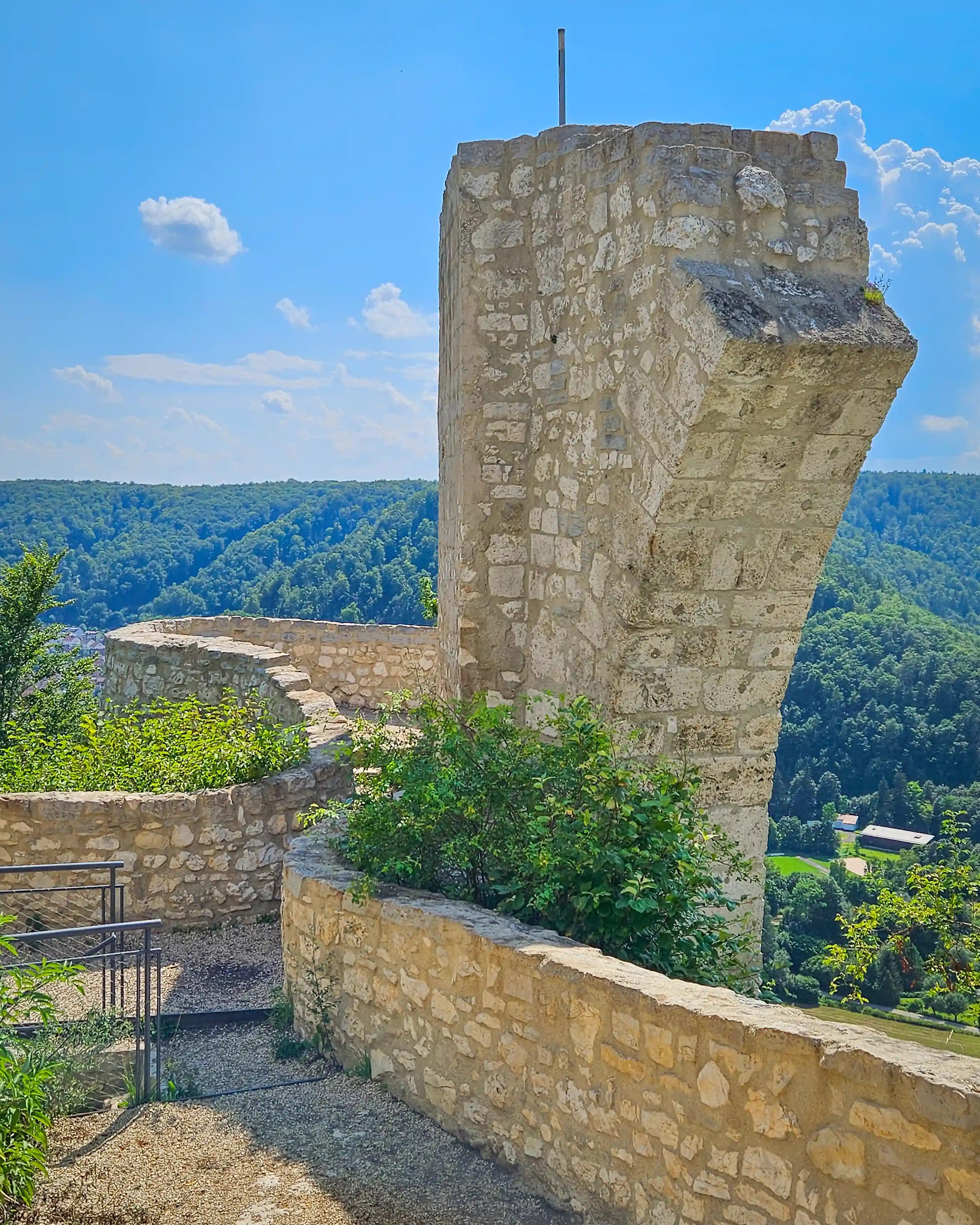
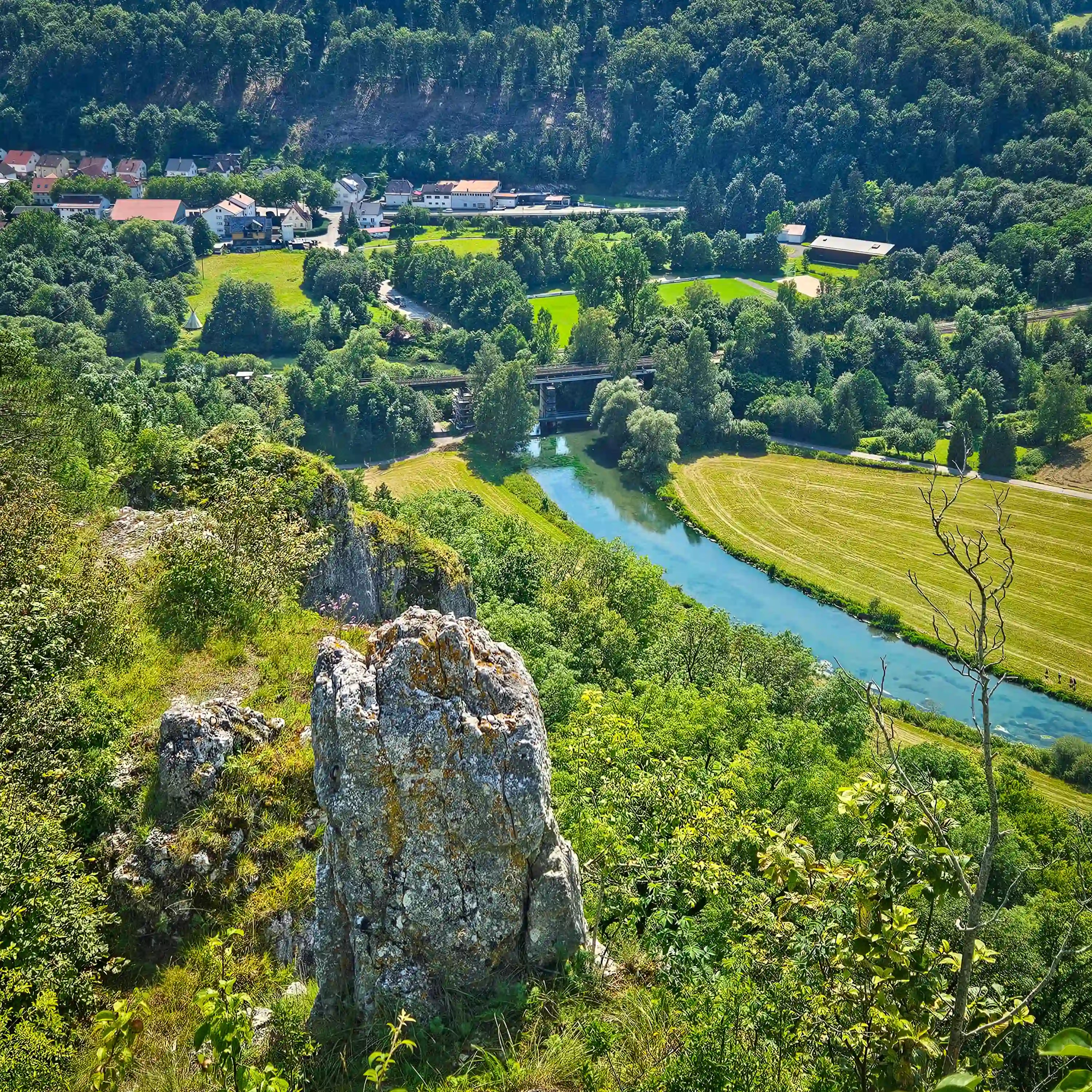
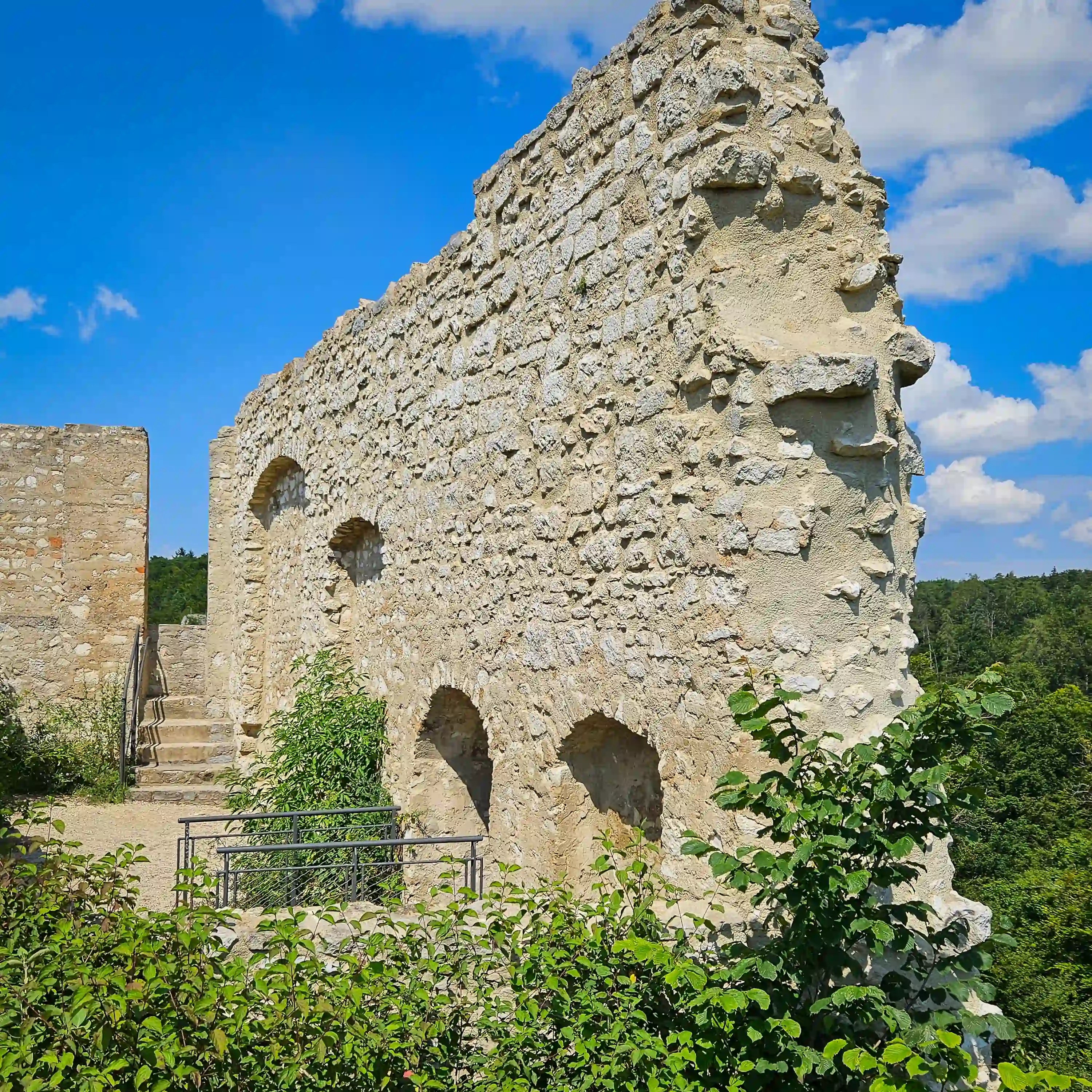
The hike passes rocky outcrops and a small cave known as the “Kleine Grotte,” which we stopped to explore. In warmer months, be prepared for mosquitoes—they were definitely present during our visit.
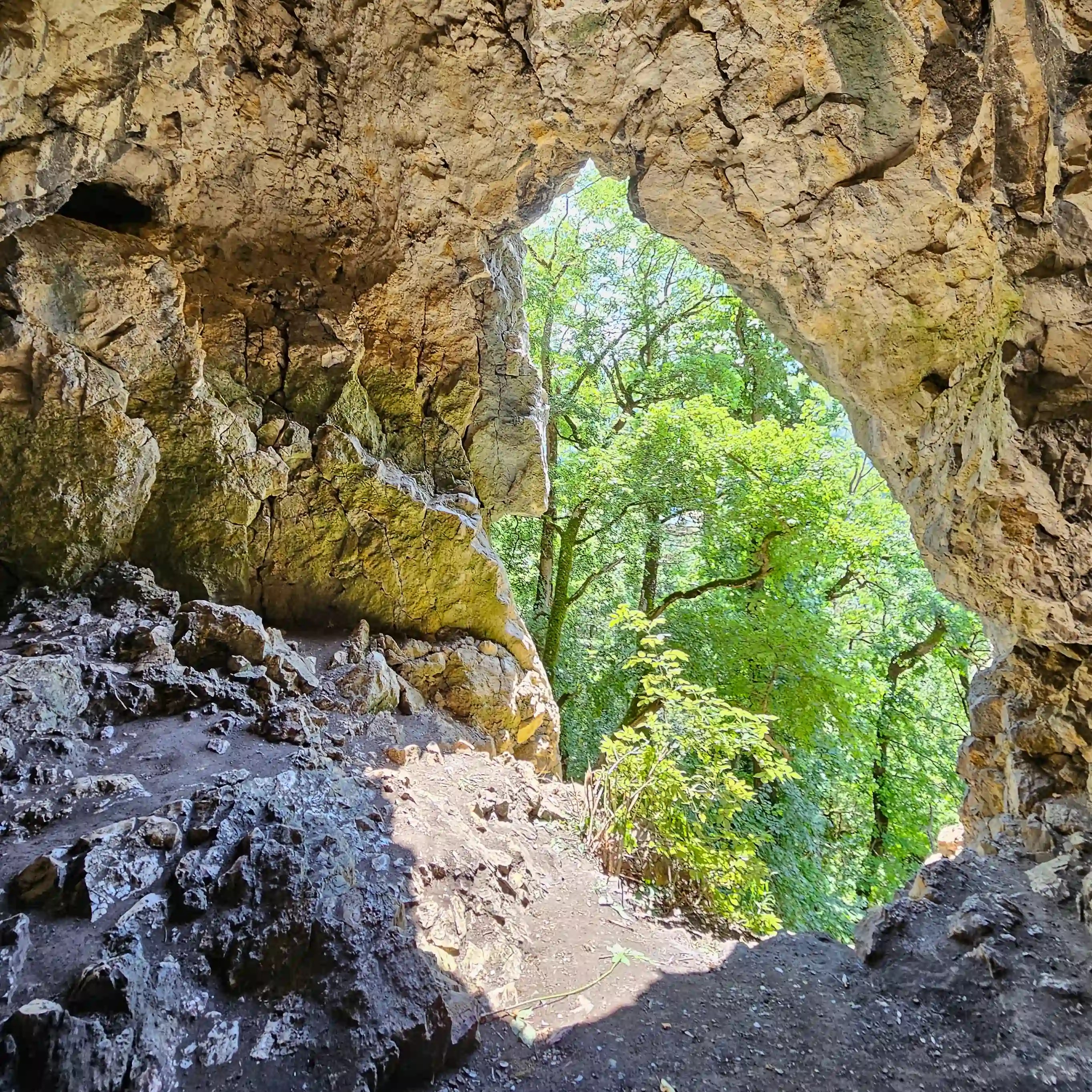
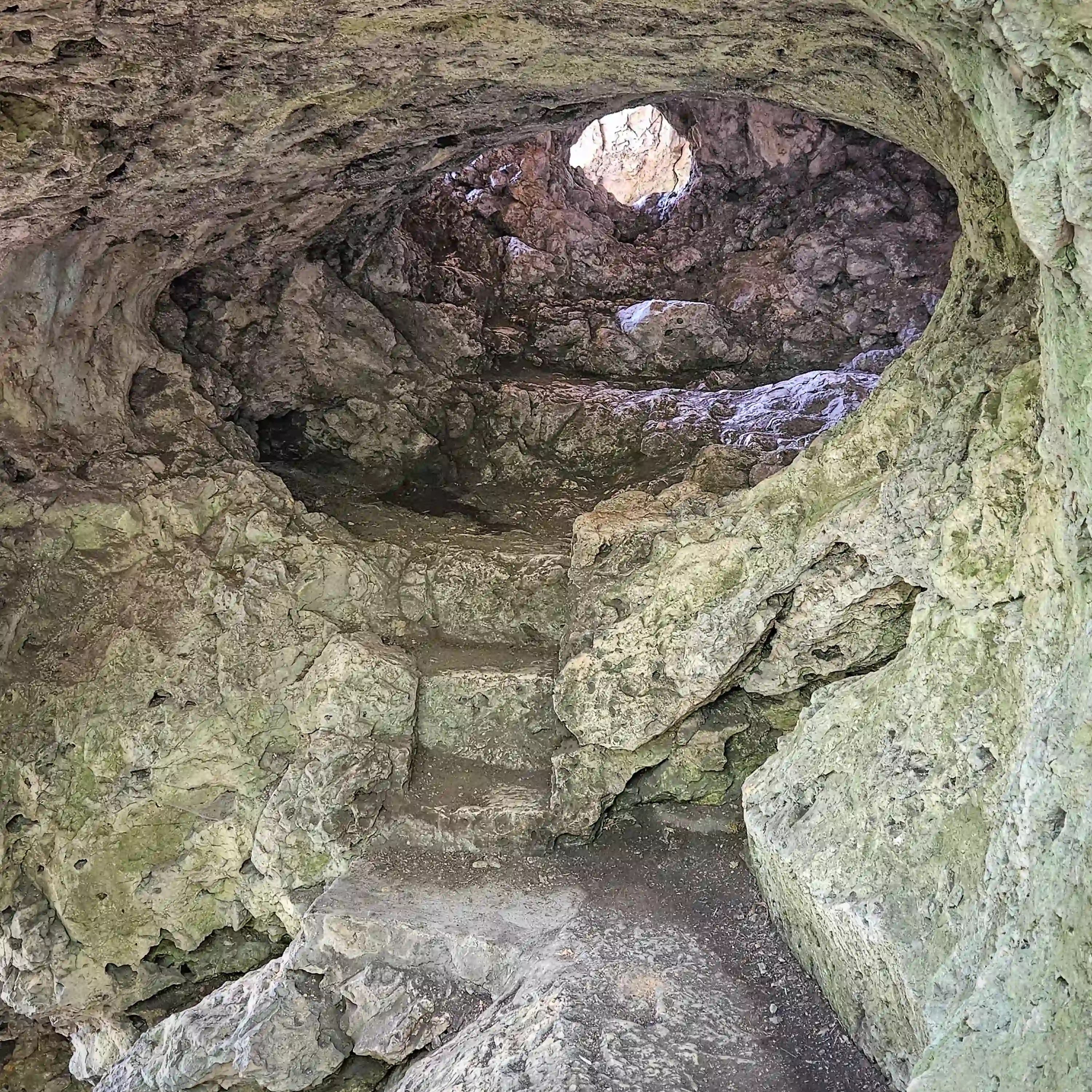
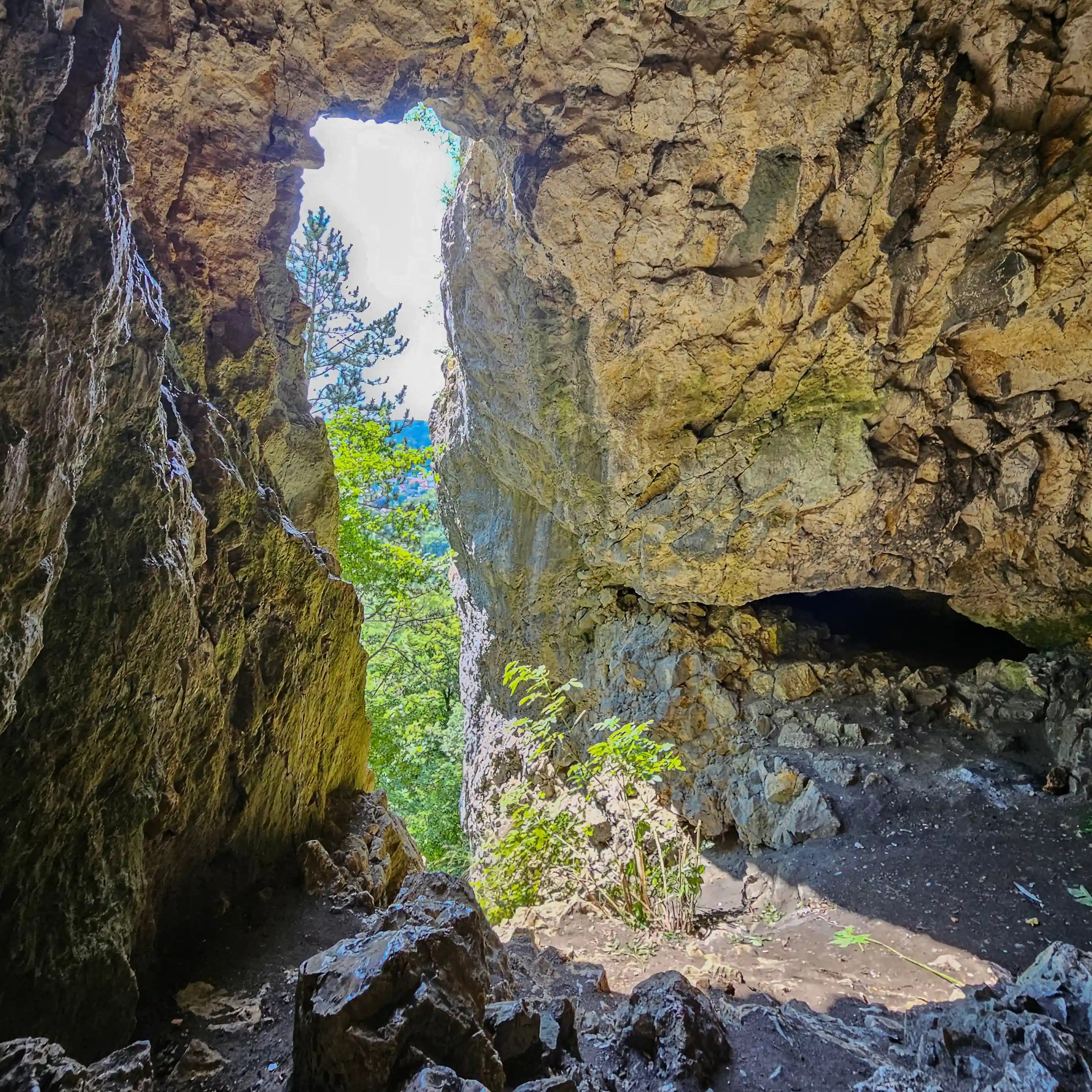
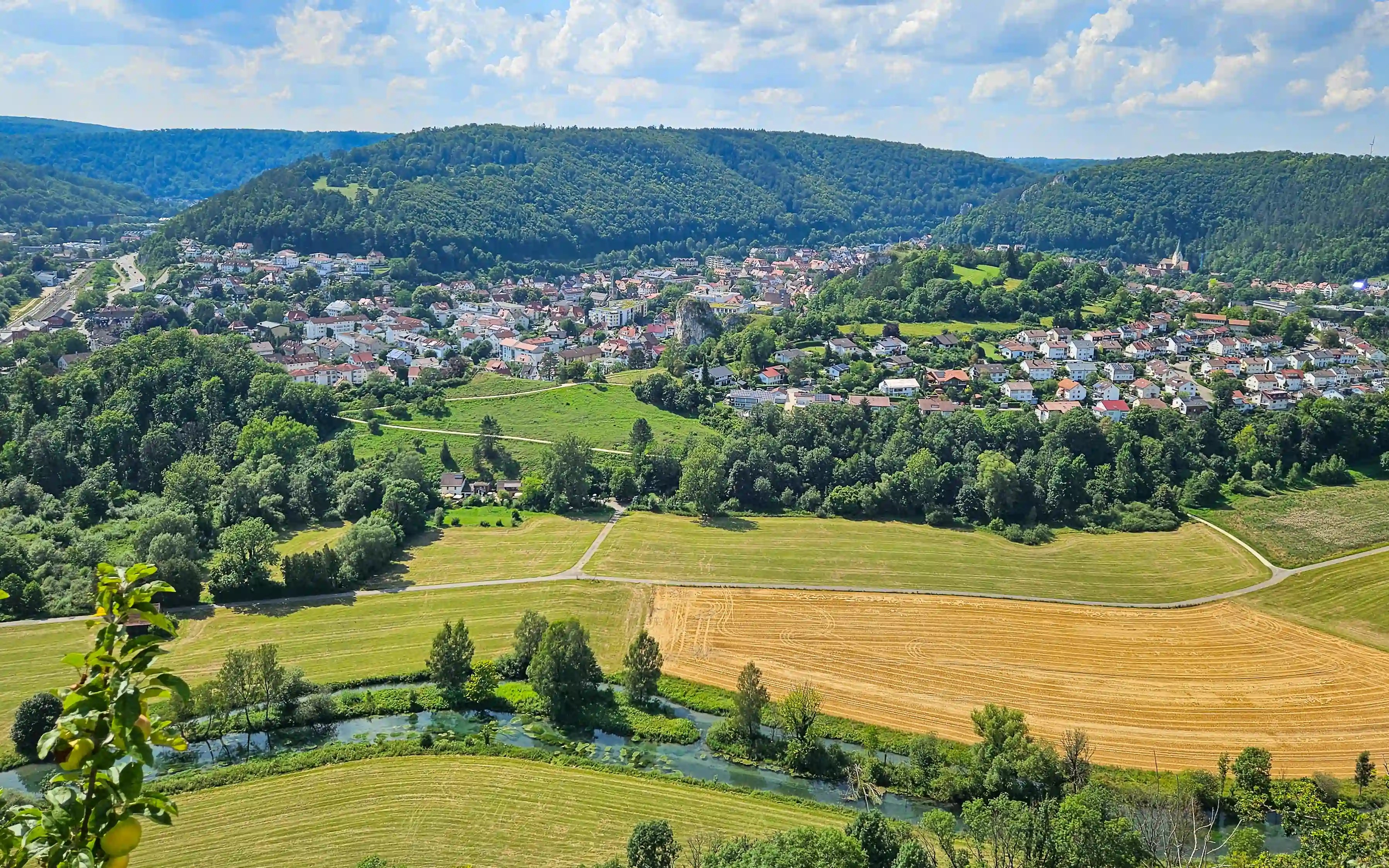
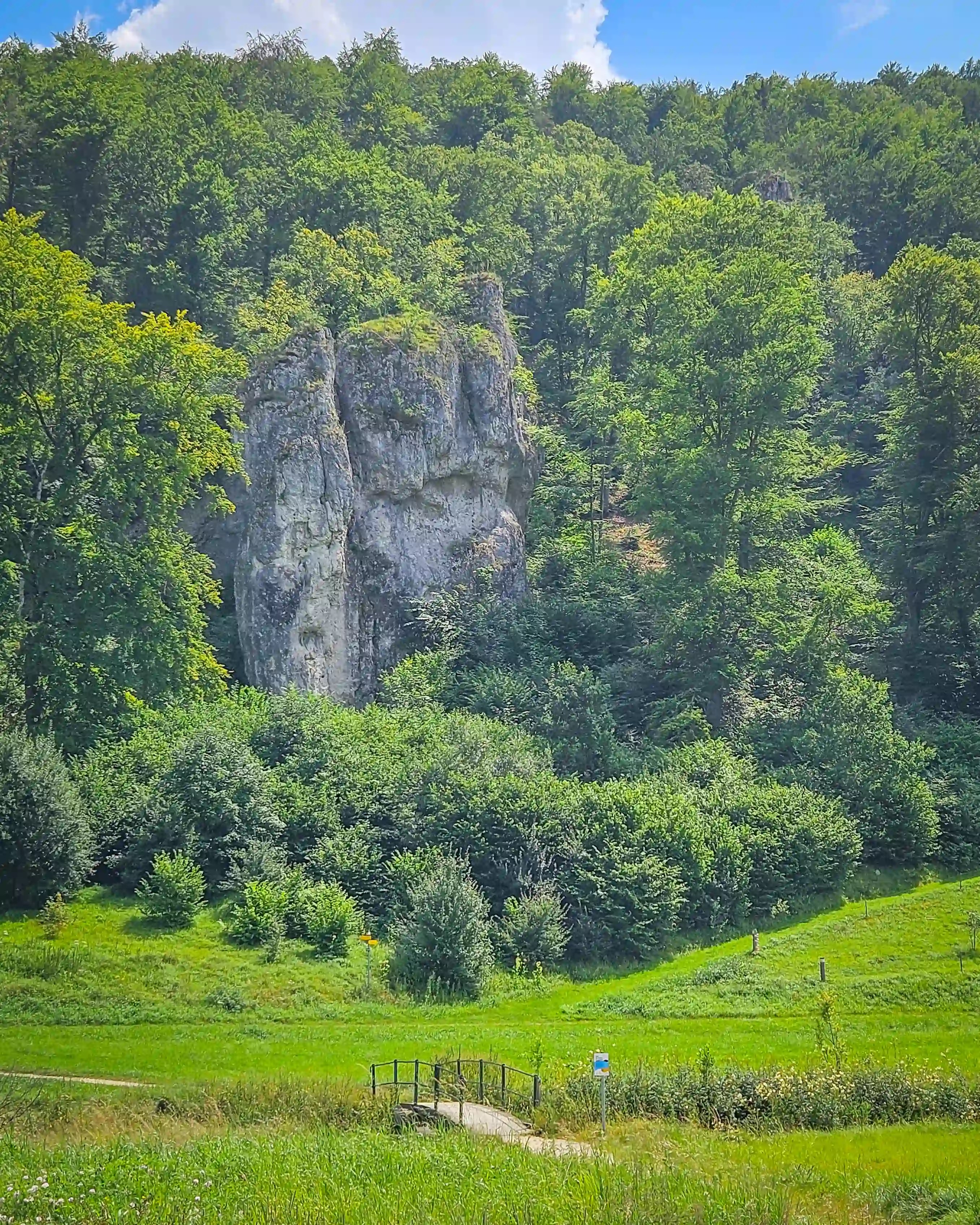
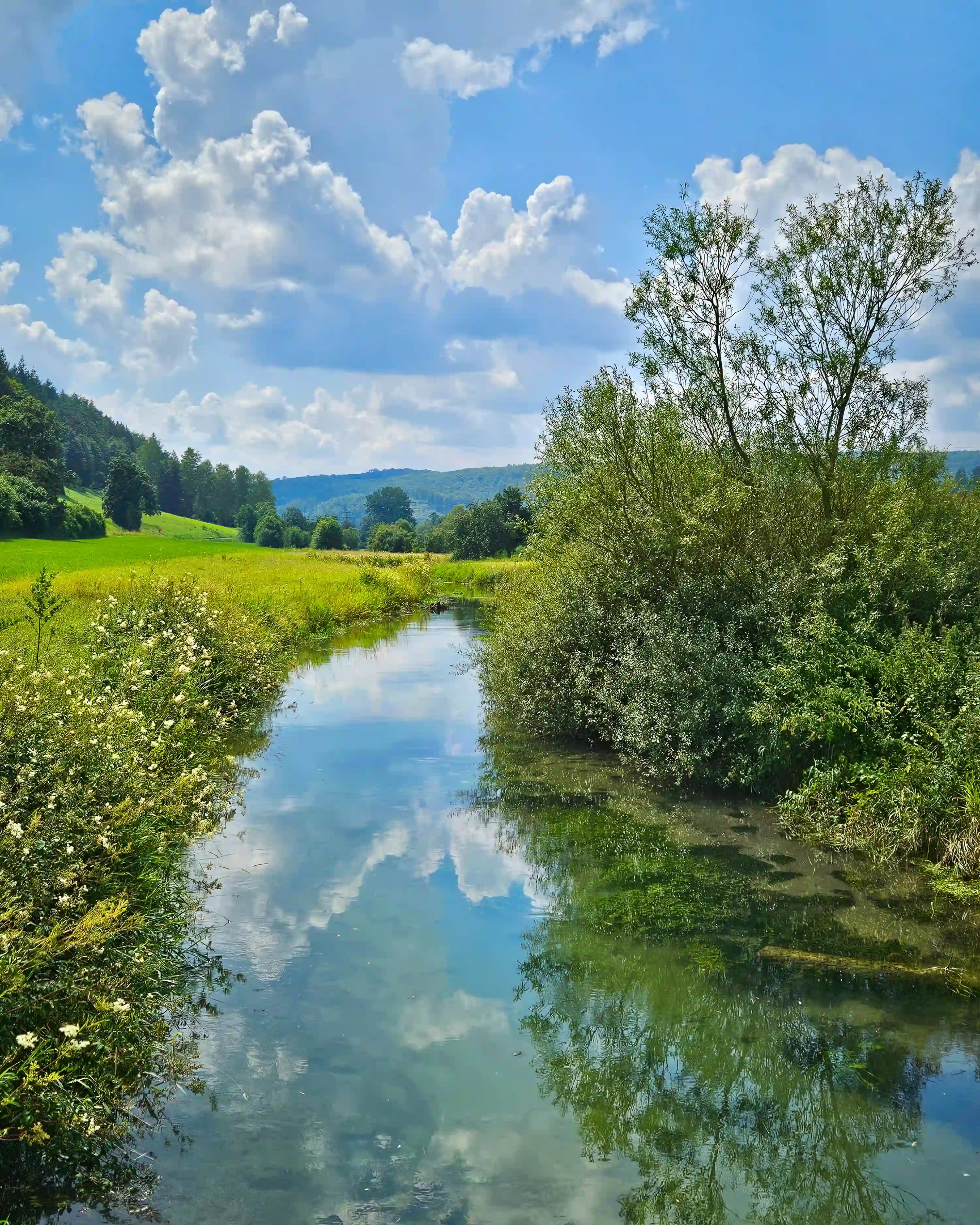
The ruins sit within a protected landscape area, home to sensitive plant and bird species. From the remaining walls you get wide views over the Blautal valley, with fields, forests, and the Blau River winding below.
Hohle Fels Cave: A Glimpse 40,000 Years into the Past
A short drive from Blaubeuren, in the Ach valley near Schelklingen, is Hohle Fels Cave.
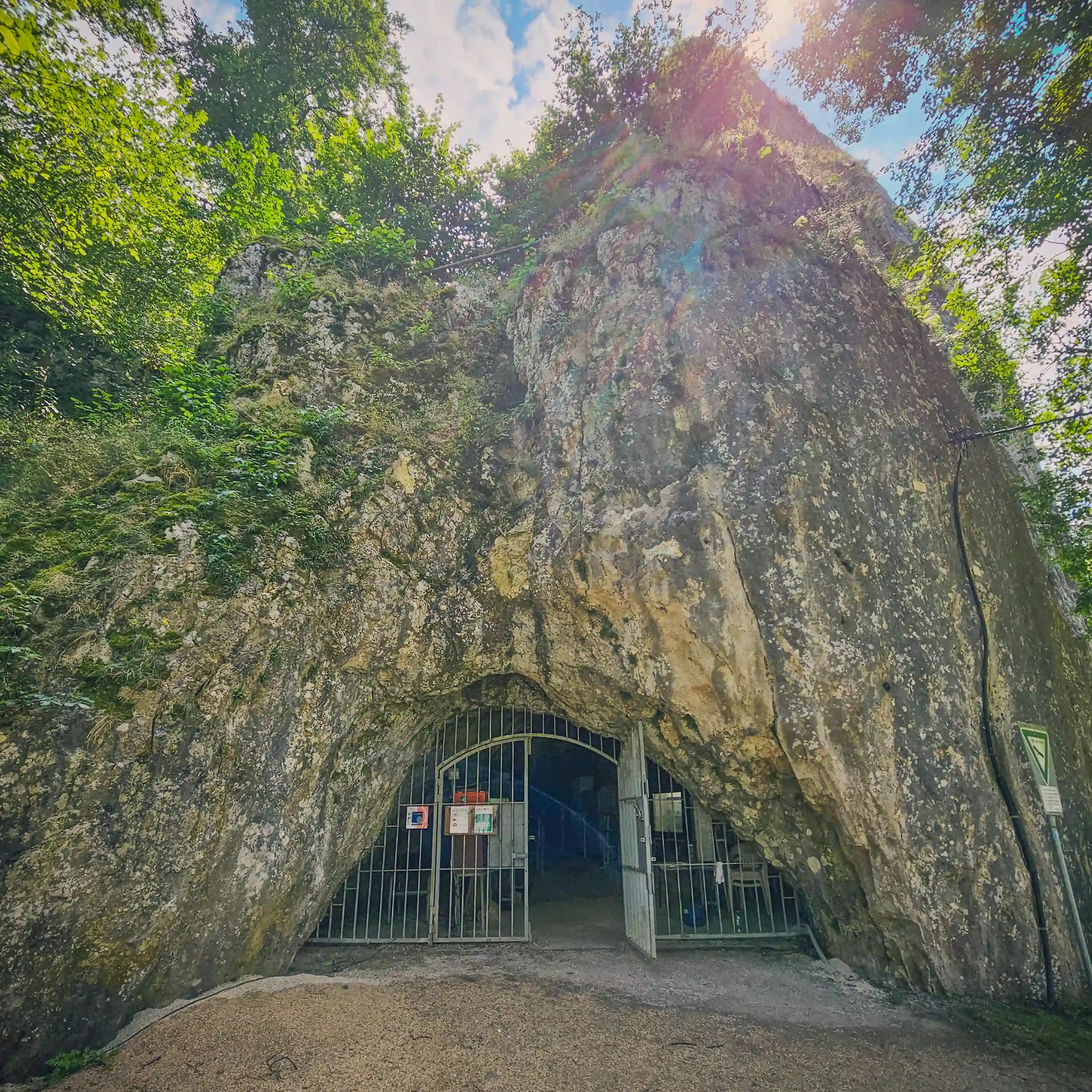
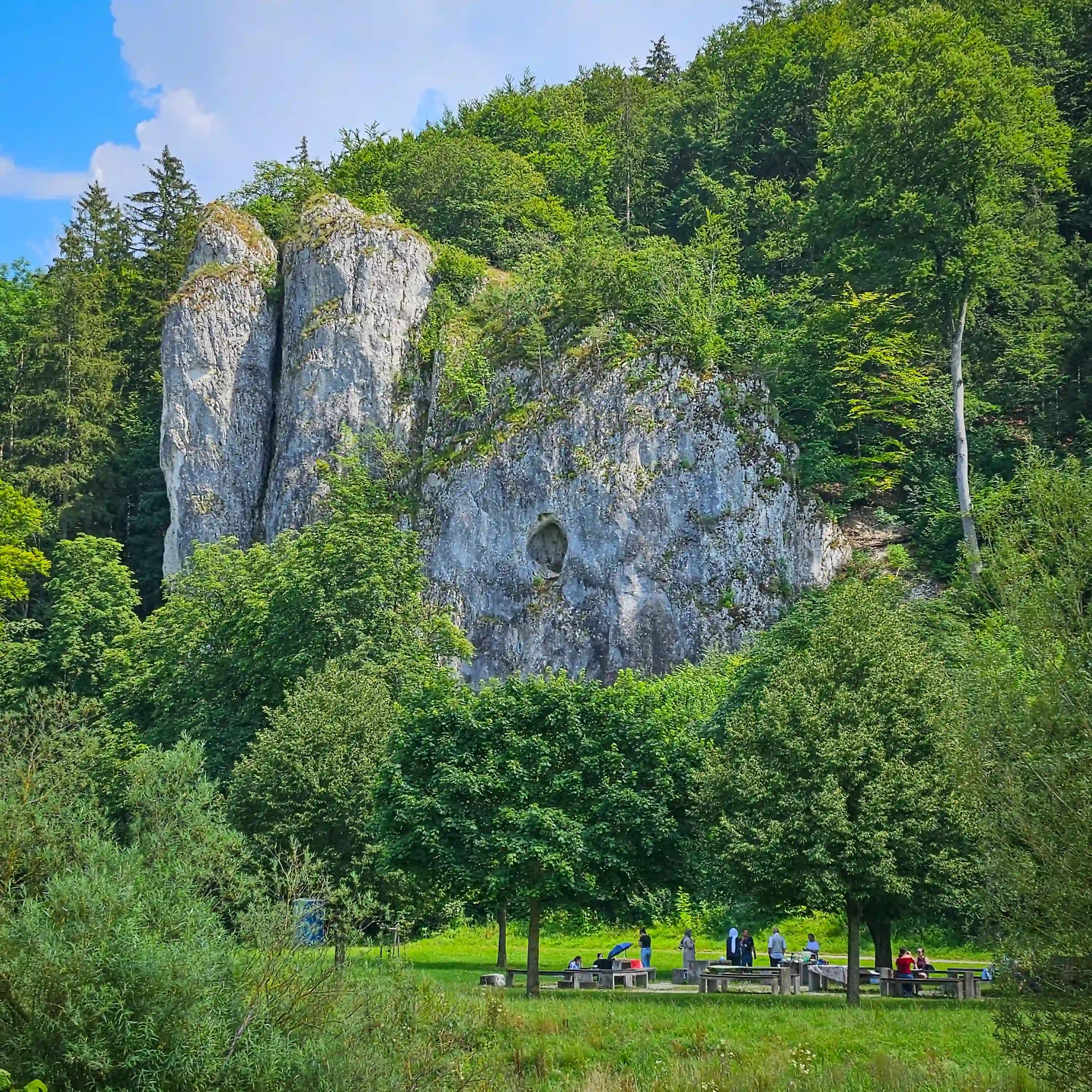
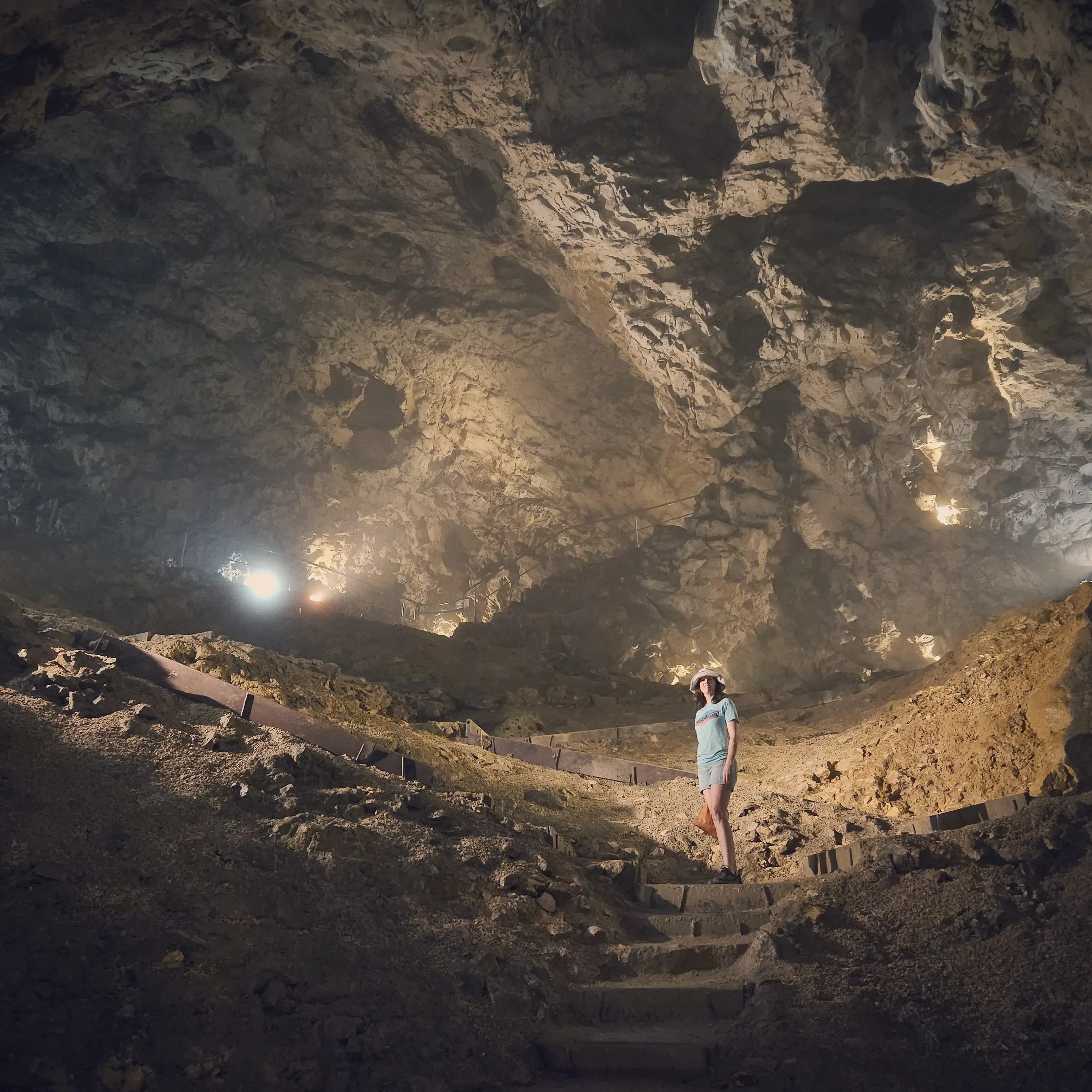
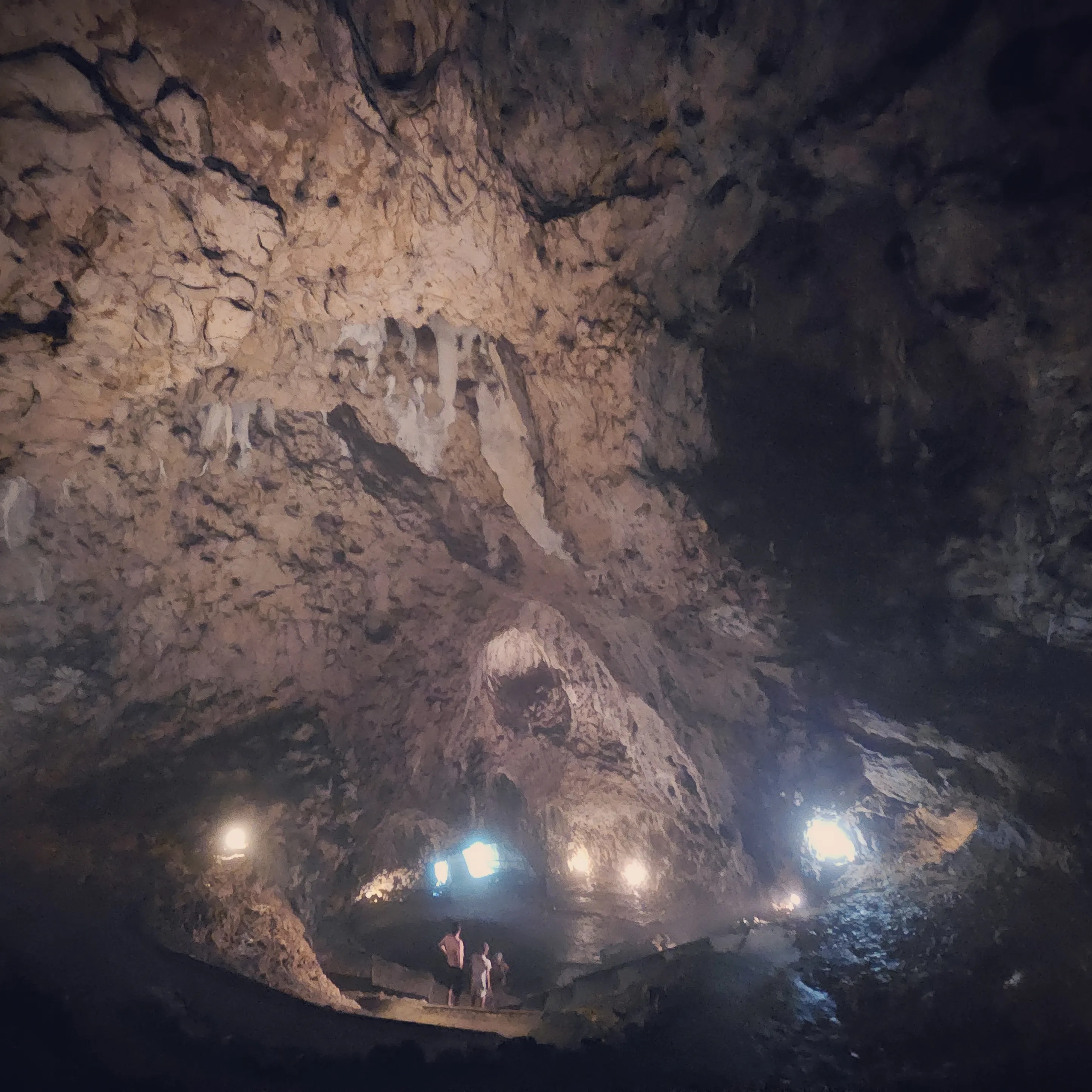
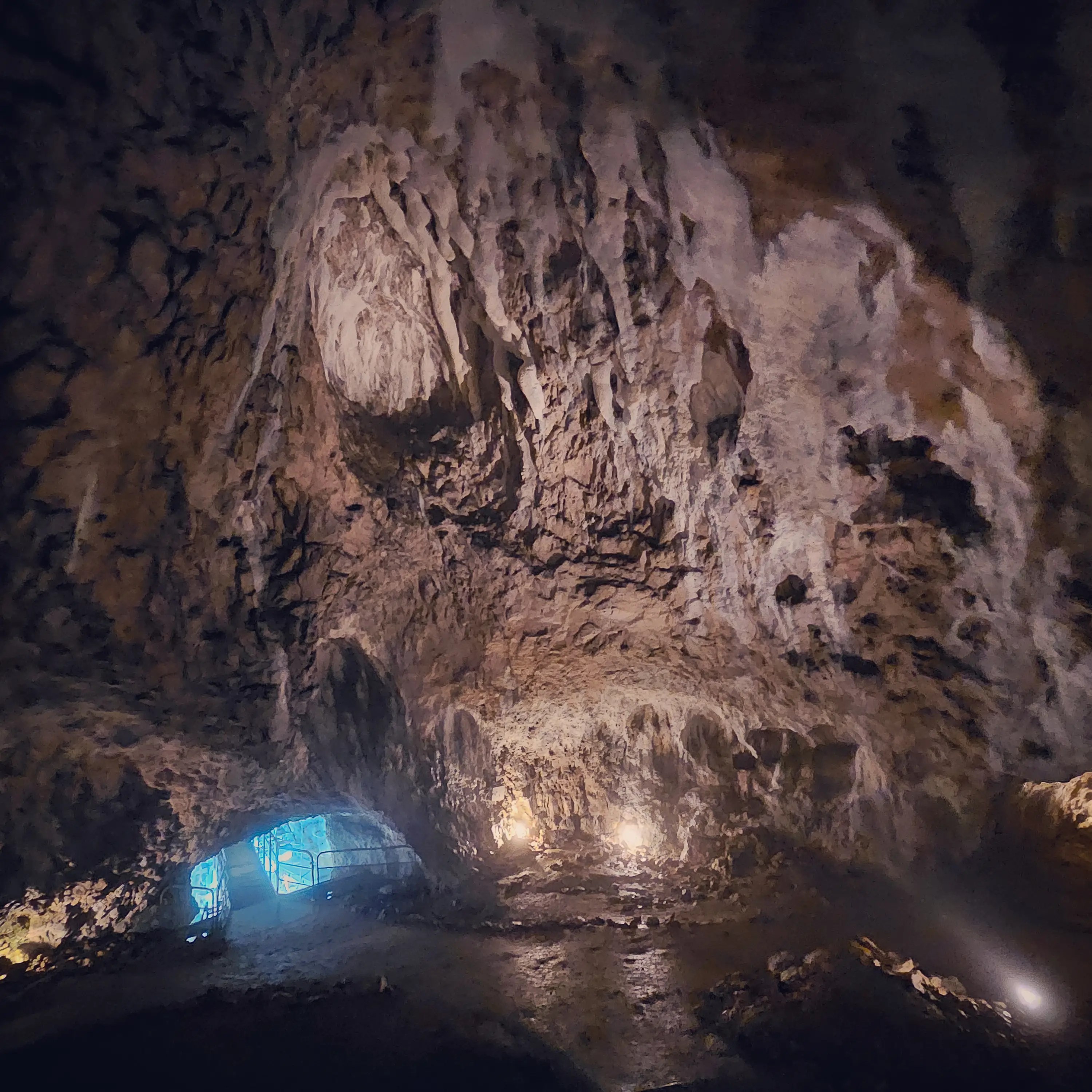
The cave is one of the largest accessible caverns in the Swabian Jura and part of the UNESCO World Heritage Site “Caves and Ice Age Art in the Swabian Jura,” designated in 2017. This listing includes six caves in the Ach and Lone valleys where some of the oldest known figurative art and musical instruments have been discovered.
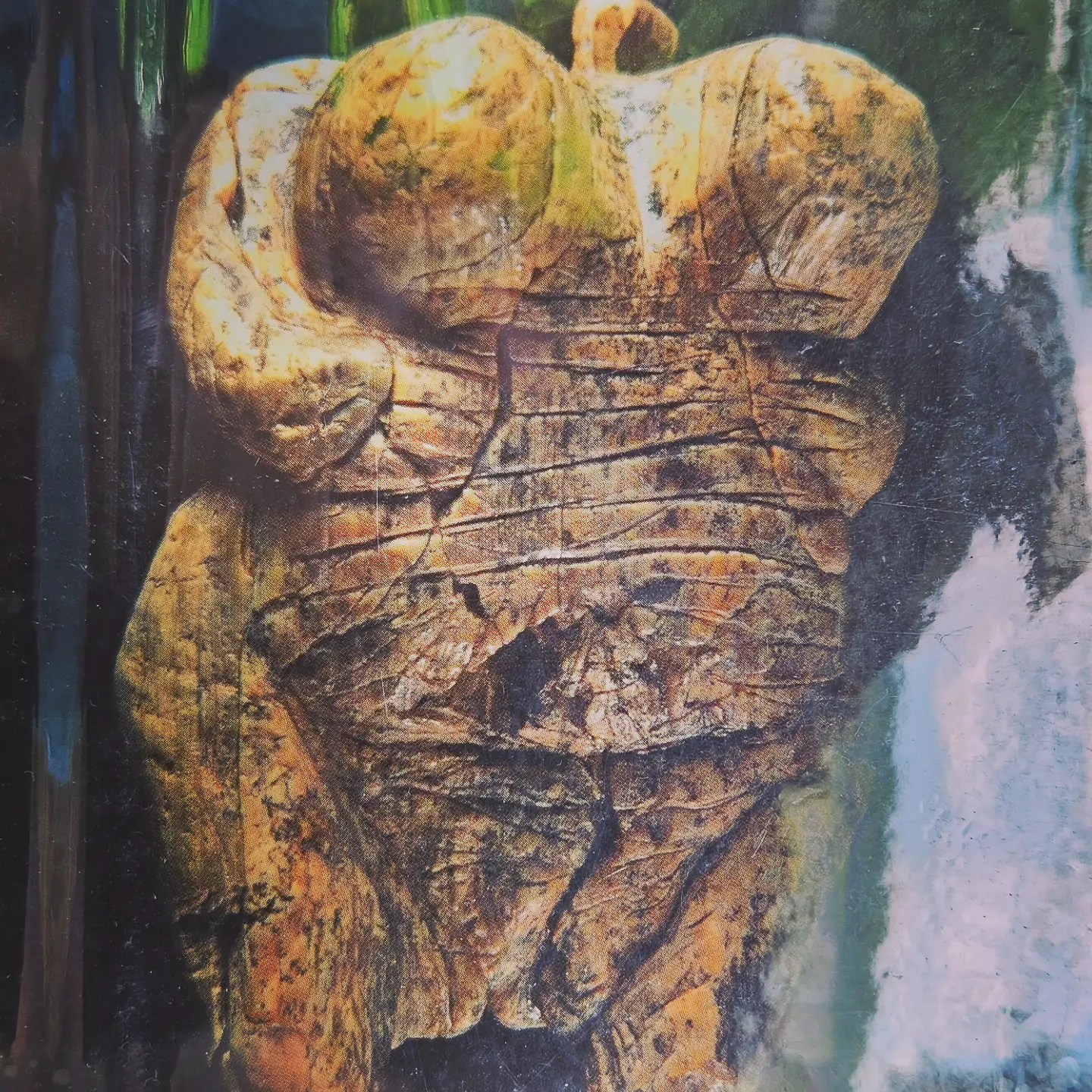
Hohle Fels remains an active archaeological site. Excavations here uncovered the Venus of Hohle Fels, a small figurine carved from mammoth ivory around 40,000 years ago, as well as a flute made from the bone of a griffon vulture—among the earliest known musical instruments.
Both Neanderthals and early modern humans occupied caves in this region, including nearby Sirgenstein Cave in the Ach valley. Together, these sites provide rare insight into early human creativity, symbolism, and daily life.
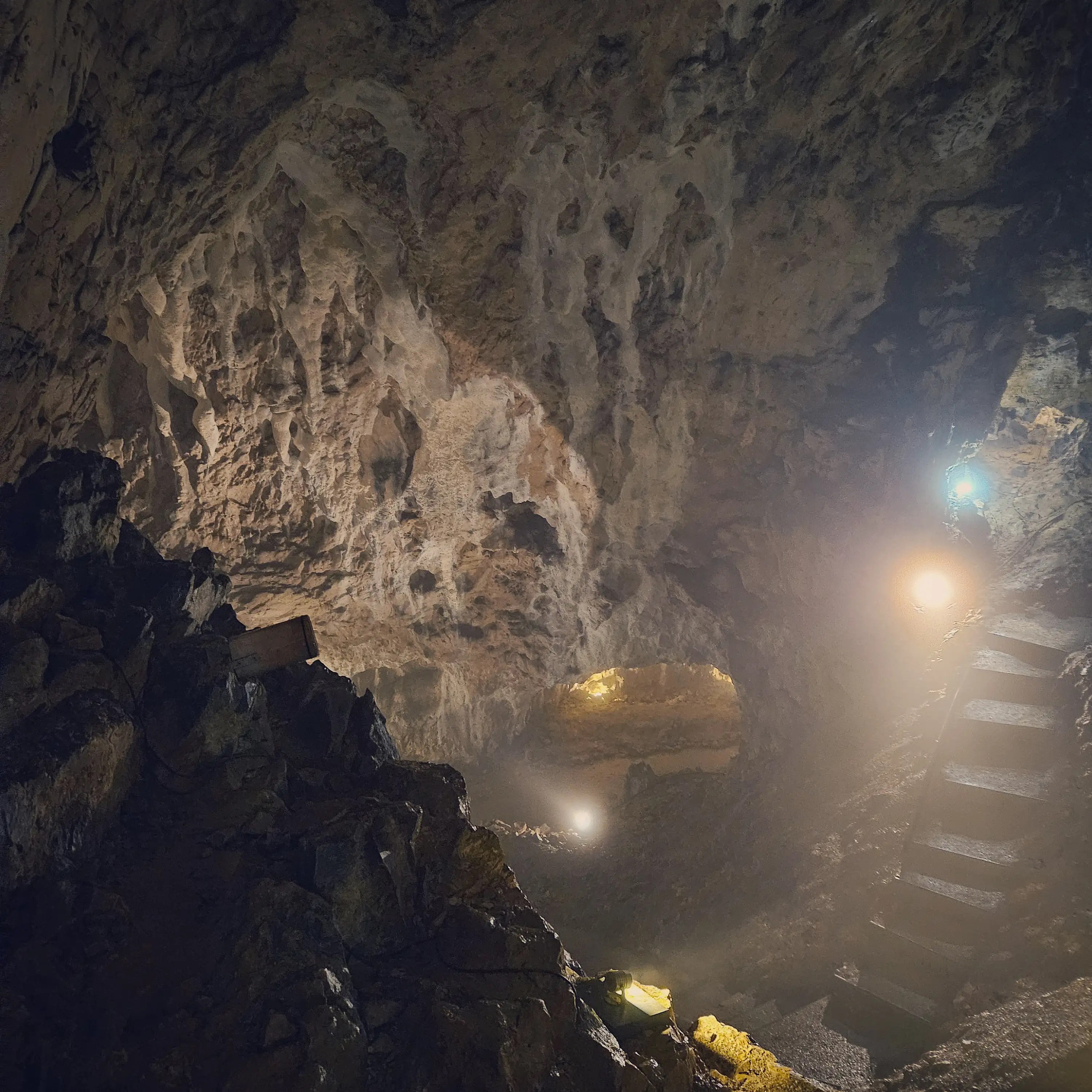
Inside Hohle Fels, the scale of the cavern is immediately striking. The ceiling rises high above, and a cool mist hangs in the air. Standing there, it’s hard to fully grasp that people were carving ivory figurines and making music in this very valley some 40,000 years ago.
More to See Around Blaubeuren
If you have additional time, the area around Blaubeuren offers several other interesting stops, from Ice Age archaeology to scenic viewpoints and unique caves.
- Museum of Prehistory (URMU) – Located in Blaubeuren’s old town, this museum displays the original Venus of Hohle Fels along with other remarkable Ice Age artifacts discovered in nearby caves. The museum is housed in part of the former Holy Spirit Hospice, which served as a medieval care home for centuries.
- Tiefenhöhle Laichingen – About 15 km (9 miles) northwest of Blaubeuren near the town of Laichingen, this cave allows visitors to descend deep underground via stairways and platforms, offering a closer look at the geology of the Swabian Alb. The cave closes seasonally to protect wintering animals, so be sure to check current opening times before visiting.
- Ruckenkreuz Viewpoint – Located on the ridge above Blaubeuren, this hilltop cross was erected in memory of residents of Blaubeuren who died in World War I. From the site there are wide views over the Blau valley surrounding Blaubeuren, accessible via hiking trails from town.
- Küssende Sau (Kissing Pigs) – A rock formation near Blaubeuren that resembles two pigs touching noses. It’s a quirky landmark along hiking trails in the limestone cliffs above town.
- UNESCO Global Geopark Swabian Alb – Blaubeuren lies within this UNESCO-recognized geopark known for its limestone cliffs, caves, and fossil sites. The surrounding area includes numerous marked hiking trails and scenic viewpoints.
- Bad Blau – Located in Blaustein, about 15 km (9 miles) from Blaubeuren, this modern swimming and sauna complex offers indoor and outdoor pools, water slides, and relaxation areas.
Location & Getting There from Stuttgart
Blaubeuren is located about 80 kilometers (about 50 miles) southeast of Stuttgart. By car, the drive takes roughly 1 hour. Public parking lots are available in town within walking distance of the Blautopf and monastery.
Ruine Hohengerhausen (Rusenschloss) can be reached on foot from Blaubeuren via marked hiking trails with a steady uphill climb. There is also a designated parking area near the Blau River (Parkplatz Rusenschloss), which shortens the hike considerably. Several route options are available, including marked trails listed on Komoot.
Hohle Fels Cave is located near Schelklingen, about 5.5 kilometers (3.4 miles) from Blaubeuren, and takes roughly 10 minutes by car.
Final Thoughts
Looking back through these photos makes me want to return on a warm spring day just to see the Blautopf glowing blue again.
The mix of natural beauty and deep history makes this corner of the Swabian Alb especially memorable. It’s easy to spend a full day here and leave already thinking about coming back.
Have you visited Blaubeuren or explored the caves of the Swabian Alb? I’d love to hear your experiences, questions, or favorite memories in the comments below.

Leave a comment