
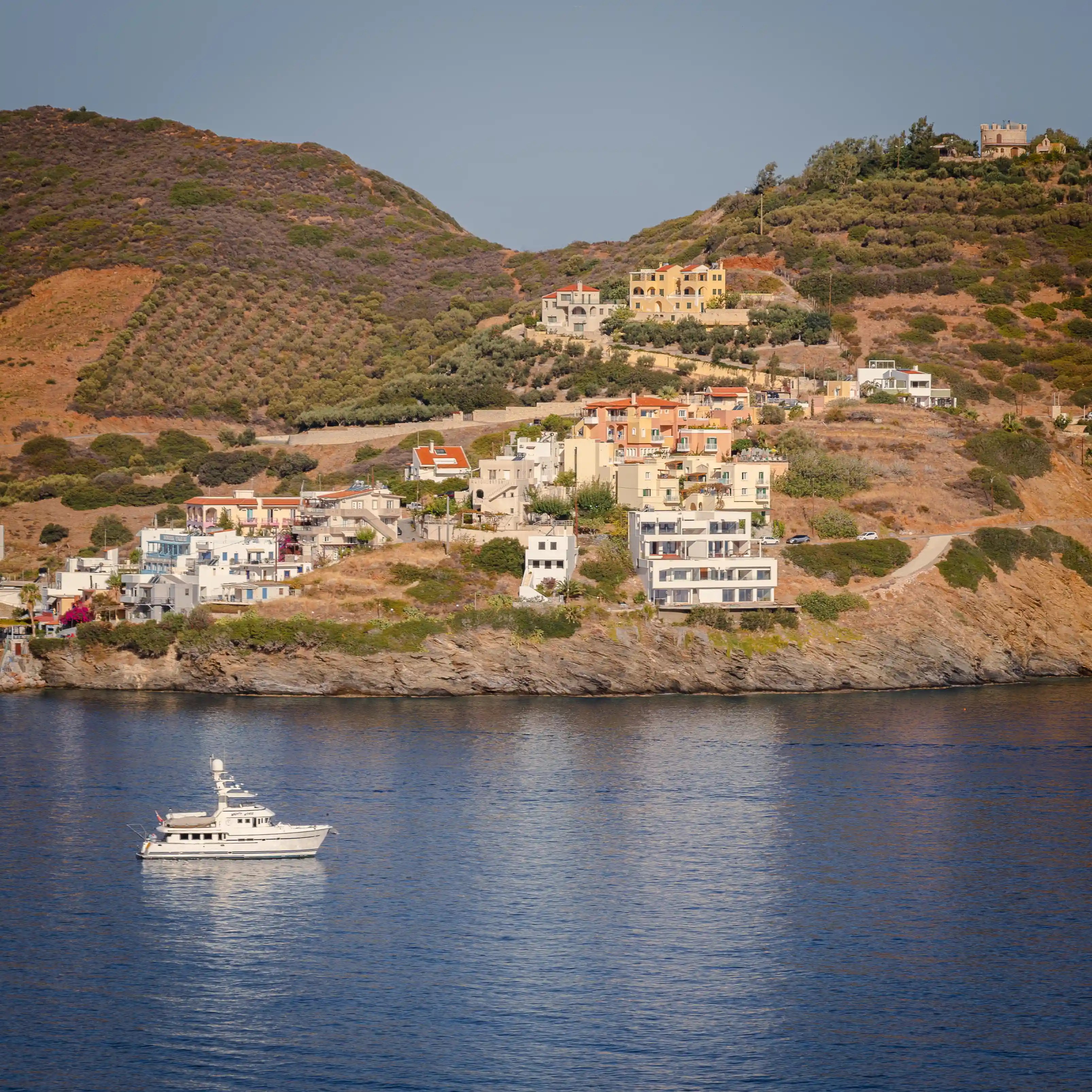
The more time we spent on Crete, the more I realized how much there is to experience across the island. Whether we stayed along the north coast or ventured inland, each day showed us a new side of Crete.
Our first days on the island—shared in Part I—only scratched the surface. The rest of our trip brought an entirely new mix of landscapes and history: the long descent through the Samaria Gorge, a full day exploring the Venetian history and seaside charm of Rethymno, the quiet waterfront of Plaka, the haunting history of Spinalonga Island, and the colorful waterfronts of Agios Nikolaos. And with that, welcome to Part II of our Crete adventure.

Samaria Gorge: Hiking One of Crete’s Most Famous Trails
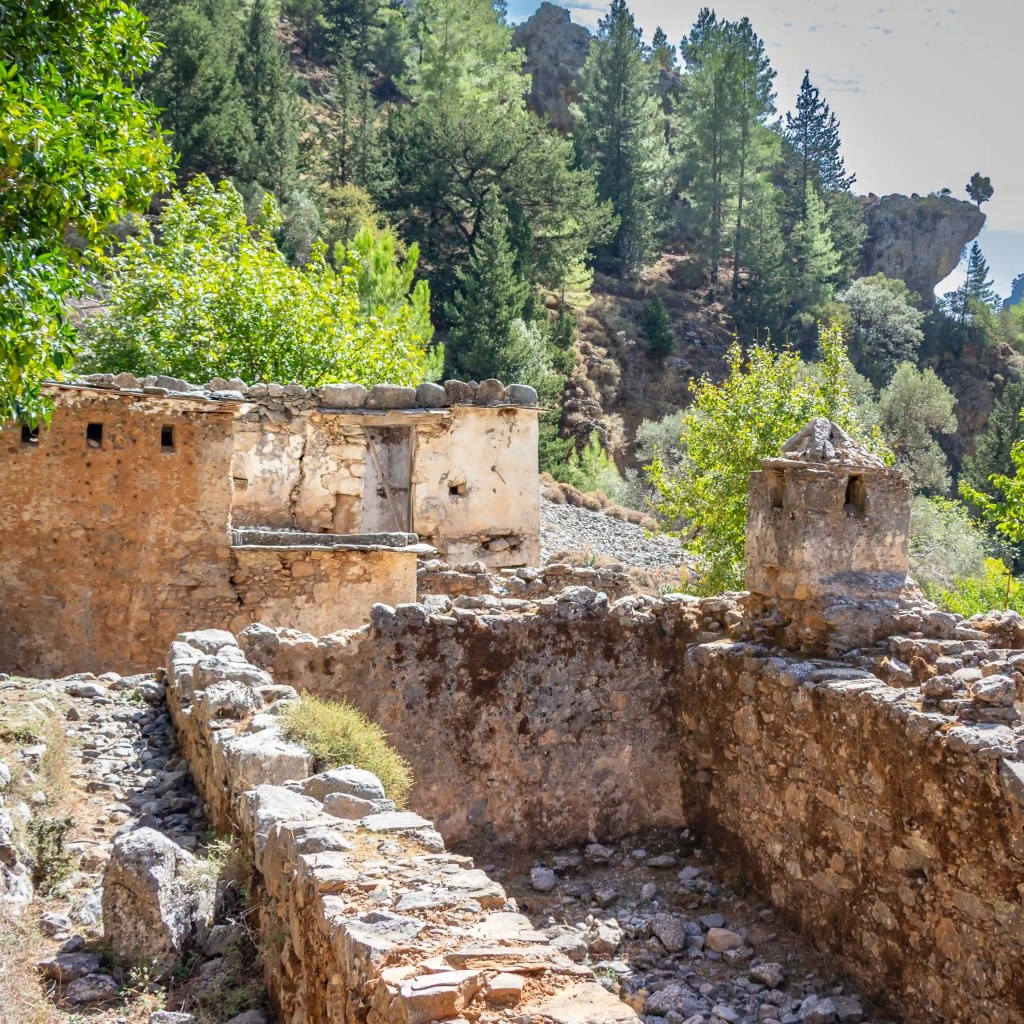
We booked a Samaria Gorge day trip departing from the Heraklion region through Viator, and the day started early with a hotel pickup and a long drive west toward the White Mountains. The Samaria Gorge is one of the longest gorges in Europe, stretching roughly 16 km (9.9 mi) from the trailhead at Xyloskalo down to the seaside village of Agia Roumeli. The area has been inhabited since the prehistoric era, with archaeological evidence, small Byzantine chapels, and even the remains of two Venetian fortifications found within the national park.
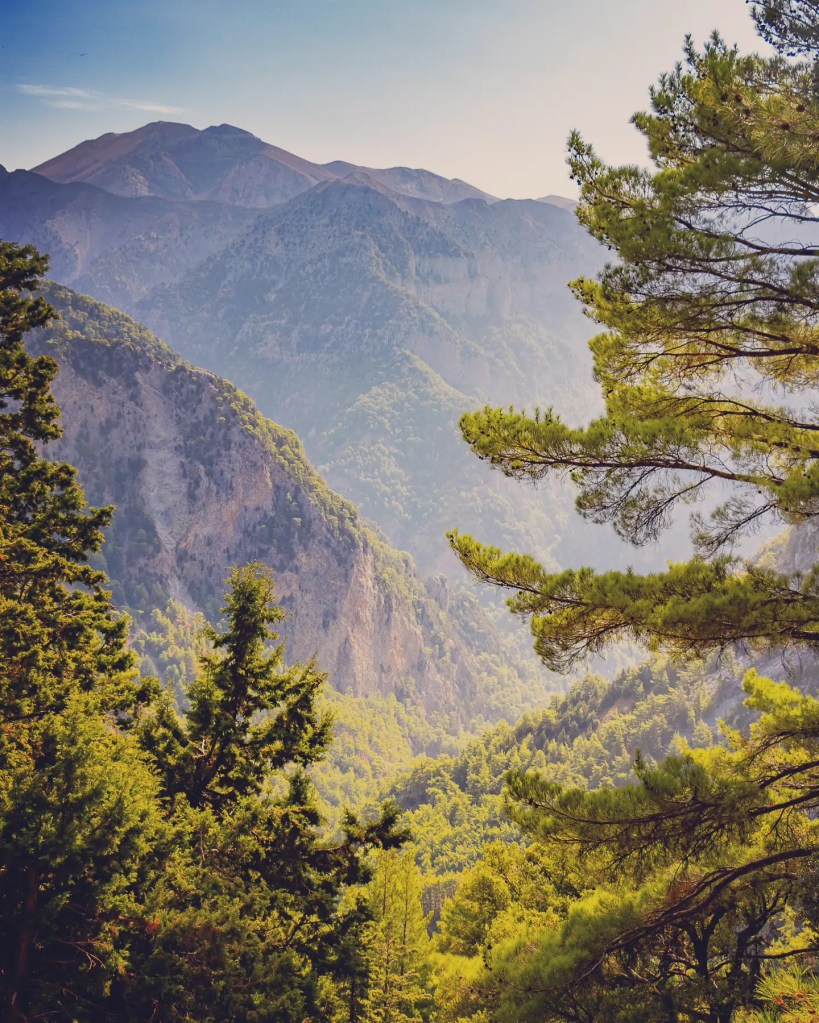
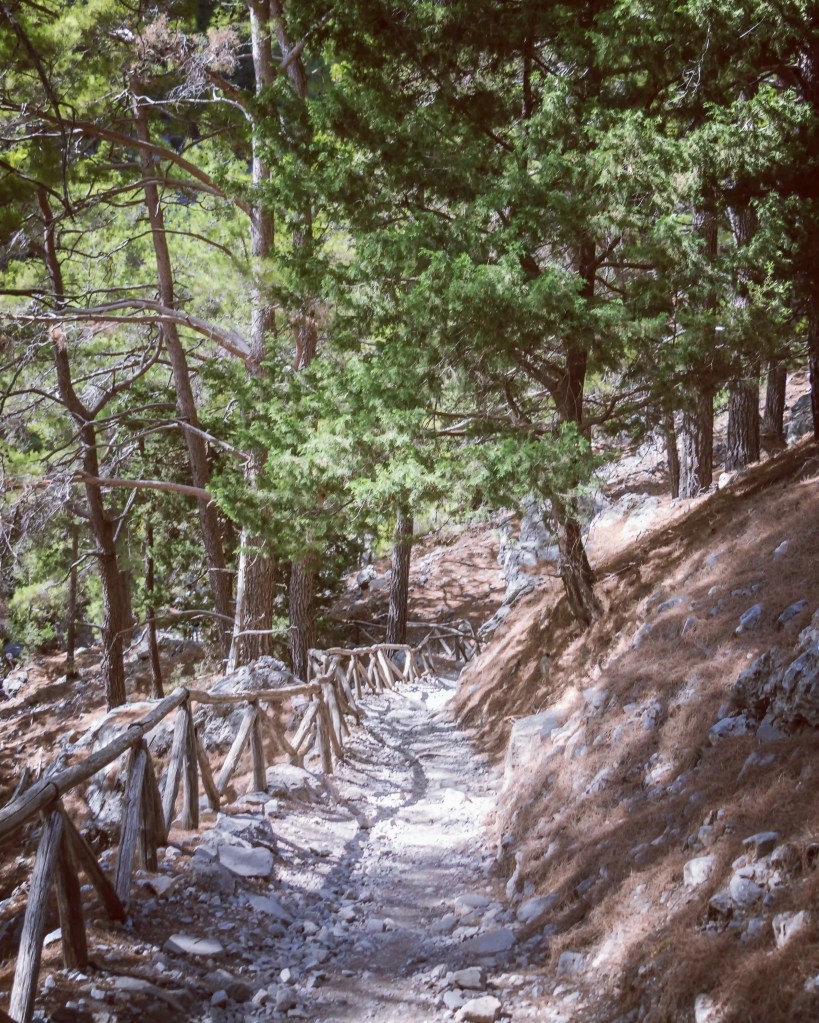
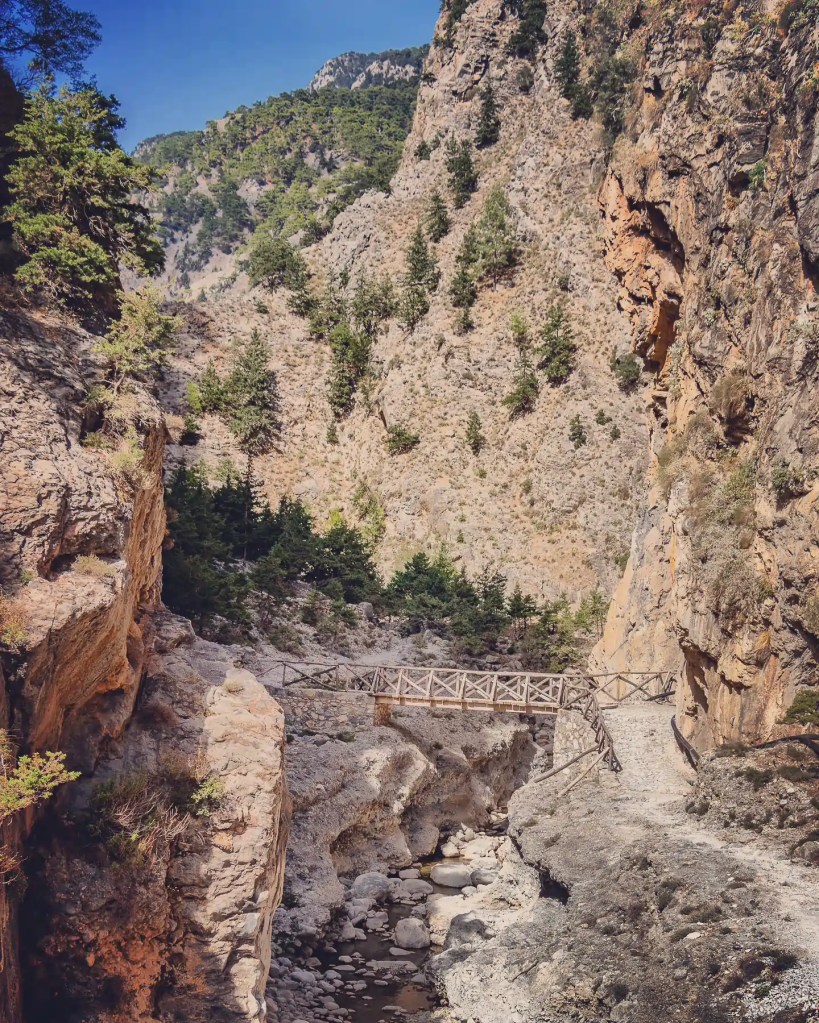
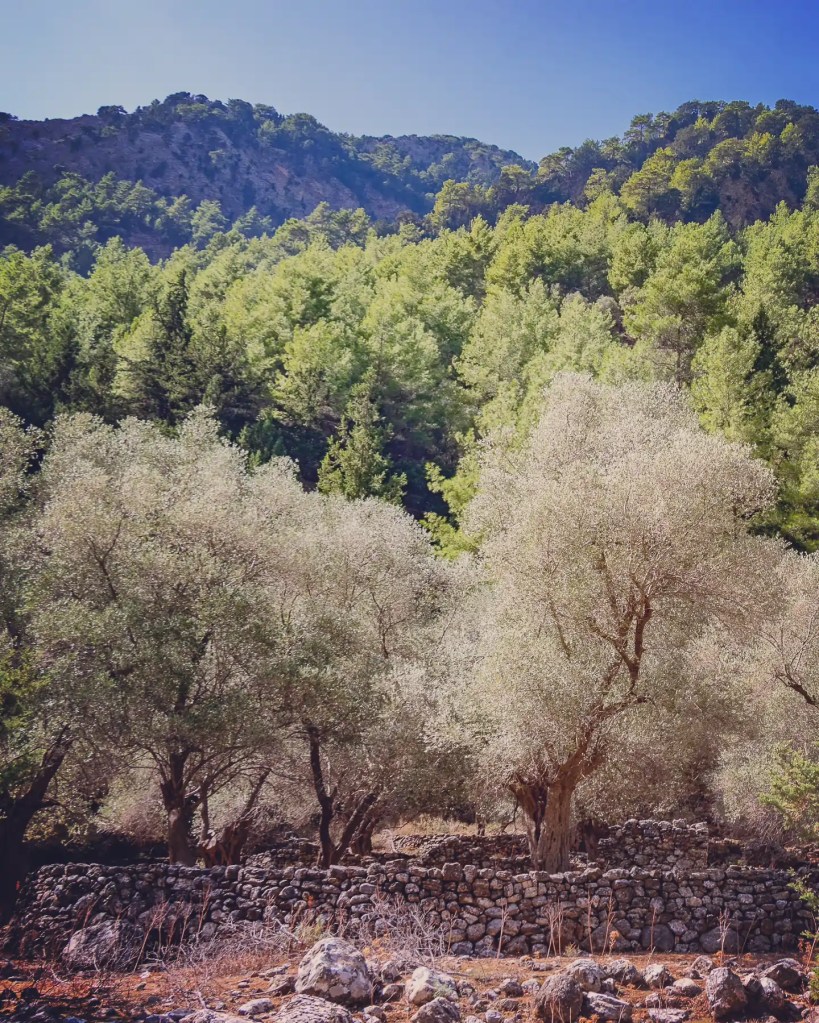
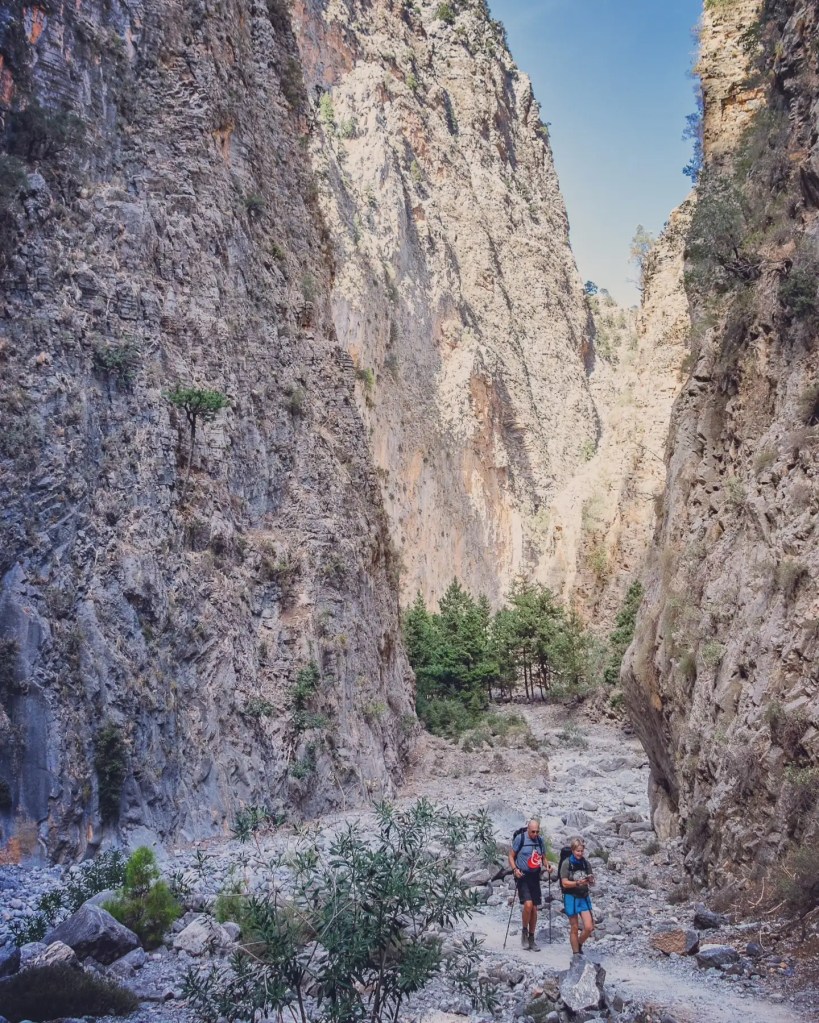
The hike begins with a steep 4 km (2.5 mi) descent through partly shaded forest—beautiful, but hard on the knees—before reaching the valley floor and the old settlement of Samaria, which now serves as the main rest area. Along the way, the landscape shifts in scale: broad mountain slopes at the start give way to towering cliffs that close in as you continue deeper into the gorge and eventually the path meets the wide, stony riverbed where the seasonal stream appears and disappears among the rocks.






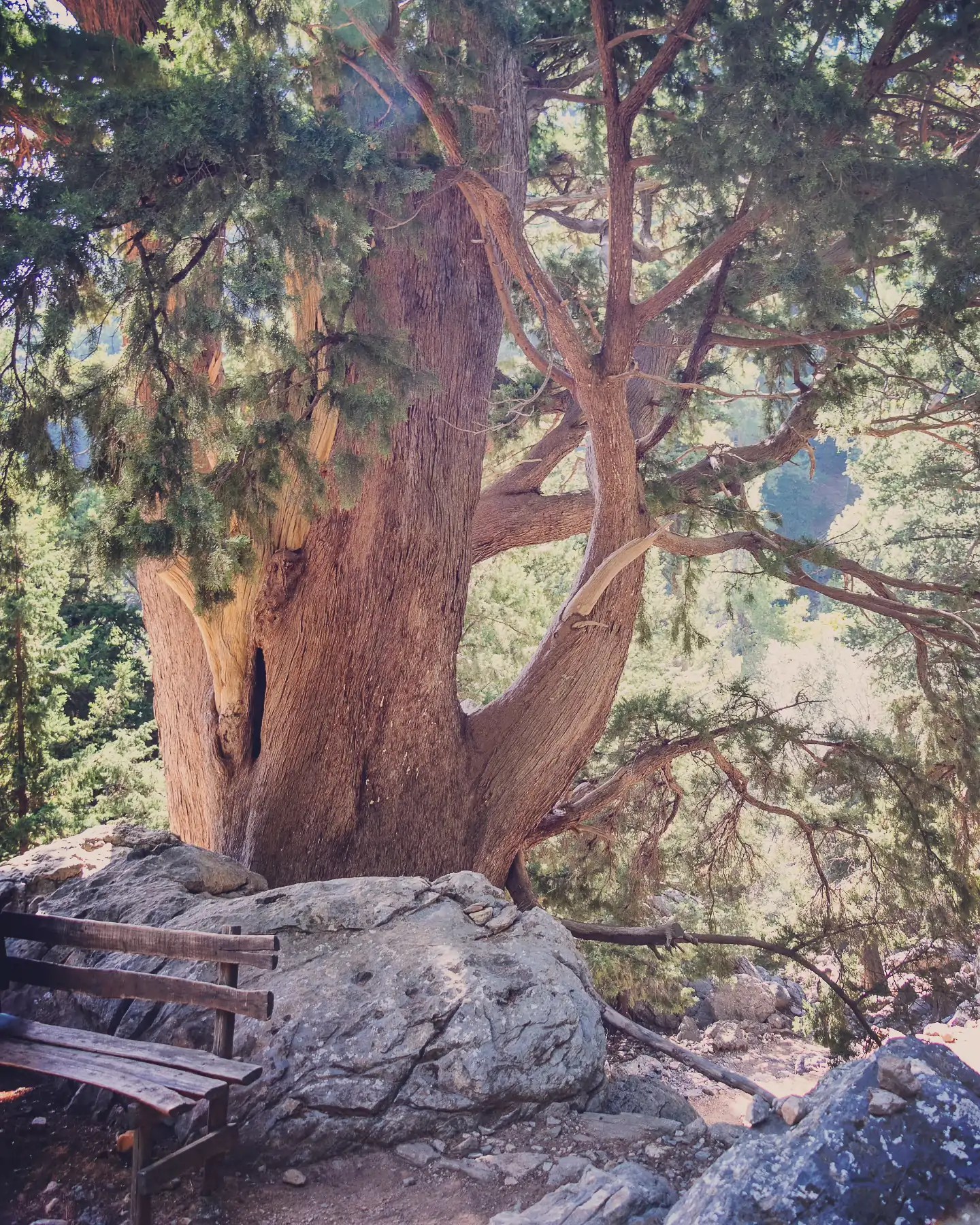
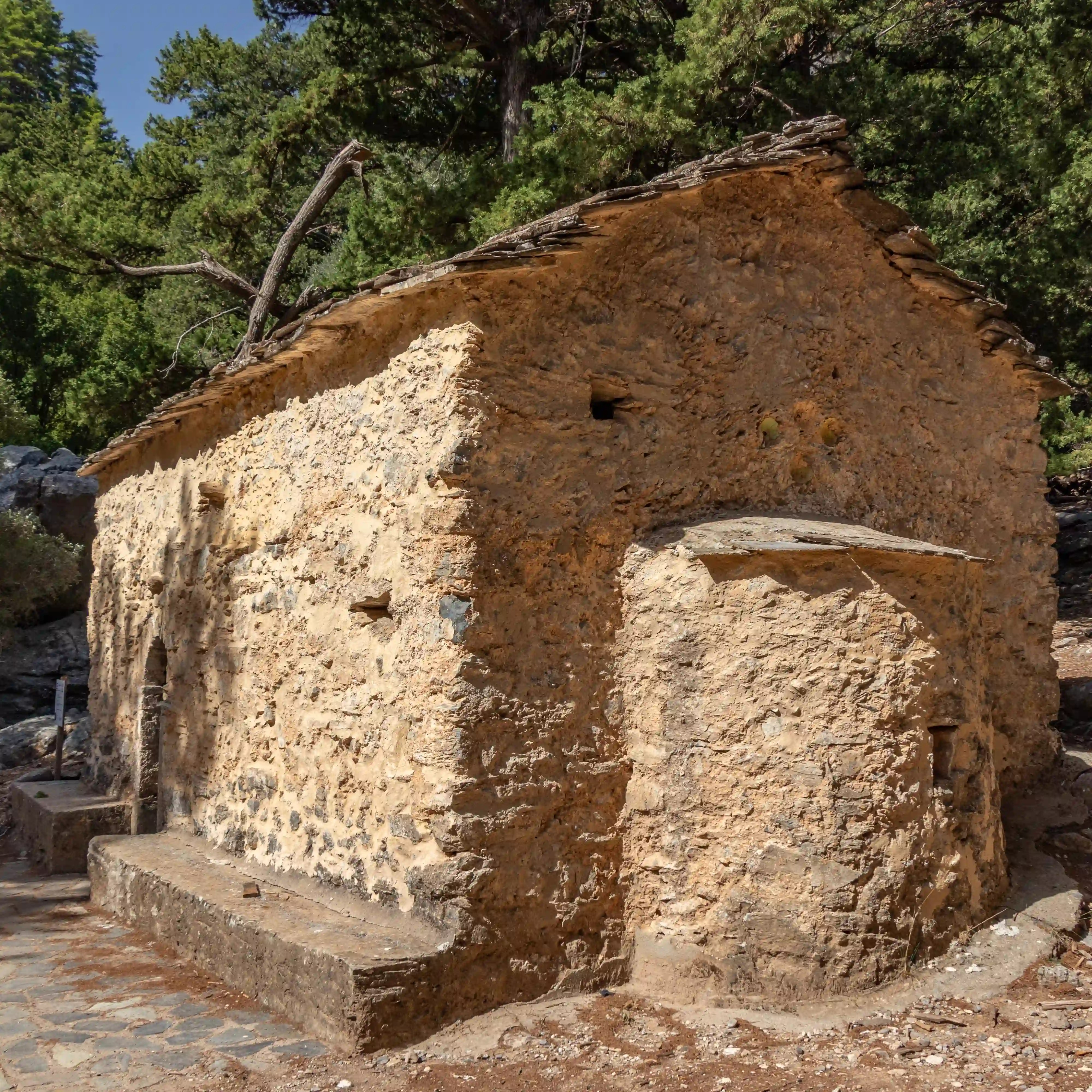
One memorable stop along the way is Saint Nicolas’s Chapel, surrounded by ancient cypress trees that have stood here for centuries. These bulky, twisting cypresses were highly valued in antiquity for shipbuilding and palace architecture. Standing beside them feels very humbling.

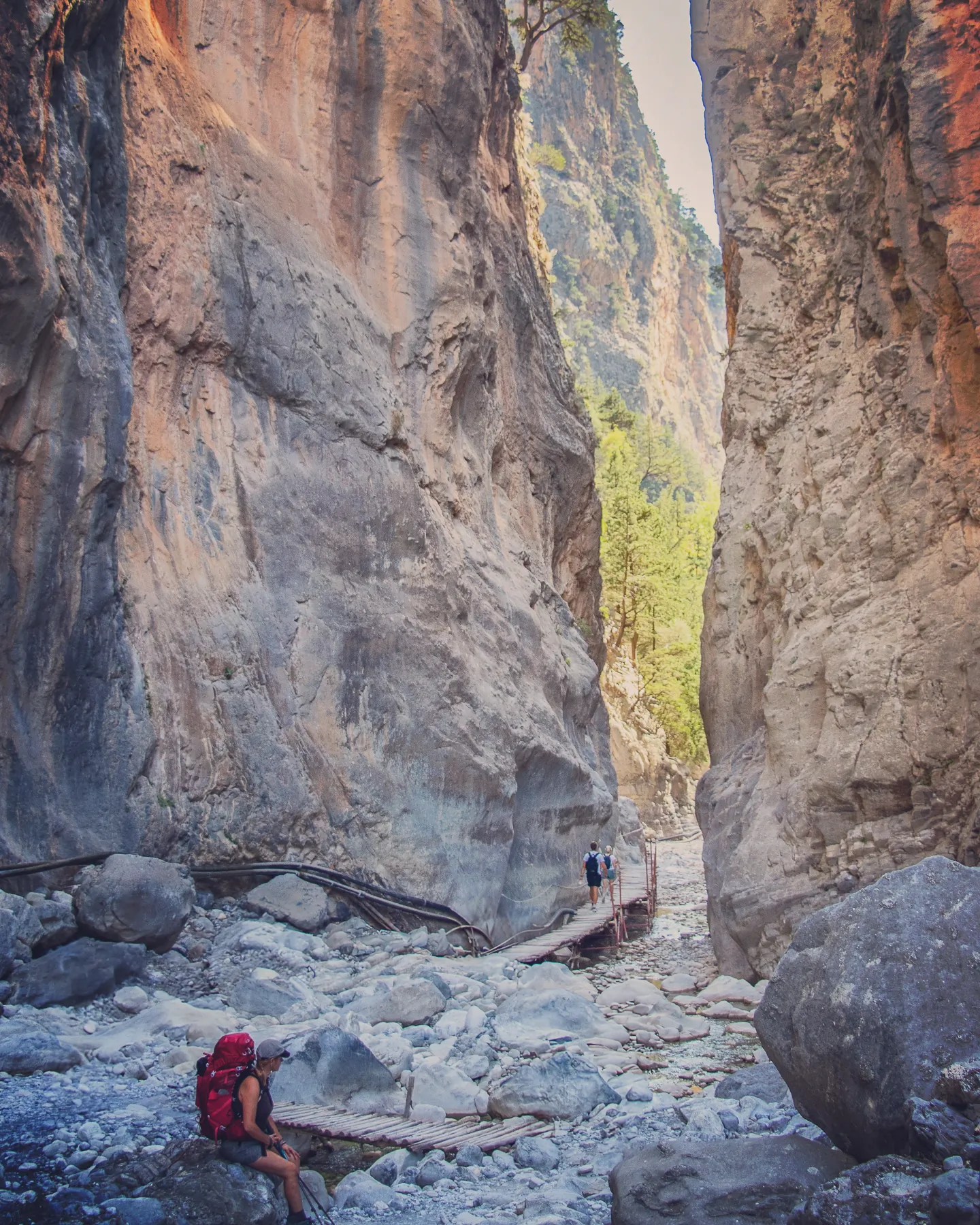
Around kilometer 11 (mile 6.8), the trail narrows into the famous Iron Gates, where the canyon walls rise 300 meters (984 feet) above you and close in to just three meters (9.8 feet) across. It’s as dramatic as it sounds, and also a sign you’re getting close to the finish line.

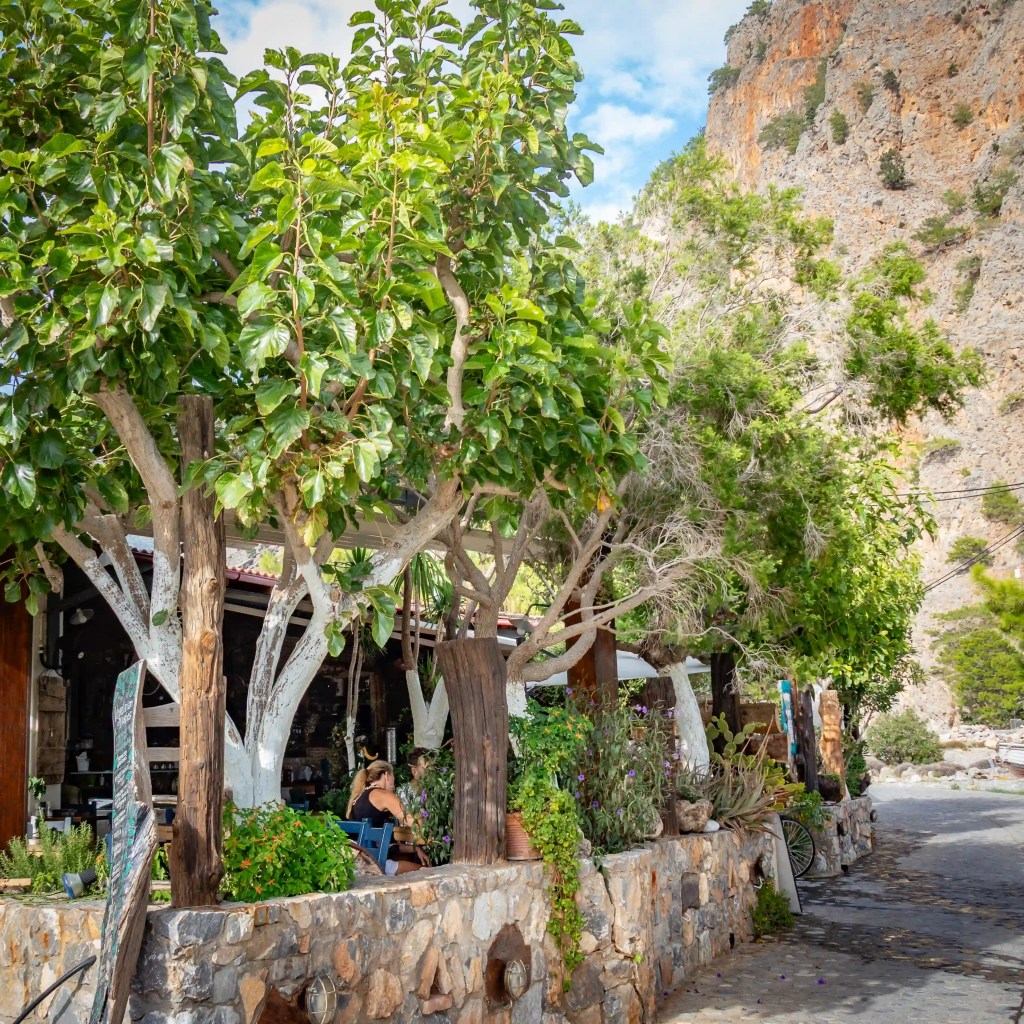
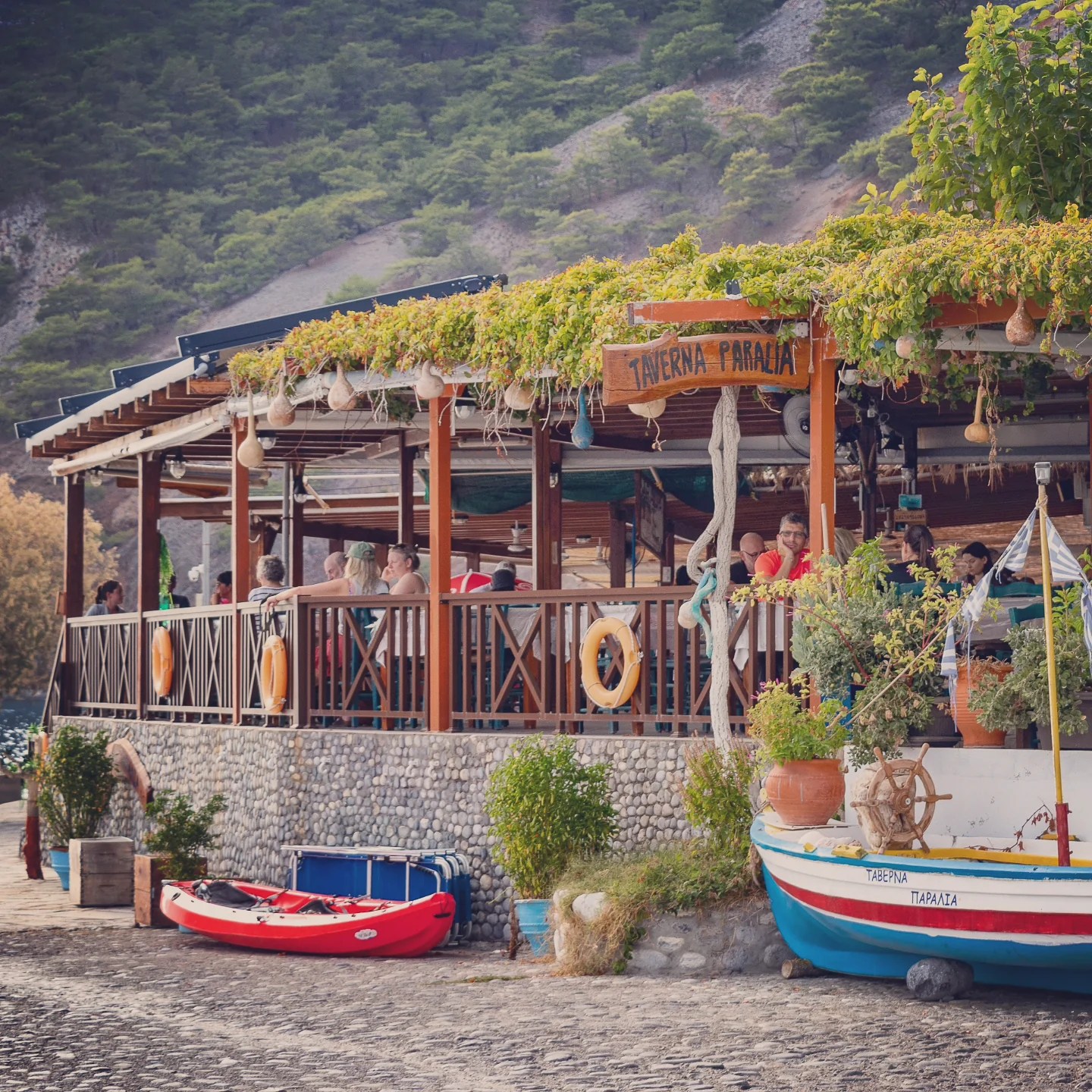
The small town of Agia Roumeli marks the end of the trail and the beginning of a well-earned break. We stopped at Rousios, a taverna set along the path that leads from the national-park exit toward the beach—close enough to catch the first wave of tired hikers, but just outside the busier cluster of seaside restaurants. Its shaded terrace and quiet atmosphere made it an easy place to relax, cool off, and enjoy a late lunch before continuing into the village.



Depending on your timing after the hike, you can explore the town or cool off with a quick swim at the black-sand beach before boarding the ferry.
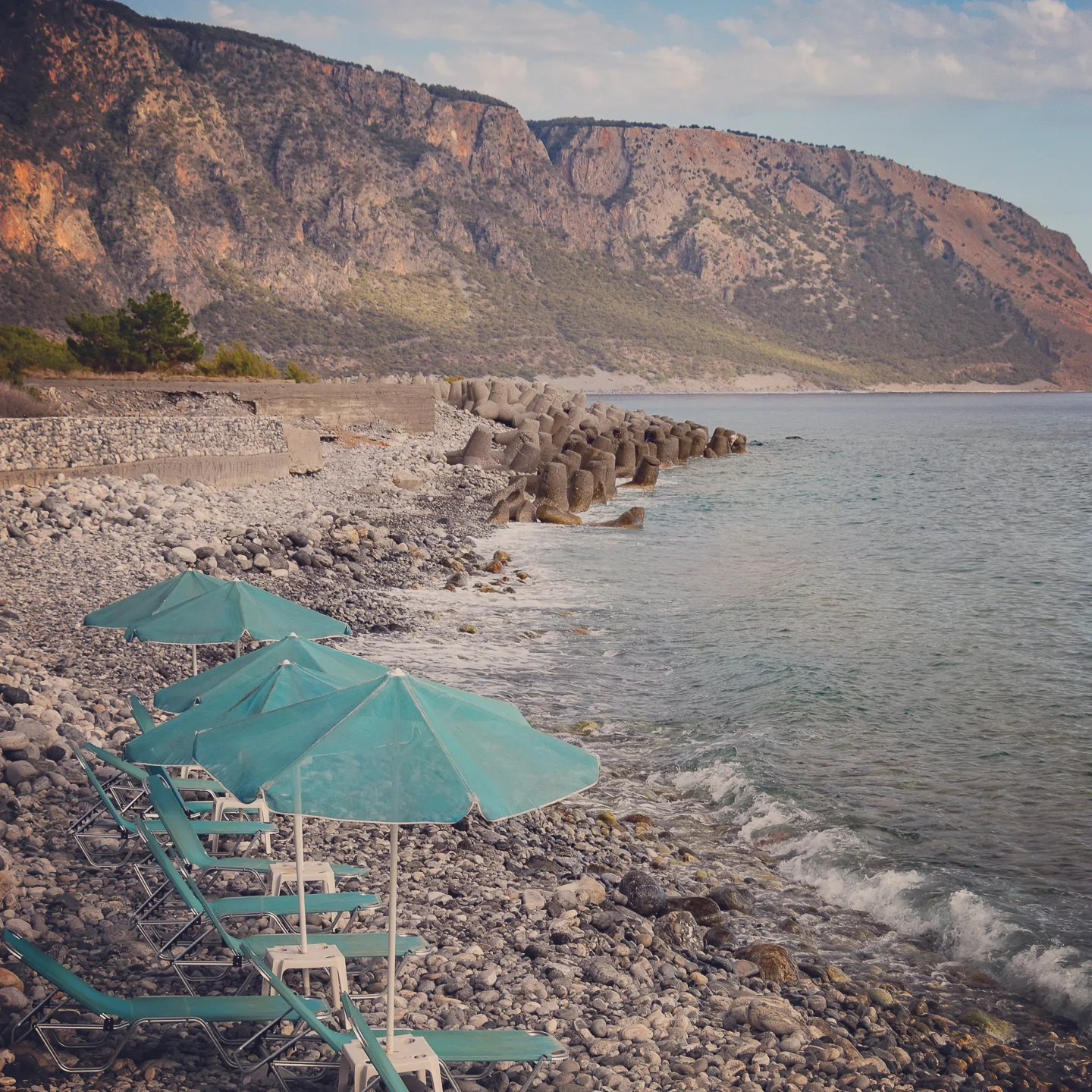
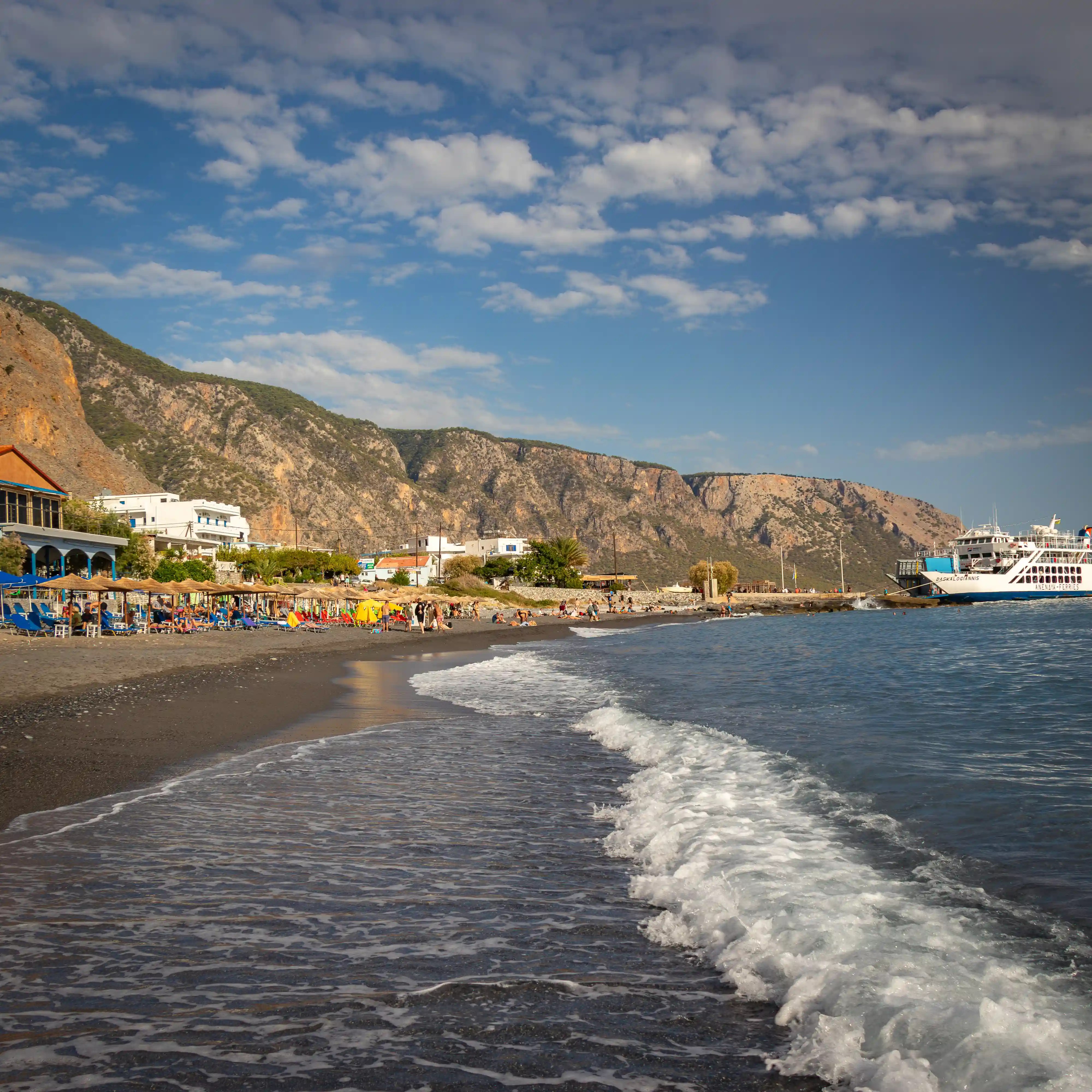
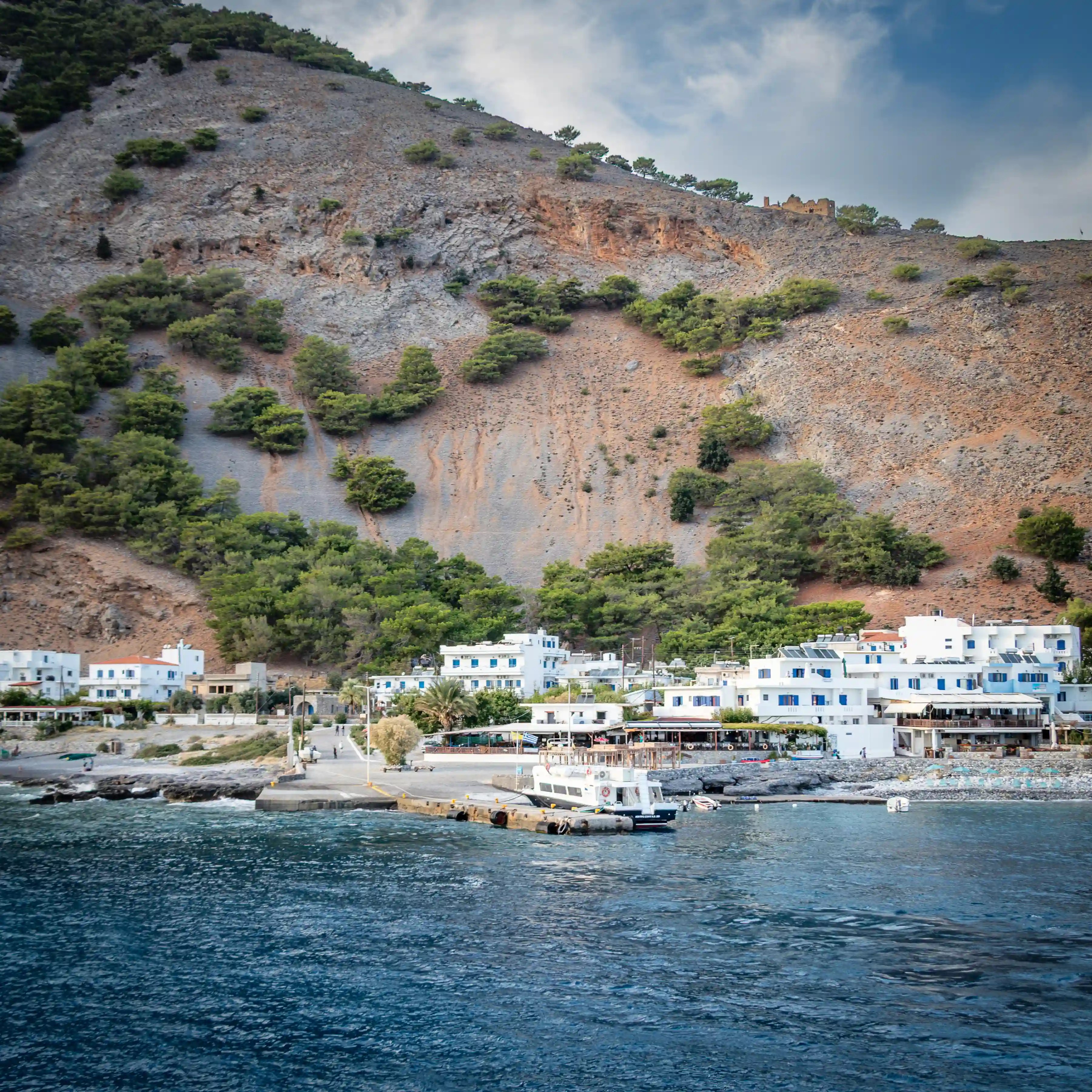
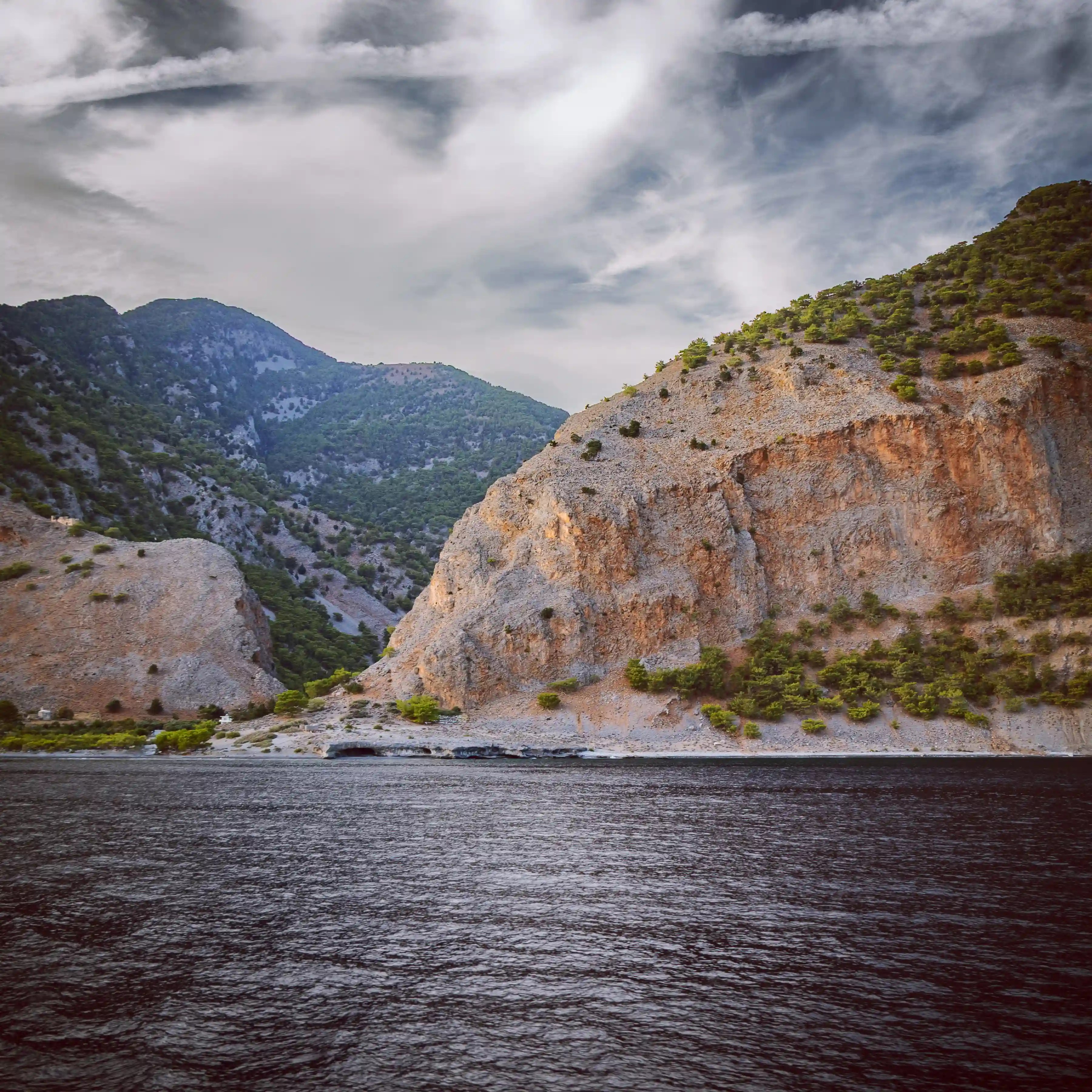
The return boat ride carries you past tiny seaside villages and stretches of coast—some so remote they’re reached only on foot or by boat—a wonderful end to a long but rewarding day.



A Day Trip Along Crete’s Northeastern Coast
Later in the week, we set out on a drive to explore more of the north coast east of Heraklion. The route took us from the quiet harbor of Plaka to the historic island of Spinalonga, with stops in Elounda and Agios Nikolaos along the way. All four places sit within a short distance of one another, but each offered something completely different—from history to scenery to colorful waterfronts.
Plaka: A Quiet Waterfront and a Short Crossing
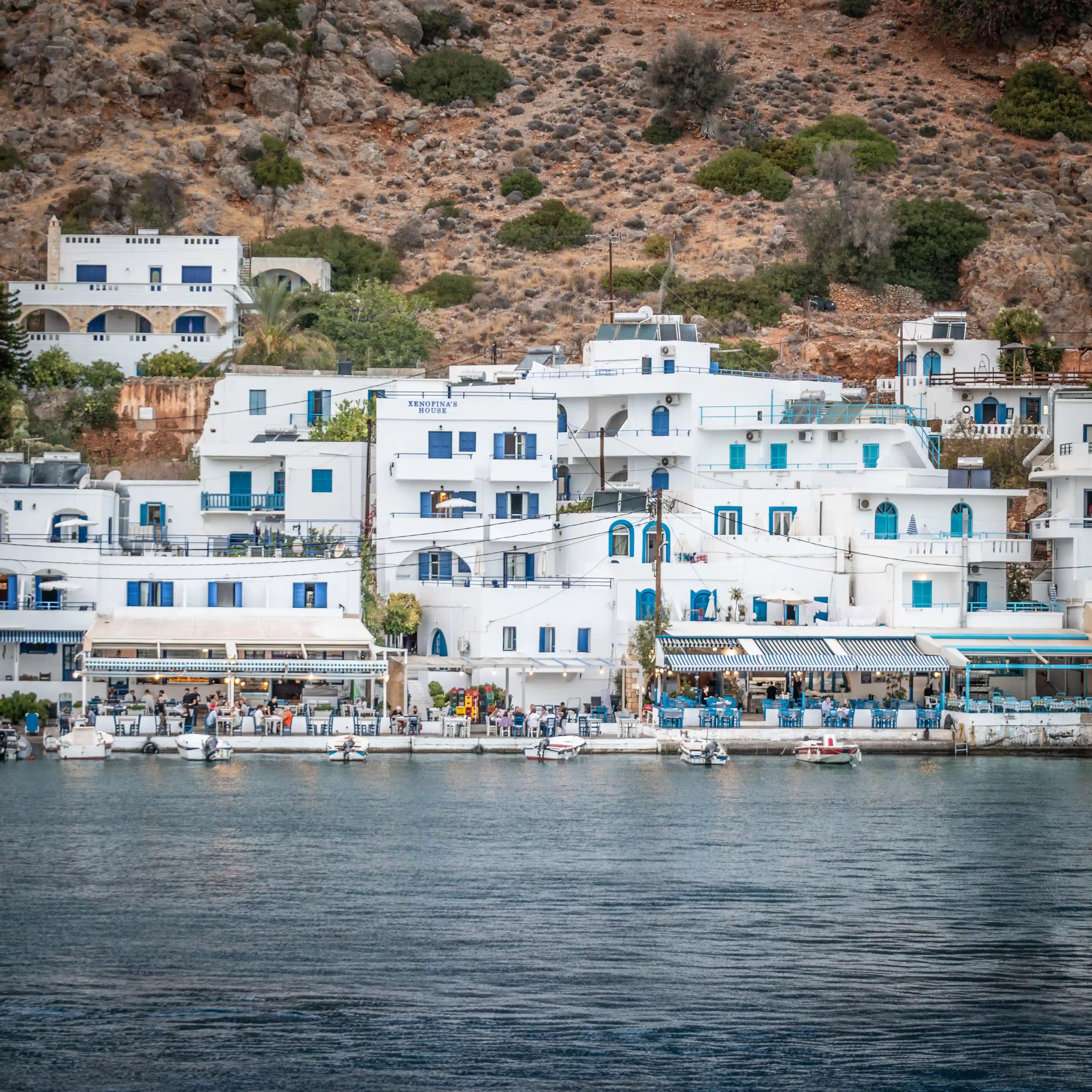
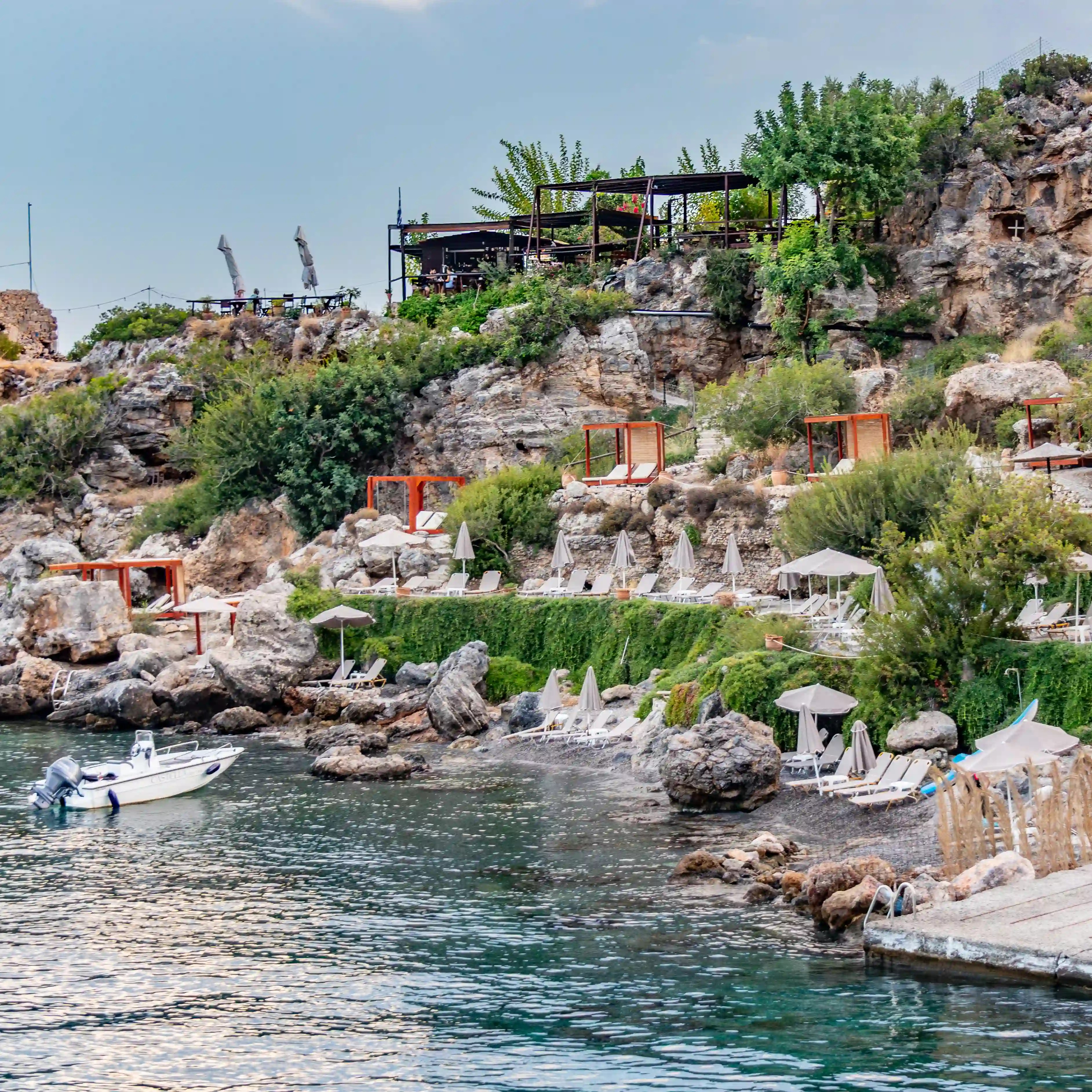
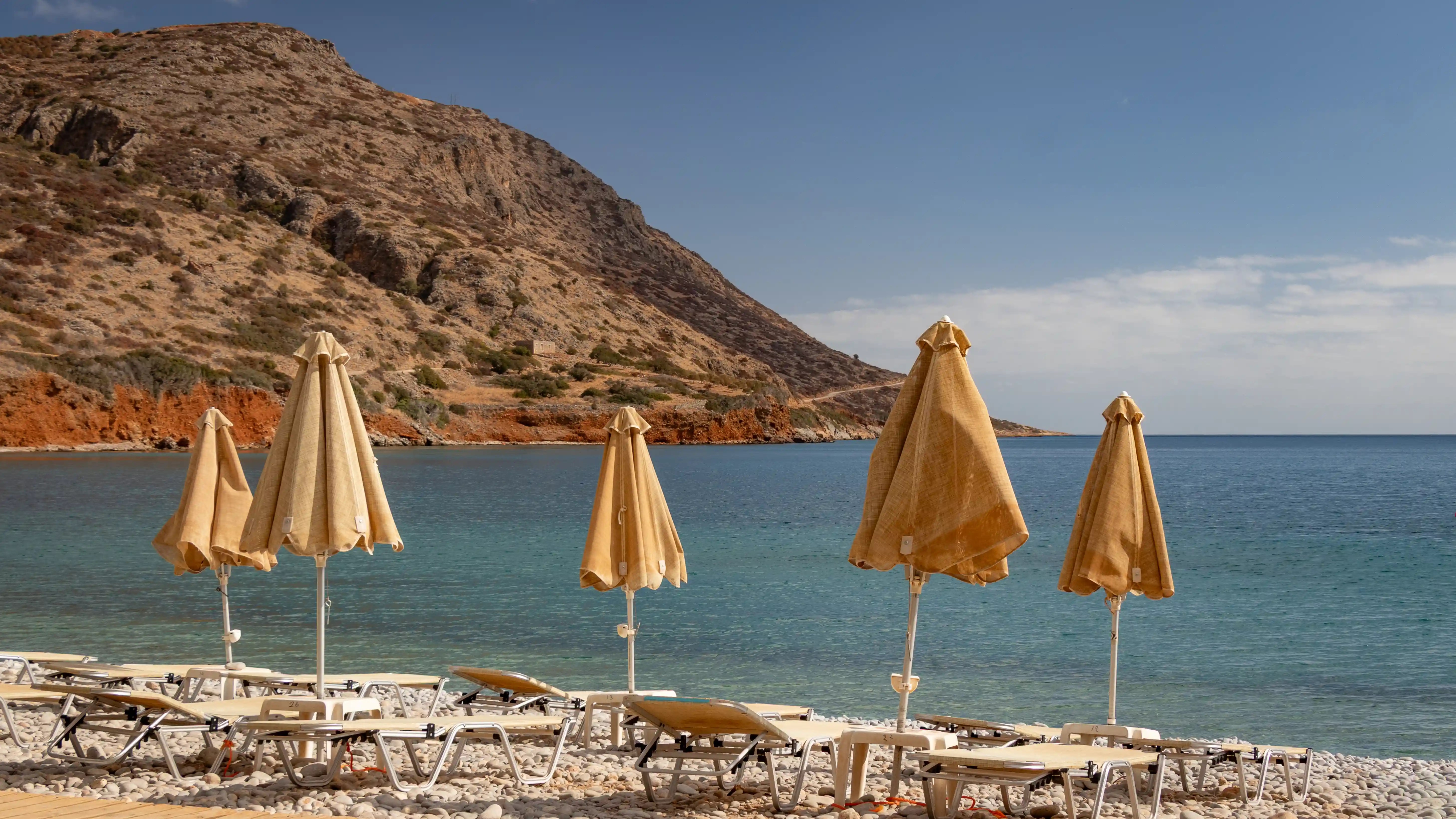
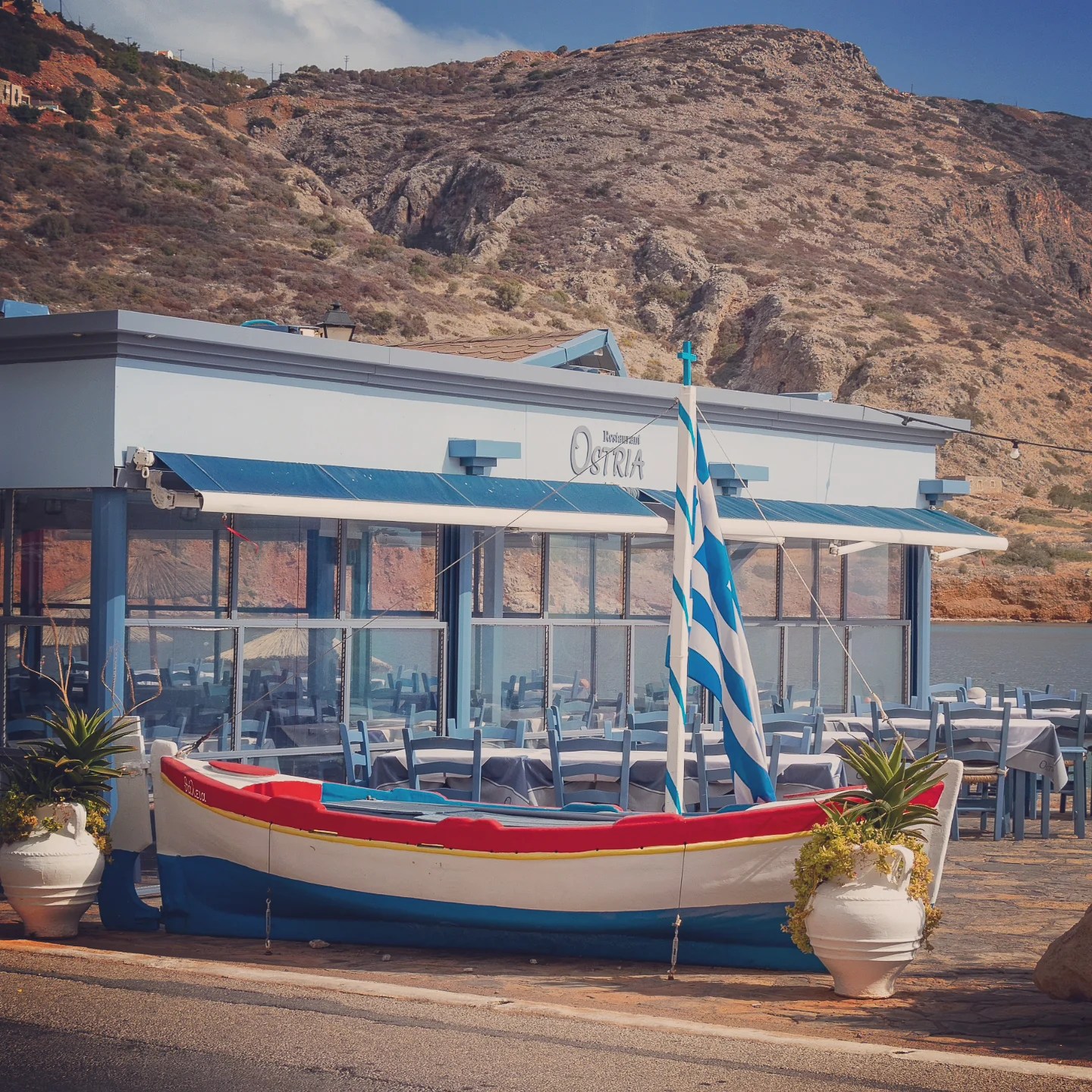
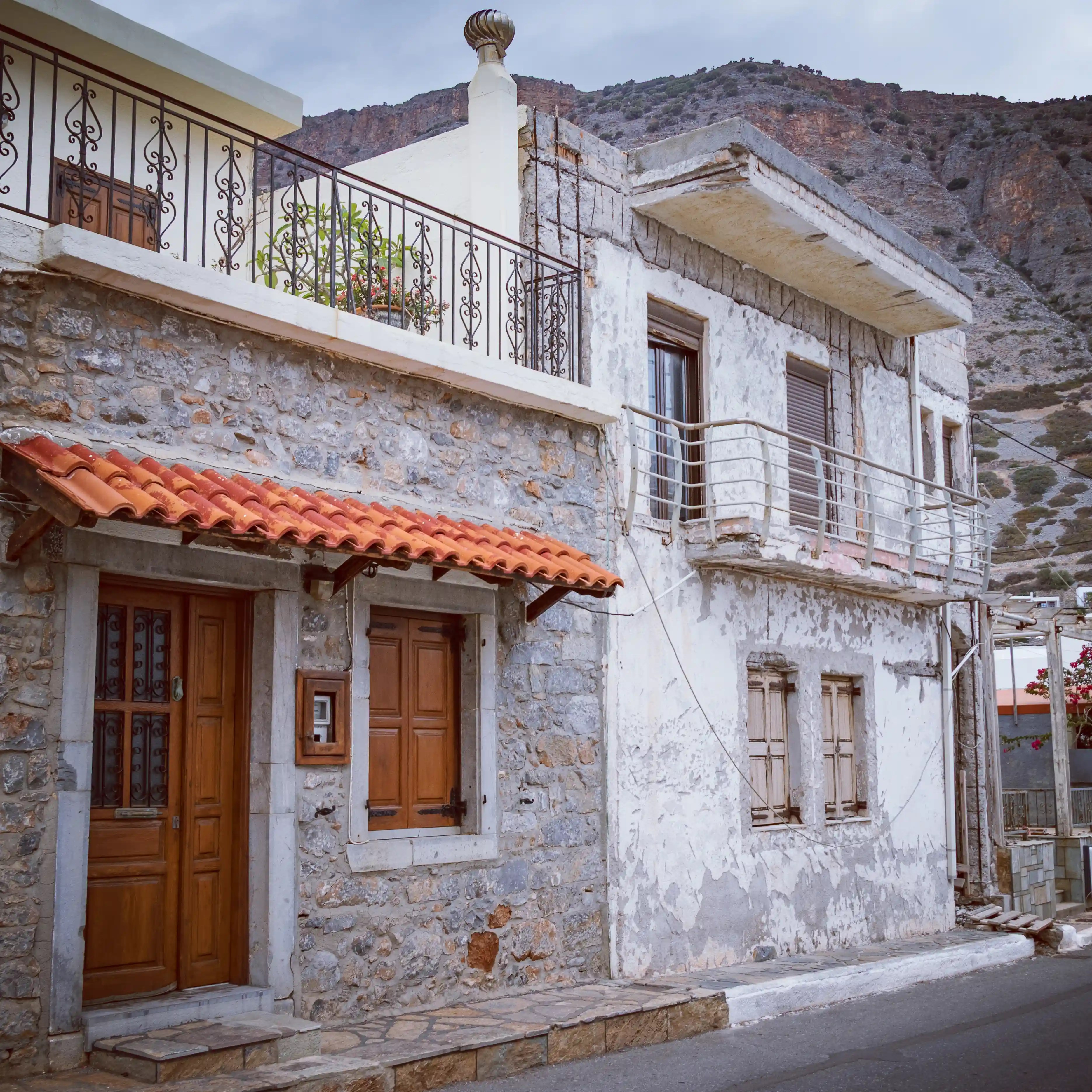
Our first stop was the village of Plaka, a small waterfront town with whitewashed buildings, calm water, and fishing boats lined up along the pier. Boats to Spinalonga Island leave from here every 30 minutes throughout the day; we used the Plaka Boat Co-operation, which runs a quick ten-minute crossing. We caught the boat over to Spinalonga first and then returned to Plaka afterward to explore the shoreline and enjoy a delicious fish lunch at Gorgona Taverna, one of the waterfront spots overlooking the bay.




Spinalonga Island: A Small Island with an Important Story
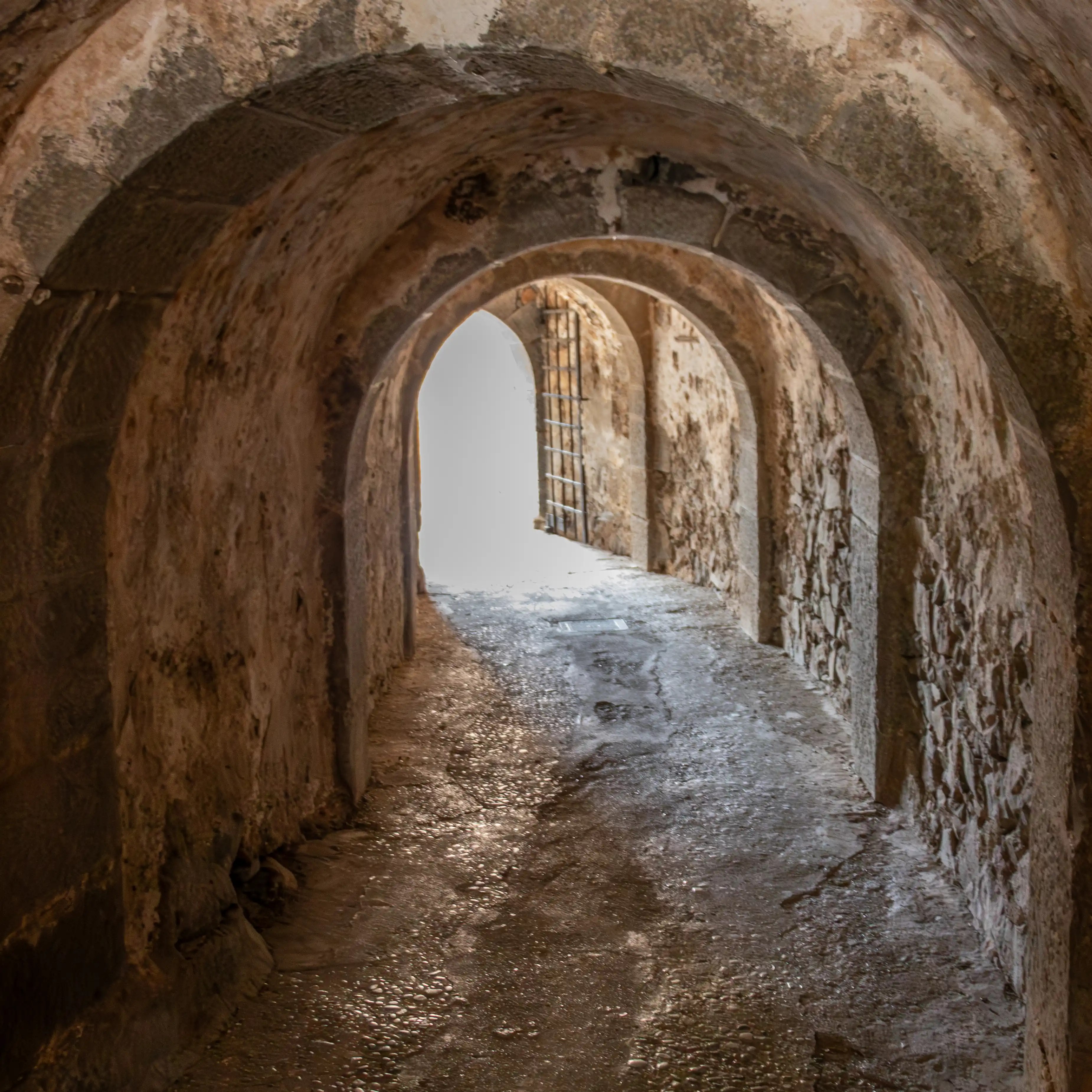
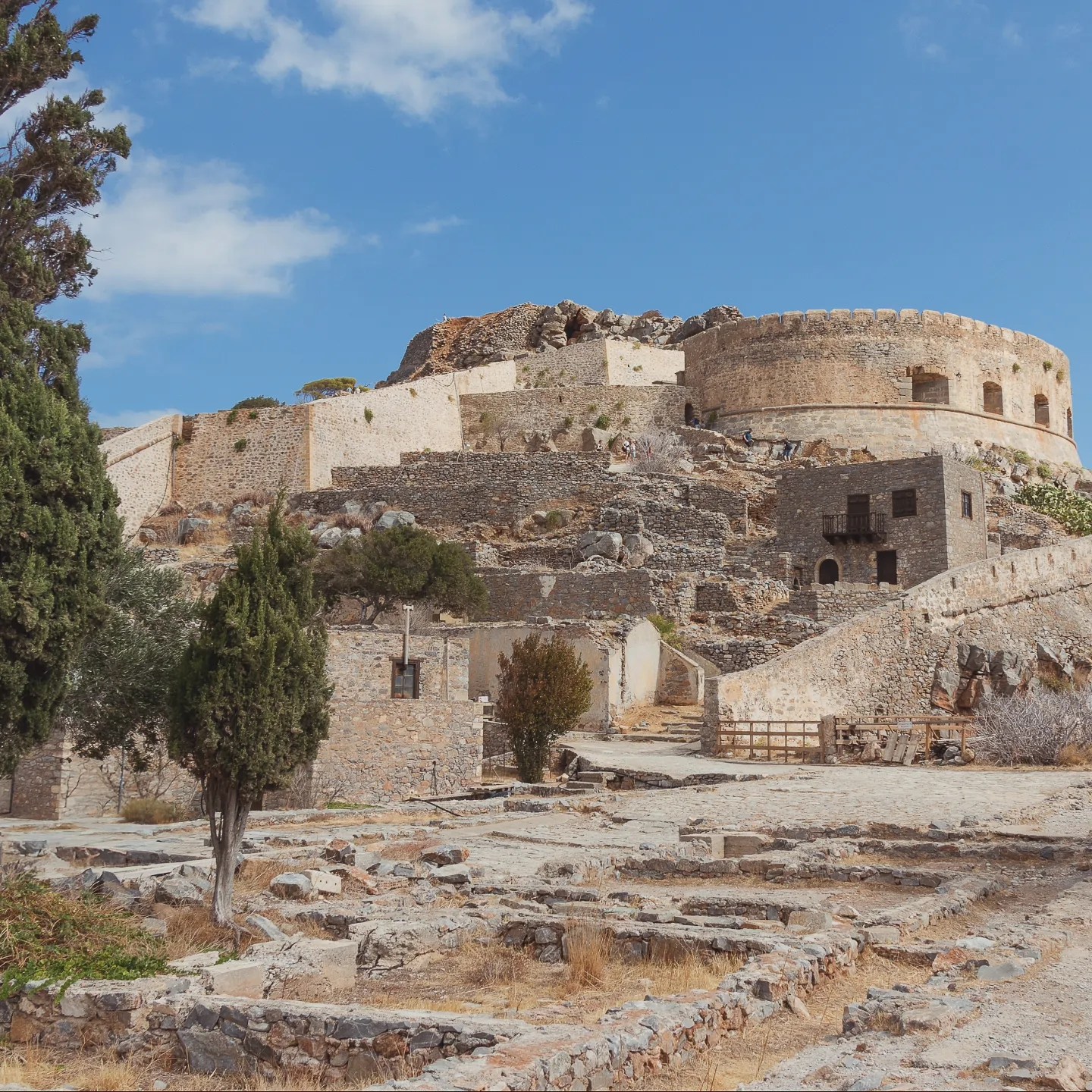
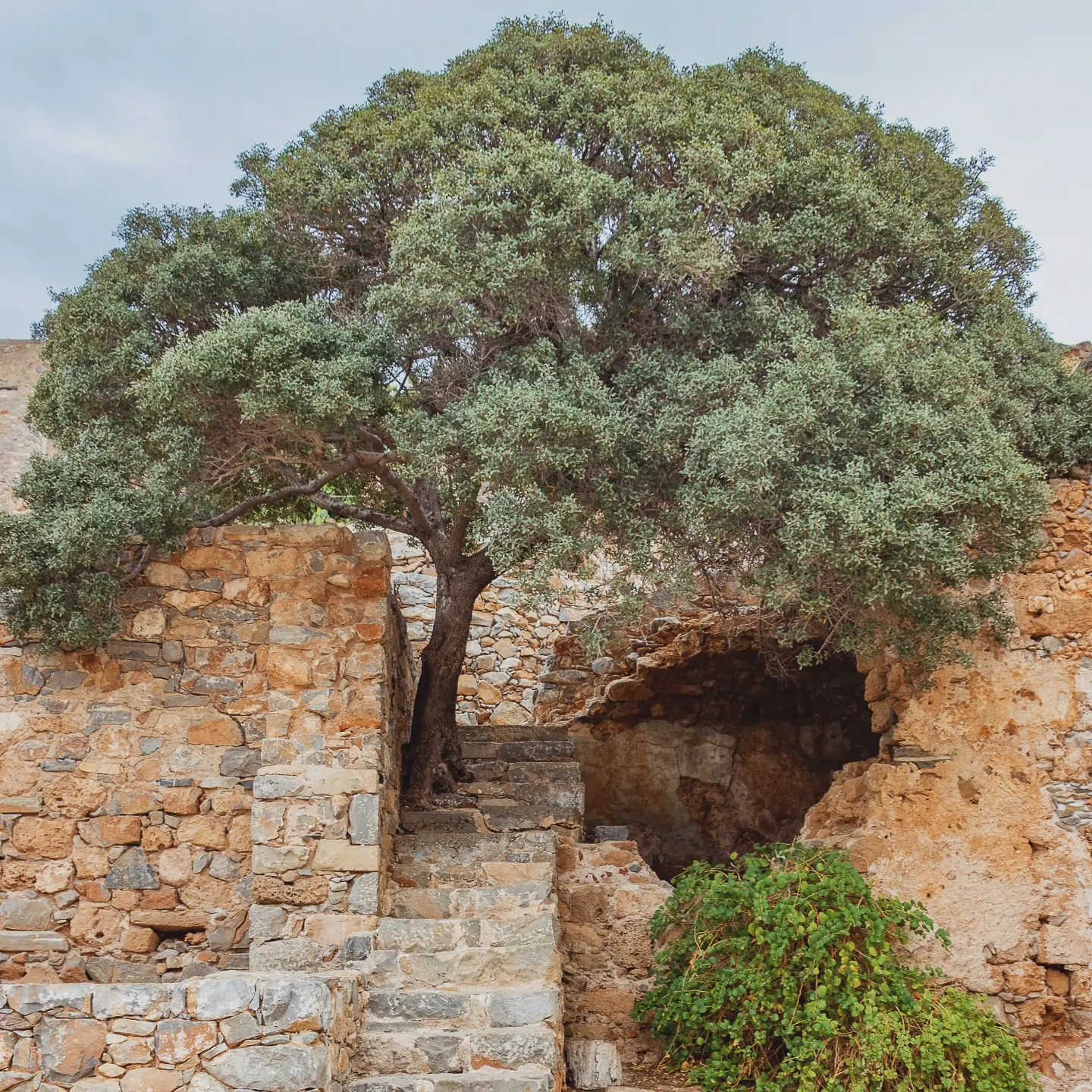
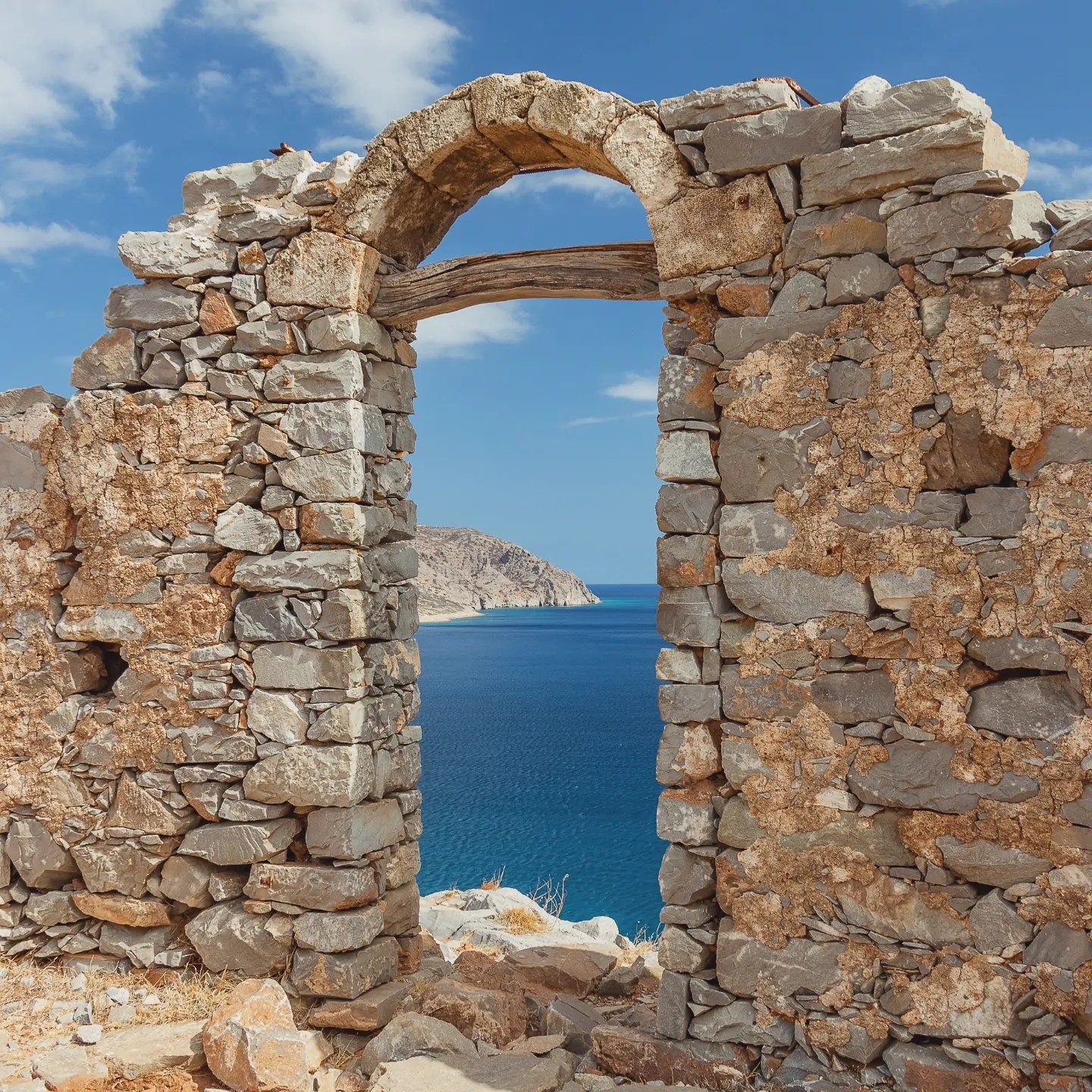
From the boat, Spinalonga looks like another rocky islet with remnants of old fortifications—but once you step through the arched entrance tunnel, the weight of its history settles in.
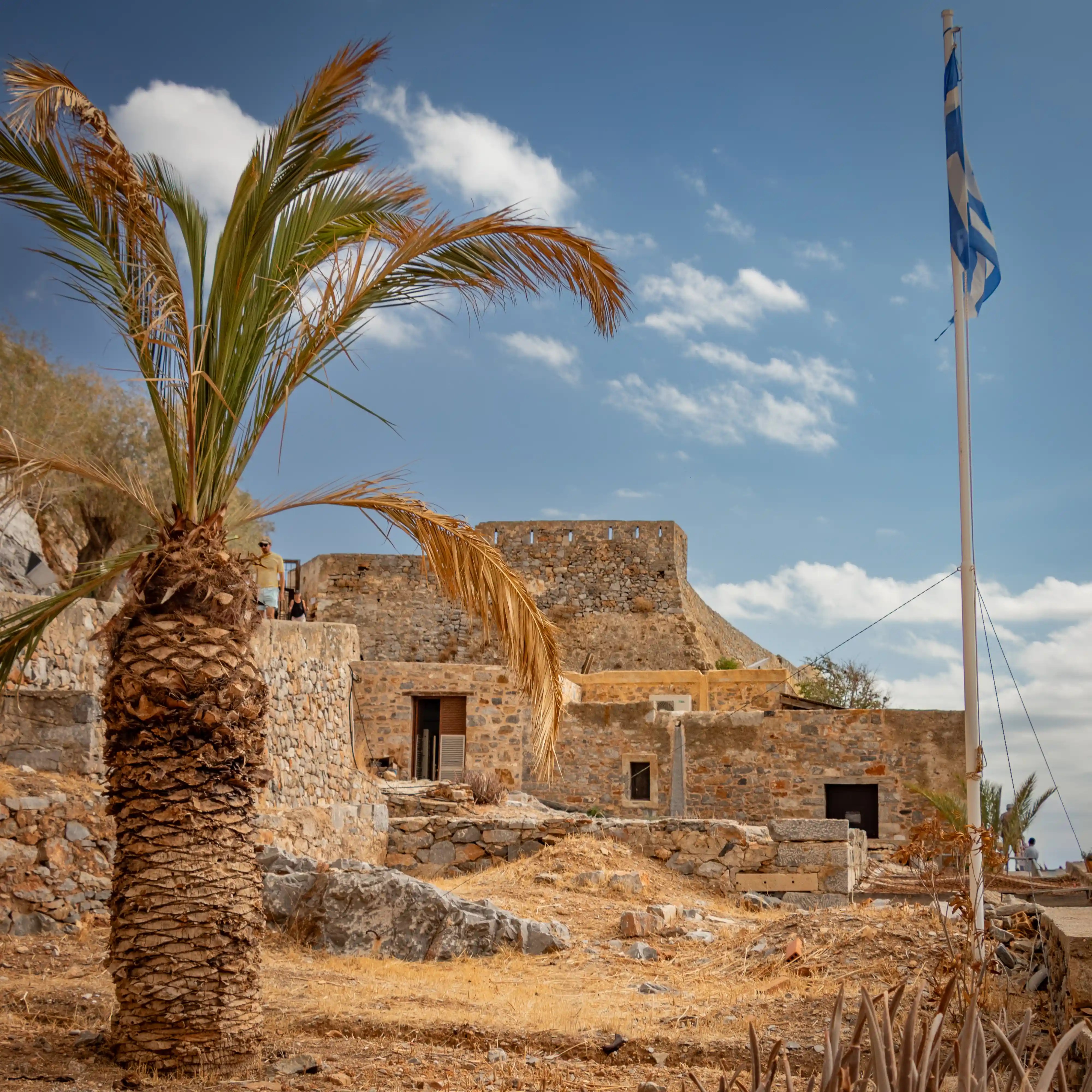
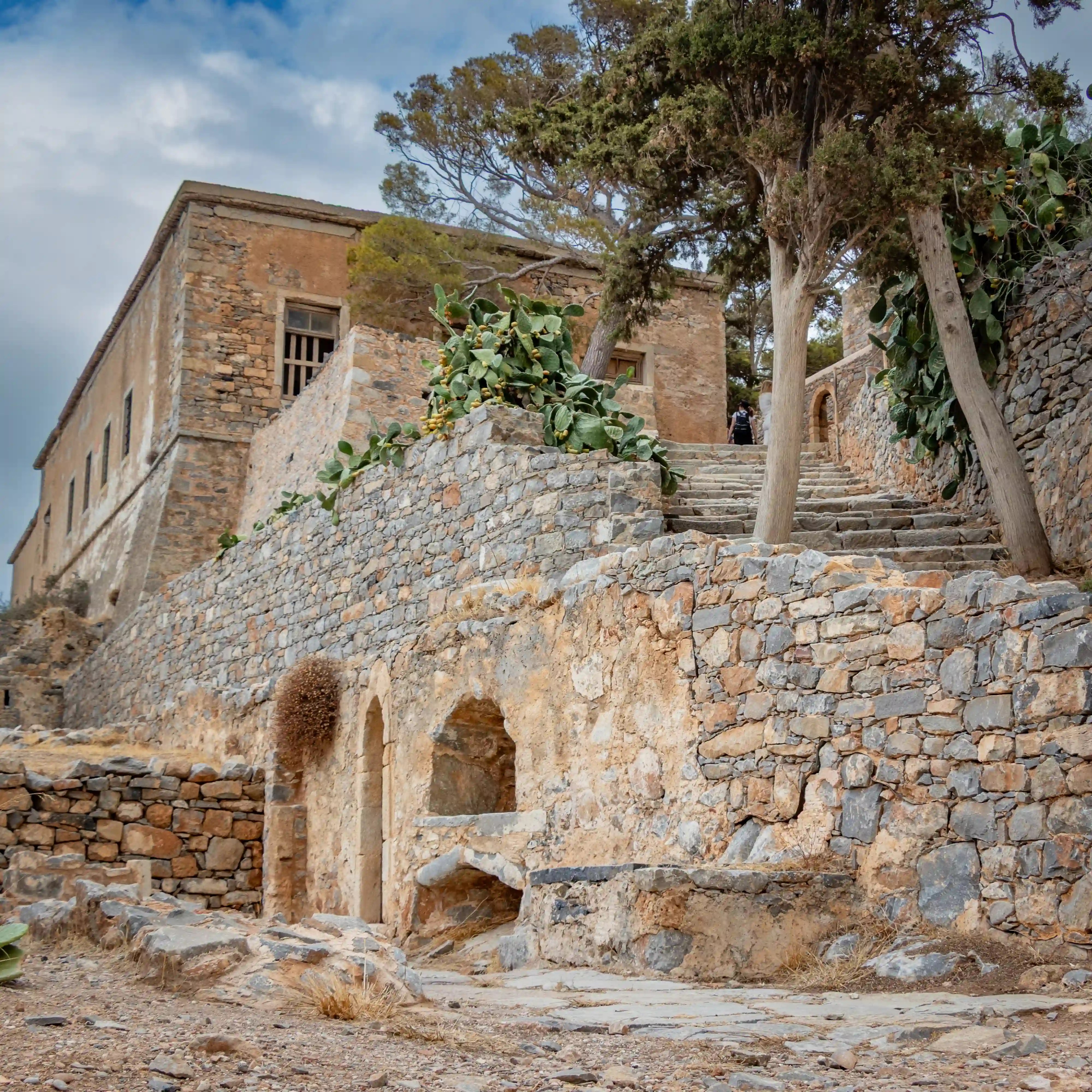
Spinalonga was fortified by the Venetians in the 16th century and later served as a leper colony from 1903 to 1957, one of the last active ones in Europe. For decades, people with leprosy were forcibly relocated here, often knowing they would never return home. Walking through the same tunnel they entered—knowing what it meant for them—is one of the most emotional parts of the visit.
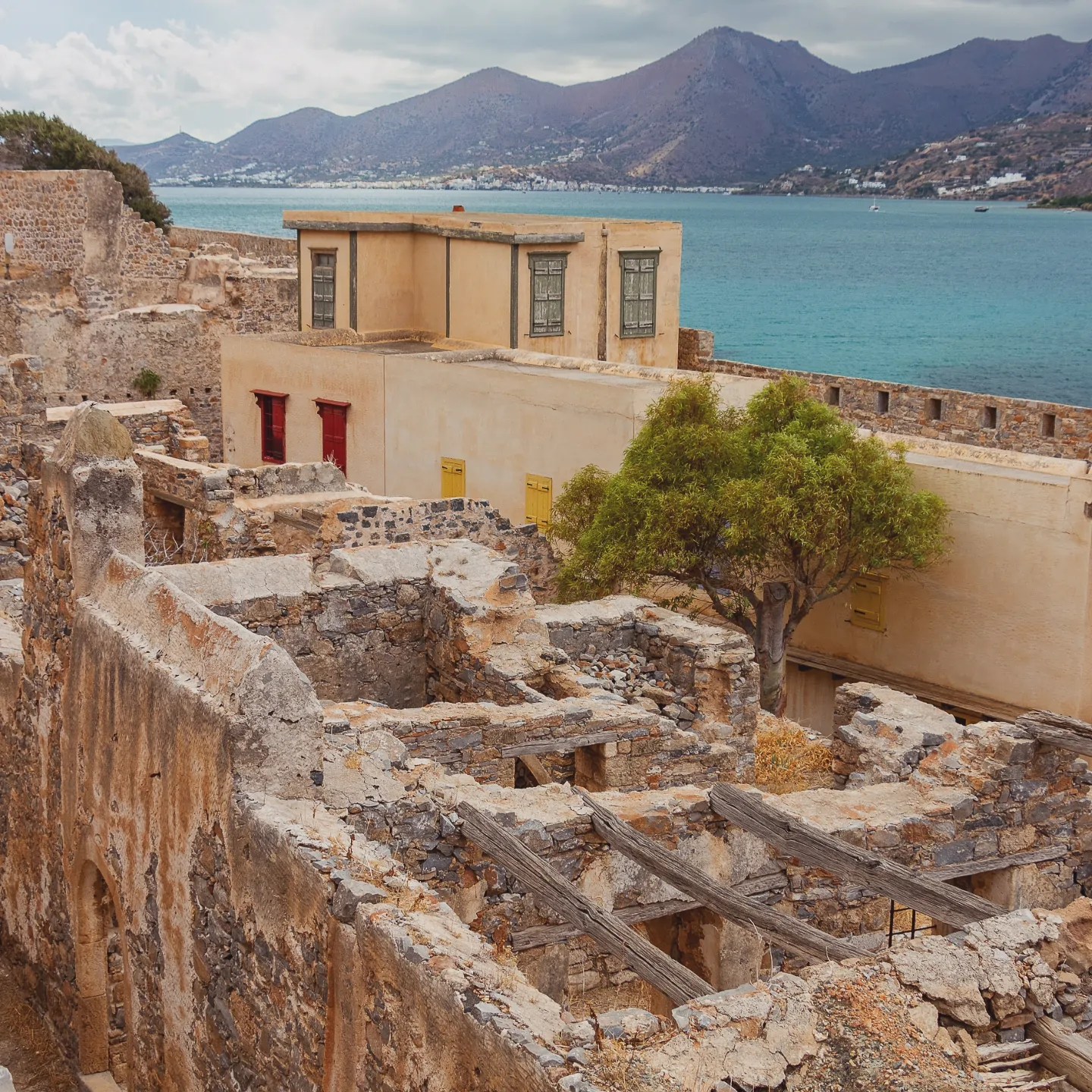
Much of Spinalonga’s former community is still visible today: the small houses and narrow alleyways where daily life unfolded, the simple stone graves of the island’s cemetery, and several chapels, including Saint Panteleimon—closely associated with healing. A small museum now provides historical context, and walking the paths around the island gives you a sense of the settlement’s scale along with views back toward Plaka and the rocky coastline.









For anyone interested in understanding the human stories connected to Spinalonga, I highly recommend Victoria Hislop’s novel The Island and its sequel One August Night—historical-fiction works that portray the emotional reality of life here during the leper colony years.
Elounda: A Calm Stop Along Mirabello Bay
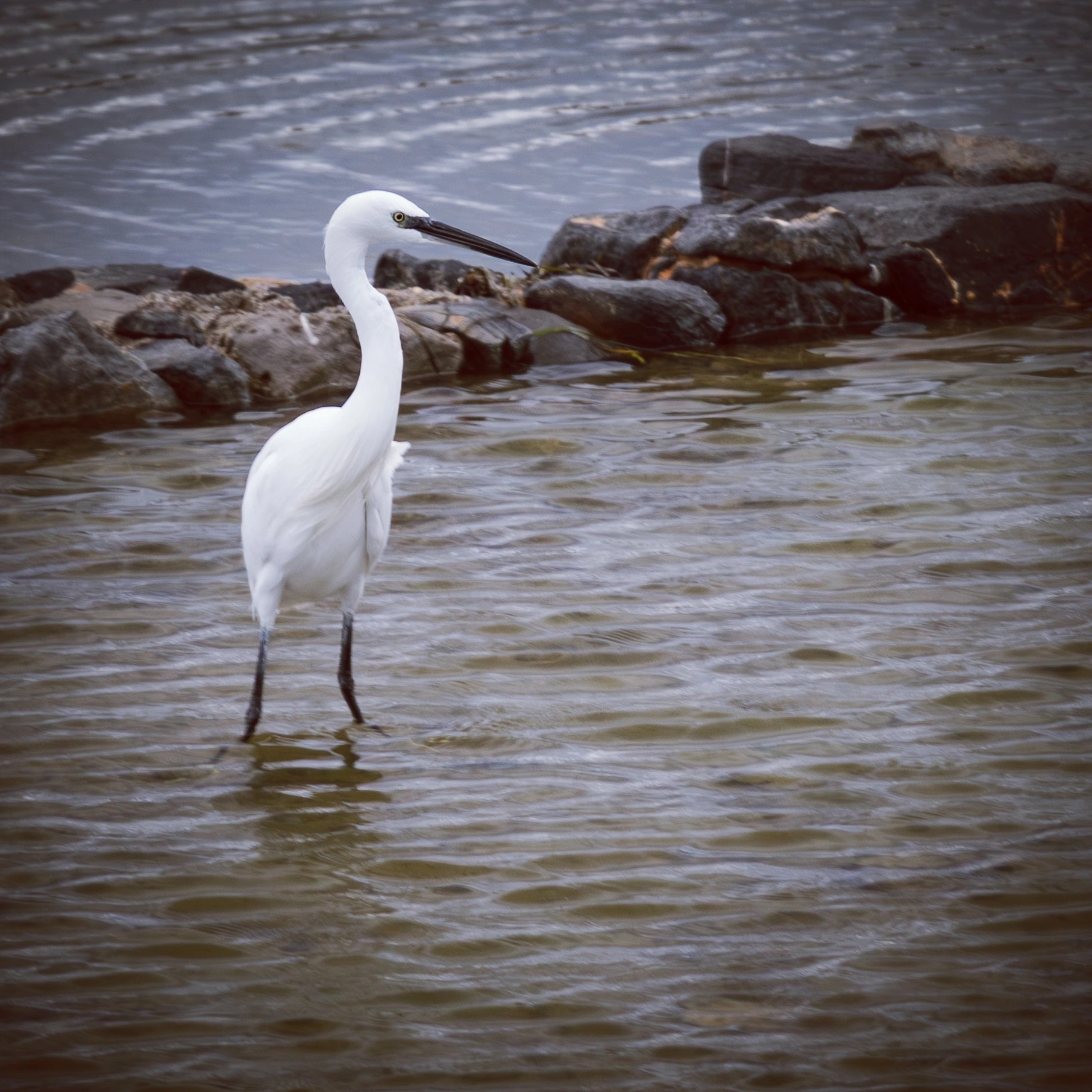
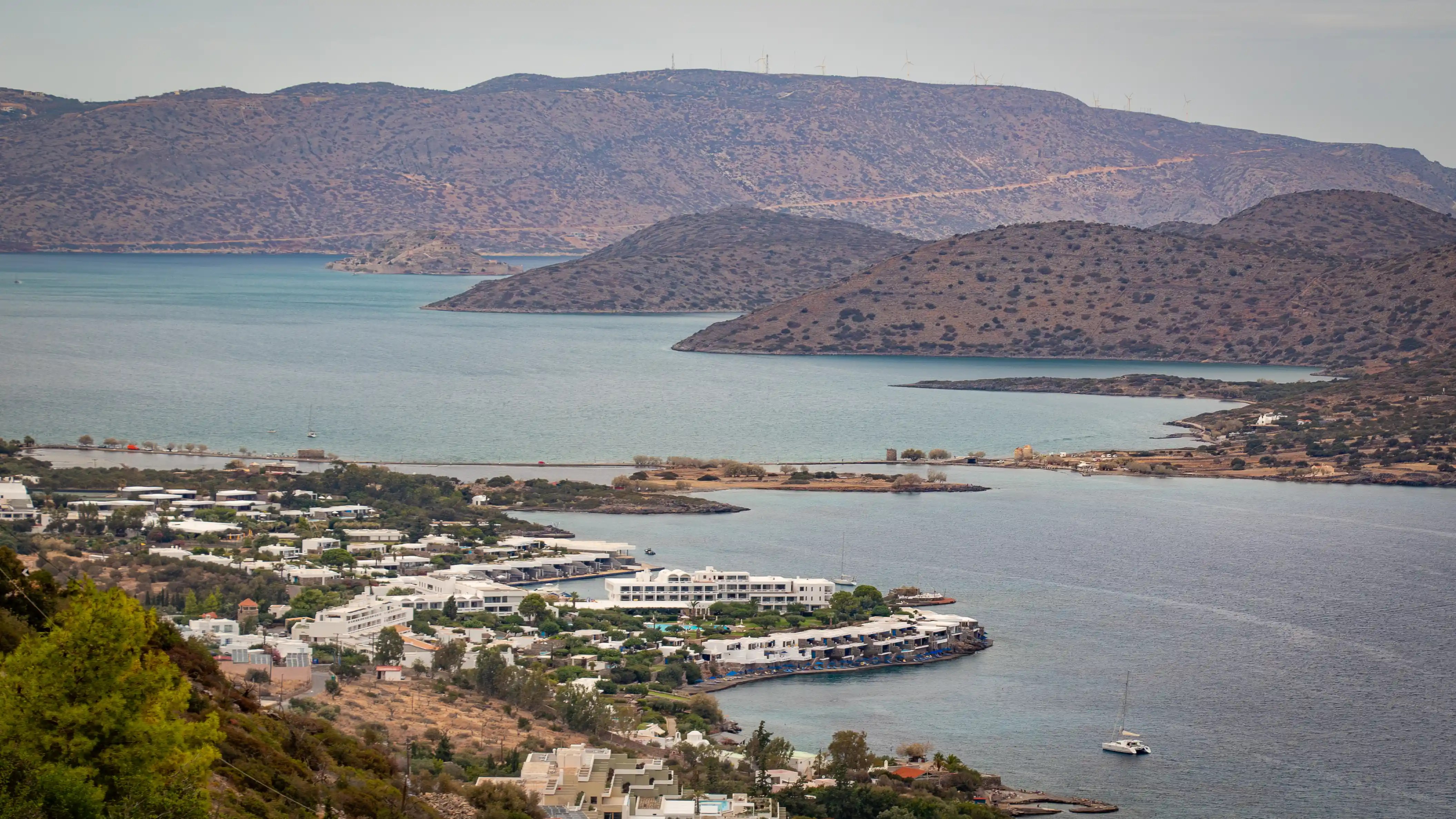
On our way south, we made a short stop in Elounda, once a fishing village and now a luxurious coastal town on the Mirabello Bay, where the scenery opens up beautifully as you approach the old causeway near Olous, the remains of an ancient city now partially underwater beside the modern causeway. Even on an overcast day, the mountains across the water created a striking backdrop. We didn’t stay long—just enough time to stretch our legs and take in the view—but it’s the kind of place that would be stunning in bright sunshine.



Agios Nikolaos: Lakeside Views & Colorful Streets
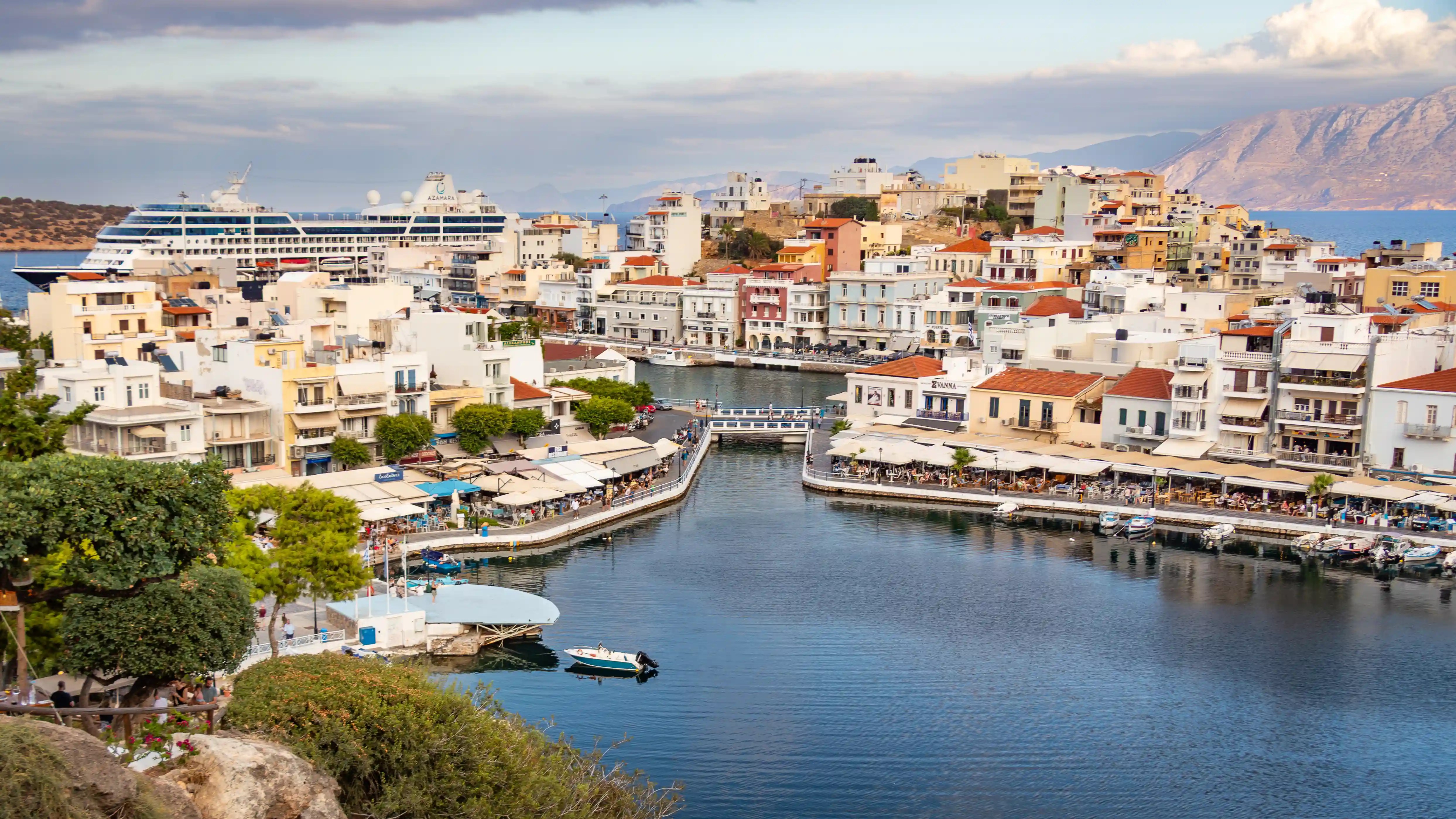
Our final stop of the day was Agios Nikolaos, a lively town built around the small Lake Voulismeni. The lake connects to the sea by a narrow channel and is surrounded by cafés, restaurants, and pastel-colored buildings—easy to enjoy from any angle, but especially beautiful from the viewpoints above. According to local legend, the Greek goddesses Athena and Artemis once bathed in its deep waters, adding a touch of mythology to an already striking setting.
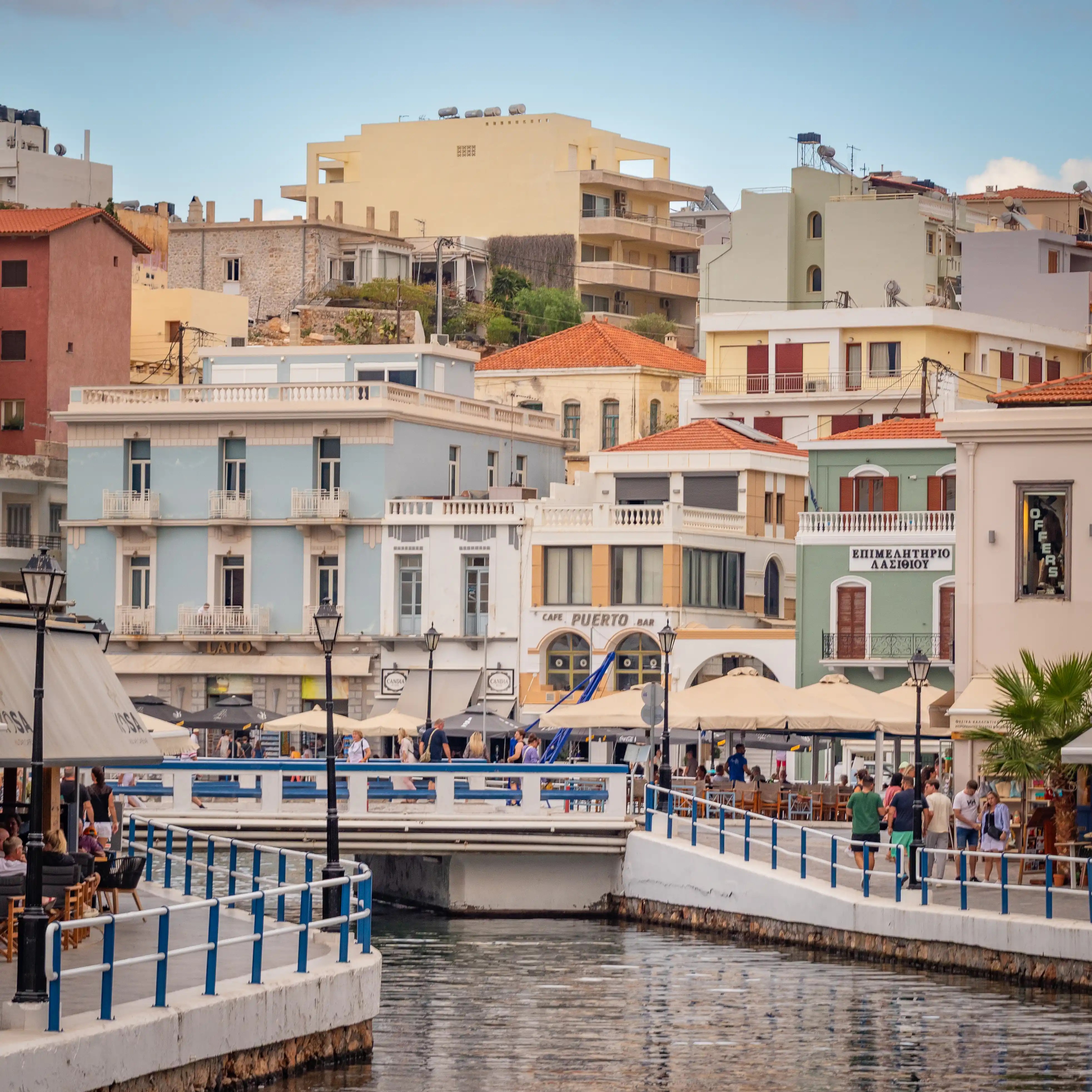
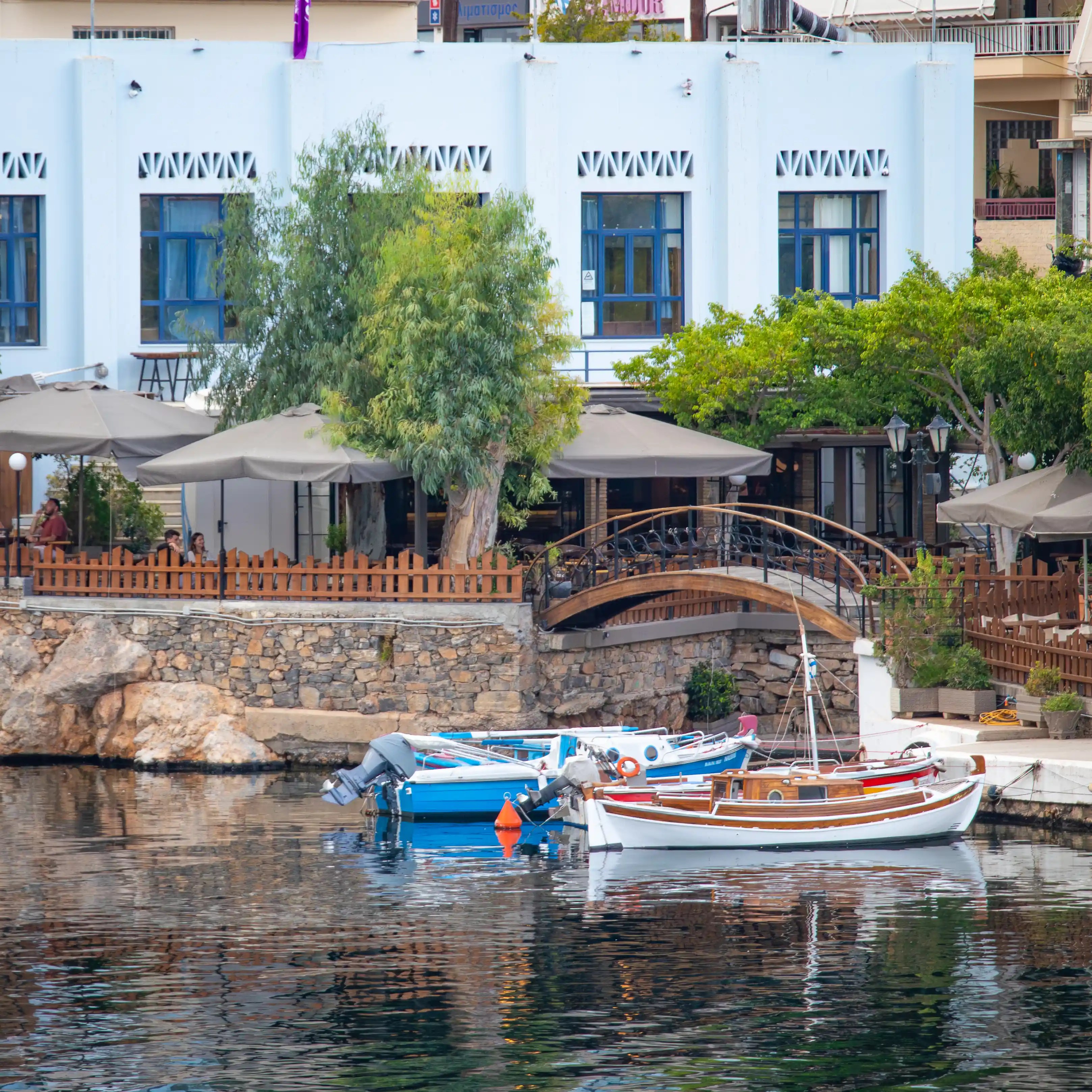

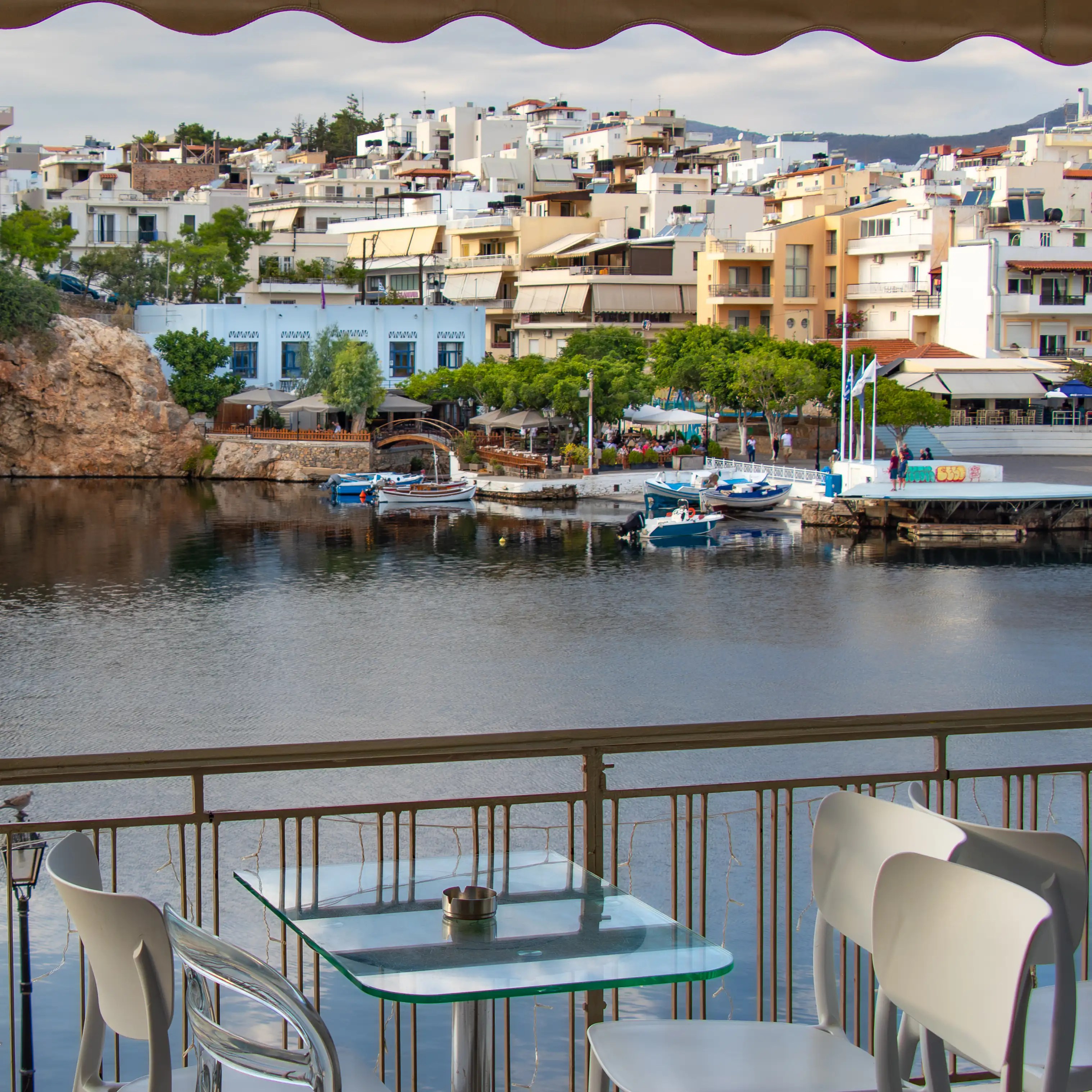

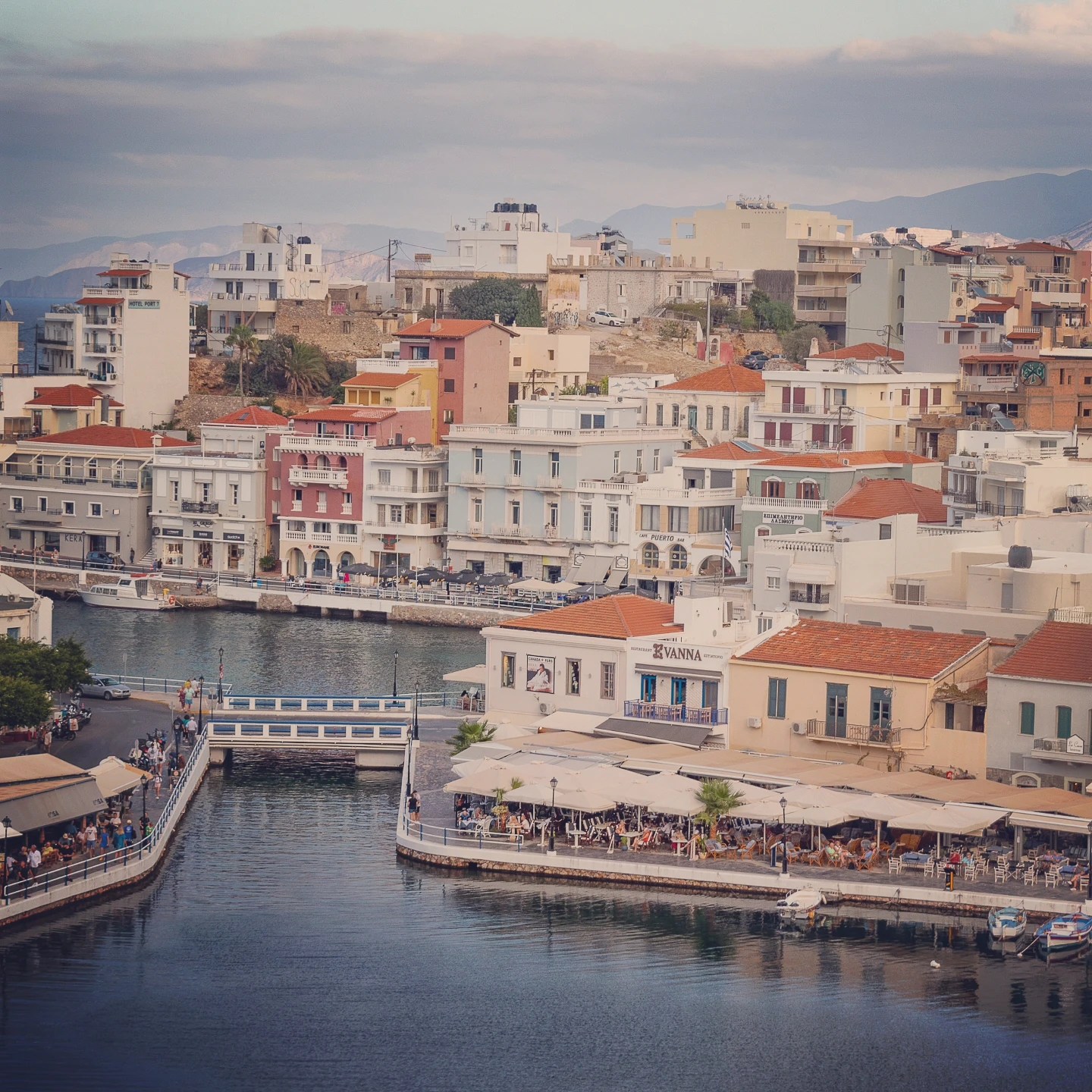


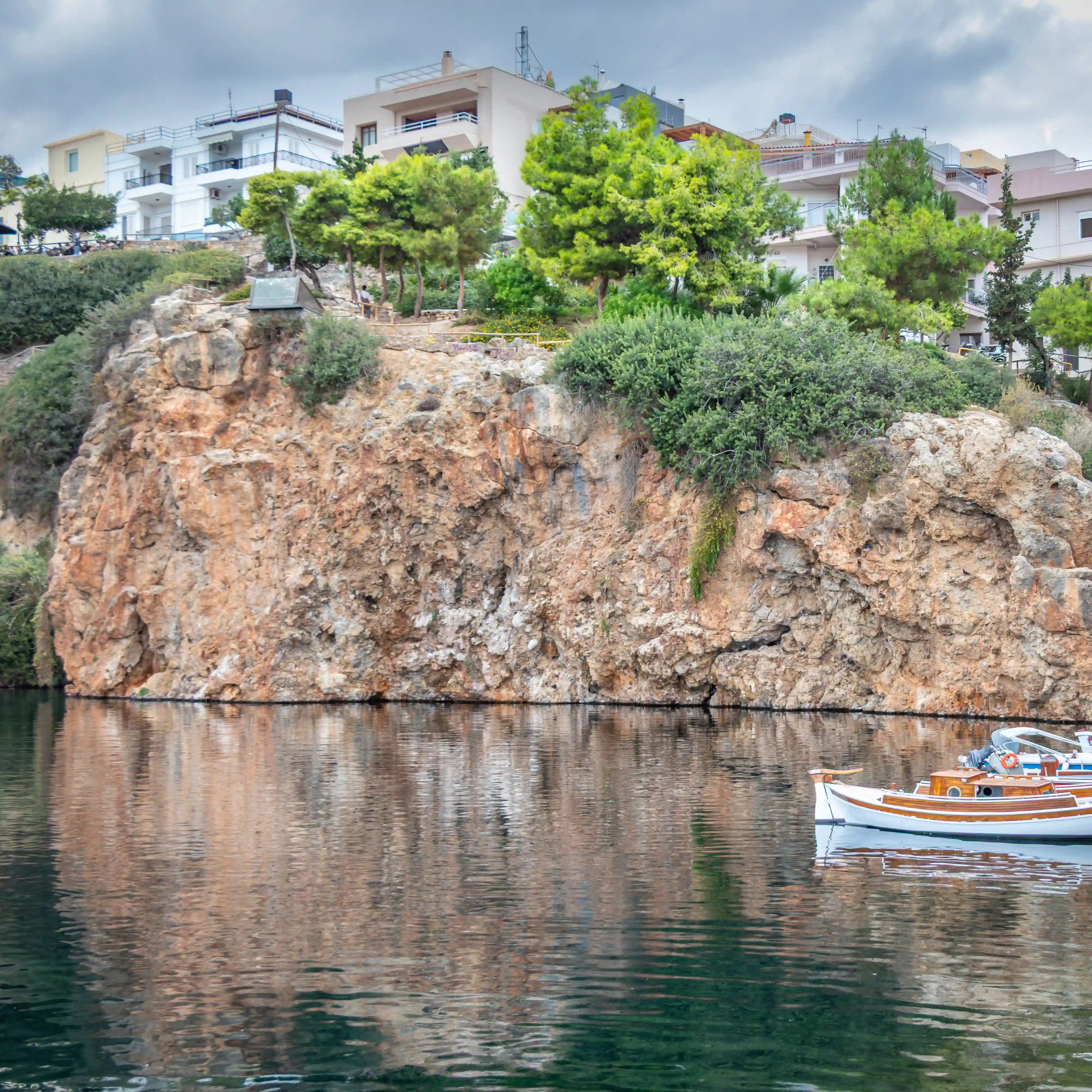
From the higher viewpoints, you can see the lake, the curved waterfront lined with outdoor seating, and the mountains standing quietly behind the town. We spent time exploring side streets, admiring the small mosaic works scattered around the area, and taking in reflections of the cliffs and boats on the water.
A little further outside town you’ll find a number of beautiful beaches along the coast, as well as the nearby mountain villages of Kritsa and Kroustas, each known for traditional tavernas, local wine, and handmade crafts.
Rethymno: A Seaside Town Shaped by Centuries
We spent another day exploring Rethymno during our Crete adventure, immersing ourselves in a town shaped by many eras. The area around modern Rethymno has been inhabited since the Neolithic period, and an ancient settlement known as Rhithymna once stood nearby.
When the Republic of Venice took control in the 13th century, they rebuilt large parts of Rethymno—narrow streets, arches, stairways, and stone façades—creating much of what visitors see in the Old Town today. The town fell to the Ottoman Empire in the mid-17th century and remained under Ottoman rule for nearly three centuries, adding mosques, minarets, and other examples of Ottoman-era architecture to the urban landscape. Together, these layers of Venetian and Ottoman influence are part of what make Rethymno one of the best-preserved old towns in Crete.
The Venetian Harbor & Lighthouse
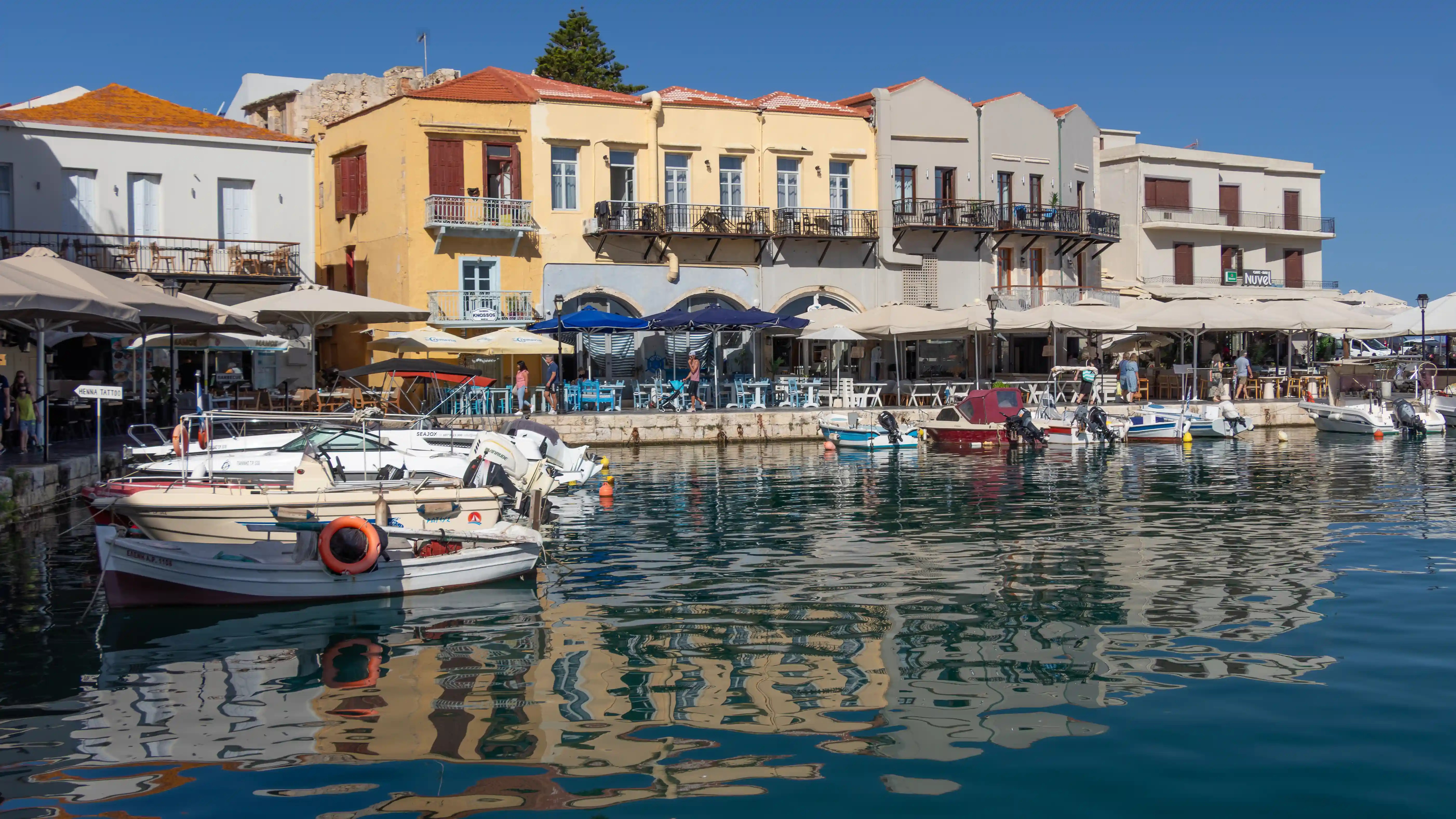
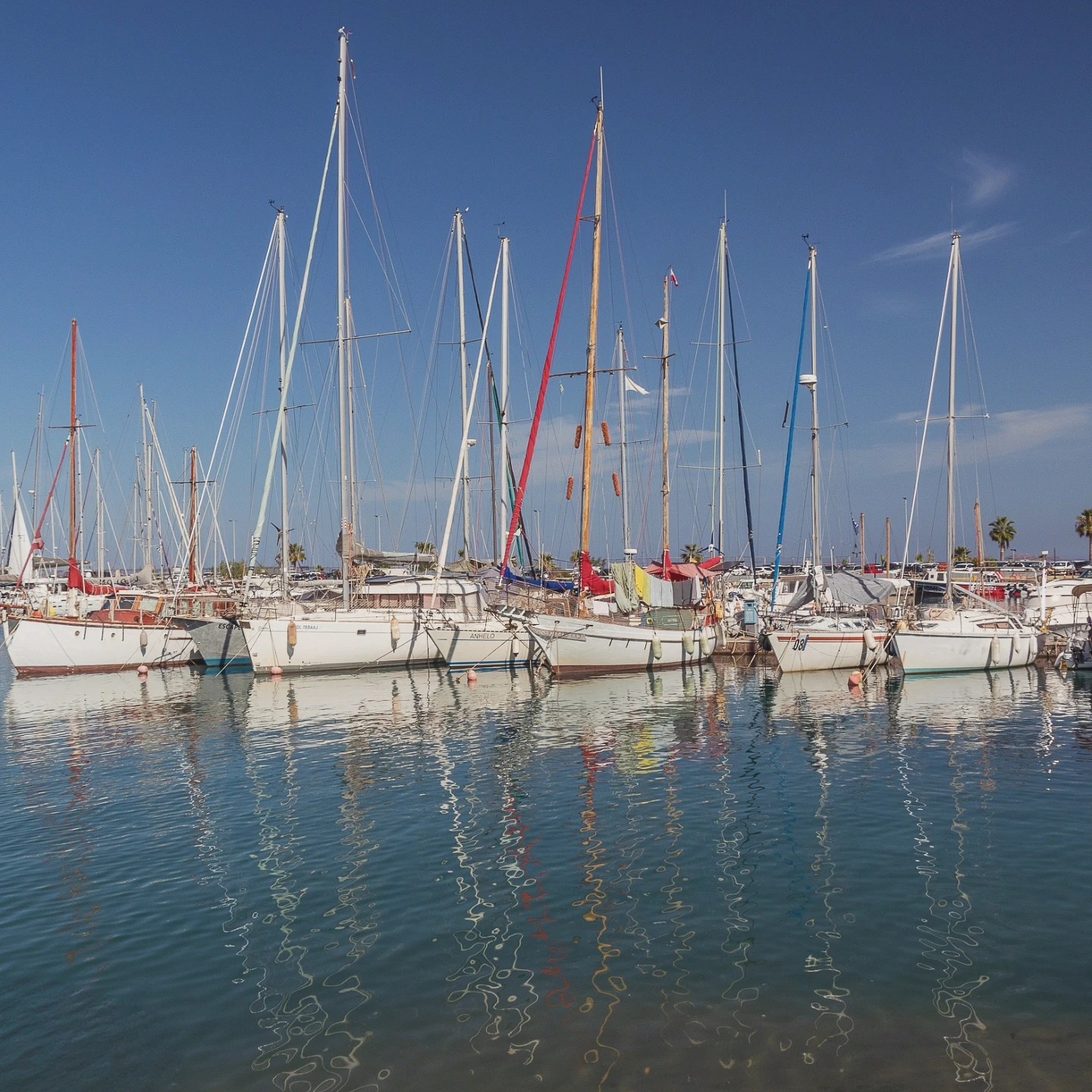
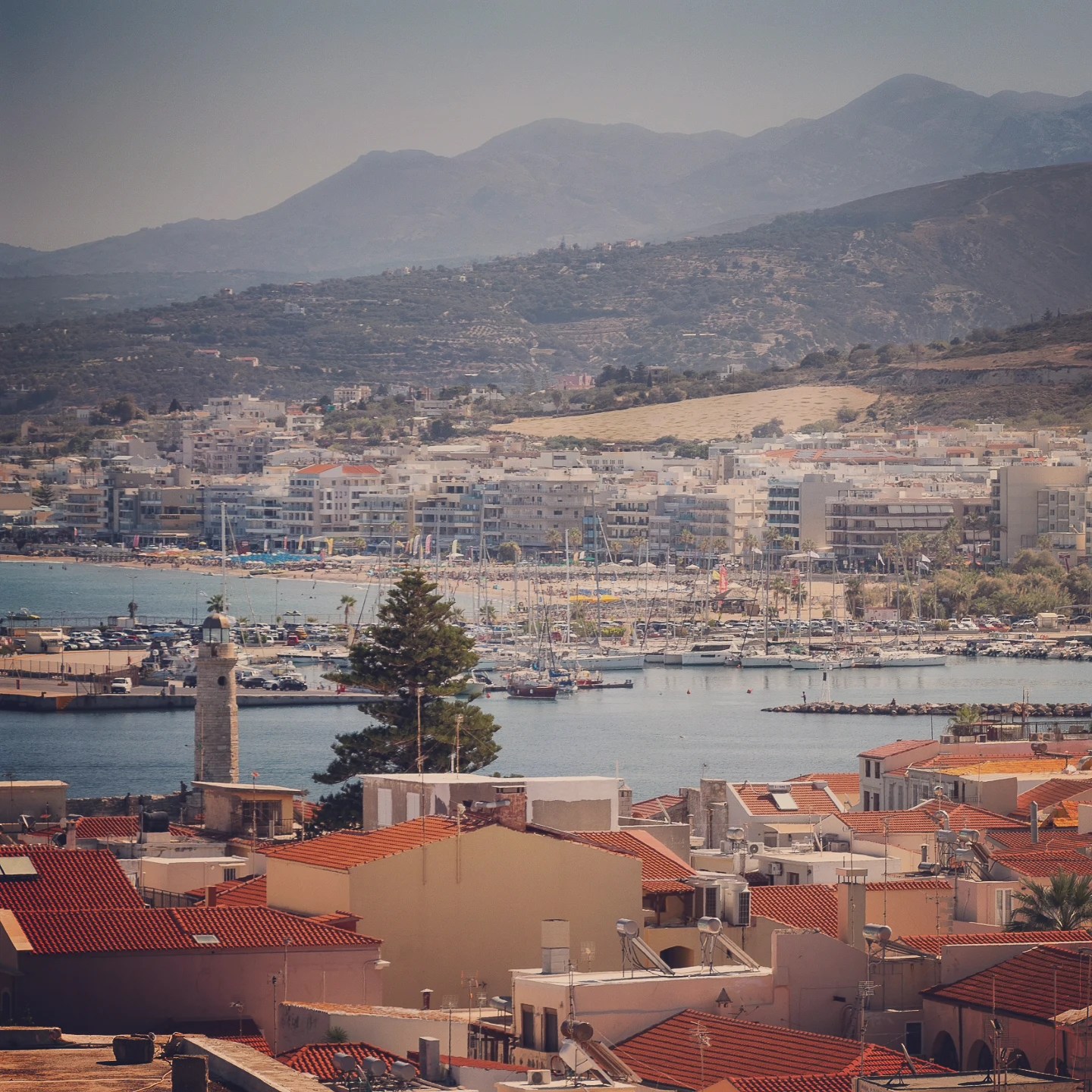
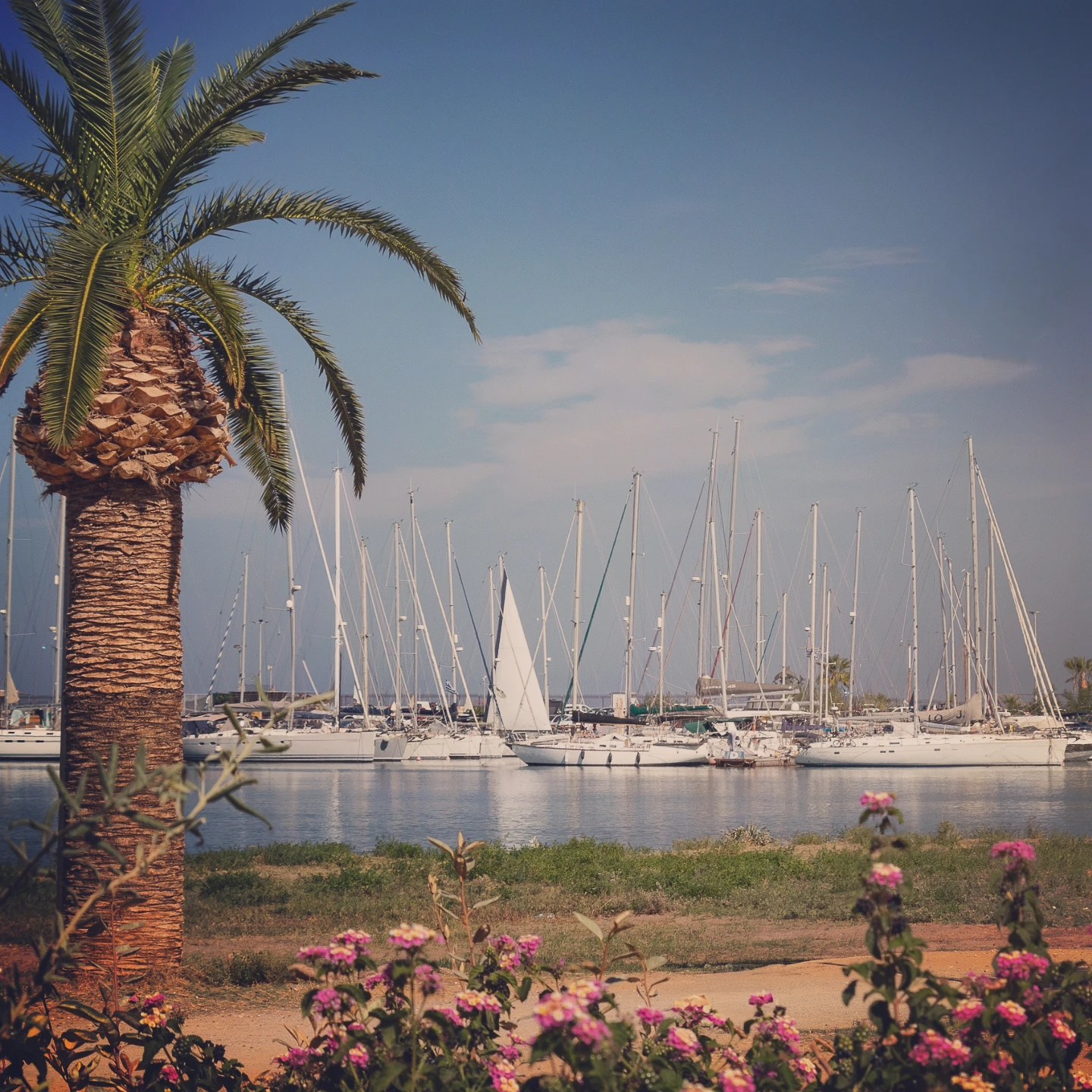
The Venetian Harbor is one of Rethymno’s most recognizable landmarks. While a small harbor existed here before the Venetians, they rebuilt and expanded it, giving the waterfront much of its present layout. At the end of the pier stands the Egyptian Lighthouse, constructed in 1838 during the Egyptian occupation on the site of an earlier beacon. Walking along the quays, you’ll pass fishing boats, stone waterfront buildings, and open-air cafés that make this part of town especially enjoyable to explore.


The Fortezza
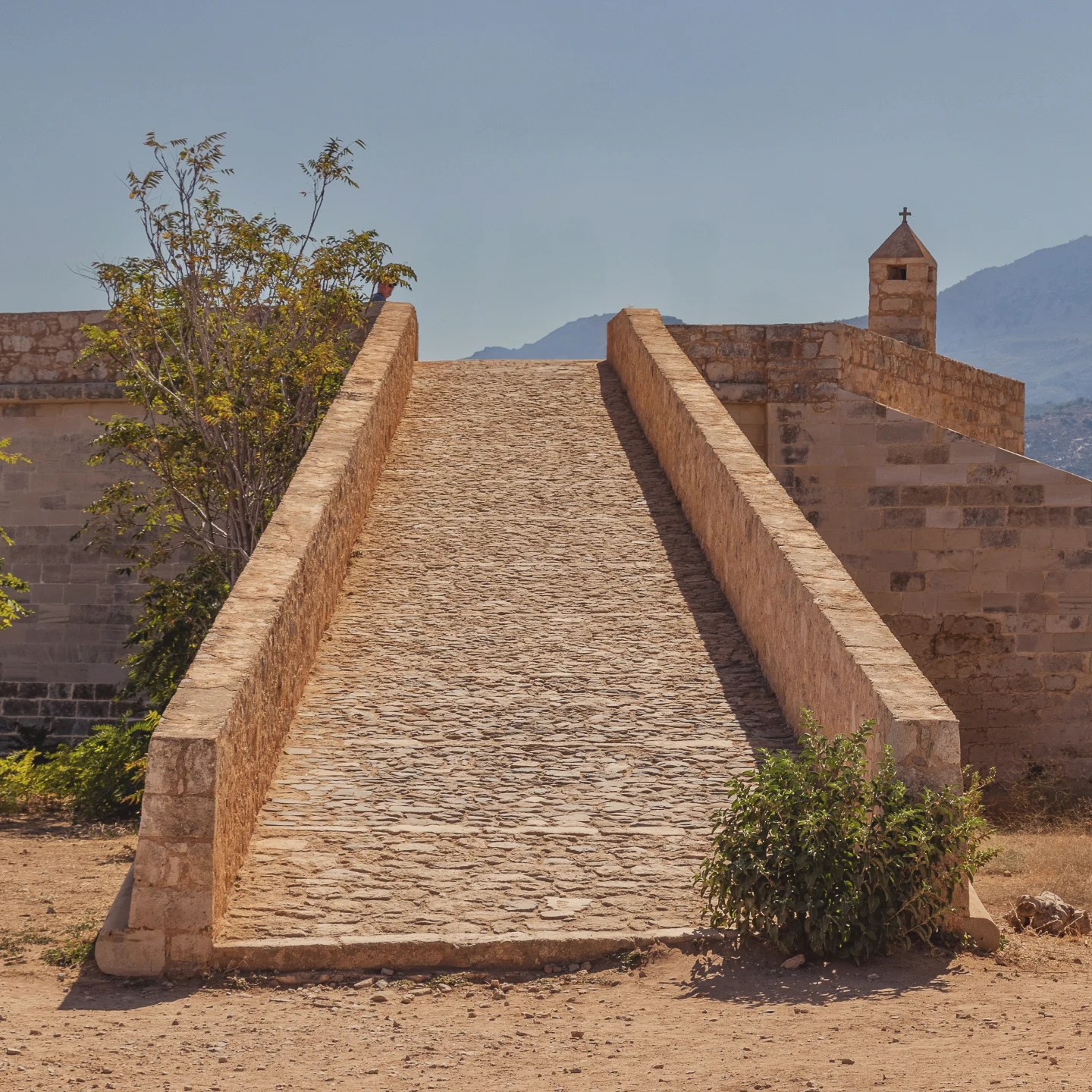
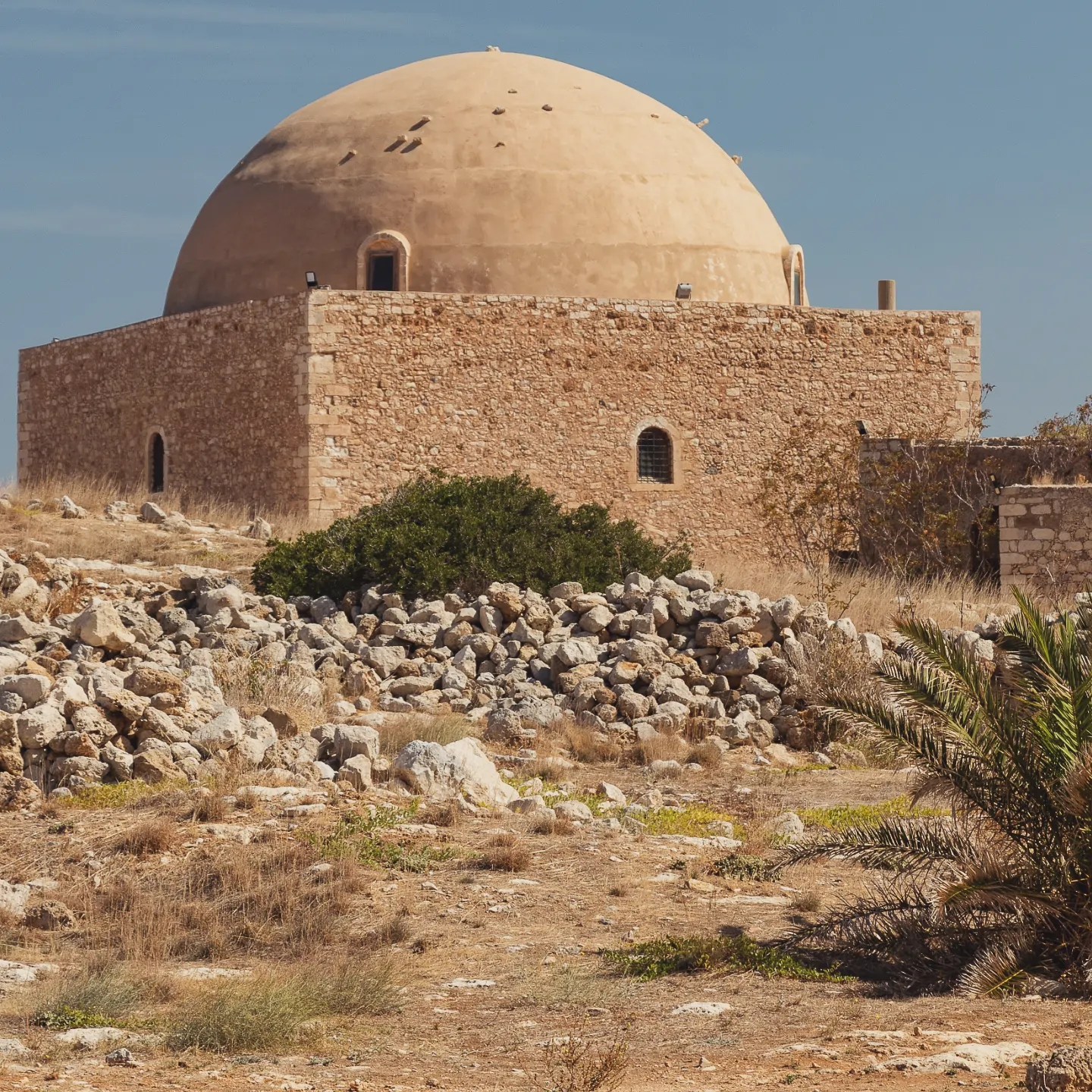
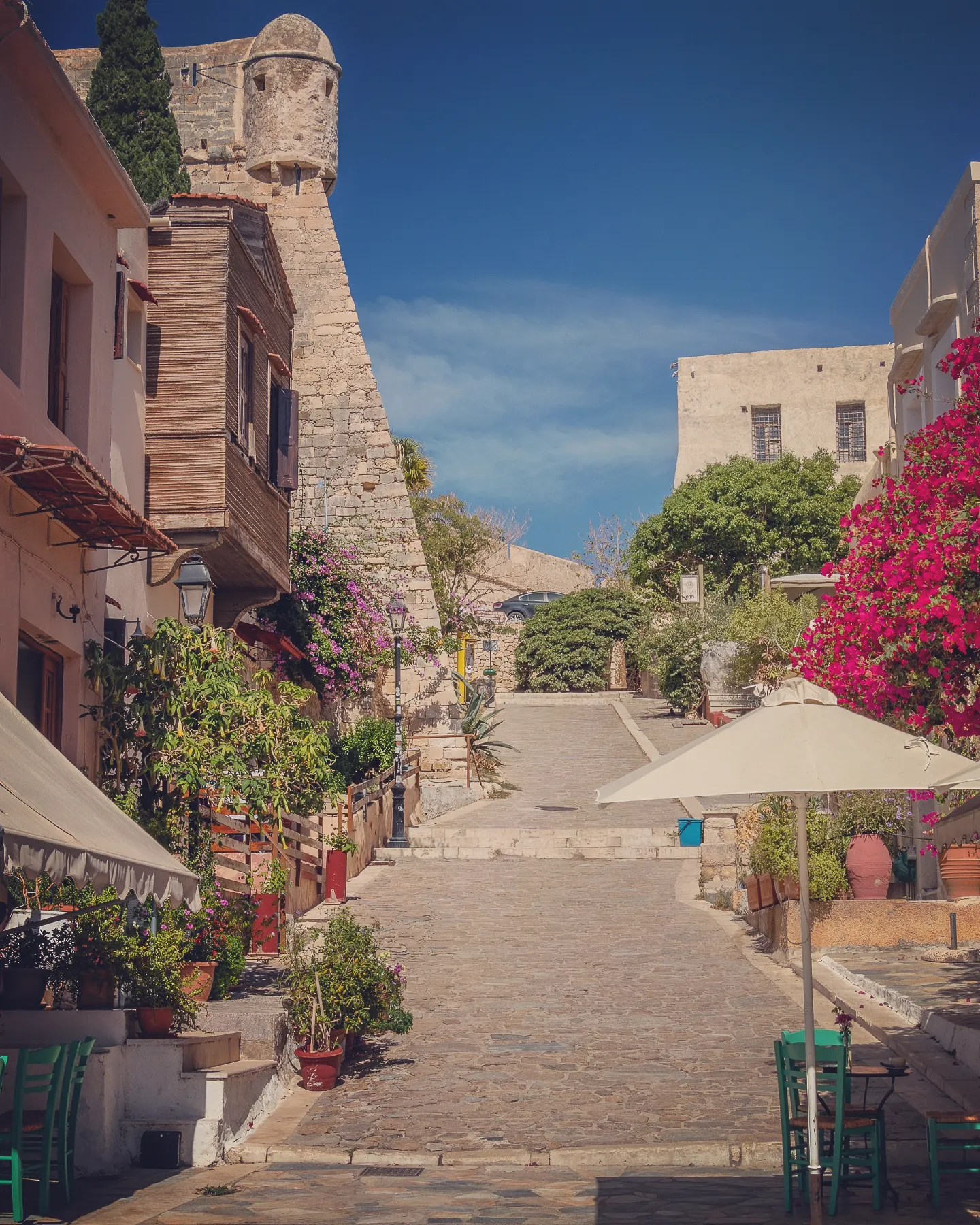
High above the town, on Paleokastro Hill, sits the Fortezza of Rethymno, the massive 16th-century fortress built by the Venetians to protect the harbor and surrounding area. From its walls, you can take in wide views of the sea, Old Town, and nearby mountains. Inside the complex stands the Sultan Ibrahim Han Mosque, which was originally built as the Cathedral of St. Nicholas before its conversion during the Ottoman period.
Near the main gate is an Ottoman-era ravelin—a small outer fortification designed to protect the entrance—which now houses the Archaeological Museum of Rethymno. We found the site fascinating to explore, especially the scale of the fortress and the views from its ramparts, and it ended up being one of my husband’s favorite stops of the entire trip.


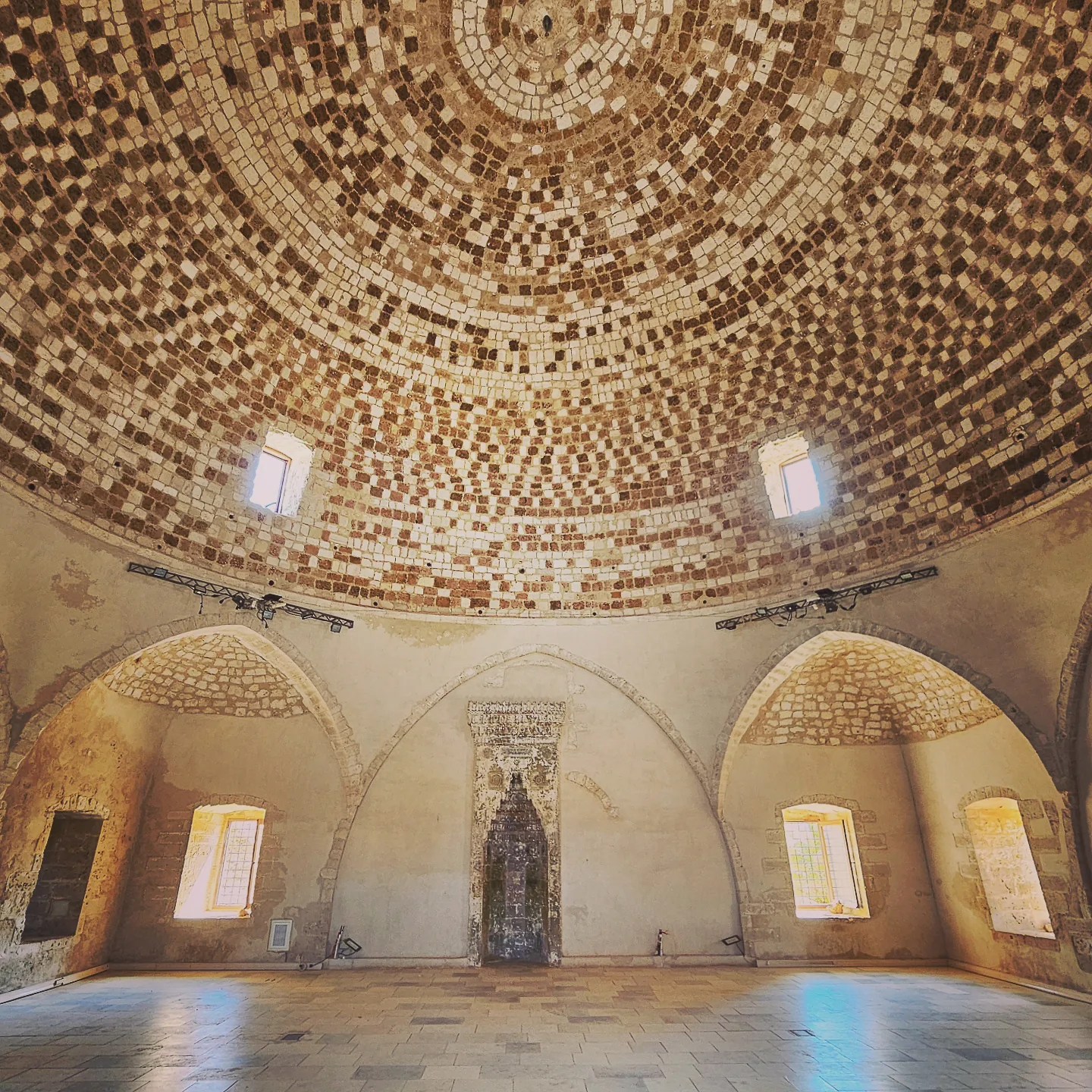
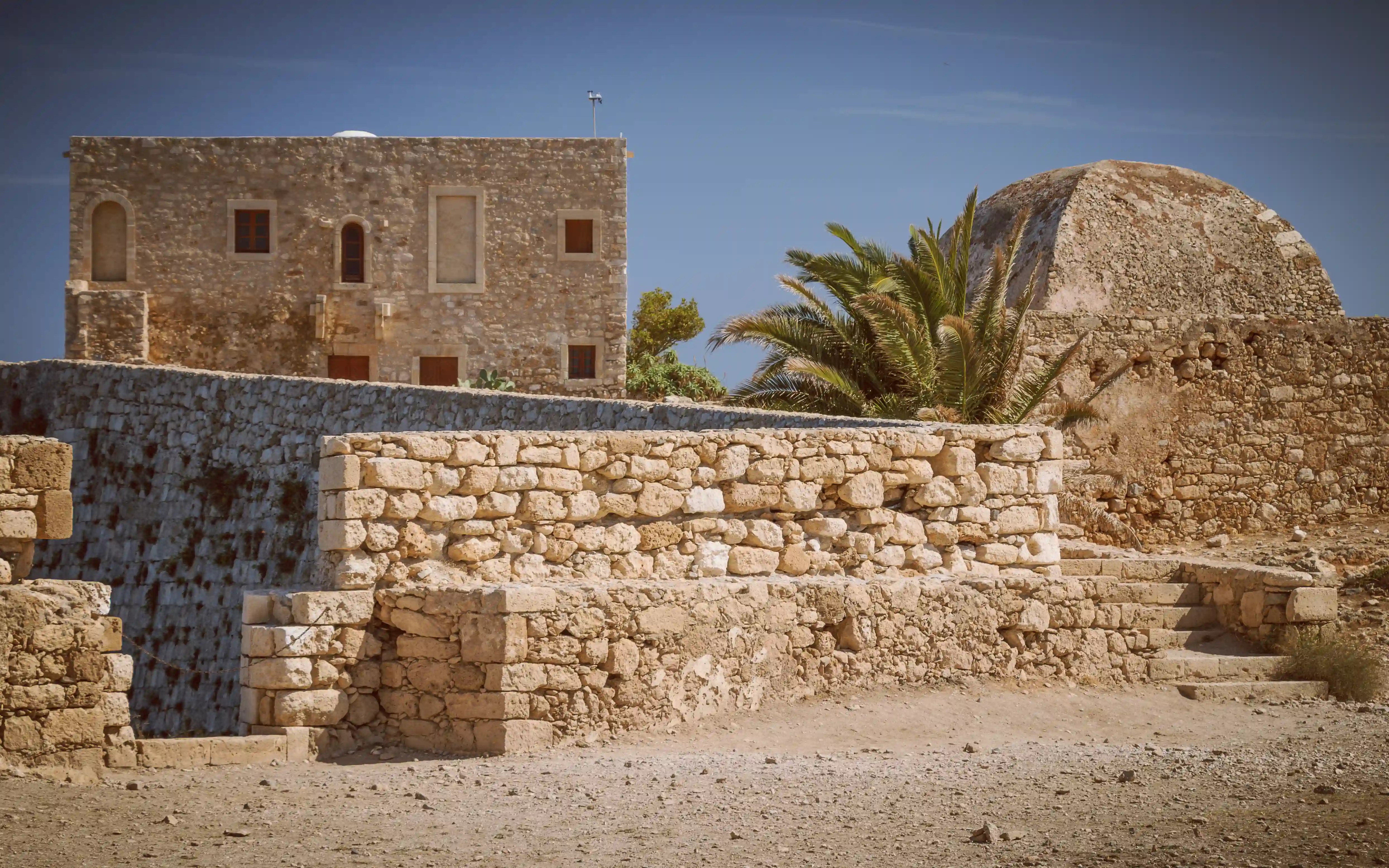
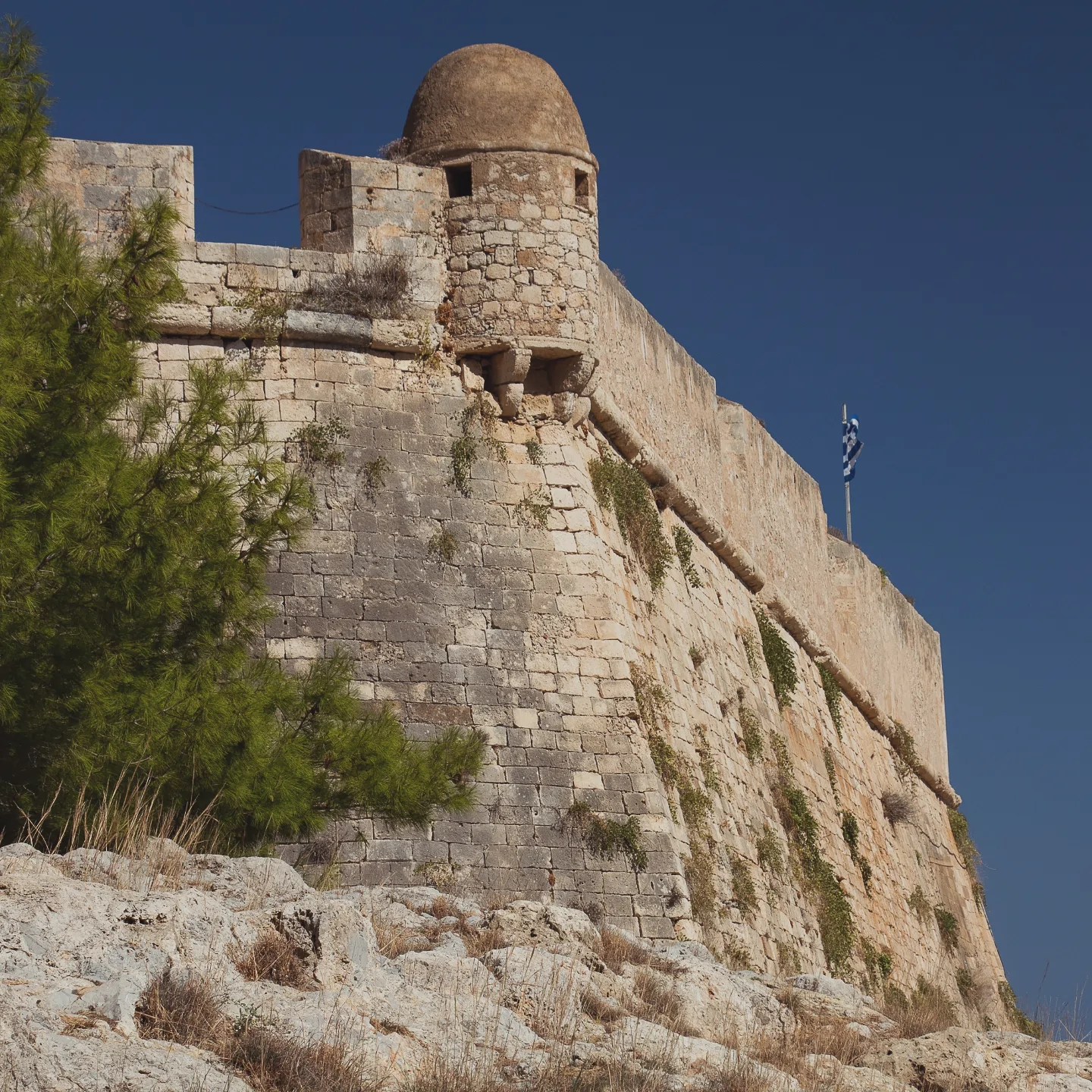

The Rethymno Old Town Streets
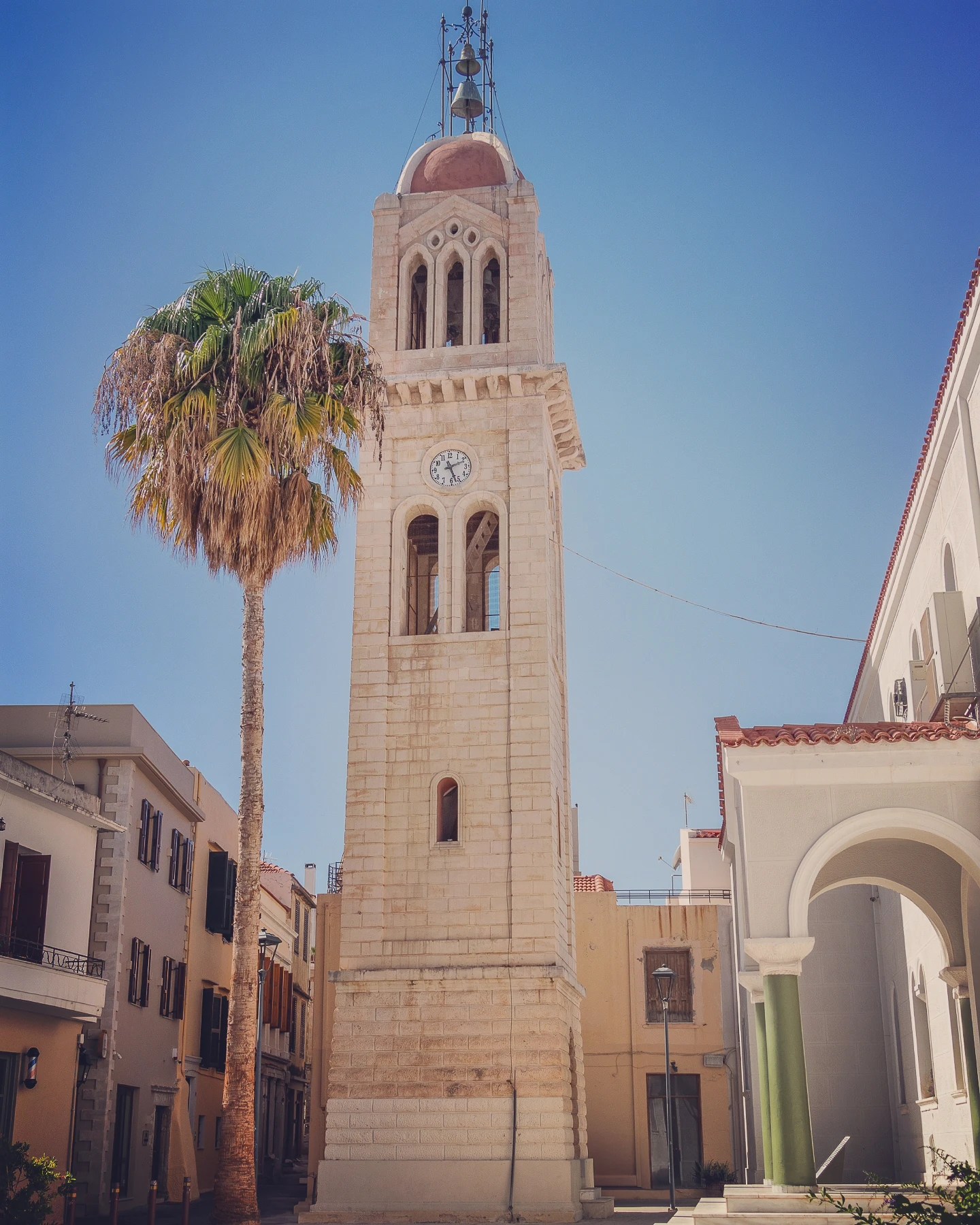
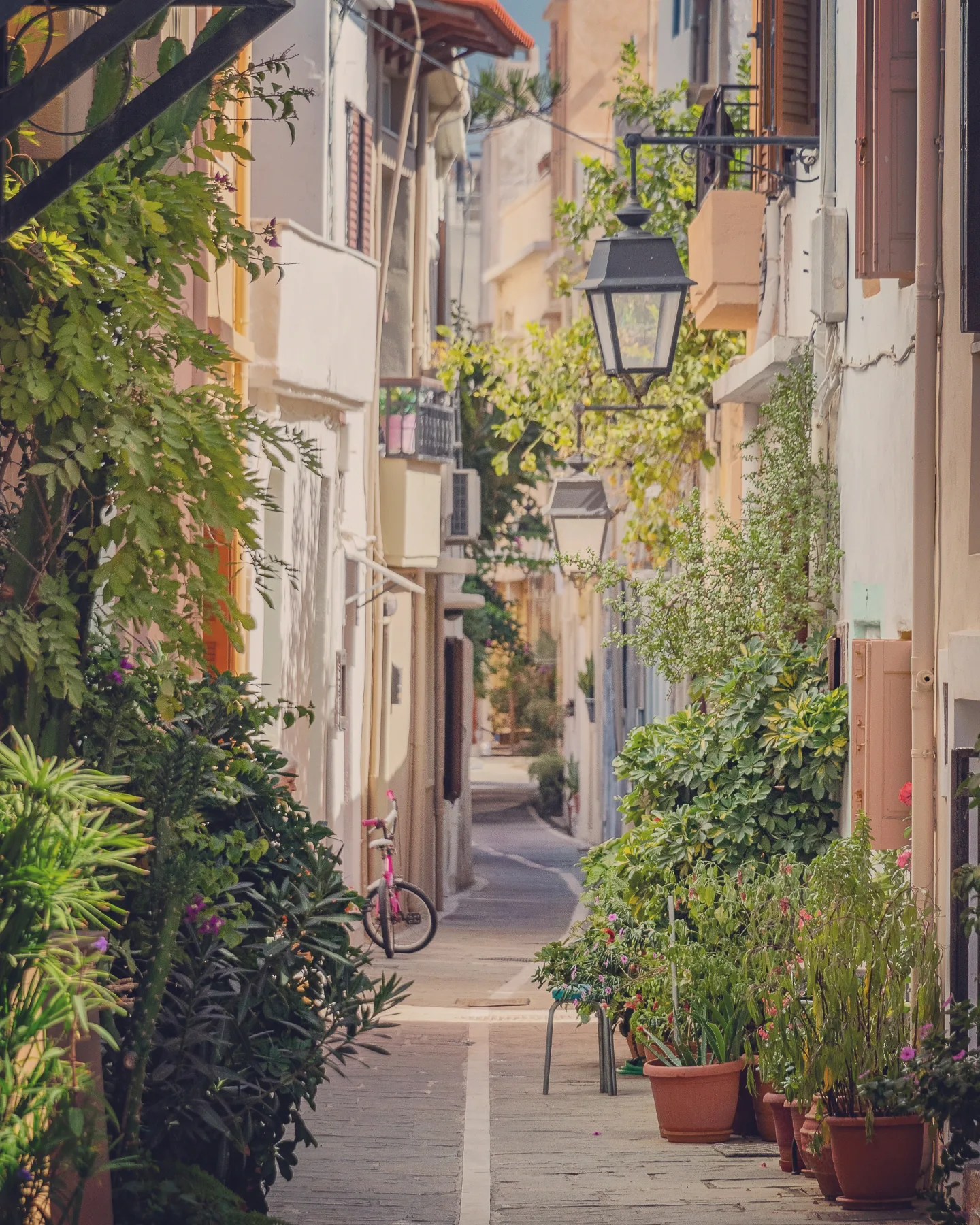
Walking through Rethymno’s Old Town quickly shows how much of the town’s history is still part of everyday life. The Rimondi Fountain, built in 1626, still pours water through its carved lion heads, a familiar sign of the Venetian era. Elsewhere in town, the Neratze Mosque rises with its tall minaret—originally a Venetian church before being transformed under Ottoman rule—and the Kara Musa Pasha Mosque adds another distinctive landmark with its domes and arched portico.
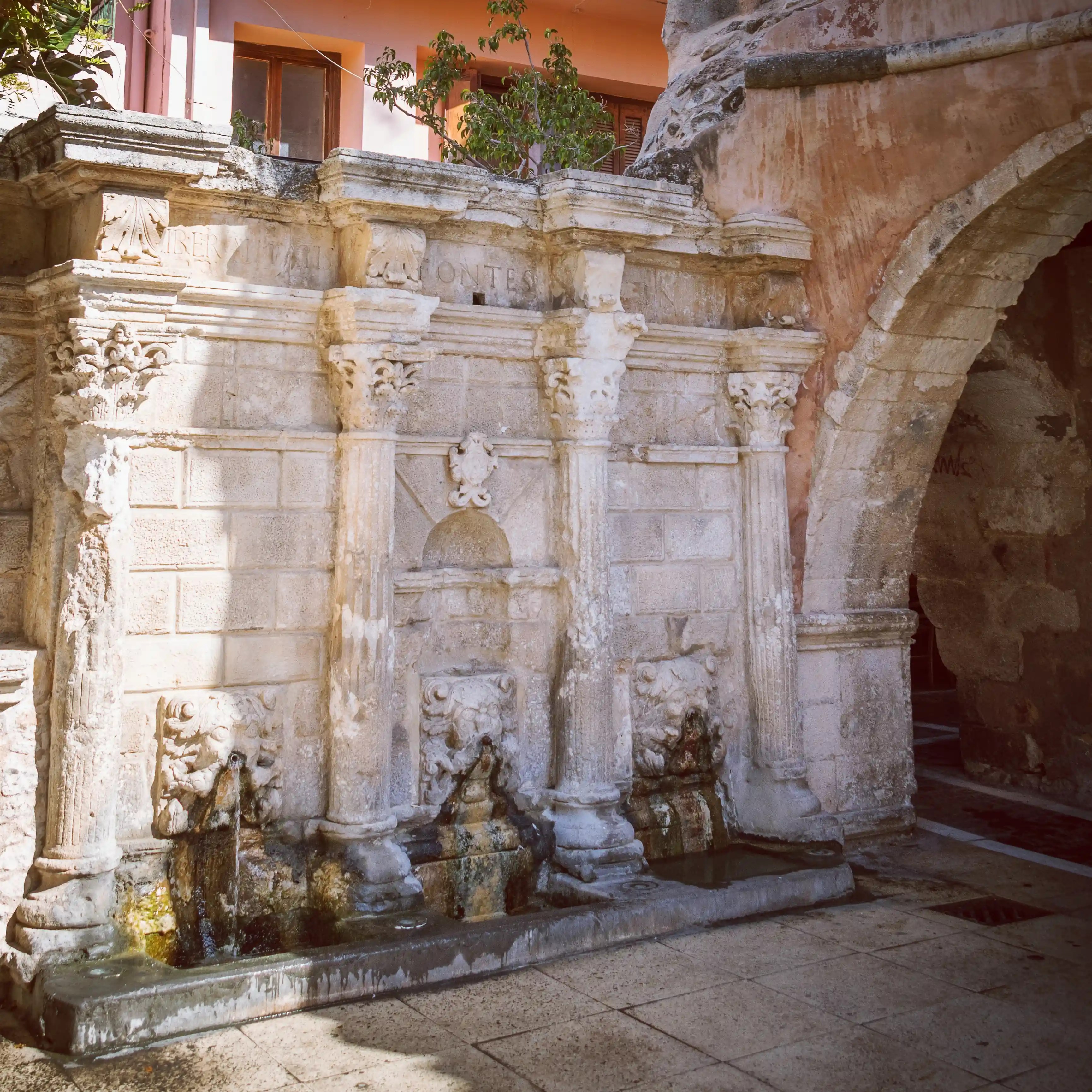
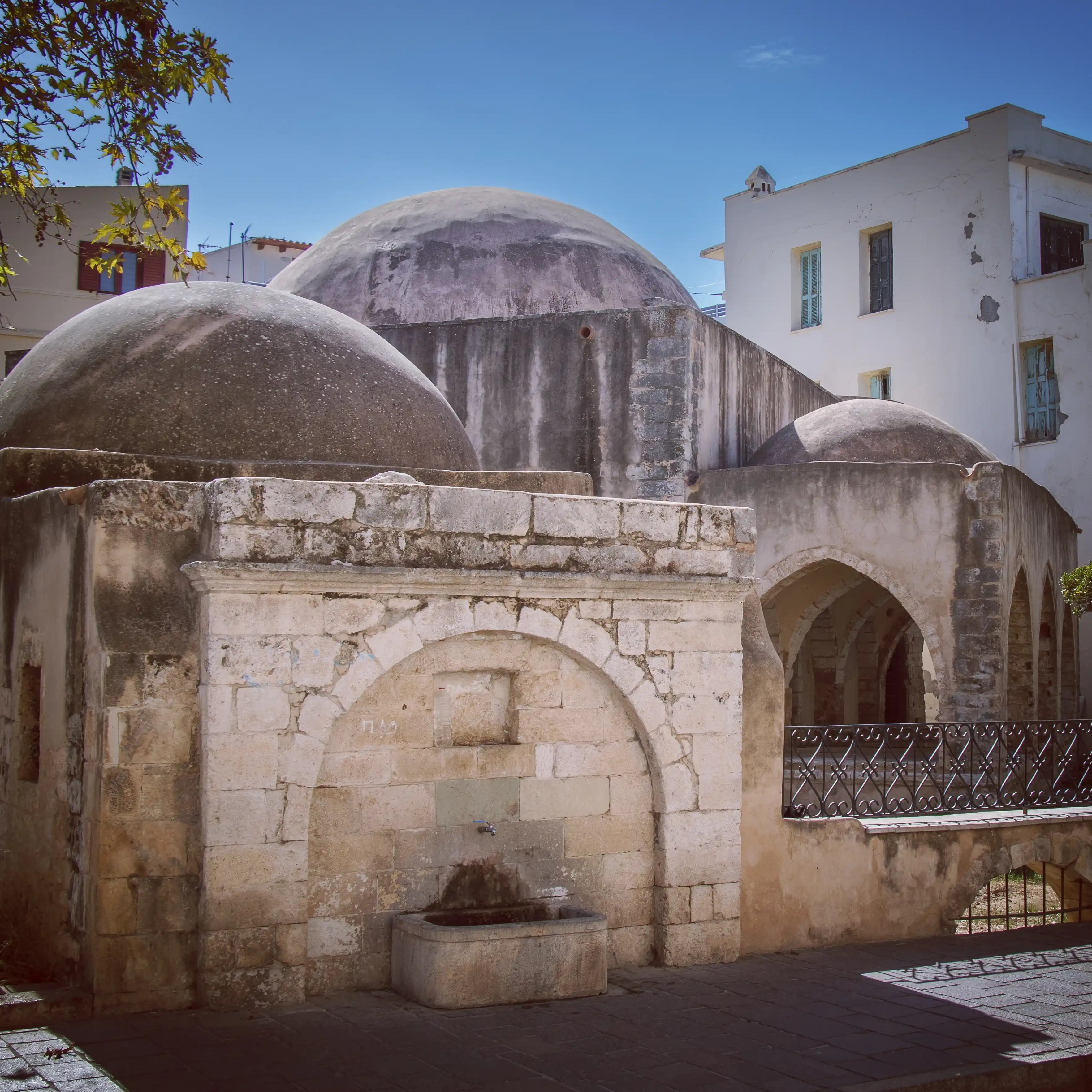
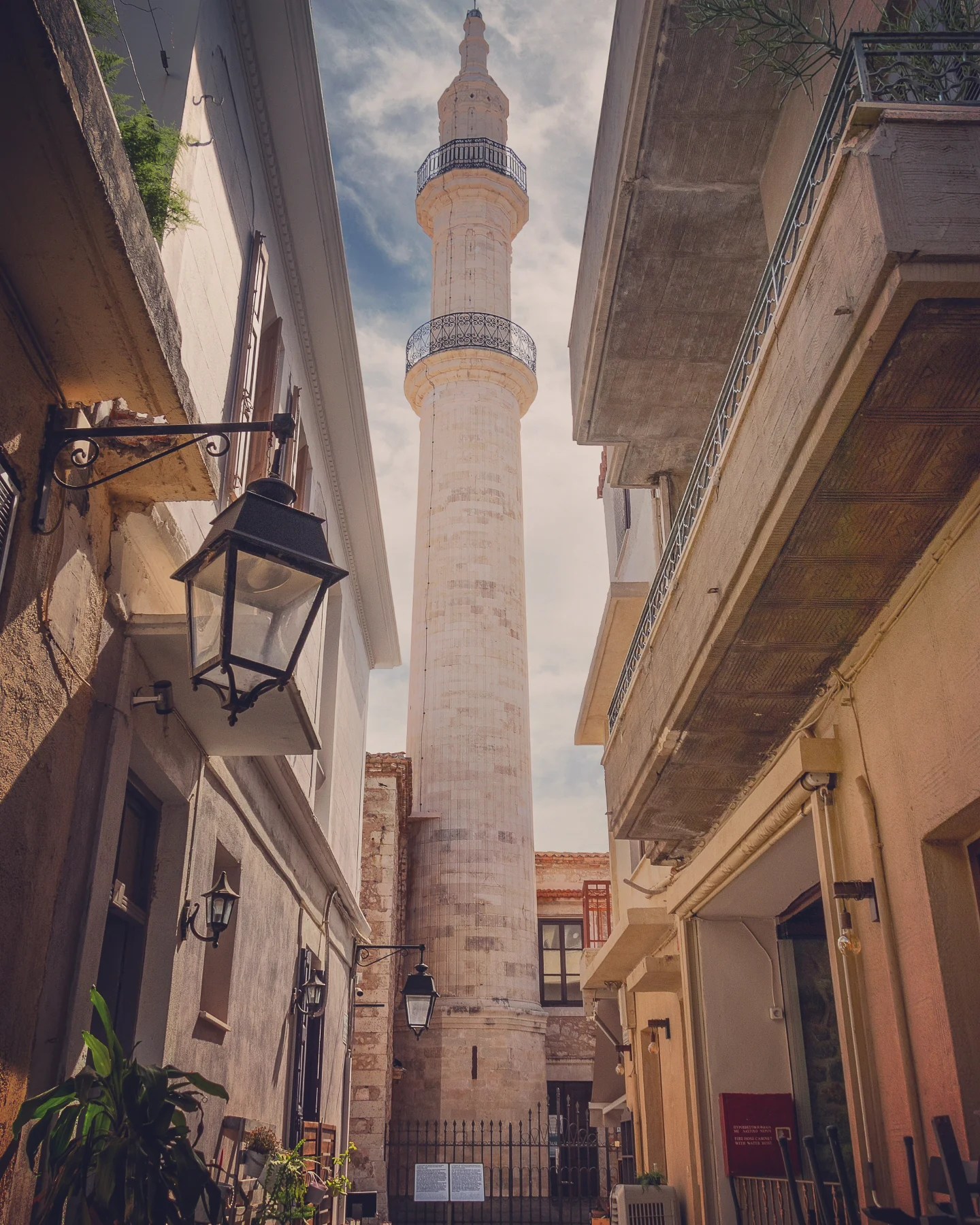
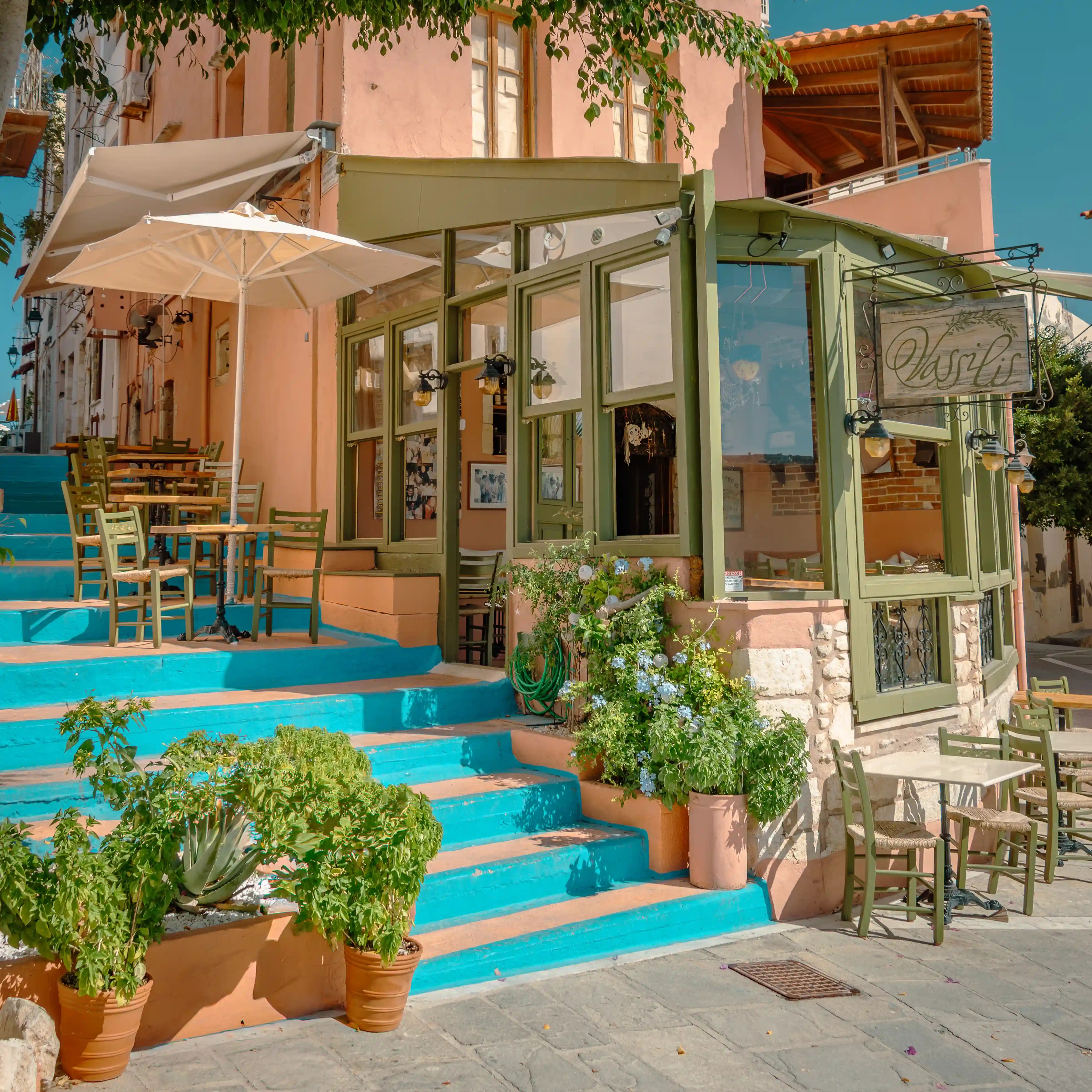
Along with these, the Old Town is full of historic nooks to discover, and its narrow streets are lined with cafés, bakeries, and small shops, making it the kind of place where you can grab a warm slice of bougatsa—a flaky Greek pastry filled with cream or cheese—and see what’s around the next corner.
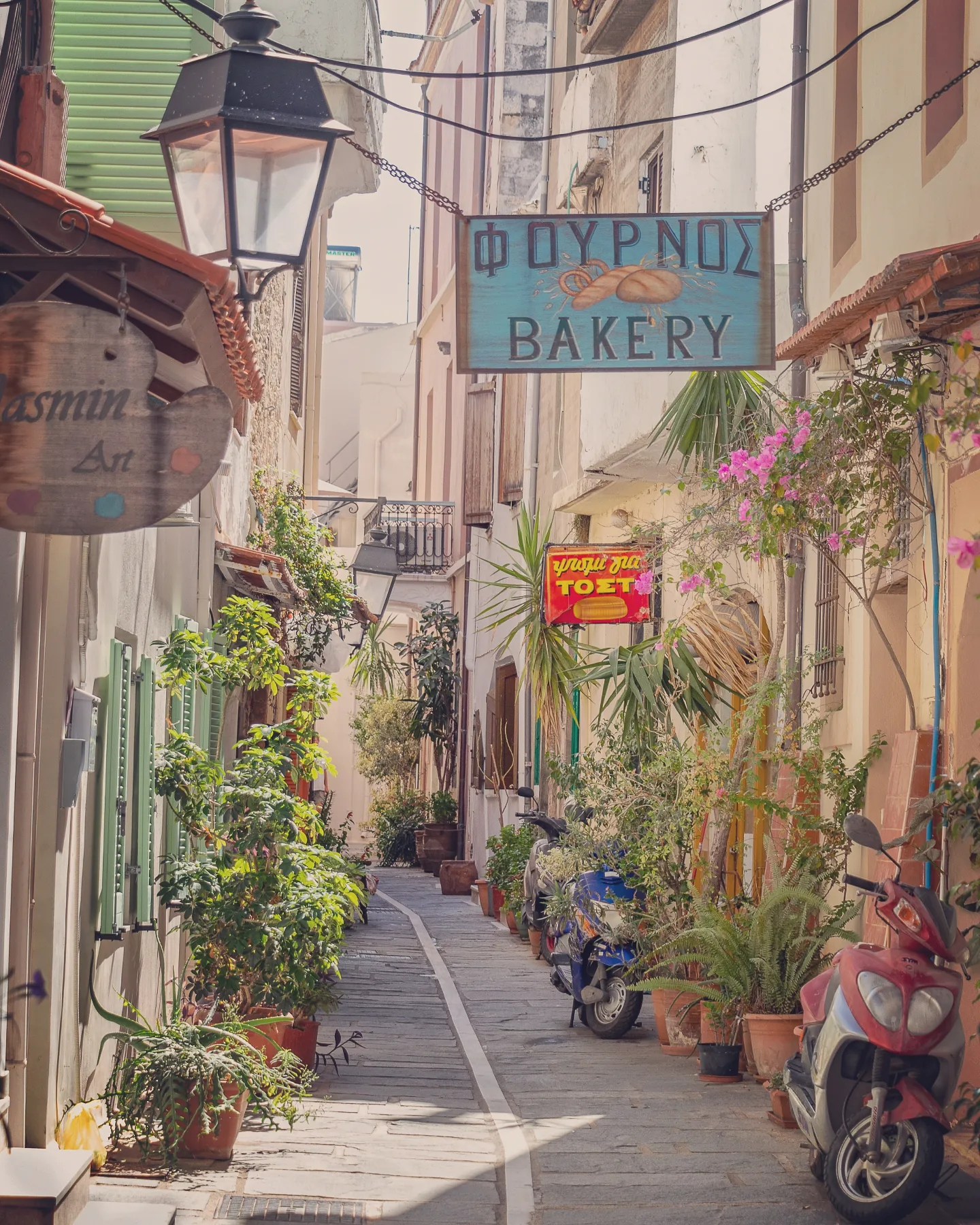
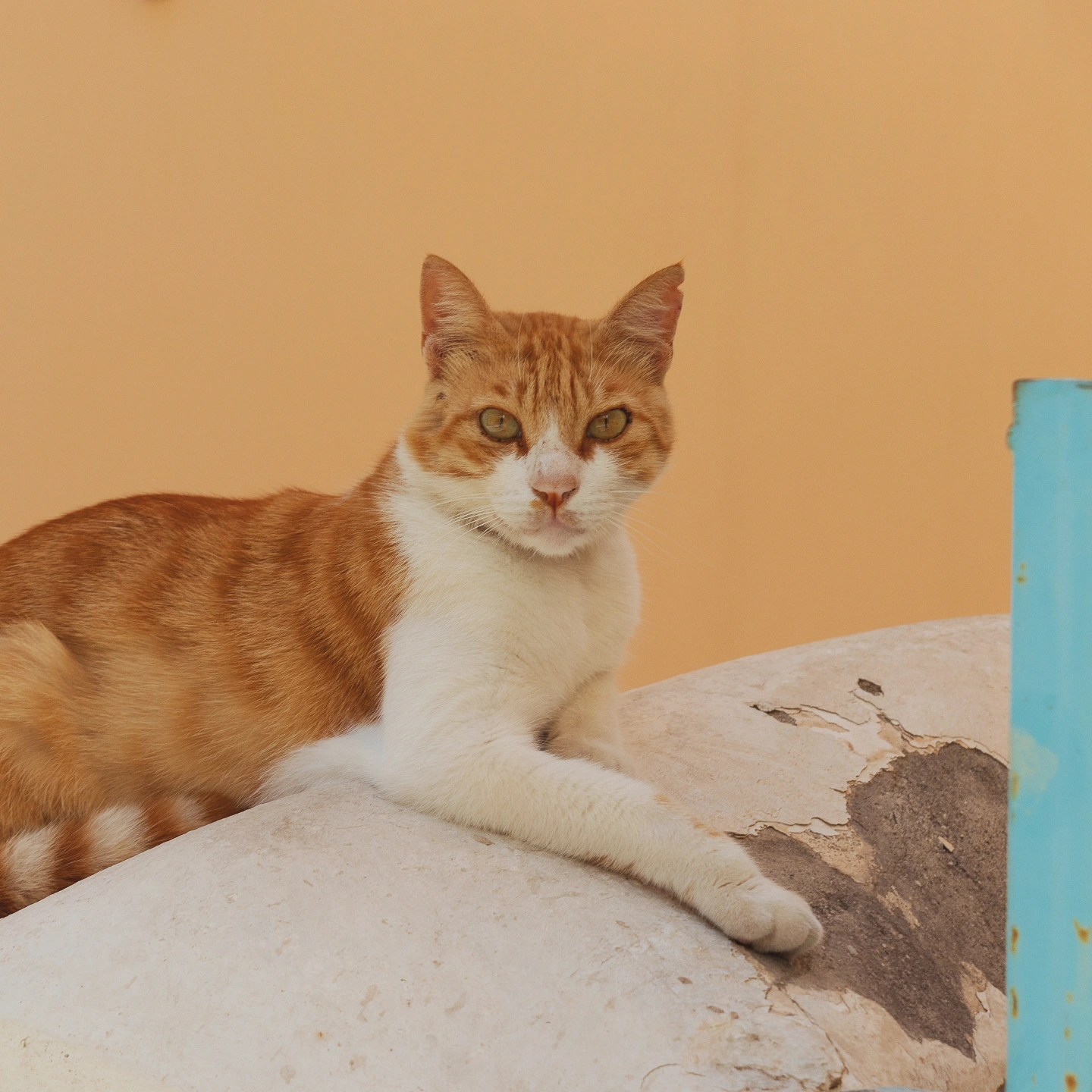
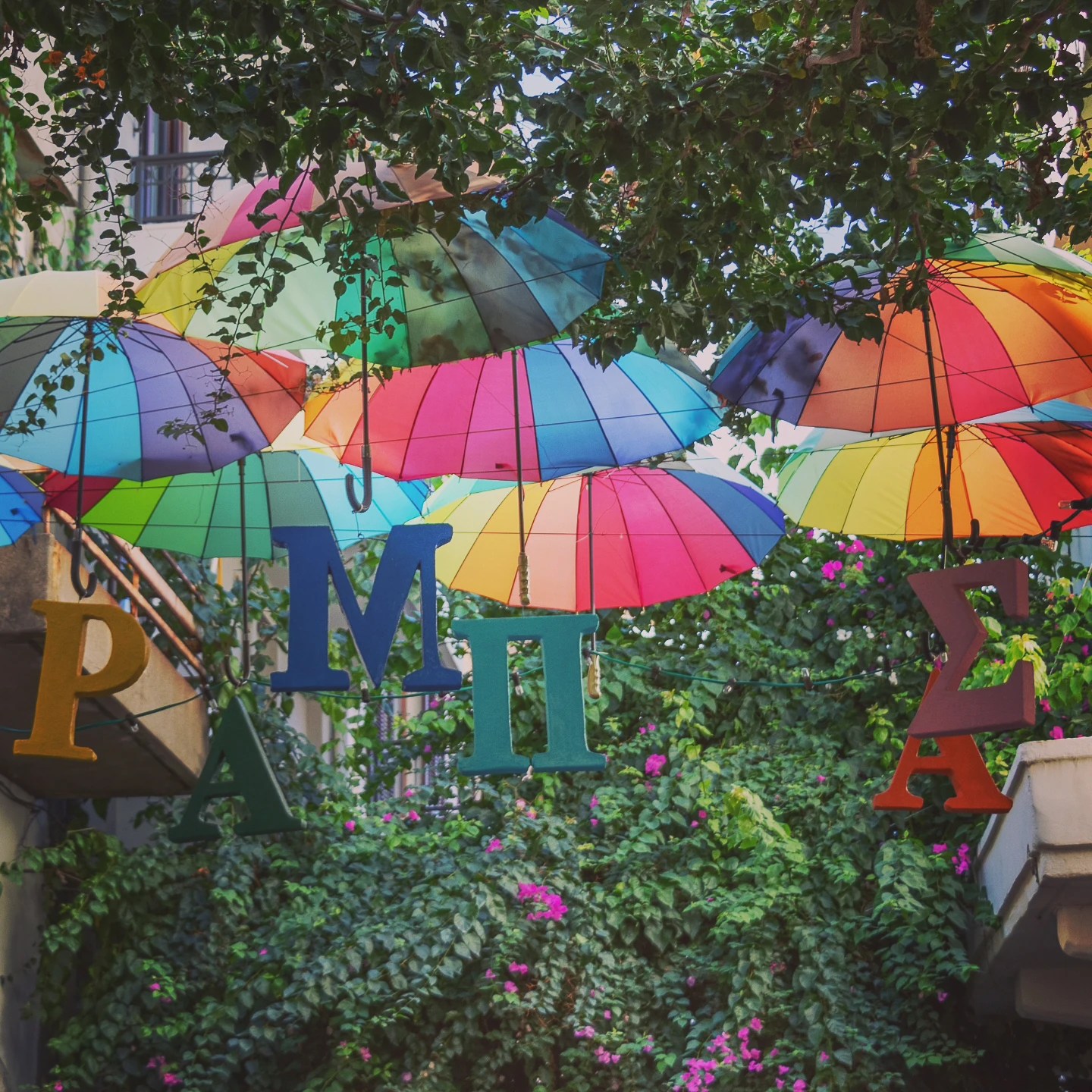
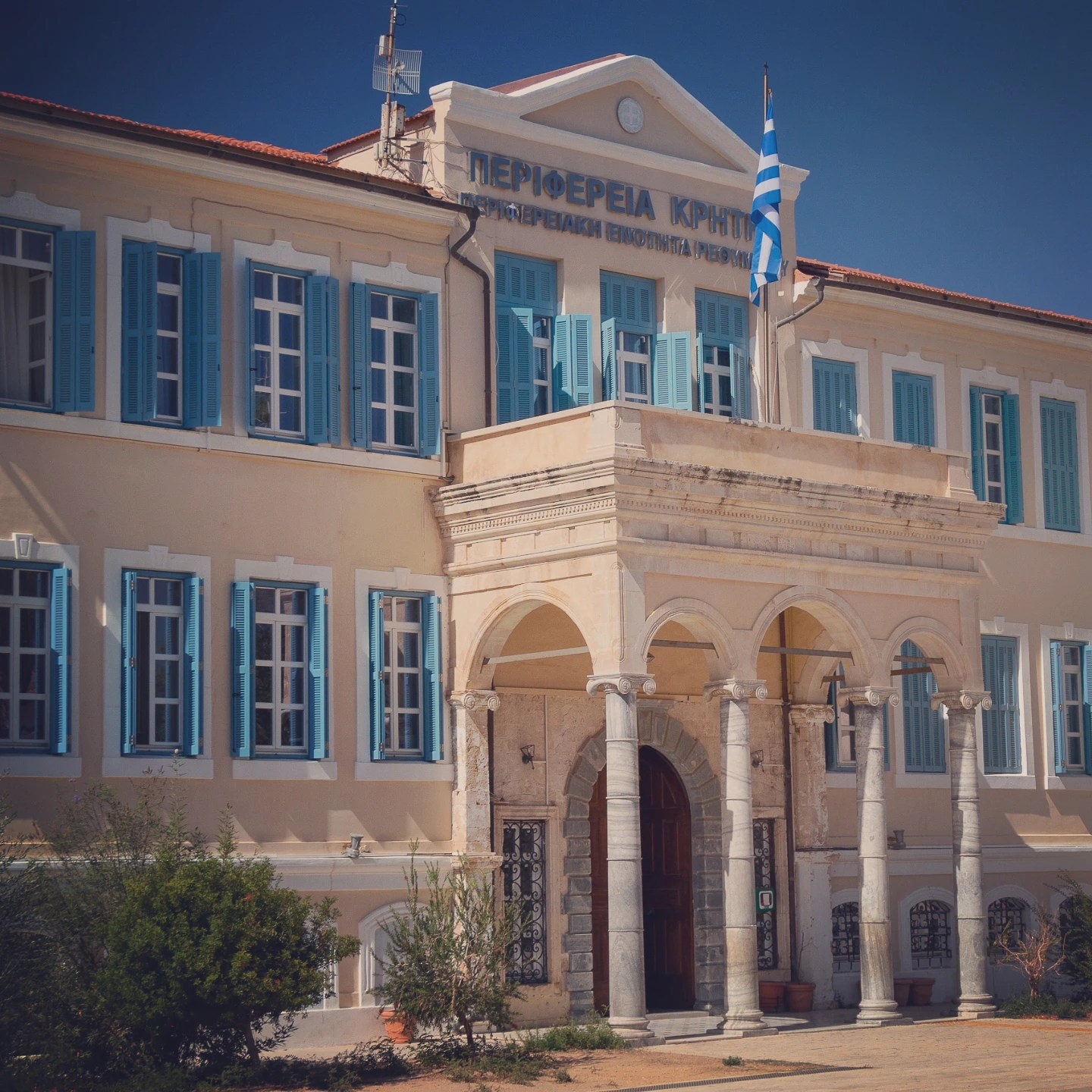

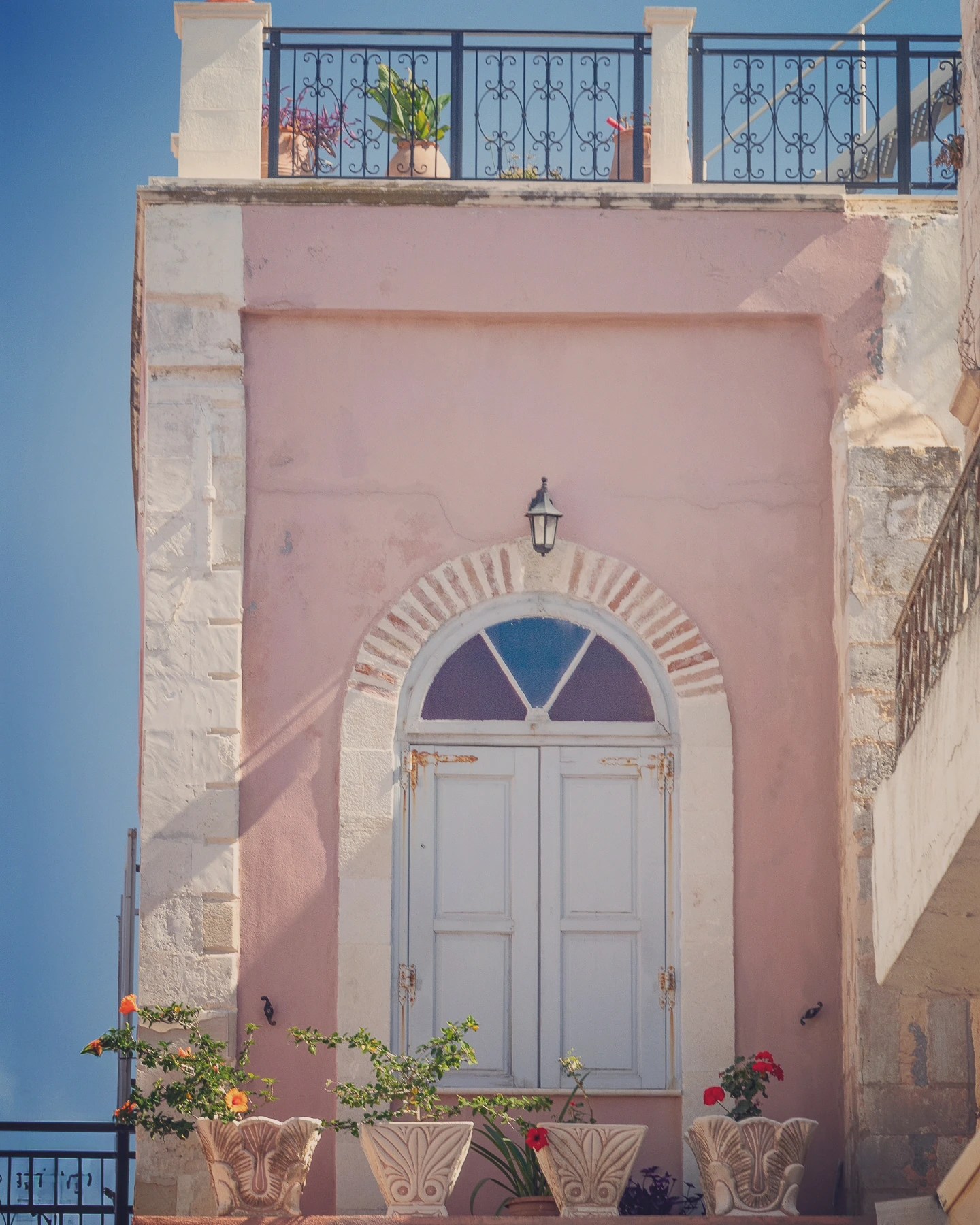



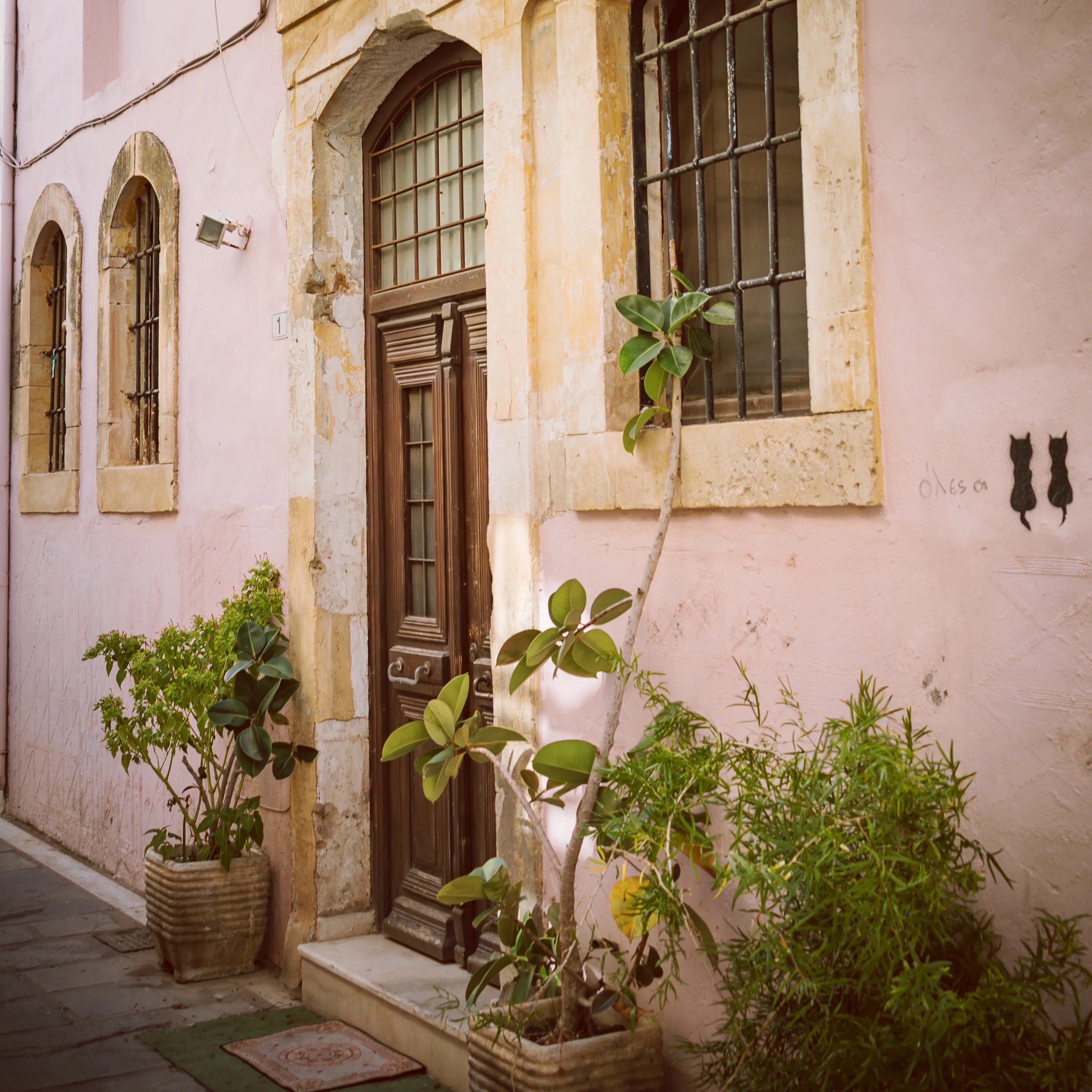
Rethymno also hosts several well-known cultural events throughout the year, including its large annual Carnival and the Cretan Diet Festival, which highlights regional food, wine, and local producers. Even if your visit doesn’t coincide with either, it’s easy to imagine how lively the town becomes during those celebrations.
Rethymno Beach & the Loggerhead Turtles
Just beyond the Old Town lies Rethymno Beach, a long stretch of sand that forms part of the nesting habitat for the endangered Caretta caretta (loggerhead sea turtle). Protective measures are in place during nesting season, and visitors will often notice marked areas where eggs have been laid. If you happen to visit at just the right moment, you might even be lucky enough to witness a nest hatching—an unforgettable but rare sight. The beach offers a wide shoreline and a relaxed place to walk after exploring the town.
Rethymno brought together so many of the things we loved about Crete—history, architecture, seaside views, and a welcoming atmosphere—and spending a day here was an easy highlight of our trip.
More Places to Explore Across Crete
While our week was full, Crete has an endless list of places to discover. Here are a few that remain on our list for next time, organized by region:
Western Crete
- Chania (Old Town & Harbor) — Located on the northwest coast of Crete, Chania’s Old Town blends Venetian, Byzantine, and Ottoman influences around one of the island’s most striking harbors.
- Balos Beach & Lagoon — A spectacular coastal lagoon with striking blue-green water and white sand, on the northwest tip of the island.
- Falasarna Beach — A broad stretch of white sand on the west coast of Crete, popular for sunsets and a more relaxed atmosphere.
- Elafonisi Beach — Famous for its pink-hued sand and shallow turquoise waters, Elafonisi stands out on the far southwestern edge of Crete.
Inland Crete
- Arkadi Monastery — A historic monastery that played a key role in Cretan resistance under Ottoman rule.
- Lake Kournas — The island’s only natural freshwater lake, located near the border of Chania and Rethymno regions, offering a peaceful contrast to coastal resorts.
- Imbros Gorge — A scenic and less strenuous alternative to the more famous Samaria Gorge, located in southwestern Crete near the village of Imbros.
South Central Crete
- Matala Beach — On the south coast of Crete, Matala is known for its distinctive cliff-side caves and a relaxed atmosphere rooted in the 1960s-70s visitor culture.
- Palace of Phaistos — One of the major Minoan-era palace sites on Crete, offering archaeological insight outside the Heraklion city center.
East Crete
- Sitia — A coastal town in the northeast known for its relaxed atmosphere, long beach, and role as a gateway to many of the area’s archaeological and natural sites.
- Vai Beach — A beautiful beach famous for its large grove of native Cretan date palms (Phoenix theophrasti), forming one of the biggest natural palm forests in Europe. The beach sits on the far northeastern tip of Crete and is known for its clear water and unique landscape.
- Kato Zakros & the Palace of Zakros — Located on the remote eastern coast, this is one of Crete’s major Minoan palace sites. The small seaside community nearby offers quiet beaches and a peaceful, less-traveled setting.
- Kapsa Monastery — A historic monastery perched above the mouth of Pervolakia Gorge on the southeast coast, known for its dramatic location and views over the Libyan Sea.
- Koufonisi Island — A small uninhabited island off the southeastern coast of Crete, known for pristine beaches and clear blue water. Boat trips operate seasonally from Makry Gialos.
- Ierapetra — The southernmost city in Europe, sitting on Crete’s southeast coast. Known for its sunny climate, long beachfront, and preserved Venetian-era Kales Fortress at the harbor.
And there is still much more to see and do across this remarkable island—be sure to check the official Crete tourism website and other regional websites for a full list of destinations and experiences. Crete truly has a lifetime of landscapes and history packed into one island.
Final Thoughts
Looking back on Part II, what ties all of these places together is how much variety Crete offers—ancient and modern, rugged and peaceful, heartbreaking and beautiful all at once. It’s the rare place I can imagine coming back to, knowing there are still countless corners of the island left to explore. If you haven’t already read Part I of our Crete adventure, you’ll find our first days on the island there, including travel logistics and the other places we explored.
Have you visited Crete, or explored any of these spots? I’d love to hear your questions, thoughts, or favorite memories in the comments below!

Leave a comment