


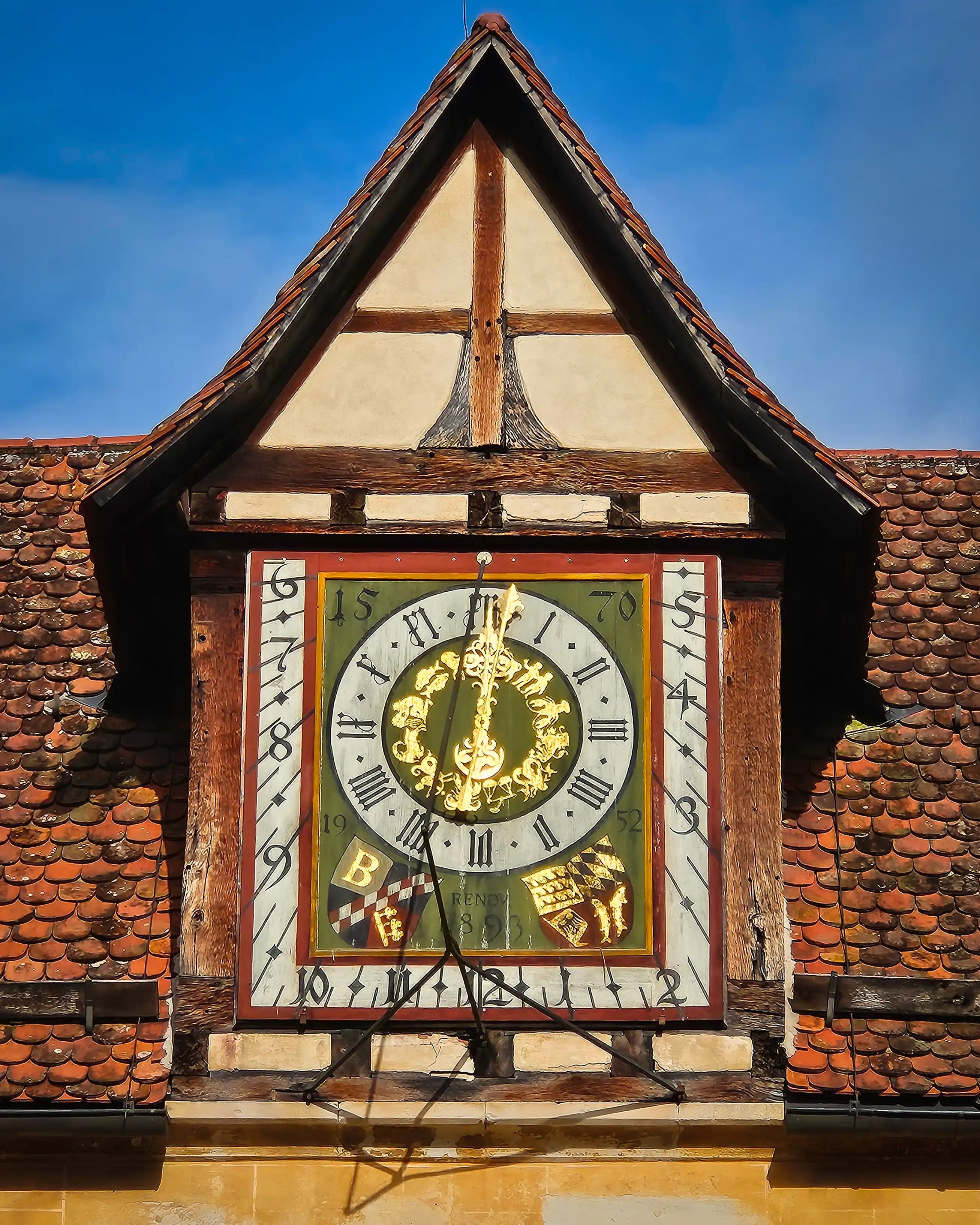
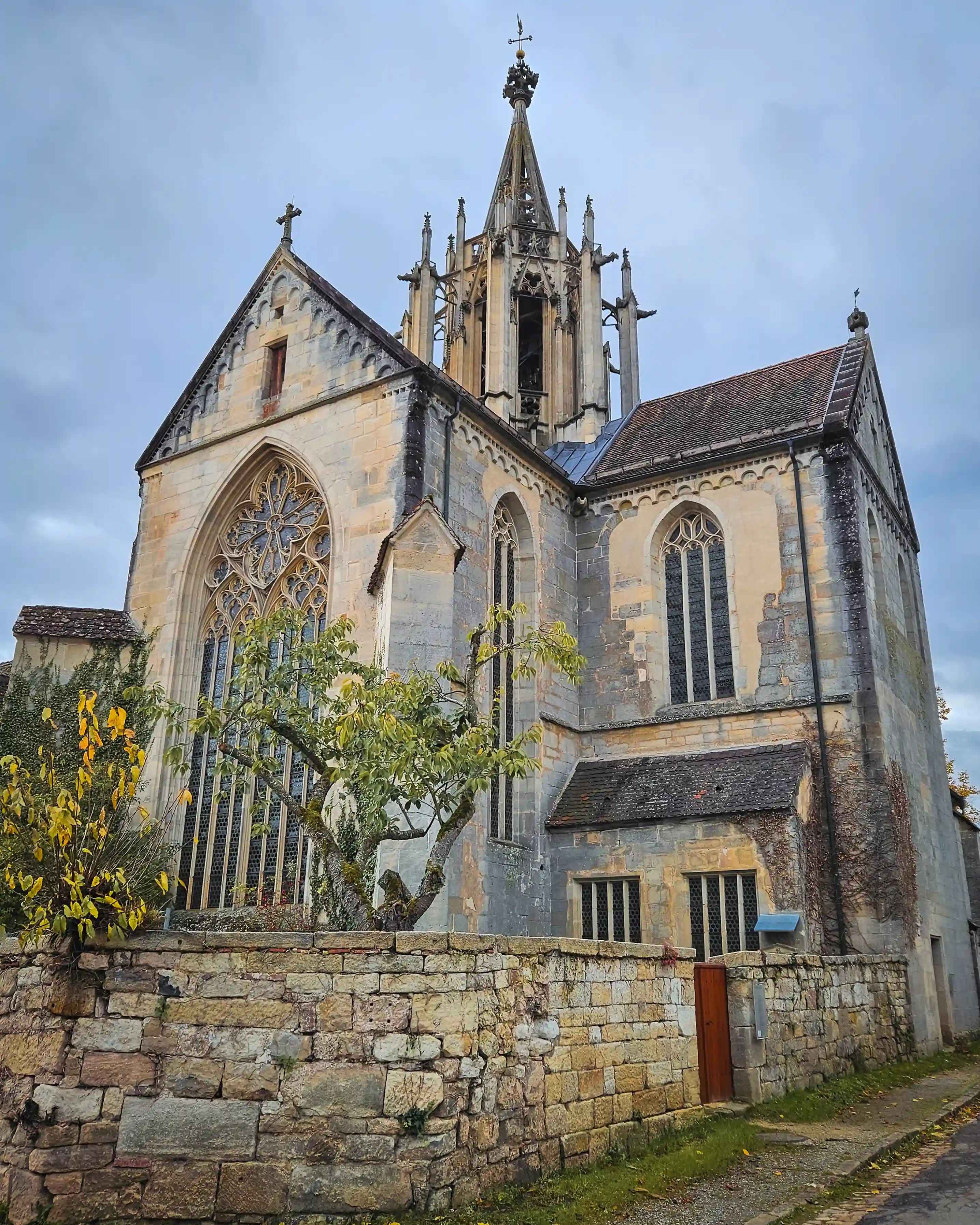
Tucked in the Schönbuch forest just outside Tübingen, Bebenhausen Monastery and Palace (Kloster und Schloss Bebenhausen) feels like stepping into another century. The monastery was founded around 1180 by Count Palatine Rudolf of Tübingen and grew into one of the most important Cistercian houses in the region. The Cistercians were a Catholic order that valued simplicity, silence, and a life centered on prayer and work. After the Reformation, it shifted roles—first a Protestant school, later a royal hunting lodge, and eventually a residence for the kings of Württemberg.

Bebenhausen Monastery
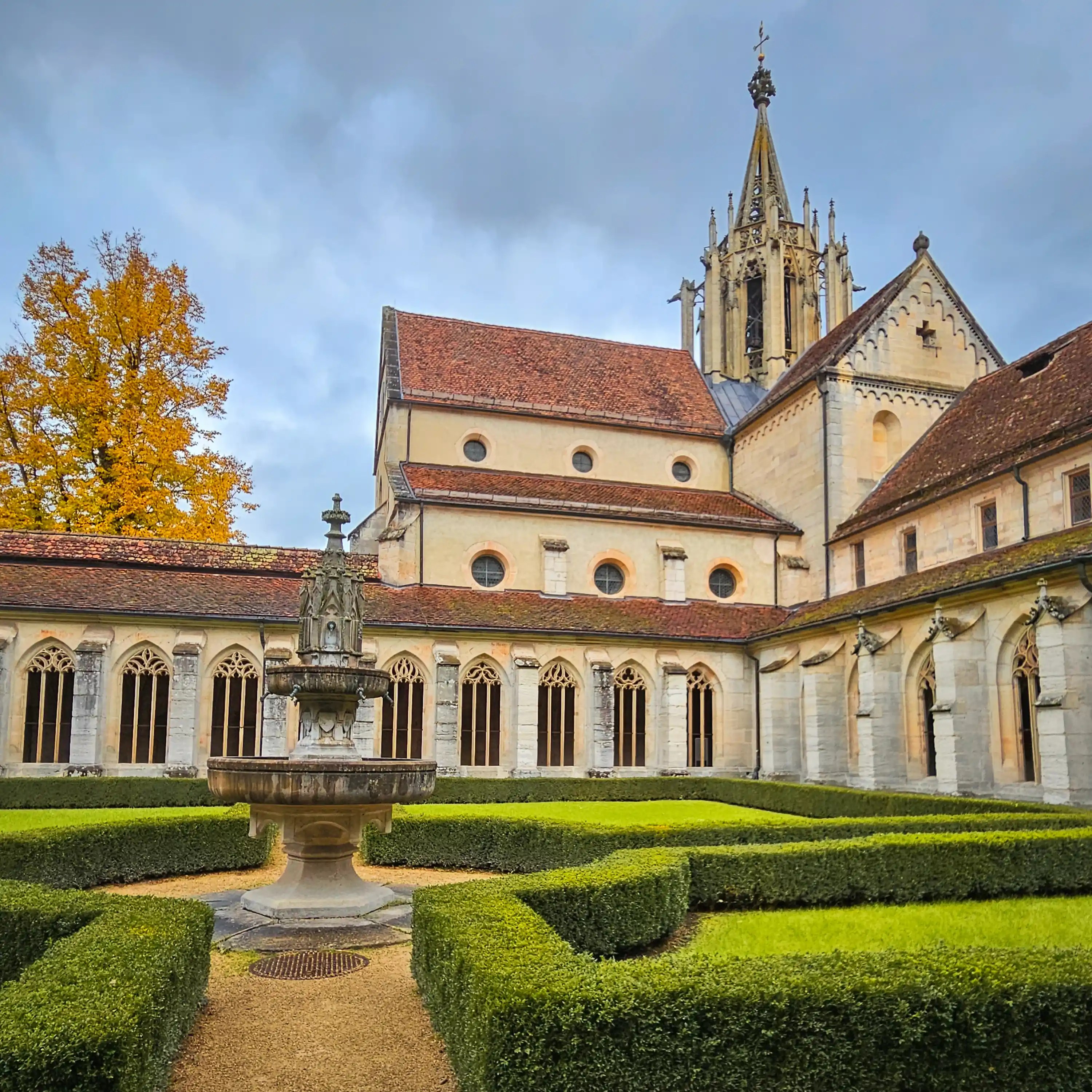
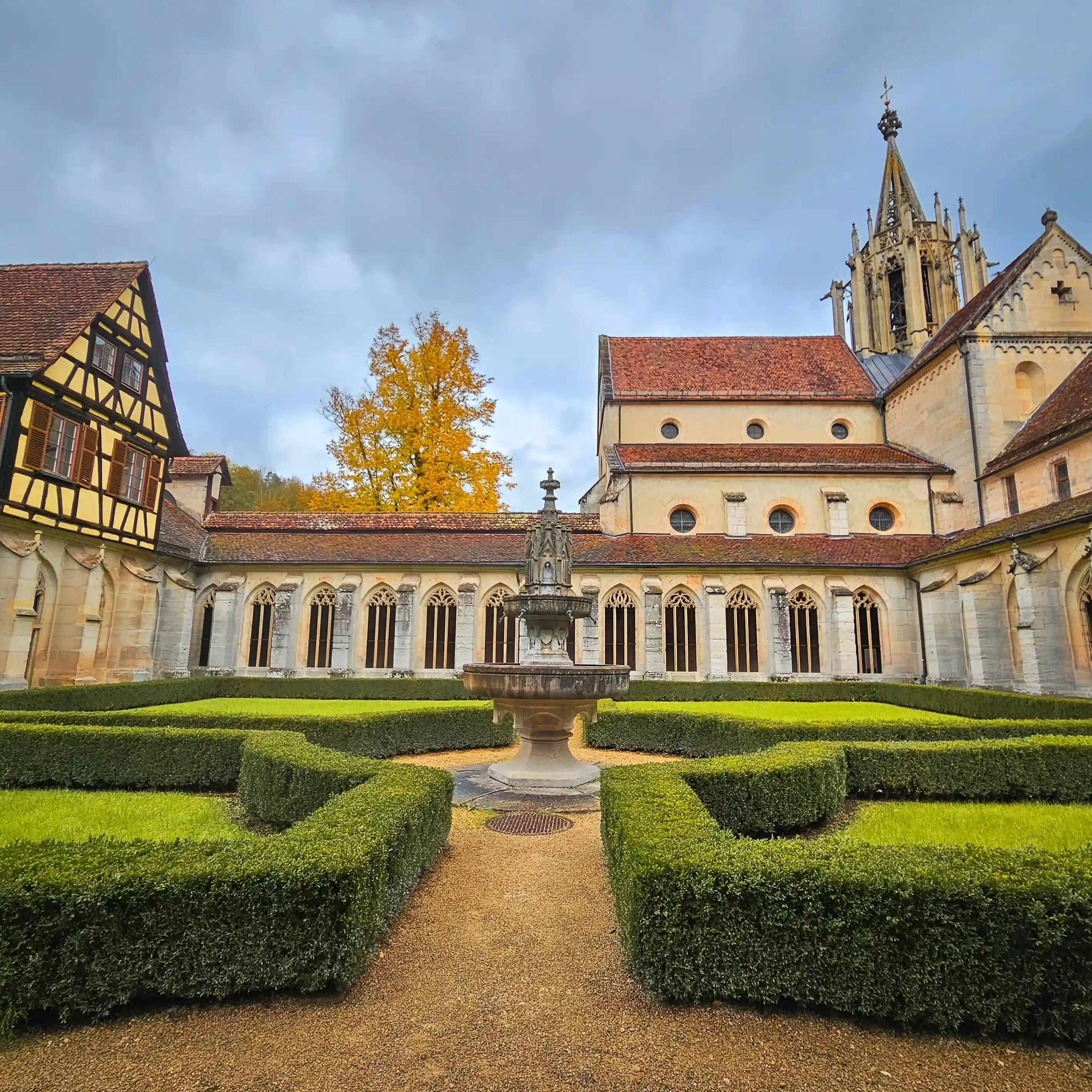
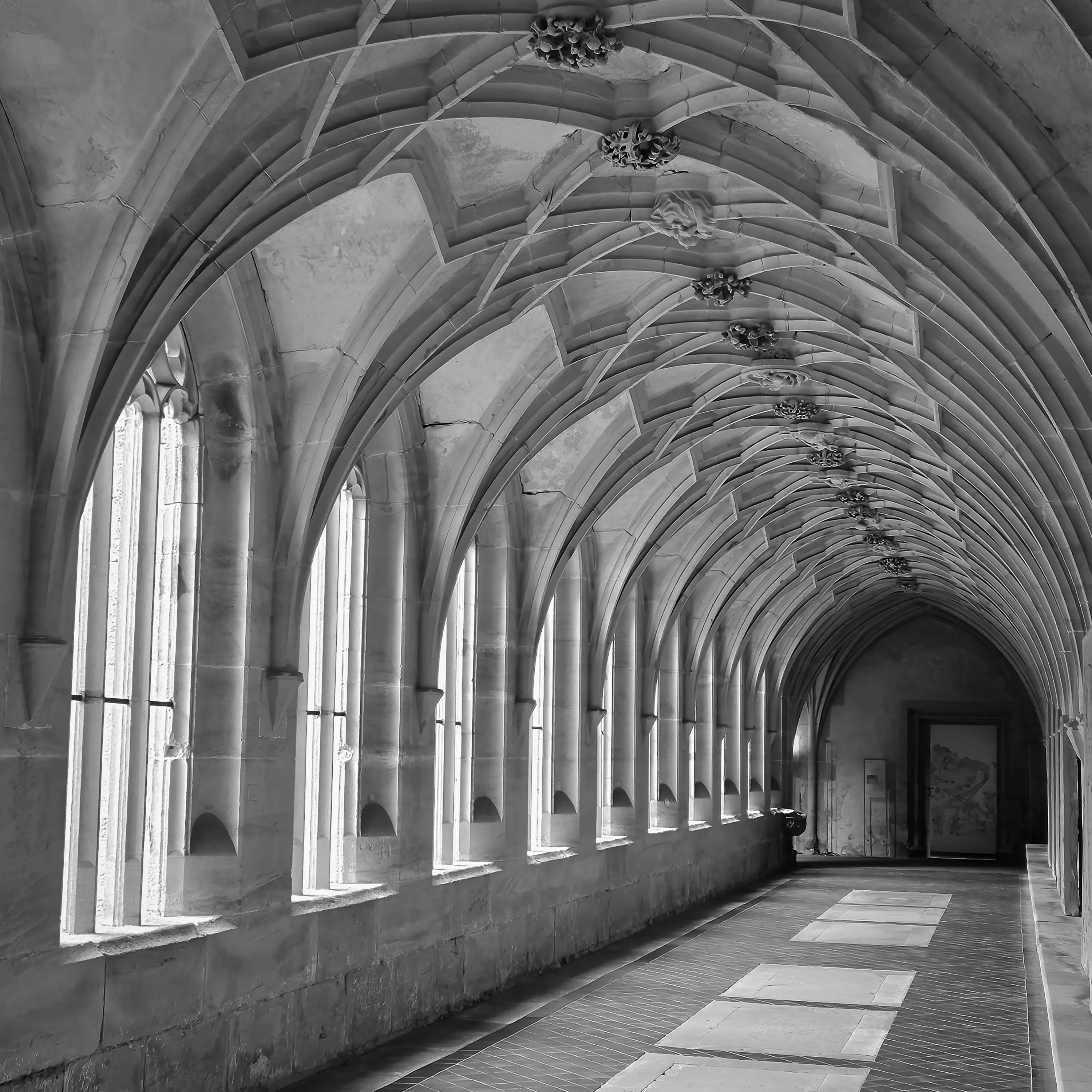
We began our visit in the cloister, the covered walkway that once connected the monks’ living and working spaces. At its center is a fountain surrounded by tidy hedges, creating a peaceful courtyard that was the heart of monastic life. Just off the cloister is the fountain house or lavatorium—the octagonal wash room where monks cleansed themselves before meals—now without its original washing fountain. We used our Schloss Card for admission (more on that at the end of this post), which made it easy to explore Bebenhausen.
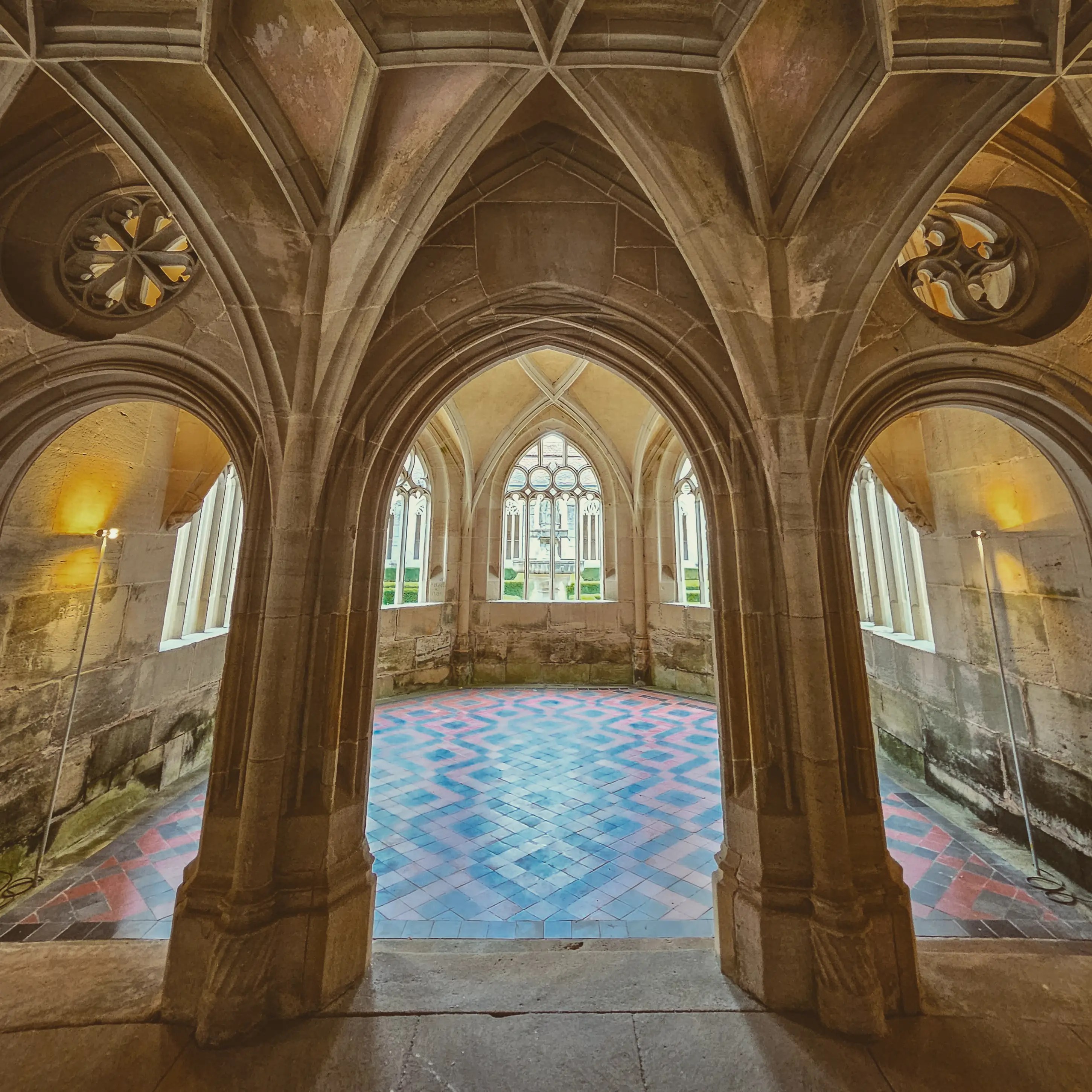


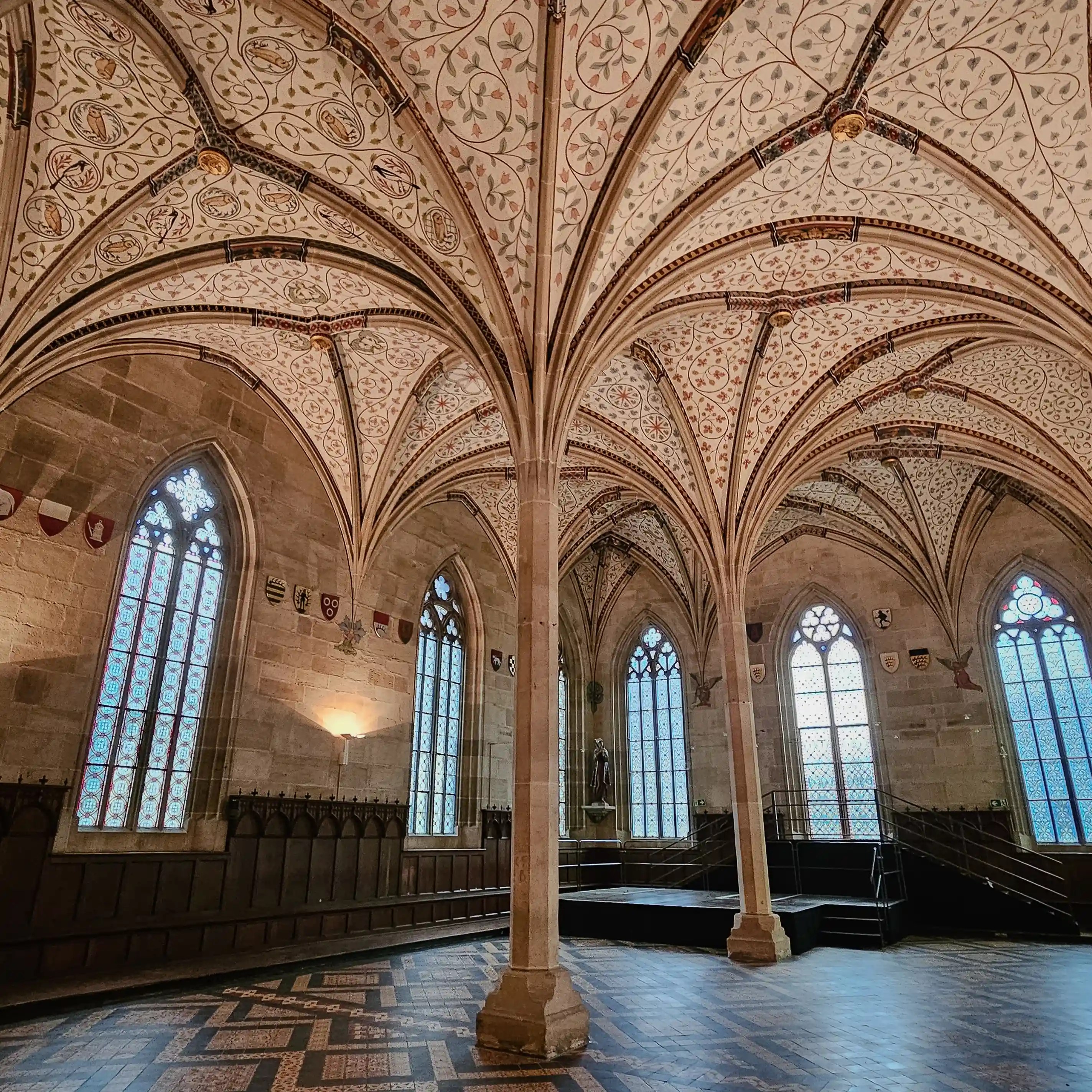
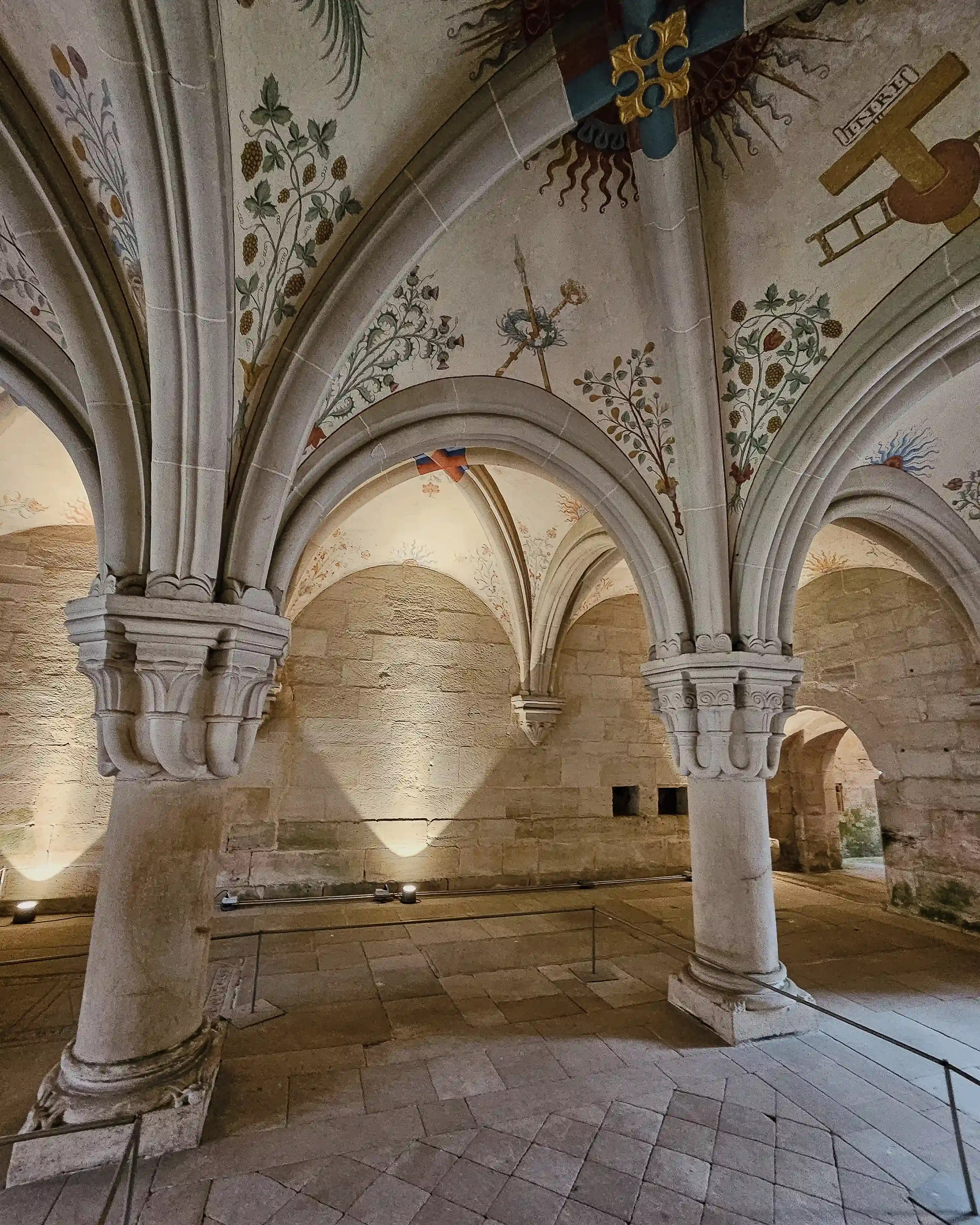
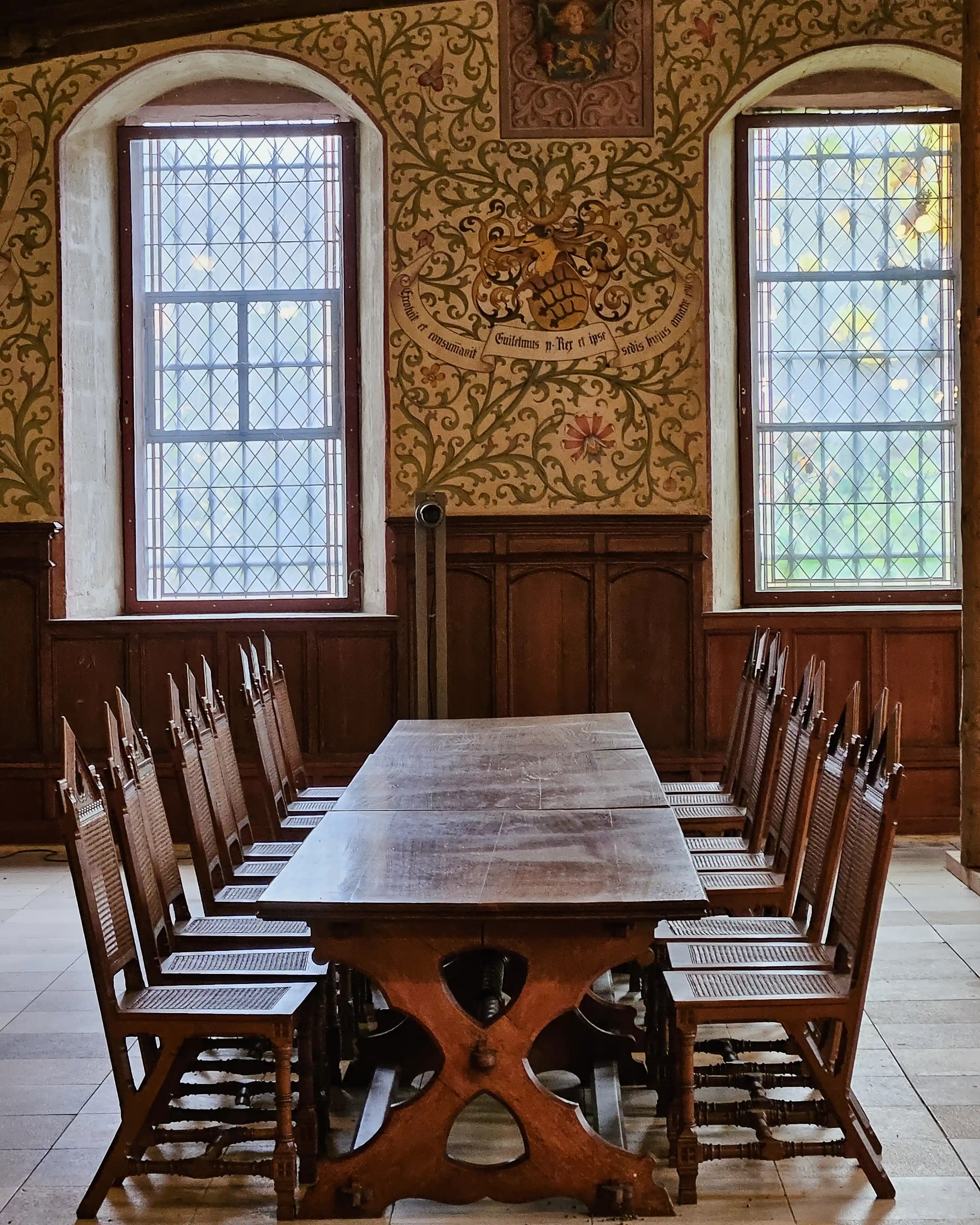
From there, we wandered into vaulted rooms and painted halls. The summer refectory—with its soaring Gothic arches, tall windows, and decorative details—was especially striking. Nearby, the chapter house—where the monks met daily to read a chapter of their rules of order and make decisions about community life—and the winter refectory added to the picture of monastic routine, where meals were taken in silence beneath a timbered ceiling.
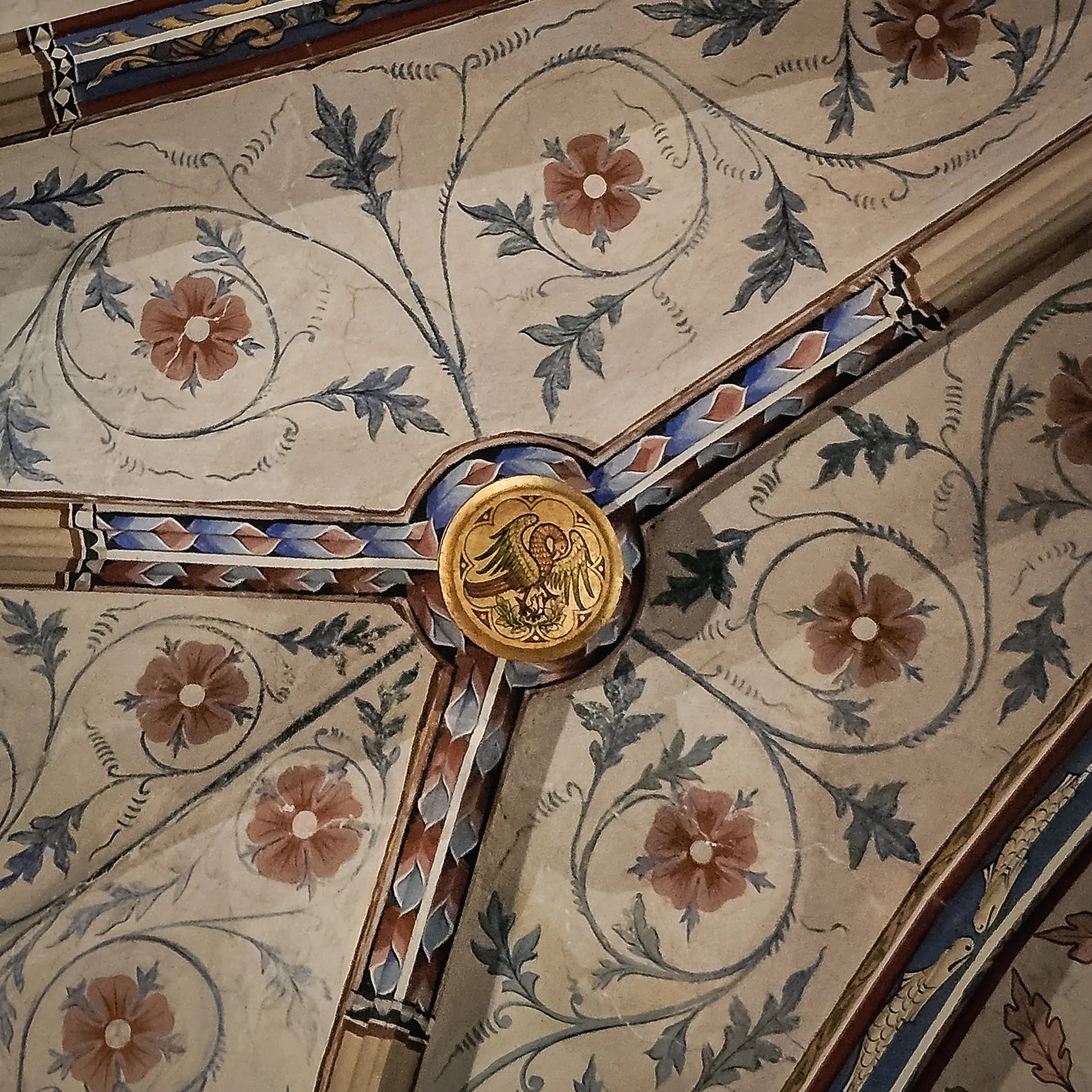
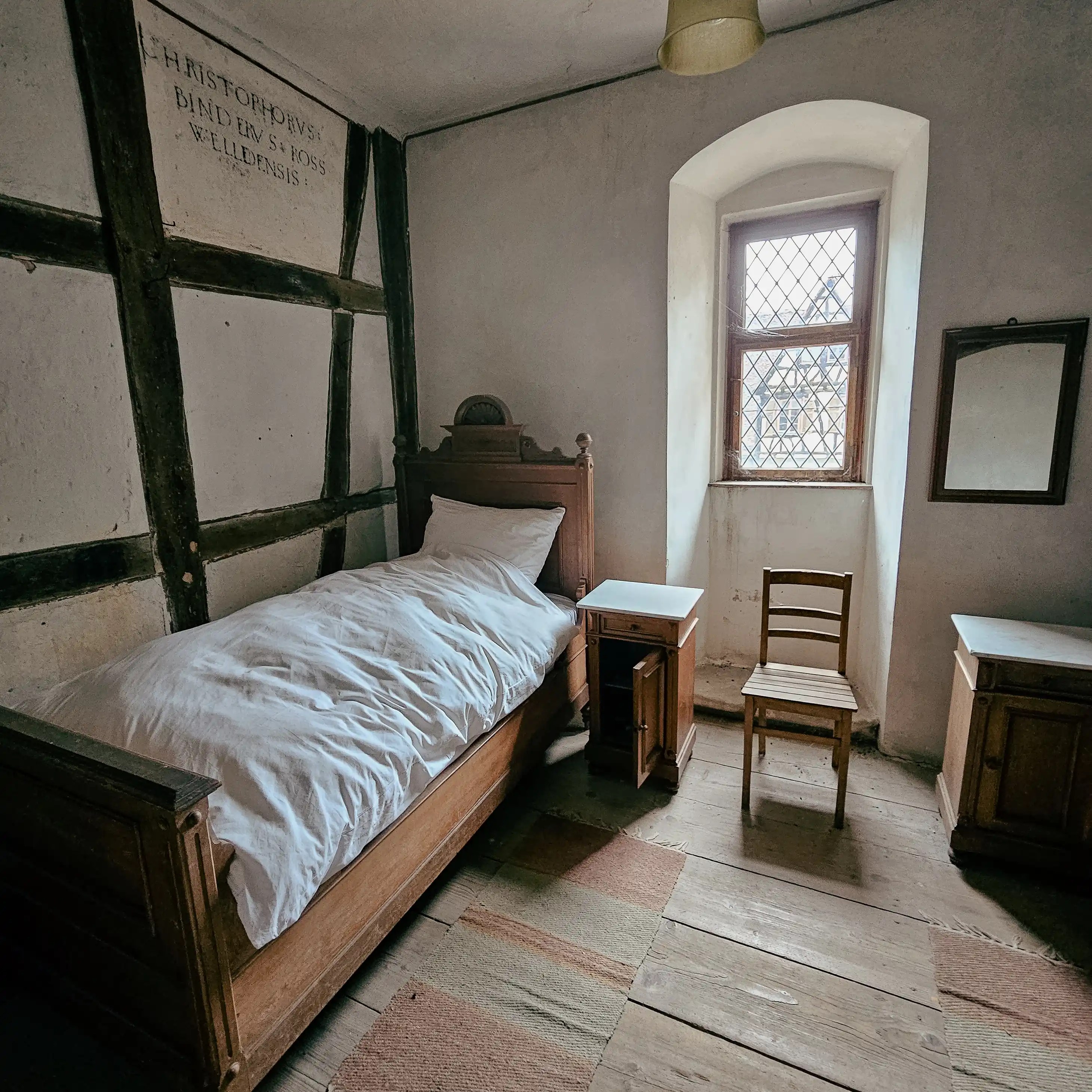
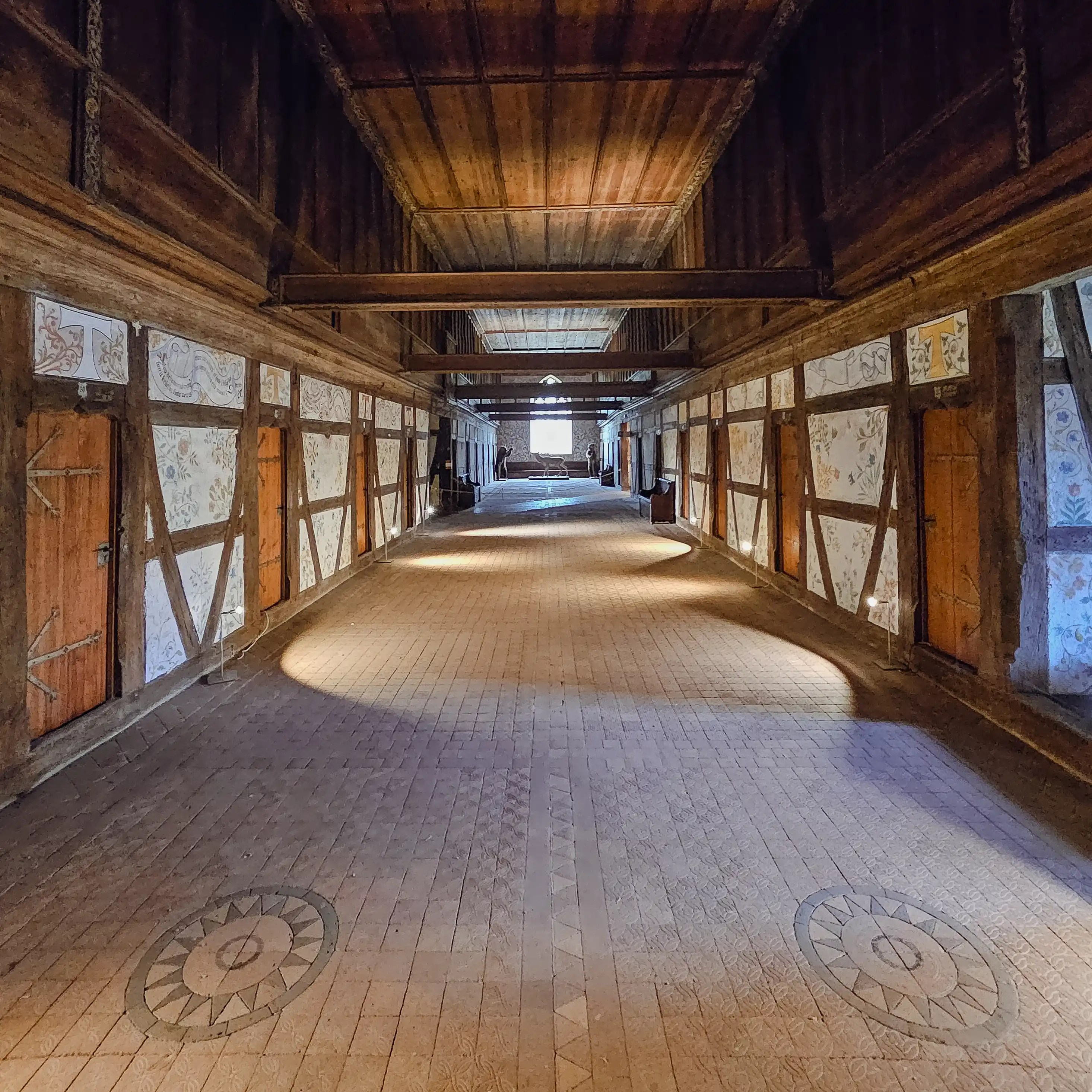
Upstairs, the long dormitory revealed the modest conditions of the monks’ quarters—rows of small doors and heavy beams softened by painted wall decorations that still add color today.

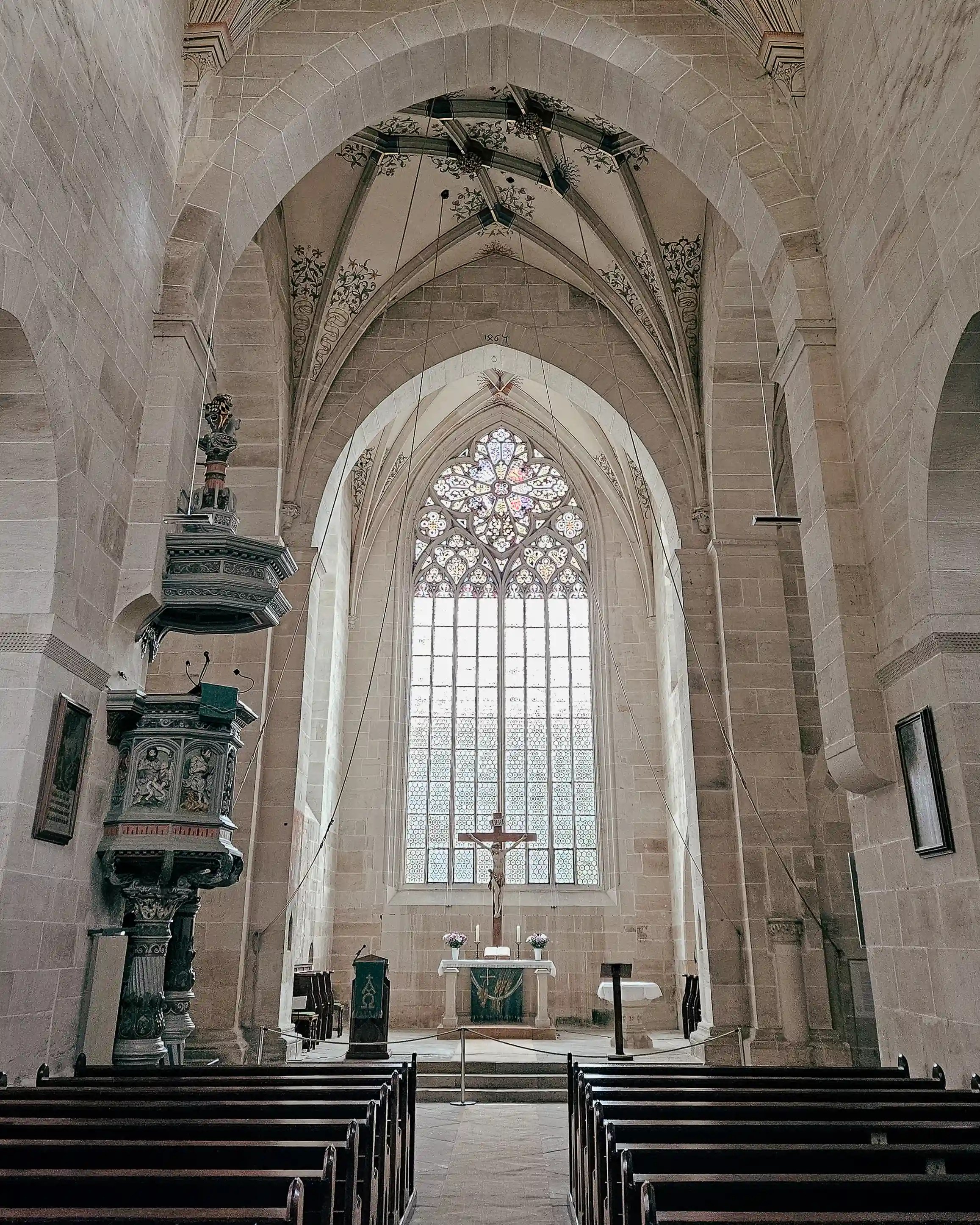
The Monastery Church
The abbey church is the heart of the complex. Tall Gothic windows fill the space with light filtered through delicate stained glass. Walking through, it’s easy to sense both the grandeur intended for worship and the quiet atmosphere that once guided the monks’ prayers.
From Monastery to Palace
The shift from simplicity to splendor is most striking in the palace rooms. We joined a guided tour, which is the only way to see this part of the complex. The tours are offered in German, and we were lucky to have a kind fellow visitor translate much of it for us—but even without full translation, it’s still well worth joining to see inside the palace.
After the monastery was dissolved, the buildings became a hunting lodge for the kings of Württemberg, and later, in the turbulent years after World War II, even served as the seat of the parliament of Württemberg-Hohenzollern before Baden-Württemberg was formed. The last royal residents were King Wilhelm II of Württemberg and his wife, Queen Charlotte, who made their home here after his abdication from the throne in 1918—adding yet another chapter to Bebenhausen’s long history.
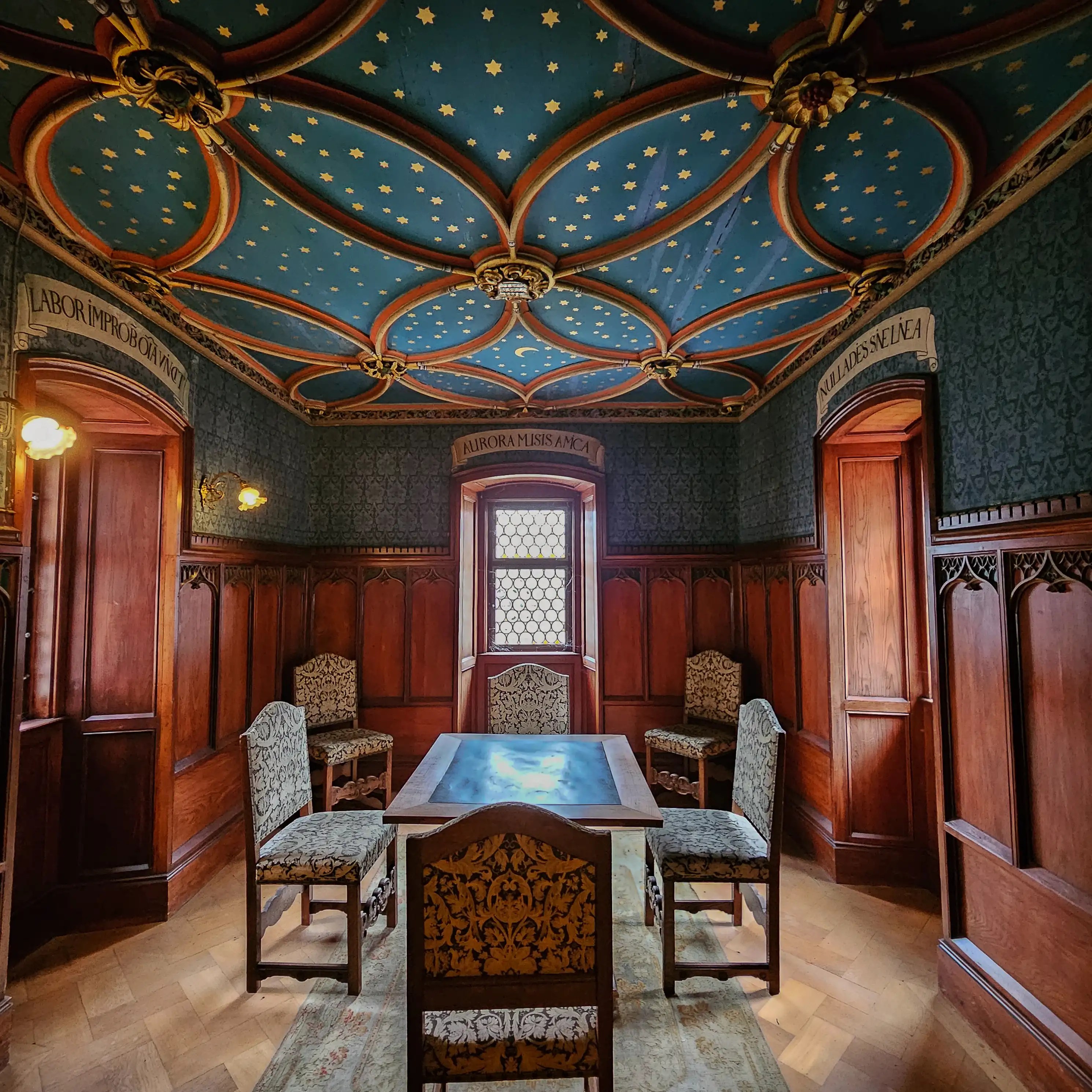
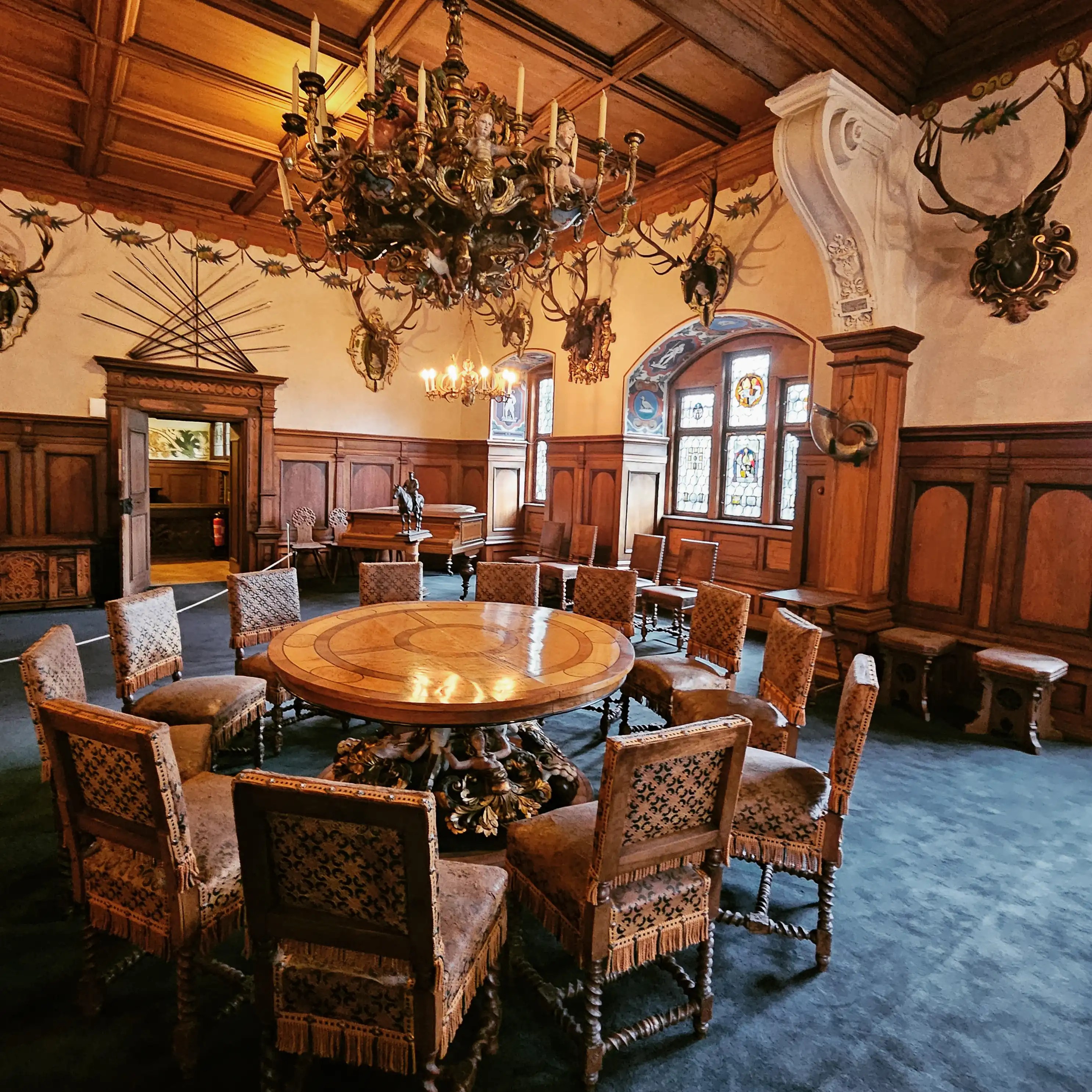
The tour took us to the vast palace kitchen, built in the 19th century, with its enormous cast-iron stove still dominating the space. From there, the rooms became increasingly ornate—wood-paneled walls, patterned ceilings, and mounted trophies pointing to its royal past. One of the most talked-about stops is the queen’s bathroom, famous for its modern-for-the-time fixtures and decorative detail.


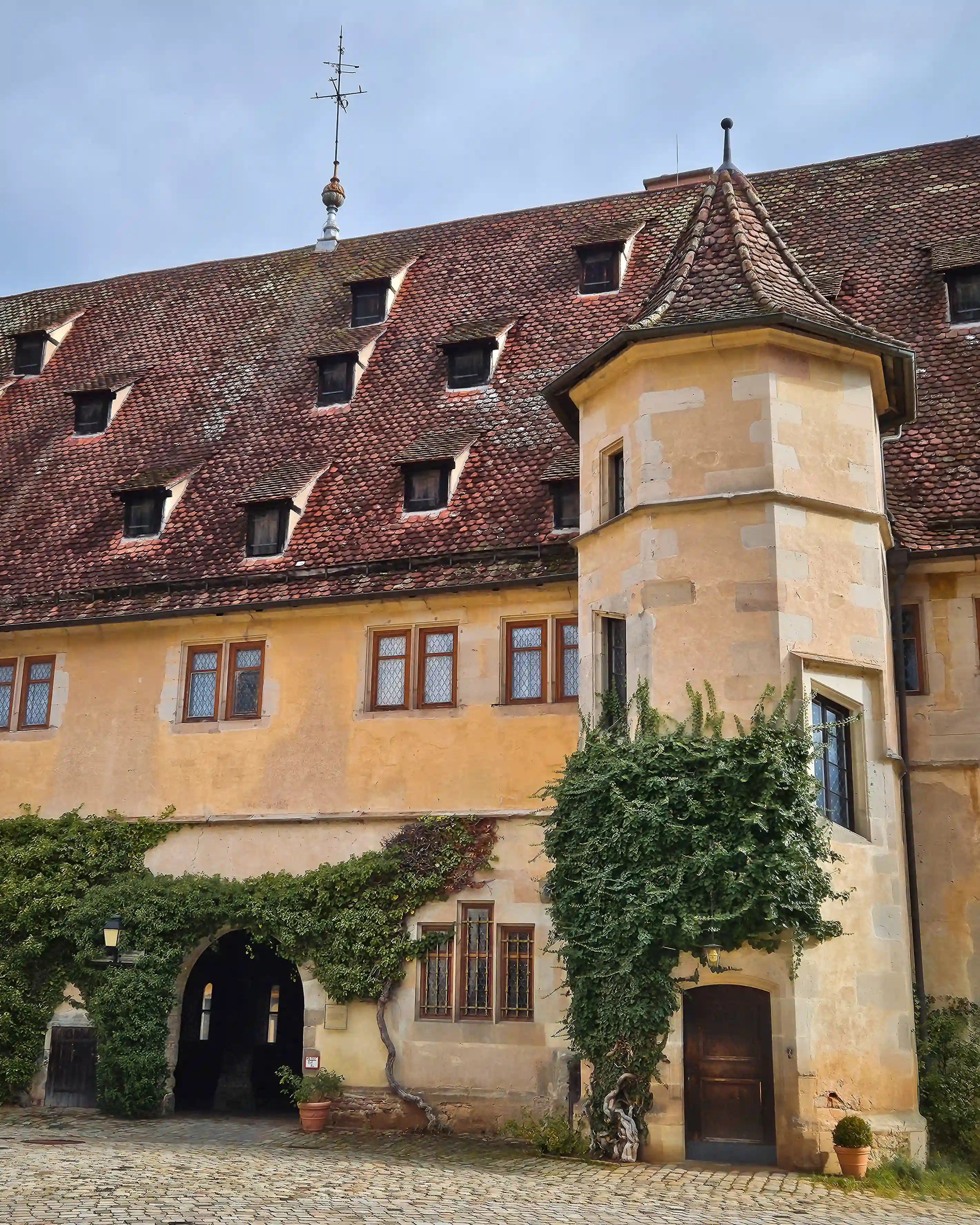
We also visited the Green Hall and the Blue Hall, two of the palace’s grand reception rooms. The Green Hall impresses with its ornate wood paneling and murals, while the Blue Hall is known for its elaborate chandeliers and hunting-themed décor. Together, they highlight how the former monastery was transformed into a prestigious royal residence.
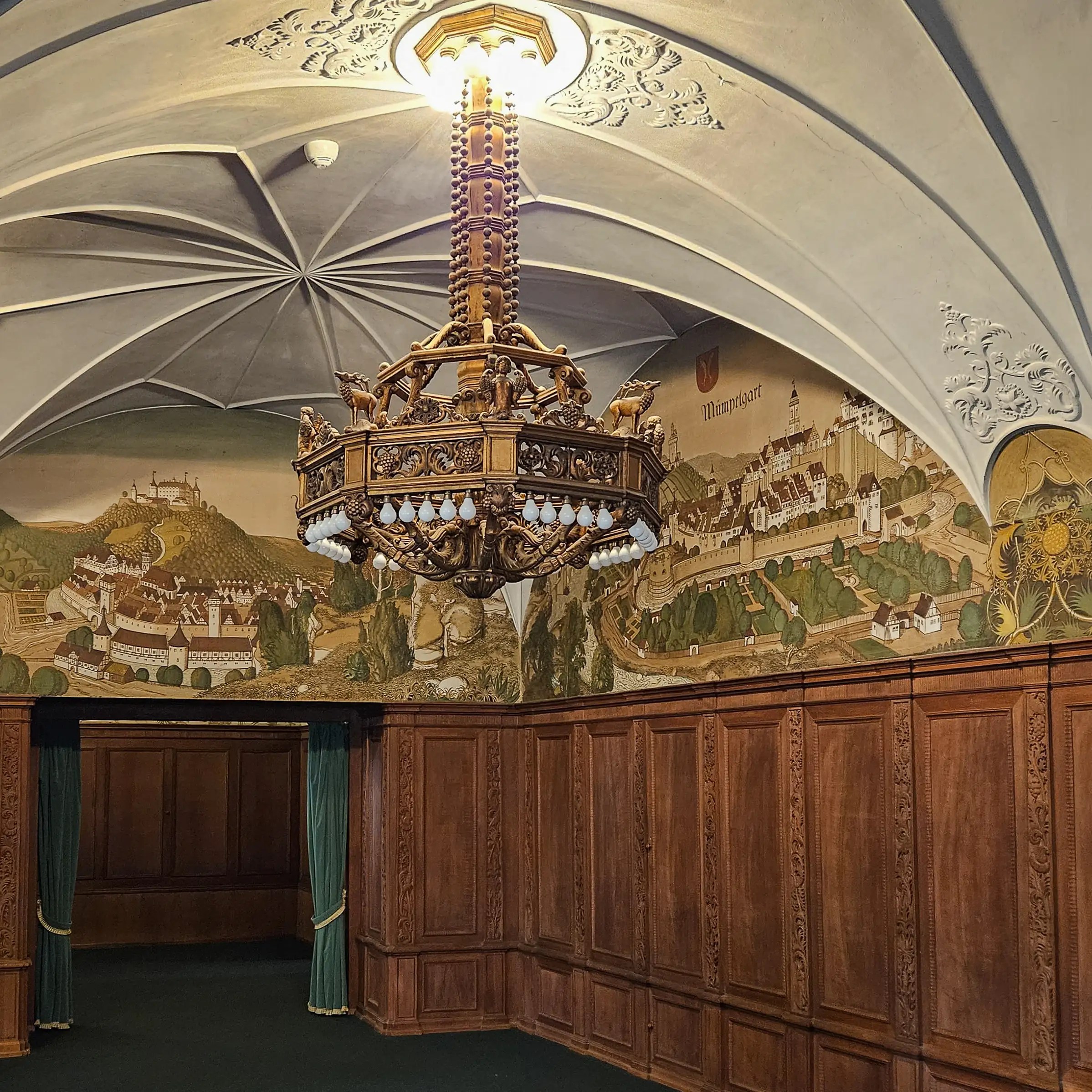
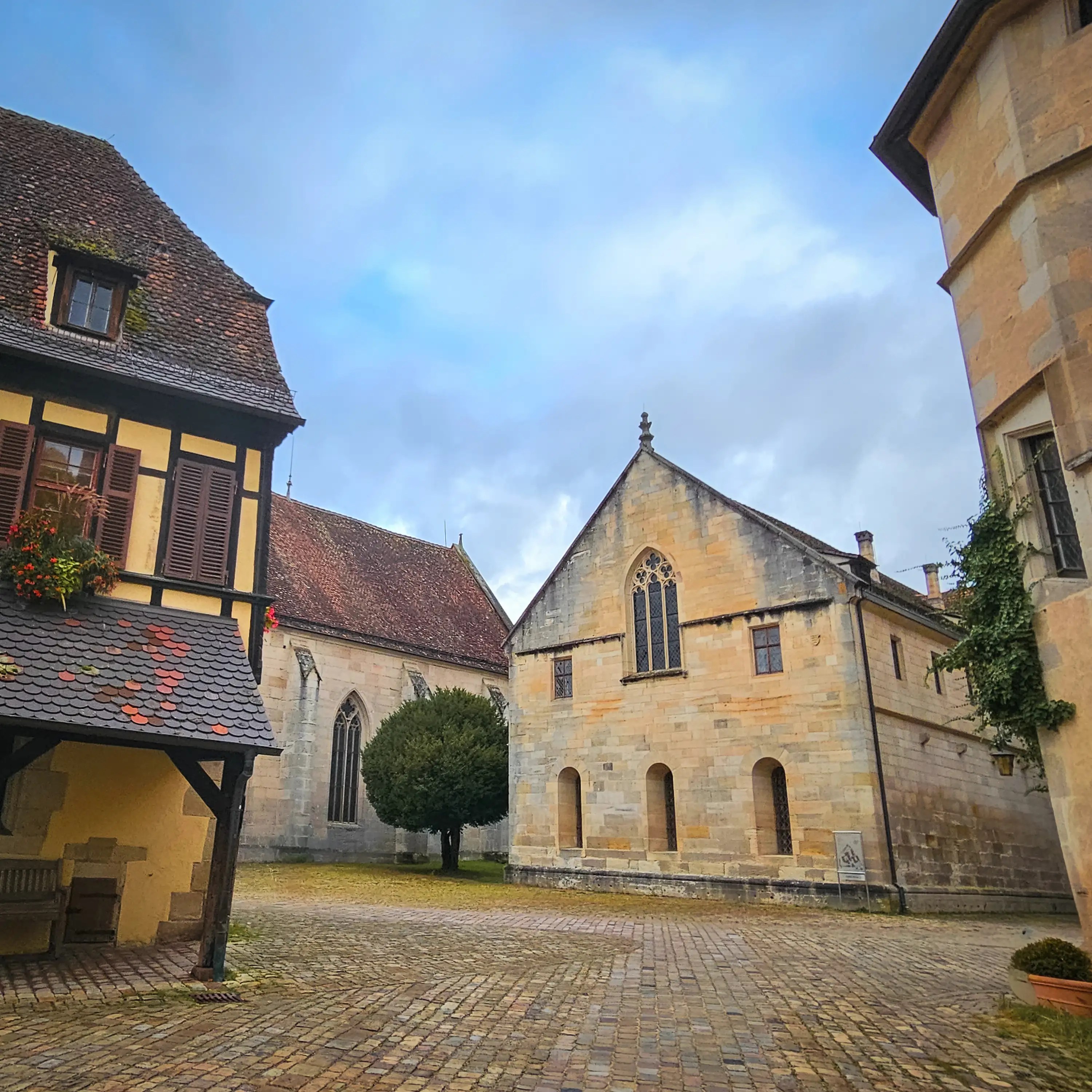
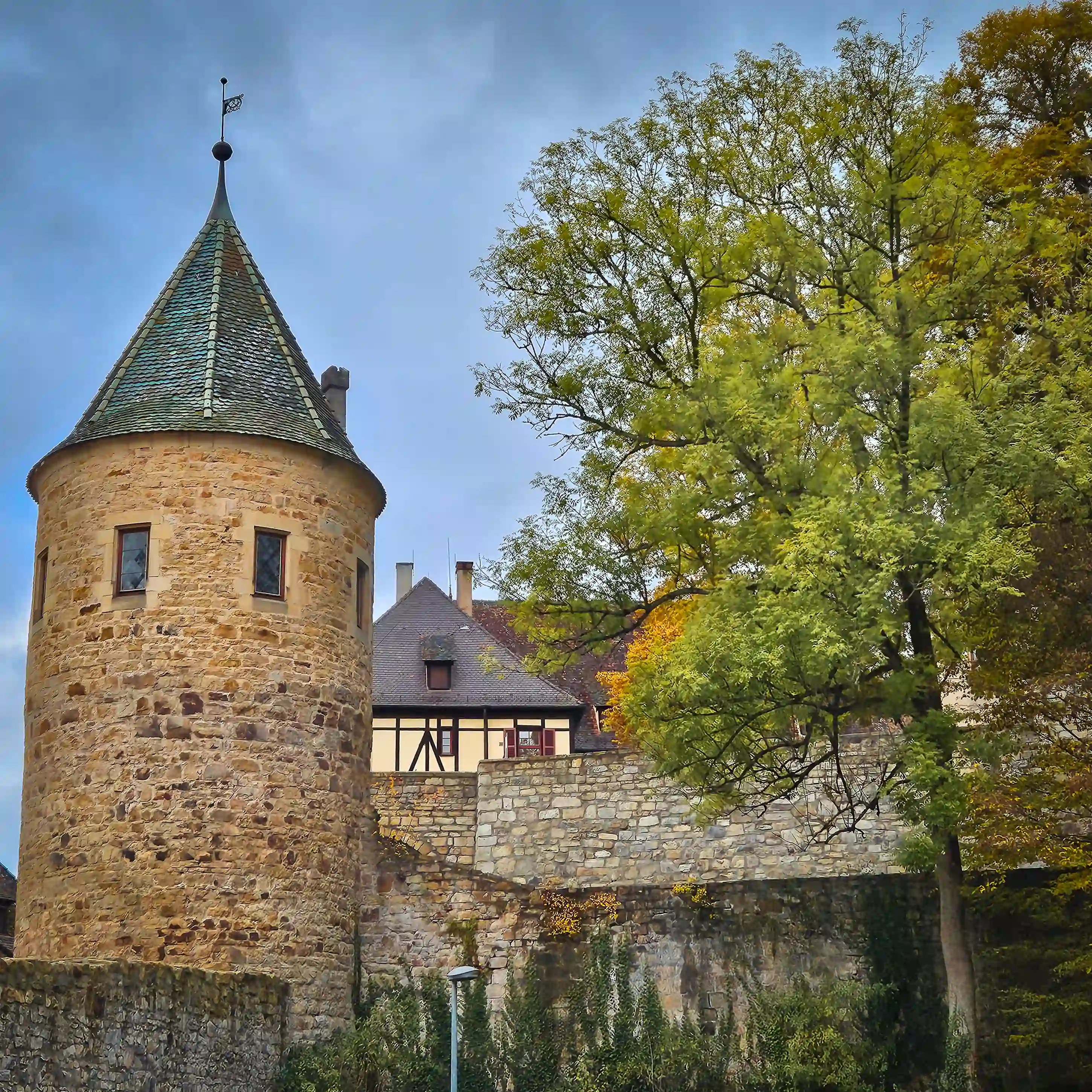
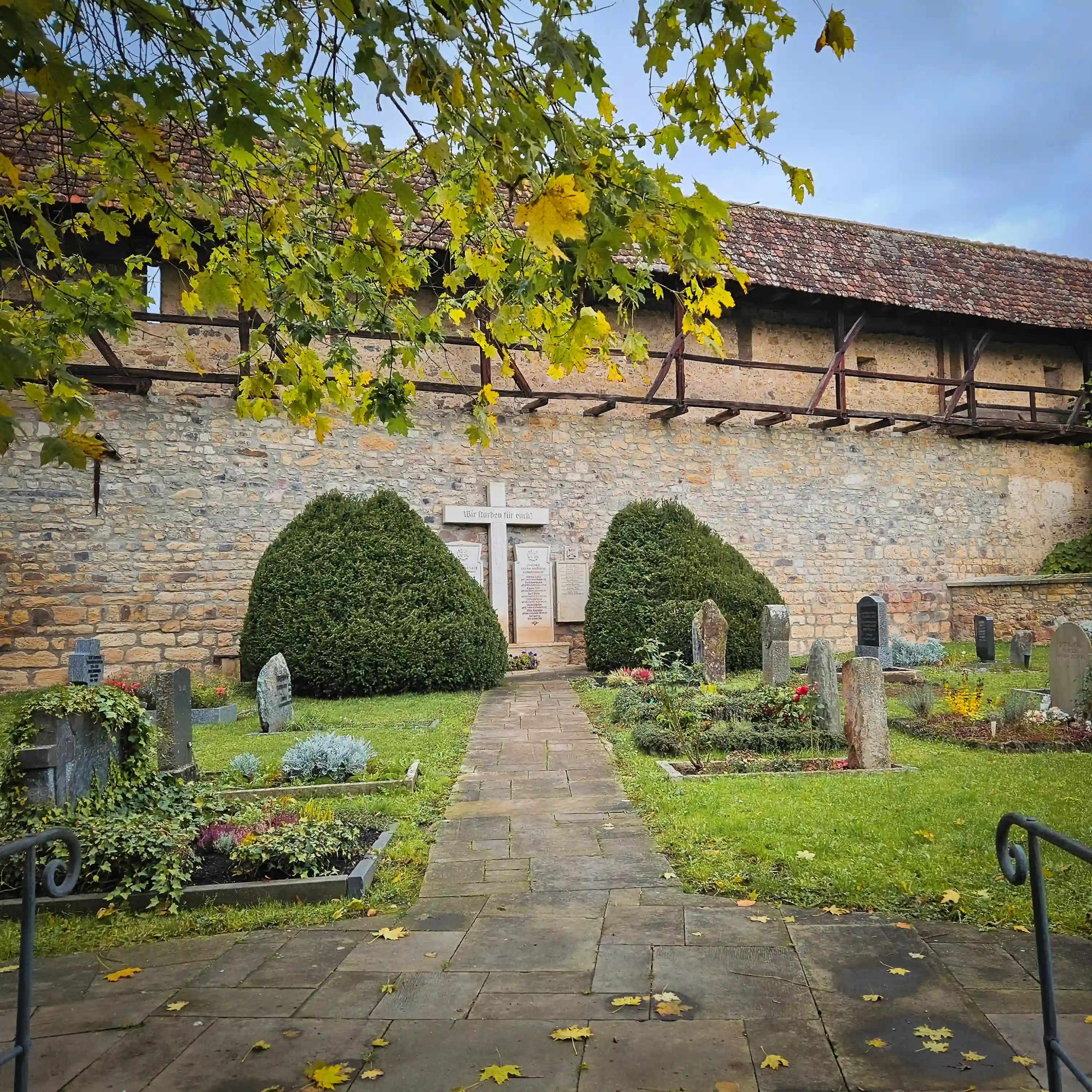
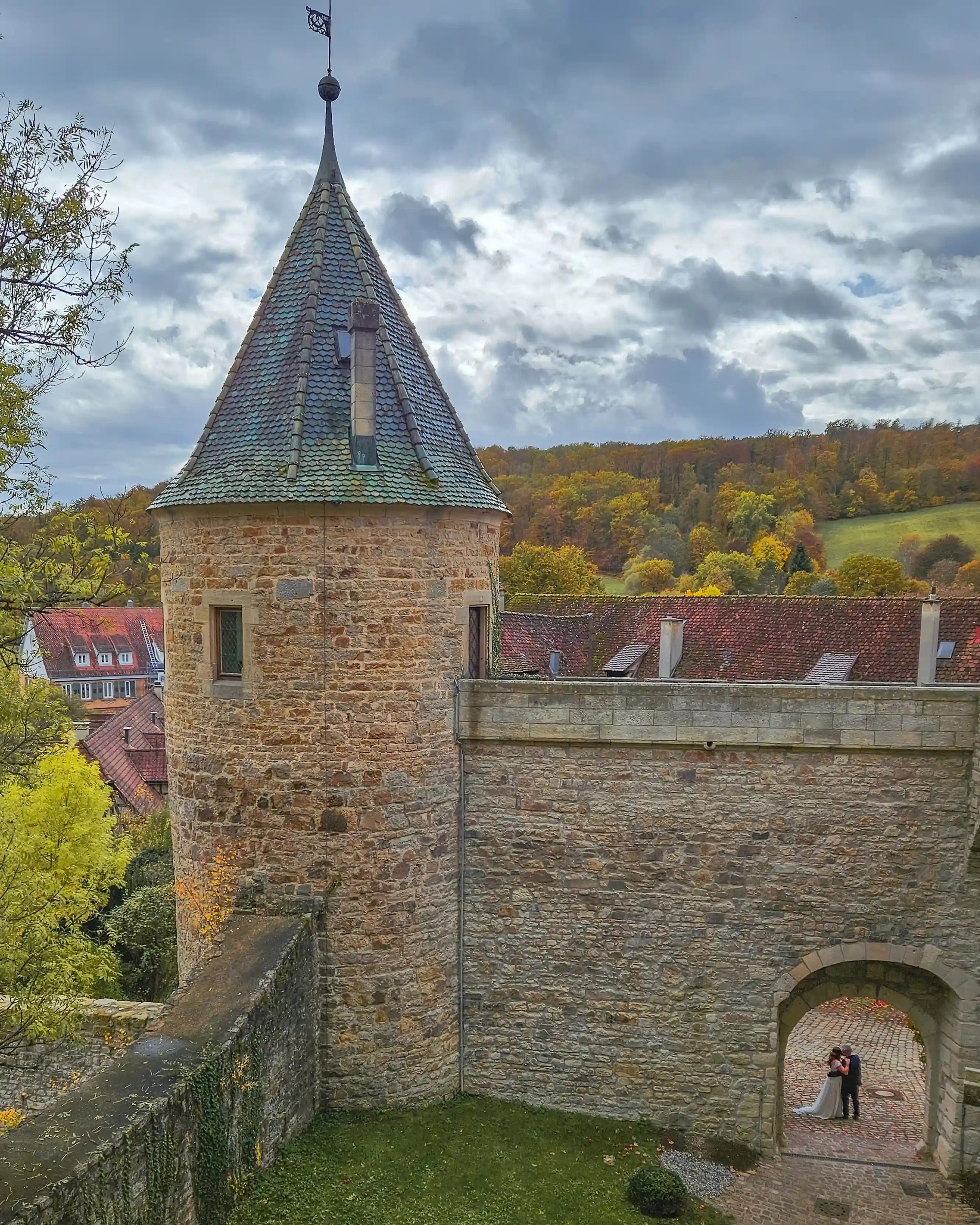
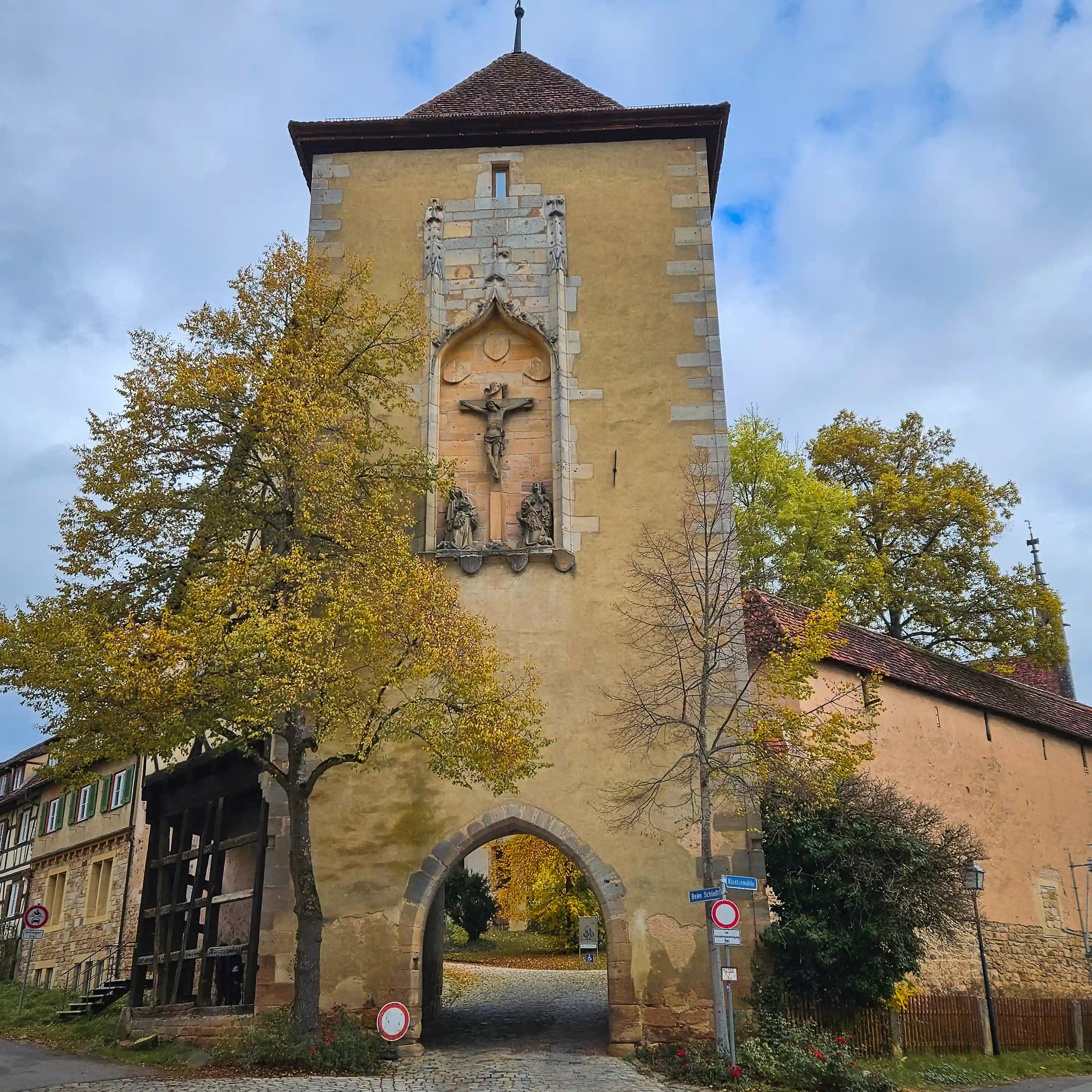
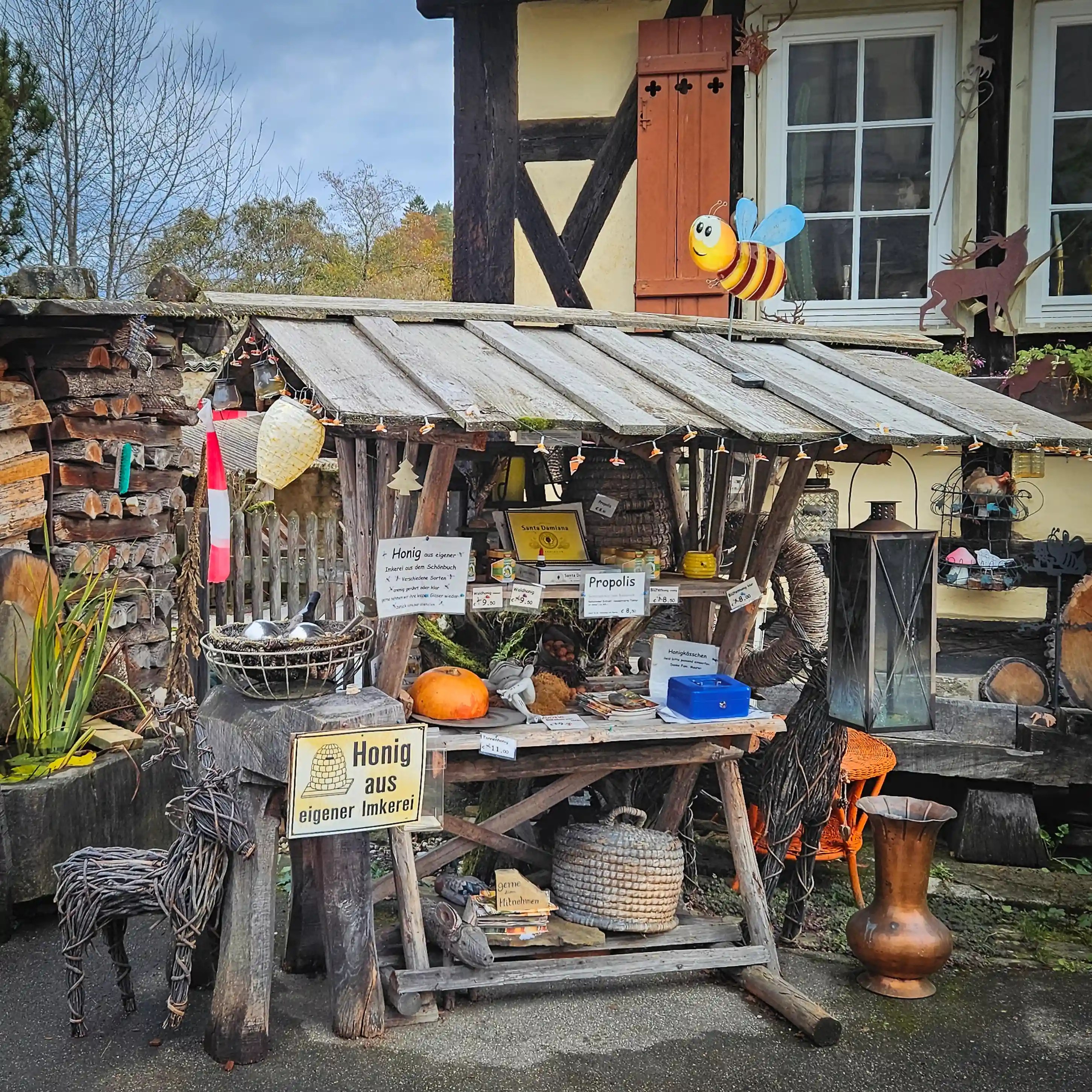
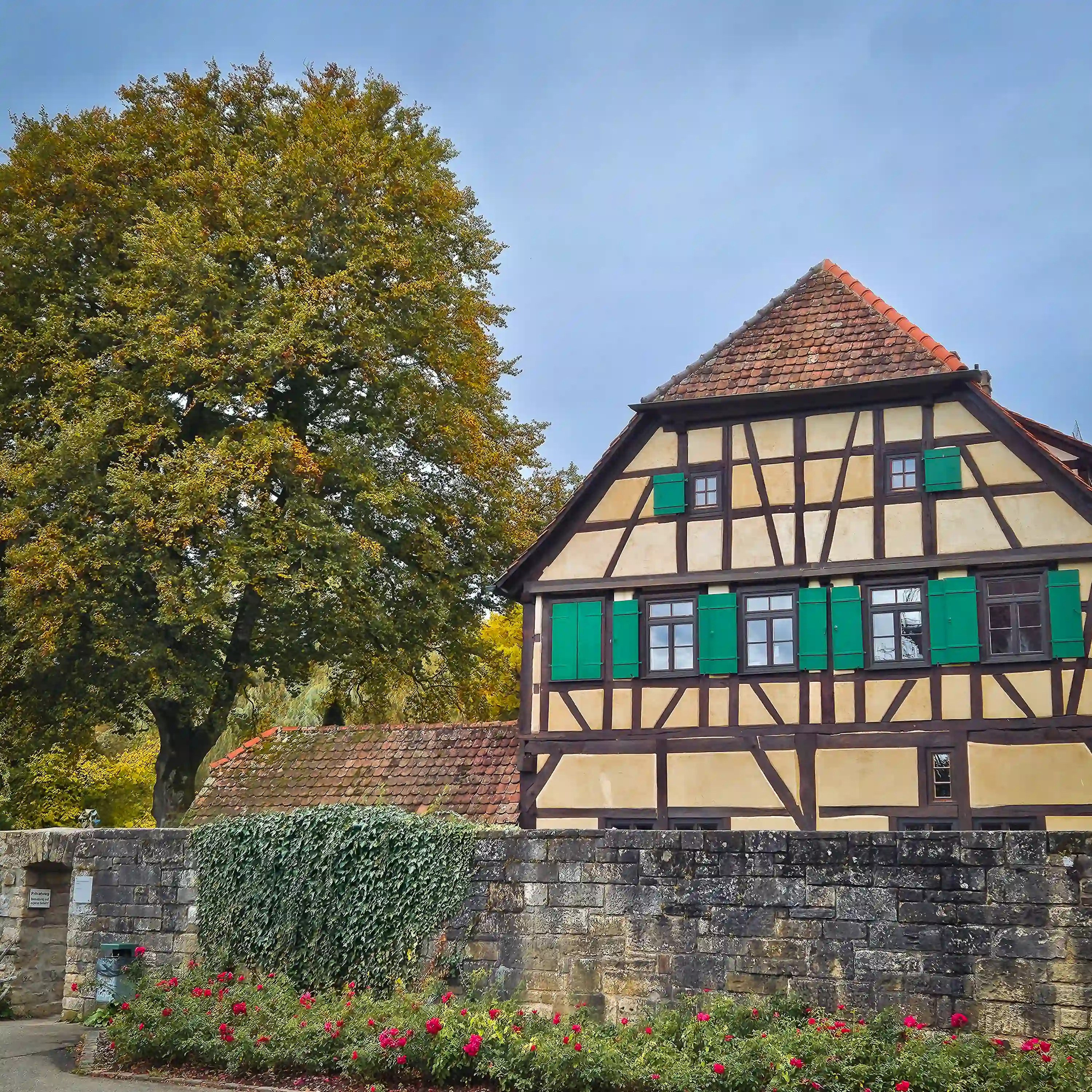
Outside, half-timbered houses and watchtowers ring the monastery. Ivy clings to stone walls, and the surrounding village feels so quaint and picturesque. On our walk, we even came across a small self-service hut selling jars of local honey—a little taste of Bebenhausen to take home.



Location & Visitor Information
Bebenhausen is about 35 minutes (43 km / 27 miles) southwest of Stuttgart by car.
By public transport, the journey takes around 1 hour 15 minutes, depending on connections. If you’re using the Deutschland Ticket—a monthly subscription that covers regional trains and buses across Germany—it includes the trip to Bebenhausen. The DB Navigator and VVS apps are both helpful for checking schedules and planning the best route.
For admission, we used our Schloss Card, which currently covers 26 castles, monasteries, and gardens across Baden-Württemberg. The card is valid for a full year and can be purchased at any participating site when you visit. We’ve really enjoyed having it—it encouraged us to explore places we might have otherwise missed, and with many sites still left to see, we know we’ll need to get another one at some point in the future.
Not all sites are open year-round, and hours can change seasonally, so it’s always best to check the official website before planning your visit.
Other Things to See and Do
- Tübingen – Only about 7 km / 4 mi (10 minutes by car, or a short bus ride) from Bebenhausen. This university town is perfect for a stroll along the Neckar River, exploring half-timbered streets, or taking a punt boat ride in summer.
- Schönbuch Nature Park – The monastery sits right on the edge of the park. There are miles of walking and cycling trails through forested hills, making it easy to combine culture and nature in a single trip.
- Hohentübingen Castle – Around 10 km / 6 mi (15 minutes by car). Overlooking Tübingen, this castle is home to the university’s museums, including archaeological collections and historic artifacts.
- Reutlingen – About 20 km / 12 mi (25 minutes by car). Known for its medieval center and the Spreuerhofstraße, one of the narrowest streets in the world.
Final Thoughts
What we loved most about Bebenhausen was how it brings together so many eras at once: a monastery cloister, a royal hunting lodge, even a parliament. The painted walls and ceilings were especially beautiful, and visiting in the fall—with the colorful leaves surrounding the village and monastery—made it even more memorable.
Have you visited Bebenhausen or another German monastery? Share your questions or favorite memories in the comments below—I’d love to hear from you!

Leave a comment