


Tucked into the Nagold Valley in Baden-Württemberg, Germany, the village of Hirsau is framed by forested hills and centuries of history. Once one of the most important centers of Benedictine life in Europe, today it’s best known for its dramatic monastery ruins and forest trails that lead deep into the Black Forest.
Hirsau is now officially a district of Calw, a small town just to the south and famous for its timber-framed houses and as the birthplace of Nobel Prize–winning author Hermann Hesse, author of classics such as Siddhartha and Steppenwolf. The Nagold Valley has long been a cultural corridor, connecting settlements along the Nagold River with the surrounding Black Forest. For centuries, Calw prospered as a trading town, while Hirsau rose to prominence as a religious and intellectual hub.
Breakfast in the Cloister: Café im Kloster
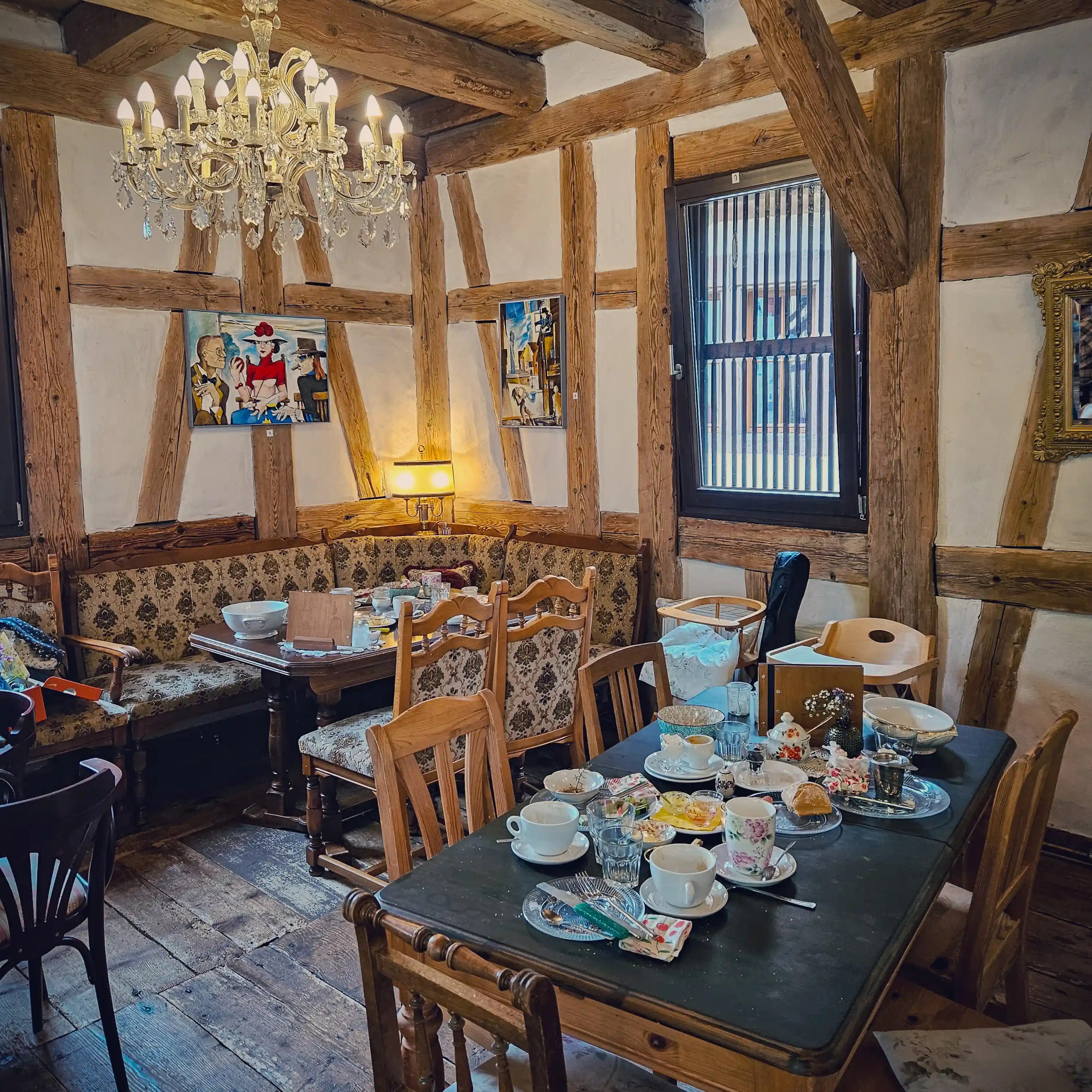
We started our morning at Café im Kloster, located right inside the grounds of the Monastery of St. Peter and Paul in Hirsau. The café is charming—its timber-framed walls and outdoor tables set near the ruins make it a memorable place to begin the day. If you want breakfast here, reservations are a must. Since we hadn’t reserved, the usual breakfast platters were already gone, but the staff offered us a warm, hearty quiche instead. It’s also a good spot to try traditional desserts like Black Forest cherry cake if you’re visiting later in the day.




The Monastery of St. Peter and Paul: From Reform to Ruin
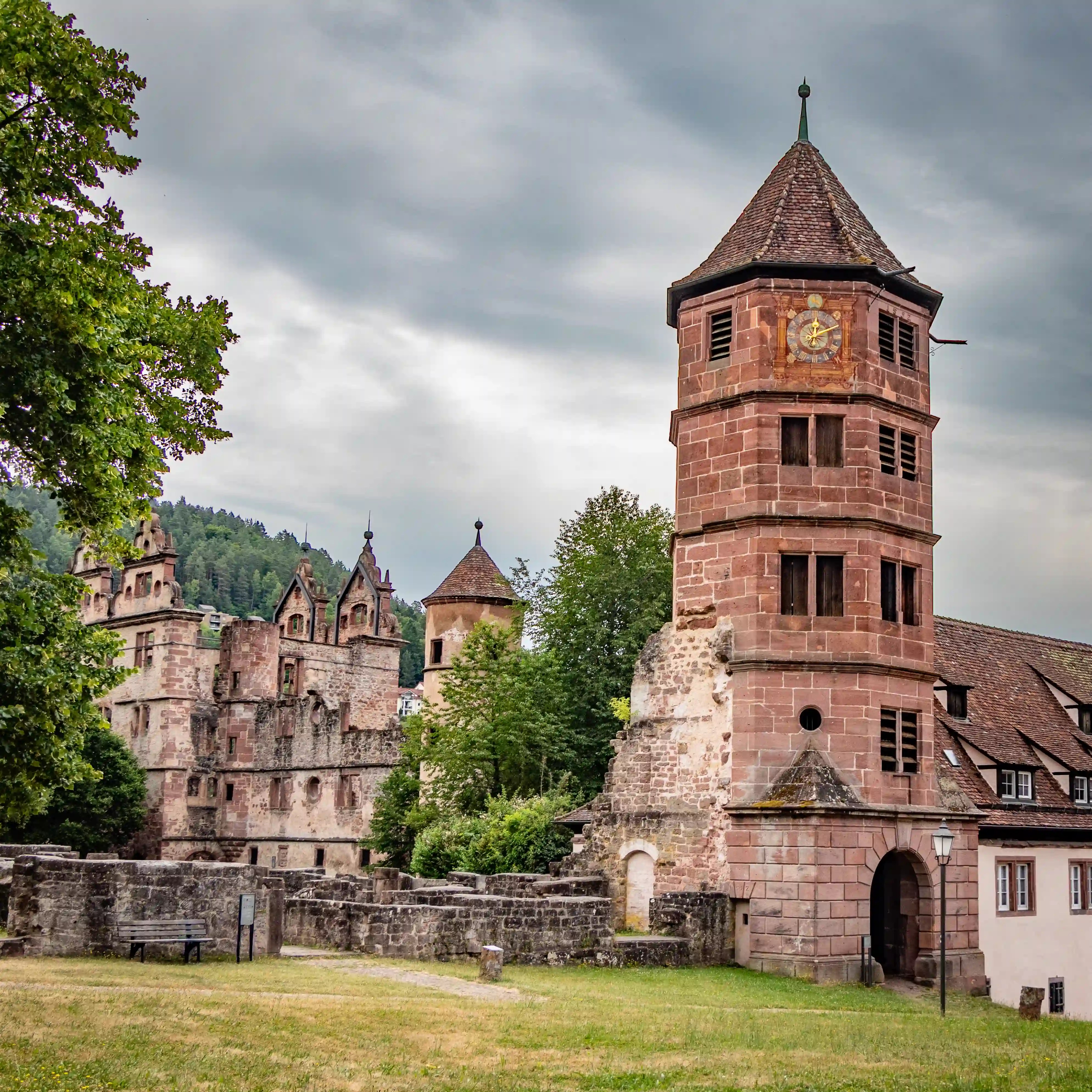
Founded in 1091, the Monastery of St. Peter and Paul—often called Hirsau Monastery—became one of the most influential Benedictine abbeys in Germany. It embraced reforms from France that called for stricter discipline while also encouraging charity and the arts. At its height, about 150 monks lived here, and Hirsau’s influence reached far beyond the Black Forest.
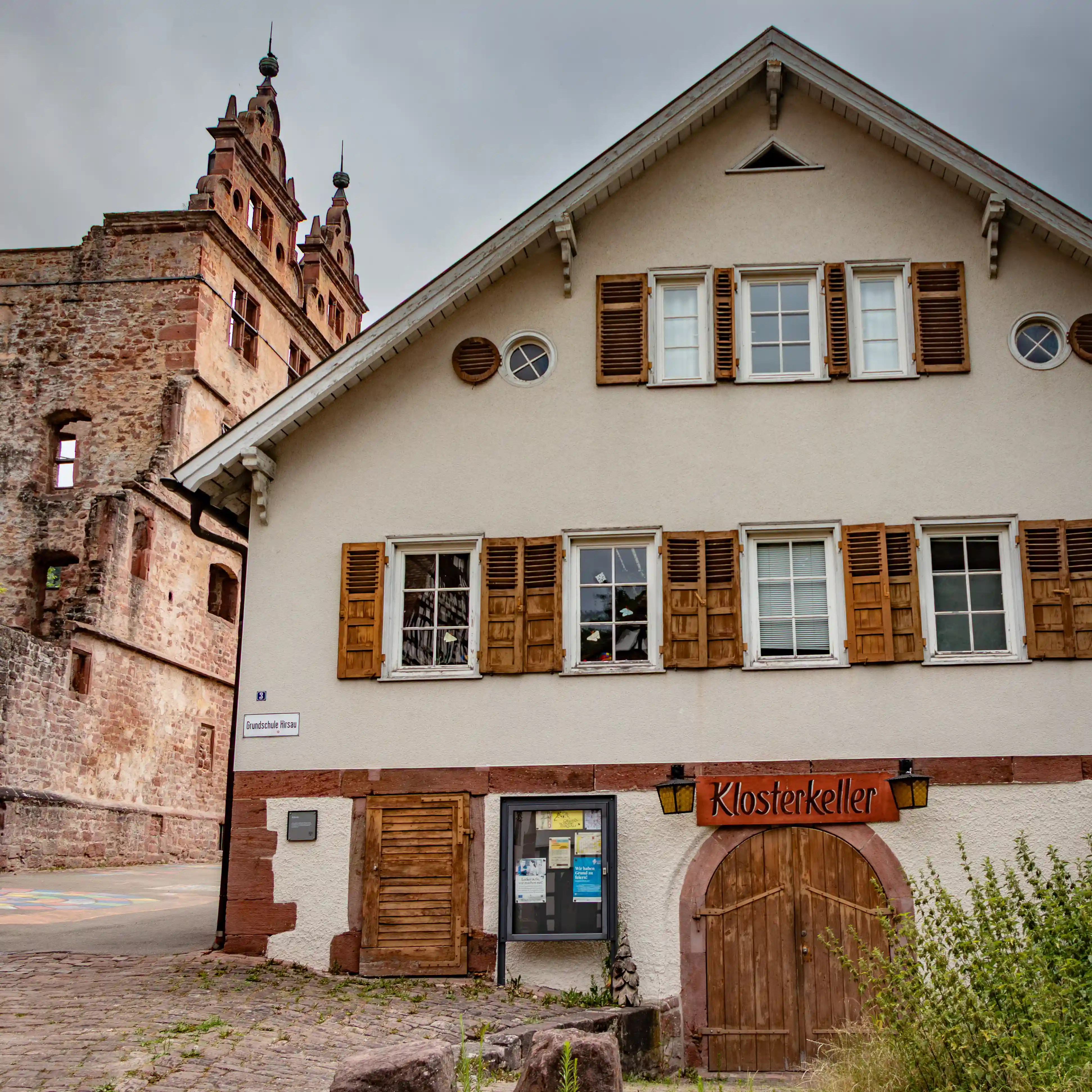
Today, the monastery lies in ruins, but the site is still impressive. Massive red sandstone walls, cloister arches, and gabled facades rise above the valley floor, hinting at the abbey’s former scale. Much of the complex was destroyed during the Nine Years’ War in 1692, when French troops set fire to the monastery, leaving the ruins that stand today.



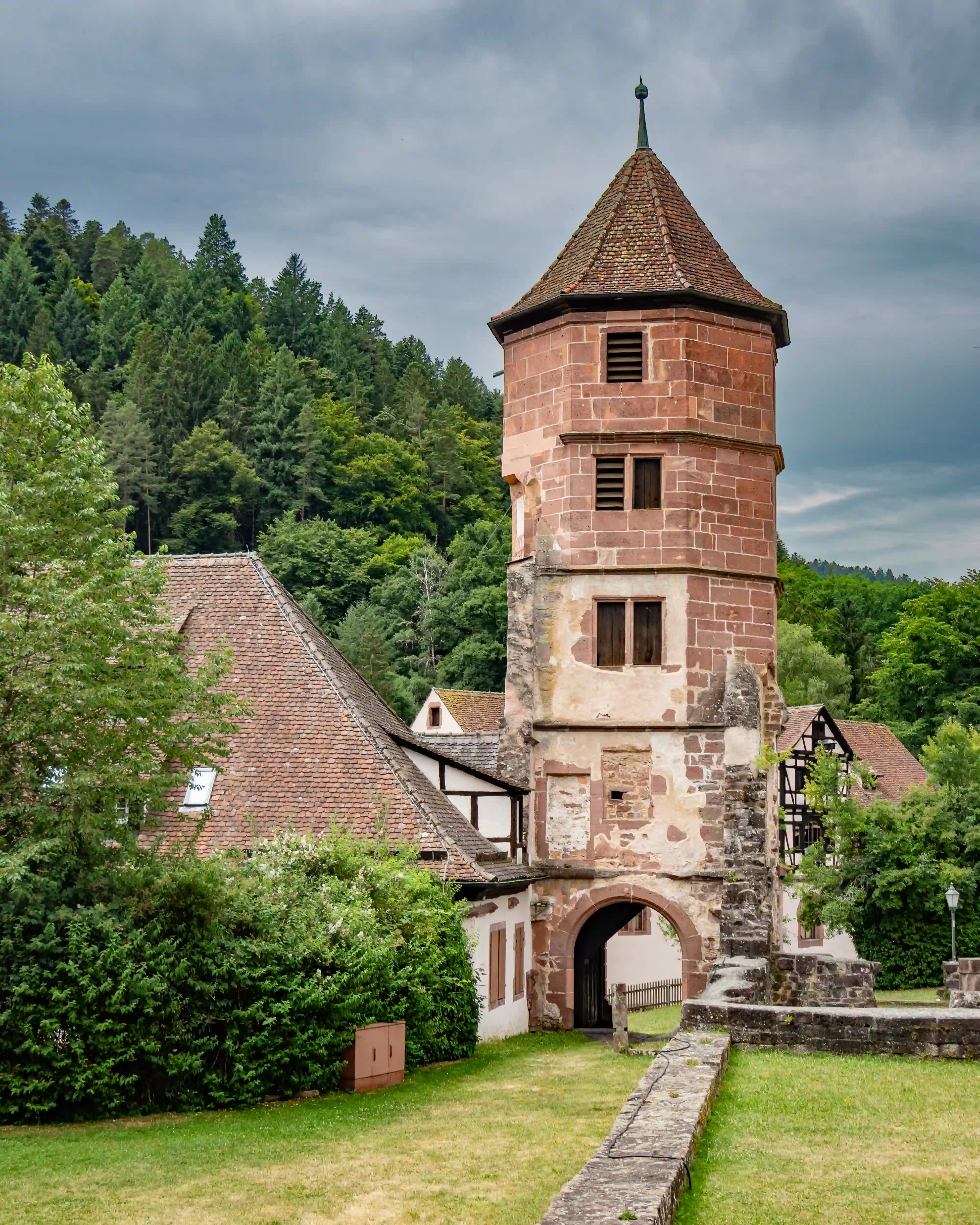
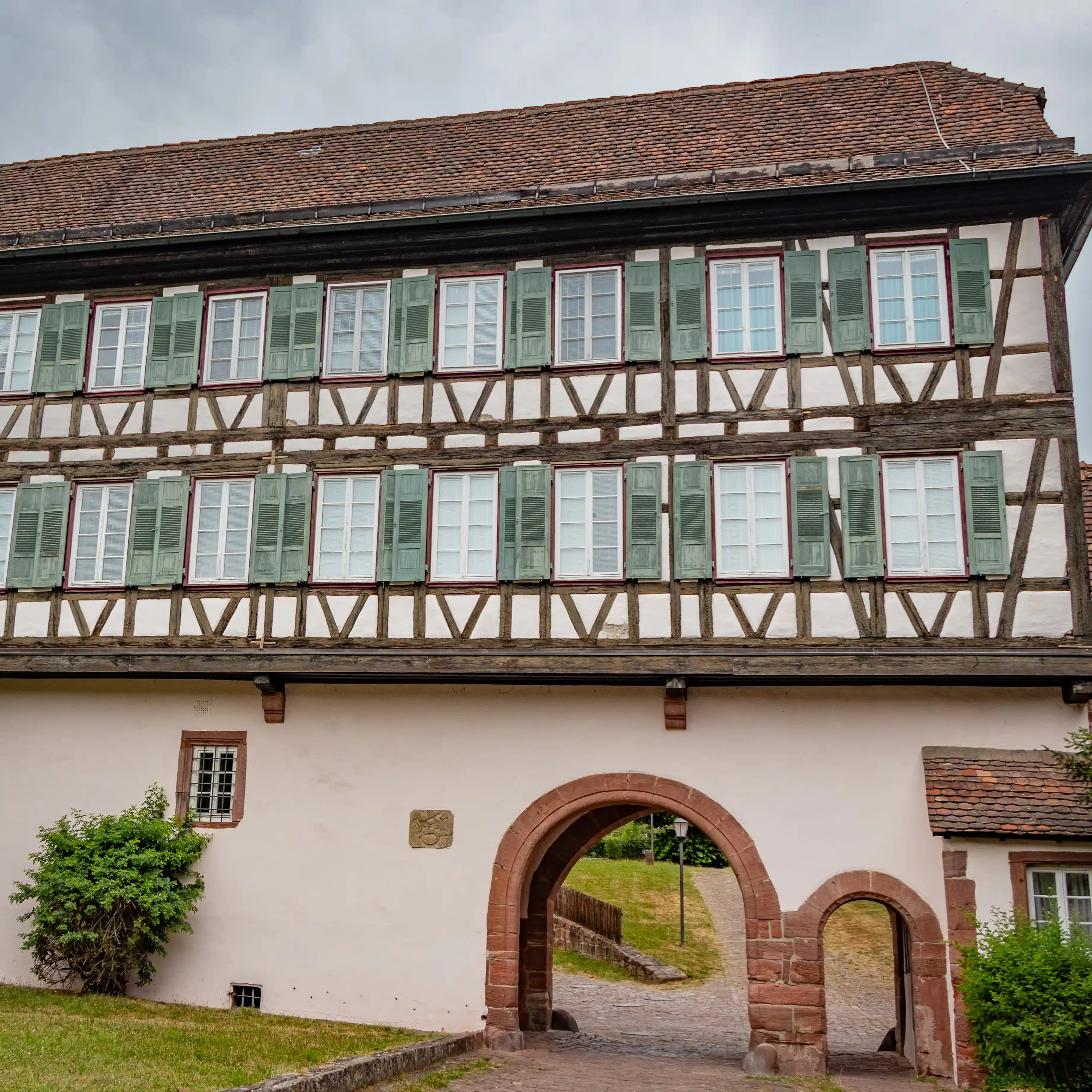
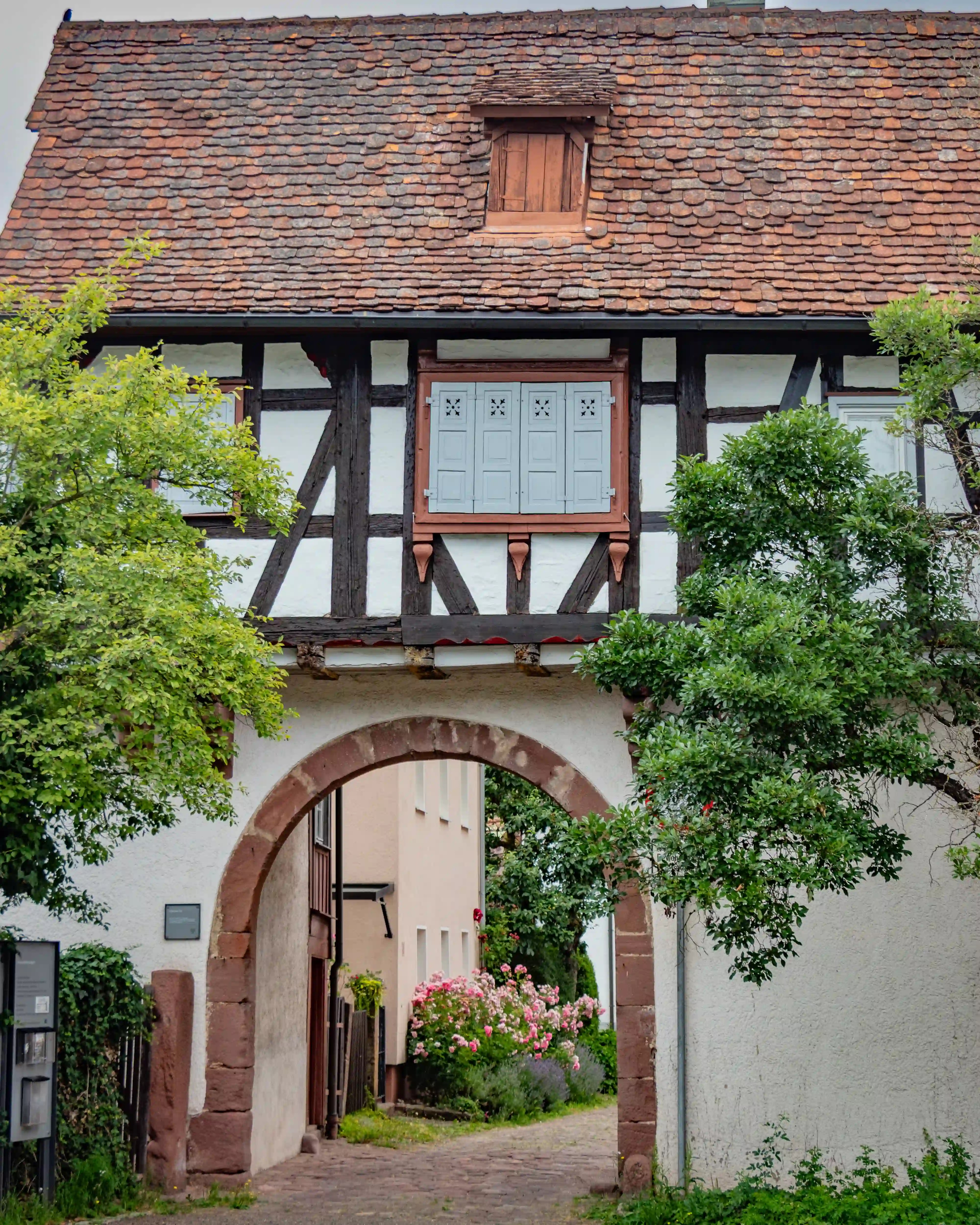

The Owl Tower
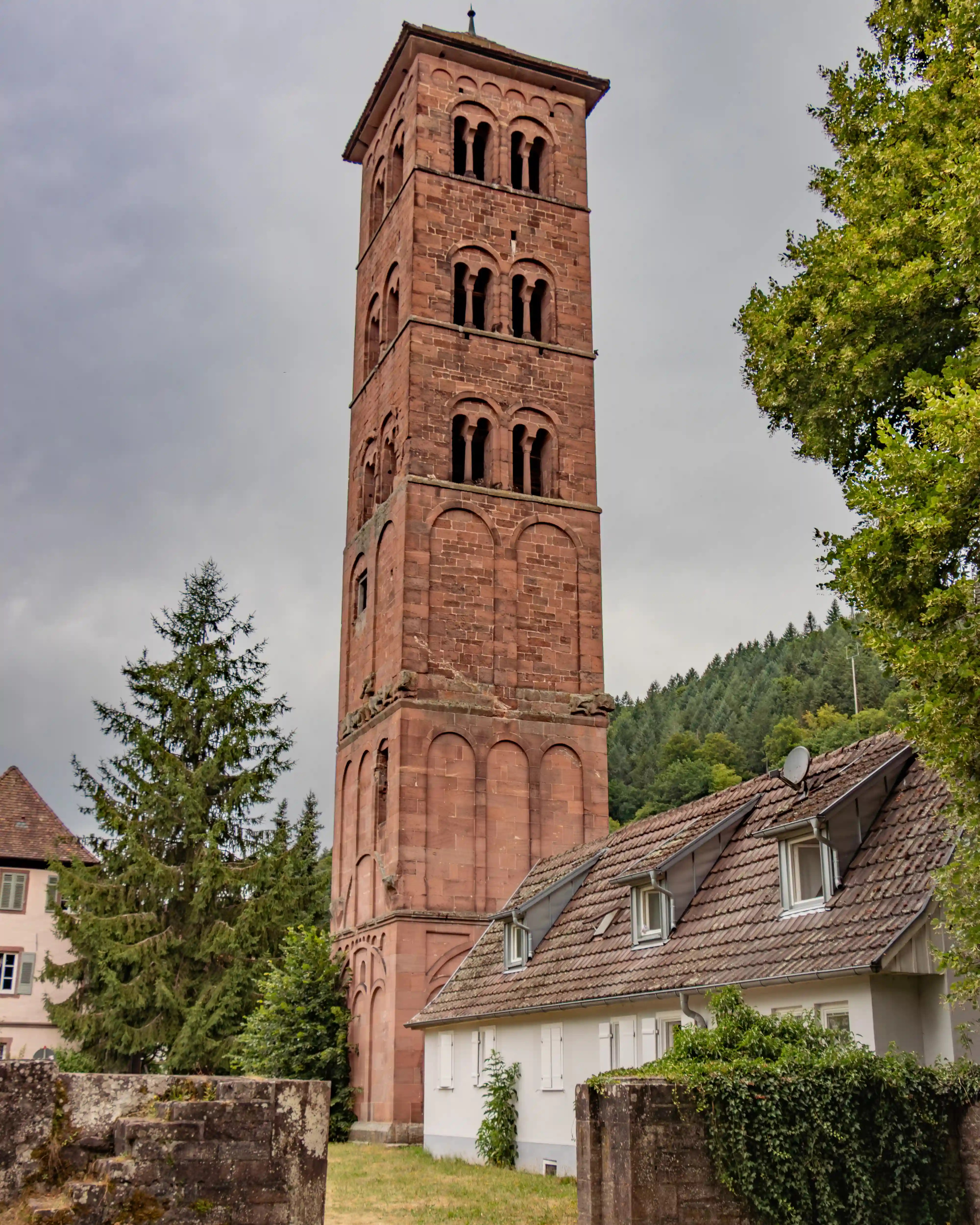
Dating to the 12th century, the Owl Tower (Eulenturm) is one of the oldest surviving parts of the Monastery of St. Peter and Paul. Constructed in the Romanesque style, it originally served as a bell tower. Today, its sturdy stone form still defines the monastery’s skyline and is one of Hirsau’s most recognizable landmarks.

The Chapel of St. Mary
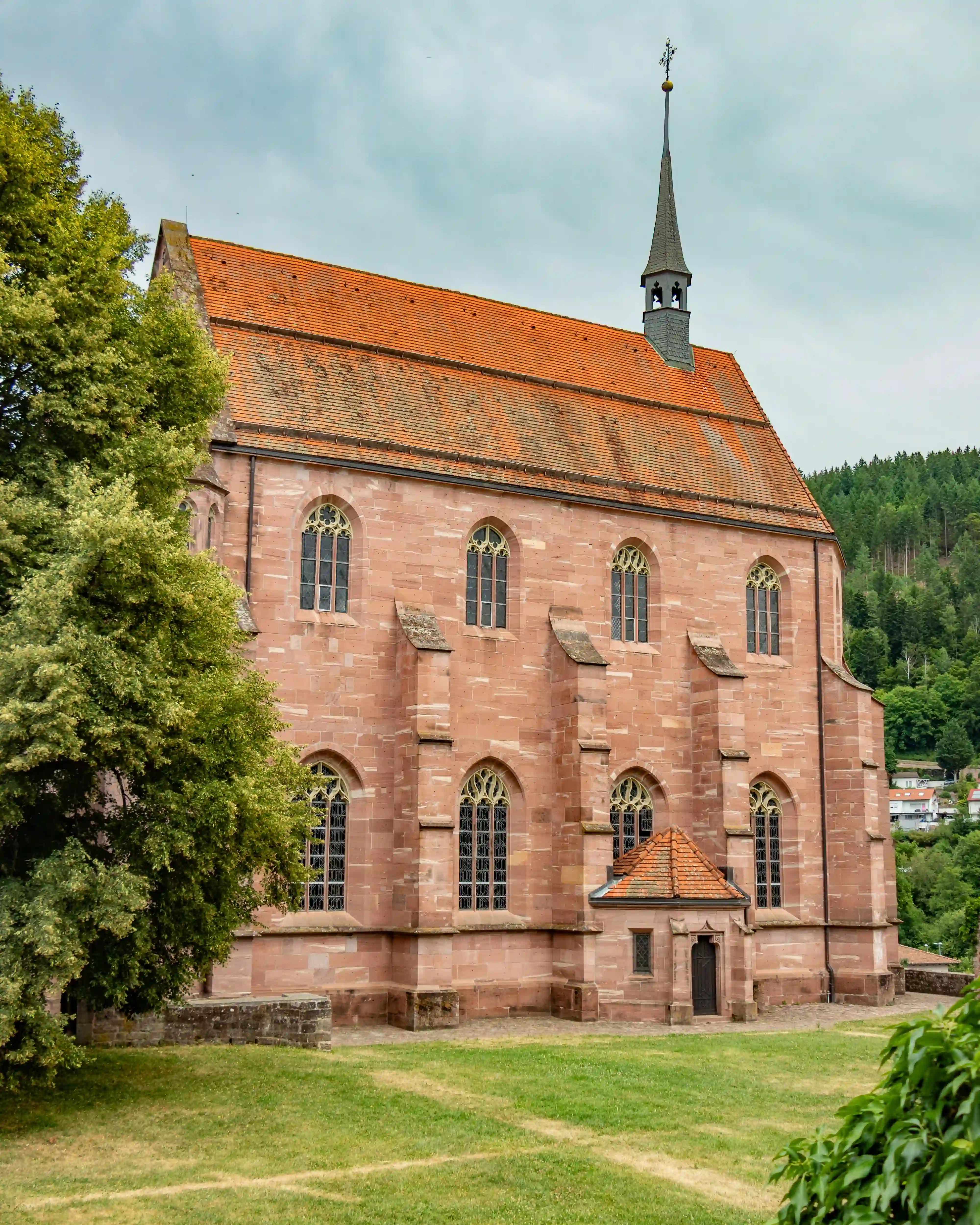
The Chapel of St. Mary (Marienkapelle) was built between 1508 and 1516 in the late Gothic style. Originally used as a chapel for the sick and later as a library, it’s one of the few monastery buildings that survived the 1692 destruction. Today, its tall, two-story walls still stand strong, serving as Hirsau’s Protestant parish church.


The Hunting Lodge
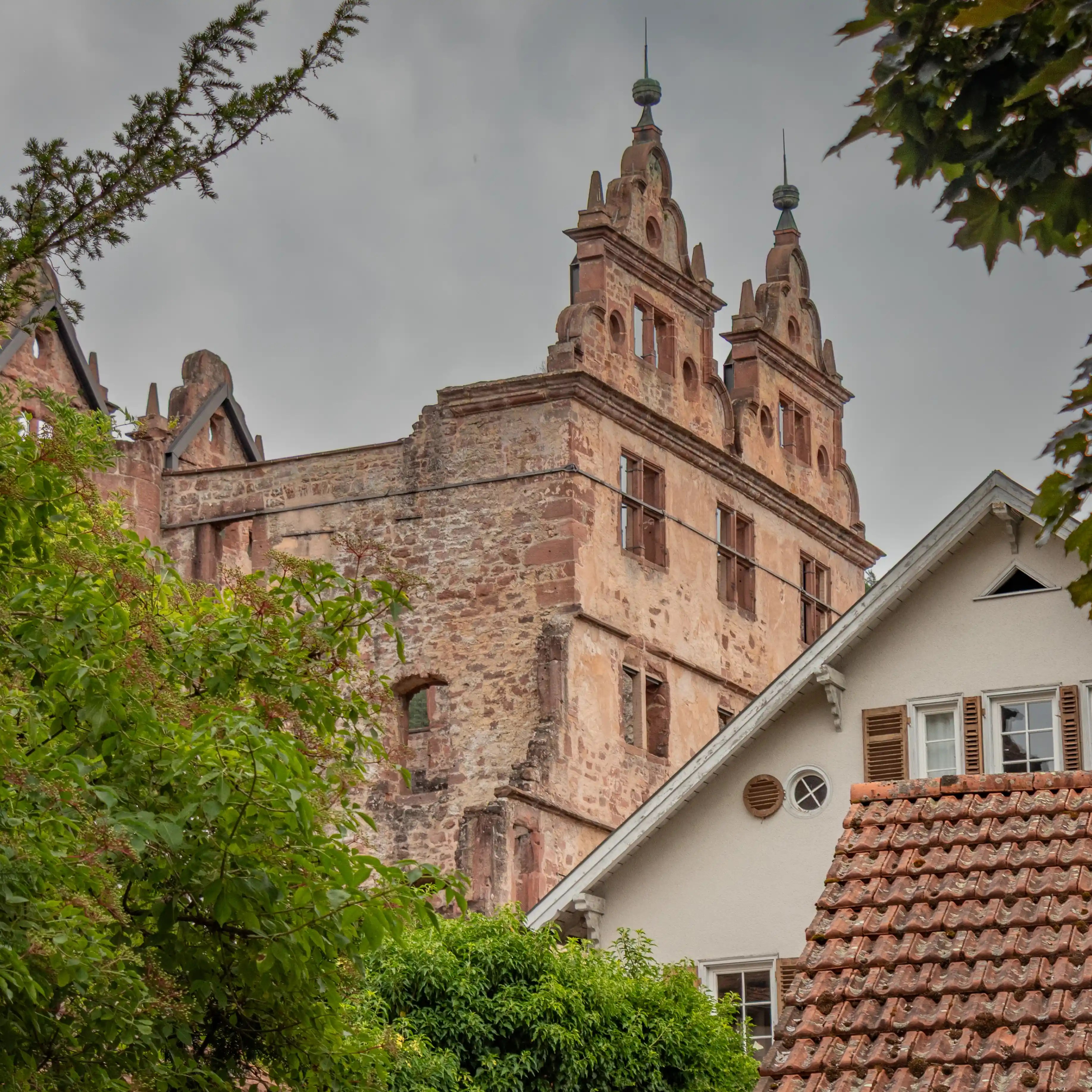
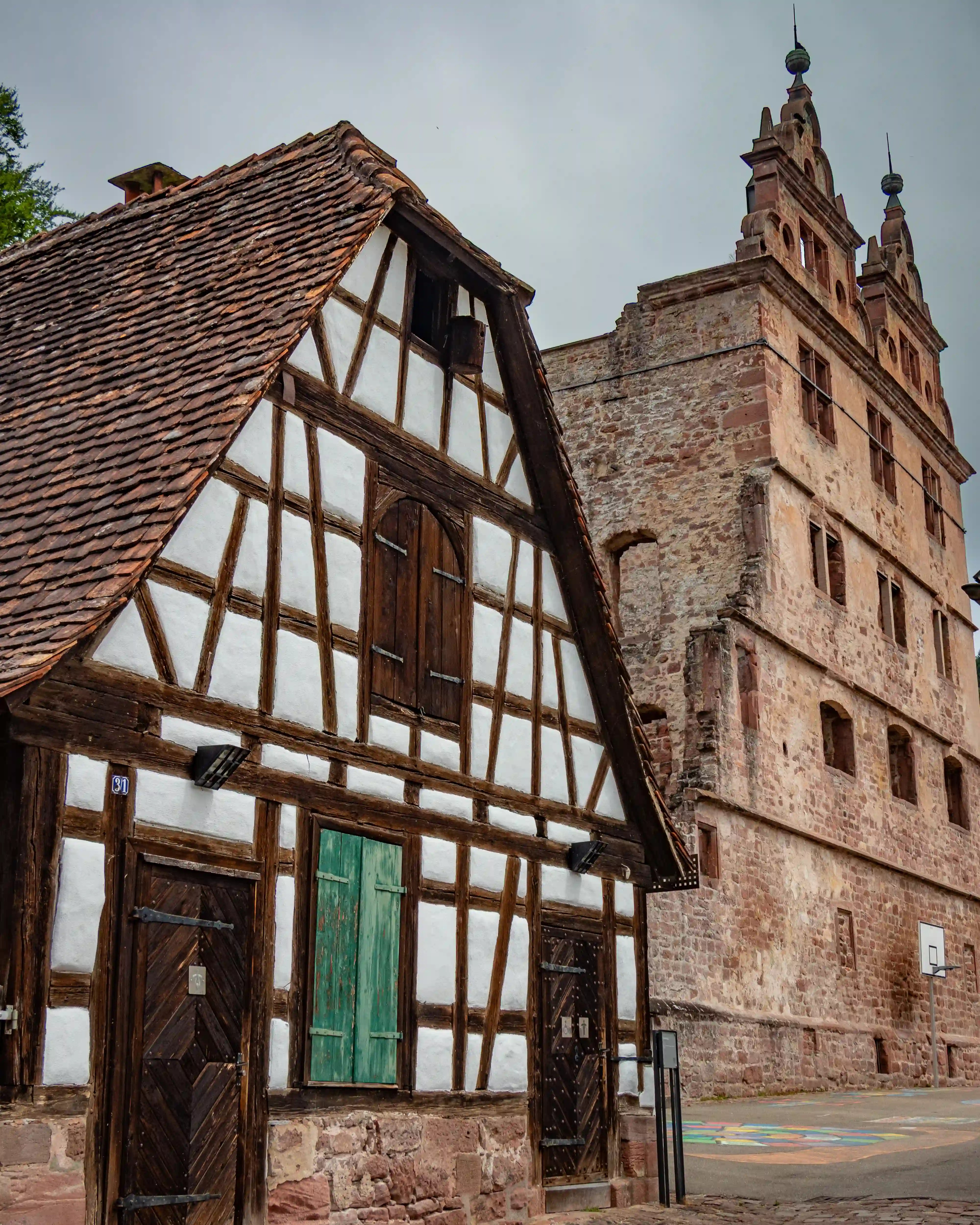
In the late 16th century, Duke Ludwig of Württemberg built the Hunting Lodge (Jagdschloss) at Hirsau, introducing Renaissance style to the monastic grounds. Though much of it was destroyed by fire in 1692, its decorative gables and facades still rise above the valley, a reminder of how the site continued to evolve beyond its medieval roots.

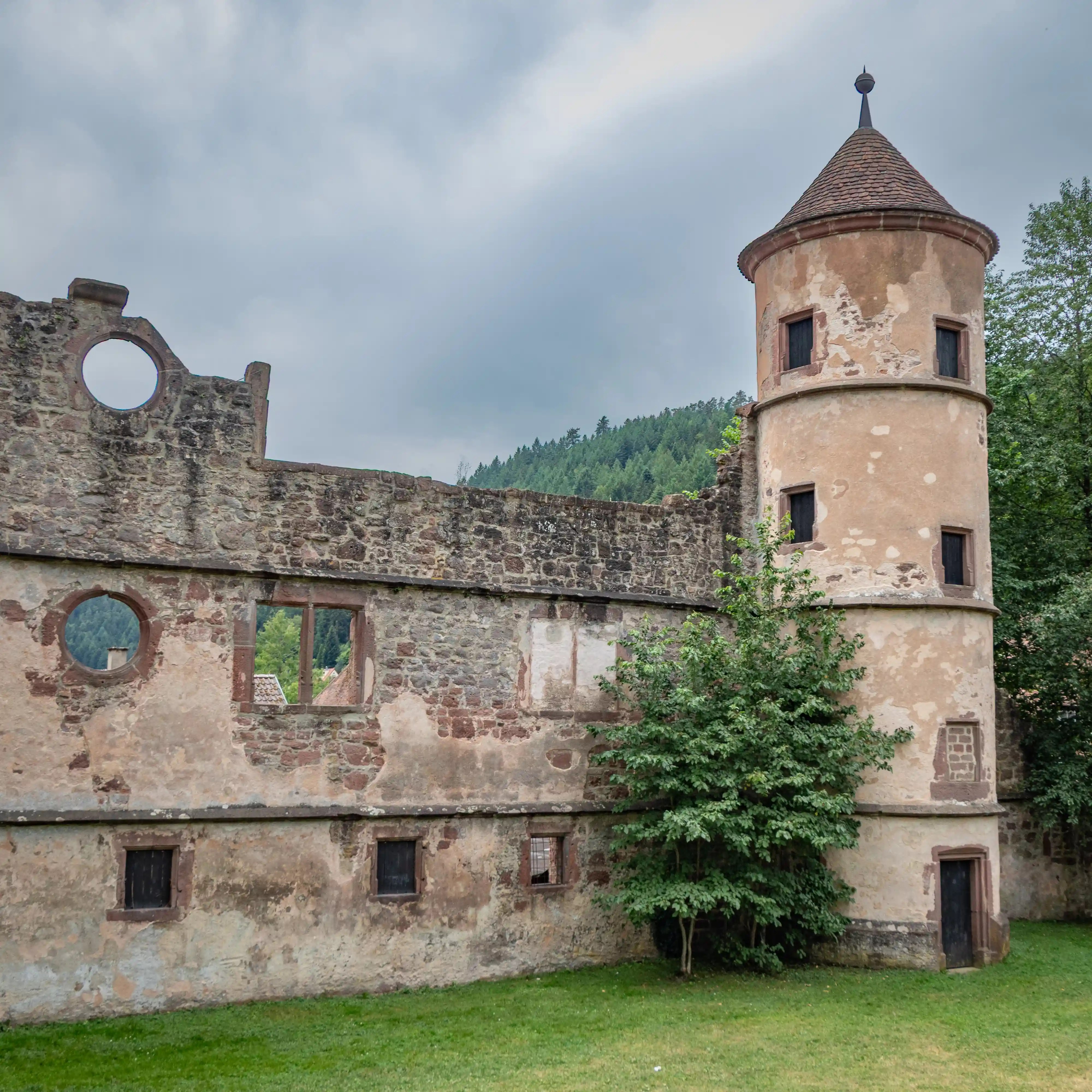
Guided tours of the Hirsau monasteries—the large Monastery of St. Peter and Paul and the smaller Aurelius Monastery (see more details below)—help bring the history to life, from architectural walks to torchlit evening tours that weave in local legends and stories.
Hiking the Schweinbachtal
Leaving the ruins behind, we set out on an 11.3 km / 7 mi Komoot hike through the Schweinbachtal, a side valley branching off from the Nagold. The trail wound through the tranquil, leafy forest, following the Schweinbach stream as it tumbled over mossy stones. We passed clearings where sunlight filtered through the trees and stretches where the path narrowed to little more than a track between tall vegetation. Stepping stones carried us back and forth across the stream—fun when the water is low, but potentially risky after heavy rain.
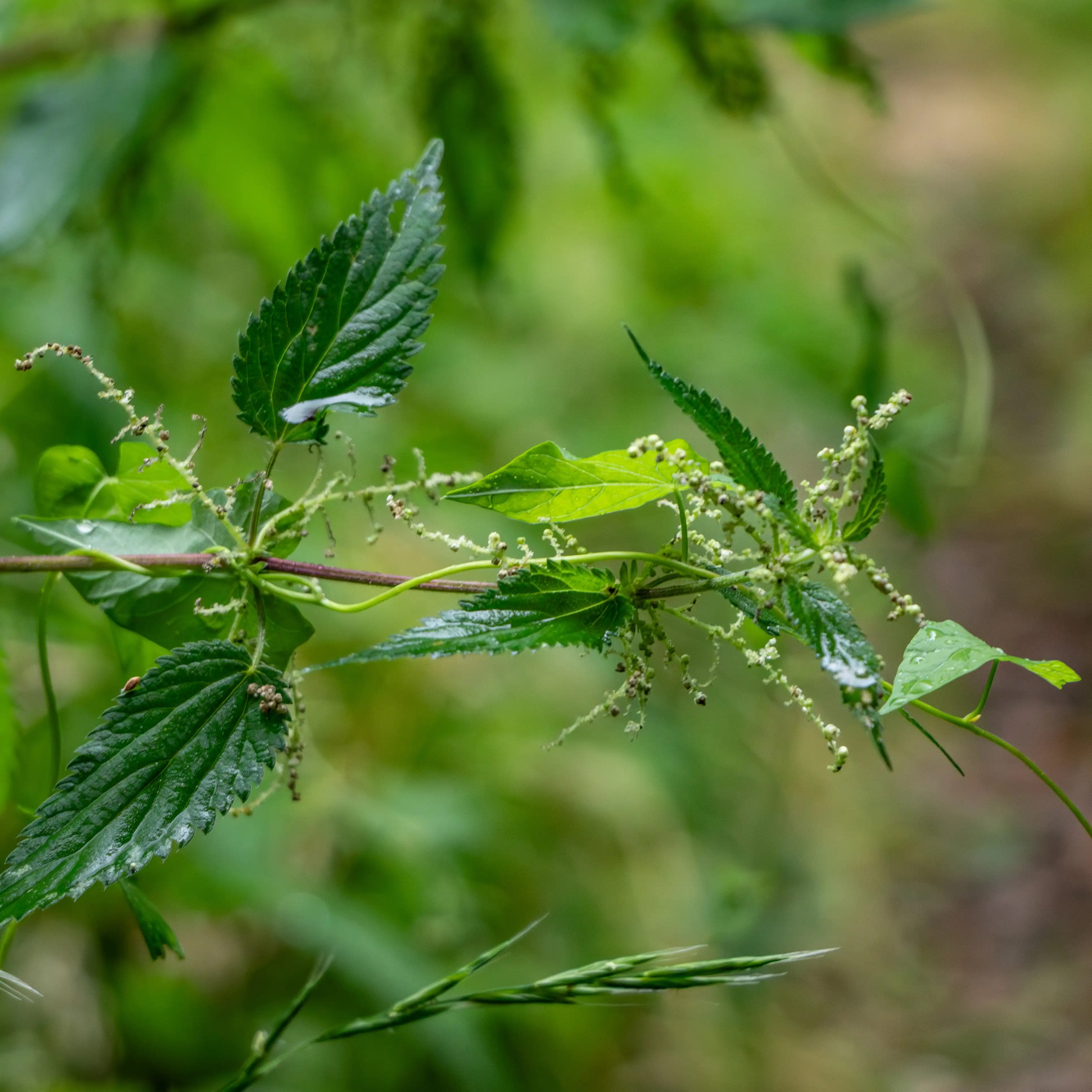
We somehow missed the old arched stone bridge (hopefully it’s still standing!), but we did run into plenty of stinging nettles along the way. They really do sting, though the burn fades quickly.


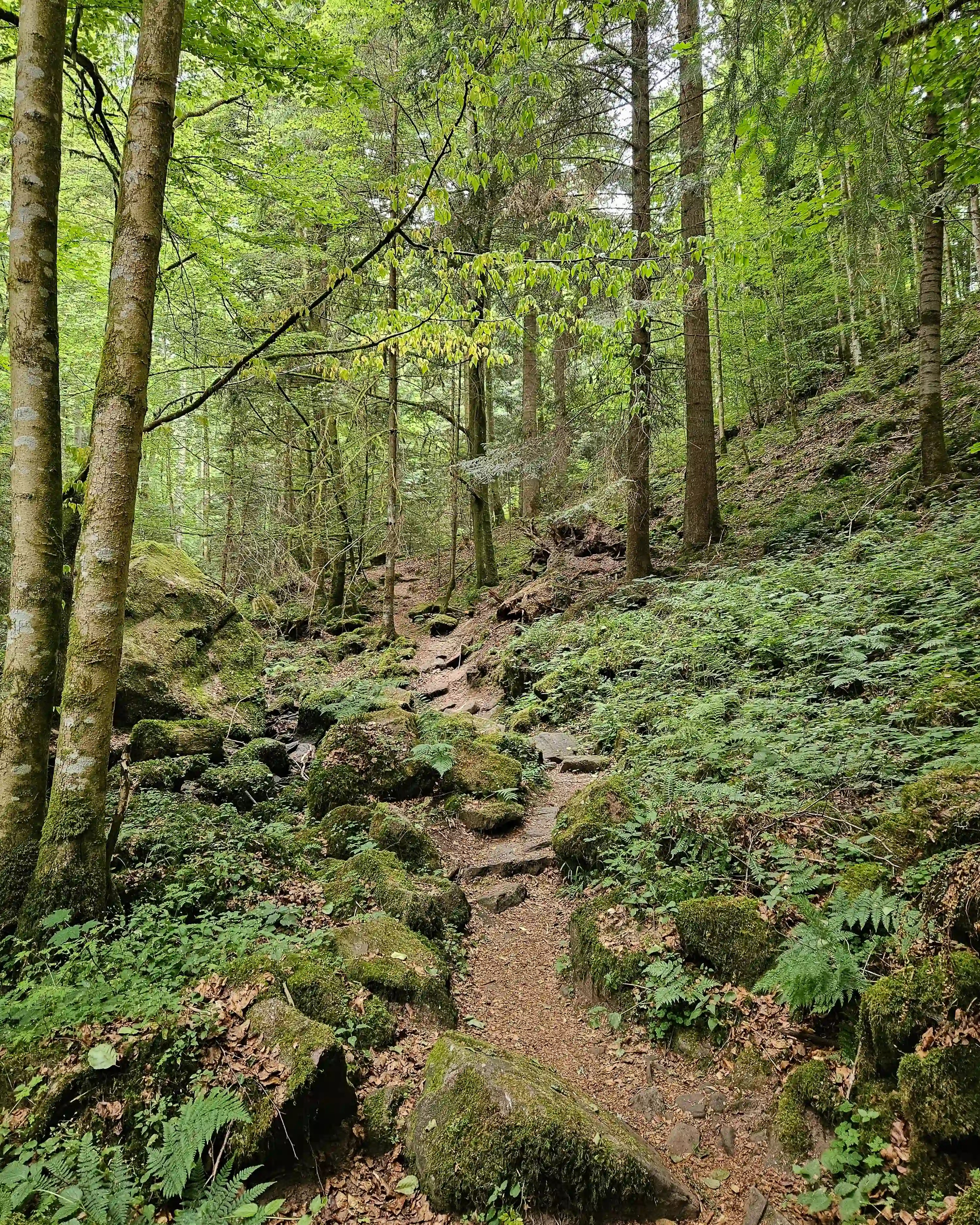



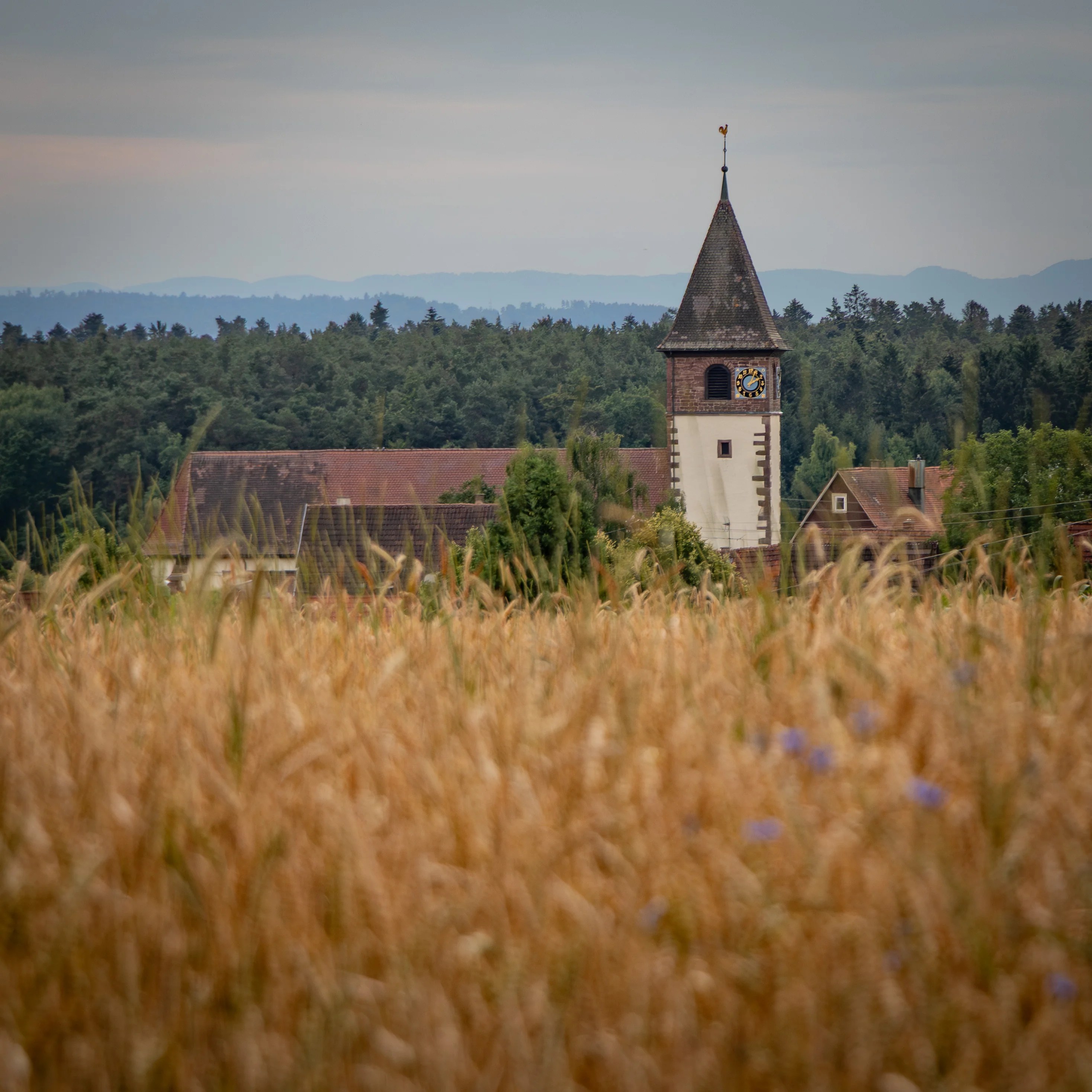
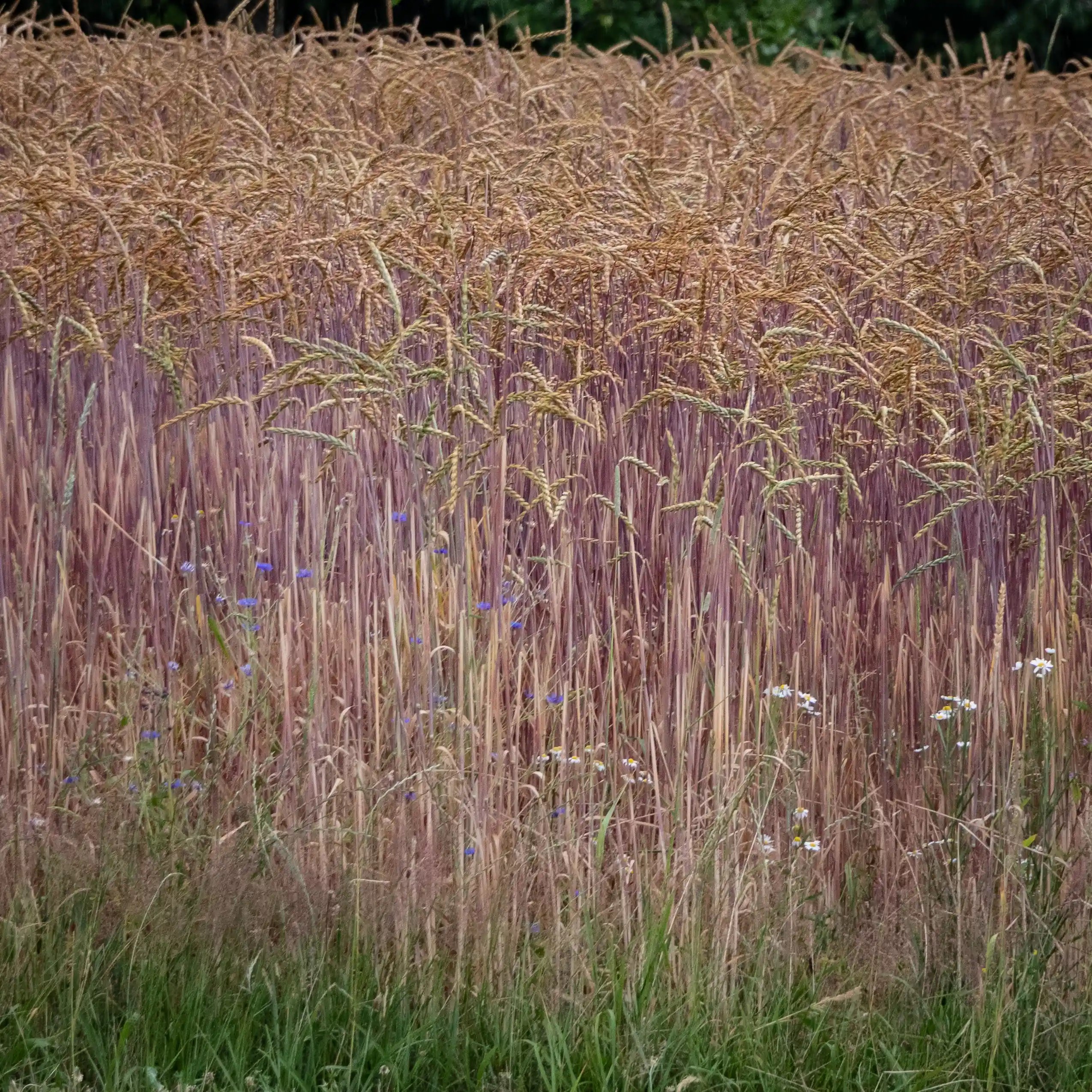
Climbing out of the valley, the forest opened up to views over Altburg and the distant ridges of the Swabian Jura (Schwäbische Alb). From the plateau, the trail dropped back down and wound through shady Black Forest paths toward Hirsau.


Trail Tips:
- Difficulty: Rated Expert on Komoot—expect steep climbs and technical sections.
- Water Levels: Stream crossings may be tricky or dangerous after rain.
- Clothing: Wear long sleeves and pants to protect against stinging nettles.
- Family-Friendly? Not recommended for children.
- Alternatives: For easier options, see other Komoot hikes in the Calw area.
More to Explore Near Hirsau
If you have more time in the area, consider visiting:
- Town of Calw – Just 3 km / 1.9 miles (about a 5-minute drive) from Hirsau, Calw is known for its timber-framed houses, lively market square, and riverside setting. The Hermann Hesse Museum is currently closed for renovation until 2026, but visitors can still enjoy strolling the historic old town or following one of the marked Hesse-themed walking trails through the area.
- Burgruine Zavelstein – About 9 km / 5.6 miles (about a 15-minute drive) from Hirsau, the ruins of Zavelstein Castle rise above the Teinach Valley. From the tower, you get sweeping views of the Black Forest, the surrounding hills, and the half-timbered town of Zavelstein below. The site is especially popular in spring when the nearby nature reserve bursts into bloom with thousands of wild crocuses during the annual Zavelsteiner Crocus Blossom.
- Alpakahof Beinberg – About 8 km / 5 miles (a 10-minute drive) from Hirsau, this alpaca farm offers guided walks with their gentle alpacas—a memorable way to experience the Black Forest at a slower pace. The farm also has a small shop with alpaca wool products and local specialties. Note that alpaca hikes are closed in winter and run only on selected days the rest of the year, so check opening times in advance.
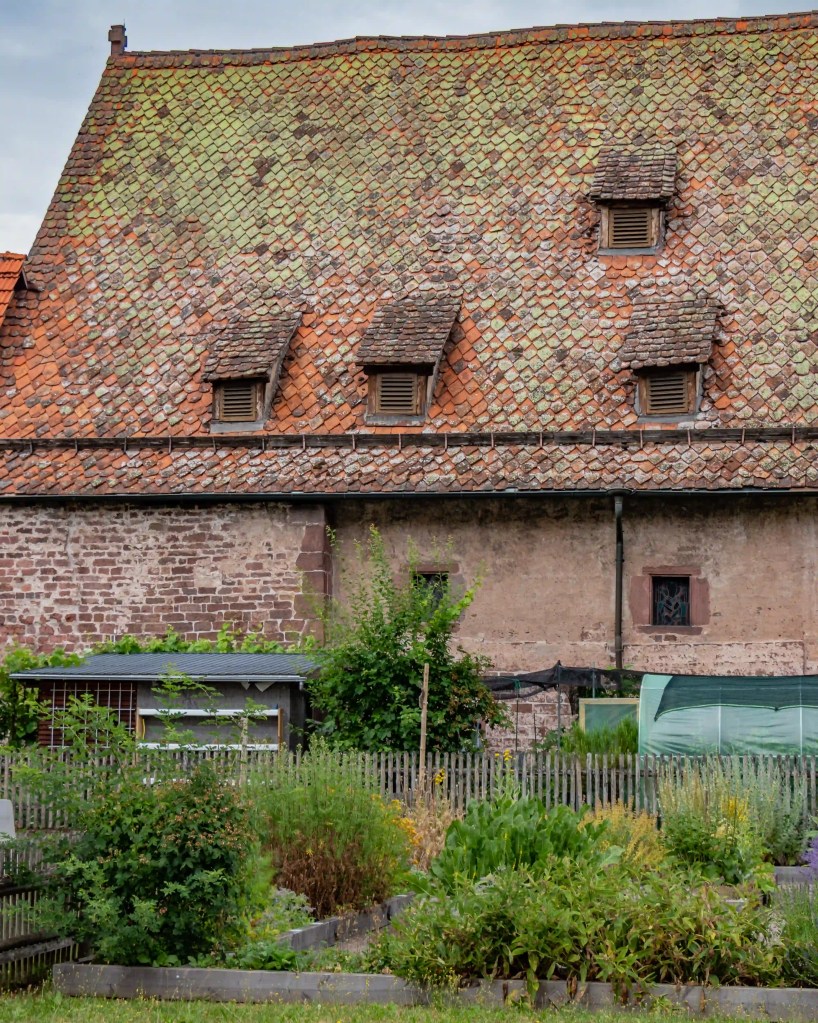
- Aurelius Monastery & Monastery Museum – The smaller and older of Hirsau’s two monasteries, with a Romanesque church and a museum that shares the story of monastic life and local history.

Location & Getting There
Hirsau is about 46 km / 29 miles west of Stuttgart—roughly a 40-minute drive by car.
By public transport, the trip takes around 1 hour 30 minutes: regional trains connect from Stuttgart to towns such as Weil der Stadt or Pforzheim, with onward buses to Calw and Hirsau. The journey is fully covered by the Deutschland-Ticket, making it an easy and affordable day trip. For up-to-date schedules and connections, check the DB Navigator app or the VVS app.
Visitor Tip: The monastery sites are open daily, but the museums and exhibitions have limited hours and are closed from November through March. Be sure to check current opening times before your visit.
Final Thoughts
Our day in Hirsau brought together history, nature, and the quiet beauty of the Black Forest. After roaming the monastery ruins and tackling the forest paths above the Schweinbach, we wrapped up the day tired in the best way—the perfect finish to a memorable day. But with Calw just next door, alpaca walks nearby, and endless Black Forest trails still waiting, we know this won’t be our last visit to the area.
Have you explored this part of the Black Forest? Share your favorite spots—or feel free to drop any questions about planning a visit—in the comments below!

Leave a comment