




Late September, as Germany’s Black Forest began to smolder with autumn color, we left Stuttgart and drove south into Switzerland. A quick stop for the motorway vignette—Switzerland’s mandatory toll sticker—reminded us we’d crossed into a land known for its precision watches, chocolate, cheese, and stunning natural beauty. We were bound for Charmey (pronounced “Shar-MAY”)—a small mountain village in the Fribourg Pre-Alps where the herds would soon descend from their summer pastures—but first we wanted to stand in the mist of Europe’s mightiest waterfall.
A Morning at Rhine Falls
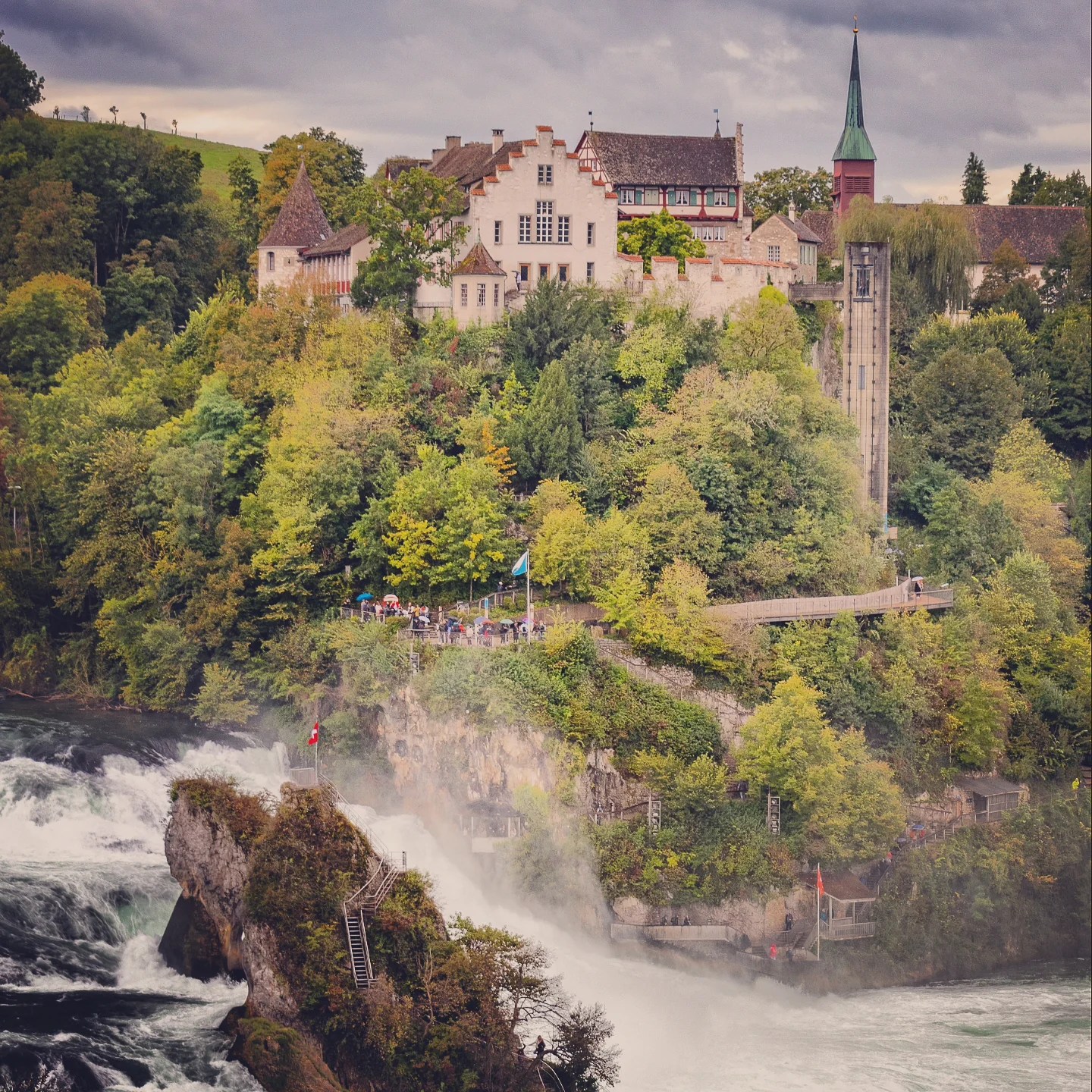
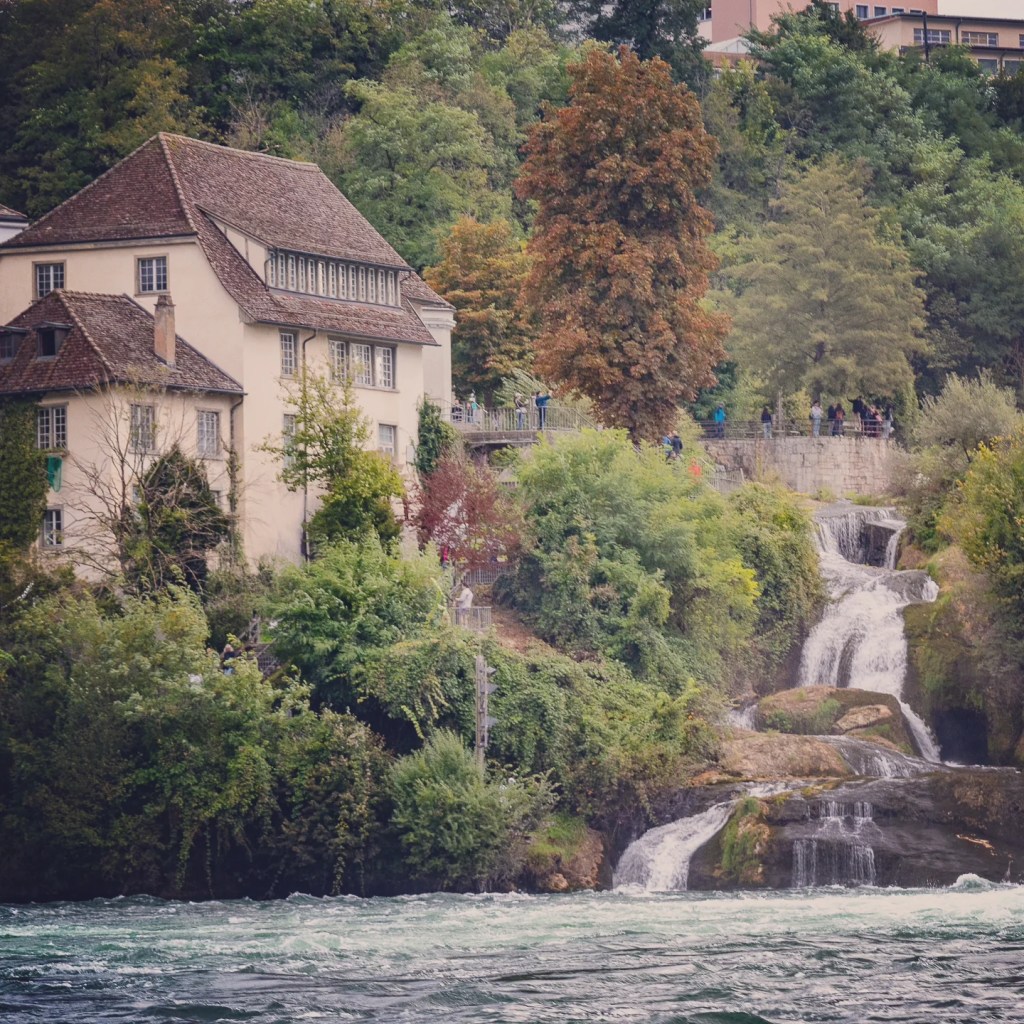
We arrived on the north bank of the Rhine Falls (Rheinfall), grabbed a parking ticket at one of the nearby parking lots, and followed the thundering sound of the falls down the path to the Rhine River. Before us roared Europe’s largest waterfall: 150 meters wide (492 feet) and 23 meters high (75 feet). At first those numbers feel abstract, but up close they begin to feel real: mist on your cheeks, a vibration in the boards underfoot, rainbows flickering above the churning white water. We couldn’t wait to get even closer!
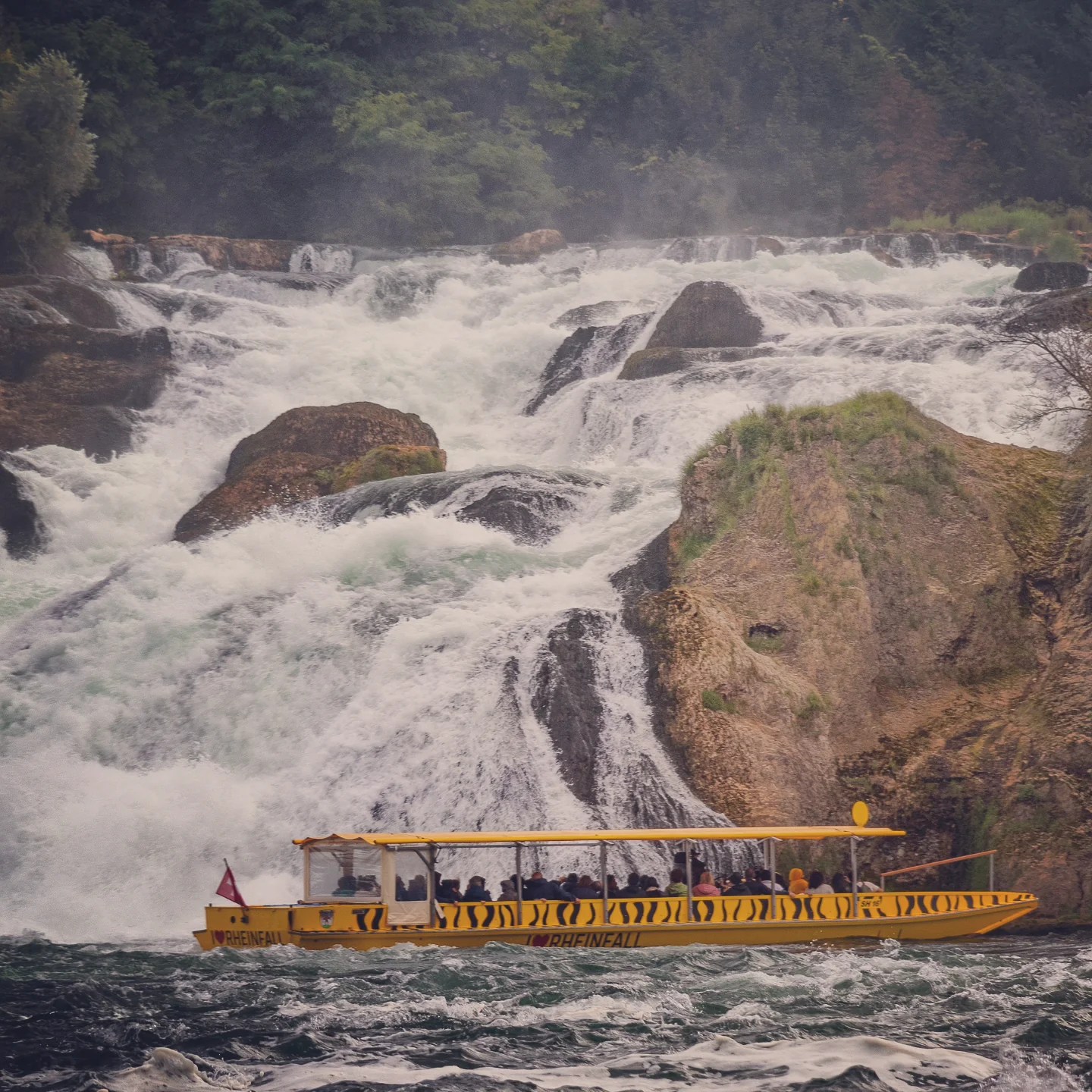
A Boat Ride to Remember
We boarded the blue 15-minute Round-Trip boat run by Rhyfall Mändli. The captain wrestled the current to edge us as close as he could to the falls; the rushing water shook the hull and misted our faces—an unforgettable way to feel the Rhine’s power up close.
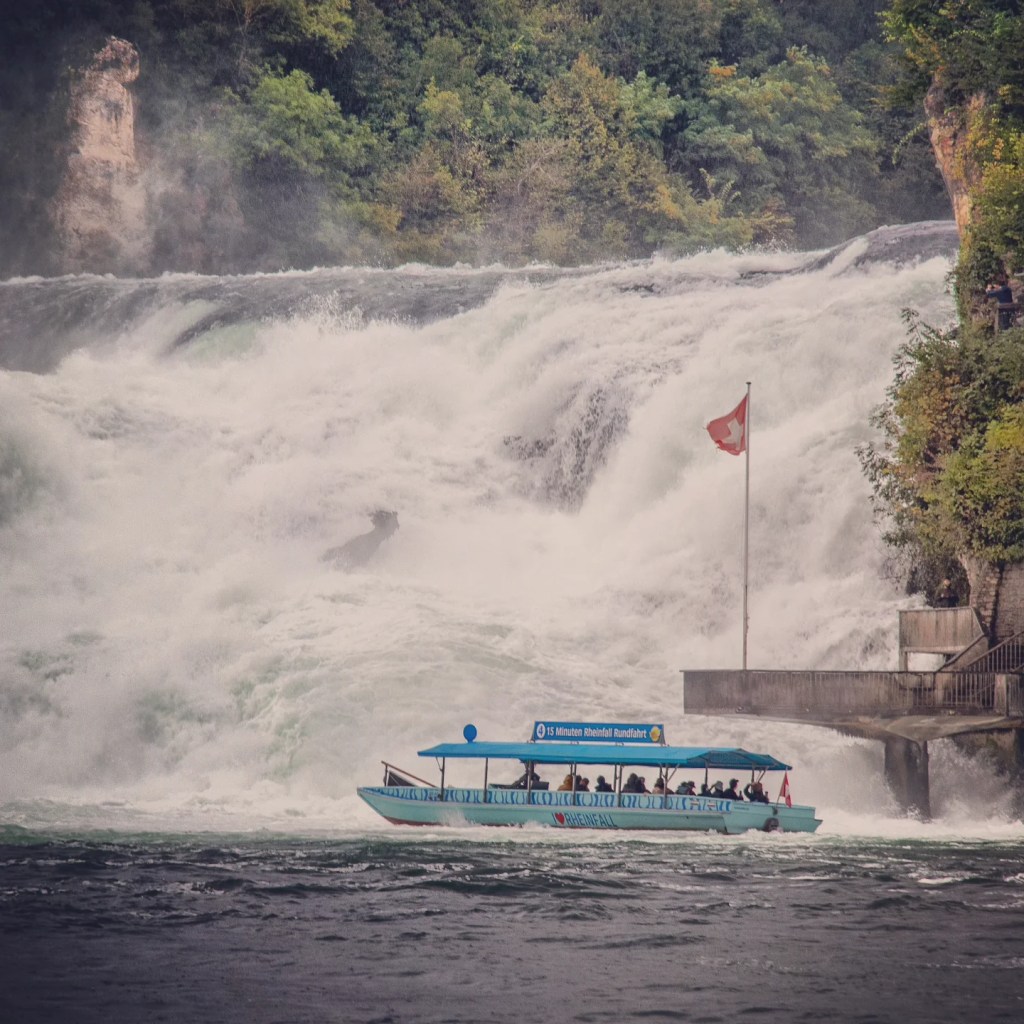
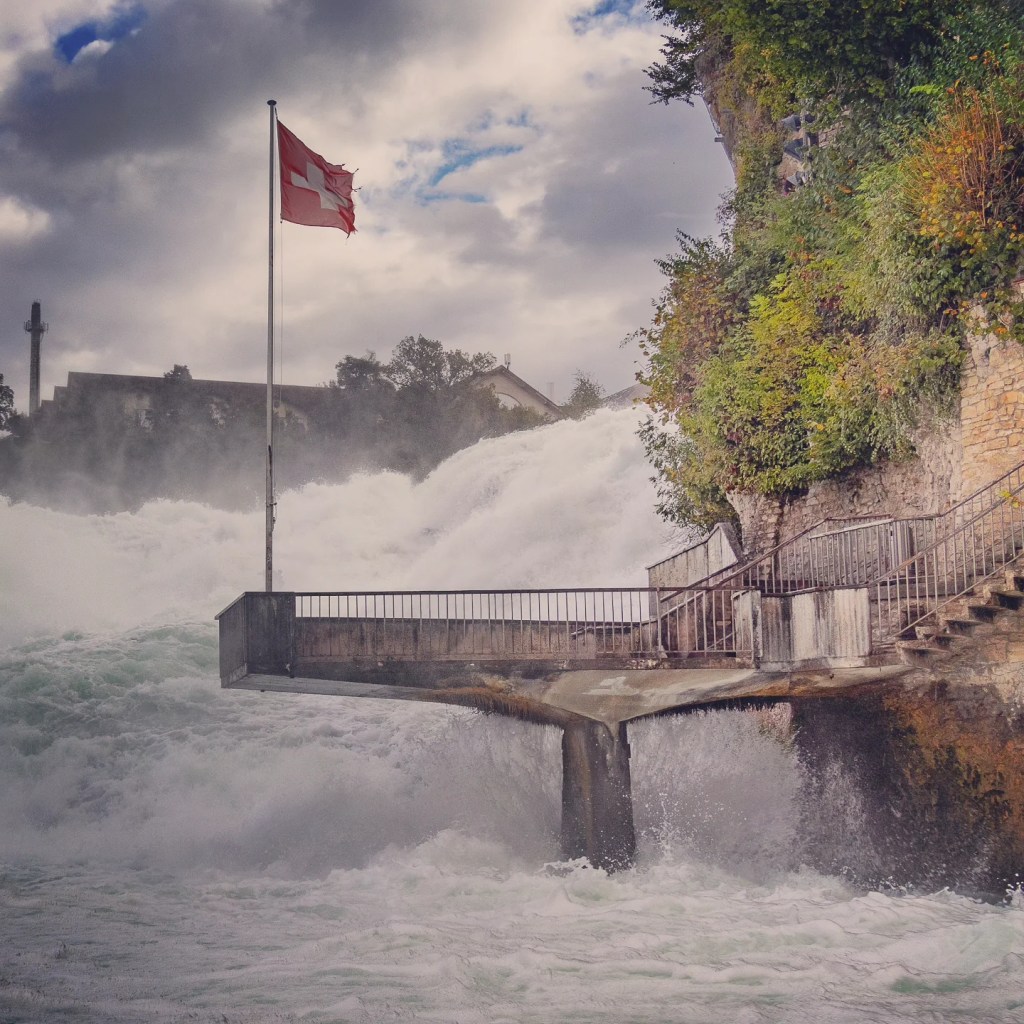
If you’d like a different vantage point, the same company offers several other tours—below are just a couple of highlights:
- Rock Experience – land on the mid-river pillar and climb 100 steps to a viewing deck high above the whitewater.
- Ferry Tour – shuttle between the north and south banks, handy if you plan to explore Schloss Laufen on the opposite shore.
Schloss Laufen, perched on the south bank for more than 1,100 years, offers a cozy castle restaurant, a panoramic glass elevator, the compact Historama exhibit, and the Belvedere Trail, which descends to spectacular viewing platforms right beside the falls. It’s already on our list for next time.
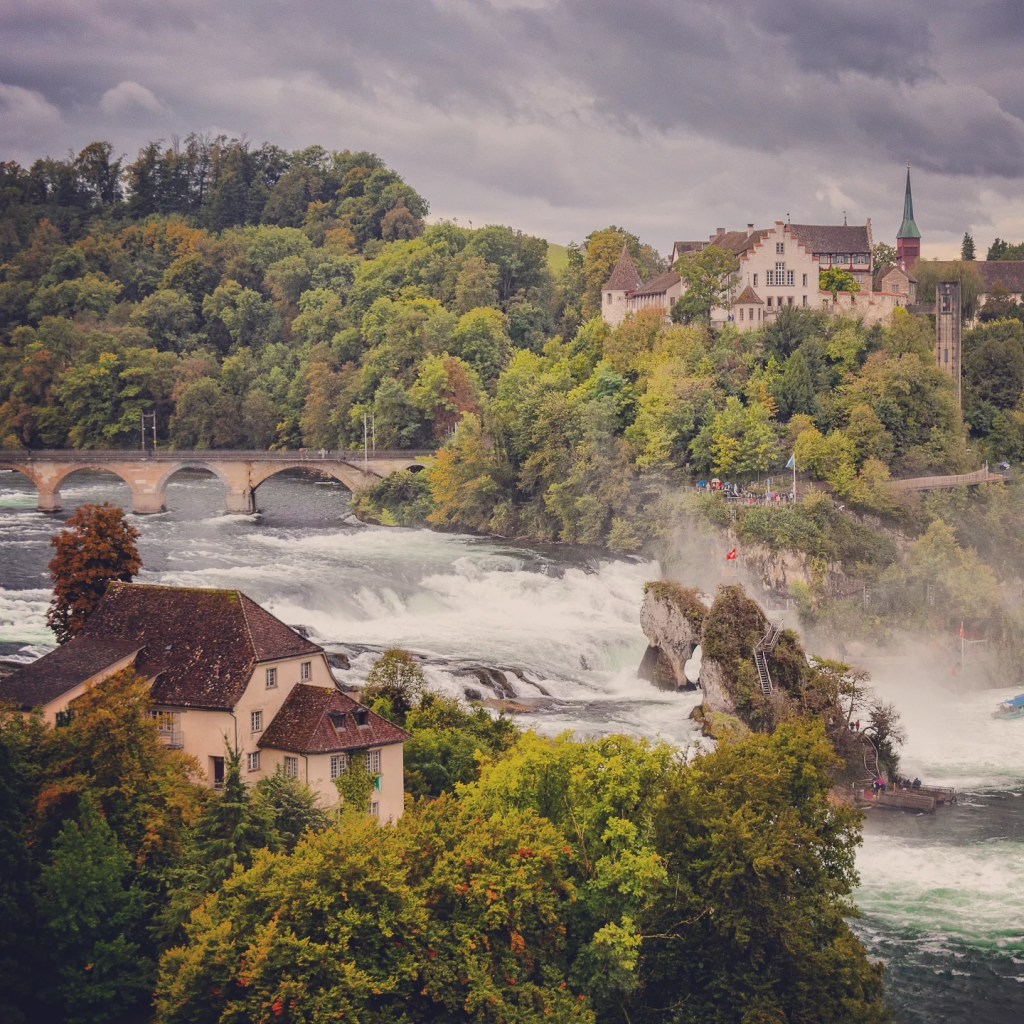
Lunch in a Water Castle
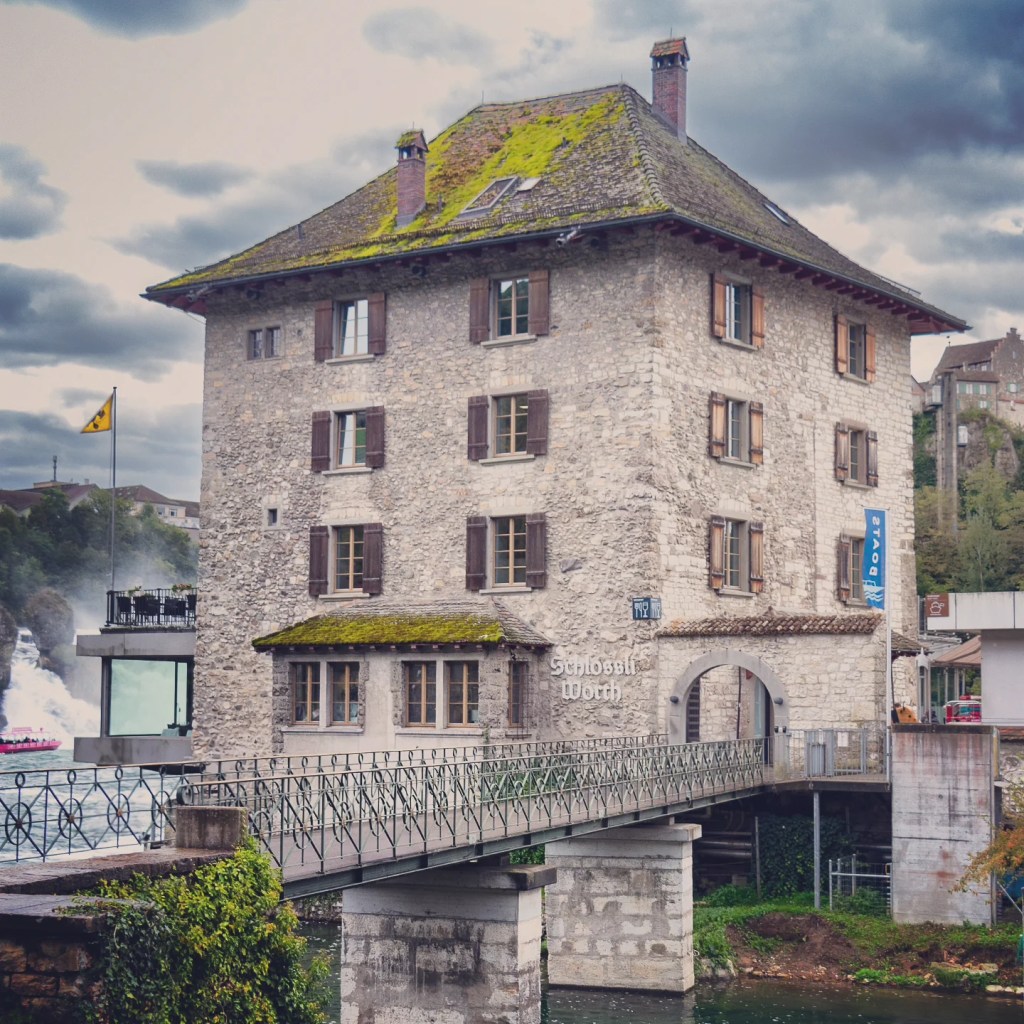
Back on the north shore we crossed a short footbridge to Schlössli Wörth, a 14-century “water castle.” Built as a customs house on its own island—its moat was the Rhine itself—it now hosts fine dining with the best view of Rhine Falls. From our window table the powerful curtain of water filled the frame while plates of pan-seared local fish arrived at our table. It’s hard to imagine a finer lunch backdrop.
If You Have More Time at Rhine Falls
- Night Illumination – after dusk, colored spotlights paint the water and cliffs; check the schedule if you plan to enjoy this colorful display.
- Smilestones – an indoor miniature Switzerland, complete with moving trains and working funiculars. A perfect rainy-day add-on to your Rhine Falls visit.
- Adventure Park Rhine Falls – high-ropes courses in a riverside forest; great for kids who need to burn energy after lunch.
- Rhyfall Express – a tourist road-train that runs between the falls and Schaffhausen’s pedestrian old town, where pastel façades and Gothic bay windows reward an afternoon stroll.
For us, though, the road to Charmey was calling. We wiped the spray off the lens, took one last long look at those beautiful, thundering falls, and set off deeper into Switzerland.
First Evening in Charmey
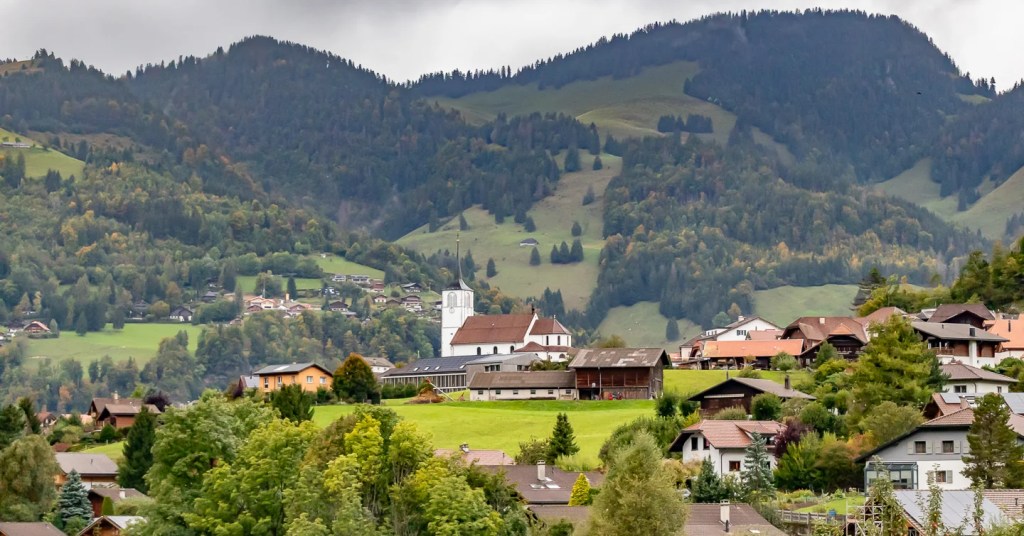
By late afternoon the road delivered us to Charmey, the main village of Val-de-Charmey, a French-speaking pocket of the Jogne Valley. Once a stop on the old cheese route to France, it now balances mountain tourism—skiing, spas, hiking—with a lingering dairy heritage you can hear in the cowbells ringing above town.
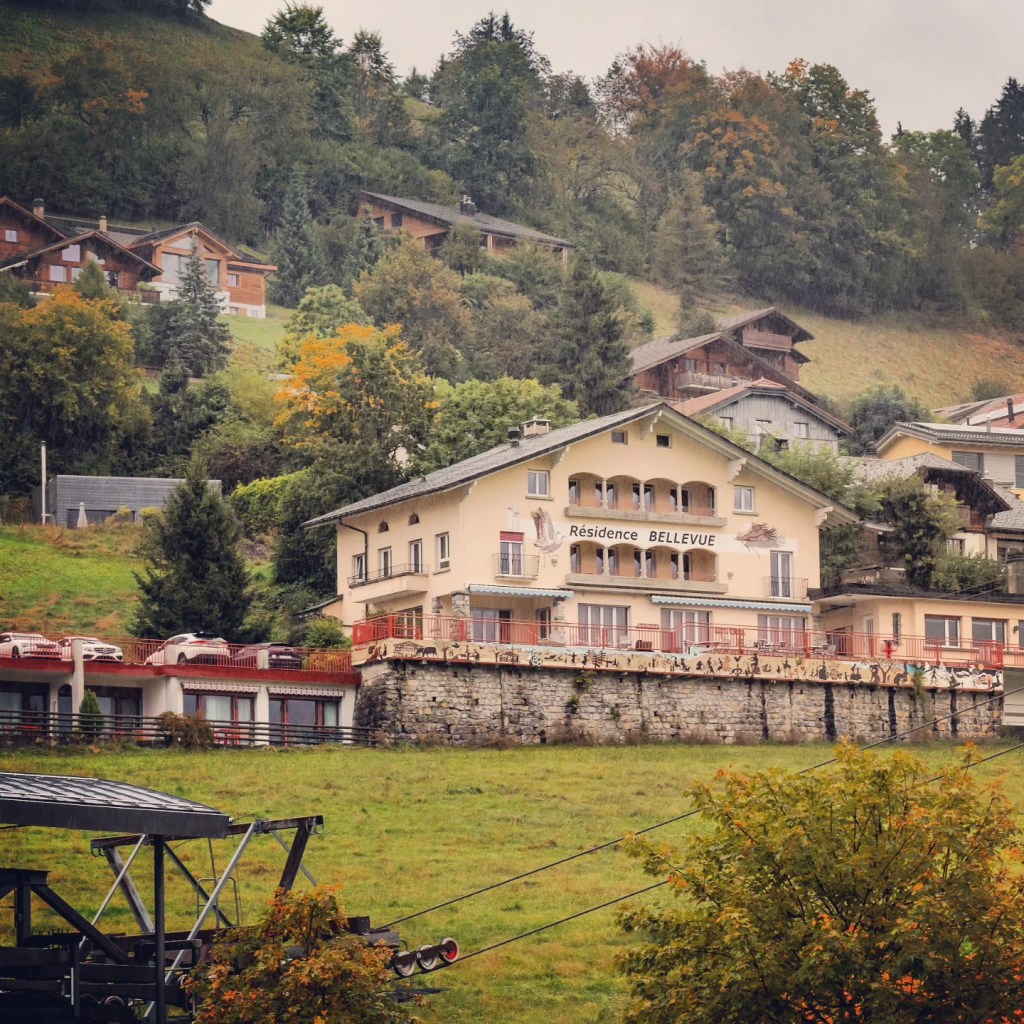
We checked into Résidence Bellevue, an early-20th-century lodge that lives up to its name with large terraces and balconies providing gorgeous unobstructed ridge-line views. Our studio even came with a handy kitchenette—ideal for stashing our market-day cheese haul and brewing a quick morning coffee—which made it the perfect base for exploring everything Charmey has to offer. If you’re planning a visit, note that the hotel has undergone a full refresh and reopened in July 2025.
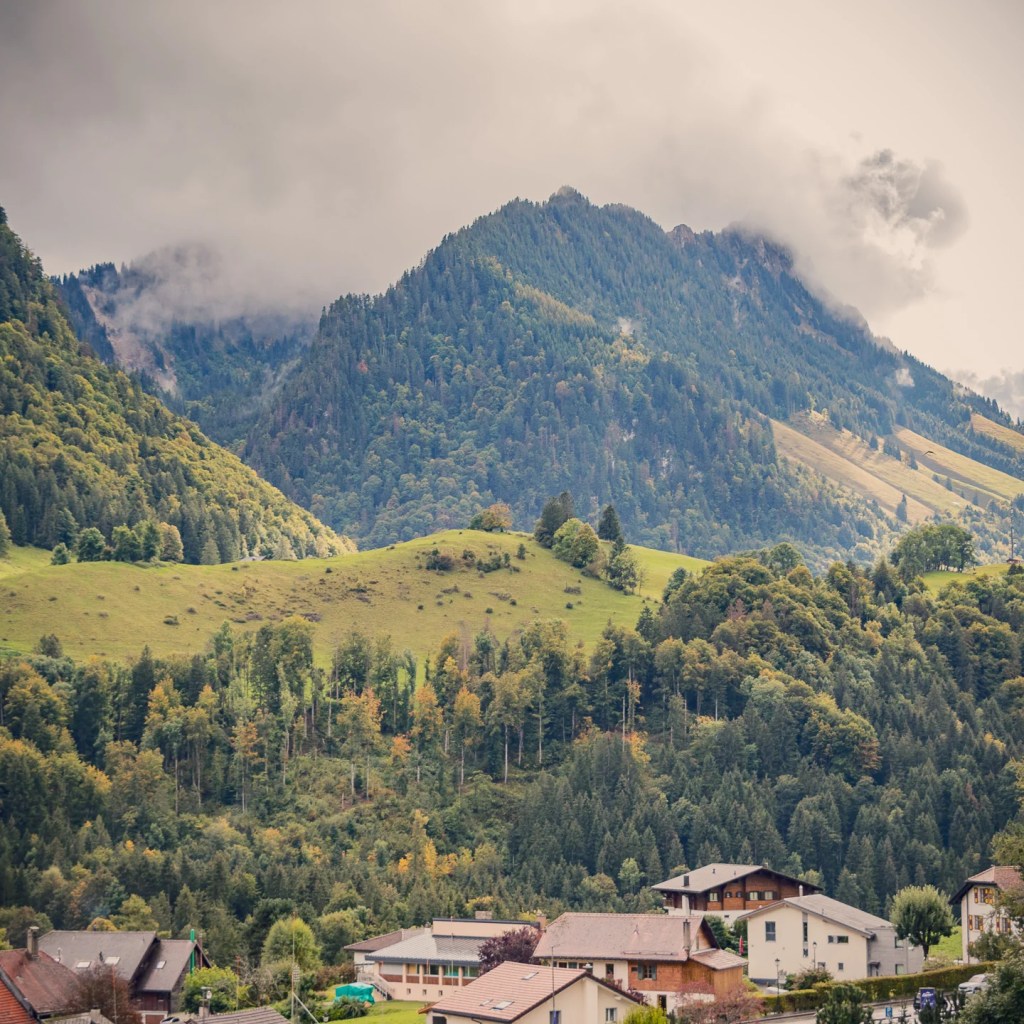
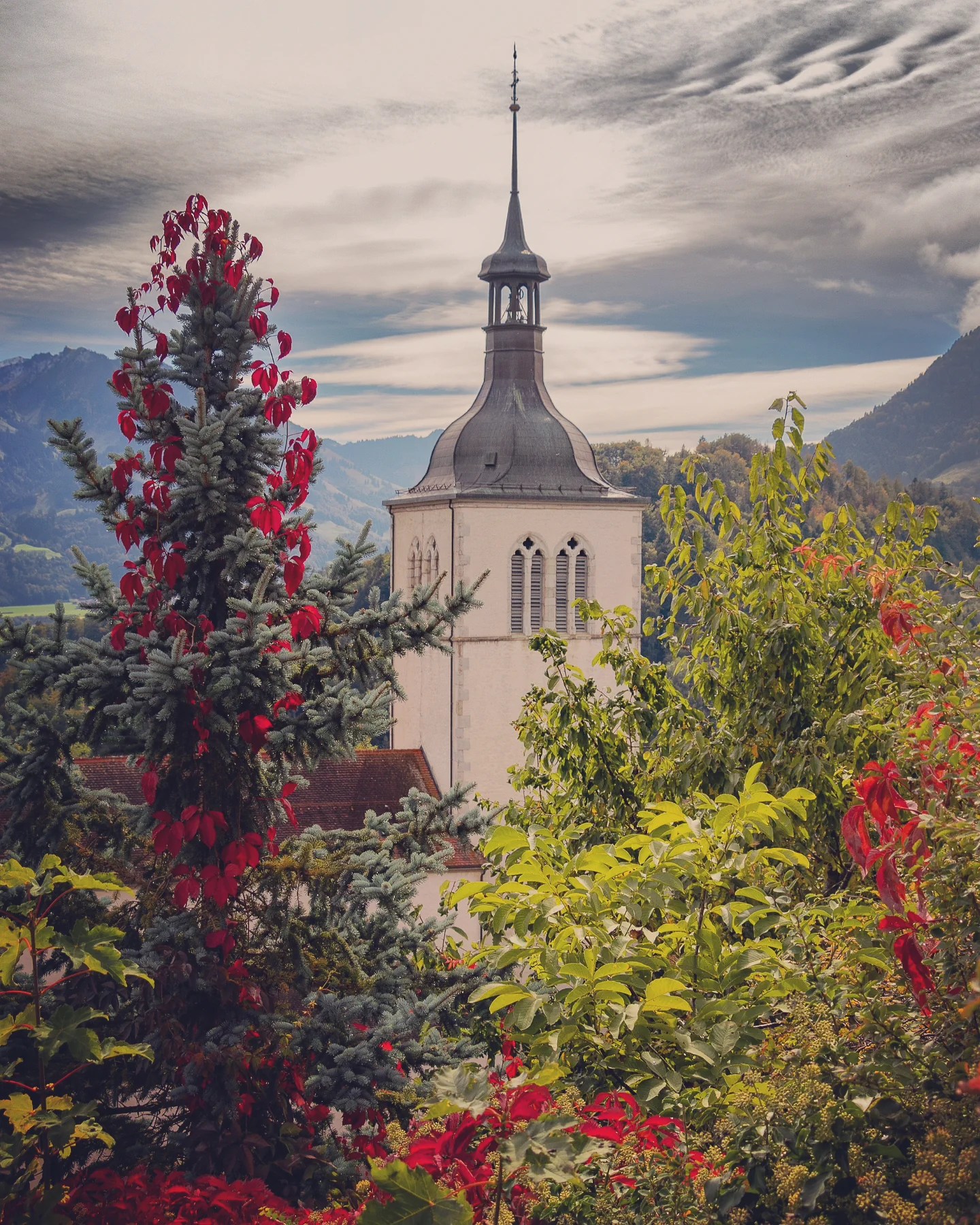
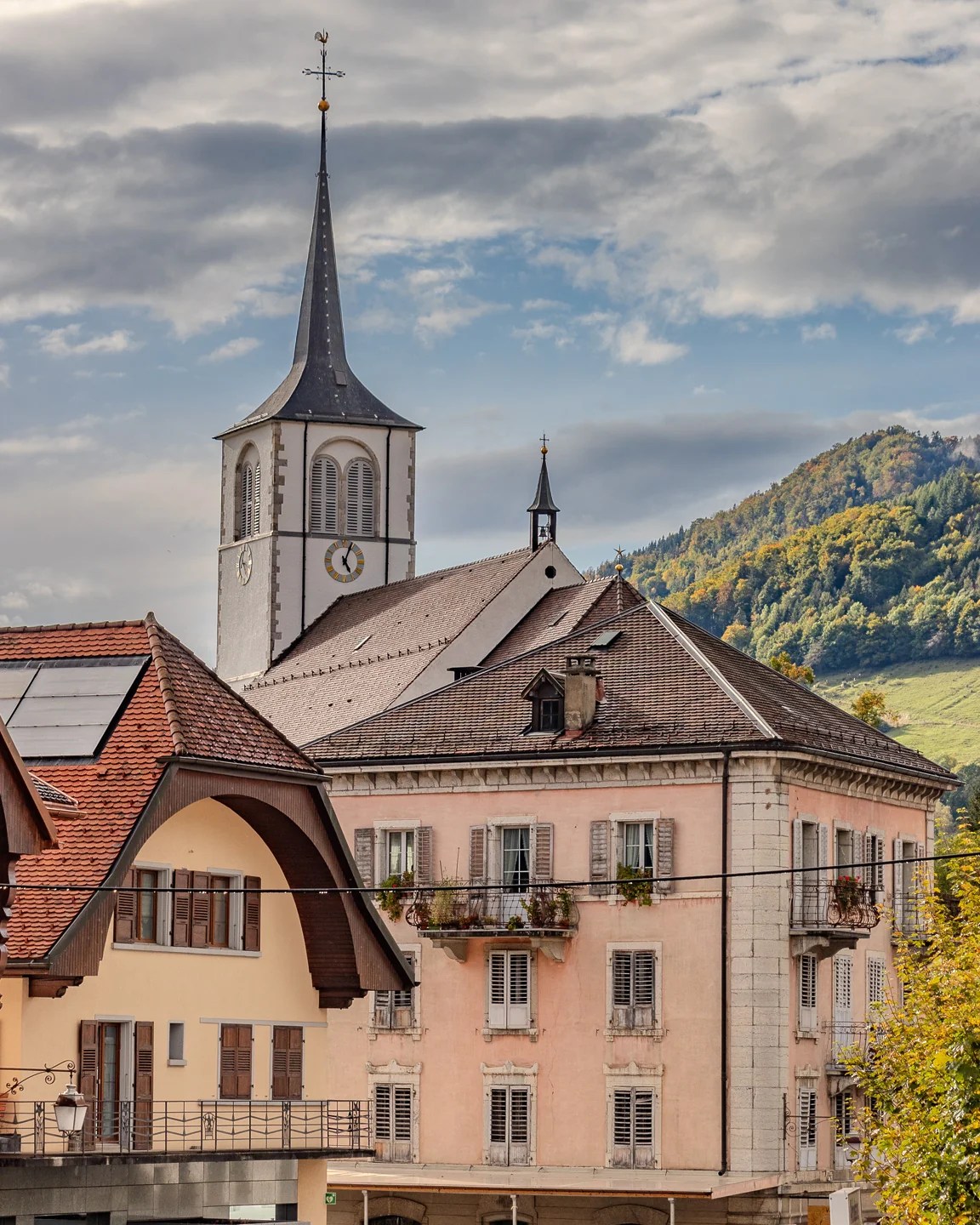
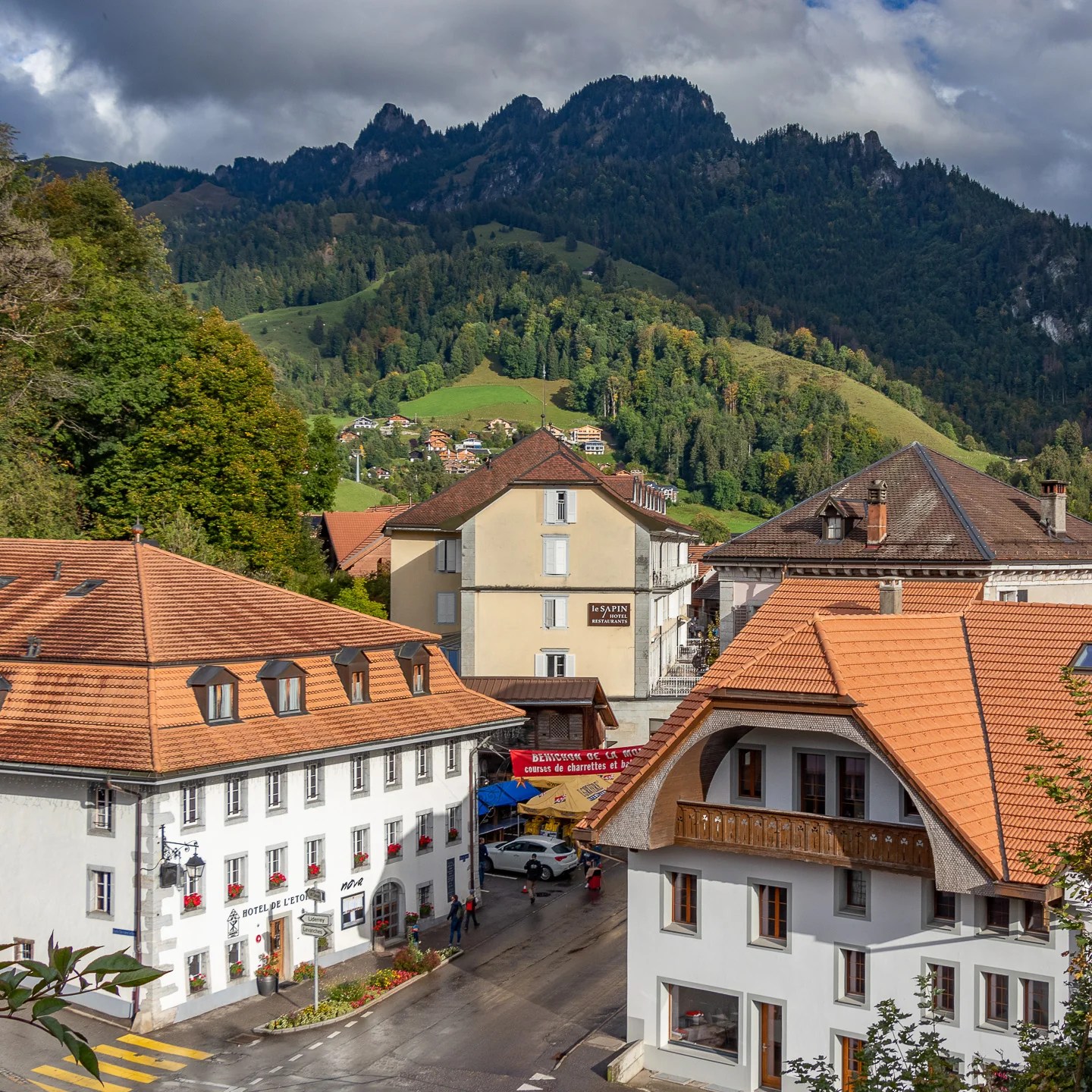
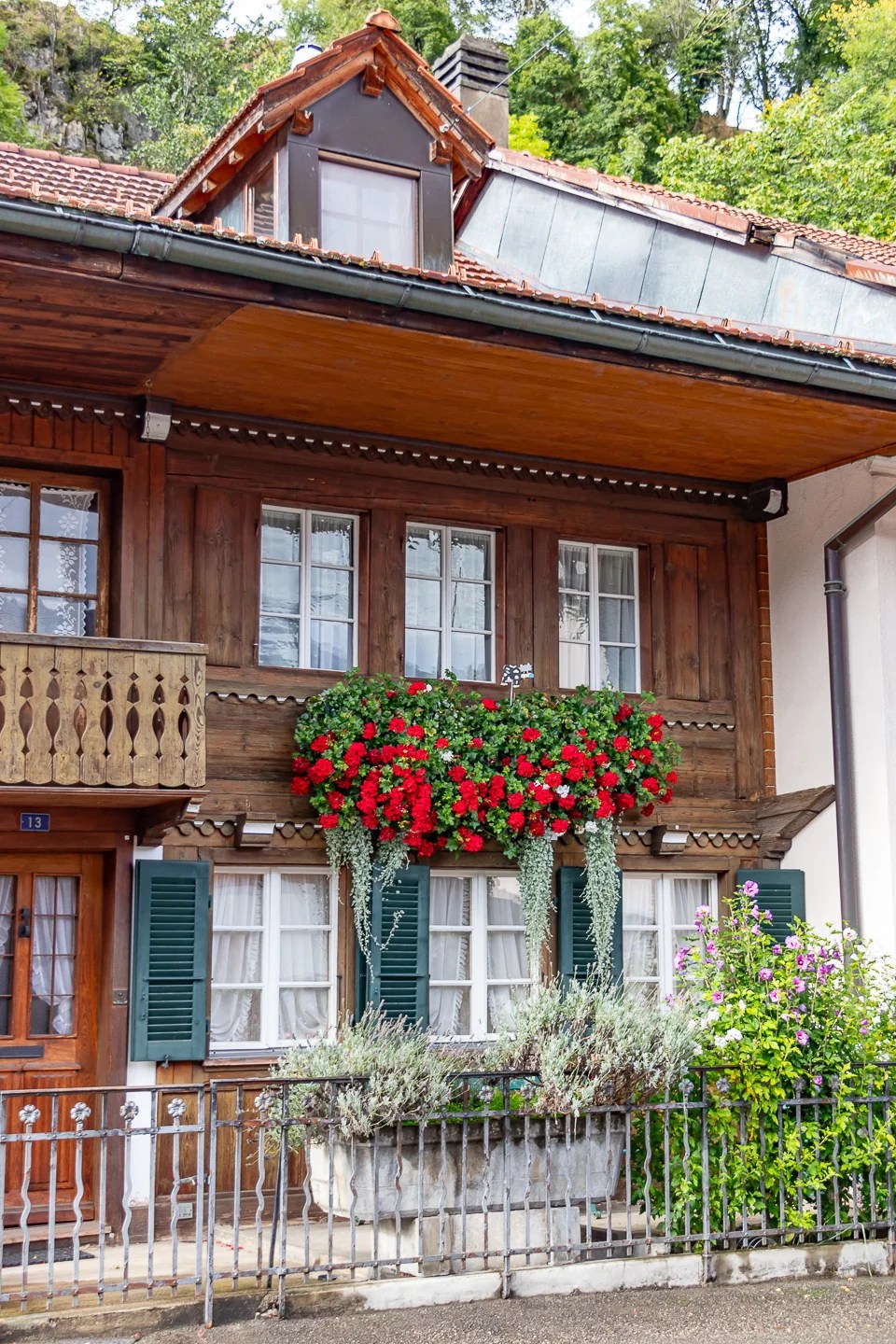
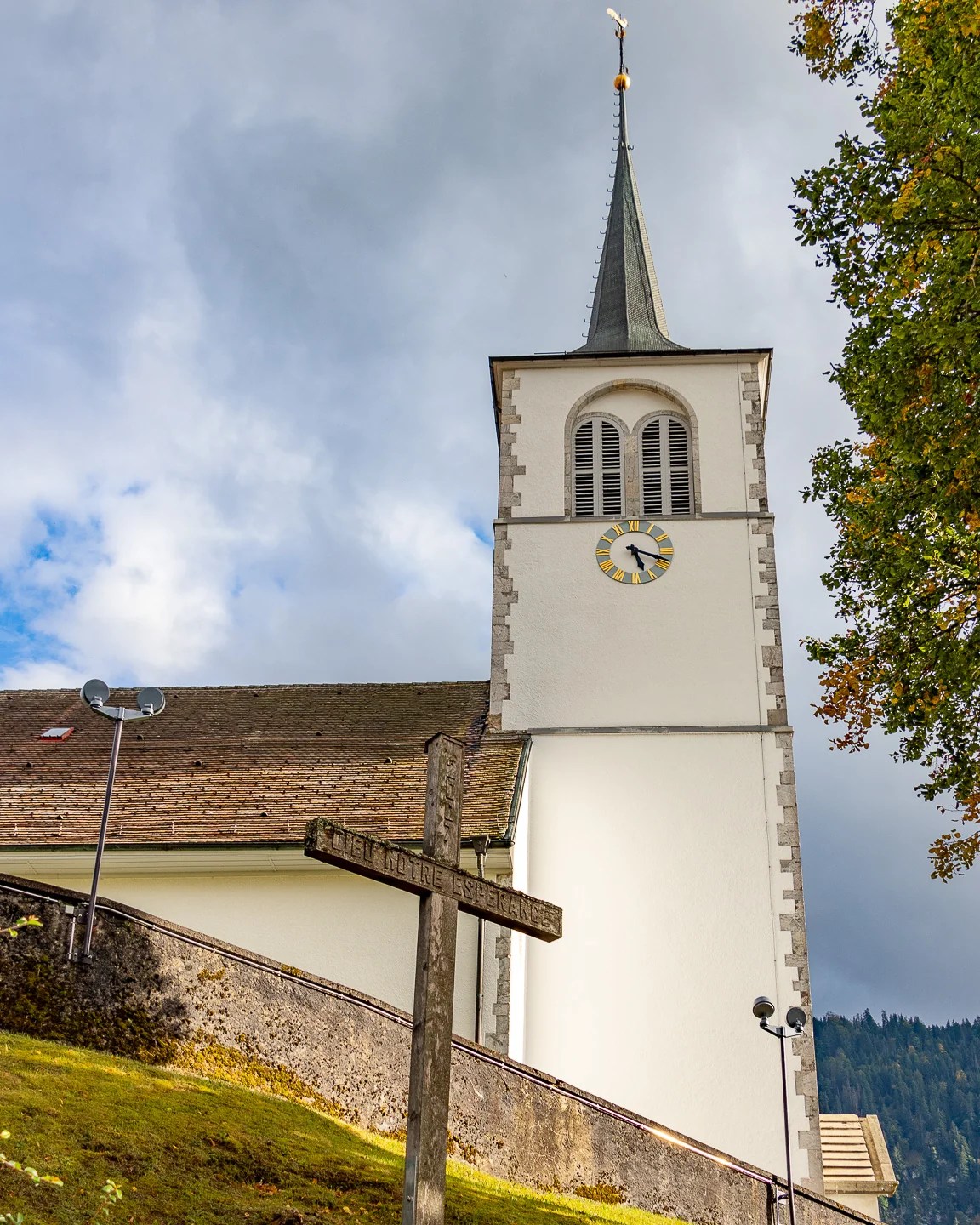
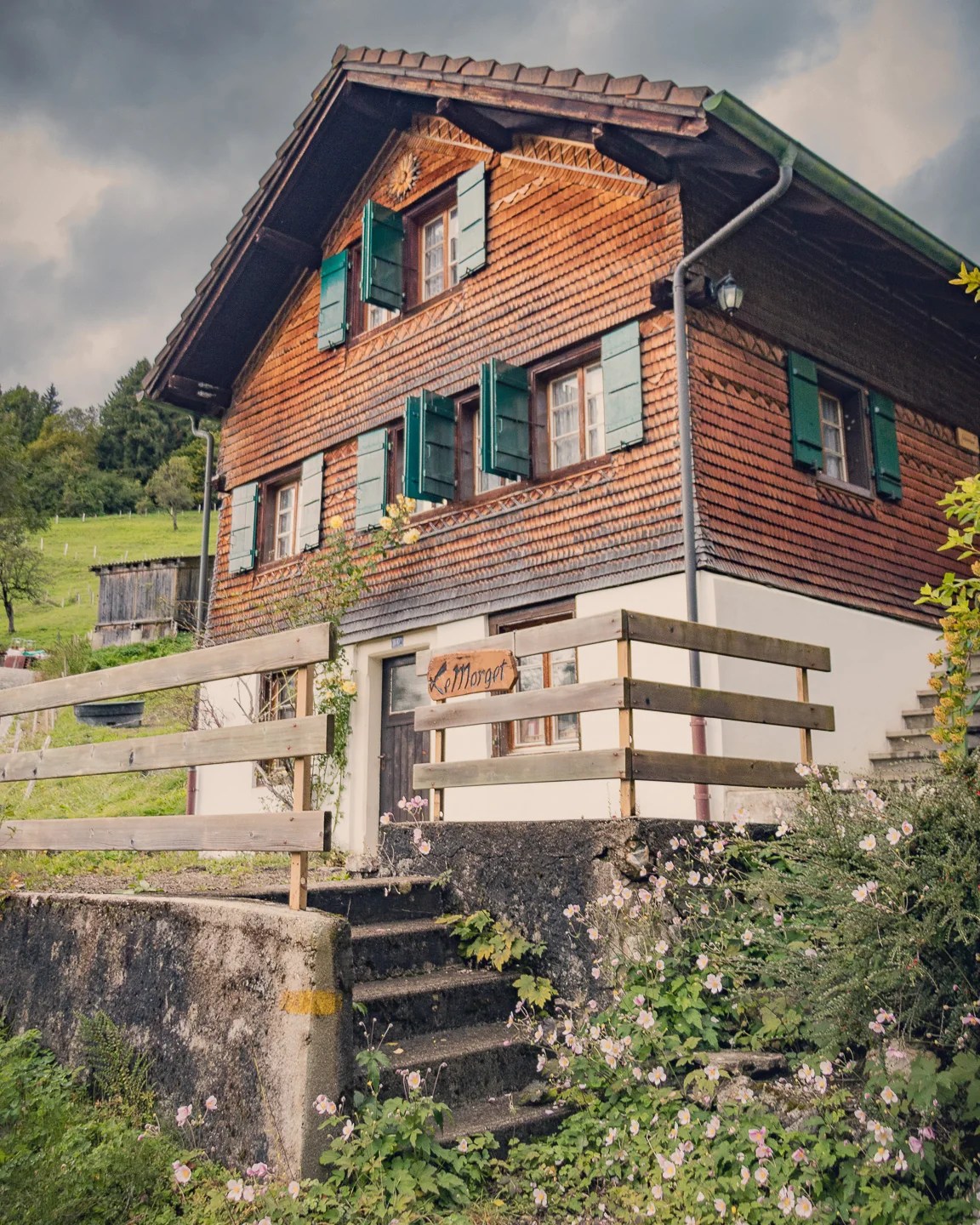
With bags stowed, we set out to explore this small corner of Fribourg. The streets were a mix of timber façades and stone farmhouses; colorful flower boxes brightening almost every building. We drifted along the quiet main street to Saint-Pierre-aux-Liens Church. Its stone tower has watched over Charmey since the 1800s; inside, colorful stained glass windows glowed softly in the late-day light. A steep path carried us down to a small mountain stream, winding past alpine chalets, wooden footbridges, and even a chatty village cat.



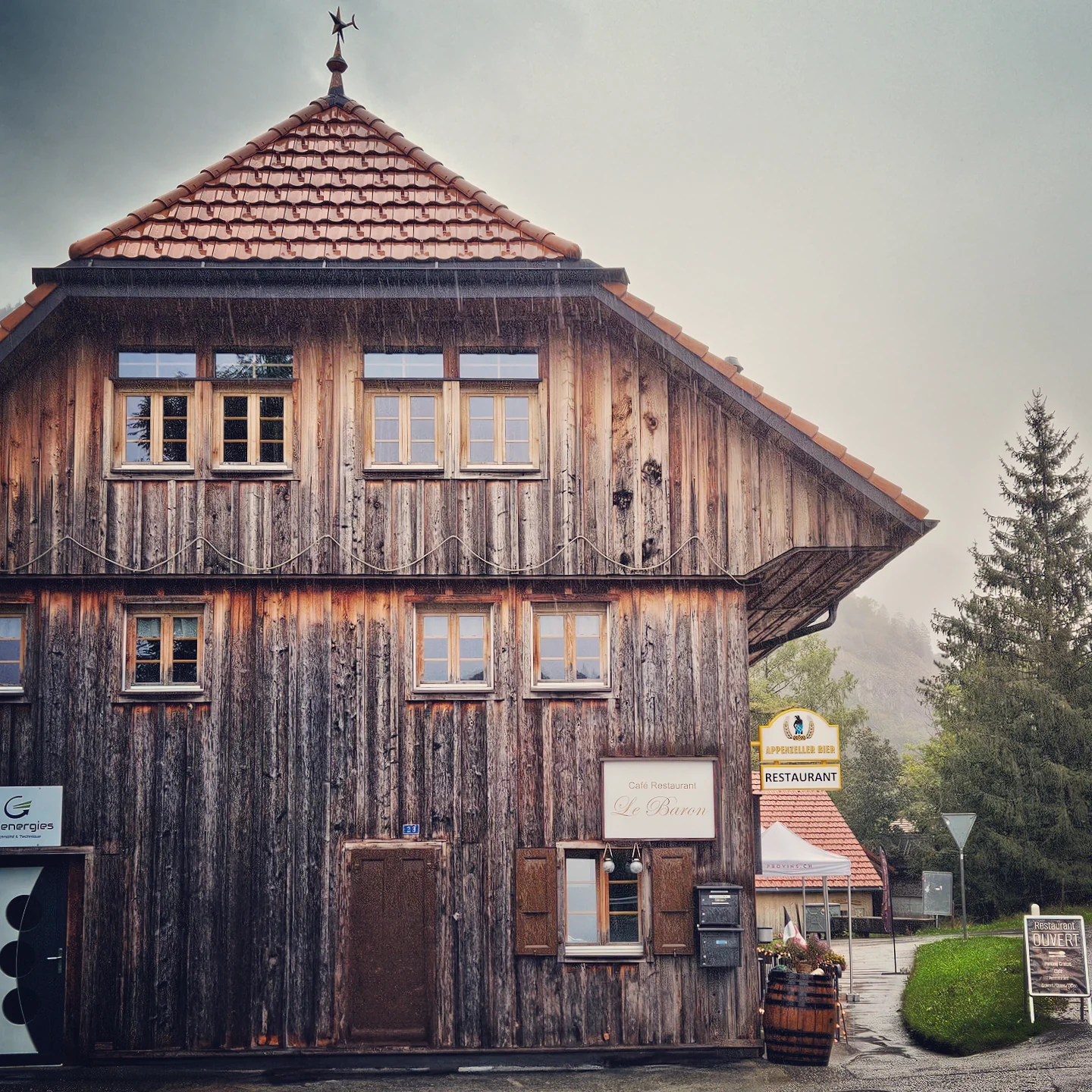
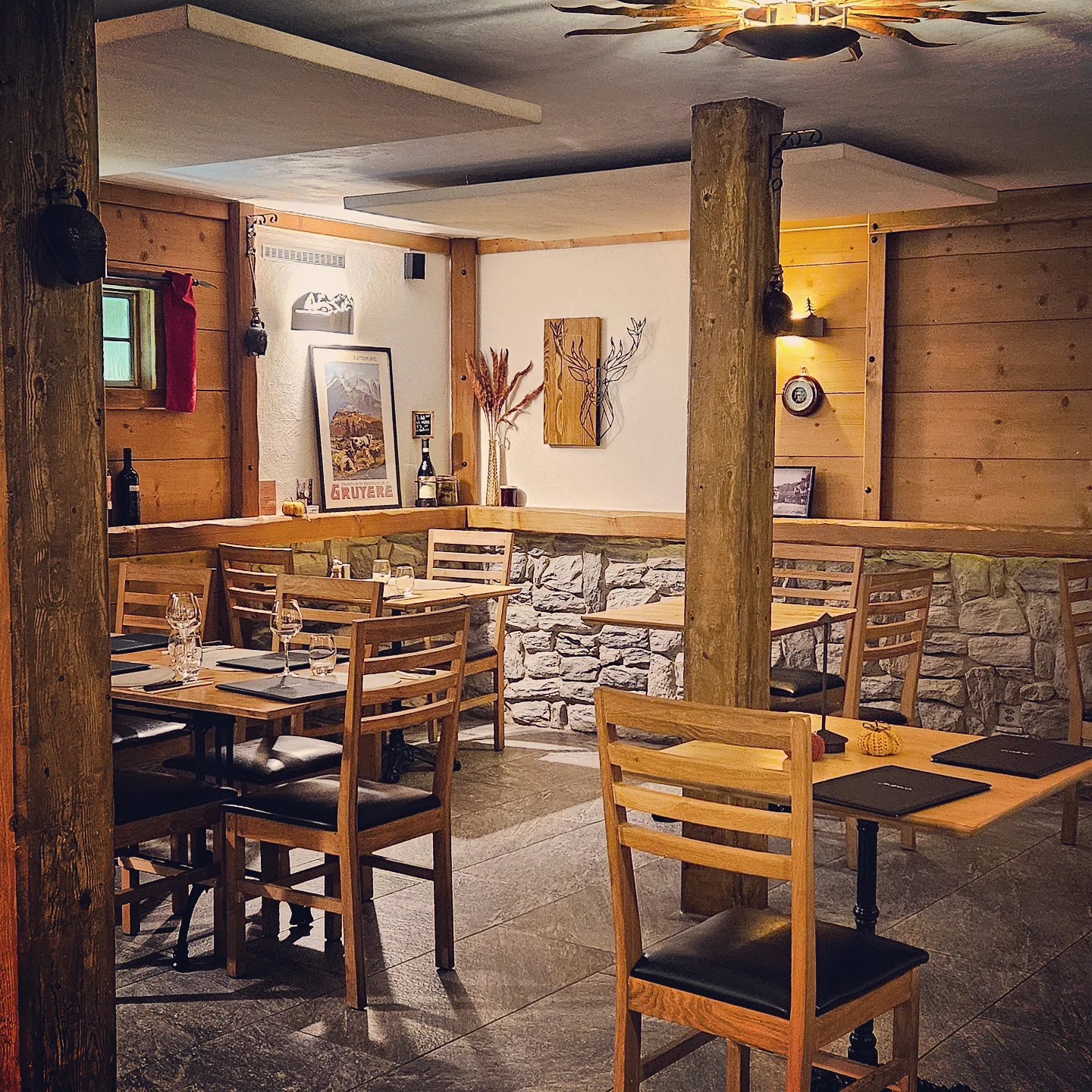
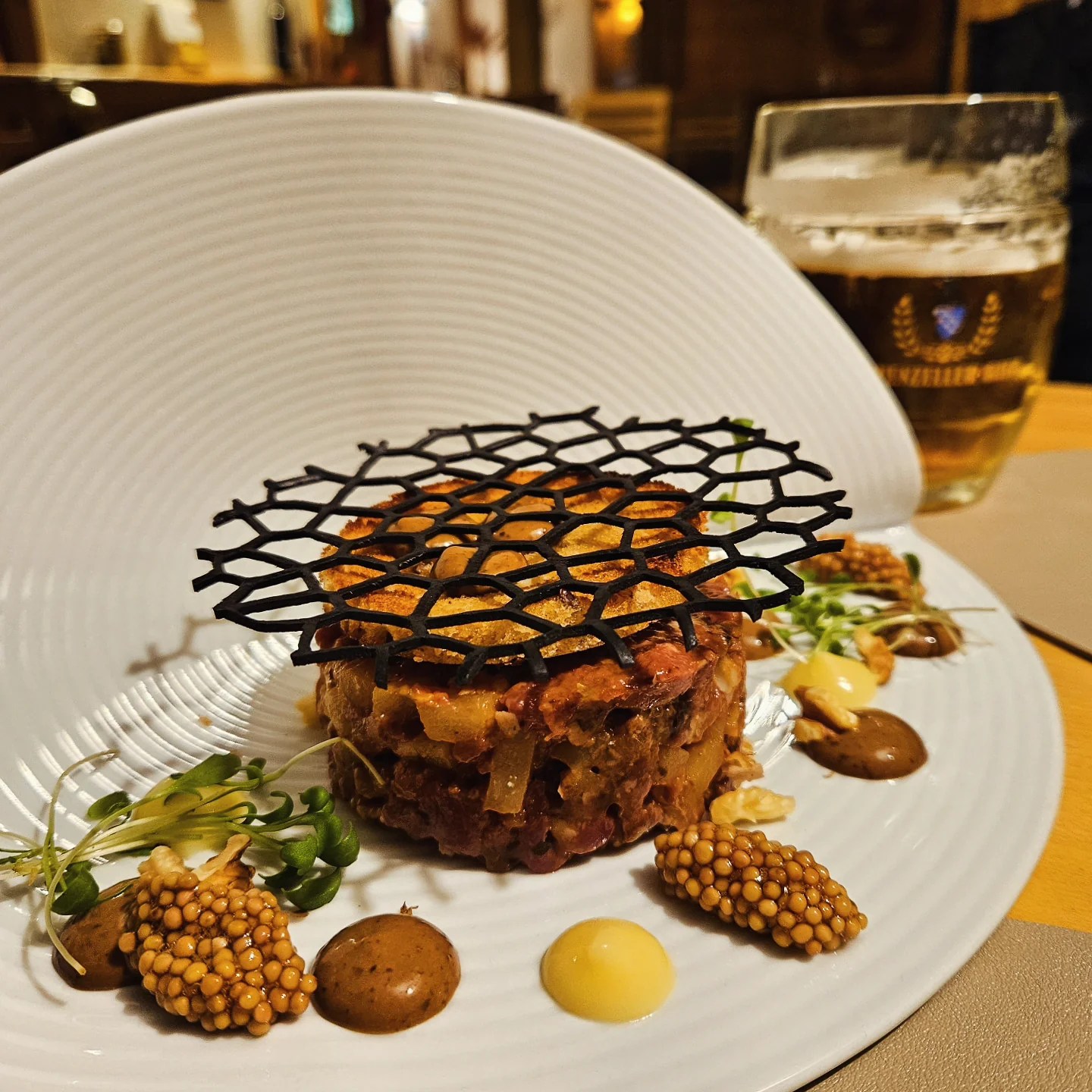
Keeping the water in earshot, we meandered until an unassuming timber barn came into view: Le Baron, a five-century-old farm building reborn as a restaurant. The chef prepares whatever the valley offers that week—hand-chopped steak tartare, spinach-ricotta ravioli, slow-braised game—paired with local Gruyère wines and the gentle creak of old beams overhead. It was a warm, delicious welcome to a village we’d soon learn could throw quite a party for its cows.
Cowbells in the Rain: A Day at the Désalpe de Charmey
We woke to rain tapping a steady rhythm on the roof and the distant clang of cowbells. Down in the village, market stalls were already unfolding—setting out hand-carved spoons, crisp autumn apples, and, of course, wheels of Gruyère. Everyone was gearing up for the Désalpe de Charmey, the annual home-coming parade that marks the end of summer grazing in the high pastures—a ritual echoed all across the Alps under different local names.
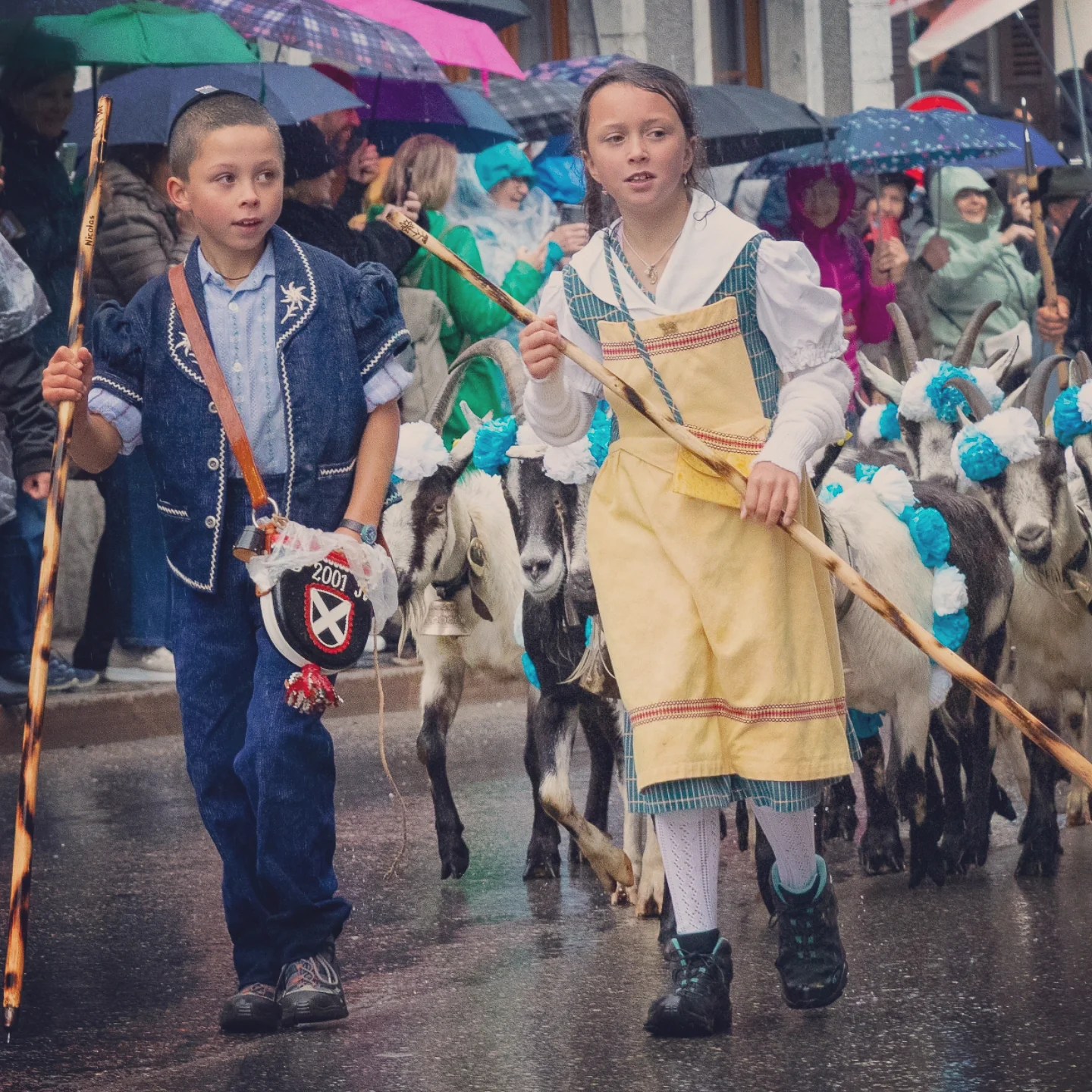
By half past nine the procession was underway. A brass band led the way, followed by a line of vintage tractors that cleared a path for the day’s true stars. What followed felt like a river of color and sound. About every fifteen minutes or so, a new herd emerged from the mist—cows crowned with evergreen boughs and fresh flowers, herders in indigo work jackets and women in bright dirndls gently guiding the animals with long wooden staffs, and children leading goats whose paper garlands dripped blue dye in the rain.
Umbrellas snapped open and shut with each shower, bells rang against embroidered leather collars, and quiet anticipation filled the gaps between herds. The rain never really let up, yet no one drifted away—we were watching centuries of alpine tradition unfold before our eyes, humbled to be among the lucky few who could say we were there.
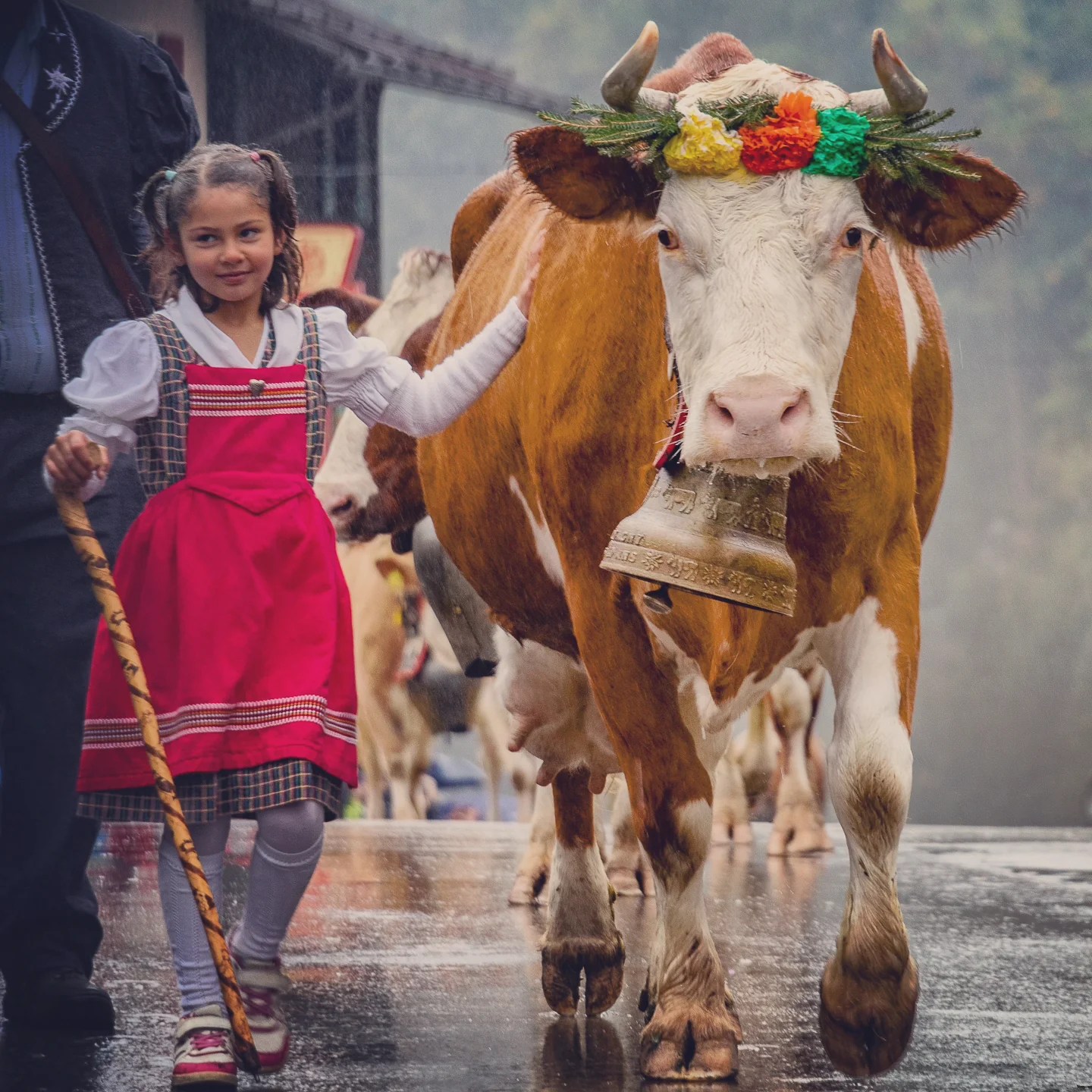
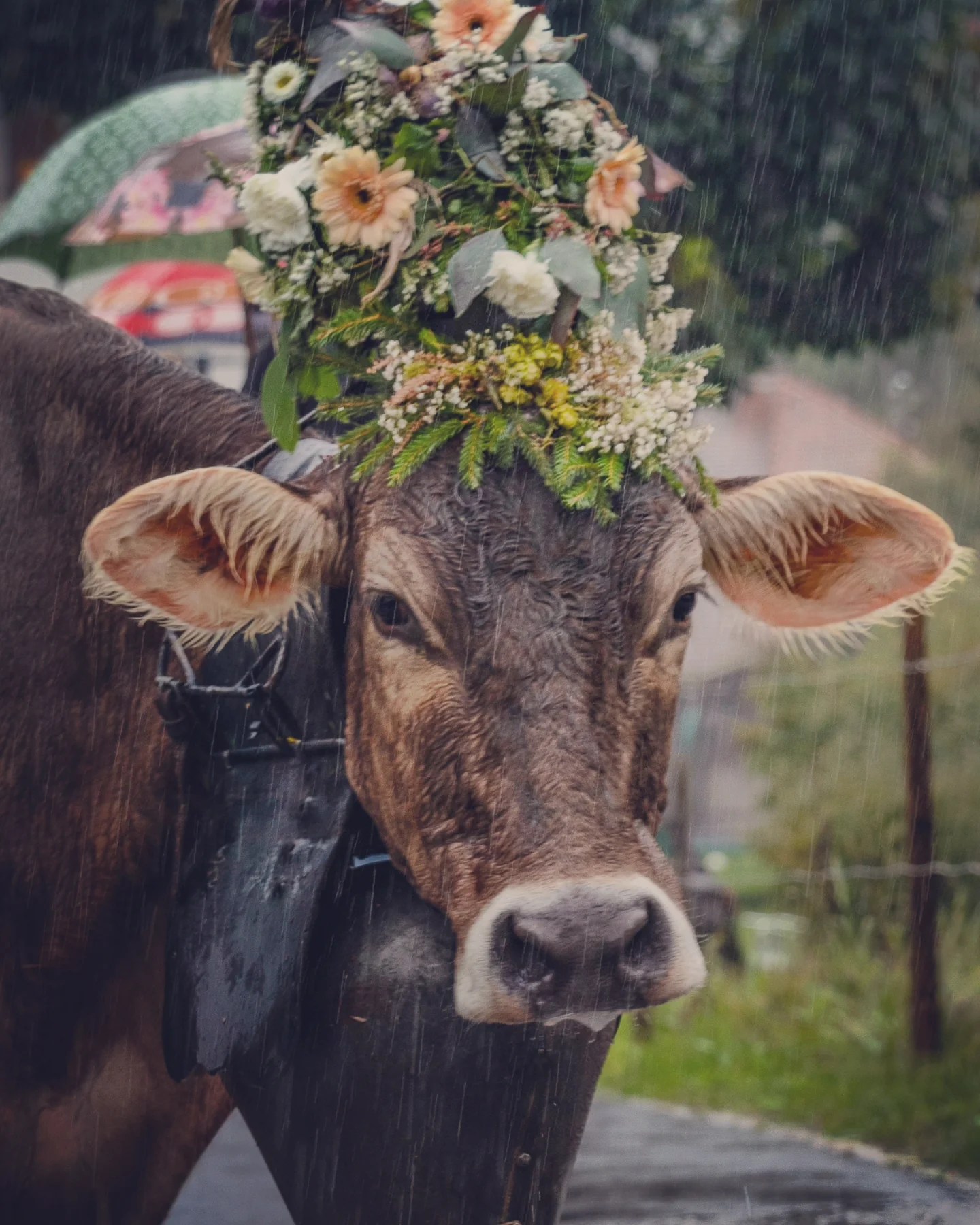
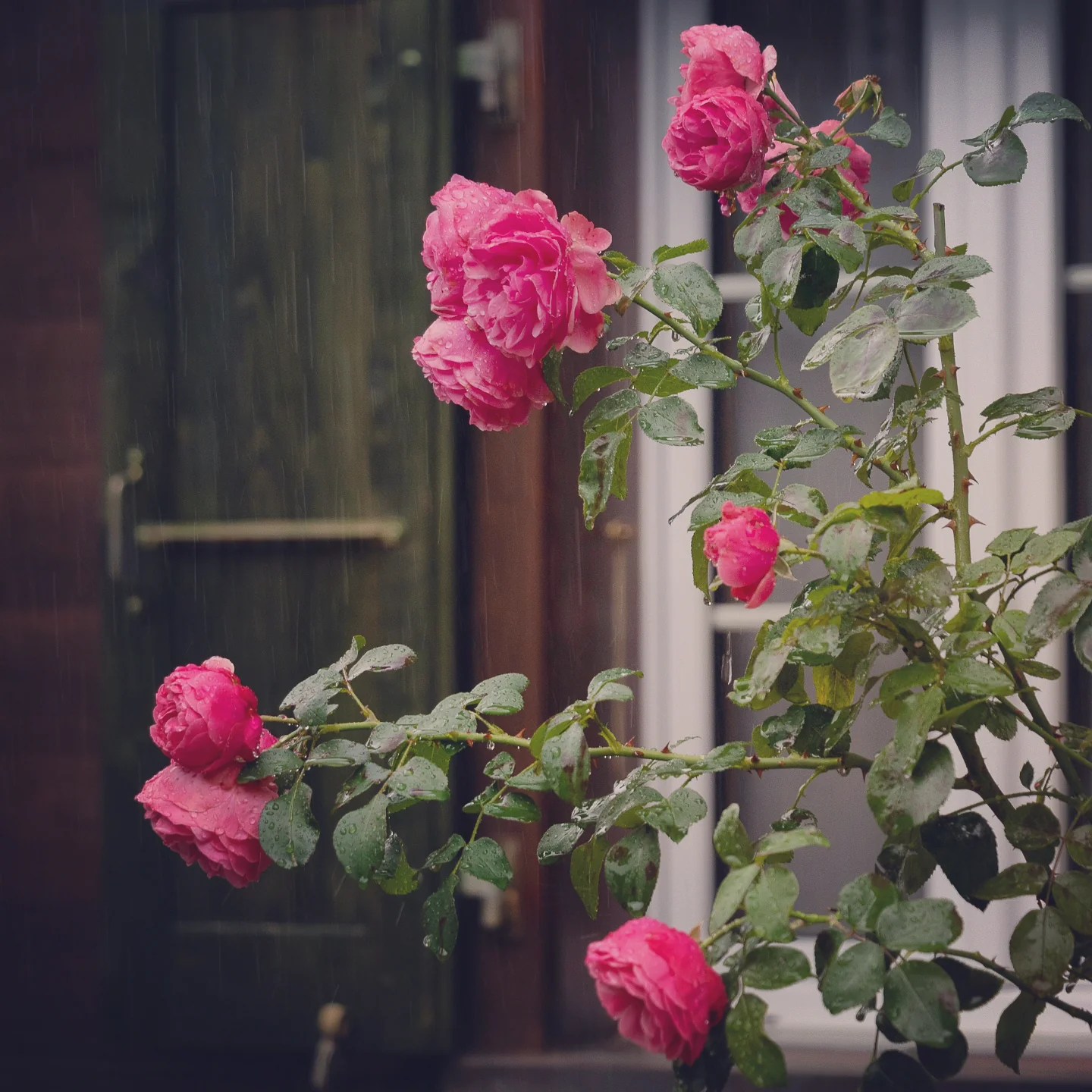
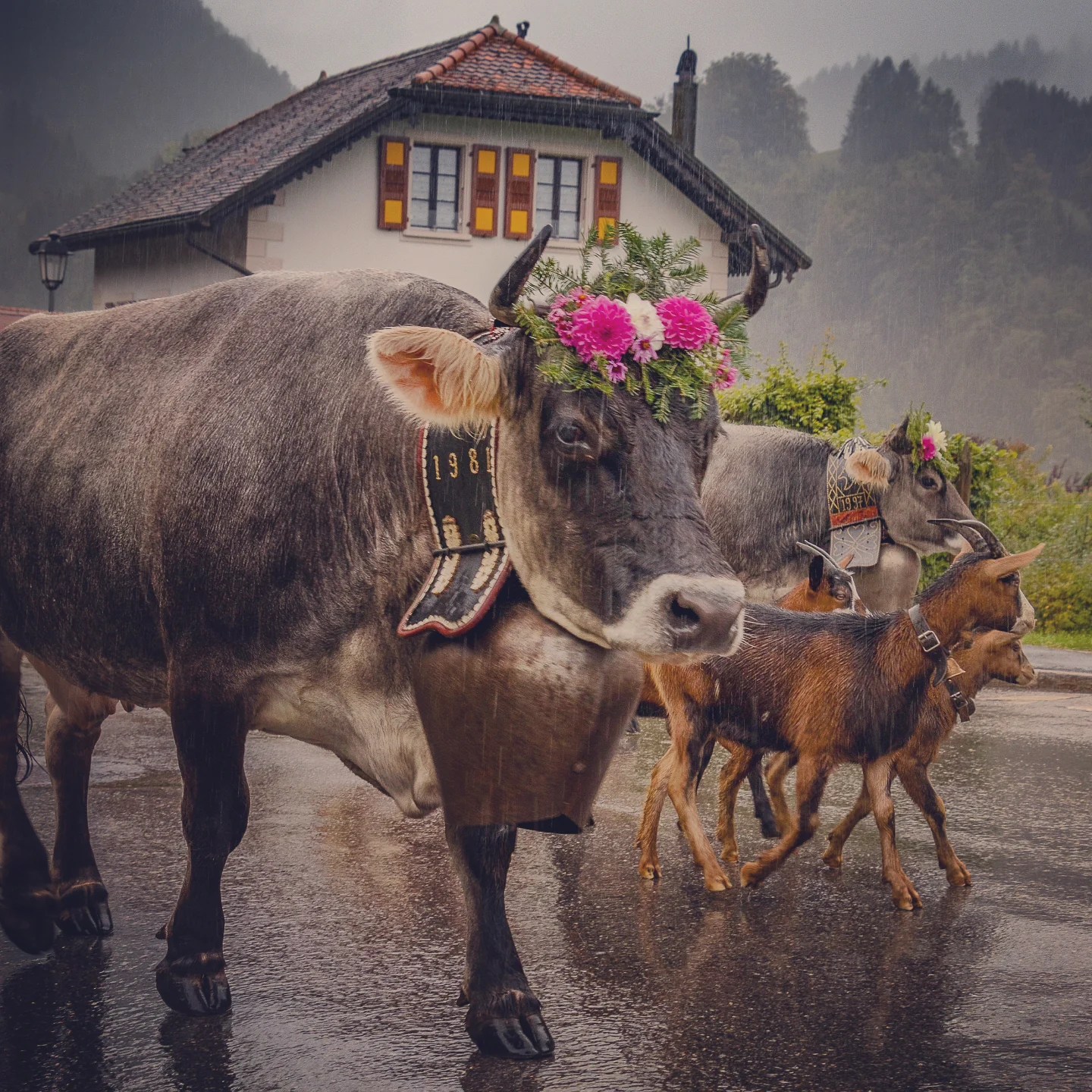
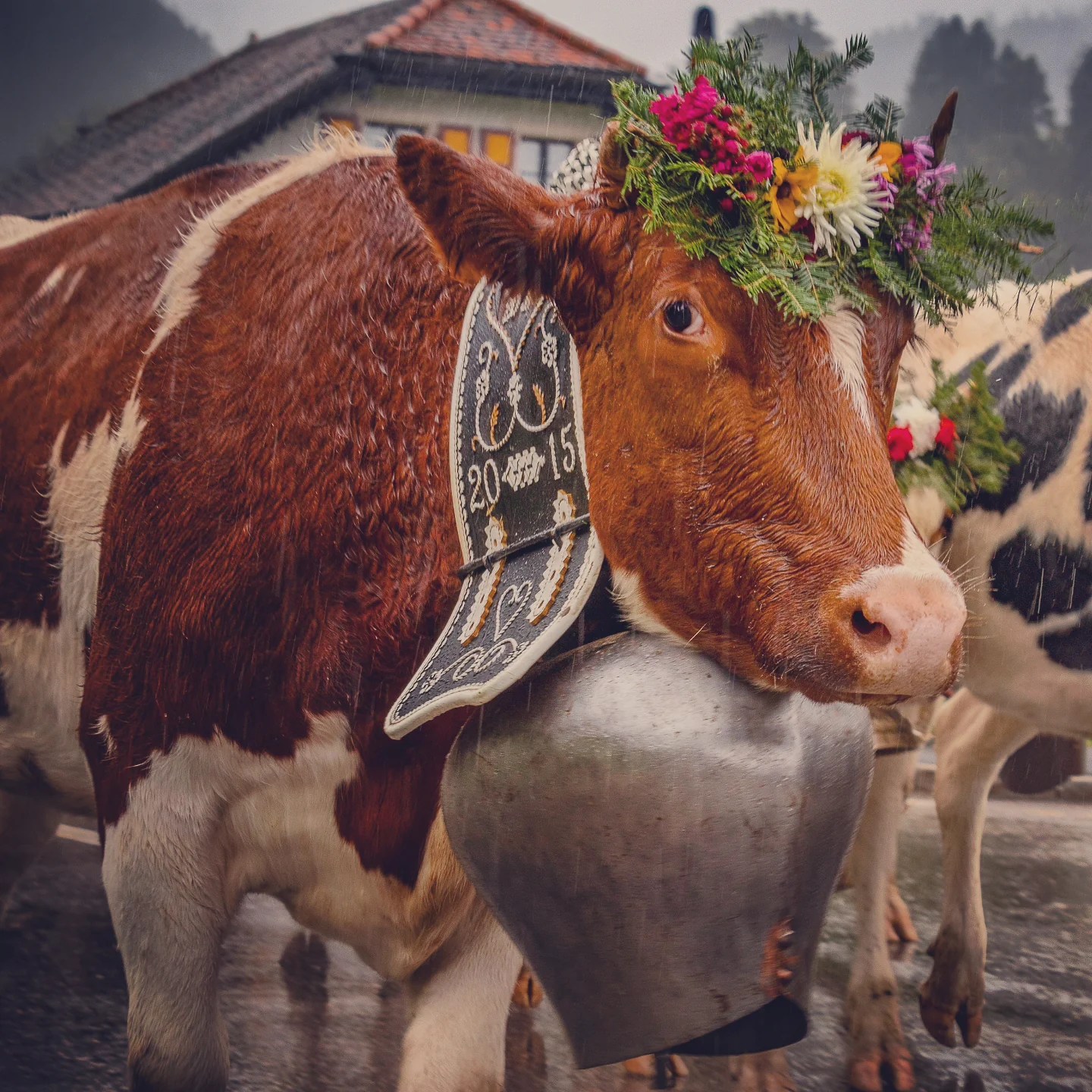
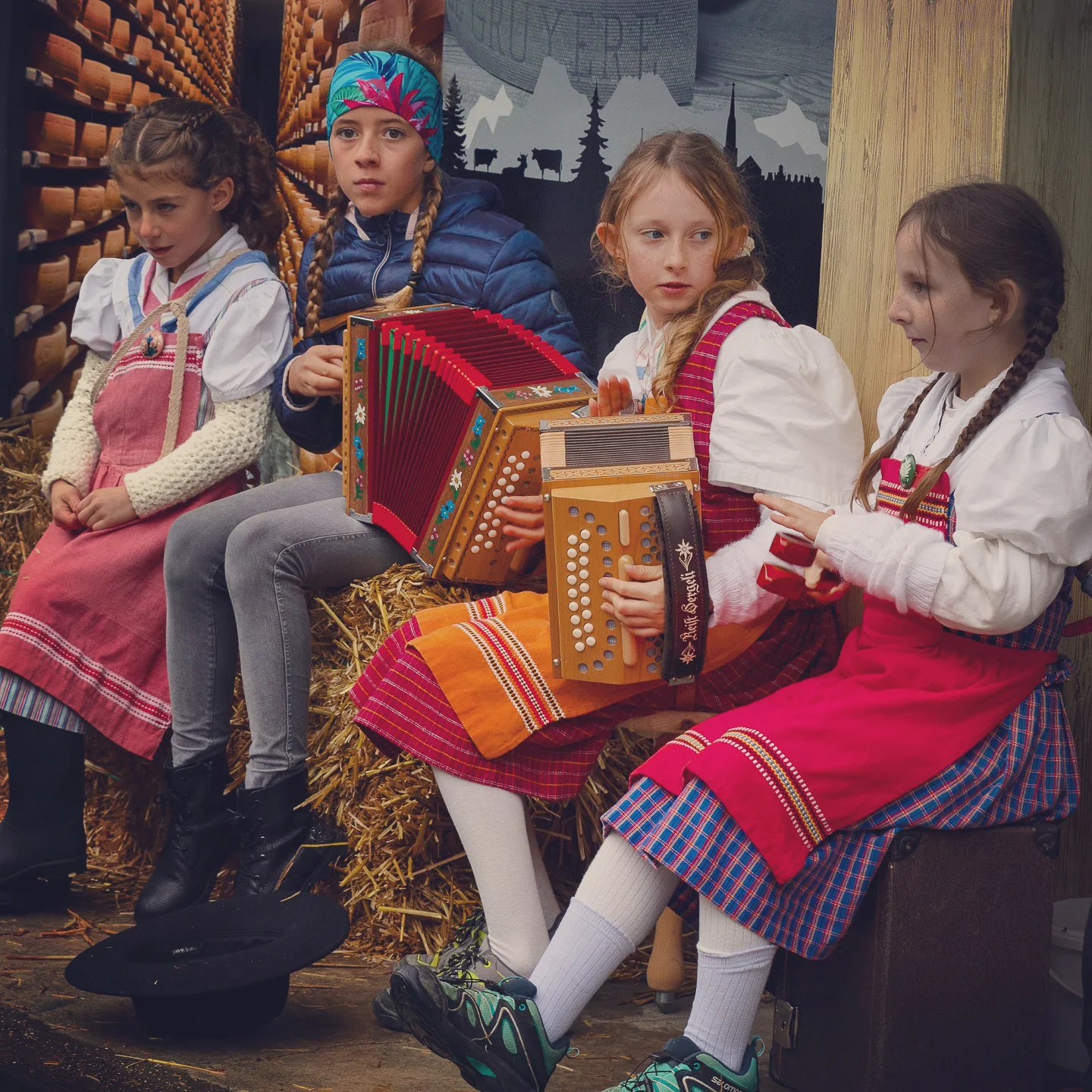
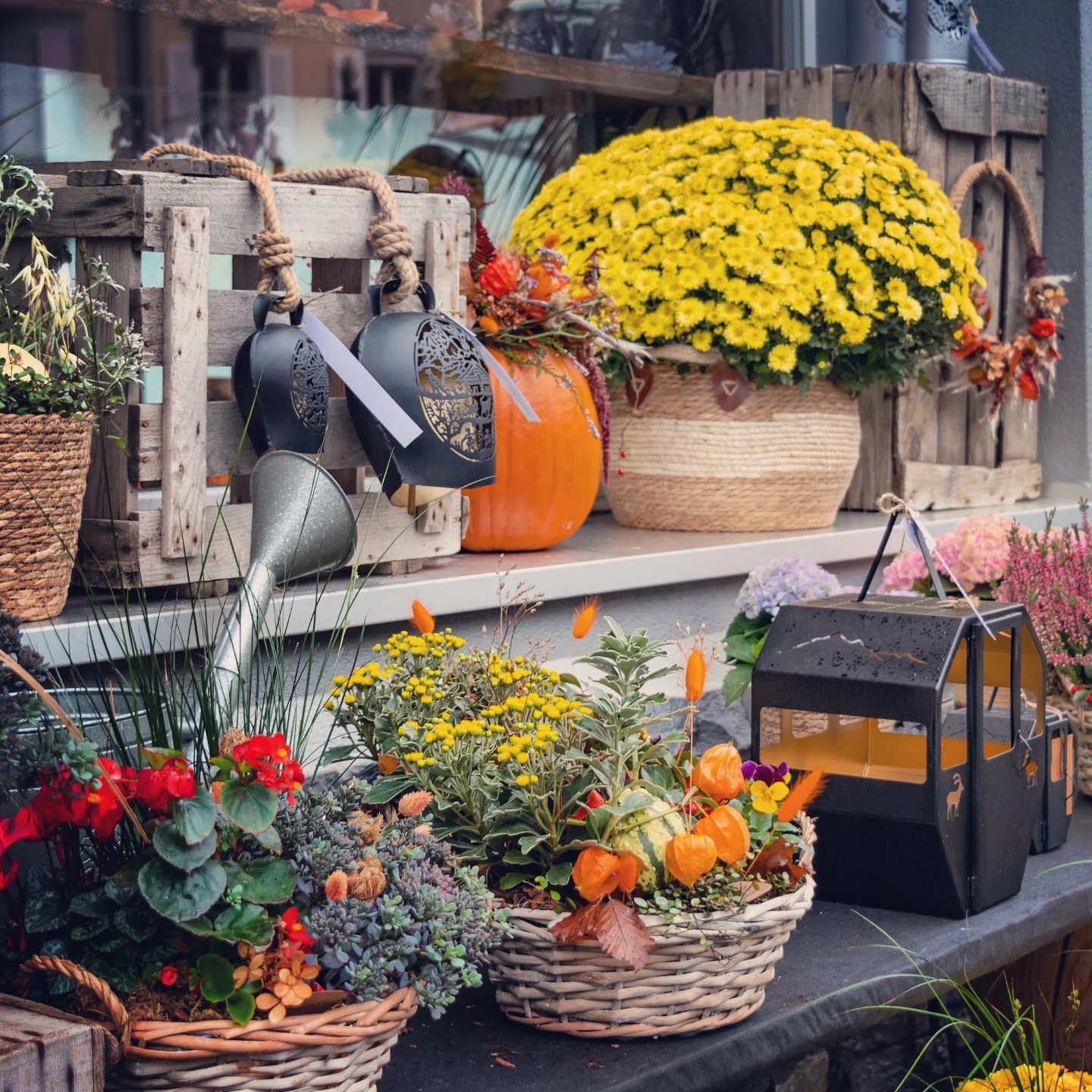
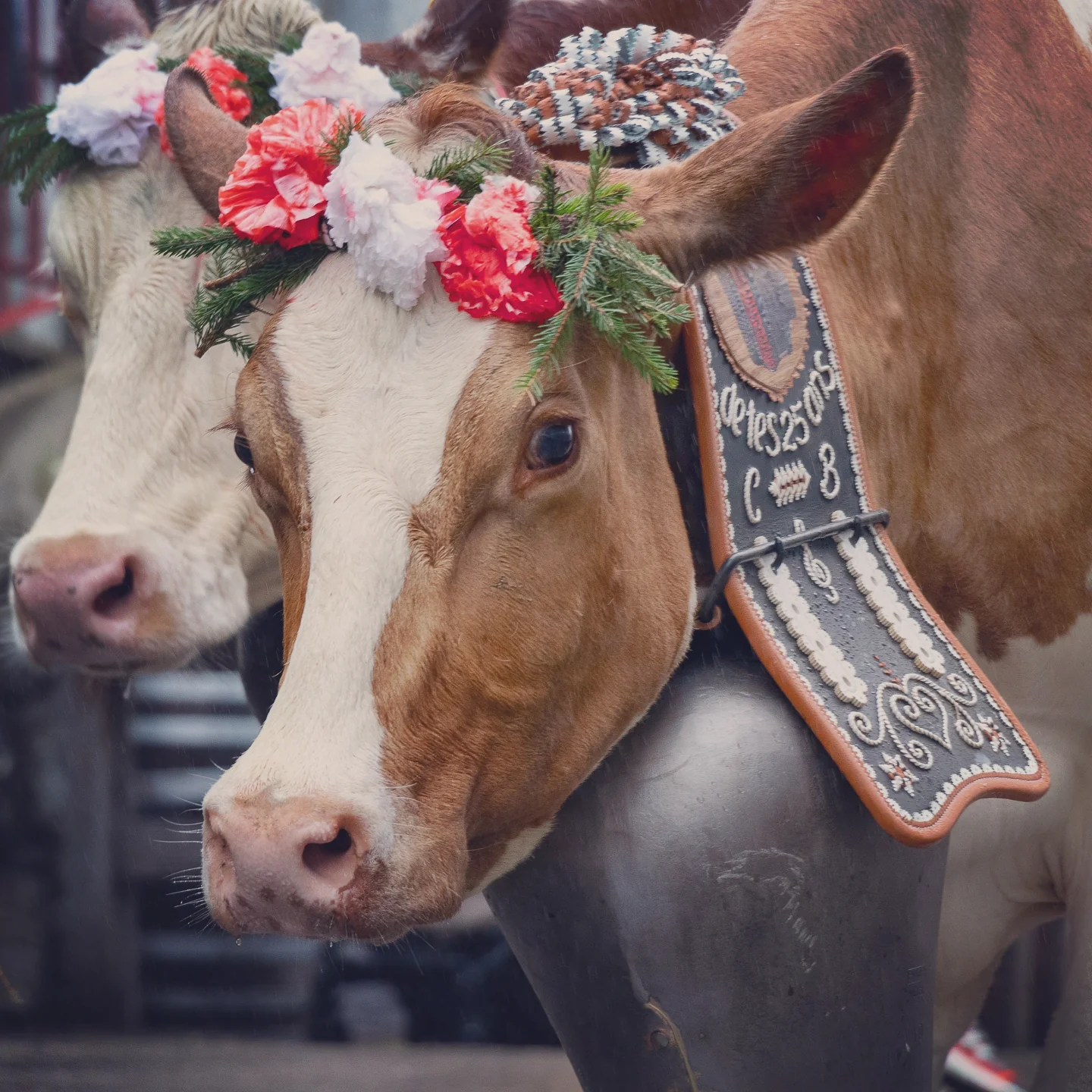

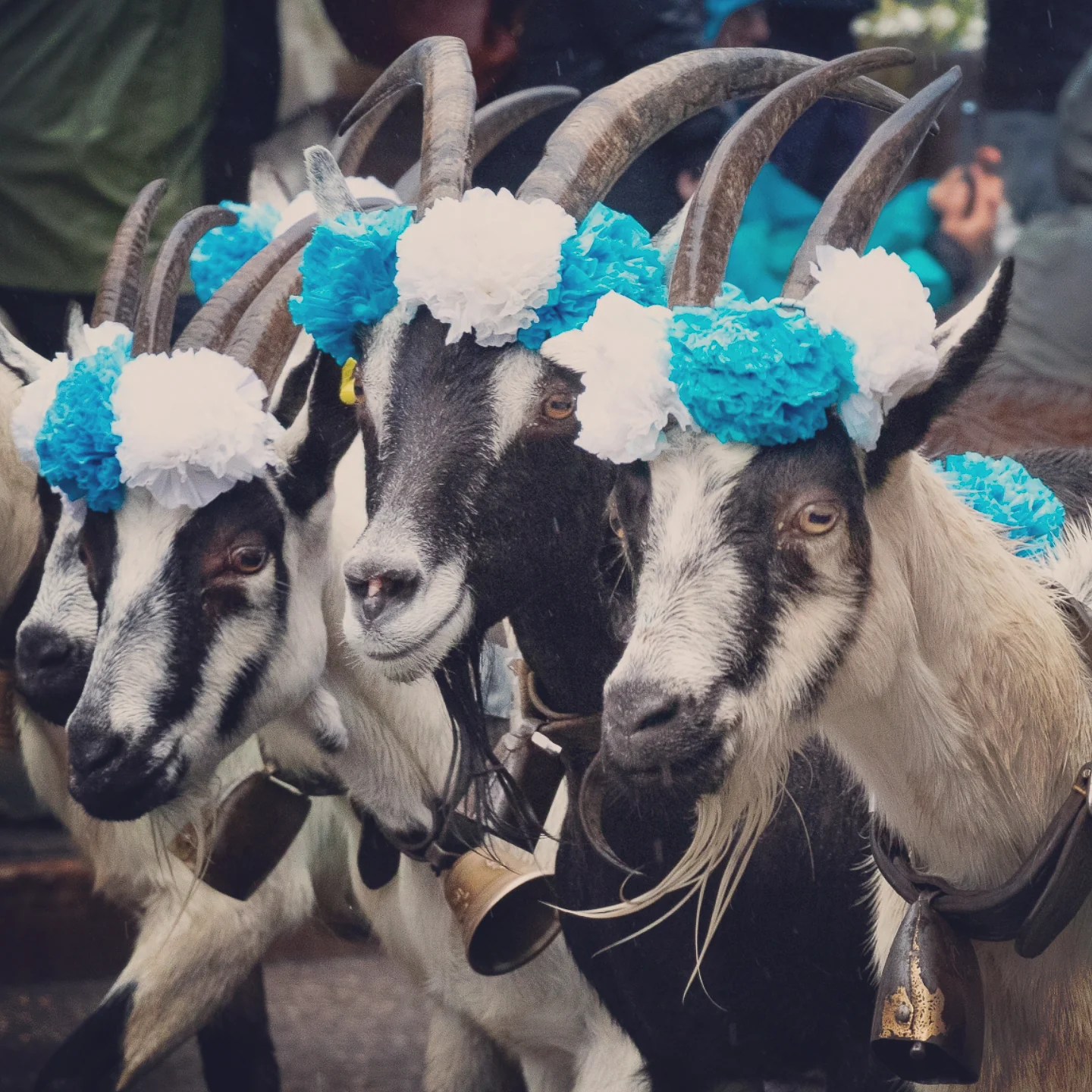

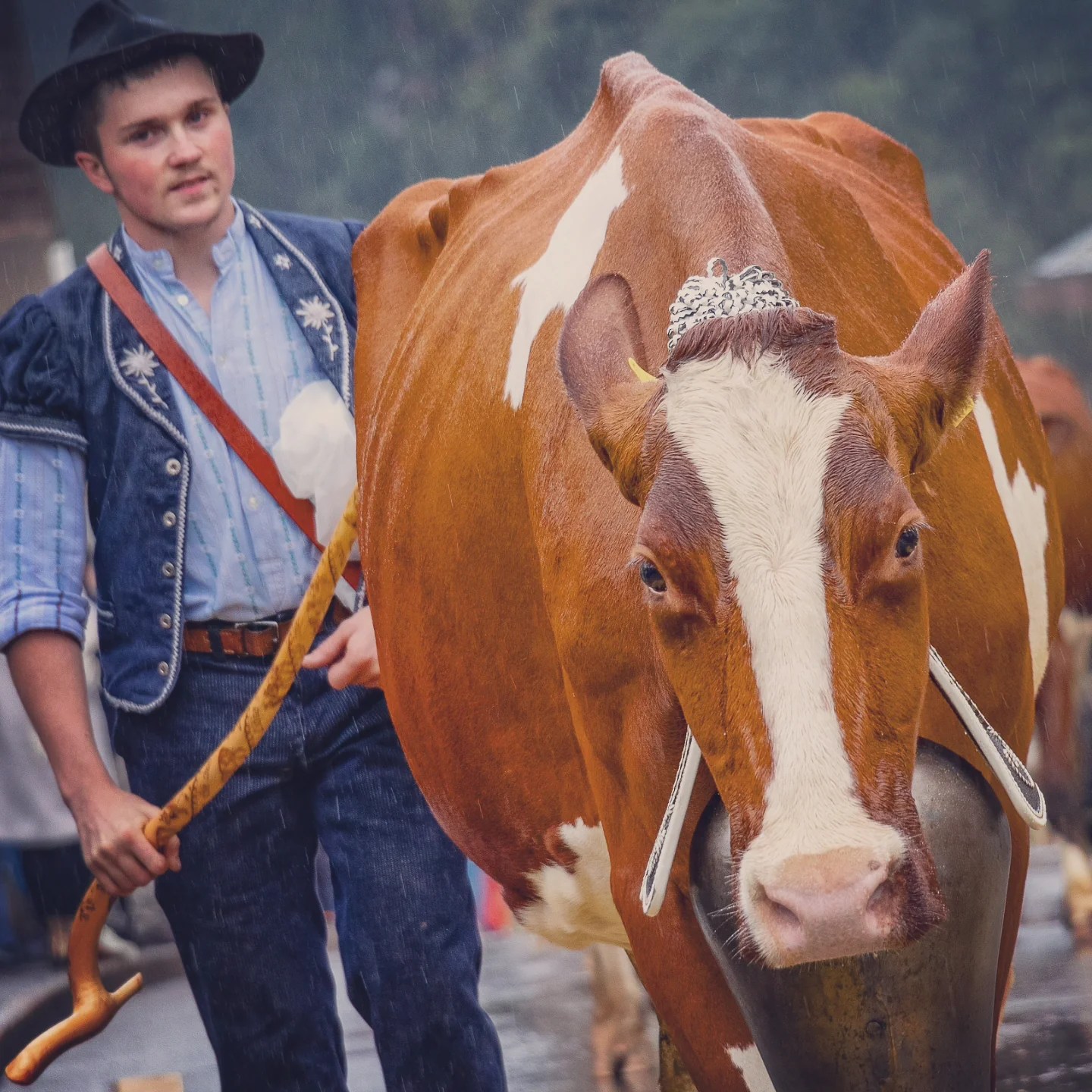
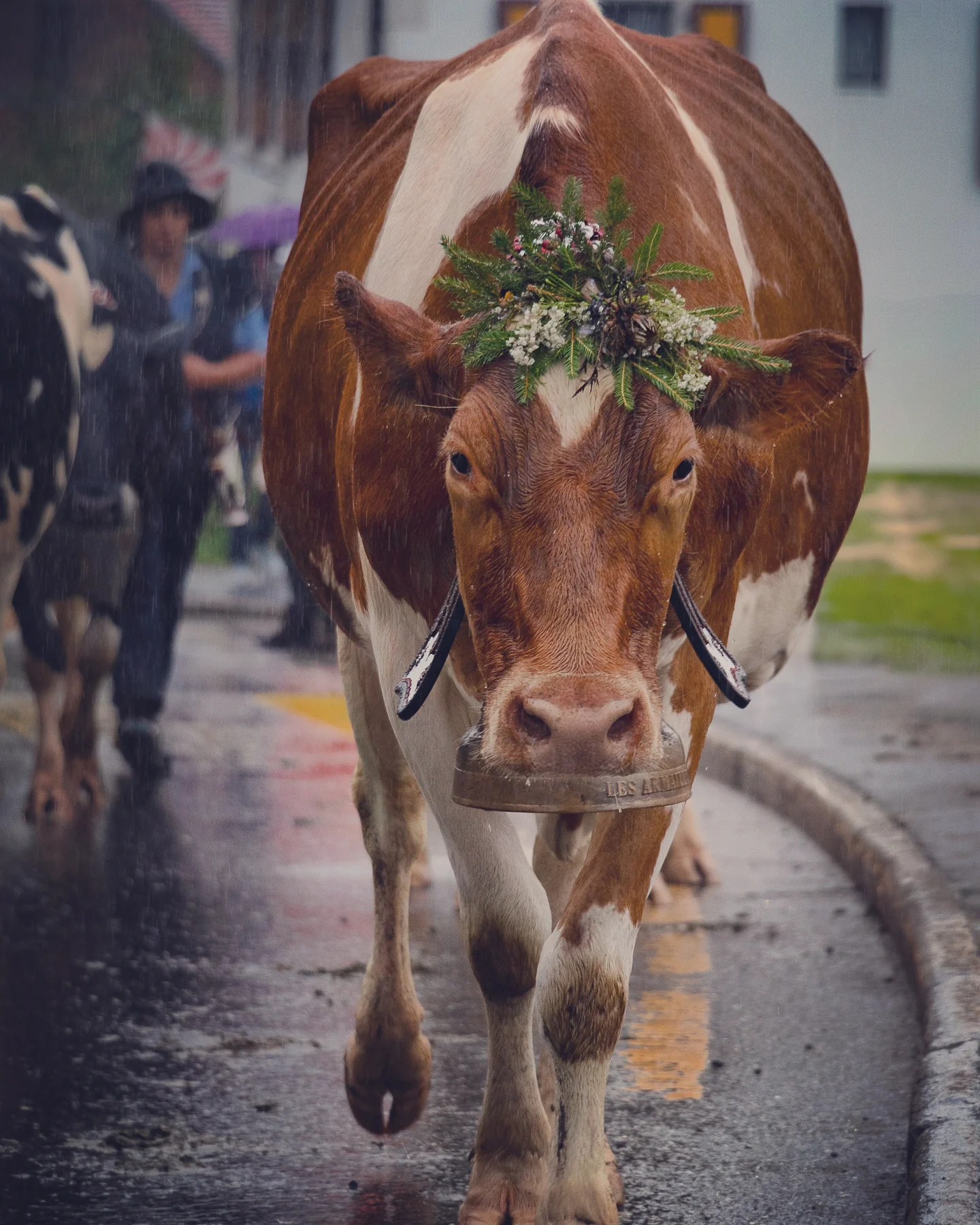

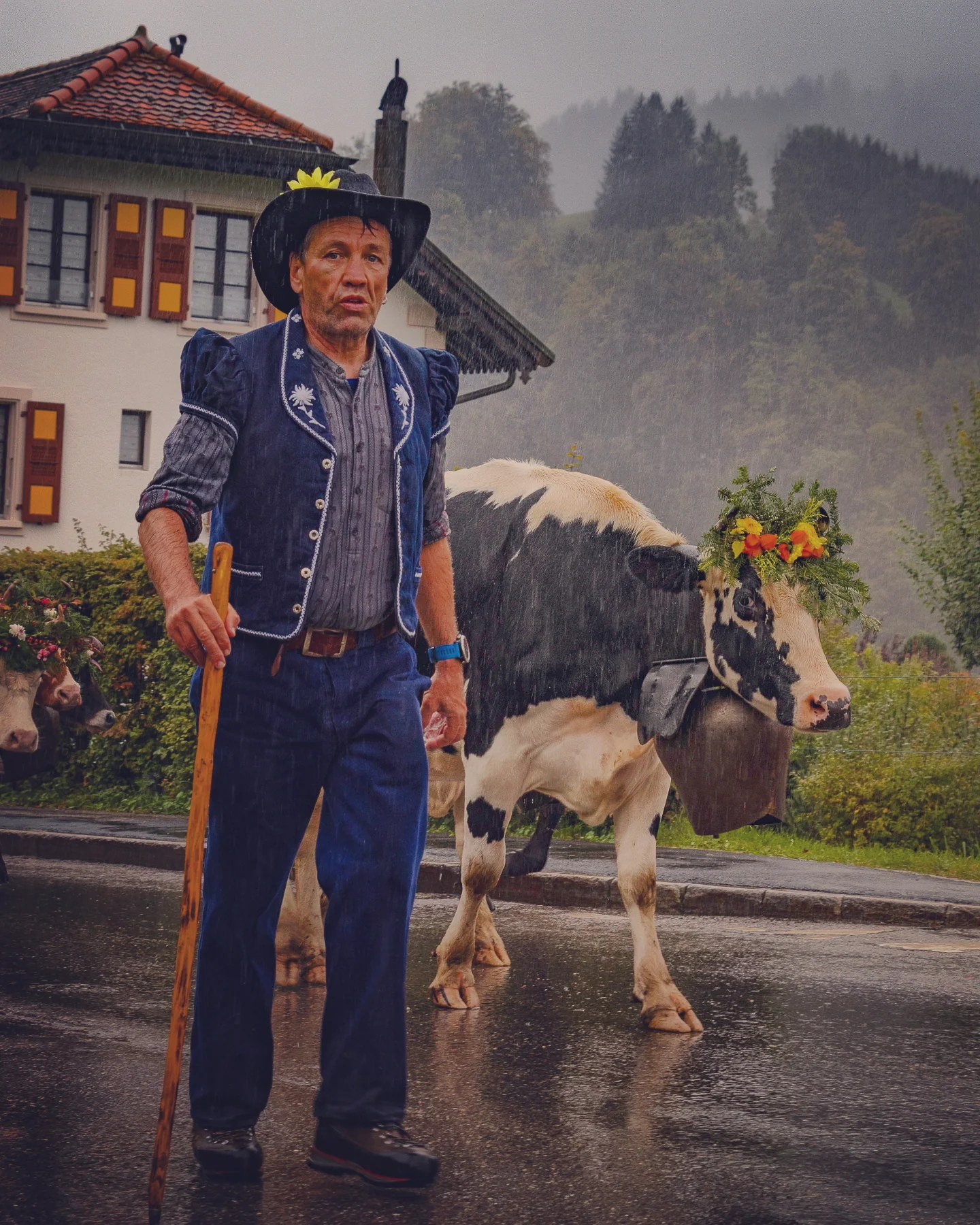

During a midday lull we ducked into Le Pâtissier de l’Hôtel Cailler, the hotel’s wood-paneled tea room and a welcome refuge from the rain. Lunch wrapped up with dark hot chocolate so thick it clung to the spoon, warming us from the inside out. Back at the market we picked up a board of Gruyère and pickles for later and paused to watch an artisan hand-finish small cowbells over a torch flame—one was too perfect to pass up and came home with me as a treasured keepsake.
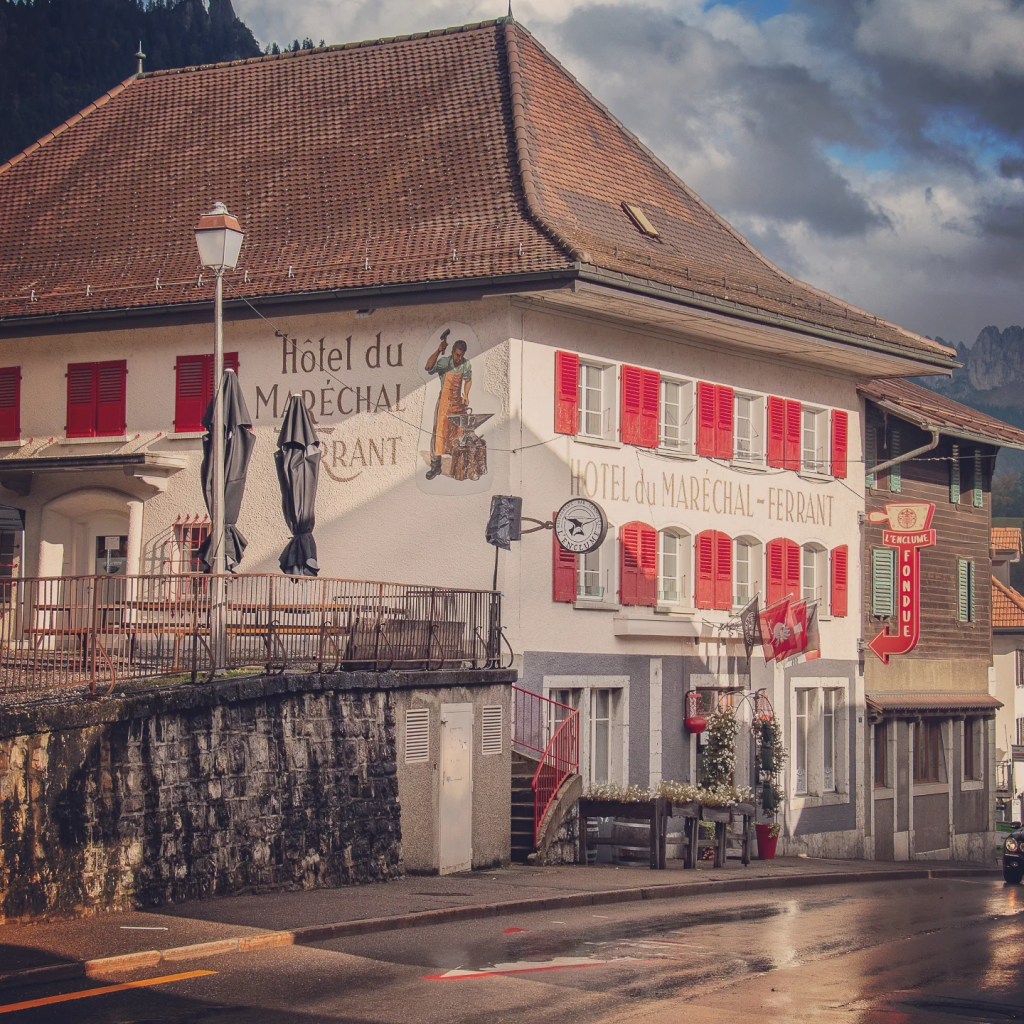
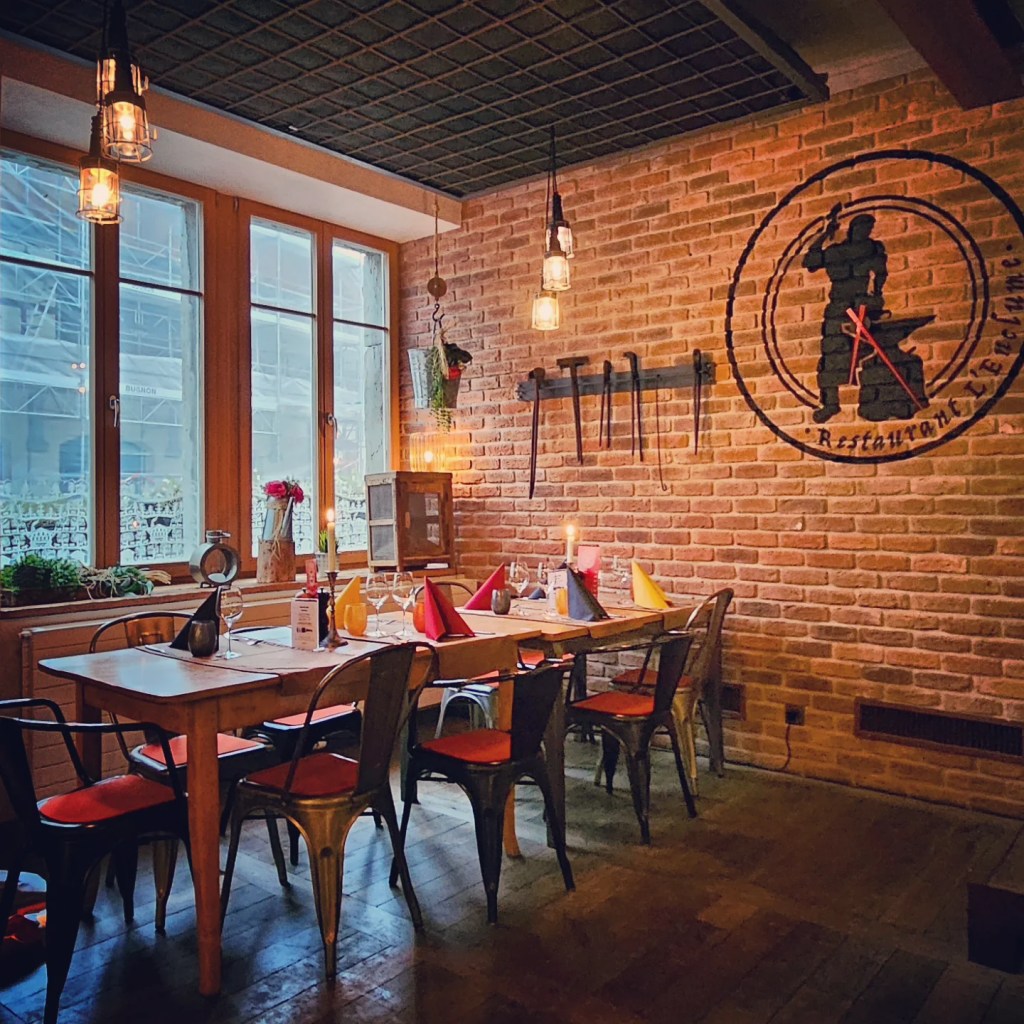
As daylight faded and rain clouds settled over the valley, we headed to L’Enclume (“The Anvil”), a onetime 18th-century forge turned village inn, now known for its silky moitié-moitié fondue. The gentle patter on the windows and the aroma of of bubbling Gruyère and Vacherin made it the coziest refuge in Charmey.
Brunch Above the Clouds: Gondola to Vounetz
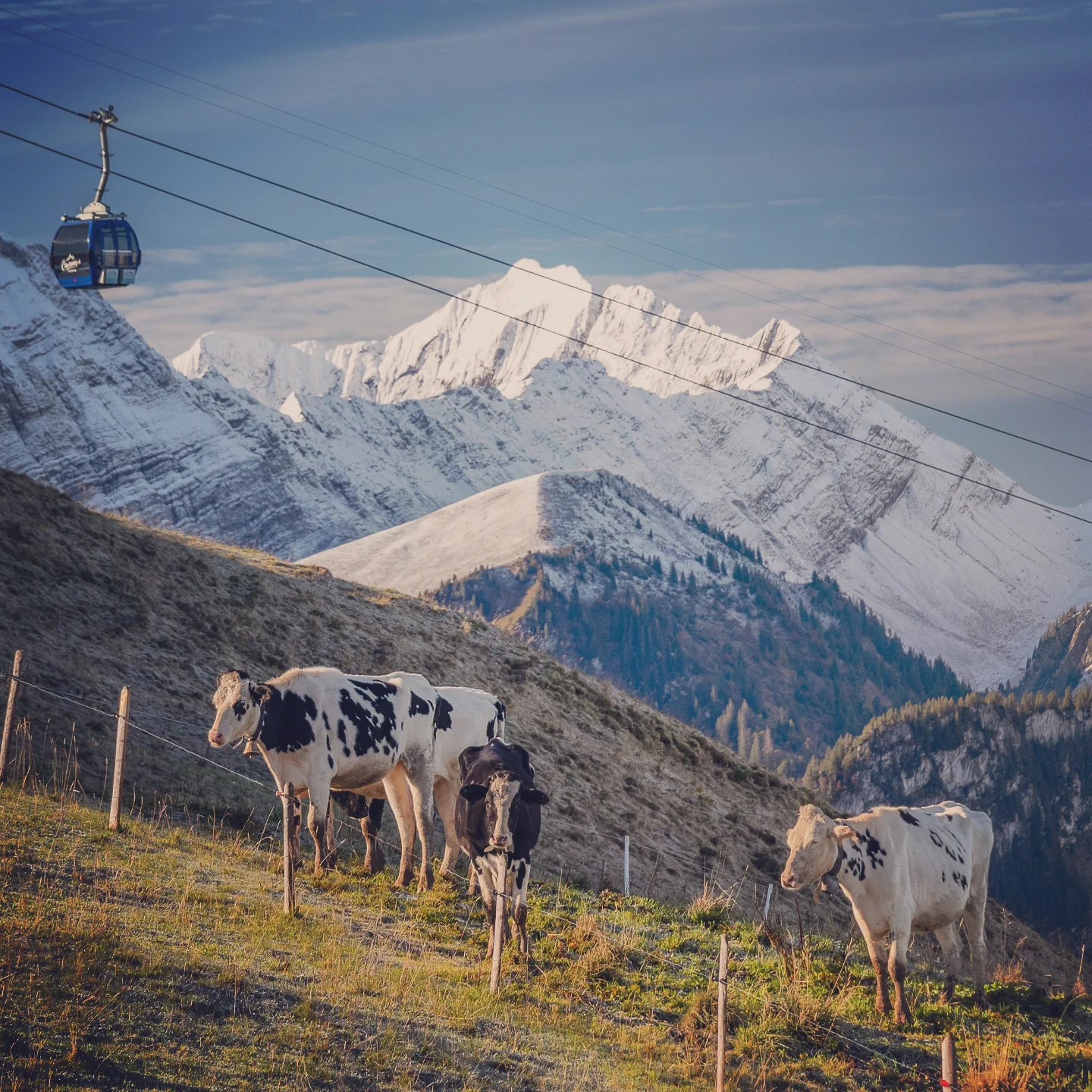
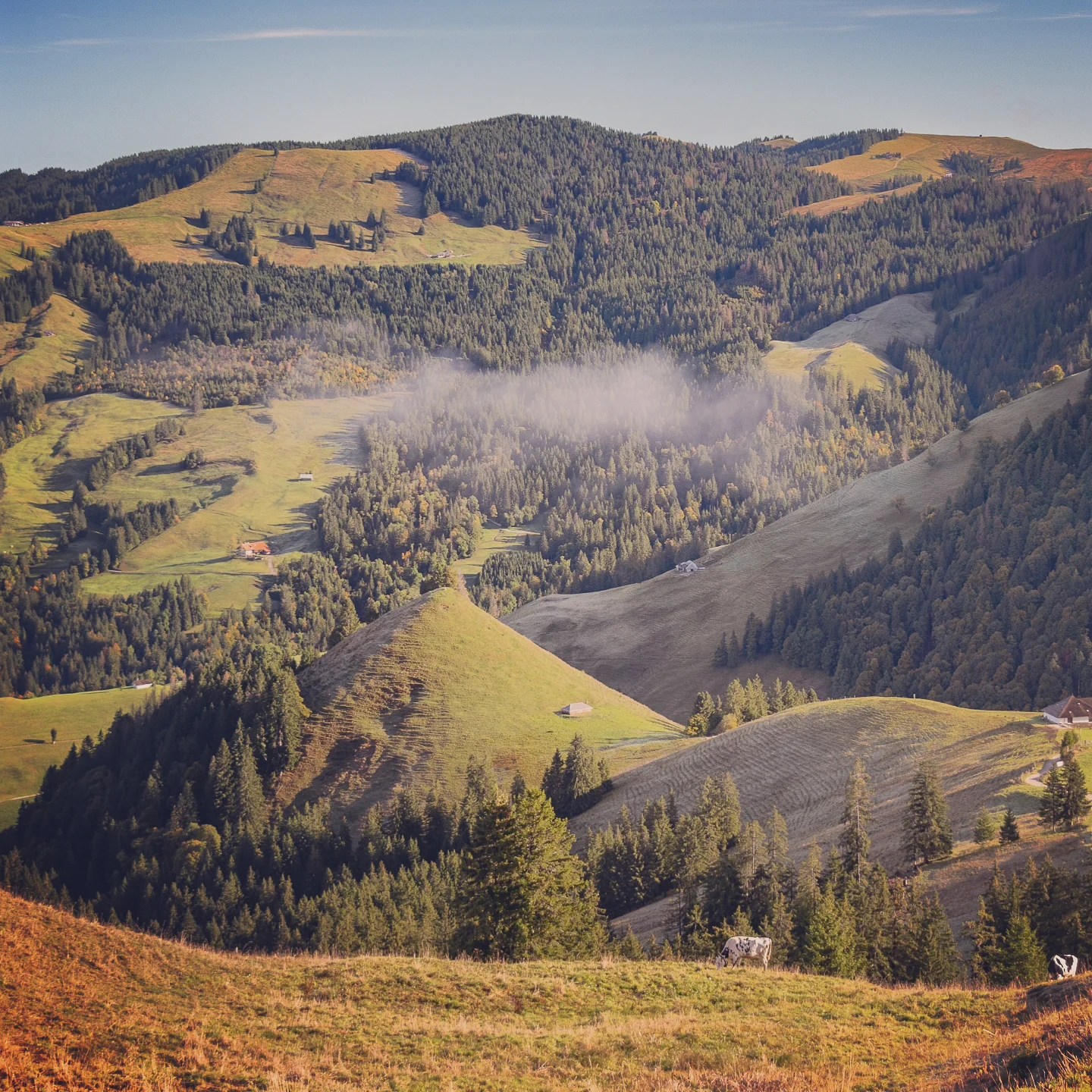
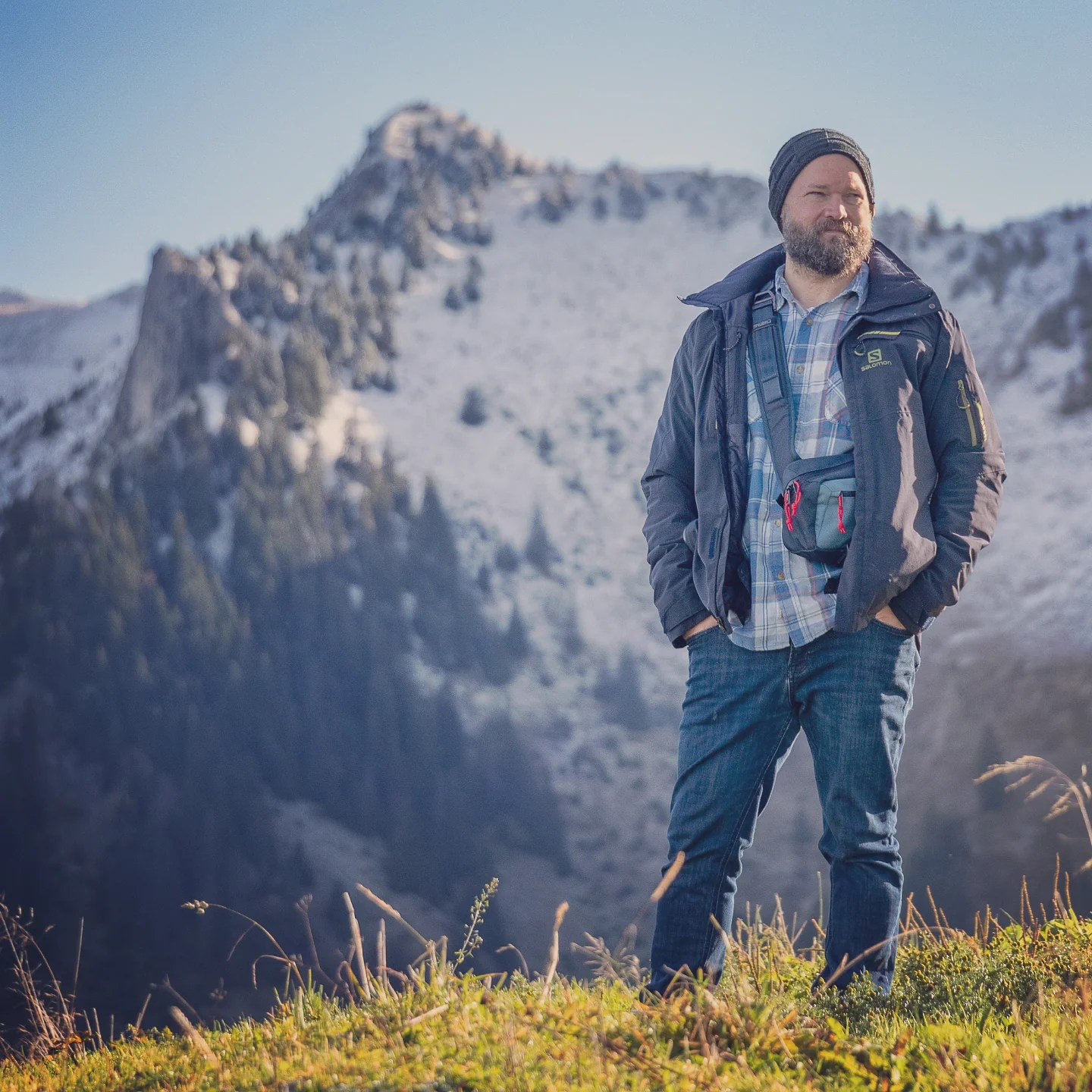
The morning after the parade dawned rain-free and brilliant—perfect weather for a ride on the Télécabine Rapido Sky. We joined a handful of hikers at the station, stepped into a gondola, and drifted upward through thin veils of morning mist. Fifteen minutes later we were standing on Vounetz (1,610 m / 5,282 ft), Charmey’s rooftops far below and the entire Gruyère basin fanning out to snow-brushed peaks on the horizon.
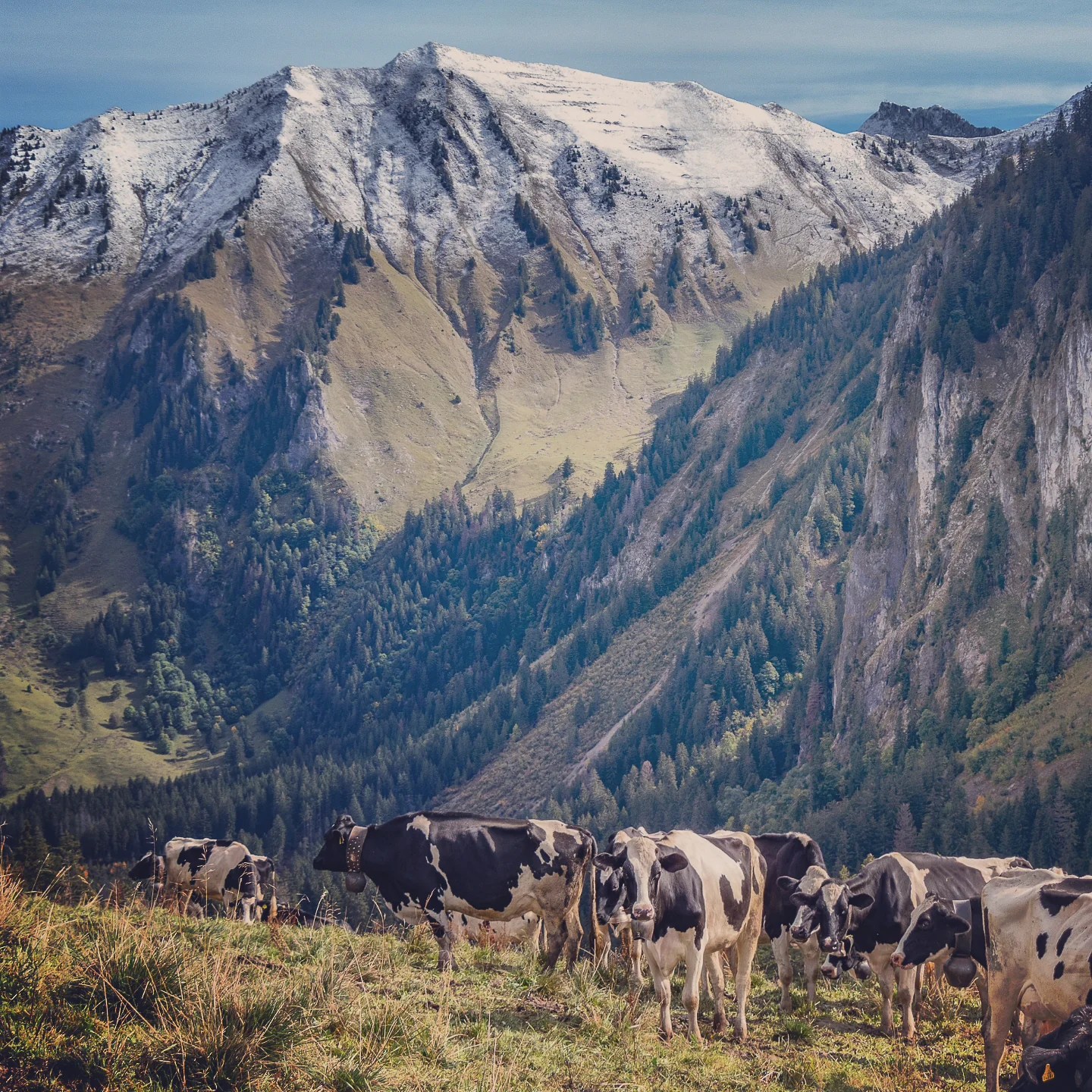
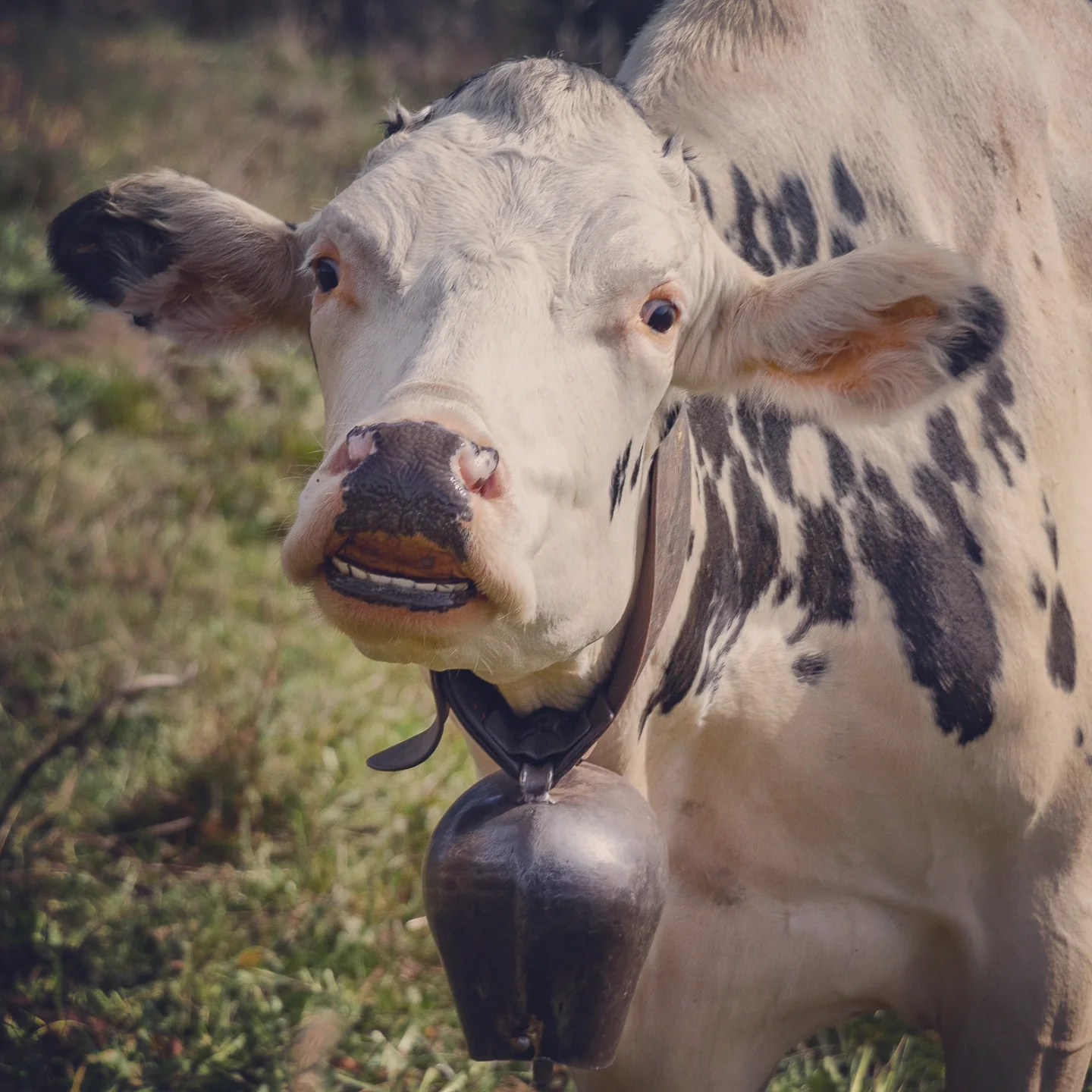
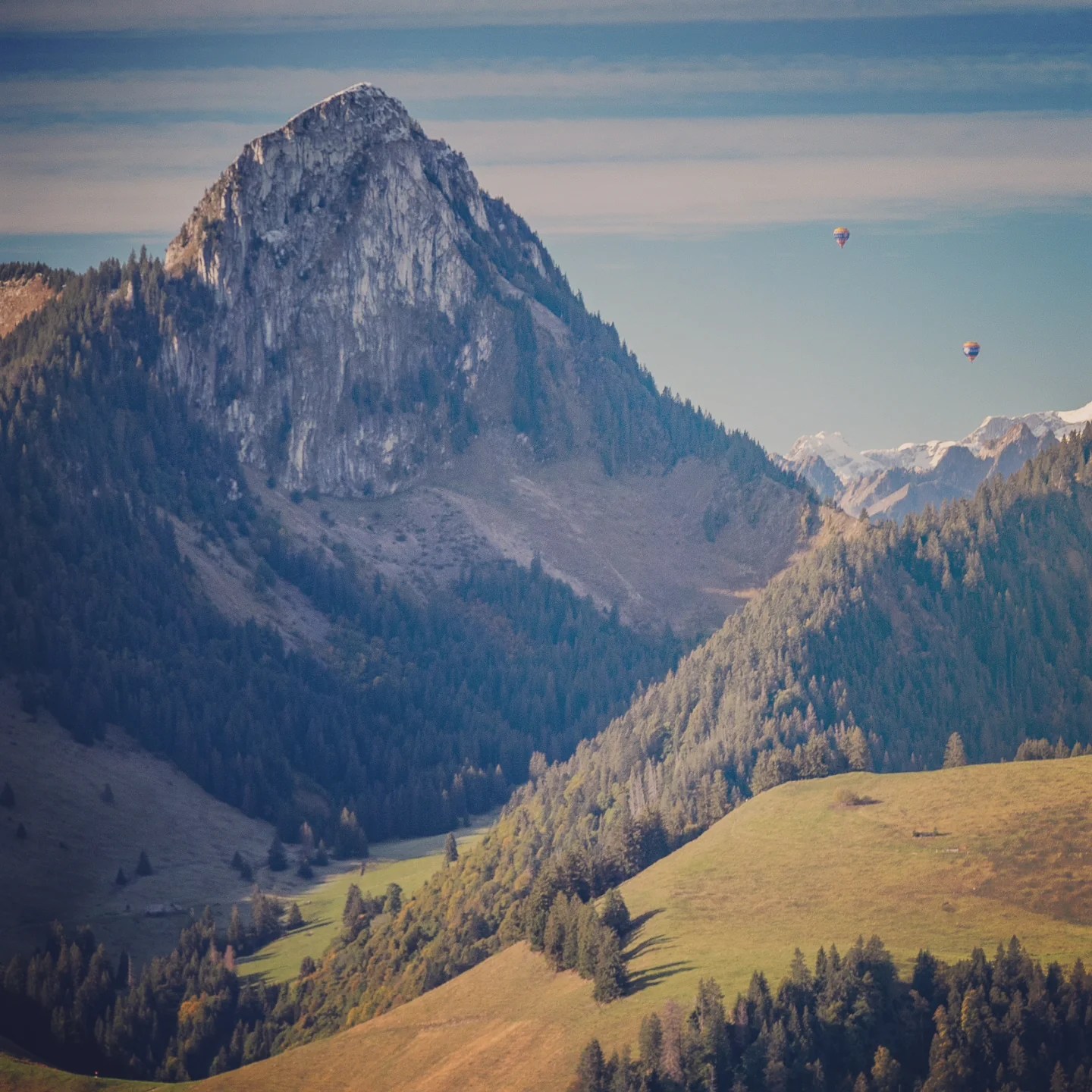
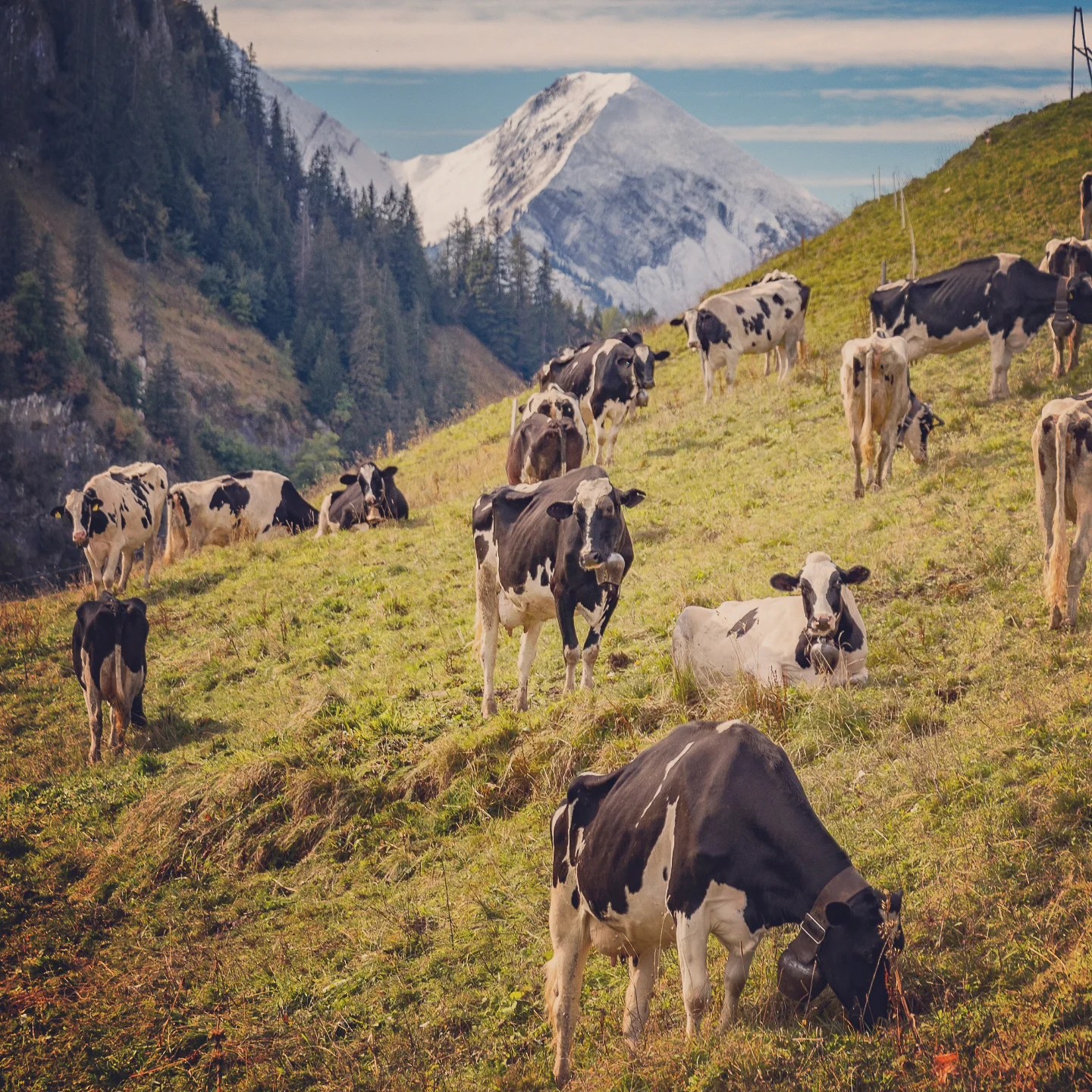
With time to spare before brunch was served, we set off along a stretch of the Panorama de Vounetz loop. Slippery frost still glazed the shaded bends of the trail, so we clung to the sun-lit portions, sharing the path with a few late-season cows whose bells chimed in the crisp air. Hot-air balloons drifted beyond the valley and paragliders traced lazy spirals below; it felt as though the whole region was celebrating the return of blue skies.


Before long the doors of Les Dents-Vertes opened for their Sunday brunch. Counters were filled with flaky pastries, local cold cuts, aromatic coffee, and generous wedges of Gruyère alongside other cheeses from the valley. After making a respectable dent in the buffet, we stepped back outside and listened as a pair of alphorn players sent mellow echoes drifting across the valley.
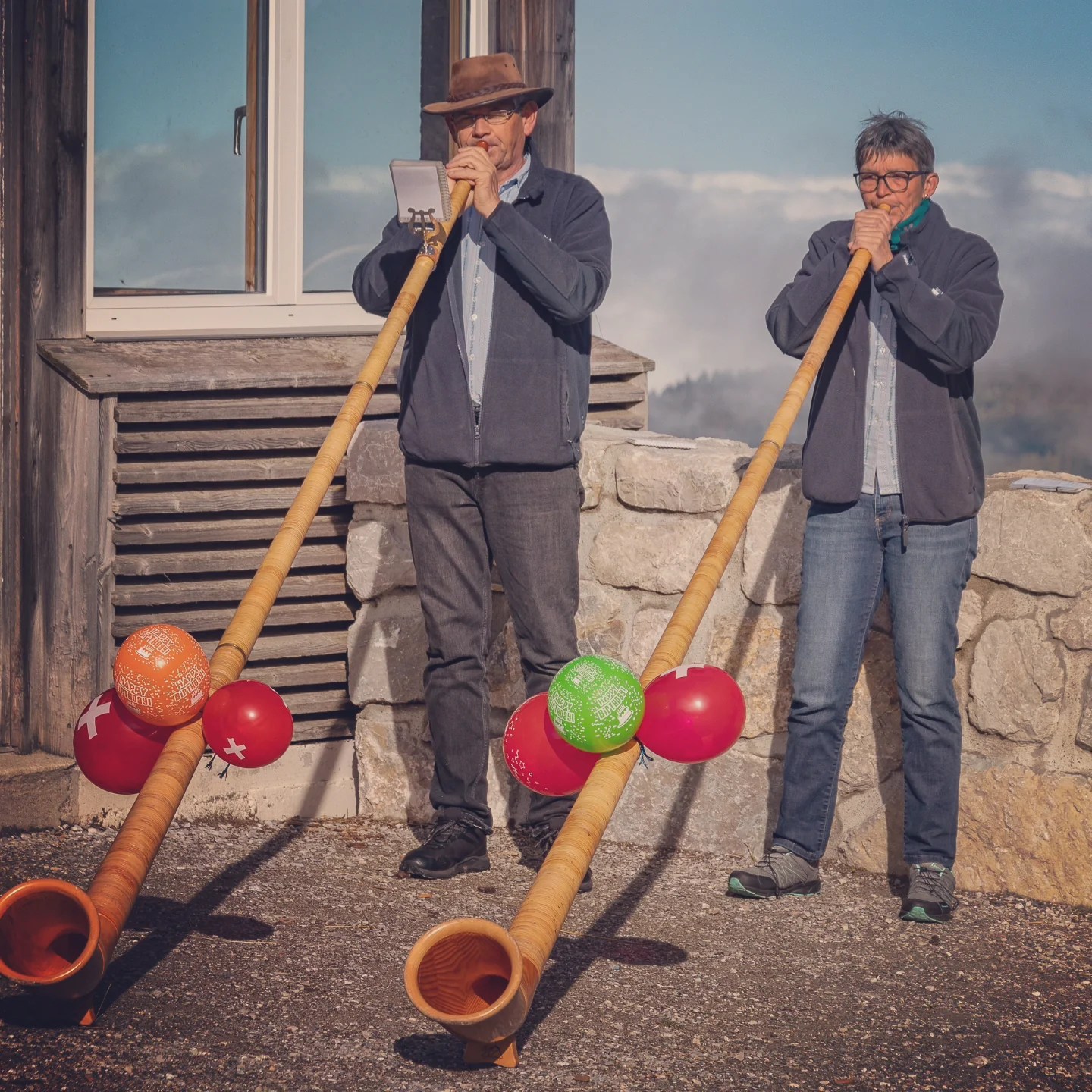
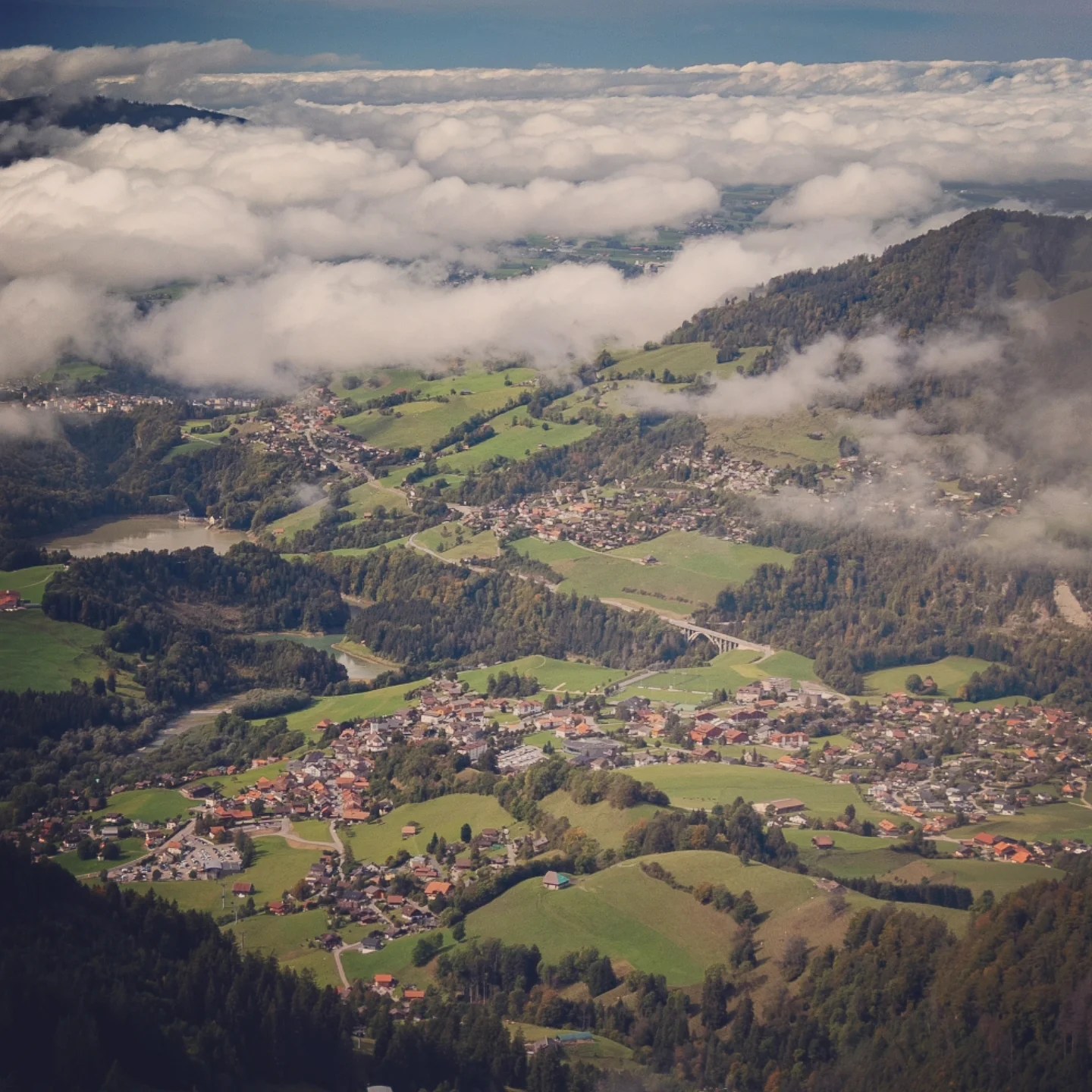
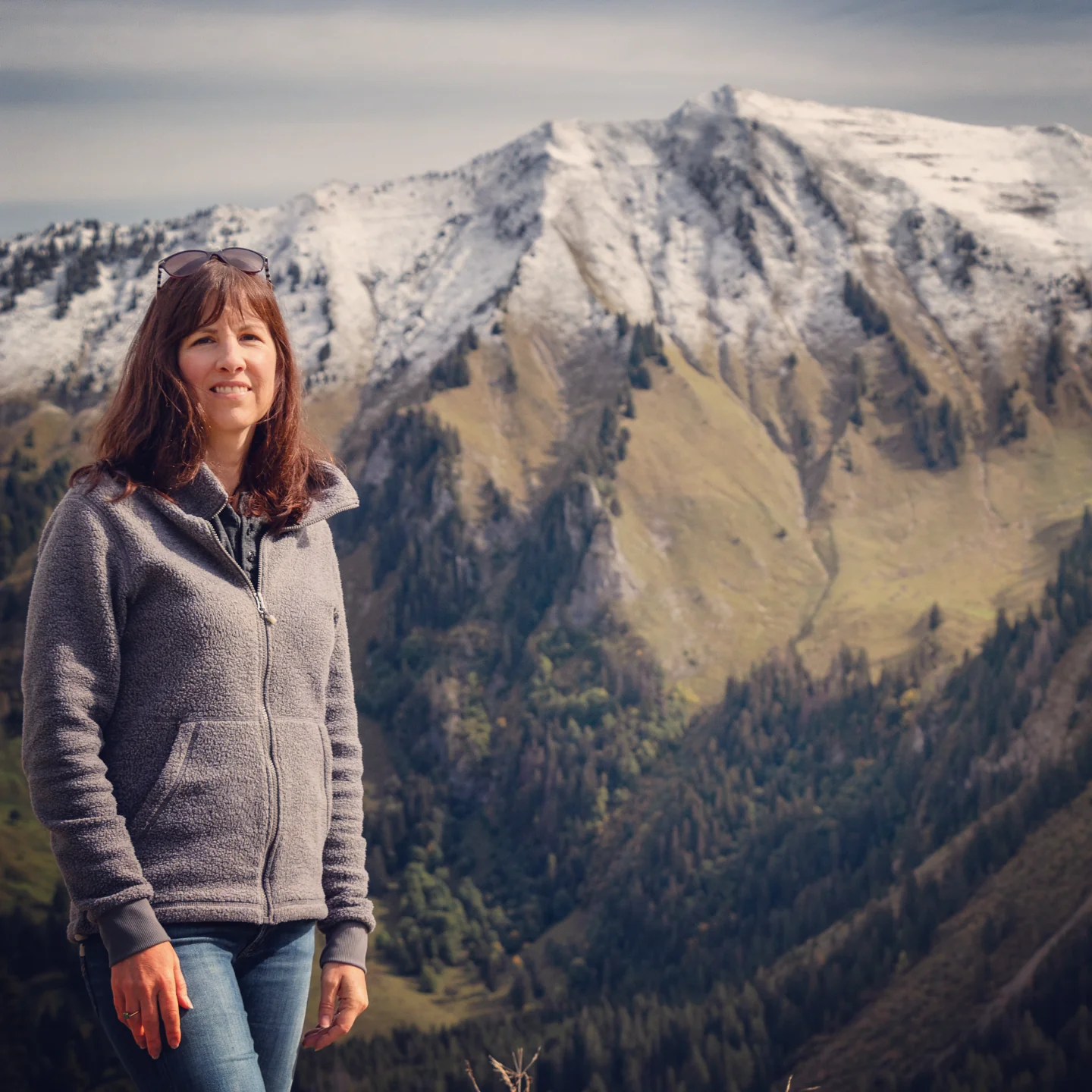
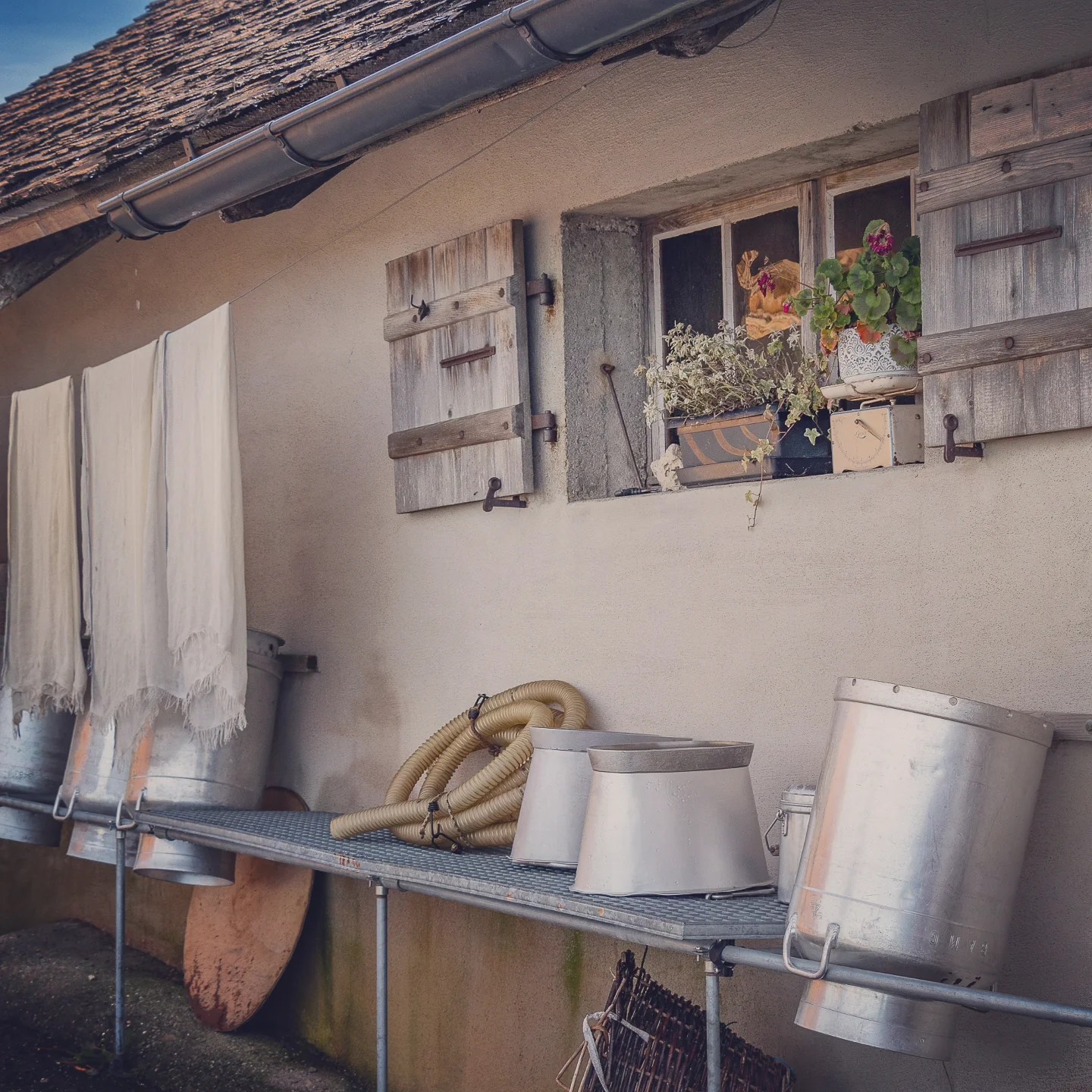
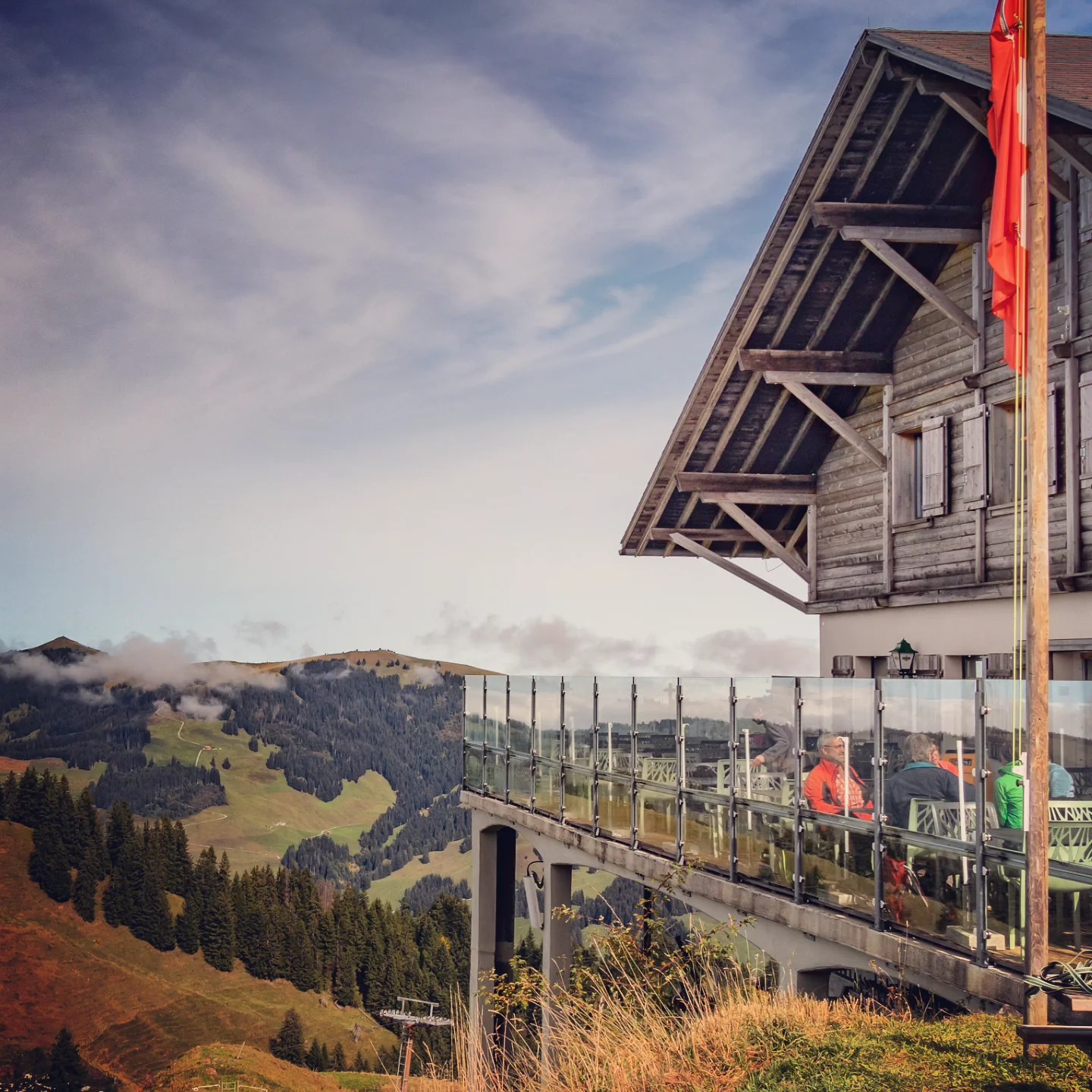
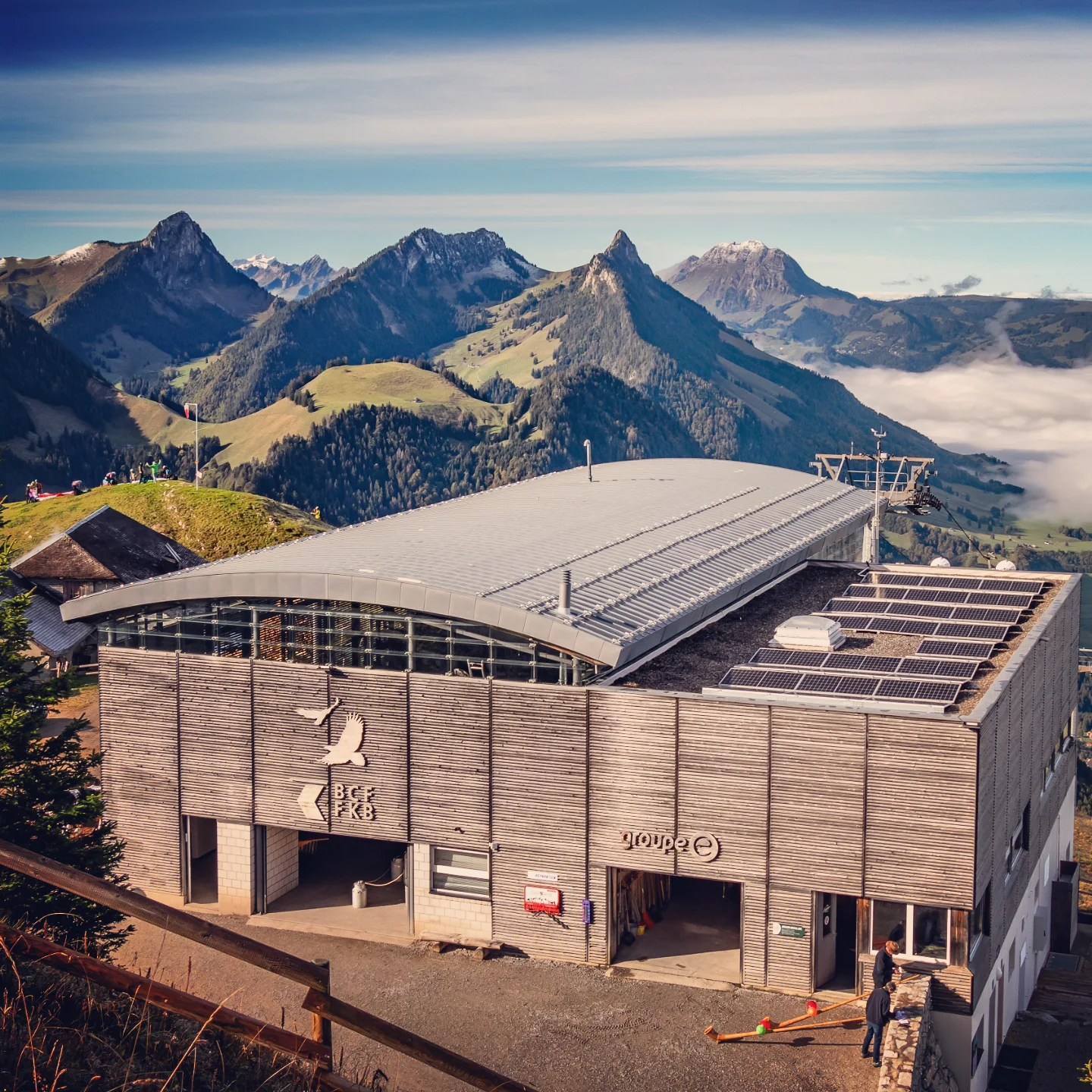

If you’re planning your own trip, the gondola sells handy combo tickets—pair the lift with a soak at Bains de la Gruyère (more on that below), a via ferrata course, or even a visit to the Maison Cailler chocolate factory in nearby Broc. Whatever mix you choose, aim for the first gondola of the day; early light and empty trails make the ascent feel even more special.
Gruyère: A Medieval Village Above the Valley
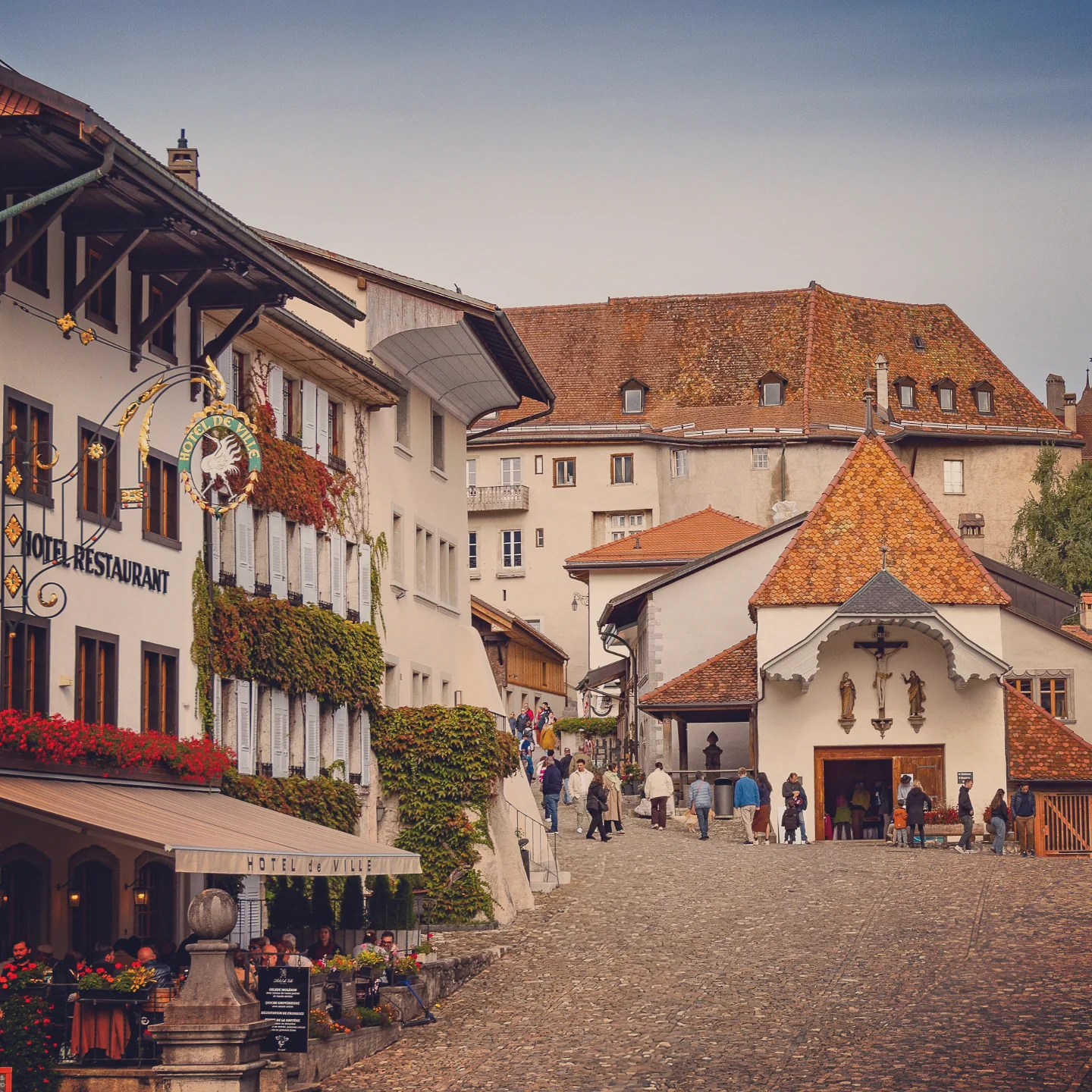
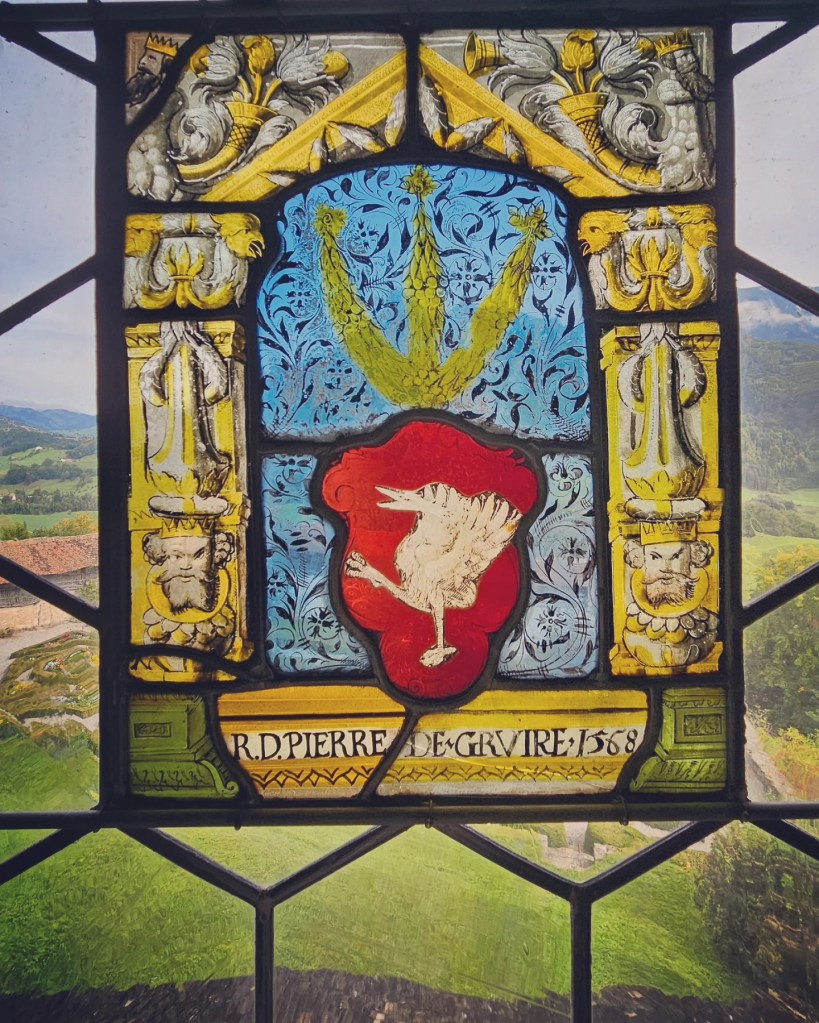
Leaving Vounetz behind, we drove twenty minutes southwest to Gruyères, a storybook village in the canton of Fribourg that lends its name to Switzerland’s most celebrated cheese. Perched on an emerald ridge, the village still flies the red-and-white crane banner of its medieval counts over valley pastures that supply milk for its nutty, cellar-aged wheels of Gruyère AOP.
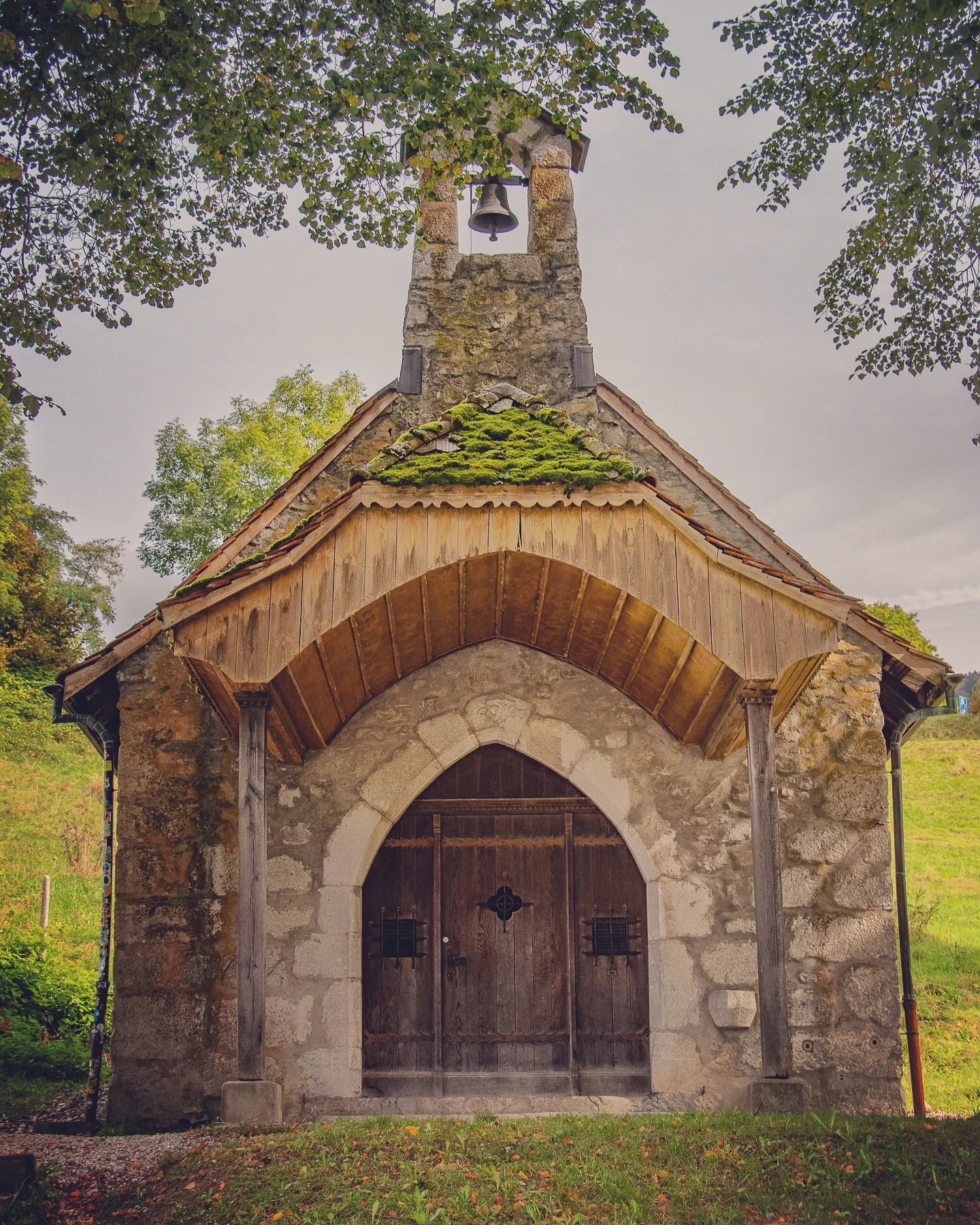
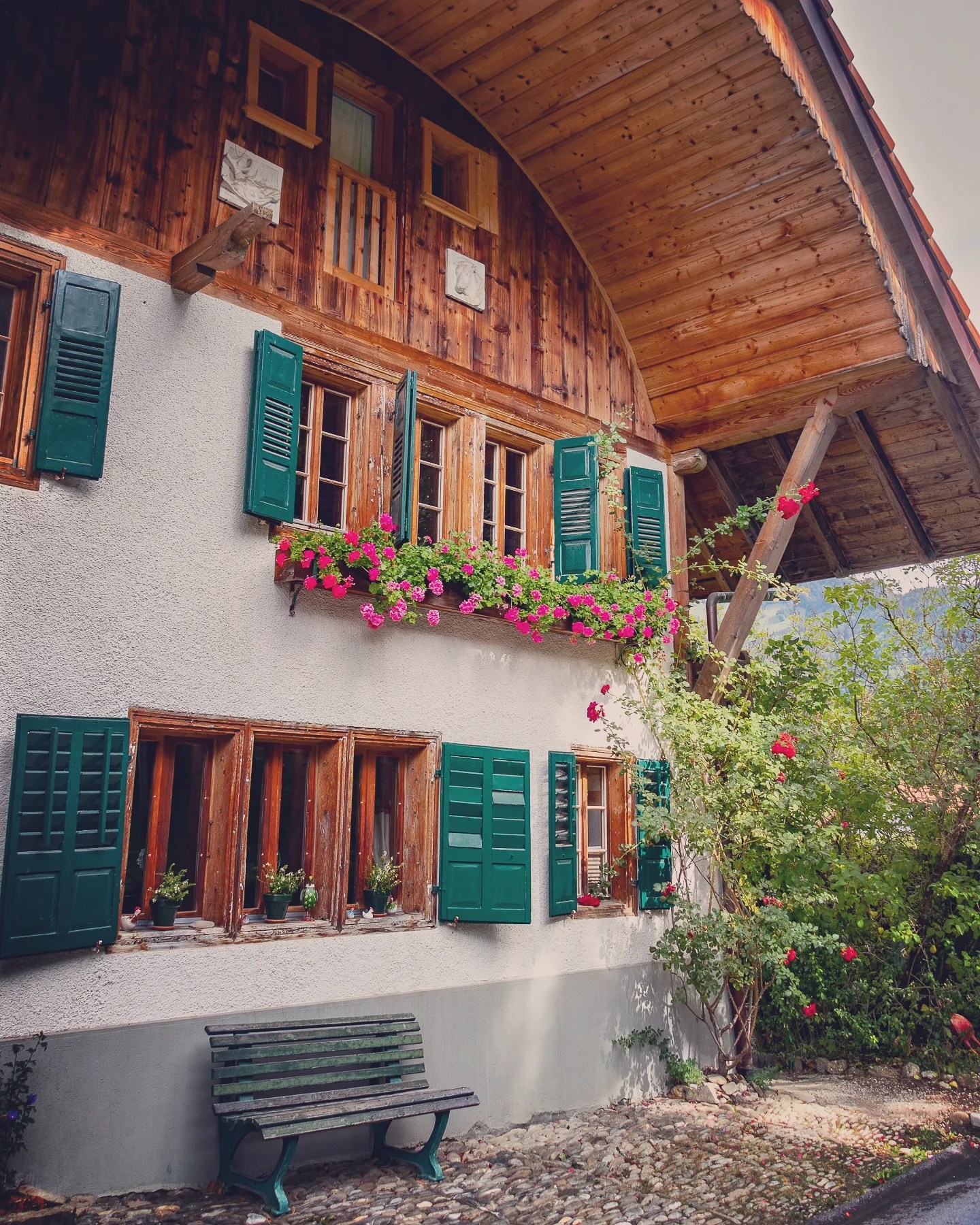
We parked near La Maison du Gruyère—the working dairy, restaurant and visitor center at the foot of the hill—then followed the sign-posted path up to Gruyères and its car-free village center (there are plenty of lots closer if you’d rather skip the climb). The lane opened onto a picture-perfect scene: window boxes overflowing with geraniums, a historic fountain murmuring in the square, café terraces alive with conversation, and shopfronts selling everything from woolly toy sheep to polished cow-bells.
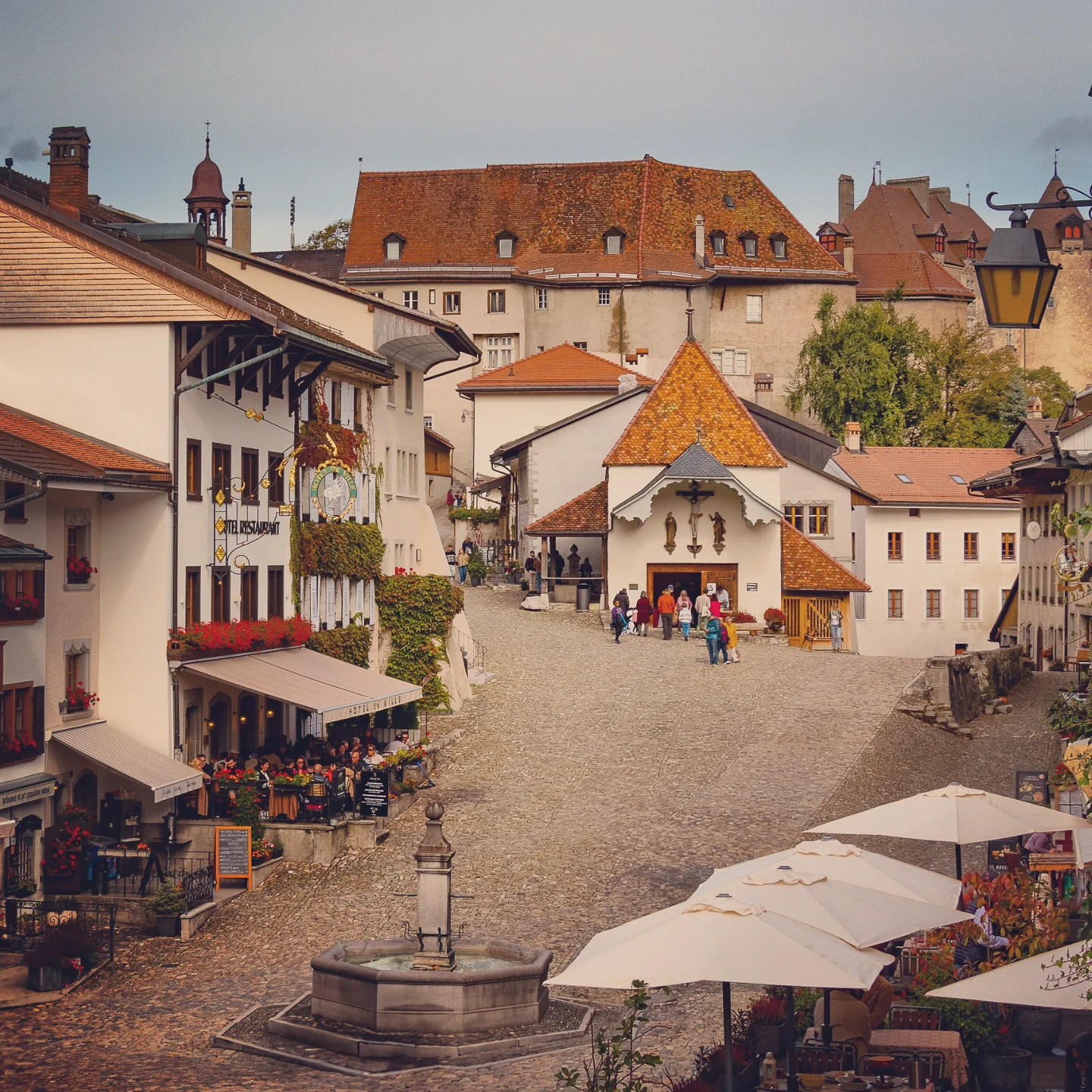
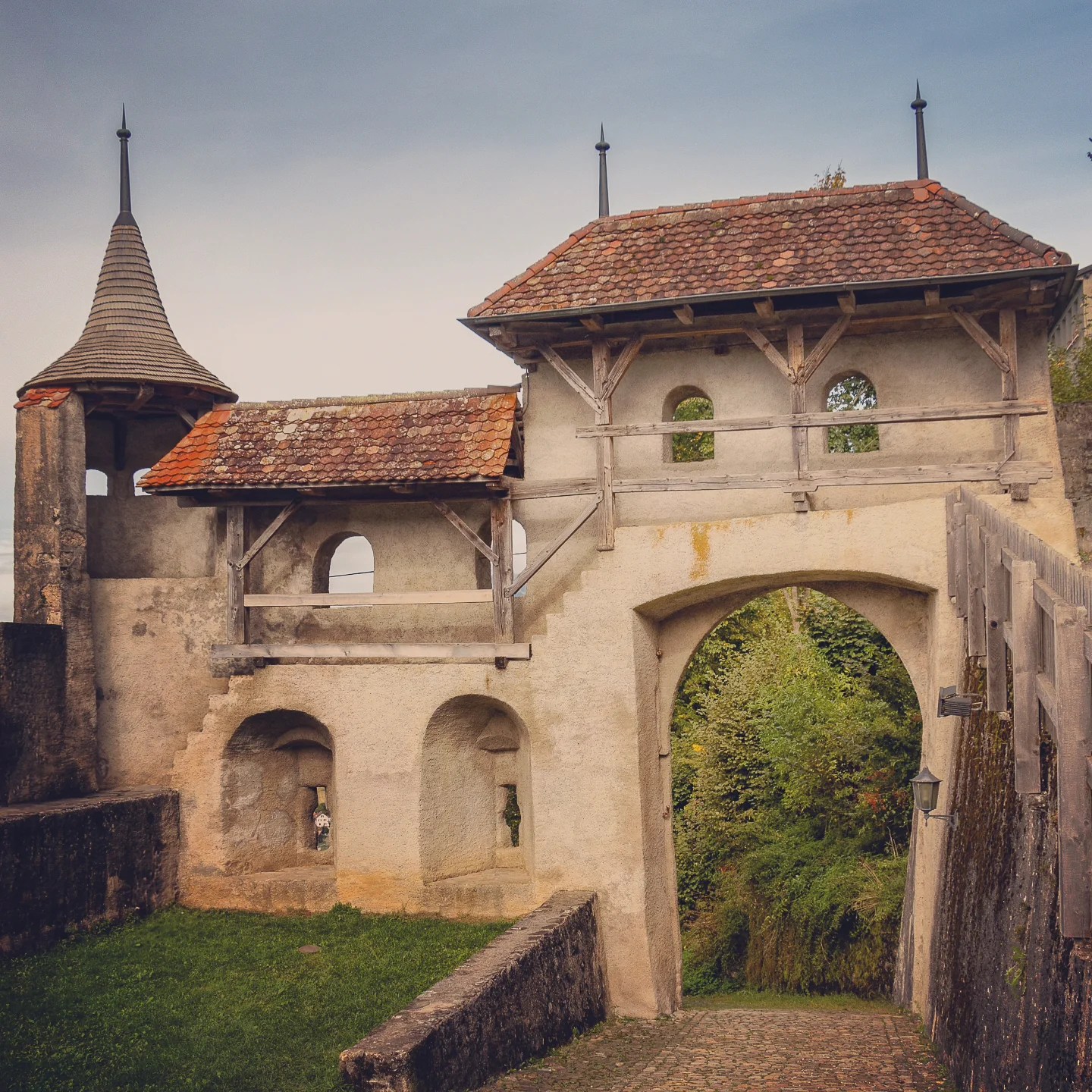

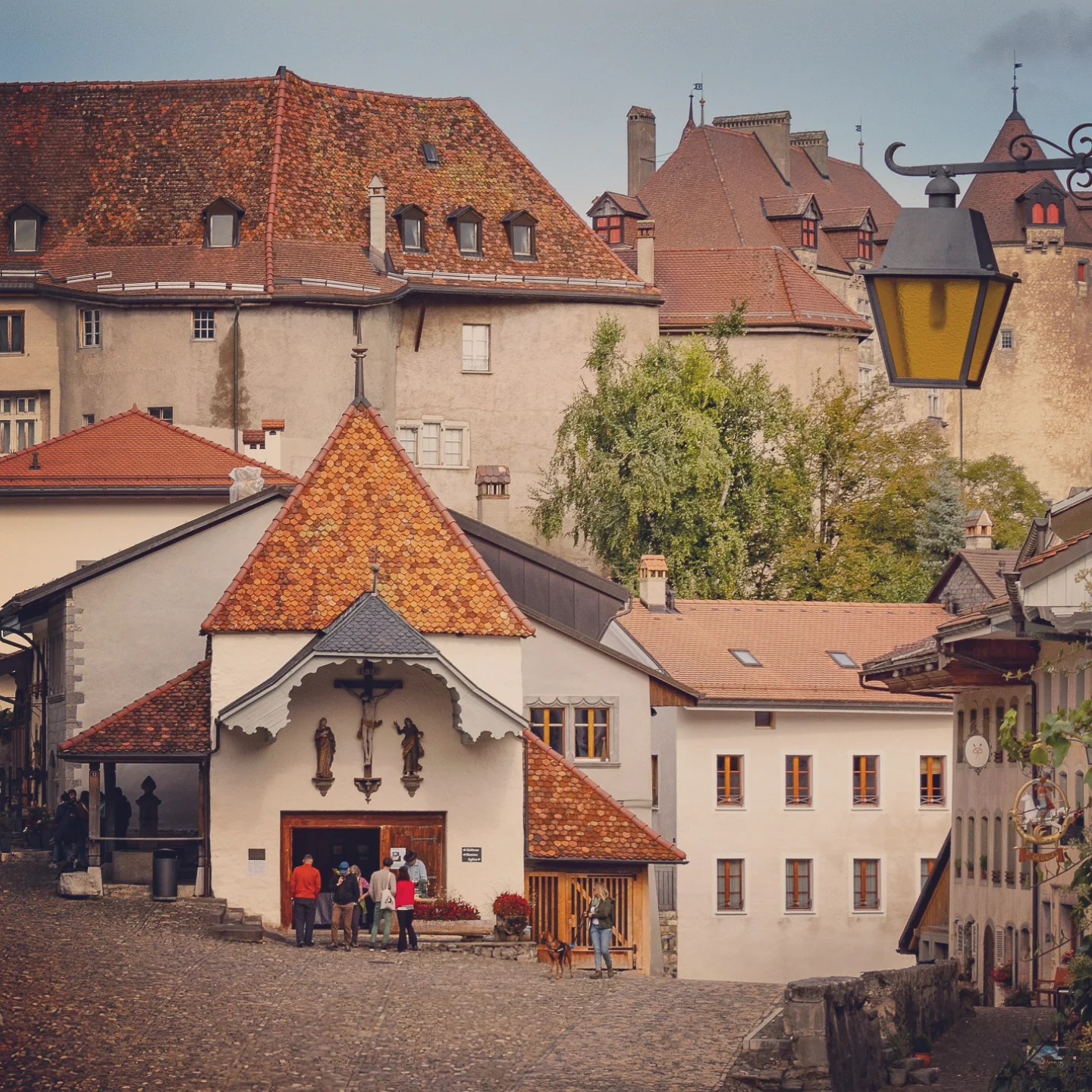
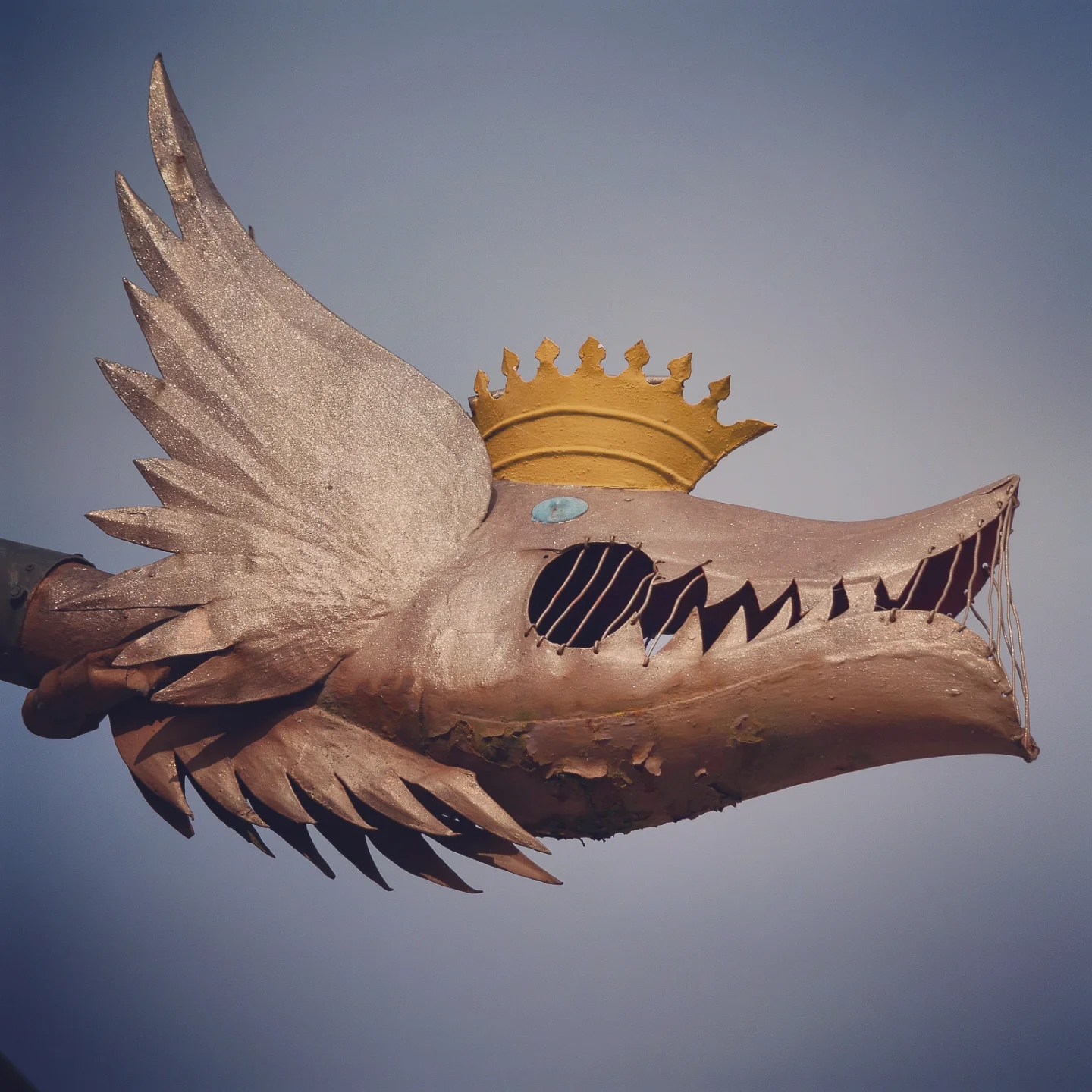

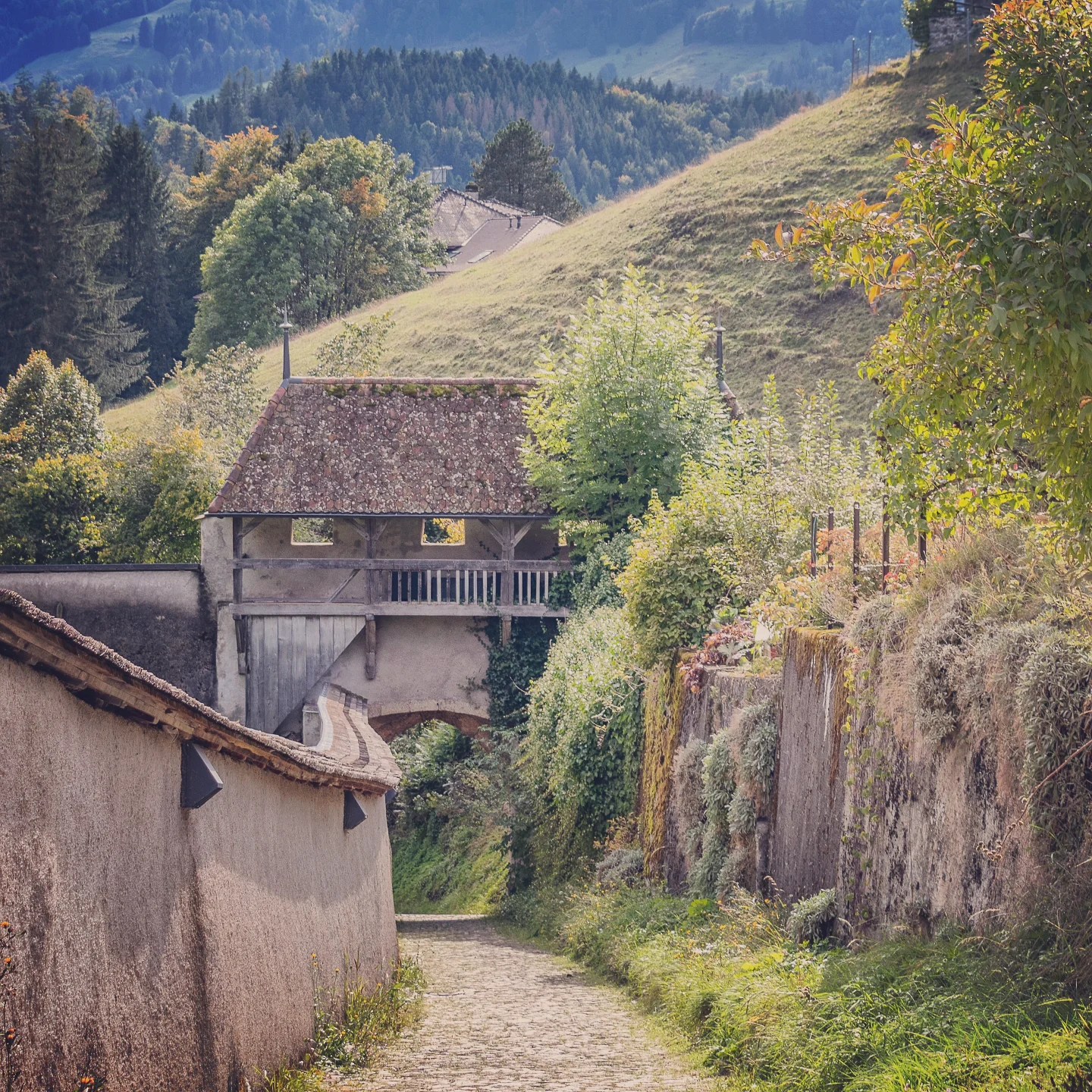


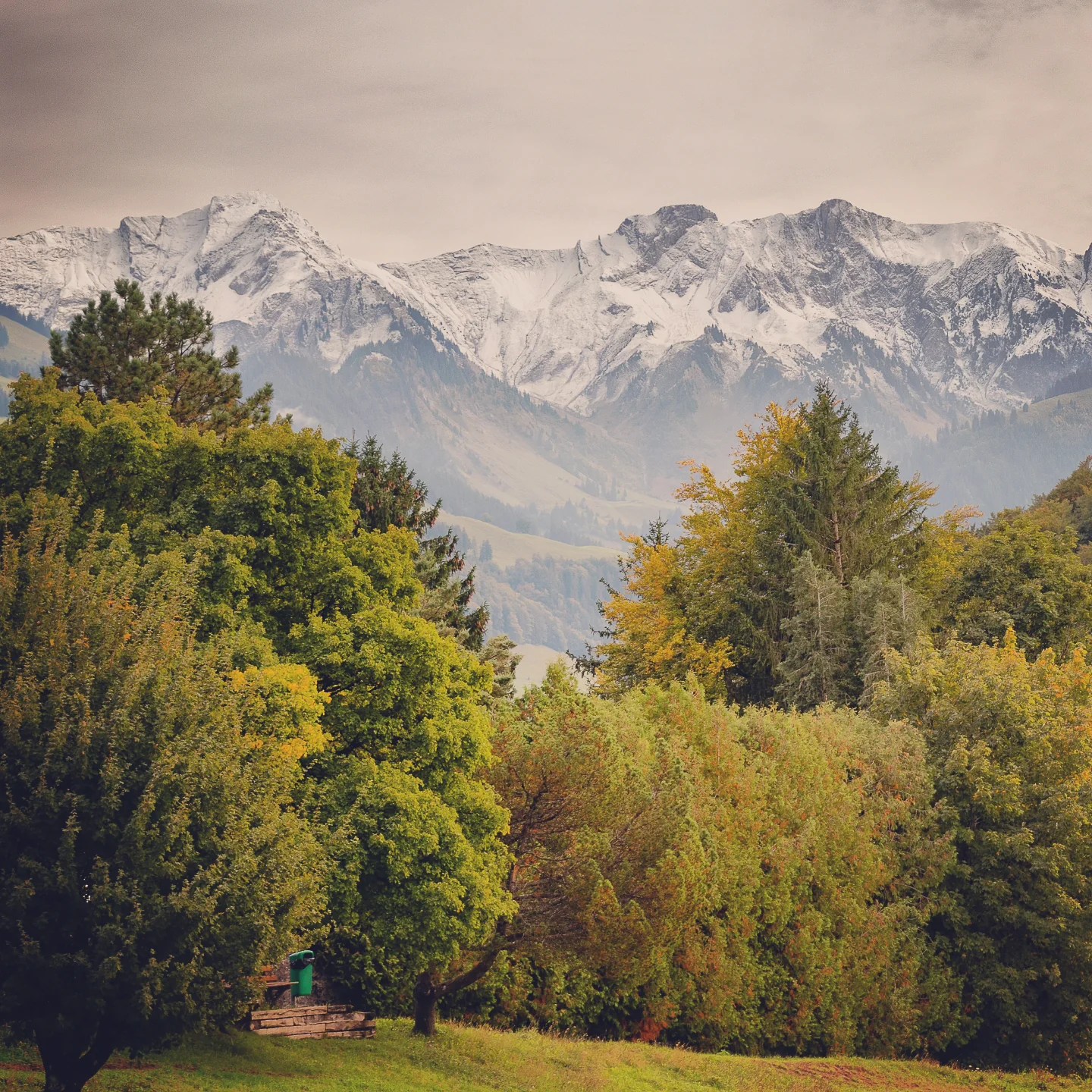
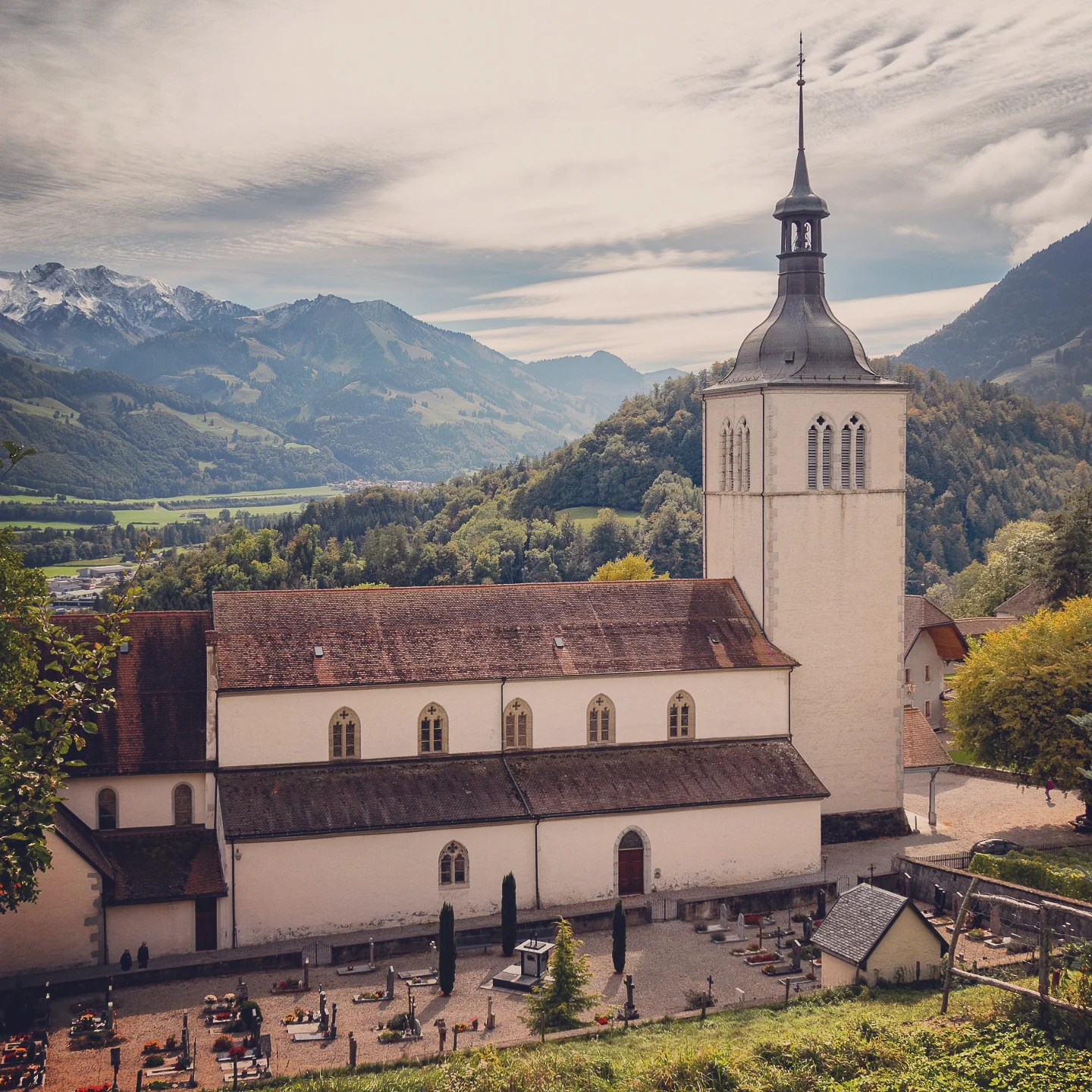

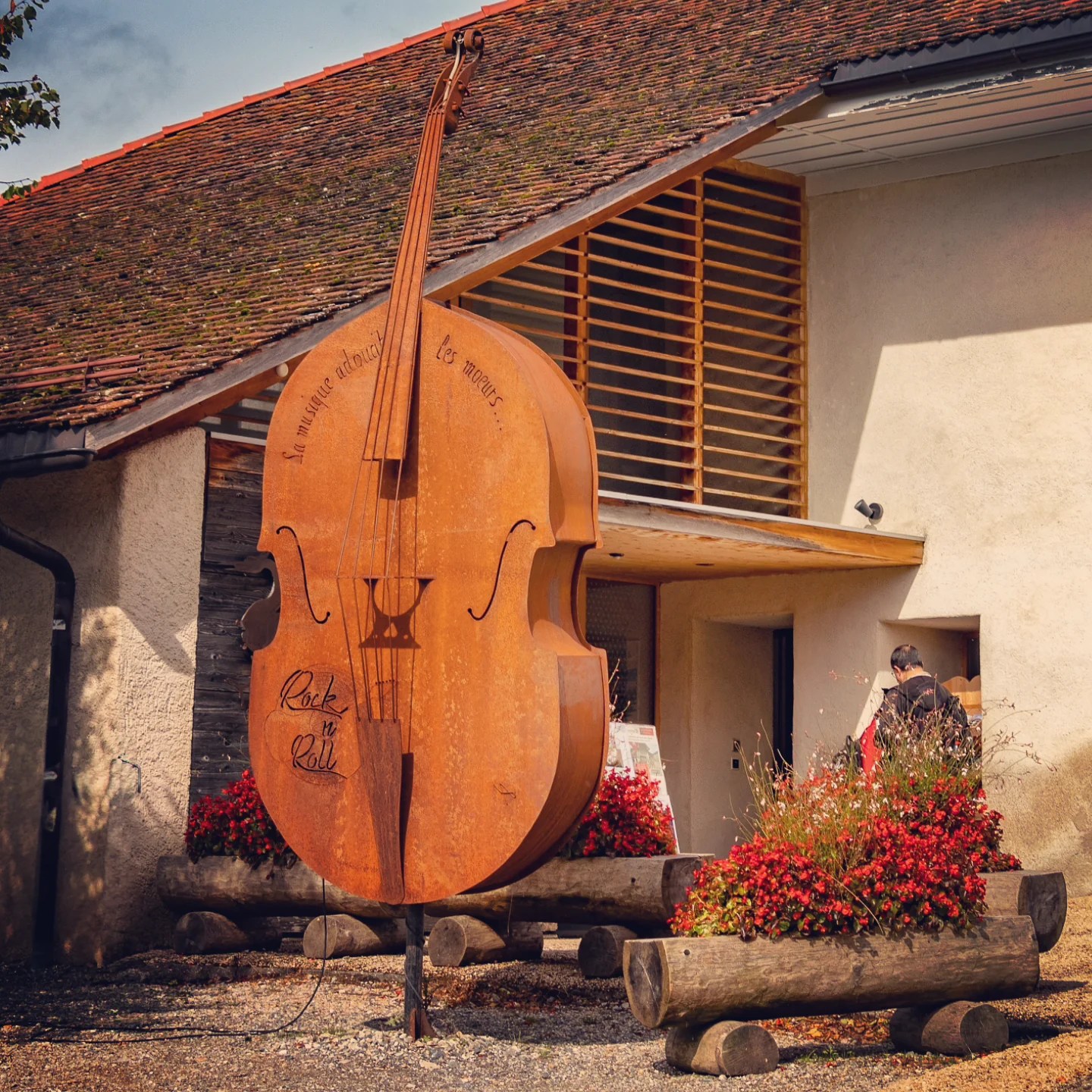
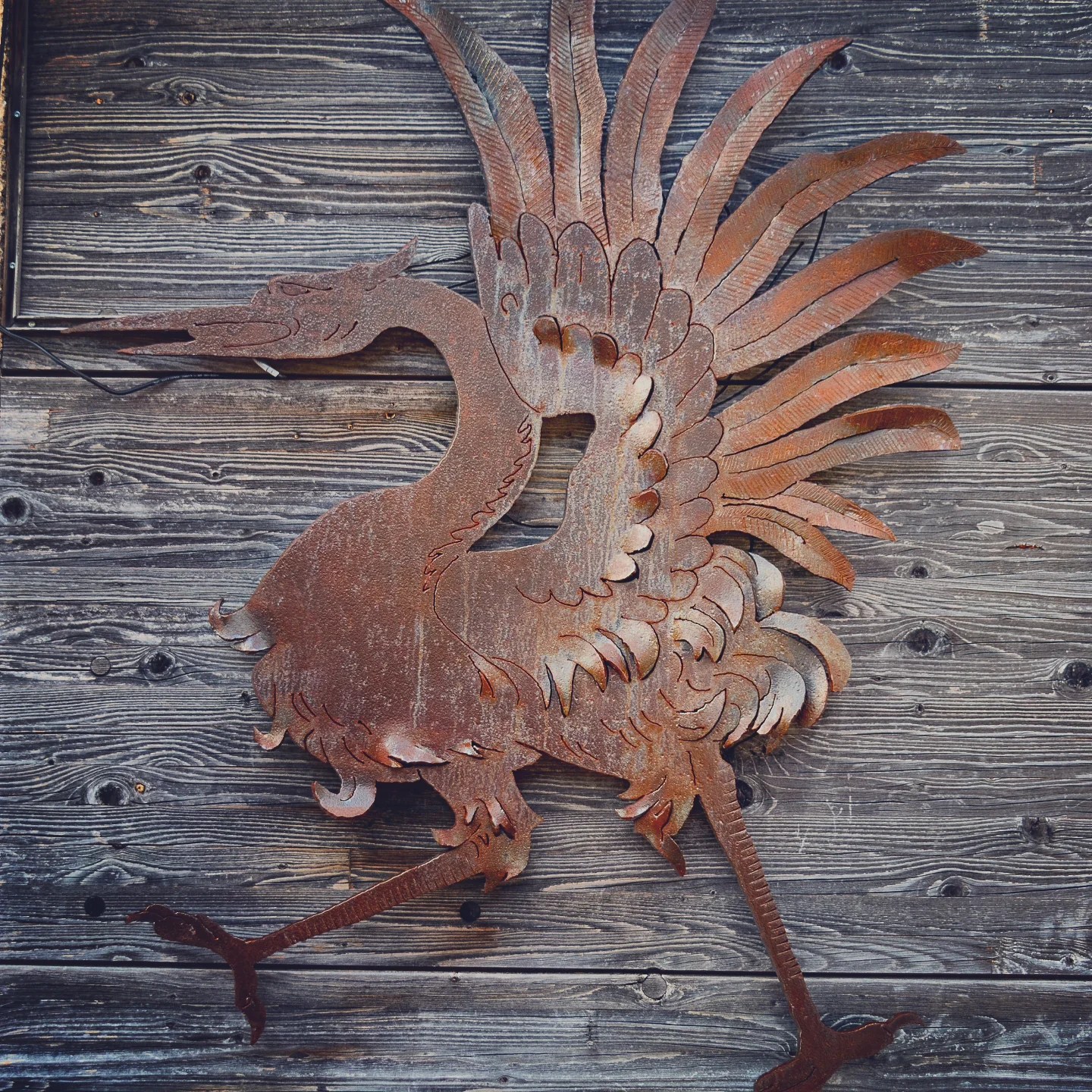


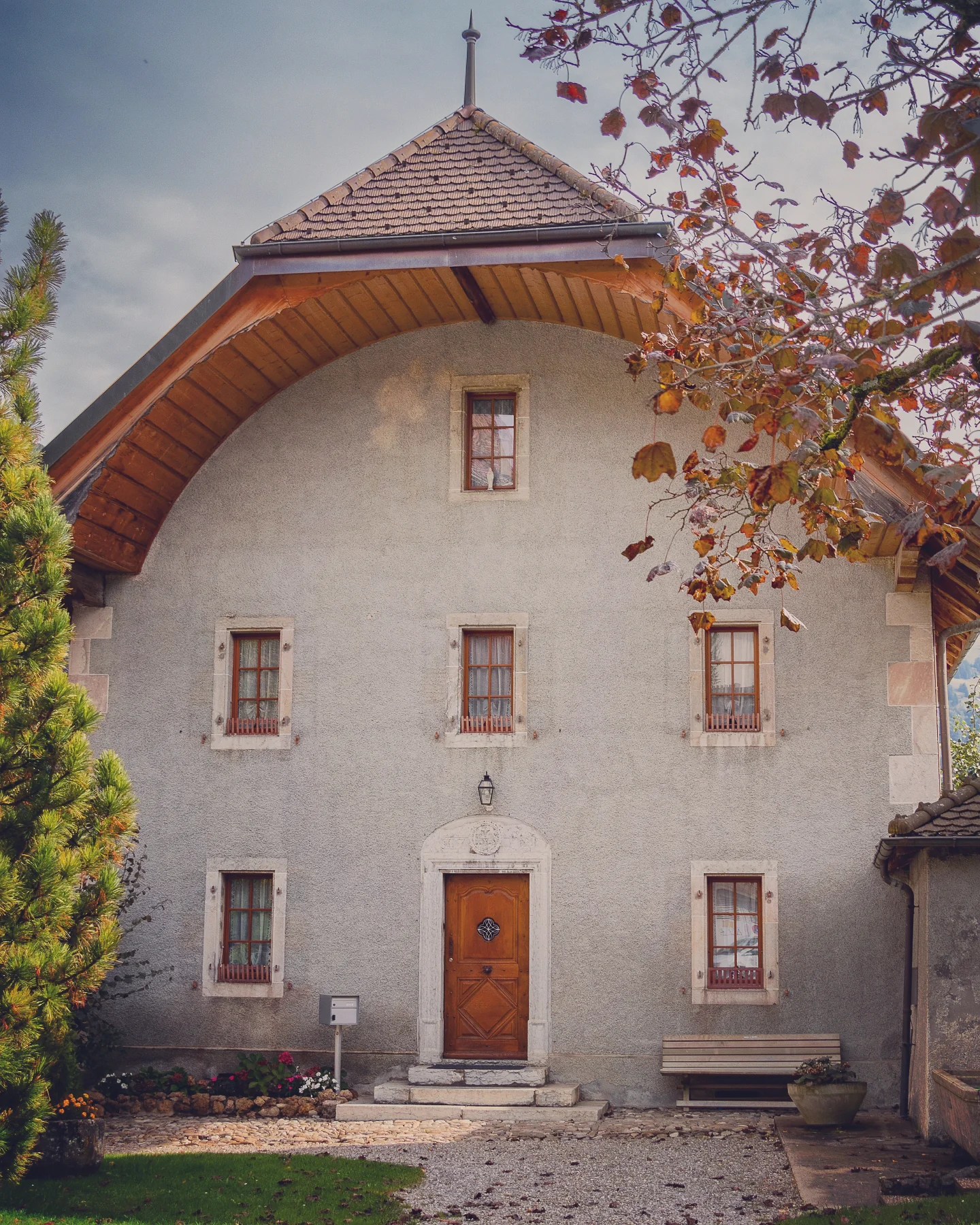

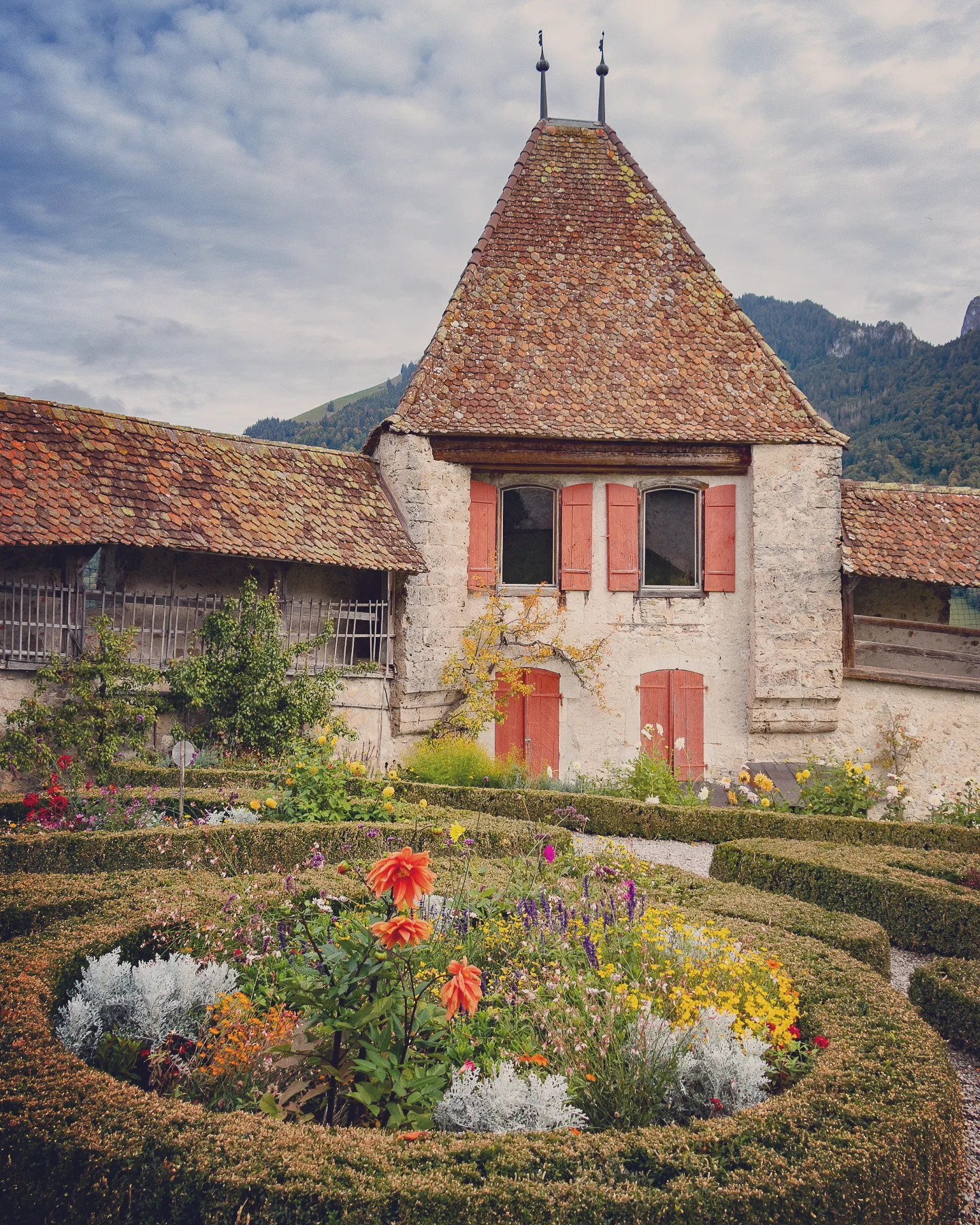
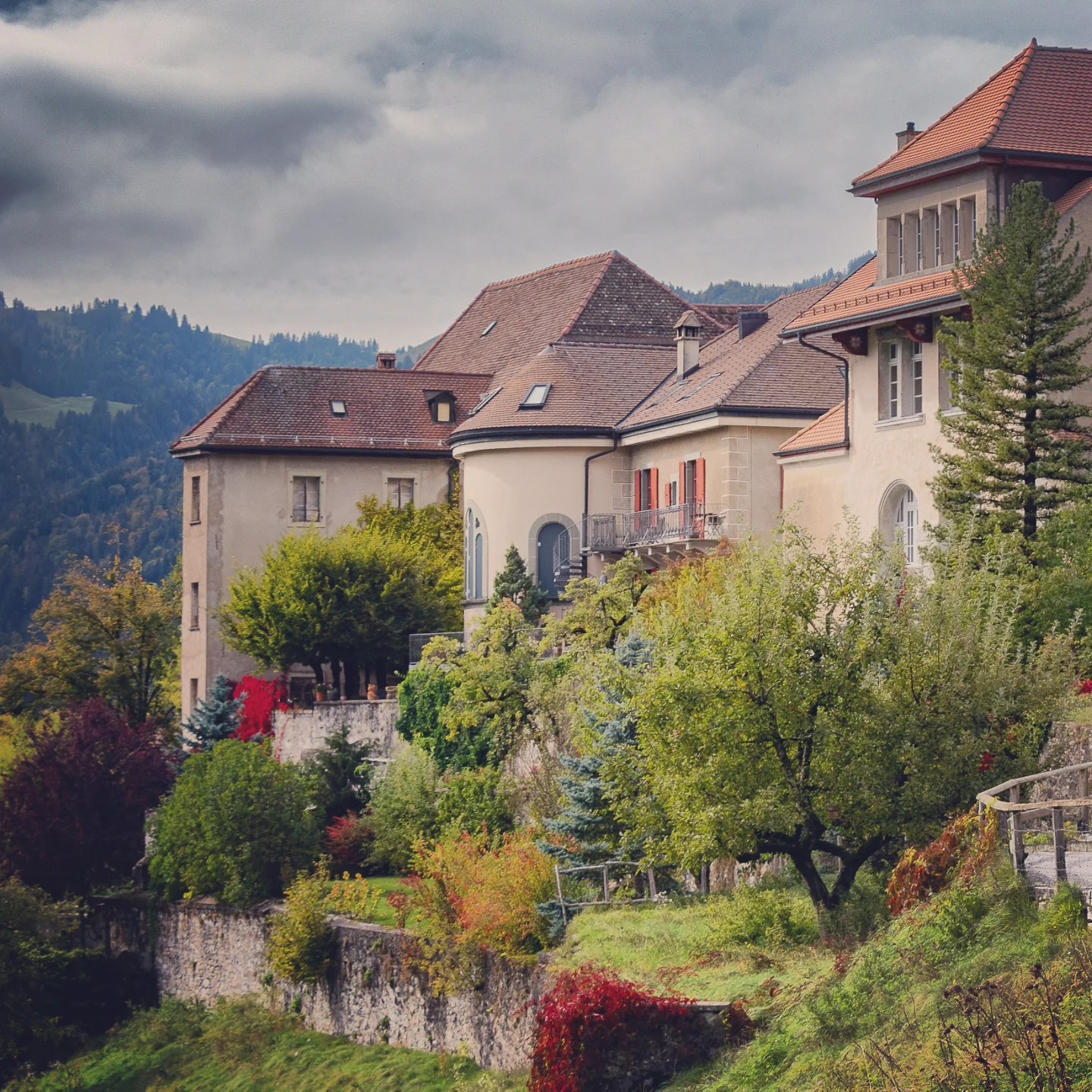
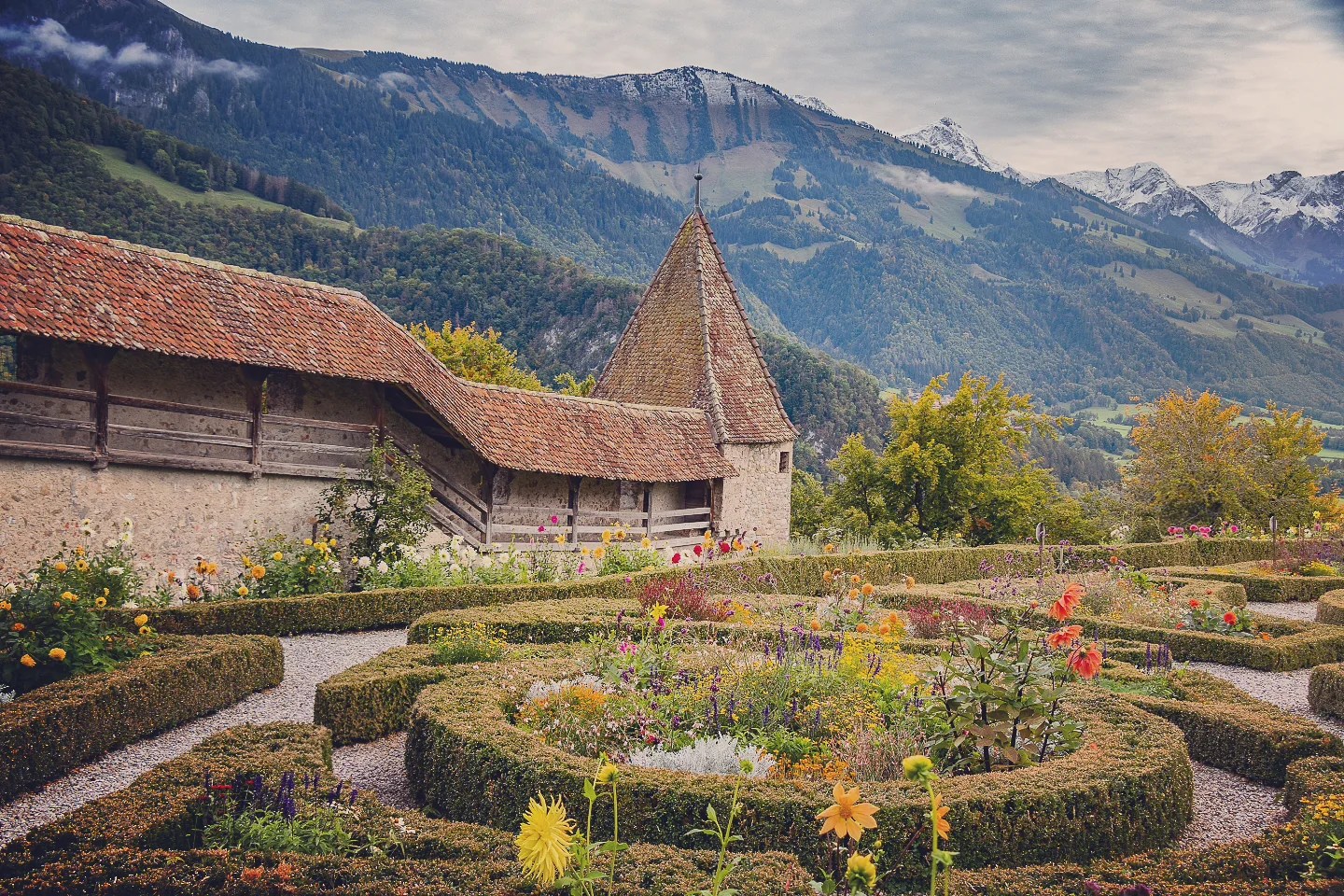
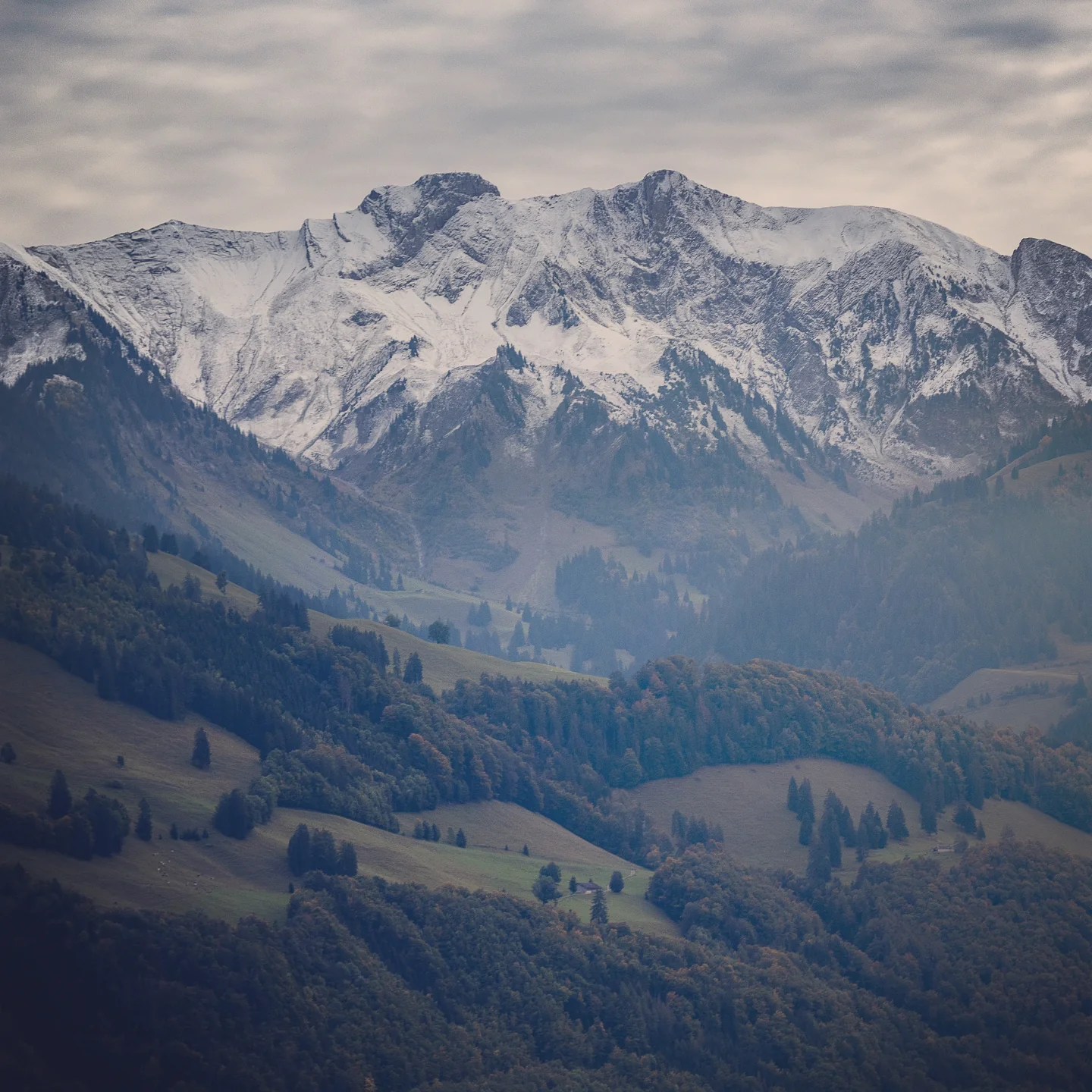
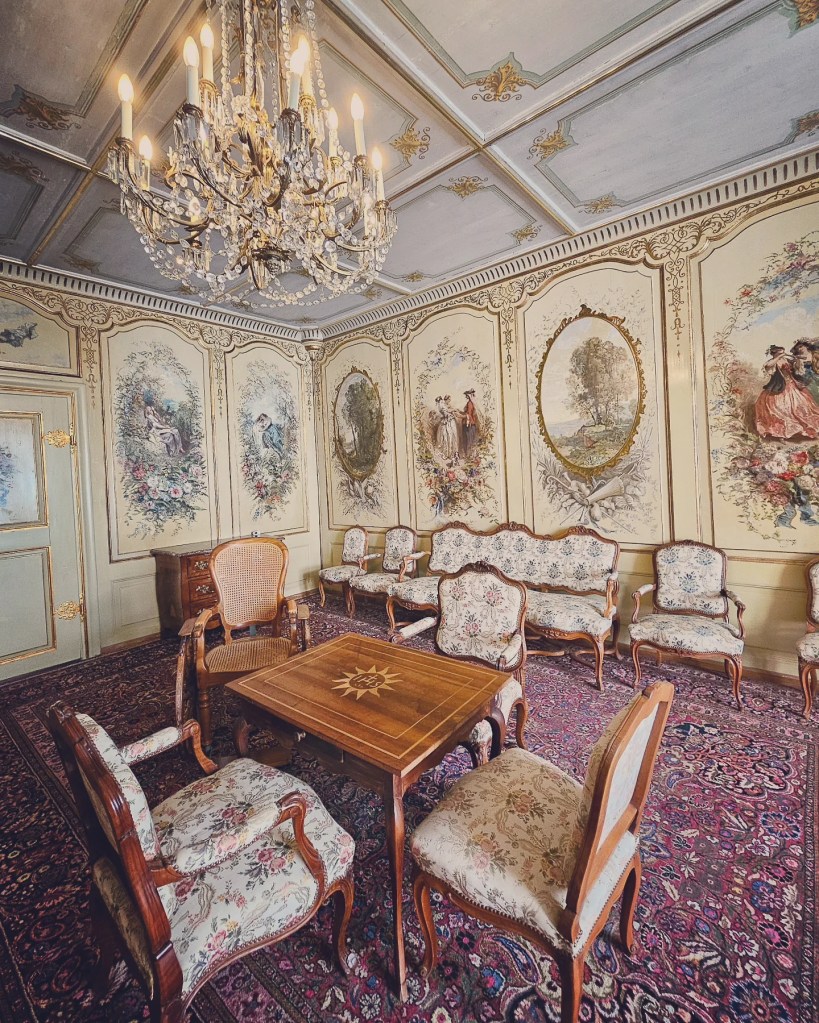
At the far end of the square rises Château de Gruyères, the 13th-century stronghold of the Counts of Gruyère. Inside, we marveled at the medieval stained-glass and frescoed walls in the Knights’ Hall; outside, a formal French garden framed sweeping views of the Saane valley and snow-dusted peaks.
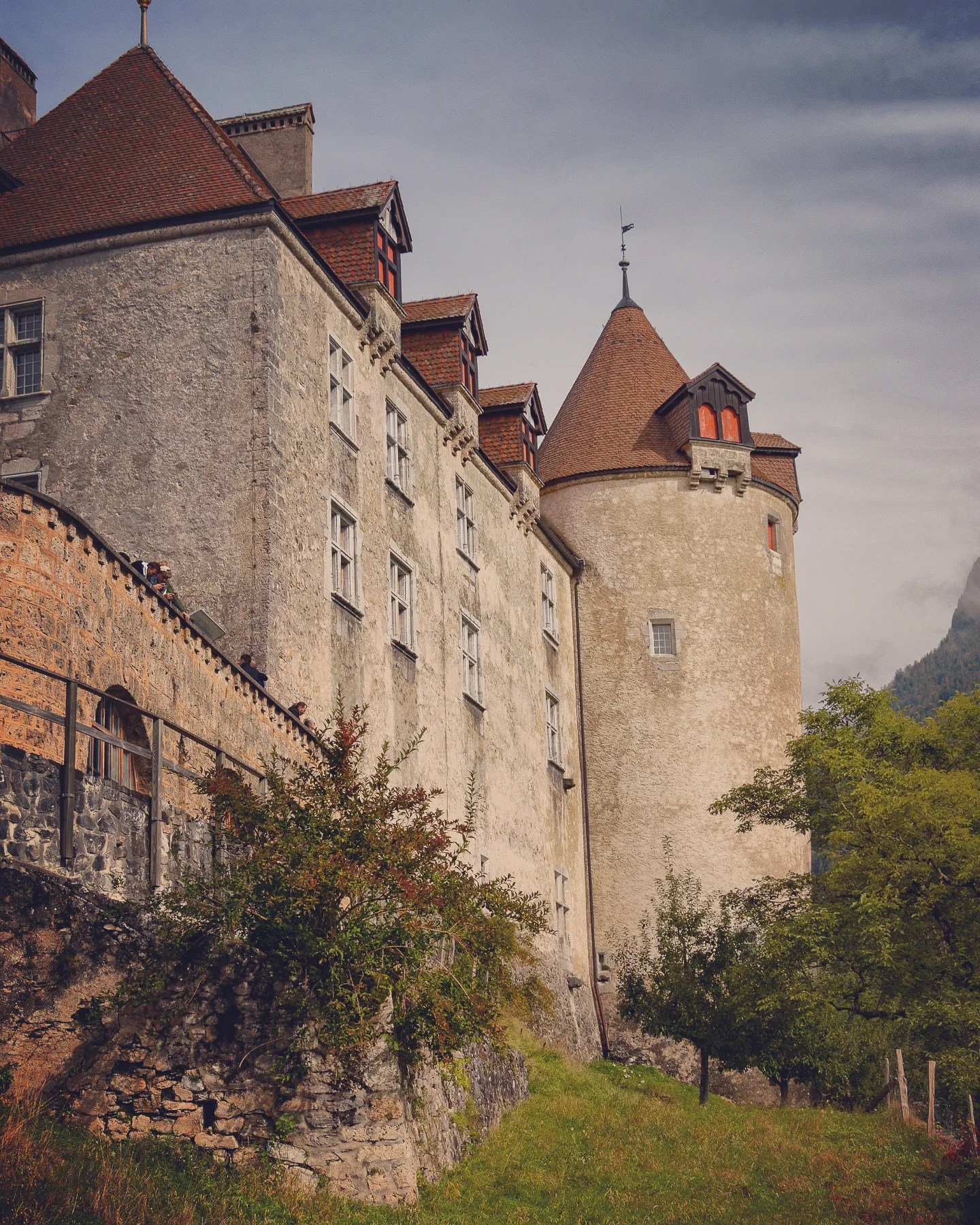
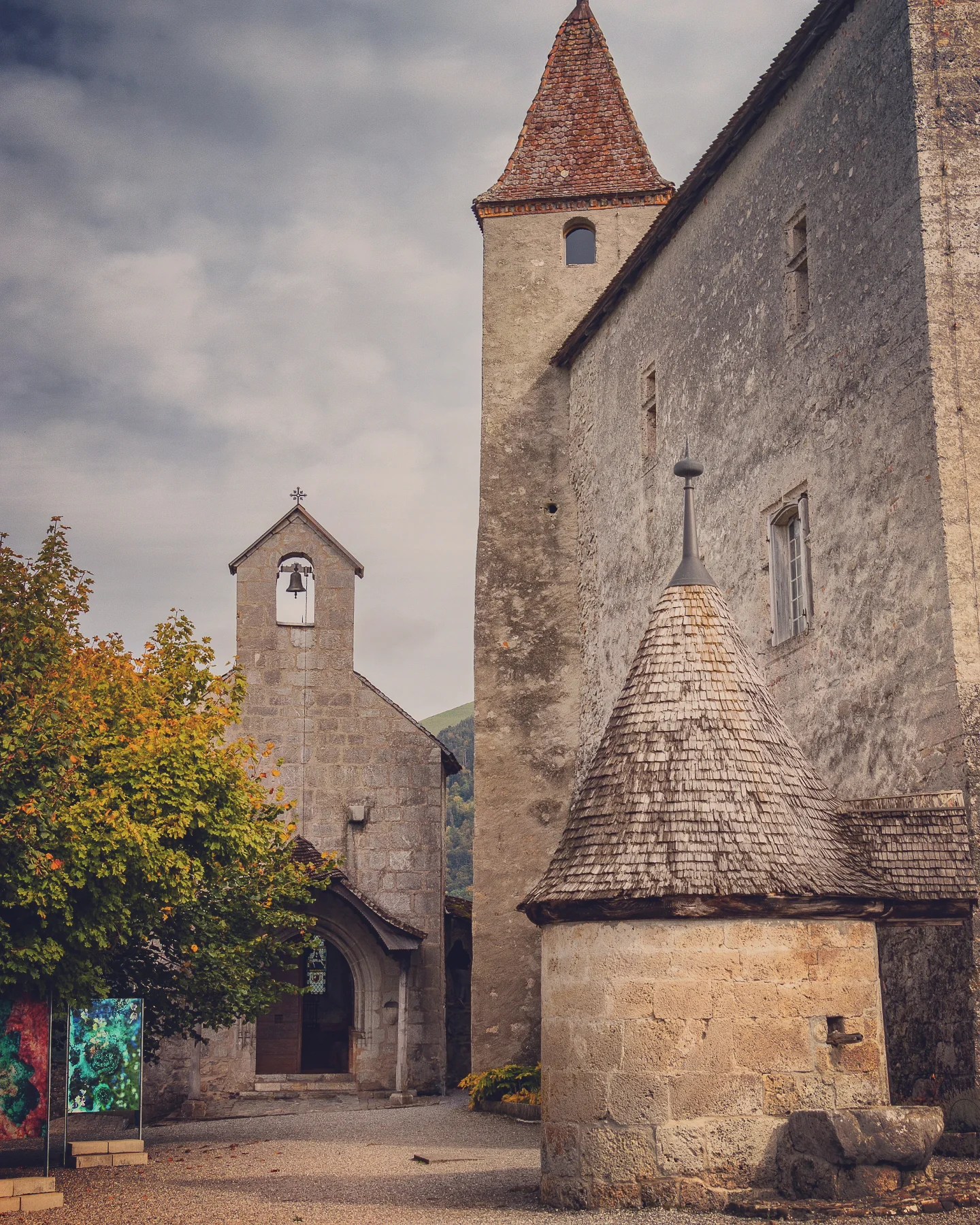
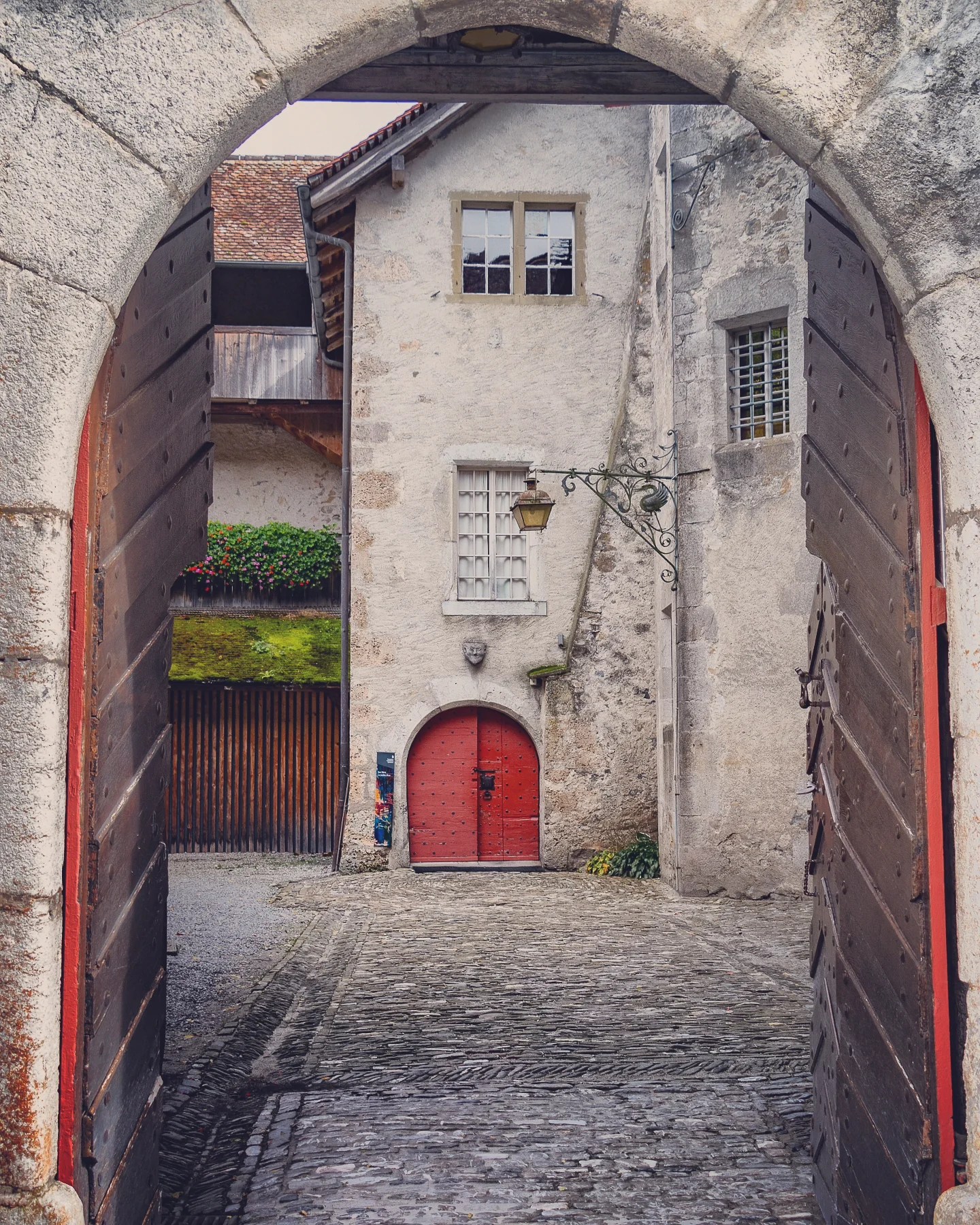
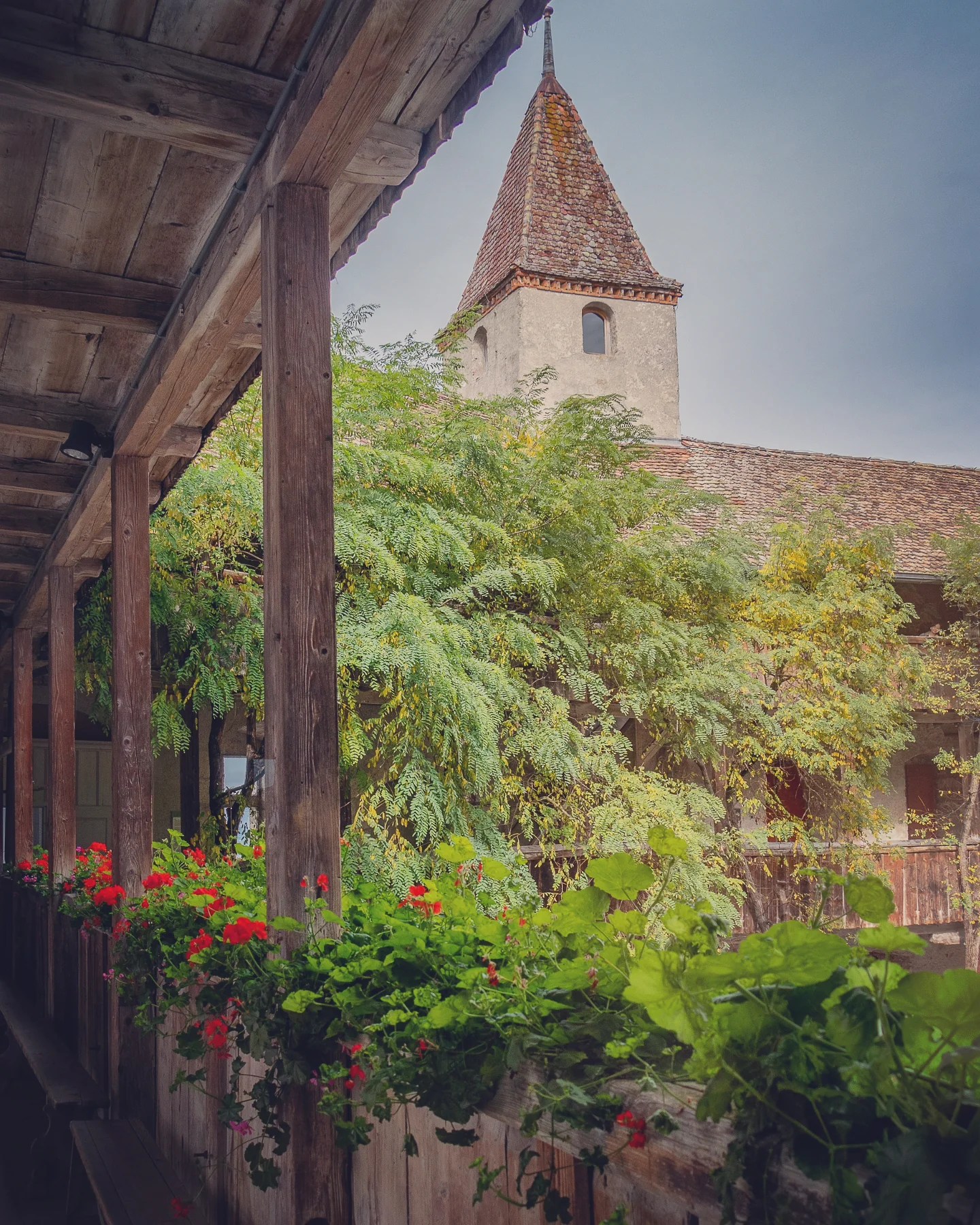


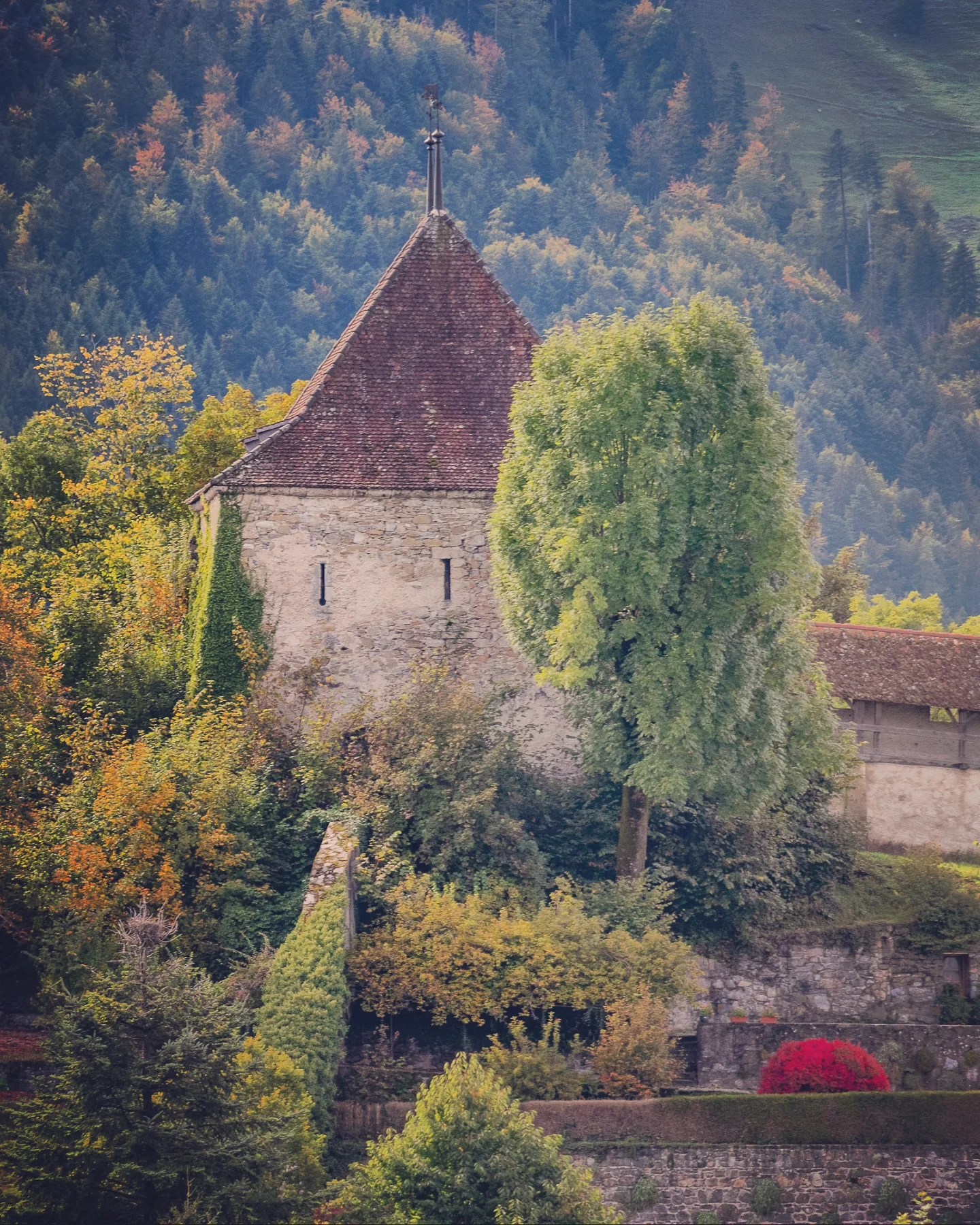
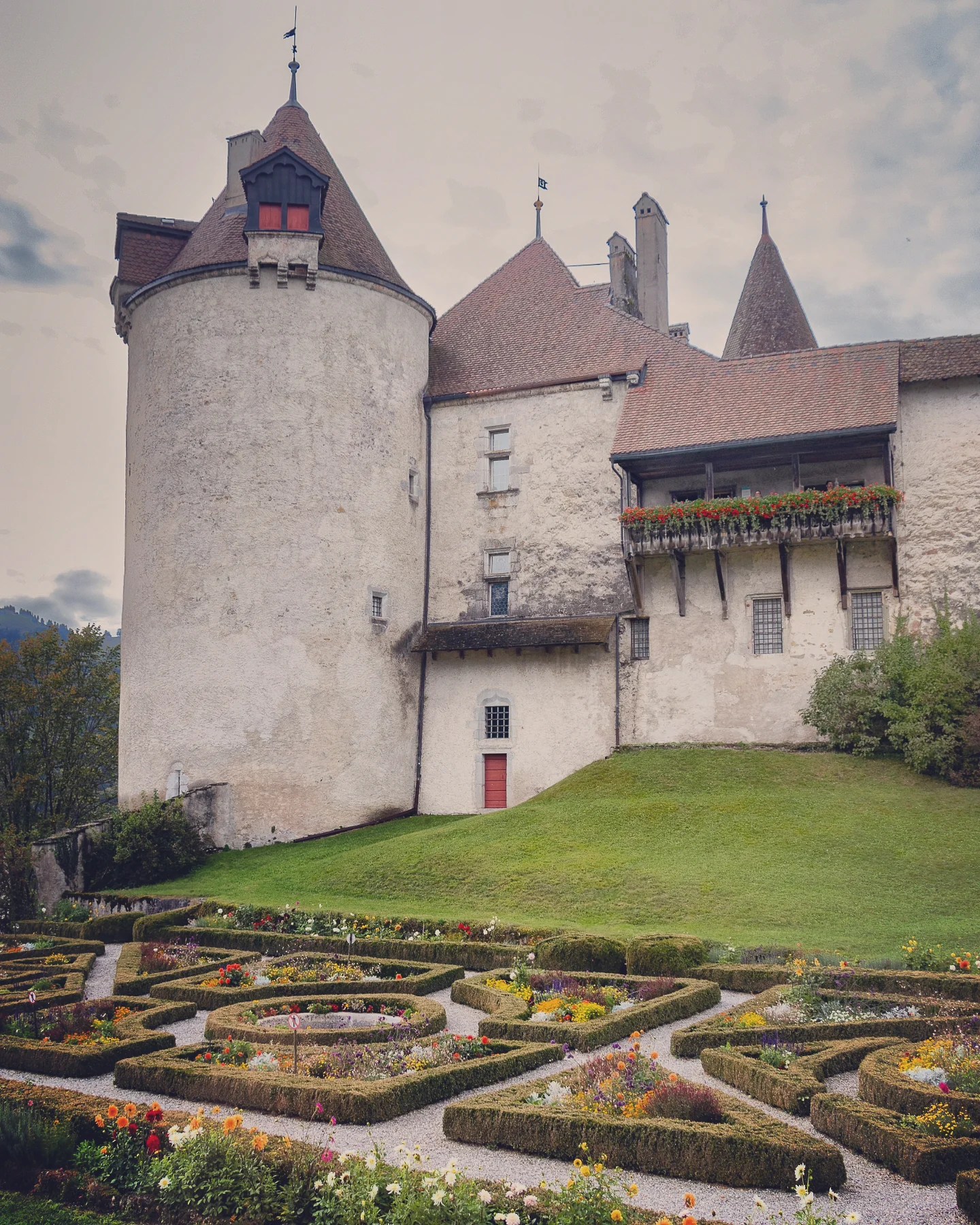
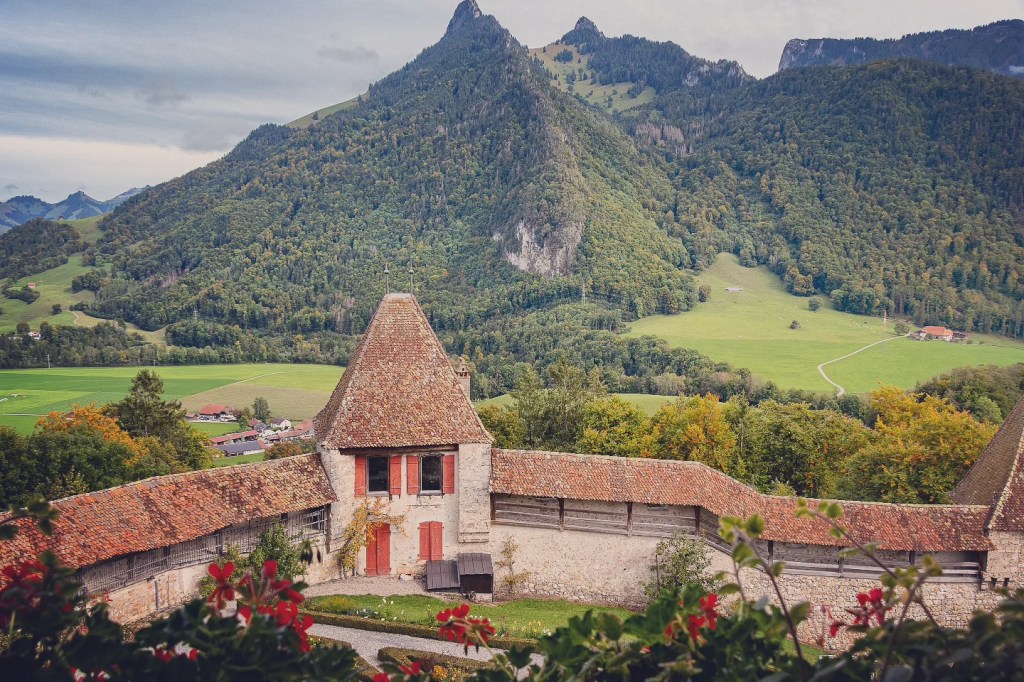
Inside Château de Gruyères
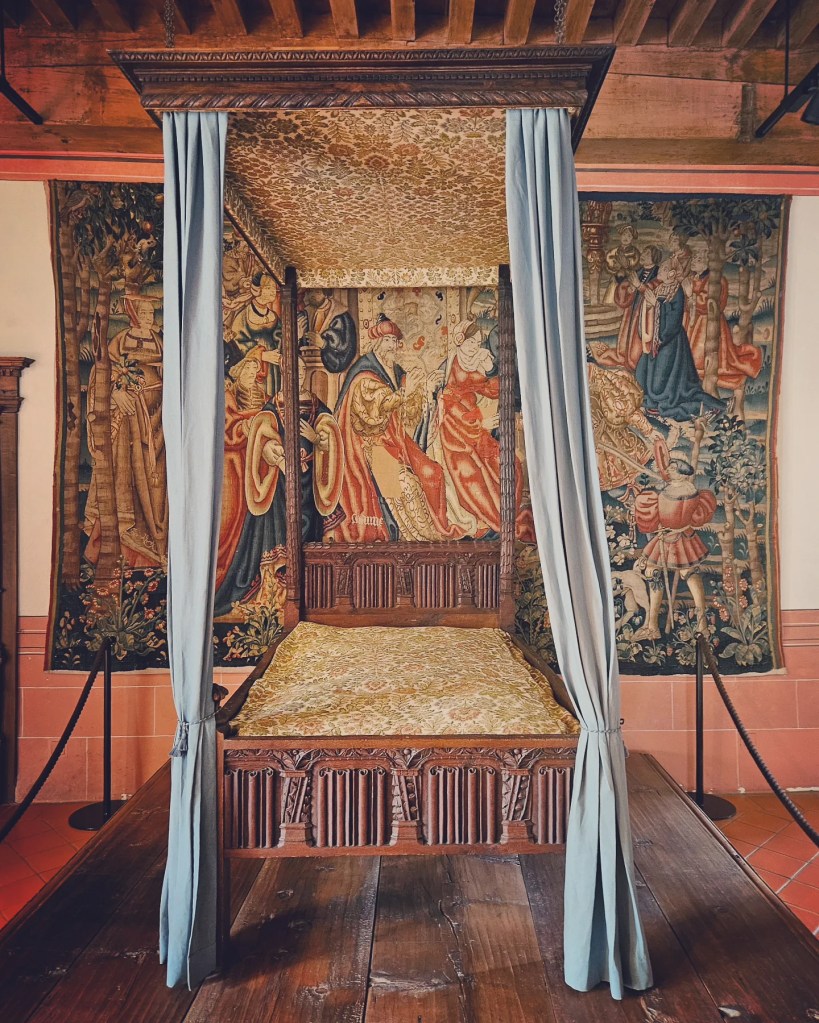
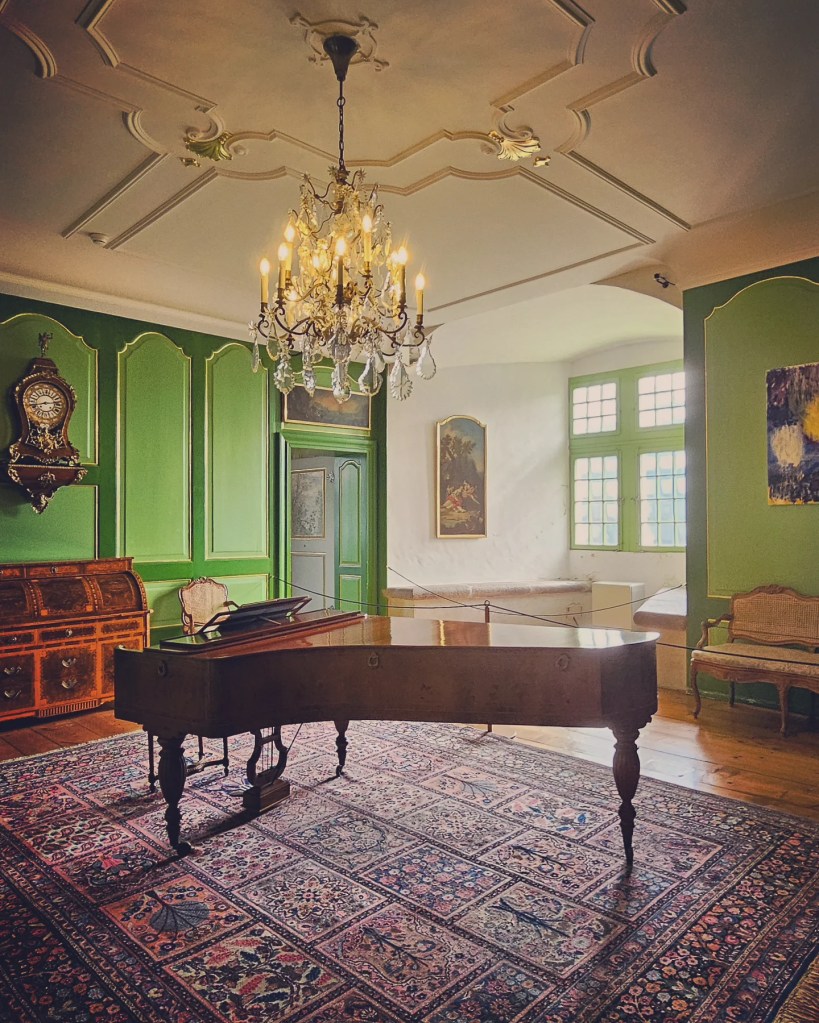
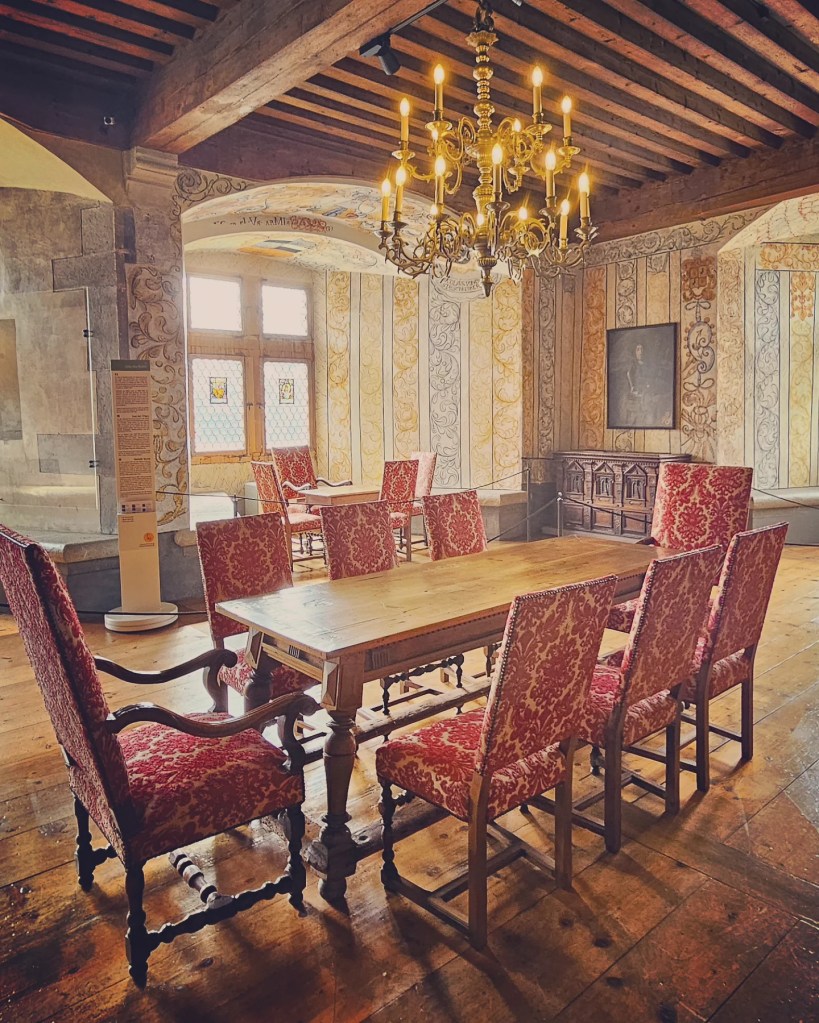
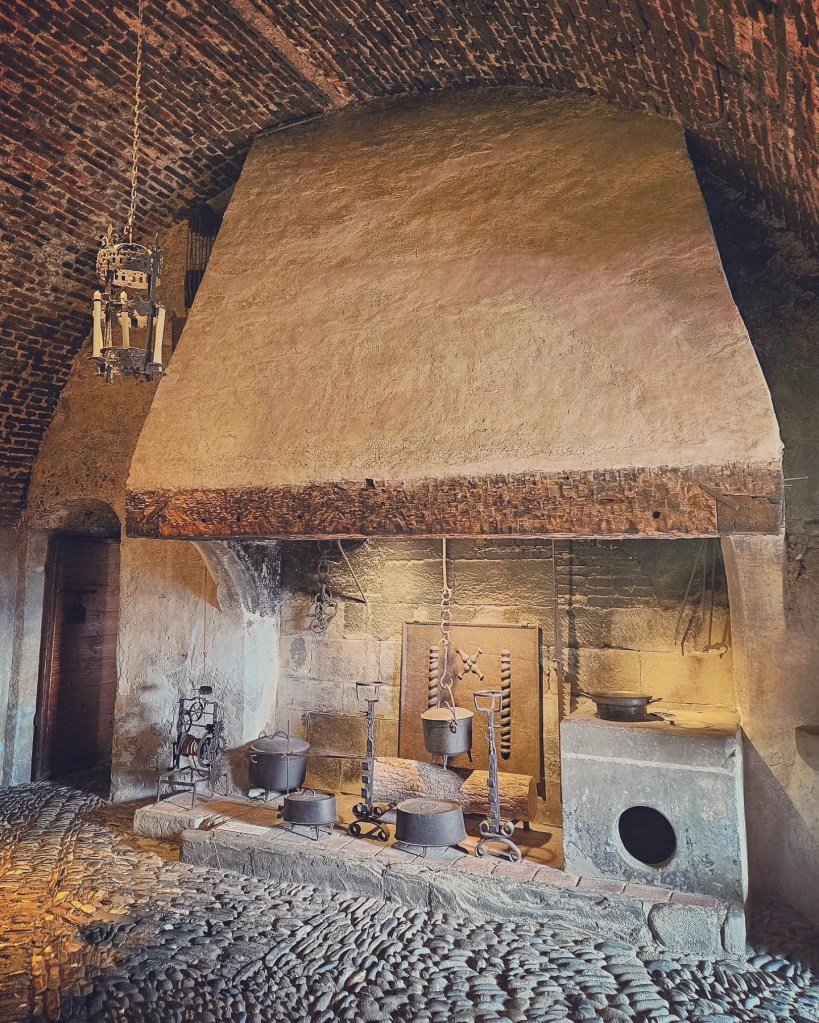


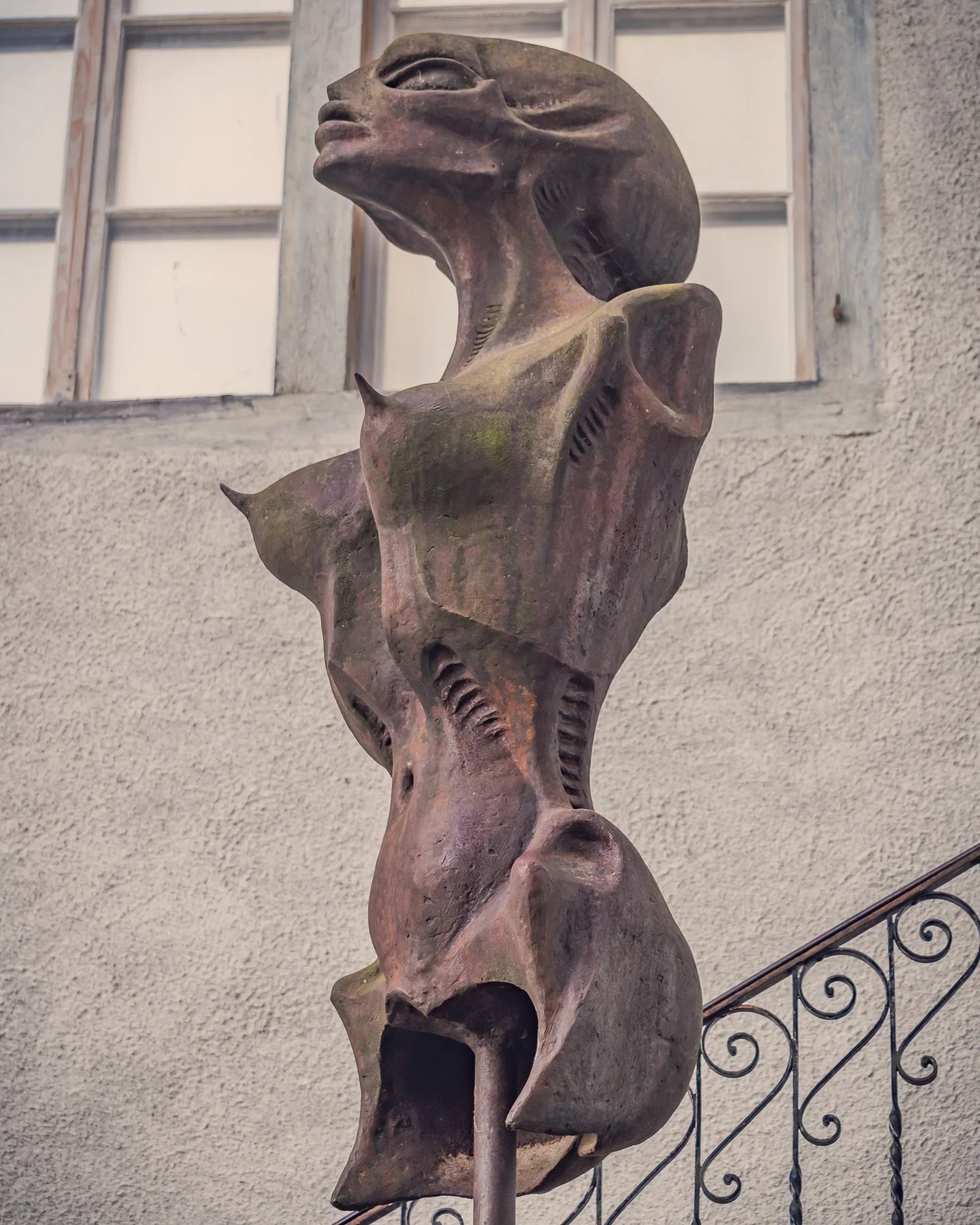
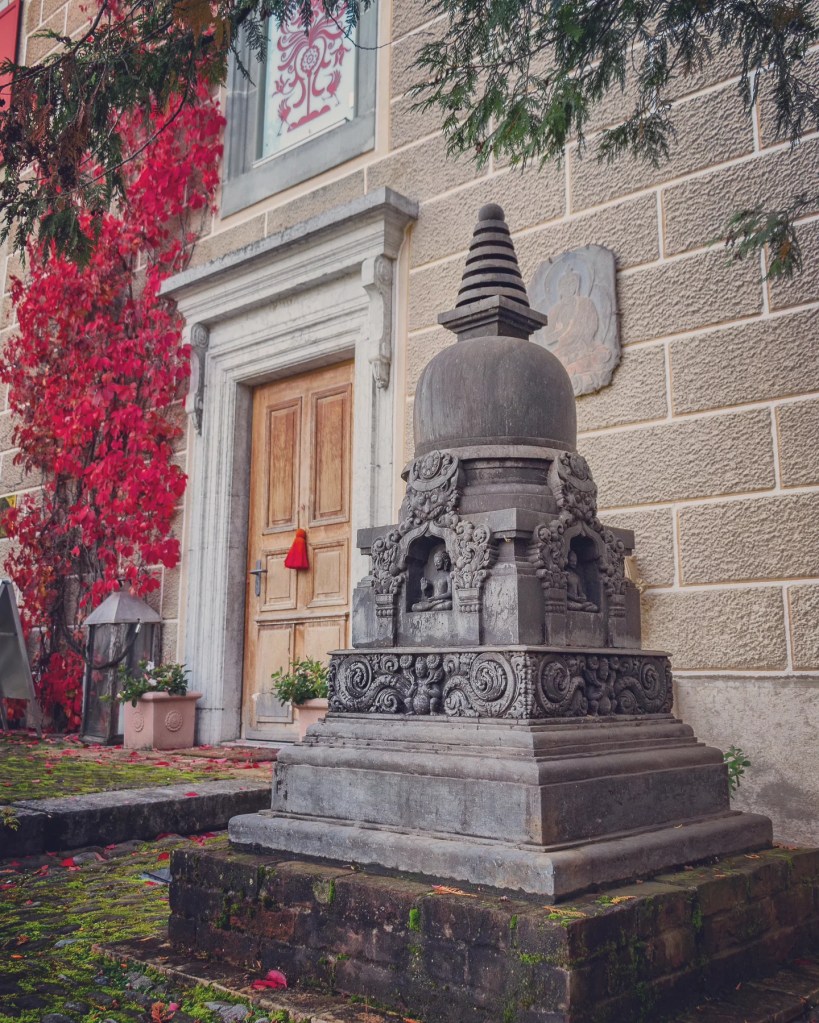
If you have extra time, stop by the H. R. Giger Museum & Bar—a gallery devoted to the Swiss surrealist who won an Oscar for Alien, filled with his biomechanical paintings, sculptures, and a bar whose chairs look like vertebrae—and the small but serene Tibet Museum just down the lane. We, however, settled for one last stroll through the town square before winding our way back to Charmey.
Bains de la Gruyère: Charmey’s Thermal Escape
Back in Charmey we traded hiking boots for swimsuits and walked over to Les Bains de la Gruyère, the village’s mineral-rich thermal spa offering front-row views of the Fribourg Pre-Alps. We drifted between the light-filled indoor pool, two steaming outdoor basins, and a small circuit of saunas and hammams—letting the warm water and quick cold plunges loosen every trail-tired muscle. After a relaxed three hours we felt reset and ready for dinner.

Location & Getting There
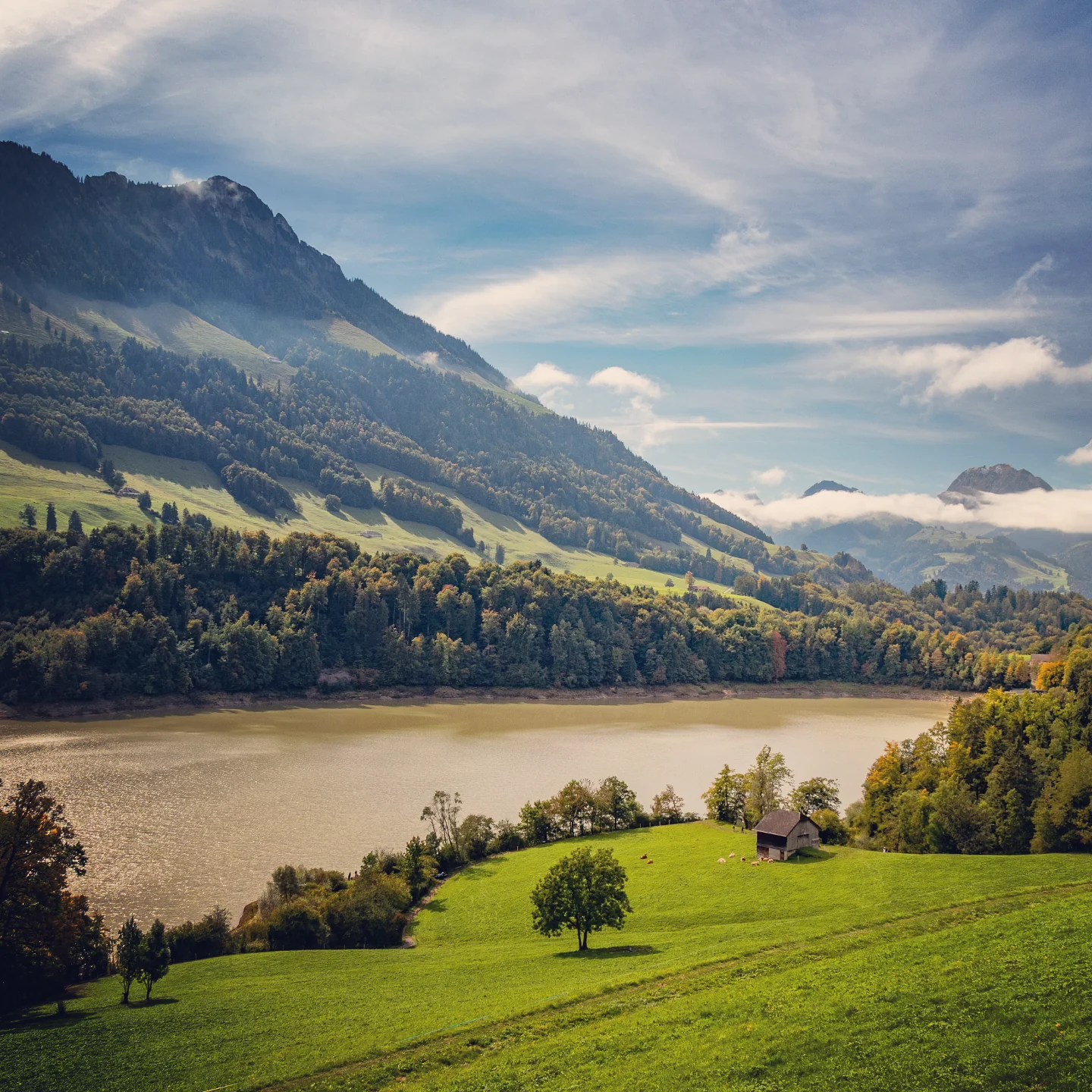
Charmey (Val-de-Charmey) lies in western Switzerland, in the French-speaking canton of Fribourg. The village is tucked high in the Jogne Valley—the first gentle folds of the Pre-Alps—ringed by pastures, forested slopes, and Lake Montsalvens. Despite the mountain setting, bigger hubs are close: Bern and Lausanne sit about an hour away, and—traffic and weather permitting—you can reach either Geneva or Zürich Airport in under 2½ hours by car.
By Car from Stuttgart
The drive from Stuttgart is a relaxed half-day trip of about 4½ hours.
- Vignette – As soon as you enter Switzerland, buy the mandatory CHF 40 motorway vignette (cash at the border or online beforehand).
- Scenic Mid-Way Stop – Roughly two hours in, the route passes Rhine Falls—ideal for a leg-stretch, lunch, and the 15-minute boat ride before you press on.
- Final Stretch – From the falls it’s another 2–2½ hours of motorway driving, ending with a short climb up the Jogne Valley into Charmey.
More Things to Do Near Charmey
- Jaunbach Gorge (Gorges de la Jogne) – A dramatic trail threading limestone cliffs, footbridges, tunnels and rock galleries between the Montsalvens dam and Broc. IMPORTANT: the gorge is closed for the 2025 season for safety work—check the official site before you go (≈10 min by car from Charmey).
- Le Moléson (2,002 m / 6,568 ft) – Funicular + cable car whisk you up to a 360° summit viewing platform. Summer brings a via ferrata, alpine coaster and panoramic restaurant; winter offers a compact ski area (≈35 min by car).
- Maison Cailler, Broc – Interactive chocolate museum, generous tastings, hands-on workshops and a café run by Switzerland’s oldest chocolate brand (≈15 min by car).
- Vounetz Summit (Rapido Sky gondola) – Once you’re up top: paragliding, hiking, a mini zip-line park, via ferrata, summer toboggan trail, ropes course, and even cheese-making. Check the website for additional activities and combo tickets that bundle the gondola with the spa, via ferrata, or Maison Cailler—handy for saving a few francs (≈15 min by gondola from Charmey).
Last Thoughts
We’ll never forget those three days in Switzerland—mist in our hair at Rhine Falls, rain-glossed cowbells echoing through Charmey, castle ramparts above Gruyères, and a summit brunch high on Vounetz. Everywhere we turned, tradition blended with 21-st century life: villagers guiding flower-crowned cows one moment, a glass gondola whisking us above the clouds the next. We drove away with Gruyère in the cooler, a handmade cowbell in the backpack, and a growing list of Swiss valleys still to explore. Until the next mountain road calls—à bientôt, Switzerland.
If you love alpine traditions like this, don’t miss our visit to the Austrian Almabtrieb in Reith im Alpbachtal—a different take on the same homecoming celebration, complete with music, market stalls, and plenty of cows in floral headdresses. Read more about our Austria Almabtrieb experience here.
Have you visited this corner of Switzerland—or are you planning to? Drop your questions or stories in the comments below; I’d love to hear from you!


Leave a comment